Category Archives: Passionists

Called by God’s Word

Yesterday’s gospel for the feast of St. Andrew the Apostle says that Jesus called the two fisherman, Peter and Andrew, from their boat on the Sea of Galilee to follow him as his disciples. We easily picture the scene–the sea, the fishing boat, the smell of the nets, two men in a boat facing another on the shore.

Not so easily pictured is the mystery enveloping the scene. Who calls the two ordinary men from the shore?  Why are they called? They’re not just to accompany him for a few days, or a few years. Who is he?

“The very Son of God, older than the ages, the invisible, the incomprehensible, the incorporeal, the beginning of beginning, the light of light, the fountain of life and immortality, the image of the archetype, the immovable seal, the perfect likeness, the definition and word of the Father: he it is who comes to his own image and takes our nature for the good of our nature, and unites himself to an intelligent soul for the good of my soul, to purify like by like.

He who makes rich is made poor; he takes on the poverty of my flesh, that I may gain the riches of his divinity. He who is full is made empty; he is emptied for a brief space of his glory, that I may share in his fullness. What is this wealth of goodness? What is this mystery that surrounds me? I received the likeness of God, but failed to keep it. He takes on my flesh, to bring salvation to the image, immortality to the flesh. He enters into a second union with us, a union far more wonderful than the first.”  (St. Gregory Nazianzen)

First Sunday of Advent

This Sunday begins the Season of Advent, leading to Christmas.

Advent is more about the future than about the past. Yes, we prepare to celebrate the birth of Jesus Christ two thousand years ago, but we celebrate his birth because Jesus Christ changes the way we look ahead. He brings us hope.

The Jewish scriptures we read during Advent tell us the kind of hope Jesus brings.  This Sunday’s first reading is from the Prophet Jeremiah. God says to him:

I will raise up for David a just shoot ;

he shall do what is right and just in the land.

In those days Judah shall be safe
and Jerusalem shall dwell secure;
this is what they shall call her:
“The LORD our justice.”

Now, God spoke to Jeremiah as Jerusalem and Judea were being laid waste by a powerful Babylonian army that came from the north to level cities and towns, destroy crops, confiscate valuables and round up able-bodied Jews to bring them to Babylon as slaves. They spared nothing, brutally crushing everything.

So Jeremiah sees nothing but wasteland before him. The land he loved, life as he knew it was gone; everything has been uprooted.

However, God points to a shoot, a tiny sliver of life pushing up amidst the ruins. It’s a sign of life, and through it God will made Judah safe and Jerusalem secure. God will bless his land again.

It’s so easy to be overwhelmed by some great loss, some defeat, some bad situation that seems to take away all we know and love. Our world today, with all its many problems, can look like a wasteland.

The time of advent says, “Signs of hope, small though they be, are there in the midst of it all. God promises life not death in Jesus, whom he has sent. Look for those signs of hope.”

National Catholic Youth Conference

25,000 Catholic young people from all over the United States met in Kansas City, Kansas from November 19-21, 2009, for the National Catholic Youth Conference. A group of about 30 were there from St. Mary’s Parish in Colts Neck, NJ.

I think I was the oldest youth at the conference, which is an offshoot of the world youth days begun under Pope John Paul II. It was a lively, spirited event, combining traditional Catholic things, like preaching,sacraments and devotions with modern technology the young use to communicate today. I missed a day because I visited one of our priests who lived nearby, but I was impressed by what I saw.

A workshop for parents by Chris Weber explaining how young people use technology today–Twitter, text messaging, Facebook, Internet– was especially helpful.

If you want to communicate with your kids, he said, get to know as much as you can about the new media. True, also, for priests and others who want to communicate with the next generation.

He recommended a book by Joseph Allen and Claudia Worrell Allen entitled Escaping the Endless Adolescence, (Random House, October, 2009).

He quoted someone saying that adolescents inhabit a subterranean world where adults are unwelcome. All you can do is sit at the top of the stairs and wait for them to talk to you as they go down or come up.

The best speakers at the event, in my opinion, were some teenagers who spoke to the young people at Sprint Center on Saturday morning about their own spiritual searching in simple fresh words.  Is God sending young people to speak to that subterranean world?

Bishops and priests were there, but the main speakers for many of the events were laypeople. Maybe that says something too about who is going to speak to the next generation.

Honestly, some of the music was hard on my ears, but if these young people are the face of the future, I have hope for the days ahead.

The Pope’s Blessing

On weekdays I don’t usually need an alarm clock to get me up in the morning. A red van pulls up outside my window about 6:30 to pick up some workers from the neighborhood who are going off to work. José, who’s been here in our building long before that, comes out to say a jovial hello to them all, and then reaches into the van to give them a blessing.

Today we’re reading a sermon by St. Leo the Great, an early pope, which he gave on the anniversary of his consecration. It’s his feastday today. Though he’s pope, he says, the blessings he’s been given are shared with the whole community. All of us, from top to bottom, are meant to give to others the blessing we have received.

“In the unity of faith and baptism, therefore, our community is undivided. There is a common dignity, as the apostle Peter says in these words: And you are built up as living stones into spiritual houses, a holy priesthood, offering spiritual sacrifices which are acceptable to God through Jesus Christ. And again: But you are a chosen people, a royal priesthood, a holy nation, a people set apart.”

The pope isn’t the only one who blesses. As usual, José gave his blessing this morning, “Urbi et orbi.”

No Life Without Sacrifice

In this Sunday’s gospel (Mark 10,35-45) James and John, two of his disciples, want something from Jesus; they want the power and position they believe he can give them. “Grant that in your glory we may sit one at your right and the other at your left.”

But they want glory without any cost. Grant it and it’s ours, they say to him. They’re looking for an easy way to get something good. Jesus says they want glory “without drinking the cup,” a life without struggle, effort and suffering. But there’s no life without sacrifice.

You can’t live without sacrifice. You can’t have it all and you can’t have it easily. That applies to every level of life.

We have to sacrifice for our own good. For example, we can’t be healthy without adopting a healthy life style, something often hard to do.

We make sacrifices for others, and that’s often hard to do. Parents sacrifice for children; children for parents. Sacrifice for strangers–that’s very hard. Soldiers have  to be ready to give up their lives for their country. The ultimate sacrifice, we say.

Jesus described his own death on the Cross as a sacrifice. That sacrifice was the culmination of a life given for others.

Sacrifice has a holy dimension we may forget.  We remember that dimension at Mass, where we use the word frequently. Sacrifice comes from    two latin words that mean “doing something holy.” If  what we do is good, for ourselves, for others, for our world, we are brought  to God through it, and God blesses our efforts, our struggles and the suffering what we have done entails.

“We come to you, Father, with praise and thanksgiving, through Jesus Christ your Son,

Through him we ask you to accept and bless these gifts we offer you in sacrifice”

What are the gifts we offer to God in sacrifice? Yes, they’re the gifts  of his Son, who offered himself to his Father once on the Cross and now becomes our offering to God who blesses us through him.

But they’re our gifts too, our sacrifices, many and varied as they are, that are joined to his and they bring down God’s blessings on us and on our world.

Let’s keep our sacrifices holy.

The Triumph of the Cross

crosspottery

The Feast of the Triumph of the Holy Cross (September 14) originated in Jerusalem, the city where Jesus died and rose again. An immense throng of Christians gathered on September 13, 335 A.D. to dedicate a church built by the Emperor Constantine over the empty tomb of Jesus and the place where he was crucified– Golgotha.

The resplendent church, one of the world’s largest, was called the Anastasis (Resurrection), or the Church of the Holy Sepulcher. From then on, Christian pilgrims from all over the world flocked there to see where Jesus was buried and where he died.

Until the Moslem conquest in the 7th century, vast crowds of bishops, priests, monks, men and women from all over the Roman empire continued to come annually to celebrate the feast, which went on for 8 days. It was Holy Week and Easter in September. One visitor, Egeria, a widely-traveled 4th century nun, said the celebration recalled the Church’s dedication, but also the day when “the Cross of the Lord was found here.”

Many Christian denominations continue to celebrate the Feast of the Triumph of the Holy Cross on September 14th.

Visitors to Jerusalem’s Old City today see a smaller, shabby successor to Constantine’s great church, which was largely destroyed in 1009 AD by the insane Moslem caliph al-Hakim and was only half rebuilt in the 11th century by the Crusaders. Today the church bears the scars of sixteen centuries of wars, earthquakes, fires, and natural disasters.

The scars of a divided Christendom also appear in the church, where various Christian groups, upholding age-old rights, warily guard their own turf. Visitors have to wonder: Does this place proclaim the great mystery that unfolded here?

Like our reaction to the sacraments, we ask Is This All There Is? It takes time to discover the Cross and its triumph.

The Mystery of the Cross

Mark’s gospel (Mk 8, 27-35) describes a journey that Jesus and his disciples made from the town  of Capernaum on the Sea of Galilee– an area predominantly Jewish– to the villages of Caesarea Phillipi, about 25 miles to the north.

The town of Caesarea Phillipi and its surroundings stood at the foot of Mount Hermon where many of the sources of water for the Jordan River and the Sea of Galilee were located. In Jesus’ time it was also a gentile region where Roman and Greek gods were honored and, as its name indicates, Caesar and Roman power proclaimed.

As he often does, Jesus uses what’s at hand to teach. Here in a center of Roman power he asks, “Who do people say that I am?” His disciples name powerful Jewish figures:  John the Baptist, who stood up to King Herod, and Elijah, the fearless prophet who stood up to King Ahab and his notorius wife, Jezebel. Some compared Jesus to them.

However, Peter, speaking for the disciples, goes beyond these Jewish heros. “You are the Christ,” he says, more powerful than the prophets and certainly more powerful than the figures honored at Caesarea Philippi. Jesus is the Messiah come to lead Israel to its high place above the nations.

In response, Jesus tells him he is a suffering Messiah, who will be rejected by the leaders of his own people, will suffer death and rise again. The scriptures had announced a Messiah like this: “I gave my back to those who beat me, my cheeks to those who plucked my beard; my face I did not shield from buffets and spitting.” (Isaiah 50)

When Peter rejects this description of the Messiah and tells Jesus to abandon it, Jesus calls him “Satan,” someone who thinks like human beings and not like God.

We’re not far from Peter’s thinking, human beings that we are. The mystery of the cross is hard for us to accept, whether we see it in Jesus or in ourselves or in the unfolding events of our time.

We celebrate the triumph of the Cross tomorrow, September 14th.

Peter Damian

DSCN0473

Last Wednesday the pope spoke of St. Peter Damian, the 11th century saint  from Ravenna, Italy, who was later named cardinal bishop of Ostia, the port of Rome.

Though Peter was drawn to the silence of the monastic life, he was called to work for the reform of the church, which suffered then from abuses resulting from lay investiture. In many places, bishops, abbots, pastors appointed by lay patrons weren’t fit for the job, and the church suffered from the immorality and lack of leadership the practice brought on.

Pope Benedict stressed Peter Damian’s dedication to the mystery of the cross. The hermitage that he loved was dedicated to Holy Cross. He wrote, “He does not love Christ who does not love the cross of Christ,” and he called himself: ” Peter servant of the servants of the cross of Christ.”

He saw the cosmic dimensions of this mystery in the  history of salvation.  “O blessed cross, you are venerated in the faith of patriarchs, the predictions of prophets, the assembly of the apostles, the victorious army of the martyrs and the multitudes of all the saints.”

Peter Damian also saw the cosmic dimensions of the cross in the struggles of his own time, it seems. He wanted a quiet, contemplative life. But he couldn’t just  lose himself in the beauty of contemplation, the pope says. He had “to assist in the work of renewal of the Church,” and the mystery of the cross gave him strength to do it.

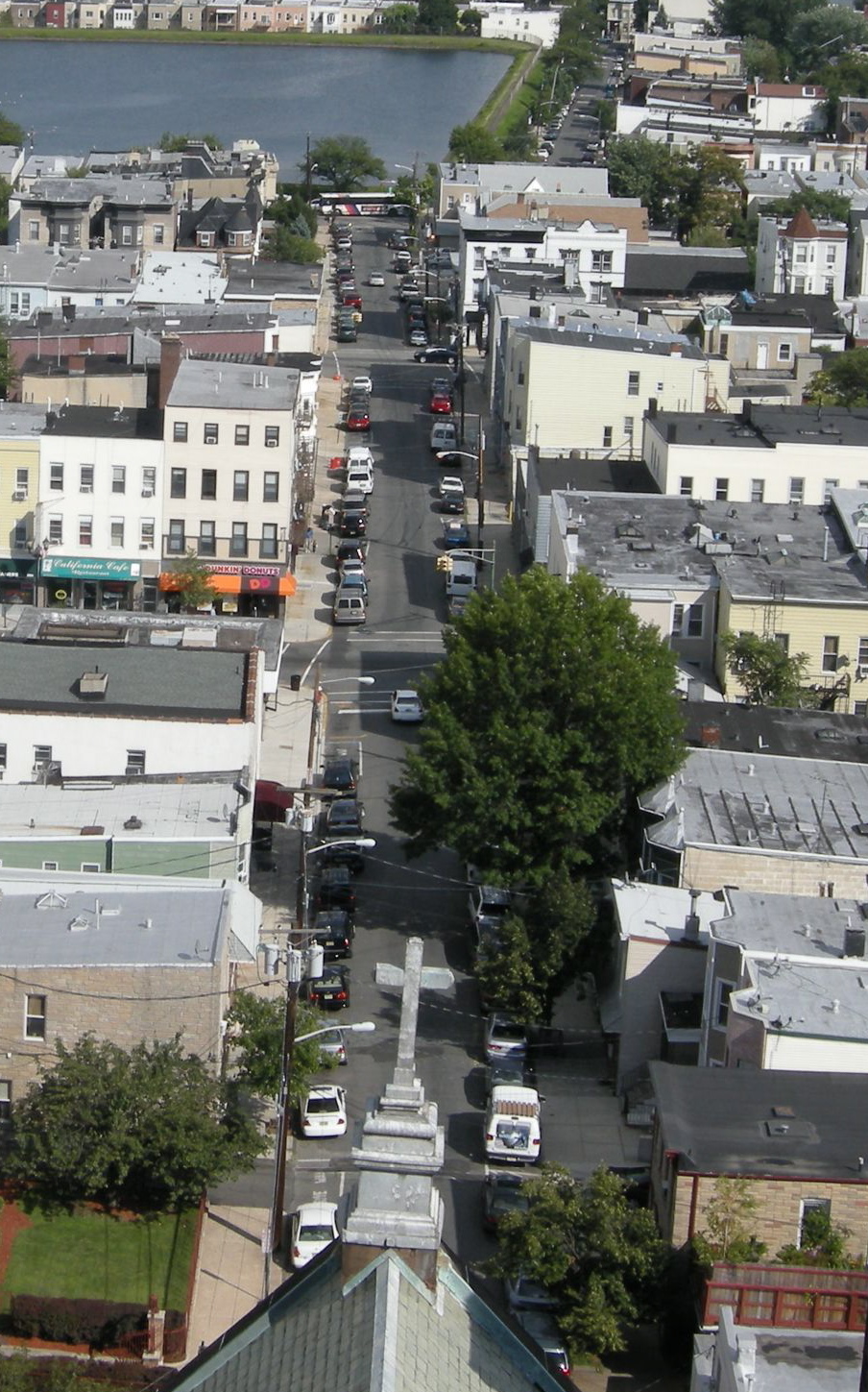
I was noticing the cross on top of the church across the way, looking down on the crowded streets below. The mystery’s here too.

By a Winding Road

The great 3rd century scholar Origin, whom I mentioned in my last post, was well acquainted with the holy land, since he was a native of Alexandria in Egypt and taught for a time in Caesarea Maritima, about 60 miles from Jerusalem. He’s one of the first Christian sources to speak of the cave at Bethlehem, where Jesus was born, and he must have been aware of other places associated with Jesus as well.

I remember  a pilgrimage I made  to Mount Sinai years ago, with Origin’s commentary “On Exodus” in hand, traveling by bus from the Red Sea through the mountains on what seemed like an interminable, narrow winding road. “We go to God by a winding road,” Origin said in his commentary, and I knew he had traveled this road.

His commentary explored the spiritual meaning of the scriptural events, but he was there all right. He didn’t forget what was there.

As a pilgrim in Jerusalem he must have stood before the ruins of the temple in Jerusalem. According to early sources, Jews came regularly to the Mount of Olives across from the Kidron Valley to look upon the ruined temple and mourn its passing. Origen must have seen them there. The present custom of gathering for prayer and remembrance at the “wailing wall” or western wall today began with them.

Then as now, some thought of rebuilding the temple, because they couldn’t envision their faith without it. Others realized that the Presence they sought there could be found elsewhere in other towns and places. Their synagogues and homes became more important as places of faith and worship.

Origen thought like the Jews who looked beyond the ruins. “Troubles and persecutions” led to rebuilding, but somewhere else and in another way. At the same time, he looked upon the ruins and acknowledged their glory, as signs of the One “who is, who was, and is to come.”

Church Closings

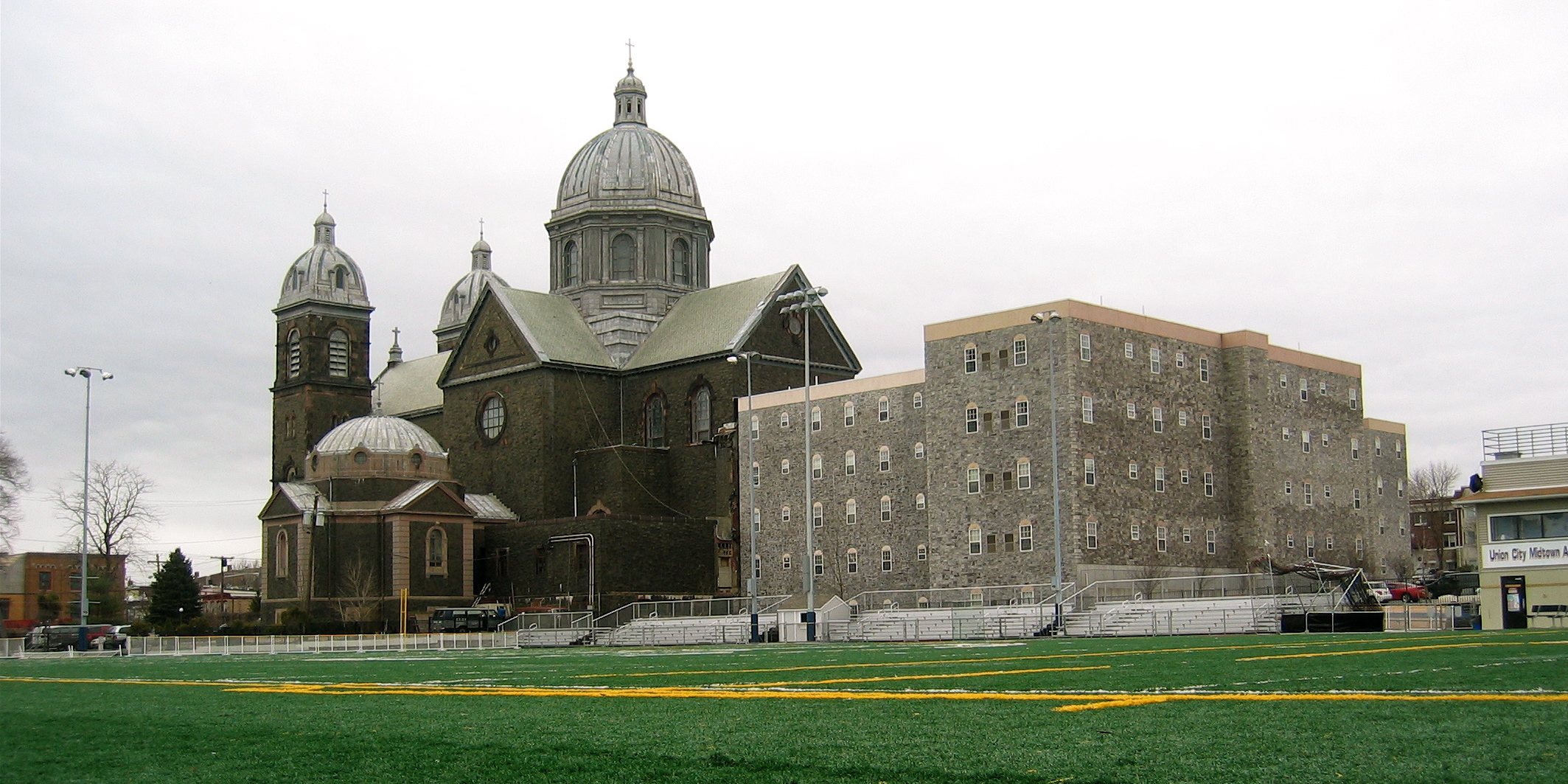
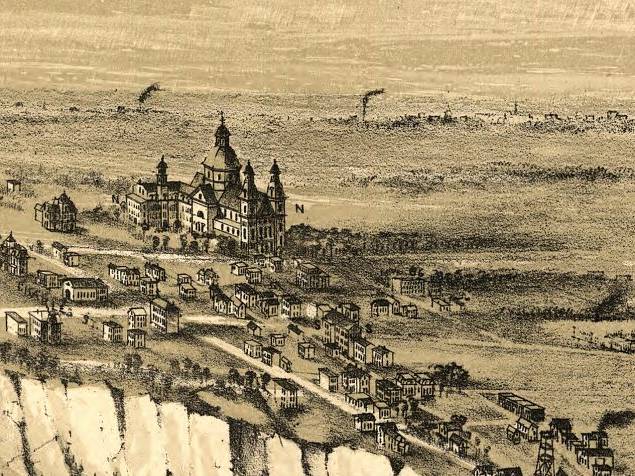
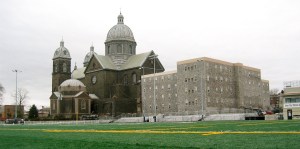
IMG_2928My window in Union City faces the great church across the street, which I still think of as St. Michael’s, although now the signs outside say in Korean and English that it’s the Hudson Presbyterian Church.  Until its closing and sale in 1981, St. Michael’s was one of the “mother churches” of Hudson County, NJ, where devotions to the Passionist saints flourished and where many of my Passionist community’s important moments took place.

A good number of parishes were established throughout the county from this place, after its foundation in 1869.

St. Michael's 3St.Michael’s 1881

St. Michael’s parish was closed because many of its parishioners moved to the suburbs as new immigrants came here and the Passionists couldn’t take on the large expense involved in maintaining the old church. The Passionists were also experiencing a decline in members,  and staffing the old monastery was difficult.

Since 1981, church closings have increased in the Unites States, especially in the Northeast and Midwest, due to population shifts, the expense in keeping up old buildings, and recently, a drastic economic downturn. But there’s another important factor contributing to church closings that doesn’t get the attention it deserves:   people are leaving the Catholic Church.

One of the best sources on religious practice in the United States is the Pew Forum on Religion and Public Life (http://pewforum.org/), based in Washington, D.C., “a nonpartisan ‘fact tank’ that provides information on the issues, attitudes and trends shaping America and the world.”

It’s recent survey (April 27, 2009), which reports that about half of American adults have changed religious affiliation at least once in their lives, explores the reasons different groups cite for leaving or joining their religion.

“Most people who change their religion leave their childhood faith before age 24, and many of those who change religion do so more than once,” the survey says.

“The group that has grown the most in recent years due to religious change is the unaffiliated population. Two-thirds of former Catholics who have become unaffiliated and half of former Protestants who have become unaffiliated say they left their childhood faith because they stopped believing in its teachings, and roughly four-in-ten say they became unaffiliated because they do not believe in God or the teachings of most religions.”

“Additionally, many people who left a religion to become unaffiliated say they did so in part because they think of religious people as hypocritical or judgmental, because religious organizations focus too much on rules or because religious leaders are too focused on power and money. Far fewer say they became unaffiliated because they believe that modern science proves that religion is just superstition.”

“Catholicism has suffered the greatest net loss in the process of religious change. Many people who leave the Catholic Church do so for religious reasons; two-thirds of former Catholics who have become unaffiliated say they left the Catholic faith because they stopped believing in its teachings, as do half of former Catholics who are now Protestant. Fewer than three-in-ten former Catholics, however, say the clergy sexual abuse scandal factored into their decision to leave Catholicism.”

Almost 1,000 Catholic churches have closed in the US in the last 10 years and more closings will come, especially in the Northeast and Midwest. When the diocese of Cleveland closed or merged a third of its 224 parishes recently, Bishop Richard Lennon had to be escorted by Cleveland police as he made the rounds for the closing ceremonies.

In February, Bishop Joseph Martino of Scranton announced the consolidation of diocesan parishes –from 209 to 111, citing changing demographics, fewer financial resources and a dwindling number of priests as reasons for the closures and mergers. The bishop’s recent resignation had to be influenced, in part, by the turmoil that came from the move.

It’s a dangerous time to be a church leader, and hard to be a Catholic in a shrinking church.  The church is suffering.

A sermon of Origen, an early 3rd century Christian scholar, may offer a good image for understanding  our present suffering. He sees a suffering church in the light of the destruction of the temple of Jerusalem.

Just as the stones of the Jewish temple, once harmoniously connected to each other, were pulled away from each other and cast down by Roman legions in 70 AD, so the “living stones” of the church, once harmoniously joined together, can become disconnected and fragmented “by troubles and persecutions.”

“Nevertheless the temple will be rebuilt and will rise again on the third day,” Origen says, echoing the words of Jesus,  “Destroy this temple and in three days I will raise it up.” (John 2,19)

For Origin, the destruction of the temple is an image of the Passion of Christ. The “troubles” in our present church belong to this same mystery. We’re experiencing them and have no idea how much will be torn down and what the rebuilding will look like. The “third day” is a good way off, but it will come.