Category Archives: Passionists

Let’s Look at the Saints

This morning, the last day of our mission here at St. Charles Borromeo, the school children were at the 8.30 Mass and participated beautifully in the liturgy. I spoke about St. Josephine Bakhita who was kidnapped and sold into slavery as a 7 year old girl in the Sudan, in Africa, around the year 1876.

She worked around the kitchen, cleaned the house and took care of the younger children of her African slave owners. Later, she was bought from them by a European family living in Africa then, and did the same things for them.

The family moved to Italy and brought Bakhita with them. One of her tasks was to take a younger child of the family to a Catholic school, where he became acquainted with the Daughters of Charity, the religious women who taught there.

When the family decided to return to Africa, Bakhita refused to go. The sisters and others made her aware that she didn’t belong to that family. She was a daughter of God who had rights of her own. In fact, Italian law forbade slavery.

Bakhita was freed and took the name Josephine. She was so impressed with the sisters that she joined their community.  She died in Italy in 1947 and was canonized a saint in 2000.

I told the children and others there at Mass that our church upholds human rights. We want all people to enjoy “life, liberty and the pursuit of happiness.”  Jesus came that people should be free.

Wonderful story to tell children. There should be no slaves in our world. Our church has been given a mission by Jesus: that all have rights to be free, to have a place to live, a family, food, medical care.

St. Josephine lived a holy life till she died. St. Josephine pray for us and help all those who are enslaved. Help us work for human rights.

Let’s Read the Bible


You wish Catholics were more familiar with the bible and read it. After all, the bible is the word of God and a way we know Jesus Christ. What bible should you read, anyway?

Go into a Barnes and Noble store or check out Amazon.com and you can easily get overwhelmed by the different bibles you find. Which one’s for you?

There are two modern translations of the bible we might single out as “Catholic bibles.”

 1. The New American Bible–Revised Edition (NABRE)

This bible appeared late in 2012. It is a revised edition of the New American Bible published in 1970 and translated from the original biblical languages. Used in Catholic pubic worship in the United States, this new edition offers excellent notes which make it particularly good for private study.

2. New Jerusalem Bible (NJB) 

The NJB is a 1985 revision of the older Jerusalem Bible (JB), translated from the original languages, but developed from a popular French translation done in Jerusalem, which is why it was called the Jerusalem Bible. It also offers good notes for private study.

Bibles in Print

The American Bible Society, which follows the bible scene closely, describes many bibles in use today on their website.They also have good background material for bible study.

Its website says the King James Version (KJV) of the bible is “still the most widely owned and used English translation in the USA.” However, it notes that “many of the best and most ancient Hebrew and Greek manuscripts of Bible books have been discovered since 1850, and so the KJV could not make use of them.” The KJV version suffers because it has not been improved by these discoveries and other advances of recent biblical scholarship.

New translations like the New Internations Version (NIV) and New Revised Standard Version (NRSV) have been done in recent years to make use of the ancient Hebrew and Greek manuscripts, yet they follow in the King James tradition.

The New American Standard Bible (NASB), revised in 1995 offers a formal translation of the bible less dependent on the King James version.

Other modern translations like the Good News Translation (GNT) and the Contemporary English Version (CEV) are in a contemporary style using common language for readers not familiar with traditional bible and church words.

The USCCB has a list of bibles approved for use by Catholics.

In the mission last night, I preached a sermon THE BLIND MAN ON THE ROAD AND ZACHAEUS UP A TREE. You can find a summary on this blog January 30, 2012.

Catechisms Have Changed

Some of us may have learned our faith through the questions and answers of the Baltimore Catechism, but catechisms have changed in recent years. One big change is that they’re not just for children, they’re for adults too.

The United States Catholic Catechism for Adults, published by the US Catholic Bishops in 2006, is an adaptation of The Catechism of the Catholic Church published in 1992 in Rome after the Second Vatican Council, as a response from the American bishops to Pope Paul VI’s call to the bishops of the world to adapt the universal catechism to the circumstances and culture of their own people.

The American catechism follows the arrangement of the Roman catechism and teaches about the Creed, the Sacraments, Moral Life and Prayer. One of its features is that it begins each lesson with a story of faith, a short biography of a Catholic, usually someone from the United States, who introduces us to the teaching that’s presented.

Many of the stories also help us appreciate how the Church in our country grew and the particular spirituality that’s been expressed here.

For example, St. Elizabeth Seton introduces us to its first question: our search for God. We search for God through creation, through human relationships and through the various circumstances of our lives.

Mother Seton found God in all those ways. As a young girl, neglected by her father and her stepmother after her mother’s death, she found God in the beauties of nature, in the fields around New Rochelle, NY, where she played as a child.

Then, she married a successful man, William Seton, and had children, a happy married life, lots of friends, and was active in her Episcopal church, Trinity Church, on Wall Street in New York City.

Her life changed when her husband’s business failed. His health also failed and Elizabeth took him to Italy to see if a better climate could revive him. When they arrived in Livorno, Italy, he died in her arms in a quarantine station at the seaport.

Some Italian friends took Elizabeth and her daughter into their home and there she began to think about becoming a Catholic. That step caused her to lose some old friends; as a widow with small children she faced hard times.

Resettling in Baltimore, then Emmitsburg, Maryland, she established a Catholic school and gathered other women to form a religious community. One of the great saints and founders of the American Church, her quest for God was lifelong and many sided. She is an example of how our search for God goes on through creation, through the people around us and in the circumstances we face going through life.

Mother Seton is a teacher of faith and played an important role in the history of the church in our country.  She reminds us how important women have been, especially religious women,  in building our American church. She also reminds us that we’re all called by God to teach others.

Epiphany Cathedral: Parish Mission, Monday-Thursday

From January 28-February 2, 2012 I’ll be preaching a mission at Epiphany Cathedral, Venice, Florida. The theme is FOLLOWING JESUS CHRIST THROUGH THE GOSPELS.  Each evening at 7 PM from Monday to Thursday, I’ll reflect on an extended passage from the gospels. My goal is to better appreciate the scriptures as a source of faith and knowing Jesus Christ.

I’ll be putting up material from the mission each day that might help  somebody who can’t get to the mission or who may have missed something.

Here’s a Youtube Video for Monday’s evening service.

Here’s the schedule for Monday evening:

1st Evening: Following Jesus Christ: Jericho to Bethany

Opening hymn:   I Want to Walk as a Child of the Light – CCH 297

Announcements and opening prayer

Catechesis  (10 minutes): How do you grow in faith today? Some aids to faith.

Reflective hymn: The Summons – CCH 375

Presentation (35 minutes): Reading from Luke 18,35-19.11, 29-38

Sermon: The Friends of Jesus

Benediction, hymns: Tantum Ergo – CCH  88

short reflective prayer,

closing hymn: Go Make of All Disciples – CCH 374

(15 minutes)

We’re Called

We may think our relationship to God is a personal affair that doesn’t depend on anybody but ourselves, but that’s not so. Others help us on our way to God. Our gospel reading for this Sunday, for example, tells us that John the Baptist told some of his disciples to follow Jesus and Andrew brought his brother Simon to him. More than we know, others lead us to God.

Instead of a lonely journey, we go to God together. Another way of saying it is that we belong to one body, a church.  Much of our knowledge and faith in God comes from others. We’re not lonely believers.

Our first reading is about the young boy Samuel whom God has chosen for a special mission among the Israelites. His mother senses this and sends him to spend some time in the temple; she hopes the priests there will help him understand what his calling is.

The young boy hears God calling in the night but it’s a very indistinct call; he’s a young boy and he doesn’t know what to make of it. The old priest Eli doesn’t help much at first. He tells the young man there’ s no one calling, go back to sleep.

Finally, the old man recognizes that God is calling the young man. This isn’t the first time someone from an older generation doesn’t understand someone younger.  An early example of the “generation gap?” The story, we learn, is not just about a young boy finding what God wants him to do, but it’s also about someone from an older generation helping him find out.


After awhile, the old priest gives Samuel the right advice: “Go to sleep, and if you are called say ‘Speak, Lord, your servant is listening.’”

That’s wise advice. The old priest is telling him, first of all, believe God speaks to you. Then, listen humbly as a servant, without letting your own ideas intrude. Become a listener and hear what God wishes to say. Pray.

An elderly man from California calls us every few months to ask for copies of a little prayer we publish called “Be With Me Today, O Lord,” which he distributes to schools and churches in his area. It’s a simple prayer you can find over at Bread on the Waters, where a lot of prayers like this can be found.

The prayer says that God has something for us to do today and everyday; we have a mission in life and it asks God to point that mission out so that we can do it.

“I have a mission…

I am a link in a chain, a bond of connection between persons.

God has not created me for naught… Therefore I will trust him.

Whatever, wherever I am, I can never be thrown away.

God does nothing in vain.

He knows what he is about.” (J.H. Newman)

We’ re links on a chain, a good image of how we fit into life’s larger picture. God hasn’t created us for nothing. We all have a mission in life, but we need people to help us know it.

Our Sunday readings might suggest one particular calling we need to think about and pray about and promote today–vocations to the priesthood and religious life. We need good priests and religious for our church and our world. God calls young men and young women. But they need others, like Eli, to support them in their call.

Next Saturday in our monastery in Jamaica, New York,  the Passionists are having a “Called by Name” weekend for young men who may be called to our community. I’m part of it. Know anyone who might have a call? Pray, and like Eli could you also encourage them to listen to God’s call?


The Baptism of Jesus

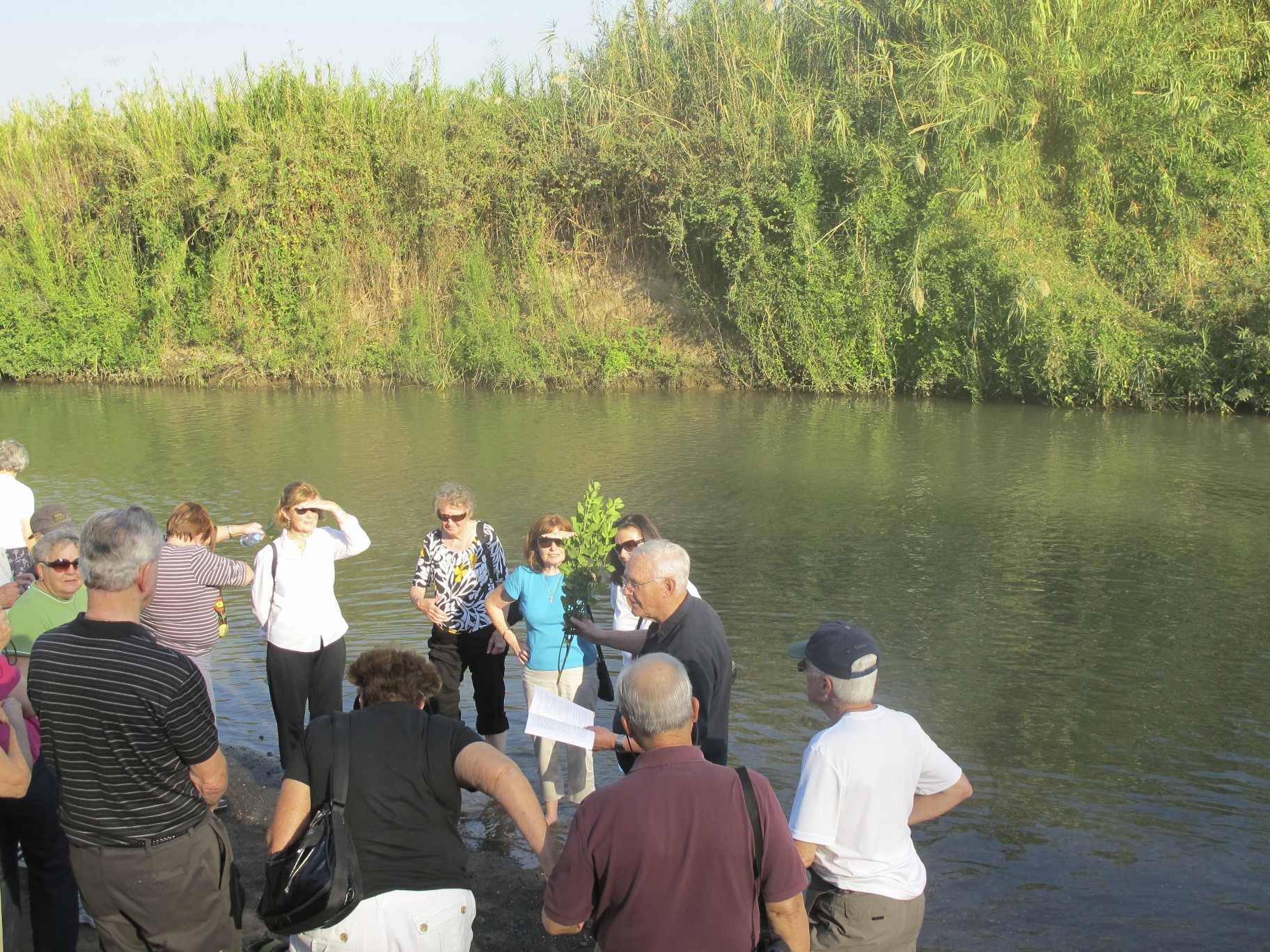
The heavens open when Jesus goes into the waters of the Jordan to be baptized. The Spirit descends on him and the Father announces his pleasure in him: “Listen to him,” we’re told, and share in his life.

The baptism of Jesus, a feast we celebrate with the Feast of the Epiphany,  affirms a new connection between earth and heaven. It speaks through the simple, fundament sign of water. Going into the Jordan, Jesus indicates that God blesses the waters of the earth– and consequently creation itself– with life. Our second reading today from Isaiah 55, 1-11 illustrates this mystery so well. First of all, Jesus quenches the thirst of our souls; he comes to quench the thirst of all:

“ All you who are thirsty,

come to the water!

You who have no money,

come, receive grain and eat;

come, without paying and without cost,

drink wine and milk!” Isaiah 55, 1

God’s gift of Jesus Christ not only satisfies our thirst as individuals, he comes to revive the institutions of our world.

“I will renew with you the everlasting covenant,

the benefits assured to David.

As I made him a witness to the peoples,

a leader and commander of nations,

so shall you summon a nation you knew not,

and nations that knew you not shall run to you,

because of the LORD, your God,

the Holy One of Israel, who has glorified you.” (Isaiah 55)

Jesus Christ also comes to purify the world and those who dwell in it:

“Seek the LORD while he may be found,

call him while he is near.

Let the scoundrel forsake his way,

and the wicked man his thoughts;

let him turn to the LORD for mercy;

to our God, who is generous in forgiving.

For my thoughts are not your thoughts,

nor are your ways my ways, says the LORD.

As high as the heavens are above the earth

so high are my ways above your ways

and my thoughts above your thoughts.” (Isaiah 55

Finally, in his Son, God makes an everlasting covenant with our world:

“For just as from the heavens

the rain and snow come down

and do not return there

till they have watered the earth,

making it fertile and fruitful,

giving seed to the one who sows

and bread to the one who eats,

so shall my word be

that goes forth from my mouth;

my word shall not return to me void,

but shall do my will,

achieving the end for which I sent it.”

There’s an good article on the significance of water in the scriptures on the American Bible Society site.

The Word Made Flesh

Because the Word was made flesh, St. Athanasius writes:
“He had then to take a body like ours. This explains the fact of Mary’s presence: she is to provide him with a body of his own, to be offered for our sake. Scripture records her giving birth, and says: She wrapped him in swaddling clothes. Her breasts, which fed him, were called blessed. Sacrifice was offered because the child was her firstborn. Gabriel used careful and prudent language when he announced his birth. He did not speak of “what will be born in you” to avoid the impression that a body would be introduced into her womb from outside; he spoke of “what will be born from you,” so that we might know by faith that her child originated within her and from her.
  By taking our nature and offering it in sacrifice, the Word was to destroy it completely and then invest it with his own nature, and so prompt the Apostle to say: This corruptible body must put on incorruption; this mortal body must put on immortality.
  This was not done in outward show only, as some have imagined. This is not so. Our Saviour truly became human, and from this has followed the salvation of humanity as a whole. Our salvation is in no way fictitious, nor does it apply only to the body. The salvation of the human being, that is, of soul and body, has really been achieved in the Word himself.
  What was born of Mary was therefore human by nature, in accordance with the inspired Scriptures, and the body of the Lord was a true body: It was a true body because it was the same as ours. Mary, you see, is our sister, for we are all born from Adam.
  The words of St John, the Word was made flesh, bear the same meaning, as we may see from a similar turn of phrase in St Paul: Christ was made a curse for our sake. Our  body has acquired something great through its communion and union with the Word. From being mortal it has been made immortal; though it was a living body it has become a spiritual one; though it was made from the earth it has passed through the gates of heaven.
  Even when the Word takes a body from Mary, the Trinity remains a Trinity, with neither increase nor decrease. It is for ever perfect. In the Trinity we acknowledge one Godhead, and thus one God, the Father of the Word, is proclaimed in the Church.

Becoming a Child

The mystery of Christmas is a call for all of us to become like the little Child. Is that what it means to be born again? St. Leo tells us in today’s reading it was the first act of humility that God’s Son made as he came among us and we need to renew this mystery in ourselves as we celebrate his birth.

“ God’s Son did not disdain to become a baby. Although with the passing of the years he moved from infancy to maturity, and although with the triumph of his passion and resurrection all the actions of humility which he undertook for us were finished, still today’s festival renews for us the holy childhood of Jesus born of the Virgin Mary.

“In adoring the birth of our Saviour, we find we are celebrating the commencement of our own life, for the birth of Christ is the source of life for Christian folk, and the birthday of the Head is the birthday of the body.

“Every individual that is called has his own place, and all the children of the Church are separated from one another by intervals of time. Nevertheless, just as the entire body of the faithful is born in the font of baptism, crucified with Christ in his passion, raised again in his resurrection, and placed at the Father’s right hand in his ascension, so with him are they born in this nativity.”

Age, race, sex, social status, temperament, individual gifts separate us, but “the entire body of the faithful” come during this holy season to be born with him in his nativity.

I Love Christmas

I Love Christmas


I love Christmas – all about Christmas –

‘Tis the season to be jolly, and happy,

and light-hearted…

Oh, go away Spirit of Christmas Past,

You fill my eyes with tears,

You make my heart cry,

With a longing for loved ones.

And places and events which are no more.

But I do love Christmas – all about Christmas –

The gift wrapping, the “secrets,”

The beautifully decorated stores,

The choosing of the tree,

 Bringing out the “Christmas box,”

The carols, the parties and get-togethers…

Oh, Spirit of Christmas Present,

Why must you show me visions of starving children,

Of the homeless,

Of old people alone and lonely,

Of all those who have lost hope?

But I do love Christmas – all about Christmas –

The visit to Santa Claus,

The excitement as the day approaches,

The cookie baking,

The magic reflected in the children’s faces,

The joy and warmth of family and friends…

Oh, Spirit of Christmas Present,

You persist in showing me visions of those children

Who have never felt that warmth,

Whose eyes will never reflect that magic,

Who are already old and wise

In the harsh, unloving ways of our world.

But, I do love Christmas – all about Christmas –

For the treasures you have given us,

Oh, God, we thank you.

And we ask that you guide us

And teach us how to share them.

I love Christmas

Because through the tears and the glitter,

Shines the LIGHT!


Teresita J. Blake

I Wonder as I Wander Out Under the Sky

Of all the gospels, St. Luke’s gospel gives the most complete account of the birth of Jesus and events leading up to it.  Luke also points out the historical importance of his birth, not only for the Jews but for the world itself. He does it by noting at the beginning of his gospel that it was in the days when Caesar Augustus ruled in Rome. Previously, he noted that King Herod the Great ruled in Judea in those days.

Those men were well known to Luke’s first readers. Caesar Augustus brought about an unprecedented era of peace and prosperity in the Roman empire. He was considered godlike. Herod the Great ruled with an iron fist in Judea; there were fearful signs of his presence everywhere.  People kept out of his way.

The child born in a stable in Bethlehem was more important than them and the great ones who followed them. He brought greater peace than any emperor could bring. He was more powerful and more present than Herod or anyone like him could possibly be.

Luke in his gospel gives an orderly account of Jesus, from his birth to his resurrection, and he also wrote a further account–the Acts of the Apostles– about  how his message was spread by his followers from Jerusalem to the great cities of the Roman empire, and finally to Rome itself. His message went out to all the world.

I was thinking of the spread of the gospel as I read the report issued a few days ago from the Pew Research Center about religion throughout the world. There are approximately 6.9 billion people in the world in 2010. There are 2.18 Christians in the world, about a third of the world’s population.

The report notes that since 1910 a great shift has taken place among the religions of the world. Instead of being concentrated in Europe, Christianity has grown enormously in sub-Saharan Africa and the Asia-Pacific region, where there were relatively few Christians at the beginning of the 20th century.  “Christianity has become a global religion. Christians are also geographically widespread – so far-flung, in fact, that no single continent or region can indisputably claim to be the center of global Christianity.”

A third of the world’s population call themselves Christian. Half of them are Roman Catholic.

Over two thousand years ago, Jesus Christ was born in Bethlehem, of poor unknown parents. He grew up unrecognized in a small discounted Galilean town called Nazareth. For a few years he taught, he healed people of illnesses, he raised the dead to life, he gathered disciples who followed him. They abandoned him when he was put to death on a cross. Then he rose from the dead.

He shot across the sky of time like a meteor. However, you would might expect that history would forget him as it does so many others. But Jesus Christ hasn’t been forgotten.   Over two billion people in our world today remember him and follow him.

We believe he’s still present and his promise of peace is still waiting to be fulfilled.

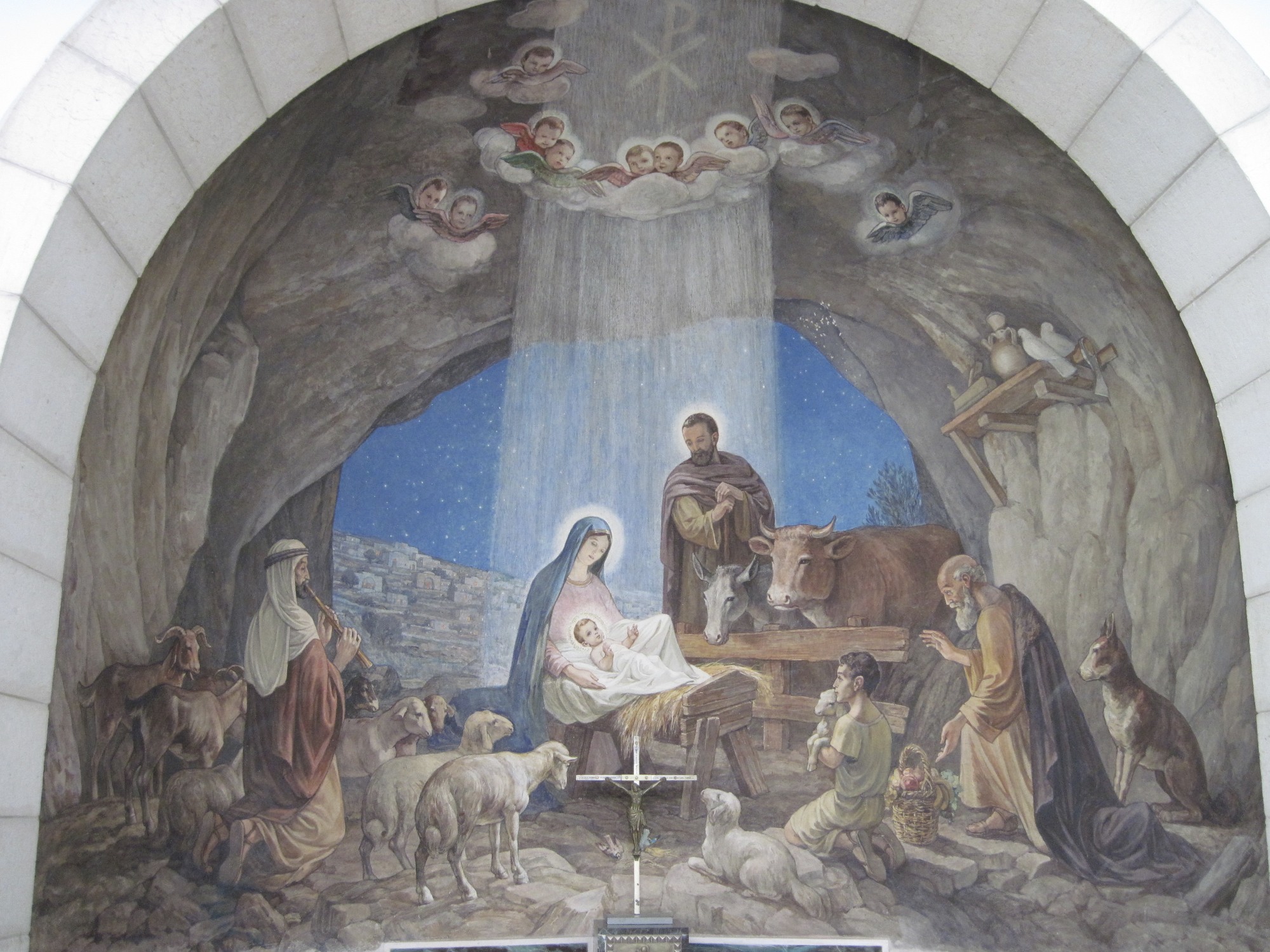
This causes me  to wonder at the mystery we celebrate at Christmas when we come to the stable and see the tiny Child.