We begin reading the Letter to the Colossians this week in our liturgy. Paul never visited this church near Ephesus. Commentators don’t agree about the situation Paul addresses in the letter. It’s not about human behavior or questions about human morality as the letters to the Corinthians are.
The Colossians have faith in Christ; they love for one another. But some of them are trying to understand the cosmos. What’s this world beyond our human world all about?
Don’t leave Jesus Christ out of that larger world, Paul says. He speaks to the Colossians– and also the Ephesians– about the Cosmic Christ.
“Jesus is the image of the invisible God, the firstborn of all creation. For in him were created all things in heaven and on earth, the visible and the invisible, whether thrones or dominions or principalities or powers; all things were created through him and for him.He is before all things, and in him all things hold together. He is the head of the Body, the Church.He is the beginning, the firstborn from the dead, that in all things he himself might be preeminent. For in him all the fullness was pleased to dwell, and through him to reconcile all things for him, making peace by the Blood of his cross through him, whether those on earth or those in heaven.” (Colossians 1, 15-20)
Is Paul’s letter to the Colossians a timely message for our age too? Jesus Christ seems to have little place in our discussions on cosmology. Jesus Christ is not just Jesus of Nazareth, rejected by his own people in a little corner of the Middle East long ago. He is not just a teacher who tells us how to get along with one other. “Jesus is the image of the invisible God…in him were created all things in heaven and on earth.” “He holds all things together” for 4.5 billion years and beyond.. He brings peace through the blood of his cross. He lives and reigns with Father and the Holy Spirit, now and forever.
September 3rd is the feast of St. Gregory the Great – greatest of the popes, many say. Gregory’s remembered, not on the day of his death, but on the day he became pope, September 3, 590, which probably was the day he thought himself condemned to death.
Years ago, I lived across the street from Gregory’s home on the Celian Hill in Rome. On my way to school, I would peek through the doors of the library of Pope Agapitus, a relative of Gregory’s, where archeologists were at work learning about what was once the largest Christian library in Rome. Barbarian tribes later plundered the place on one of their regular sweeps through the city.
Bad times. Gregory was called from his monastery, not just to be pope, but to lead a city under siege. He was never healthy and never had much support. Most of Rome’s leading families moved to safer parts; the imperial government relocated in Milan. The burden of the city and the church fell on him.
Called to a position he didn’t want, Gregory drew wisdom and strength from the scriptures, especially from figures like Job and Paul the Apostle. In his Commentary on Ezechiel, Gregory saw himself like Ezechiel appointed the city’s watchman, who had to go up to the heights and see what’s coming,
“I’m not doing this very well, ” Gregory says.
“I do not preach as well as I should nor does my life follow the principles I inadequately preach.
“I don’t deny my guilt, I get tired and negligent. Perhaps by recognizing my failure I’ll win pardon from a sympathetic judge. When I lived in the monastery I was able to keep my tongue from idle topics and give my mind almost continually to prayer, but since taking on my shoulders the burden of pastoral care, I can’t keep recollected, with my mind on so many things.
“I have to consider questions affecting churches and monasteries and often have to judge the lives and actions of others; I have to take part in certain civil affairs, then I have to worry about barbarians attacking and wolves menacing the flock in my care; I have a political duty to support those who uphold the law; I have to put up patiently with thieves and then I have to confront them, in all charity.
“My mind is torn by all the things I have to think about. Then I have to put my mind on preaching. How can I do justice to this sacred ministry?
“Because of who I am I have to associate with all kinds of people and sometimes I say too much. But if I don’t talk to them the weaker kind of people wont come near me, and then we wont have them when we need them. So I have to listen to a lot of aimless chatter.
“But I’m also weak myself and I can get drawn into gossiping and then find myself saying the same things I didn’t care to listen to before.
“Who am I — what kind of watchman am I? I’m not standing on the heights, I’m down in the depths of weakness. And yet the creator and redeemer of all can give me, unworthy as I am, the grace to see life as it really is and power to speak effectively of it. It’s for love of him that I do not spare myself in preaching him.”
You have to admire Gregory. However he felt, he’s the watchman caring for his city and his church. Weakness doesn’t prevent him from serving or being far-sighted. From the Celian Hill Gregory sent monks to England, then the ends of the world, to found the church there.
On his tomb in the Vatican is the simple inscription that describes him so well. “Servant of the servants of God.”
We shouldn’t limit Gregory’s teaching on service to popes, bishops and priests either. It applies to anyone who directs others, like parents, teachers, politicians, directors and mentors of all kinds. You can’t serve others well if you don’t know yourself and your own weakness.
Kids go back to school in September and I ask myself: are you going to school too? I’m looking at the church calendar for September. It’s a school of another kind, isn’t it? It calls for celebrating feasts, reflecting on the scriptures and listening to saints. They’re good teachers, not afraid to offer their lessons year after year.
The saints in our calendar are wonderful people, good teachers. St. John Chrysostom, September 13th, complained about people of his time who don’t know much about the church’s calendar at all: “Many people today just about know the names of the feasts we celebrate in church. They know hardly anything about where we come from and what it means… What a shame.” We’re forgetful listeners, the saint says.s
September has a parade of interesting saints, like Gregory the Great, September 3rd, the pope who lived when the Roman world was falling apart, but he didn’t fall apart. He believed in doing something and he wasn’t afraid to think big. He sent missionaries out to faraway England and northern Europe.
In a world falling apart, he tells us don’t give up, be courageous. There are still things to be done.
St. Peter Claver, September 9th, worked among the black slaves in Colombia, South America. He reminds us not to forget there’s still slavery in our world. Don’t forget it: let’s try to get rid of it.
Saints Cornelius and Cyprian, September 16, early Christian martyrs, remind us that people died for the faith we believe in. It’s that important. They were concerned too about God’s forgiveness. The world goes round because of the mercy of God.
September 26th , St. Vincent De Paul was inspired by God to take care of the poor in France. He started a whole movement in the church of people who looked after the poor. Is there someone at work now speaking for the poor?
St. Matthew, the tax collector, September 21. Jesus called him to be one of his apostles. Others looked down on him. But God didn’t look down on him, nor does he look down on us.
St. Jerome. September 30th was a saint who loved the bible and constantly studied it. That’s something we should do too. Some of our calendars give us a list of the scriptures we’re reading in church. So why not read them with the church day by day. That would be a wonderful way to keep learning and hearing God speak.
September 14th we celebrate the Feast of the Exaltation of the Holy Cross. It’s like Holy Week in September. We need to be lifted up by the mysteries of Jesus continually. He died and he rose again. We die and rise again with him.
September 15 we remember the sorrows of the Mary. Every month we have at least one feast of Mary, this month, September, we have two. We remember her birth on September 8. She’s our companion as we follow her son. She can help us understand him and do whatever he tells us.
On September 1st this year, Pope Leo called again to remember creation and care for the creation we are part of. Leo wants us all to join together and lift up this world we’ve endangered by our abuse.
September is a school. October, November….they’re schools too.
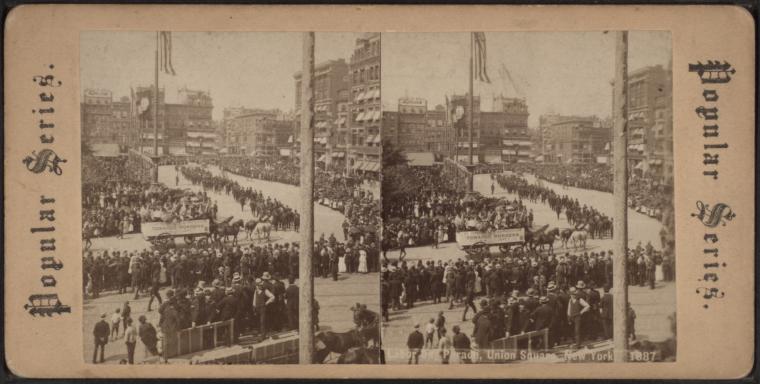
Labor Day Parade 1889, New York City, NYPublic Library
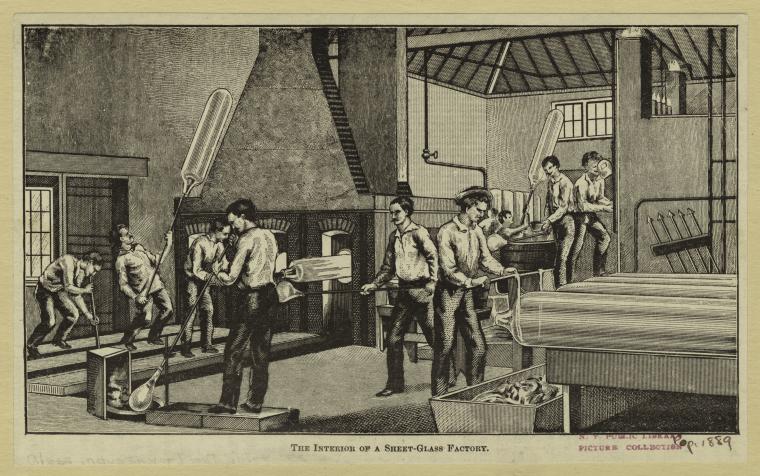
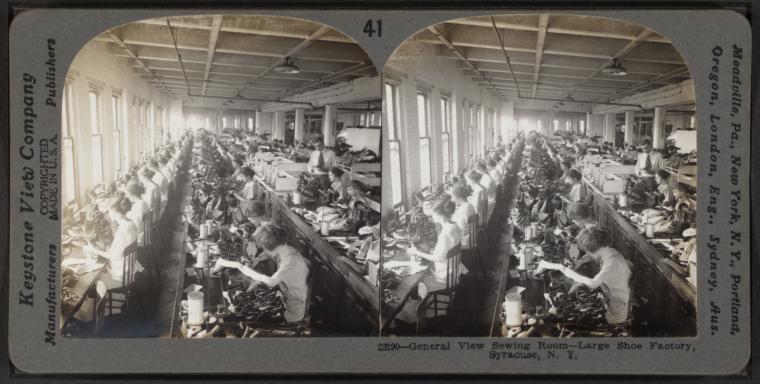
Labor Day is a holiday in my country, a day off. It’s also day to reflect on issues affecting work and workers. Labor Day can be traced back to when our world was agricultural rather than industrial. In many Christian societies, it was a day when people gave thanks for the crops they harvested and prayed for continued blessings. “Prosper the work of our hands, Lord, prosper the work of our hands.”
Labor Day can be traced to the rogation days in the Christian calendar, when people gathered in their church and went in procession through their fields thanking God for his gifts of the earth and asking God’s blessing for the future. Their procession was a walk of appreciation. As they walked through their fields people saw creation as good.
In a gospel suggested for today, Jesus tells us
“Do not worry and say, ‘What are we to eat?’ or ‘What are we to drink?’ or ‘What are we to wear?’ All these things the pagans seek. Your heavenly Father knows that you need them all. But seek first the kingdom [of God] and his righteousness, and all these things will be given you besides. Do not worry about tomorrow; tomorrow will take care of itself. Sufficient for a day is its own evil.” (Matthew 6:311-36)
Each day has its worries, but worrying about tomorrow stops us from appreciating today, Jesus tells us. Worrying about tomorrow can stop us from living today.
That’s not to say we should not reflect on society’s social ills. Labor Day is also a time to call out against poor labor conditions, abusive labor conditions, lack of opportunities for good, meaningful work. There’s the threat that comes now from Artificial Intelligence. How will that impact workers?
Still, Labor Day calls us to take an appreciative walk through our own wheat fields, through the place where we are, looking at the work we do, appreciating the work others do for us. It’s a holiday.
Ten years ago, Pope Francis called for A World Day of Prayer for the Care of Creation for September 1st. The day of prayer, coinciding with the publication of his letter Laudato si’ , began a Season of Creation, an ecumenical endeavor shared with other churches and communities that extends from September 1st to October 4th, the Feast of St. Francis of Assisi.
Our church calendar, besides feasts and seasons, has days of prayer when particular causes arise. In a recent letter, Pope Leo called the care of creation a particularly timely issue to pray for:
“…given the evidence in various parts of the world that our earth is being ravaged. On all sides, injustice, violations of international law and the rights of peoples, grave inequalities and the greed that fuels them are spawning deforestation, pollution and the loss of biodiversity. Extreme natural phenomena caused by climate changes provoked by human activity are growing in intensity and frequency (cf. Laudato Deum, 5), to say nothing of the medium and long-term effects of the human and ecological devastation being wrought by armed conflicts.
As yet, we seem incapable of recognizing that the destruction of nature does not affect everyone in the same way. When justice and peace are trampled underfoot, those who are most hurt are the poor, the marginalized and the excluded. The suffering of indigenous communities is emblematic in this regard.
That is not all. Nature itself is reduced at times to a bargaining chip, a commodity to be bartered for economic or political gain. As a result, God’s creation turns into a battleground for the control of vital resources. We see this in agricultural areas and forests peppered with landmines, “scorched earth” policies, [1] conflicts over water sources, and the unequal distribution of raw materials, which penalizes the poorer nations and undermines social stability itself…
Environmental justice – implicitly proclaimed by the prophets – can no longer be regarded as an abstract concept or a distant goal. It is an urgent need that involves much more than simply protecting the environment. For it is a matter of justice – social, economic and human. For believers it is also a duty born of faith, since the universe reflects the face of Jesus Christ, in whom all things were created and redeemed. In a world where the most vulnerable of our brothers and sisters are the first to suffer the devastating effects of climate change, deforestation and pollution, care for creation becomes an expression of our faith and humanity.
Now is the time to follow words with deeds.”
( For THE 10th WORLD DAY OF PRAYER FOR THE CARE OF CREATION 2025)
Recently, the Dicastery for Divine Worship provided a preliminary text for a Mass for the Care of Creation. A good resource for prayer during the Season of Creation.
MASS FOR THE CARE OF CREATION
Entrance Antiphon Ps 18: 2
The heavens declare the Glory of God,
and the firmament proclaims the work of his hands.
Collect
God our Father,
who in Christ, the firstborn of all creation,
called all things into being,
grant, we pray, that docile to the life-giving breath of your Spirit, we may lovingly care for
the work of your hands.
Through our Lord Jesus Christ, your Son,
who lives and reigns with you in the unity of the Holy Spirit,
God, for ever and ever.
Prayer over the Offerings
Receive, O Father,
these fruits of the earth and of our hands:
bring to completion in them the work of your creation,
so that, transformed by the Holy Spirit,
they may be for us the food and drink of eternal life.
Through Christ our Lord.
Communion Antiphon All the ends of the earth have seen the salvation of our God.
cf. Ps 97: 3
Prayer after Communion
May the sacrament of unity
which we have received, O Father,
increase communion with you and with our brothers and sisters,
so that, as we await the new heavens and the new earth,
we may learn to live in harmony with all creatures.
The Lord’s Prayer is the norm for every prayer. That’s true, especially, for the Eucharistic Prayer in which we thank God, our Father, for blessing us “always and everywhere.” The Eucharistic Prayer is the Lord’s Prayer in another form.
As we do in the Lord’s Prayer, we call God “Our Father” at Mass and thank him for the blessings we receive as his children.
God’s blessings are symbolized in bread and wine. At Mass bread has the same manifold meaning it has in the Lord’s Prayer. “Give us this day our daily bread.” Daily Bread stands for the whole of creation, the bread of everything, It also stands for “the True Bread come down from heaven,” Jesus Christ.
Bread and wine are signs of God’s past and present blessings. They also promise of a new creation and new life to come.
In bread and wine, we bring to the Father everything that’s given to us. At Mass, Jesus Christ, our priest, takes them in his hands as he did at the Last Supper and gives them new meaning. Giving thanks to his Father he gives himself to us as God’s supreme Gift. “Take, eat and drink, this is my body; this is my blood.”
He gives us all the gifts of creation as well as the promise of a new creation surpassing this one. “God’s kingdom is coming,” he said and he himself is the way to it.
“Your will be done.” Jesus fulfilled God’s will when he came as God’s love “poured out” for the forgiveness of sins. In his death and resurrection we’re promised a way to a kingdom to come.
The Lord’s Prayer is at the heart of the Eucharistic Prayer. With Jesus we pray to Our Father in heaven, whose gifts are without measure. With Jesus we ask to do his will and work that his kingdom come. We receive Jesus Christ as our daily bread, our food and drink, our teacher and Lord. He is the shepherd who leads us through the temptations of this life.
After the Eucharistic Prayer said by the priest, we pray the Lord’s Prayer together, to prepare for receiving the Bread of Life.
We’re reading the dramatic account of the Passion of John the Baptist today on his feast, (Mark 6:14-29), which Mark places in his gospel after Jesus is rejected in his hometown of Nazareth. (Mark 6:1-6) The people of Nazareth wash their hands of Jesus, but Herod Antipas, who’s got his ear to the ground and agents everywhere, keeps his eye on him. Jesus was someone to be reckoned with.
Herod “had heard about Jesus, for his fame had become widespread and people were saying, ‘John the Baptist has been raised from the dead; that is why mighty powers are at work in him.’ Others were saying, ‘He is Elijah,’ still others, ‘He is a prophet like any of the prophets.’But when Herod learned of it, he said, ‘It is John whom I beheaded. He has been raised up.’”
John was put to death before Jesus. Herod “feared John, knowing him to be a righteous and holy man, and kept him in custody. When he heard him speak he was very much perplexed, yet he liked to listen to him.” (Mark 6:20) Some in his court even became followers of Jesus. Joanna, the wife of Herod’s steward, Chuza, followed Jesus to Jerusalem (Luke 8:3).
Others in Herod’s circle, however, became his enemies. Early on in his gospel Mark notes that the Pharisees seek out “Herodians”, some of Herod’s people, as allies to put Jesus to death. ( Mark 3,16) Then, there were Herod’s vengeful wife Herodias and her dancing daughter.
John’s passion foreshadows the passion of Jesus as the preface for today’s Mass states: “God willed that Saint John the Baptist should go ahead of your Son both in his birth and in his death.” Mark places John’s death in his gospel to indicate the rejection Jesus faced at Nazareth and other Galilean towns will culminate in his death. The powers that be decree it, even though some like Pontius Pilate and Herod himself do it hesitantly. Evil is at work.
John was arrested and imprisoned in Herod’s fortress of Macherius near the Dead Sea. His disciples scattered. He was beheaded and an innocent man died alone. “When his disciples heard about it, they came and took his body and laid it in a tomb,”
John’s death was also reported by a contemporary Jewish historian, Josephus. According to him Herod was alarmed at John’s popularity with the people and “decided to strike first and be rid of him before it led to an uprising.” ( Antiquities18.118) Jesus’ death resulted from of a simple pragmatic political decision.
Mark’s account of John’s death, is one of the great stories of literature. Our prayer at Mass calls John “ a Martyr for truth and justice” and asks God that “ we, too, may fight hard for the confession of what you teach.”
Truth and justice are endangered values today. John’s example is a timely one.
The preface for today’s Mass sums up why John is honored:
“In Saint John the Baptist, we praise your great glory, O God, for you consecrated him for a singular honor among those born of women.His birth brought great rejoicing; even in the womb he leapt for joy at the coming of human salvation. He alone of all the prophets pointed out the Lamb of redemption. And to make holy the flowing waters, he baptized the very author of Baptism and was privileged to bear him supreme witness by the shedding of his blood.”
Venerable Bede sees John’s death like the death of Jesus because they both embraced the same values. If John stayed silent about Herod’s conduct, he may have gained a few peaceful years of life, but he was more concerned with what God thinks than what powerful people think.
“His persecutor had demanded not that he should deny Christ, but only that he should keep silent about the truth. Nevertheless, he died for Christ. Does Christ not say: I am the truth?
“He preached the freedom of heavenly peace, yet was thrown into irons by ungodly men; he was locked away in the darkness of prison, though he came bearing witness to the Light of life.
“But heaven notices – not the span of our lives, but how we live them, speaking the truth.” (Bede, Homily)
In contrast, Herod noting only the opinion of his guests, gives in to Herodias’s vengefulness. Human sinfulness is on display in this banquet at court, which the artist (Above) describes so well. The women smugly presenting John’s head. The man pointing his finger at Herod and Herod denying it all. John’ eyes are still open, his mouth still speaks.
Wonderful line from Bede: “Heaven notices – not the span of our lives, but how we live them, speaking the truth.”
The memorial of the Passion of Saint John the Baptist complements the Solemnity of his birth, celebrated June 24, about six months before that of Christ. Our liturgical celebration of his martyrdom goes back to the dedication in the 5th century of a small basilica in Sebaste, Samaria that celebrates the discovery of his head. The feast was celebrated in 5th century France and 6th century Rome. In the 12th century Pope Innocent II had John’s head later transferred to Rome to the Church of Saint Sylvester in Capite.
St. Augustine was born in North Africa in 354 to Patricius, a pagan, and Monica, a fervent Christian. Monica, venerated as a saint, raised Augustine as a Christian, but he drifted away from that faith and practice, finding no wisdom in the Christian scriptures.
Intelligent, ambitious, and interested in everything the world had to offer, he found prestigious teaching positions in Rome and later in Milan, constantly searching for meaning in the philosophies of the day. For some years he lived with a woman with whom he had a son, Adeodatus.
In Milan, his mother Monica encouraged him to listen to the bishop Ambrose, who introduced him to the beauty and truth of the scriptures. Augustine was baptized and for more than 35 year was bishop of Hippo in Roman Africa, where he died on August 28, 430, as Vandal armies prepared to lay siege to the city.
Augustine’s many writings are treasured in the church. The classic account of his life, his Confessions, describes his discovery of how God was with him from life’s beginning till the present. He was thirsting for God and only God brings true happiness, he said. Augustine came to know God in an intimate way:
“Late have I loved you, O Beauty ever ancient, ever new, late have I loved you! You were within me, but I was outside, and it was there that I searched for you. In my unloveliness I plunged into the lovely things which you created. You were with me, but I was not with you. Created things kept me from you; yet if they had not been in you they would have not been at all. You called, you shouted, and you broke through my deafness. You flashed, you shone, and you dispelled my blindness. You breathed your fragrance on me; I drew in breath and now I pant for you. I have tasted you, now I hunger and thirst for more. You touched me, and I burned for your peace.”
“O eternal Truth, true Love, and beloved Eternity, you are my God, and for you I sigh day and night. As I first began to know you, you lifted me up and showed me that, while that which I might see exists indeed, I was not yet capable of seeing it. Your rays beamed intensely on me, beating back my feeble gaze, and I trembled with love and dread. I knew myself to be far away from you in a region of unlikeness, and I seemed to hear your voice from on high: ‘I am the food of the mature: grow, then, and you shall eat me. You will not change me into yourself like bodily food; but you will be changed into me’”
Here’s a biography of Augustine by Pope Benedict XVI





 The Victor's Place