Category Archives: Religion

Saturday, First Week of Lent: Loving Enemies

Lent 1

“Jesus said to his disciples: ‘You have heard that it was said,

You shall love your neighbor and hate your enemy.

But I say to you, love your enemies,

and pray for those who persecute you,

that you may be children of your heavenly Father,

for he makes his sun rise on the bad and the good,

and causes rain to fall on the just and the unjust.” (Matthew 5: 43-48) 

When people talk about love today,  they’re usually focused on romantic love, “falling in love”, or loving yourself. Not much talk about loving others or loving your enemies today.

 “Love your enemies”, Jesus says in today’s gospel. Have a love that imitates God’s love,  our heavenly Father “who makes his sun rise on the bad and the good and causes rain to fall on the just and the unjust.”

Is that love beyond us?

We’ve been told from earliest years that there are some people you can’t trust; they’ll take advantage of you; they’ll harm you. You have enemies in this world. Be careful.

Certainly Jesus doesn’t condemn reasonable caution. He had enemies too and he was careful what he said and how he dealt with them. Evil exists. Rather, Jesus warns against  a pessimism that leads us to condemn someone or some groups absolutely. We see no possible goodness or possible change in them, only intractable evil.

We don’t see as God sees when we think like that. The sun of God’s goodness shines on this world; the rain of his mercy softens its hardest places. His love changes people for the good.

We can’t just reason our way to a love of enemies, we must pray to grow in this love.  Jesus not only taught us, but showed us by his own example how to love our enemies. Look at him in his Passion, says St. Aelred:

“Listen to his wonderful prayer, so full of warmth, of love, of unshakeable serenity – Father, forgive them.  Is any gentleness, any love, lacking in this prayer?
 
  Yet he put into it something more. It was not enough to pray for them: he wanted also to make excuses for them. Father, forgive them, for they do not know what they are doing. They are great sinners, yes, but they have little judgement; therefore, Father, forgive them.
 
They are nailing me to the cross, but they do not know who it is that they are nailing to the cross: if they had known, they would never have crucified the Lord of glory; therefore, Father, forgive them.
 
They think it is a lawbreaker, an impostor claiming to be God, a seducer of the people. I have hidden my face from them, and they do not recognise my glory; therefore, Father, forgive them, for they do not know what they are doing.”
 

Teach us, Lord, a love like yours,
that never gives up or draw limits,
or settles for those in its small circle.
Help us to love like the sun and the rain
that reach everywhere.

FEBRUARY 22-27: Ist WEEK OF LENT

FEBRUARY 22 Mon The Chair of Saint Peter.Feast

1 Pt 5:1-4/Mt 16:13-19

23 Tue Lenten Weekday. Is 55:10-11/Mt 6:7-15

[Saint Polycarp, Bishop and Martyr]

24 Wed Lenten Weekday Jon 3:1-10/Lk 11:29-32 

25 Thu Lenten Weekday Est C:12, 14-16, 23-25/Mt 7:7-12 

26 Fri Lenten Weekday Ez 18:21-28/Mt 5:20-26

27 Sat.  ST.GABRIEL POSSENTI, CP 

[Saint Gregory of Narek, Abbot and Doctor of the Church]

Dt 26:16-19/Mt 5:43-48 

28 SUN SECOND SUNDAY OF LENT

Gn 22:1-2, 9a, 10-13, 15-18/Rom 8:31b-34/Mk 9:2-10 

Our Lenten readings for the 1st week teach us how to see as Jesus sees–through prayer. On the mountain Jesus teaches the Lord’s Prayer, the common prayer of God’s children. God is Father of us all, the One who gives us daily bread, forgiveness and strength when testing comes. God’s gift of prayer opens our eyes and our hearts. Like snow and rain, the gift of prayer falls on all. All can pray. (Tuesday)

Prayer is about more than ourselves and our own needs. The story of Jonah points out a world bigger than our own. As children of the world we must pray and work for its good. (Wednesday)

Never lose confidence in prayer and what it makes possible. “Ask and you will receive, seek and you will find. Knock and the door with open” Jesus teaches. (Thursday)

Make sure as you approach the altar to pray that your heart is free from resentment, harsh judgment and anger. Otherwise, your prayer become weak and blind. You cannot see.  (Friday)

We must pray even for our enemies. For our Father causes the sun to shine on the just and the unjust and the rain to fall on saints and sinners. (Saturday)

This week opens with the Feast of the Chair of Peter. (Monday) Our church is a teacher of prayer. The Passionists celebrate the Feast of St. Gabriel on Saturday.

Lent is an important time to teach children to prayer. Here’s a site that can help. OurChildrenPray. You may also find this new website on Prayer helpful in your own prayer:

https://praydaybyday.org

A Book for Lent

St. Paul Cross

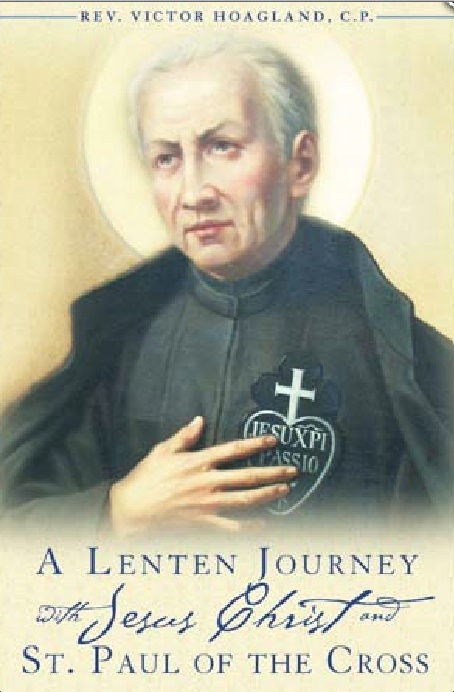
Lent begins next Wednesday, February 14th. Some years ago a publisher asked me to write a book entitled A Lenten Journey with Jesus Christ and St. Paul of the Cross, to be part of a series of reflections on the daily lenten gospels that included thoughts of saints of different religious orders. The book has just been translated into Japanese.

I was initially skeptical about the project. From early on I’ve seen lent as a time to give up something and take up some devotional practice like the Stations of the Cross. Yes, Lent was a journey with Jesus, and I appreciate the daily scriptures that take us through the season with him, but where does a saint come in, even a saint important to me, like St. Paul of the Cross, the 18th century founder of my community the Passionists ?

Working on the book made me see lent differently. First, for St. Paul of the Cross lent was a time to leave the quiet mountain at the edge of the Mediterranean Sea where he lived and prayed and go to work in the Tuscan Maremma, then a swampy, malaria infested region of Italy, overrun with robbers and desperately poor. All through lent, carrying a cross and a bible Paul went from village to village preaching God’s love to people whose lives were often on edge with fear and lost hope.

Lent isn’t a time for turning inward, away from world you live in, Paul reminds me. Lent is a time to go out to the wounded world before you.

Secondly, Paul engaged his world, the world of the Tuscan Maremma, in the light of the gospel, especially the Passion of Jesus Christ. For him that mystery was not limited to a time long ago, when Jesus suffered on a Cross; it was there in the people before him. From village to village, he held up a Cross to anyone who would hear as a mirror of their reality and a pledge of the great mercy of God. Jesus died and rose again.

The Passionists celebrate two feasts immediately before Ash Wednesday to prepare for Lent. Last Friday we celebrated the Commemoration of the Passion of Jesus Christ. Tomorrow, Tuesday before Ash Wednesday, we celebrate the Prayer of Jesus in the Garden. Both feasts come from our missionary founder.

I can see him packing his bags for his lenten journey down the quiet mountain for the villages and towns of the Tuscan Maremma. He must remind himself what he will see. He must pray so he doesn’t forget.

“May the Passion of Jesus Christ be always in our hearts.”

FEBRUARY 15-21: Lent Begins

The final daily readings from Mark’s gospel, on Monday and Tuesday this week, introduce us to the season of Lent on Ash Wednesday. The Pharisees ask for a sign (Mark 8:11-13) The sign Jesus gives is his death and resurrection. The disciples at this point in Mark’s Gospel (Mark 8: 14-21) still do not understand him.

Unfortunately, we’ll only have readings from the story of Noah as the flood descends on the world. We’ll miss the ending of the flood narrative and the story of the Tower of Babel, great passages from the Jewish scriptures, The Genesis narrative deserves a better place in our lectionary.

The Passionist calendar on Tuesday has a memorial of the Prayer of Jesus in the Garden. We must enter this mystery through prayer, as Jesus did. St. Paul of the Cross understood the place of prayer for entering the mysteries of God.

The readings and rites of Ash Wednesday offer basic directions for entering the Lenten season–prayer, fasting and almsgiving. We’re administering ashes differently this year because of the pandemic. The 1st Sunday of Lent recalls the Temptation of Jesus, this year from the Gospel of Mark. This year is something of a desert for us too, isn’t it?

During Lent saints’ feast days are few, not to overshadow the readings and events of the season. Most of those celebrated are optional memorials in the liturgical calendar of the USA. 

FEBRUARY 15 Mon Weekday Gn 4:1-15, 25/Mk 8:11-13 

16 Tue Weekday Gn 6:5-8; 7:1-5, 10/Mk 8:14-21 

Prayer of Jesus in the Garden Heb 5:1-9/Luke 22:39-46

17 Wed Ash Wednesday Jl 2:12-18/2 Cor 5:20—6:2/Mt 6:1-6, 16-18 

18 Thursday after Ash Wednesday Dt 30:15-20/Lk 9:22-25 

19 Fri Friday after Ash Wednesday Is 58:1-9a/Mt 9:14-15

20 Sat Saturday after Ash Wednesday Is 58:9b-14/Lk 5:27-32

21 SUN FIRST SUNDAY OF LENT Gn 9:8-15/1 Pt 3:18-22/Mk 1:12-

6th Sunday b: Reaching to Those Alone

For this week’s homily, please watch the video below.

February 8-14

FEBRUARY 8 Mon Weekday

[Saint Jerome Emiliani; Saint Josephine Bakhita, Virgin]

Gn 1:1-19/Mk 6:53-56 

9 Tue Weekday

Gn 1:20—2:4a/Mk 7:1-13 

10 Wed Saint Scholastica, Virgin Memorial

Gn 2:4b-9, 15-17/Mk 7:14-23 

11 Thu Weekday. [Our Lady of Lourdes]

Gn 2:18-25/Mk 7:24-30 

12 Fri Weekday.  SOLEMN COMMEMORATION OF THE PASSION (Passionists)

Isaiah 15:1-12/ 1 Cor 1:18-25/ John 19:17-30

13 Sat Weekday

Gn 3:9-24/Mk 8:1-10 

14 SUN SIXTH SUNDAY IN ORDINARY TIME

Lv 13:1-2, 44-46/1 Cor 10:31—11:1/Mk 1:40-45

The Book of Genesis is read this week and the weekdays until Ash Wednesday, February 17th. It’s the first book of the Torah, the 5 foundational books of the Jewish scriptures. 

Saint Josephine Bakhita, an abused woman; Saint Scholastica, a sister whose prayers brought on a storm, are saints we celebrate this week.

February 11 is the Feast of Our Lady of Lourdes.  Beginning on this day until July 16,1858, Mary appeared 18 times to the humble Bernadette Soubirous in Lourdes, France.  We have a Lourdes grotto in our garden, so some of us will visit it (weather permitting) on the feast.

We’re drawing near to Lent. The Passionists celebrate the Solemn Commemoration of the Passion this Friday to prepare for it. 

The readings for most of this week can be found at https://bible.usccb.org/readings/calendar

5th Sunday B: Peter’s Mother-in-Law

For this week’s homily please watch the video below.

February 1-7


February 2 is the Feast of the Presentation of Jesus in the Temple, a major feast of our calendar.

February 5 and February 8 we remember two valiant women saints, St. Agatha and St. Josephine Bakhita. Both faced the evils of human trafficking and abuses against women. Timely examples of present evils and God’s grace that works against them.

February 6 we celebrate Saint Paul Miki and Companions, martyrs of the church in Japan. Our calendar reminds us every nation has holy people. That day let’s remember Japan, our church there and its holy people.

Our readings this week continue from chapters 5 and 6 of Mark’s gospel. He begins chapter 5: “They came to the other side of the sea, to the territory of the Gerasenes.” That’s pagan territory. He begins chapter 6: ”He departed from there and came to his native place, accompanied by his disciples.” Two important destinations for us, as well. Our own hometown and the world beyond.

FEBRUARY 1 Mon Weekday. Heb 11:32-40/Mk 5:1-20 

2 Tue The Presentation of the Lord Feast

Mal 3:1-4/Heb 2:14-18/Lk 2:22-40 or 2:22-32

3 Wed Weekday

[Saint Blaise, Bishop and Martyr; Saint Ansgar, Bishop]

Heb 12:4-7, 11-15/Mk 6:1-6 

4 Thu Weekday

Heb 12:18-19, 21-24/Mk 6:7-13 

5 Fri Saint Agatha, Virgin and Martyr Memorial

Heb 13:1-8/Mk 6:14-29 

6 Sat Saint Paul Miki and Companions, Martyrs

Memorial Heb 13:15-17, 20-21/Mk 6:30-34

7 SUN FIFTH SUNDAY IN ORDINARY TIME

Jb 7:1-4, 6-7/1 Cor 9:16-19, 22-23/Mk 1:29-39 


Rejected at Nazareth: Mark 6:1-8

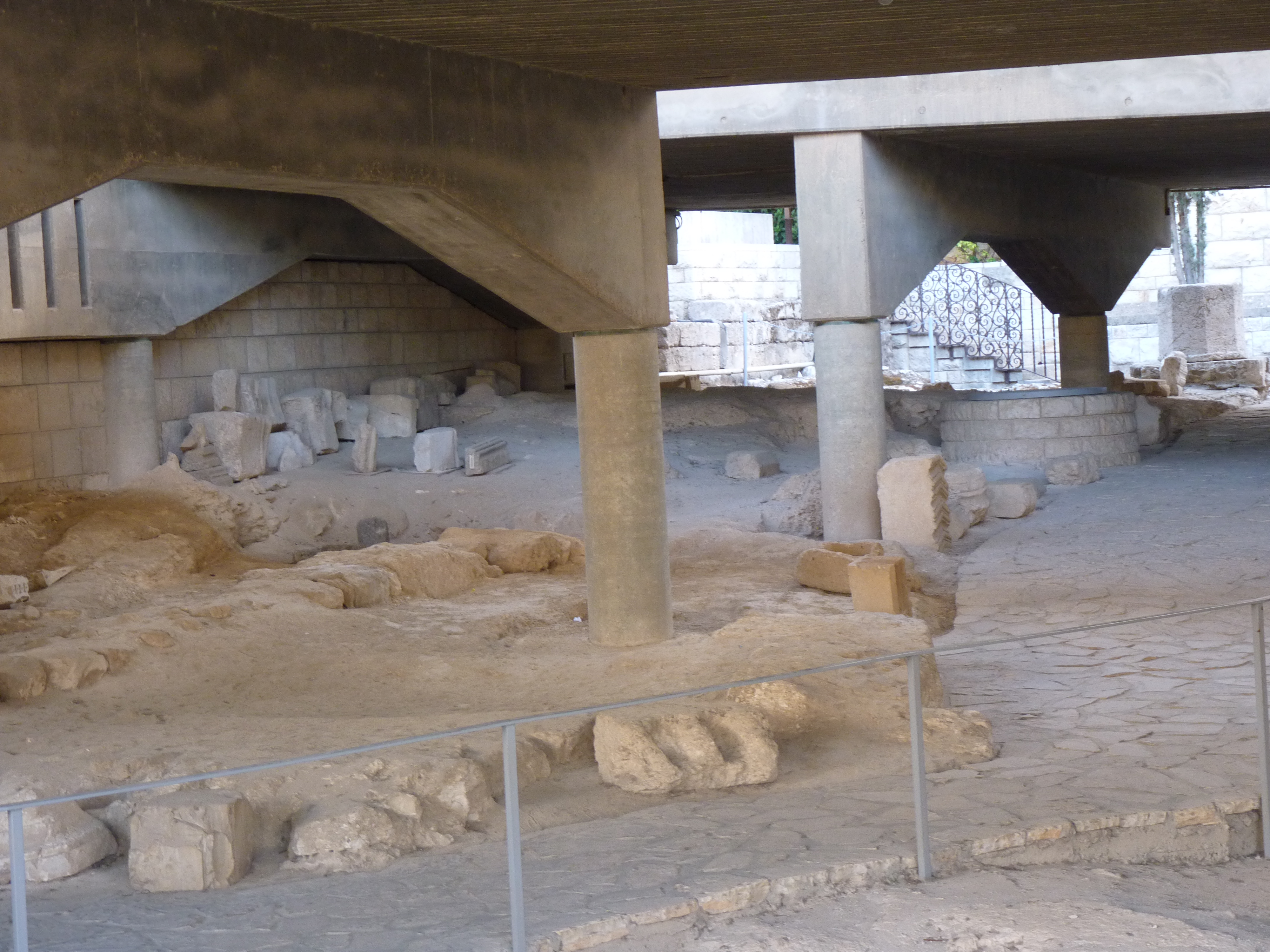
Nazareth: Ruins of the Town

Our gospel reading at Mass today is from the 6th chapter of Mark. “Jesus departed from there and came to his native place accompanied by his disciples.” (Mark 6, 1)

He came to Nazareth from Capernaum where he brought back the daughter of Jairus from the dead and healed the woman who touched his garment. (Mark 5, 21-43) That news surely reached his hometown before he arrived.

When Jesus enters their synagogue on the Sabbath, the people are initially impressed by his teaching and news of “his mighty deeds” but then they recall he’s “‘the carpenter, the son of Mary, and the brother of James and Joses and Judas and Simon? And are not his sisters here with us?’ And they took offense at him.“

“‘A prophet is not without honor except in his native place and among his own kin and in his own house,” Jesus tells them. “So he was not able to perform any mighty deed there, apart from curing a few sick people by laying his hands on them. He was amazed at their lack of faith. “ (Mark 6, 1-6)

Over and over we hear in Mark’s Gospel what we wouldn’t expect: that Jesus was rejected in places where he went. In Capernaum, he drives out an unclean spirit, cures Peter’s mother-in-law and, at the end of the day, the whole town is at his door. {Mark 1, 16-34) But the enthusiasm doesn’t last. Capernaum and other towns in Galilee first receive him, then reject him. (Matthew 11,23)

In pagan territory, over the Sea of Galilee on the east bank, he also meets rejection. He casts out the unclean spirit there, as he did at Capernaum, but when the pigs stampede down into the sea the townspeople ask him to leave. He’s endangering their economy, they say. (Mark 5, 1-20)

Jesus doesn’t have continual path of success in his ministry, or an unbroken parade of achievements, Mark insists. Even his own hometown, his family, don’t receive him well. Final rejection takes place on Calvary in his passion and death, but rejection and misunderstanding meet him all through his public life.

Nazareth has a prominent place in the story of Jesus’ rejection. From his earliest years as a child, he was thought little of there, it seems. Later apocryphal gospels that date from the 2nd century relate miraculous stories about Jesus as a child in Nazareth, but they lack credibility. Jesus did nothing remarkable in his “hidden years.” Some blissful modern portrayals in music and art miss this point. They did not watch his every move with expectation as he grew up.

Jesus “was not able to perform any might deed” in Nazareth; he did not impress or convert many there, as far as we know. He was just “the carpenter’s son.”  Like any other human being, he seemed part of the world in which he lived, someone of the time and place. Subject to Mary and Joseph, hardly noticed, “ he grew in wisdom and age and grace before God and man.” (Luke 2,52)

From his time and through the centuries, Nazareth never seems to have accepted the one we call God’s Son. Historians say early Jewish-Christians after his resurrection were expelled from the town. The Christian presence in Nazareth has been small, even till today.

Nazareth is part of the mystery of the Incarnation. The scandal of the Incarnation.

4th Sunday b: Deliver Us From Evil

For this week’s homily please watch the video below.