Category Archives: Motivational

The Bird of Good Hope

I found this Christmas story called “Aidan of the Cows” in an old book.

A young woman named Aidan had a herd of  choice cows producing the best milk and cheese anywhere in the village of St.Koatsven in a distant land near the shore of a distant sea.

Unfortunately, Aidan fell on bad times because the young man she loved spent her fortune and all her cows had to be sold  to moneylenders.

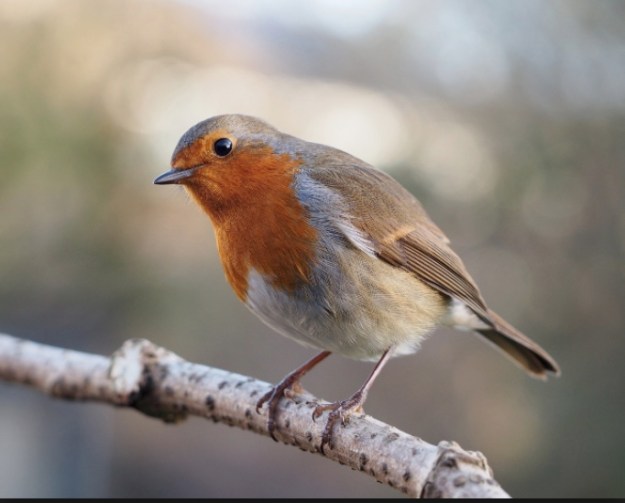
Christmas morning Aidan wandered sadly down a meadow near the sea and  heard a robin singing:

She listened with amazement, with fear and trembling,  with a fearful joy, because the bird sang in human speech.
“I am Robin Redbreast,” he sang, ” the Bird of Good Hope, much admired among birds. For in ancient times when He was toiling up the heavy hill bearing the bitter Cross, I was moved by Heaven to alight on His head, and I plucked from out His bleeding brow one thorn from the cruel crown that bound His temples. One drop of His blood bedewed my throat as I stooped to the blessed task and dyed my breast in a hue of glorious beauty for ever.”

Aidan listened with all the ears of her heart.
“In remembrance of what I did, a blessing was given me—that once  every year, on Christmas-eve, I can give a good gift to the first maiden, good but unhappy, who should put her foot upon the herb Marie, as you, Aidan, have done.”

The girl looked down. Her foot was lightly- pressing the pretty little yellow trefoil plantret, an herb called Marie. “As you have done, Aidan of the Cows,” the robin repeated with a confident chirrup.

Of course, Aidan got her cows back and even got her repentant young man, whom she married, and they live happily ever after. All this took place in a Distant Land where things like this take place.

May the Bird of Good Hope speak to you today.

Unfortunately, we’ve lost this wonderful imaginative tradition that sees divine mysteries allied to the ordinary plants and creatures of creation. Science has taken over our Christian imagination. May we get it back some day; maybe the Christmas mystery so closely allied to a simple stable and donkeys and cattle and camels and straw may help us.

Sustainable Development Goals:2023


In September 2015 world leaders at the United Nations agreed to work for 17 Sustainable Development Goals by 2030. The goals aim to “eliminate poverty, fight inequality and tackle climate change, while ensuring no one is left behind. They recognize that ending poverty must go hand-in-hand with strategies that build economic growth and address a range of social needs including education, health, social protection, and job opportunities, while also tackling climate change and environmental protection.” https://www.un.org/sustainabledevelopment/development-agenda/

The United Nations will convene a summit on the Sustainable Development GoalsDG 18-19 September 2023 at its Headquarters in New York, during the General Assembly high-level week. The goals at this point “are in deep peril. For the first time in decades, development progress is reversing under the combined impacts of climate disasters, conflict, economic downturn and lingering COVID-19 effects. The SDG Summit serves as a rallying cry to recharge momentum, for world leaders to come together, to reflect on where we stand and resolve to do more. It is a moment to recommit to a vision of the future that ensures no one is left behind. Fundamental shifts in commitment, solidarity, financing and action must put us back on track to end poverty, realize just societies and reset a balanced relationship with the natural world.” (UN report)

Cities are still an important focus for Sustainable Development, because today more than half the world’s population lives in cities and that number is expected to reach two-thirds by the year 2060. In cities “the battle for sustainability will be won or lost,” one UN expert remarked. https://www.un.org/sustainabledevelopment/blog/2018/07/un-forum-spotlights-cities-struggle-sustainability-will-won-lost/

The 11th goal of Sustainable Development is “making cities safe, inclusive, resilient and sustainable by 2030. Sustainability differs from city to city, but quality of life means among other things, adequate housing, work and employment, clean water and air, access to public transportation.

Today many countries are at war, building walls and wondering only about themselves. Why not think big? What can we do? The USA ranks 39th in fulfilling the goals. Our church, at least here in the US doesn’t seem active enough. Maybe better said: we’re not active enough. Yesterday’s blog was on the Israelites grumbling in the desert. Could be us.

Here’s the current report on the goals: https://sdgs.un.org/gsdr/gsdr2023

Tenebrae

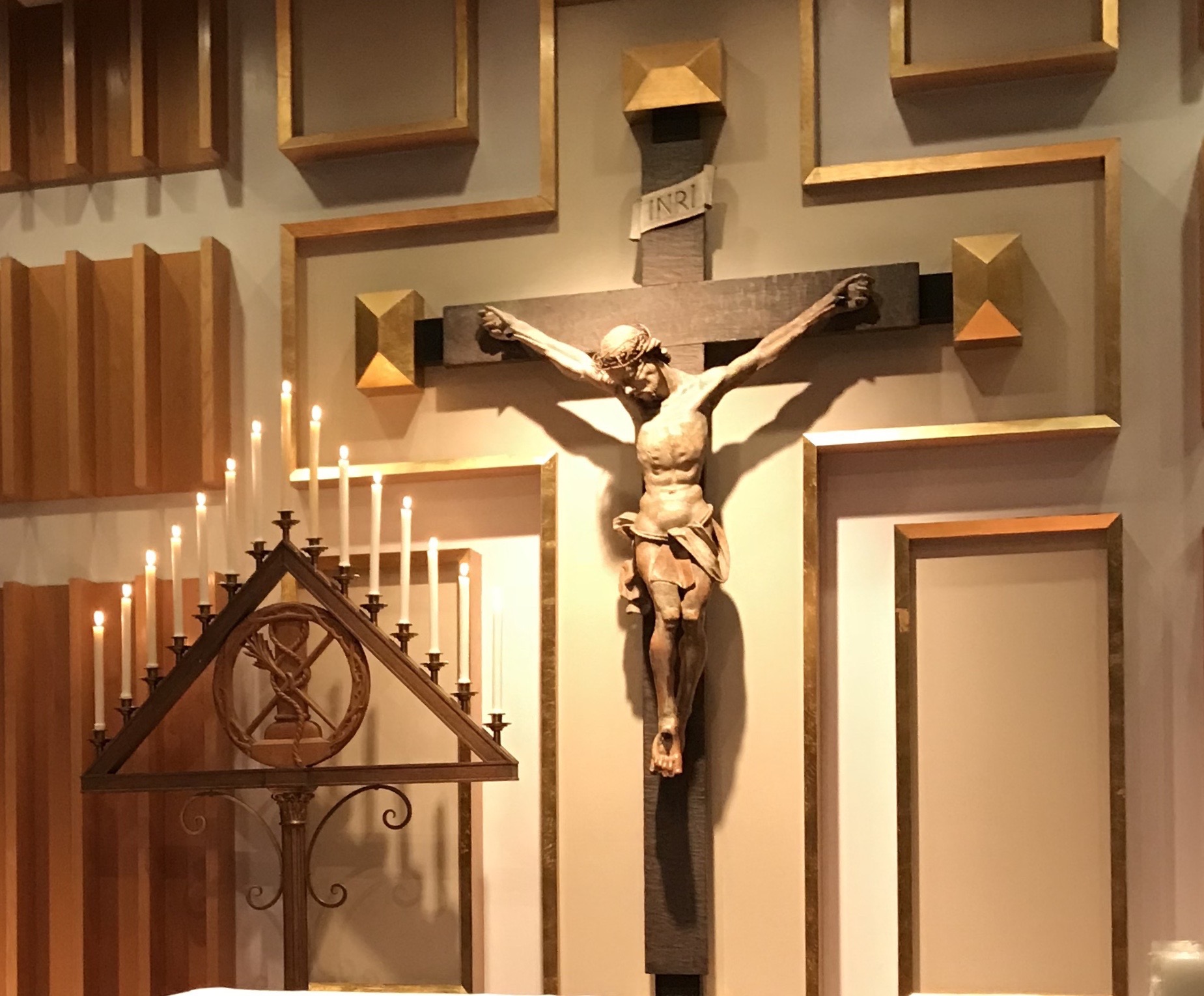
Tenebrae is an ancient Holy Week service celebrated on Holy Thursday, Good Friday and Holy Saturday. Tenebrae, a latin word, means darkness, but the 15 lighted candles at the heart of this service say that darkness never has its way. The 15 candles stand for Jesus, his twelve disciples and the two disciples who leave Jerusalem for Emmaus after Jesus’ death, having lost all hope.

In the Tenebrae service, the candles are extinguished one by one, as the scriptures are read. His disciples leave him, one betrays him. Jesus goes to death alone, but his light remains burning.

Psalm 69 is read at Tenebrae on Holy Thursday:

“I have become an outcast to my brothers,
a stranger to my mother’s sons,
because zeal for your house consumes me,
and the insults of those who blaspheme you fall upon me.”

On Holy Thursday Jesus leaves Bethany with his disciples to celebrate the Passover feast in the evening in an upper room in Jerusalem near the temple. At the table he tells them their faith will be shaken and they will leave him.

The Tenebrae readings tell us  Jesus is our great high priest whose love never fails:

“We have a great high priest who has passed through the heavens, Jesus, the Son of God, let us hold fast to our confession. For we do not have a high priest who is unable to sympathize with our weaknesses, but one who has similarly been tested in every way, yet without sin. So let us confidently approach the throne of grace to receive mercy and to find grace for timely help.”
(Hebrews 4, 14-16)

These days of Holy Week we approach “the throne of grace to receive mercy and find grace for timely help.”

A final reading on Holy Thursday from an Easter homily by St. Melito of Sardis reminds us: “He is the one who brought us out of darkness into light, out of slavery into freedom, out of death into life, and made us a people chosen to be his own. He is the Passover which is our salvation.”

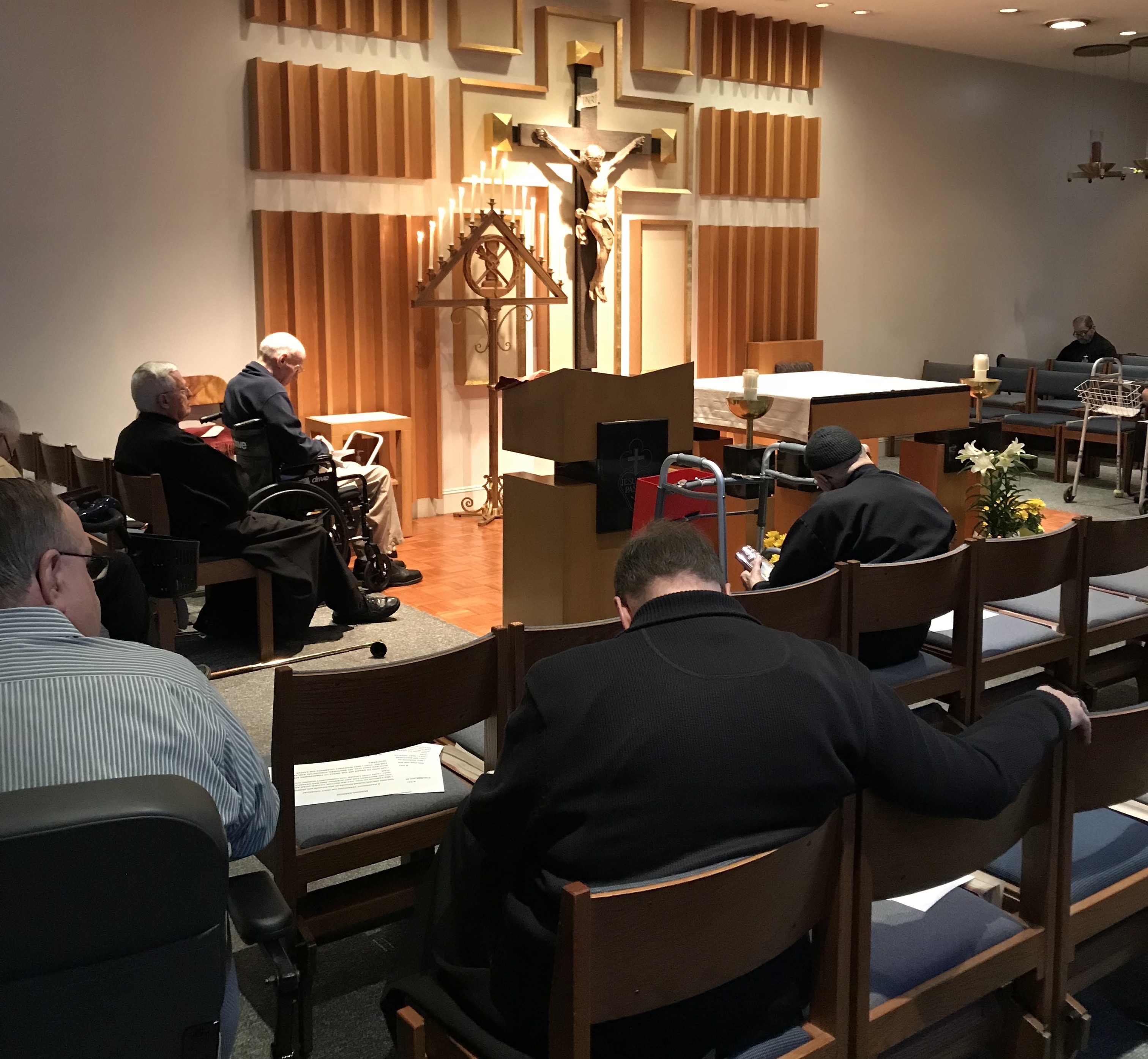
We celebrated Tenebrae  Holy Thursday, Good Friday and Holy Saturday at Immaculate Conception Monastery in Jamaica, New York.

I haven’t found much on the history of Tenebrae, except indications that the prayer began in monastic circles early on. My guess is that it developed from a pastoral need. During the days of Holy Week more people must have come to monasteries to pray as  work was somewhat lessened–unlike our time when we work, feast days or not. Did the monks decide to make some accomodation to their daily office for their visitors?  

The celebration has candles, extinguished as the psalms and other scriptures are read. Everyone understands candles. The psalms are favored sources for understanding the mystery of the passion and resurrection of Jesus in monastic prayer, but they’re not easily appreciated. 

The psalm prayers and captions from St. Augustine and other saints in the church’s morning and evening prayer today are meant to help people appreciate their Christian meaning. 

So can Tenebrae still be a creative prayer form during Holy Week?  I think so. 

Water:Genesis 2

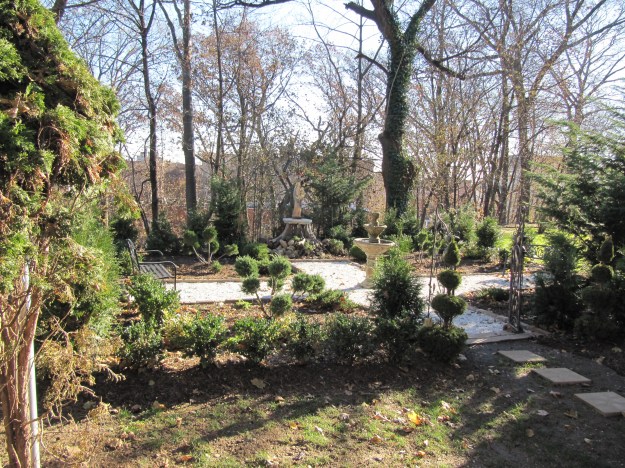
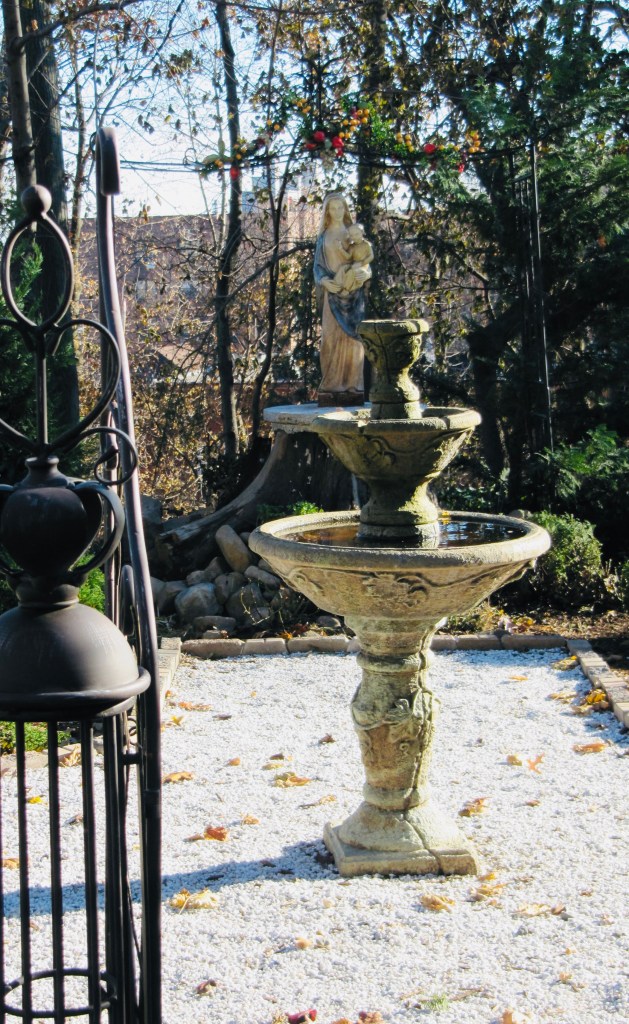
Mary Garden, Passionist Monastery, Jamaica, New York

Today’s reading from Genesis begins the second creation account (Genesis 2,4..) which pays particular attention to the creation of human beings. But it begins with water, welling up from the earth bringing life to the earth and finally the human family.

IMG_2381

Water is at the heart of the garden God provides for Adam and Eve. We have a fountain in the center of our Mary Garden signifying water’s vital role in the garden that was Eden and in the world we live in today.

Pope Francis speaks repeatedly of the role of water in our common home of creation and our need to care for it. Here are some of his reflections from his 2018 World Day of Prayer for the Care of Creation. Notice his strong objection to attempts to privatize water by commercial groups.

“On this World Day of Prayer for the Care of Creation, which the Catholic Church for several years now has celebrated in union with our Orthodox brothers and sisters and with participation of other Churches and Christian communities, I would like to draw attention to the question of water. It is a very simple and precious element, yet access to it is, sadly, for many people difficult if not impossible. Nonetheless, “access to safe drinkable water is a basic and universal human right, since it is essential to human survival and, as such, is a condition for the exercise of other human rights. Our world owes a great social debt towards the poor who lack access to drinking water, because they are denied the right to a life consistent with their inalienable dignity” (ibid., 30).
Water invites us to reflect on our origins. The human body is mostly composed of water, and many civilizations throughout history arose near great rivers that marked their identity. In an evocative image, the beginning of the book of Genesis states that, in the beginning, the spirit of the Creator “swept over the face of the waters (1:2)”.
In considering the fundamental role of water in creation and in human development, I feel the need to give thanks to God for “Sister Water”, simple and useful for life like nothing else on our planet.  Precisely for this reason, care for water sources and water basins is an urgent imperative. Today, more than ever, we need to look beyond immediate concerns (cf. Laudato Si’, 36) and beyond a purely utilitarian view of reality, “in which efficiency and productivity are entirely geared to our individual benefit” (ibid., 159). We urgently need shared projects and concrete gestures that recognize that every privatization of the natural good of water, at the expense of the human right to have access to this good, is unacceptable.
For us Christians, water represents an essential element of purification and of life.  We think immediately of baptism, the sacrament of our rebirth. Water made holy by the Spirit is the matter by which God has given us life and renewed us; it is the blessed source of undying life. For Christians of different confessions, baptism also represents the real and irreplaceable point of departure for experiencing an ever more authentic fraternity on the way to full unity. Jesus, in the course of his mission, promised a water capable of quenching human thirst for ever (cf. Jn 4:14).  He prophesied, “If any one thirst, let him come to me and drink (Jn 7:37). To drink from Jesus means to encounter him personally as the Lord, drawing from his words the meaning of life. May the words he spoke from the cross – “I thirst” (Jn 19:28) – echo constantly in our hearts. The Lord continues to ask that his thirst be quenched; he thirsts for love.  He asks us to give him to drink in all those who thirst in our own day, and to say to them, “I was thirsty and you gave me to drink” (Mt 25:35). To give to drink, in the global village, does not only entail personal gestures of charity, but also concrete choices and a constant commitment to ensure to all the primary good of water.”

https://www.vaticannews.va/en/taglist.cultura-e-societa.Diritti-umani.html

Jesus in Caphernaum

img_0065

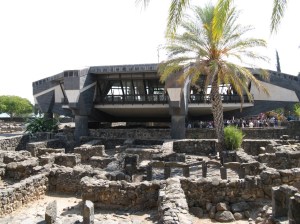
  Near the shore of the Sea of Galilee, in Israel, one can visit the excavations of the ancient town of Capernaum. There the Franciscans have built a lovely hexagonal church over the restored ruins of a circular stone house, with the opening for its front door clearly visible. We pilgrims believe in our hearts of faith that this is the house mentioned in today’s Gospel.

      ” On leaving the synagogue Jesus entered the house of Simon and Andrew with James and John. Simon’s mother-in-law lay sick with a fever. They immediately told Him about her. He approached, grasped her hand, and helped her up. Then the fever left and she waited on them.

     ” When it was evening, after sunset, they brought to Him all who were ill or possessed by demons. The whole town was gathered at the door.” (Mk 1; 29-33).

     We believe that right at that door Jesus healed dozens, if not hundreds, of people (including the paralytic, who was lowered with ropes through the ceiling). He might also have preached the Good News of the Kingdom in front of that humble threshold.

     I cannot help but imagine my Lord residing in my own private room within my heart. I know that there, through the Eucharist or prayer, planned or unexpectedly, He continuously “grasps my hand and helps me up”. He stands at the door of my heart and encourages me to serve, to invite all those around me, in my family and community, who might need some of the hope and healing that He compels me to share. This is what I live for.

     And He asks for more: ” Let us go on to the nearby villages that I may preach there also. For this purpose have I come.” (Mk 1; 38). With His holy companionship I am asked to reach out to those beyond the locust of my comfort zone: to the stranger, the different, the unpleasant one,the hopeless one, the one whose political ideas or interests are so different from mine.

     May He give me the strength and faith, and courage, to try and “grasp” the hand that might reject mine. He has given me so much undeserved grace and love. He has given me the eyes to “see Him”. For what “purpose” has He come to me, if not so that I may be an instrument of His peace and love?   

                                      Orlando Hernandez

The Season of Creation, September 1st -October 5th

1 September 2022, Pope Francis writes:

Dear brothers and sisters!

“Listen to the voice of creation” is the theme and invitation of this year’s Season of Creation.  The ecumenical phase begins on 1 September with the World Day of Prayer for the Care of Creation, and concludes on 4 October with the feast of Saint Francis.  It is a special time for all Christians to pray and work together to care for our common home.  Originally inspired by the Ecumenical Patriarchate of Constantinople, this Season is an opportunity to cultivate our “ecological conversion”, a conversion encouraged by Saint John Paul II as a response to the “ecological catastrophe” predicted by Saint Paul VI back in 1970. 

If we learn how to listen, we can hear in the voice of creation a kind of dissonance.  On the one hand, we can hear a sweet song in praise of our beloved Creator; on the other, an anguished plea, lamenting our mistreatment of this our common home.

The sweet song of creation invites us to practise an “ecological spirituality” (Laudato Si’, 216), attentive to God’s presence in the natural world.  It is a summons to base our spirituality on the “loving awareness that we are not disconnected from the rest of creatures, but joined in a splendid universal communion” (ibid., 220).  For the followers of Christ in particular, this luminous experience reinforces our awareness that “all things came into being through him, and without him not one thing came into being” (Jn 1:3).  In this Season of Creation, we pray once more in the great cathedral of creation, and revel in the “grandiose cosmic choir” made up of countless creatures, all singing the praises of God.  Let us join Saint Francis of Assisi in singing: “Praise be to you, my Lord, for all your creatures” (cf. Canticle of Brother Sun).  Let us join the psalmist in singing, “Let everything that breathes praise the Lord!” (Ps 150:6).

Tragically, that sweet song is accompanied by a cry of anguish.  Or even better: a chorus of cries of anguish.  In the first place, it is our sister, mother earth, who cries out.  Prey to our consumerist excesses, she weeps and implores us to put an end to our abuses and to her destruction.  Then too, there are all those different creatures who cry out.  At the mercy of a “tyrannical anthropocentrism” (Laudato Si’, 68), completely at odds with Christ’s centrality in the work of creation, countless species are dying out and their hymns of praise silenced.  There are also the poorest among us who are crying out.  Exposed to the climate crisis, the poor feel even more gravely the impact of the drought, flooding, hurricanes and heat waves that are becoming ever more intense and frequent.  Likewise, our brothers and sisters of the native peoples are crying out.  As a result of predatory economic interests, their ancestral lands are being invaded and devastated on all sides, “provoking a cry that rises up to heaven” (Querida Amazonia, 9).  Finally, there is the plea of our children.  Feeling menaced by shortsighted and selfish actions, today’s young people are crying out, anxiously asking us adults to do everything possible to prevent, or at least limit, the collapse of our planet’s ecosystems.

Listening to these anguished cries, we must repent and modify our lifestyles and destructive systems.  From its very first pages, the Gospel calls us to “repent, because the kingdom of heaven has come near” (Mt 3:2); it summons us to a new relationship with God, and also entails a different relationship with others and with creation.  The present state of decay of our common home merits the same attention as other global challenges such as grave health crises and wars.  “Living our vocation to be protectors of God’s handiwork is essential to a life of virtue; it is not an optional or a secondary aspect of our Christian experience” (Laudato Si’, 217).

As persons of faith, we feel ourselves even more responsible for acting each day in accordance with the summons to conversion.  Nor is that summons simply individual: “the ecological conversion needed to bring about lasting change is also a community conversion” (ibid., 219).  In this regard, commitment and action, in a spirit of maximum cooperation, is likewise demanded of the community of nations, especially in the meetings of the United Nations devoted to the environmental question.  

The COP27 conference on climate change, to be held in Egypt in November 2022 represents the next opportunity for all to join in promoting the effective implementation of the Paris Agreement.  For this reason too, I recently authorized the Holy See, in the name of and on behalf of the Vatican City State, to accede to the UN Framework Convention on Climate Change and the Paris Agreement, in the hope that the humanity of the 21st century “will be remembered for having generously shouldered its grave responsibilities” (ibid., 65).  The effort to achieve the Paris goal of limiting temperature increase to 1.5°C is quite demanding; it calls for responsible cooperation between all nations in presenting climate plans or more ambitious nationally determined contributions in order to reduce to zero, as quickly as possible, net greenhouse gas emissions.  This means “converting” models of consumption and production, as well as lifestyles, in a way more respectful of creation and the integral human development of all peoples, present and future, a development grounded in responsibility, prudence/precaution, solidarity, concern for the poor and for future generations.  Underlying all this, there is need for a covenant between human beings and the environment, which, for us believers, is a mirror reflecting “the creative love of God, from whom we come and towards whom we are journeying”.  The transition brought about by this conversion cannot neglect the demands of justice, especially for those workers who are most affected by the impact of climate change.

For its part, the COP15 summit on biodiversity, to be held in Canada in December, will offer to the goodwill of governments a significant opportunity to adopt a new multilateral agreement to halt the destruction of ecosystems and the extinction of species.  According to the ancient wisdom of the Jubilee, we need to “remember, return, rest and restore”.  In order to halt the further collapse of biodiversity, our God-given “network of life”, let us pray and urge nations to reach agreement on four key principles: 1. to construct a clear ethical basis for the changes needed to save biodiversity; 2. to combat the loss of biodiversity, to support conservation and cooperation, and to satisfy people’s needs in a sustainable way; 3. to promote global solidarity in light of the fact that biodiversity is a global common good demanding a shared commitment; and 4. to give priority to people in situations of vulnerability, including those most affected by the loss of biodiversity, such as indigenous peoples, the elderly and the young.

Let me repeat: “In the name of God, I ask the great extractive industries – mining, oil, forestry, real estate, agribusiness – to stop destroying forests, wetlands, and mountains, to stop polluting rivers and seas, to stop poisoning food and people”.

How can we fail to acknowledge the existence of an “ecological debt” (Laudato Si’, 51) incurred by the economically richer countries, who have polluted most in the last two centuries; this demands that they take more ambitious steps at COP27 and at COP15.  In addition to determined action within their borders, this means keeping their promises of financial and technical support for the economically poorer nations, which are already experiencing most of the burden of the climate crisis.  It would also be fitting to give urgent consideration to further financial support for the conservation of biodiversity.  Even the economically less wealthy countries have significant albeit “diversified” responsibilities (cf. ibid., 52) in this regard; delay on the part of others can never justify our own failure to act.  It is necessary for all of us to act decisively.  For we are reaching “a breaking point” (cf. ibid., 61).

During this Season of Creation, let us pray that COP27 and COP15 can serve to unite the human family (cf. ibid., 13) in effectively confronting the double crisis of climate change and the reduction of biodiversity.  Mindful of the exhortation of Saint Paul to rejoice with those who rejoice and to weep with those who weep (cf. Rom 12:15), let us weep with the anguished plea of creation.  Let us hear that plea and respond to it with deeds, so that we and future generations can continue to rejoice in creation’s sweet song of life and hope.

Rome, Saint John Lateran, 16 July 2022,  Memorial of Our Lady of Mount Carmel
Ezekiel, Words for Hard Times

jewsinexile
Jewish captives led to Babylon, 6th century BC


We begin reading the Prophet Ezekiel weekdays at Mass. He was a priest brought captive to Babylon along with King Johoiachin and members of the Jewish elite after the Babylonians crushed the Jewish revolt  in 597 BC. He could be one of those pictured above, on their way to exile .

The Jewish elite taken to Babylon were convinced God would never permit Jerusalem to be destroyed. When it was destroyed, they were just as convinced it would be rebuilt quickly. You’re wrong in both cases, Ezekiel tells them. Jerusalem will be destroyed and it won’t be God’s fault– it’s yours. You are unfaithful leaders.

“Thus says the Lord GOD: Woe to the shepherds of Israel
who have been pasturing themselves!
Should not shepherds, rather, pasture sheep?
You have fed off their milk, worn their wool,
and slaughtered the fatlings,
but the sheep you have not pastured.
You did not strengthen the weak nor heal the sick
nor bind up the injured.”

Jerusalem won’t be restored by your power either, Ezekiel says. It will take time, and it will come in God’s time, not yours, by God’s power, not yours. In the meantime, ask God to take away your hearts of stone and give you natural hearts.

The Jewish leaders didn’t like Ezekiel’s message:

“Son of man, listen! The house of Israel is saying, ‘The vision he sees is a long time off; he prophesies for distant times!’ Say to them therefore: Thus says the Lord GOD: None of my words shall be delayed any longer. Whatever I say is final; it shall be done.”

Hard times lead to impatience, to blaming others, to thinking God is absent, but hard times are blessed times, Ezekiel says, when God is more present than ever. God will save his people.

“Thus says the Lord GOD,”

I swear I am coming… I will claim my sheep…I will save my sheep…
I myself will look after and tend my sheep.” (Ezekiel 34,1-11)

Good words for us today?

Discovering Him

 I retired about fourteen years ago. My husband, Orlando and I had great plans for our retirement. We wanted to travel, to relax, to have fun! But that wasn’t to be. God had other plans for us! Orlando’s parents in Florida got very ill and we were needed there. We became snowbirds , 6 months here and 6 months in Florida. Around that same time Orlando and I baptized our fourth grandchild, Isabel in a church if Florida. The day of the baptism our son and his wife had a surprise for us. After the baptism we were able to renew our marriage vows in front of our Lord Jesus Christ. For us that was very special because we had not gotten married in the church, we had been married about 25 years but at the court. It didn’t matter to us back then. We had spent over 40 years without God, at that time a church wedding hadn’t been important to us. Neither one of us had come from a religious family. When the priest started blessing us and our rings something happened to us in that ceremony. We were crying and laughing both at the same time. Grace was being poured on us from above!

    After that experience Orlando started convincing me to go to church on Sundays. He had been caught by the fever! Jesus had gotten his hands on him. Not so for me! Going to mass was a burden. Many times I would leave the church worse than how I had gone in. It was boring and ritualistic. But yet I wanted to make Orlando happy, so I would go. For some reason around that time I started having the urge to get married in front of God. I loved Orlando so much that I felt that maybe this would make our marriage even stronger.

    I had never been confirmed. My parents weren’t very religious. In Cuba, where I come from, I got baptized and had my First Communion but after that church did not come back into my life. Here in the U. S. life was hard. We were refugees . The Catholic Church was a great help but it didn’t inspire us to go back to it.

Well you can see what my problem was. I tried to marry Orlando in the Catholic Church but then I found out I needed to be confirmed. Was it worth it? Did I really need to marry Orlando in front of God? How was I going to work it out? I was here in NY for 6 months and in Florida the next 6 months. How would it work out with RCIA? You know now I realize that God had a plan for us as a married couple. Things worked out between our local parish here, American Martyrs Church in Bayside. NY,  and the local church in Hallandale Beach, FL where we were renting.

     In 2011 I was finishing my RCIA in St Matthew’s Church in Florida. We were told there was going to be a four day Mission at the church. We weren’t sure what that was but yet we were intrigued by what it might be. The first day we were there a priest all dressed in black with a giant heart on the left side of his chest, a giant rosary hanging from this thick belt, and a giant crucifix in his hand came to the pulpit and introduced himself, ” I am Fr. Vincent Youngberg and I am an alcoholic. ” That was a great way to start! He was a sinner just like me! During the next few days with his story and his preaching he slowly brought me closer to understanding why I was doing what I was doing. He led me to believe that Jesus, that God, wanted a relationship with me. He helped me to believe that he did exist!

The last day of the Mission Fr Vincent led us in a meditation. He said:

    “Everyone please close your eyes. Now imagine yourself sitting on the sand. You’re watching the ocean, relaxing under the warm sun. From the corner of your eye you notice a person walking towards you. You can’t see him well yet, but he looks like he might be walking straight for you. He is getting closer and closer and your heart is beating faster and faster because you can’t believe your eyes. Suddenly you realize that the person you saw in the distance that now is so close to you is no other than our Lord Jesus Christ. He comes close to you extends his hand towards you and gets you to stand up…..”

    Fr. Vincent continued but I was no longer listening. I was face to face with Jesus! I couldn’t believe what was happening to me. I was crying and laughing. I couldn’t find words to say, but I didn’t have to. He took me in his arms and said, ” Berta, you have no idea how much I love you. I have been wanting you to open the door to me for a long time. I am so happy that you are in my arms now. I will never let you go!” I had melted into his body. The hug he was giving me was delicious! Life was perfect. But then I became aware of Fr. Youngberg’s voice again bringing us back. I didn’t want to leave my Jesus, now that I had met him. But it was time and we had to part. I was back in the church crying like a little girl. They weren’t tears of sadness,no , they were tears of joy! Now I understood! I had been looking for him all my life, but didn’t know it. I knew for many years that there was something missing in my life and on that beautiful Lenten day I found it . God put Fr. Vincent Youngberg in my path. He was the one that led me through the whole process. My husband, my son and his wife, Isabel my granddaughter, the RCIA teachers and volunteers, the priests with their homilies, the new friends I had met in church, they all had a hand in leading me to meet Him!It was all designed by Him!

    In 2011 I became confirmed  during the Easter Vigil at American Martyrs Church. That summer Orlando and I convalidated our marriage on August 7, 2011 in front of our dear God, our family and our friends. In September 2011 I had my first retreat at Bishop Molloy Retreat House in Jamaica, Queens. I had found out that Fr. Vincent was a Passionist priest and his order had a Monastery and a Retreat House 15 minutes from my house! Orlando and I felt the need to go to the Holy Land and in November 2011 we joined a group from Texas and ended up with a Franciscan guide and our beautiful Lord Jesus leading us !

    All I can say about my new life is ” Thank You Jesus for your Love, and the blessings and grace you have brought into our lives! ” “Thank you for the beautiful Passionist priests that are now our friends, thank uou for the prayer group we are part of, thank you for my new friends, thank you for knowing that I am never alone! I love you my Triune God, without you I am nothing!!!!!”

Berta Hernandez

 The Touch of Love: Mark 8:22-26

In this Wednesday’s Gospel (Mk 8: 22-26), Jesus heals a blind man at the town of Bethsaida. This healing does not happen right away:

        ” People brought to Him a blind man and begged Jesus to touch him. He took the blind man by the hand and led him outside the village. Putting spittle on his eyes He laid His hands  on the man and asked, ‘ Do you see anything?’ Looking up the man replied, ‘ I see people looking like trees and walking.’ Then He laid hands on the man’s eyes a second time and he saw clearly; his sight was restored and he could see everything distinctly.”

    This passage has been interpreted as an example of how the healing that comes from God happens gradually, in steps. We must be trusting and patient.

     In line with this, I see in this Gospel the invitation of Love toward my conversion. I was blind to the marvelous reality of a loving God in my life. By example and prayer, good people ( like my son Frank) brought me to Him. He took me by the hand and led me outside of my sphere (my village) to the intimate place where only He and I interact. He touched me. He questioned me (“Do you believe?”). He enabled me to see, at least a little bit, as if in a “mirror dimly” ( 1 Cor 13:6). He touches me again and again so that I can see Him and ” see everything distinctly”. In a sense I am no longer blind. I can begin to, in the words of Walter Burghardt, take “a long loving look at the real”.

    And so this passage also reminds me of His wonderful gift of prayer. He takes me by the hand to the isolated place “the private room” , and many times I cannot see Him in this darkness. Then He works His miracle and opens the eyes of my soul to His presence.

    Like Mary Magdalene, I cry within the dark, stony, tomb of my distress, my guilt, my doubt, loneliness and despair. Suddenly He calls to me: ” Woman, why are you weeping? For whom are you looking?”. I look out into the blinding light. I can barely see the hazy human silhouette standing there outside. I cannot recognize Him. Then He calls me by name. I realize this is the Friend who has by now healed me, accompanied me, taught and loved me for so long. In some strange, deep, indescribable way I can see Him! He is my Lord and my God!

   Thank You, Jesus, my Beloved.

       Orlando Hernandez


The Calendar on the Kitchen Door


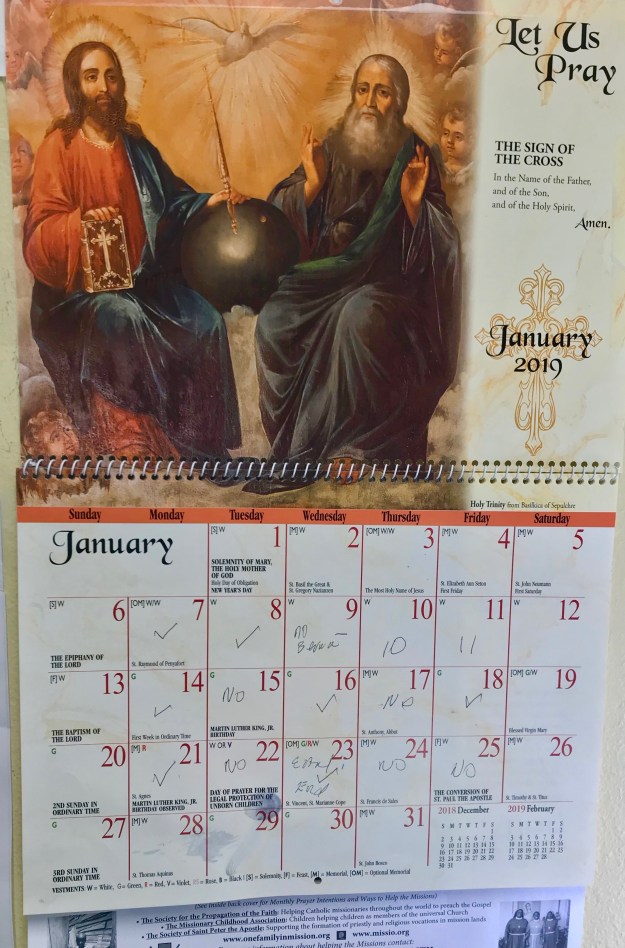
About this time every year when I was a boy, my mother would put up on the kitchen door the calendar we got from church. She marked down the anniversaries of family deaths and birthdays and other celebrations coming along, and she added other dates as the days passed. The pictures on the calendar interested me most then. When we put up the calendar, we were ready for the days ahead.

The calendar’s still a good way to get ready for the days ahead. “Teach us to number our days aright, that we may gain wisdom of heart,” one of the psalms says.

Our calendars today may be on our computers instead of the kitchen door. They’ve also changed in a number of ways since the Second Vatican Council. For one thing, our church calendars today list the scripture readings read at Mass for the weekdays and Sundays throughout the year. They open the treasures of our faith for us.

Our calendars alert us to the main feasts and seasons, Christmas and Easter, advent and lent, celebrated by the whole church throughout the year. The general calendar also lists the days for celebrating saints honored the world over, such as Mary, the Mother of Jesus, the apostles, St. Francis of Assisi, St. Theresa of Avila and others.

The council left countries and regions to decide on some celebrations of their own. In our particular calendar here in the United States, for example, we celebrate Thanksgiving Day and American saints like St. Elizabeth Seton, St. Elizabeth Cabrini and St. John Neumann.

The calendar’s still a good way to keep our lives in order, not only doctors’ and social appointments, birthdays and anniversaries, but our spiritual lives as well. They go together. We’re meant to live from day to day, from feast to feast, and be formed by the mysteries of Christ, his saints and the scriptures.

Every Sunday evening I try to publish the week’s calendar on my blog: http://www.vhoagland.com

It’s my kitchen door. Through the week I reflect on the feasts and seasons and saints on that blog. The calendar’s a teacher helping us to “number our days aright.” It’s our daily catechism.