Category Archives: Inspiration

December 18: Joseph, Son of David

Nativity

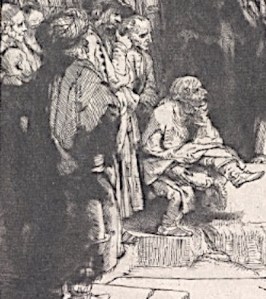
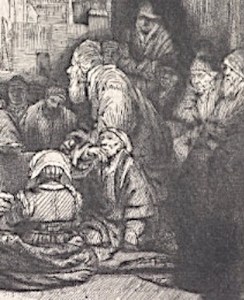
In the gospel of Matthew  Joseph, the husband of Mary, has an important role in Jesus’ birth and early years. Mary points to him to tell the story of the birth of Jesus in the illustration above.

Matthew’s gospel calls Joseph  a just man, someone who listens to God rather than to himself. He does God’s will. He’s a carpenter, the gospels say, certainly not someone privileged – but he’s a “son of David” from the royal family who gives the world a Messiah.

During their betrothal, which in Jewish tradition was more than the modern engagement we know, Joseph finds that Mary is pregnant. A just man, he struggles to find a way to divorce her quietly when, in a dream, an angel of God tells him not to be afraid to take Mary as his wife.

Here is the key part of the angel’s message: “For it is through the Holy Spirit 
that this child has been conceived in her. She will bear a son and you are to name him Jesus, because he will save his people from their sins.”

Like Mary, Joseph believes God’s message. Like Mary, he sees more than human eyes and a human mind sees. “When Joseph awoke, he did as the angel of the Lord had commanded him and took his wife into his home.” He believed what we say in our creed: “(Jesus) was conceived by the Holy Spirit, born of the virgin Mary.” Jesus became one of us, God was with us.

Artists early on pictured Joseph with his head in his hands, listening in sleep to the angel’s message. In a dream later he heard the angel telling him to take the child and his mother to Egypt to escape Herod, the king. He was a man of great faith.

The medieval artist who painted the picture above has Mary pointing to Joseph as a witness to whose Child this is who’s’ born in a stable. They are the first to believe and they will care for Jesus with all the love and care they can give him.

Joseph has his hand on his head.. The angel spoke to him in dreams. Faith is like a dream where God speaks to us in another way.

O Leader of the House of Israel,
giver of the Law to Moses on Sinai:
come to rescue us with your mighty power!

The gospels for the remaining days until Christmas are from St. Luke, recalling the angel’s visit to Mary and her relative Zechariah. Matthew’s gospel will be read again after the birth of the Child, when Joseph will be warned of danger and takes the Child and Mary to Egypt and then to Nazareth..

Wednesday, 2nd Week of Advent

Isaiah


In yesterday’s first reading for Advent, Second Isaiah repeats to the exiles in Babylon words he hears from God: “Comfort, give comfort to my people, says your God.” In today’s gospel reading Jesus says:“Come to me, all you who labor and are burdened, and I will refresh you.” A favorite reading for so many of us.

Notice Jesus speaks to the “crowds” in Matthew’s gospel, not just to the disciples who know him, or the Jewish Christian church Matthew wrote for at the end of the first century.  God’s love and God’s promises reach far beyond the circle of disciples or the church.  Jesus Christ came to refresh the world that labors and is burdened, even if it doesn’t know him.

 Second Isaiah in today’s readings appeals to Jewish exiles to remember the eternal God, creator of the ends of the earth. Do not to abandon God for the Babylon’s gods who are too small, he tells them and us all.  

“To whom can you liken me as an equal?
says the Holy One…
Do you not know
or have you not heard?
The LORD is the eternal God,
creator of the ends of the earth.
He does not faint nor grow weary,
and his knowledge is beyond scrutiny.”

God still holds us in his hands, sustains and comforts us, even if we do not know him or seem to care. God’s Spirit does not faint or grow weary

Feast of The Immaculate Conception

Why does Mary, the Mother of Jesus, have such a big place in our church? The words of the angel in Luke’s gospel, words we often repeat in prayer, are an answer: “Hail, full of grace, the Lord is with you.”

Mary is filled with God’s grace, gifted with unique spiritual gifts from her conception, because she was to be the mother of Jesus Christ, God’s only Son.

She would be the “resting place of the Trinity,” and would give birth to, nourish, guide and accompany Jesus in his life and mission in this world. To fulfill that unique role she needed a unique gift. She would be free from original sin that clouds human understanding and slows the way we believe God and his plan for us.

“How slow you are to believe” Jesus said to the two disciples on the way to Emmaus. Jesus made that complaint repeatedly as he preached the coming of God’s kingdom. “How slow you are to believe!” “What little faith you have!” “Do you still not understand!” Human slowness to believe didn’t end in gospel times. We have it too.

Mary was freed from that slowness to believe. “Be it done to me according to your word,” she immediately says to the angel. Yet, her acceptance of God’s will does not mean she understood everything that happened to her. “How can this be?” she asks the angel about the conception of the child. “The Holy Spirit will come upon you.”  But the angel’s answer seems so incomplete, so mysterious.

Surely, Mary would have liked to know more, but the angel leaves, never to return. There’s no daily message, no new briefing or renewed assurance by heavenly messengers. The years go by in Nazareth as the Child grows in wisdom and age and grace, but they’re years of silence. Like the rest of us, Mary waits and wonders and keeps these things in her heart.

That’s why we welcome her as a believer walking with us. She is an assuring presence who calls us to believe as she did, without knowing all. She does not pretend to be an expert with all the answers. She has no special secrets she alone knows. “Do whatever he tells you,” is her likely advice as we ponder the mysteries of her Son.

The feast of the Immaculate Conception is celebrated 9 months before the feast of the Birth of Mary (September 8). The feast  was extended to the universal Church by Pope Clement XI in 1708.

 Pope Pius IX solemnly proclaimed the Dogma of the Immaculate Conception in 1854: “We declare, pronounce, and define that the doctrine which holds that the most Blessed Virgin Mary, in the first instance of her conception, by a singular grace and privilege granted by Almighty God, in view of the merits of Jesus Christ, the Savior of the human race, was preserved free from all stain of original sin” (Ineffabilis Deus, 1854)

Do Whatever He Tells you

Advent: Tuesday, 1st Week


Edward Hicks, Peaceable Kingdom

“The calf and the young lion shall browse together, with a little child to guide them. A shoot shall sprout from the stump of Jesse, and from his roots a bud shall blossom.” (Isaiah 11,1)

A child stands atop Isaiah’s peaceable kingdom in Tuesday’s first reading at Mass. Edward Hicks, the Quaker painter, made over 100 copies of this scene from Isaiah, carefully indicating in the far left the peace treaty between William Penn and the native peoples of Pennsylvania in colonial America.

It takes a child to believe the astounding promises Isaiah makes. Adults, hardened by the experience of life, struggle with the prophet’s words. That’s why Advent invites us to become children, not physically, of course, but spiritually.

Become like little children. That’s what Jesus told his followers,  and he praised the childlike:

“I give you praise, Father, Lord of heaven and earth, for although you have hidden these things from the wise and the learned, you have revealed them to the childlike.” Luke 10

Only the childlike believe in great promises.

What does being “childlike” mean? Here’s what St. Leo the Great said about Jesus’s teaching on spiritual childhood: To be a child means to be “free from crippling anxiety, to be forgetful of injuries, to be sociable and to keep wondering at all things.”

A little child in its mother’s arms has no worries. It’s a good place to be, free from anxieties and a mother’s voice promising all will be well. Advent brings that grace back  to us; a grace we can lose so easily.

Jesus experienced that grace in Mary’s arms. Herod’s soldiers, like Isaiah’s Assyrian armies, were on their way. It’s a poor place where he’s born, no room in the inn, but the Child in his mother’s arms has no fear. All will be well.

Injuries come. The world can turn hostile. The promises may seem far away, but from infancy to his death, Jesus knew he was a child of God, his Father, in God’s caring hands and destined for God’s kingdom.

Help us, Lord to become like children

Saving Santa Claus

Santa came to town for Macy’s annual Thanksgiving Parade. From the parade he went into the store for Black Friday and he will be there for the rest of the days till Christmas.

More than a salesman, Santa’s a saint– Saint Nicholas– and he reminds us Christmas is for giving rather than getting. His quiet giving mirrors God’s love shown in Jesus Christ.

Telling his story is one of the ways we can save Santa Claus from being captured by Macys and Walmart and all the rest. First, take a look at our version for little children, which has over 200,000 views on YouTube. How about telling that story to a real little kid you know? Wouldn’t you rather they know someone like him than the guy in the store in a red suit?

Then, you might want to go on to our  modest contribution for bigger children– like us:

The Maccabees: Restoring the Temple

This week’s Mass readings from the 1st Book of Maccabees tell the story of the re-dedication of the temple of Jerusalem three years after its profanation  by Antiochus Epiphanes.  About the year 167 BC,  Jews under Judas Maccabeus took up the weapons of their time, re-conquered Jerusalem and restored the temple, the heart of their religion.

The first reading on Friday describes the rededication of the temple to its former glory. The Jews continue to celebrate it in the feast of Hannukah. (1 Maccabees 4,36-61}

The New Testament writers, certainly aware of this historic event, recall Jesus cleansing the temple.(Friday’s gospel) Entering Jerusalem after his journey from Galilee, “ Jesus went into the temple area and proceeded to drive out those who were selling things, saying to them, ‘It is written, My house shall be a house of prayer, but you have made it a den of thieves.’” Then, “every day he was teaching in the temple area” until he was arrested and put to death. (Luke 19,45-48)

Cleansing the temple was a symbolic act. By it,  Jesus signified  he is the presence of God, the Word made flesh, the new temple of God.

Luke says Jesus taught in the temple “every day.” Even from his early days he taught in the temple, Luke writes. As our eternal high priest, he teaches us every day and brings us every day to his Father and our Father.

Jesus is the indestructible temple, the indestructible Presence of God among us. Witnesses at his trial before he died were half right when they said he spoke of destroying the temple. He was speaking of the temple of his own body. Death seemed to destroy him, but he was raised up bodily on the third day.We share in this mystery as “members of his body.”

Still, as sacramental people we need places like temples and churches to come together, to pray and to meet God who “dwells among us.” We need churches and holy places and instinctively revolt seeing them go, or not frequented.

Old stories, like the story of the Maccabees, carry lessons and raise questions. The Maccabees took the military option to restore and pursue the Kingdom. What are our military options today when we have atomic weapons, drones, cryptoweaponry at our disposal? New laws? Persuasion?

Old stories raise questions.

Mother Cabrini: November 13

Mulberry Street, New York City, ca.1900

From 1880 to 1920 more than 4 million Italian immigrants came to the United States, mostly from rural southern Italy. Many were poor peasants escaping the chaotic political situation and widespread poverty of a recently united Italian peninsula.

Almost all the new immigrants came through Ellis Island; many settled in the crowded tenements of the New York region, where men found work in the subways, canals and buildings of the growing city. The women often worked in the sweatshops that multiplied in New York at the time. Almost half of the 146 workers killed as fire consumed the Triangle Shirtwaist Factory in 1911, were Italian women.

Over time, the immigrants moved elsewhere and became prominent in  American society, but at first large numbers suffered from the over-crowding, harsh conditions, discrimination and cultural shock they met in cities like New York. Many returned to Italy with stories of the contradictions and injustices lurking in “the American dream.”

Mother Maria Francesca Cabrini

Mother Maria Francesca Cabrini (1850-19170), founder of the Missionaries of the Sacred Heart, an order of women missionaries , came to America in 1889 at the urging of Pope Leo XIII to serve the underserved poor. Her work is succinctly described on the website of the Cabrini Mission Foundation. and in the movie Cabrini.

She proceeded to found schools, orphanages, hospitals and social services institutions to serve the needs of immigrants in the United States and other parts of the world. Despite poor health and frailty, Mother Cabrini crossed the ocean 25 times during 29 years of missionary work, and with her sisters founded 67 institutions in nine countries on three continents – one for each year of her life.

Mother Cabrini was a collaborator from the start of her missionary activity. She was a woman of her time, yet beyond her time. Her message – “all things are possible with God” – is as alive today as it was 110 years ago. Mother Cabrini lived and worked among the people, poor and rich alike, using whatever means were provided to support her works. She was a progressive, strategic visionary, willing to take risks, adaptable to change, and responsive to every opportunity that arose to help others. In recognition of her extraordinary service to immigrants, Mother Cabrini was canonized in 1946 as the “first American saint,” and was officially declared the Universal Patroness of Immigrants by the Vatican in 1950.”

Be good to have leaders like her today in the church, as well as in society, wouldn’t it? “… a progressive, strategic visionary, willing to take risks, adaptable to change, and responsive to every opportunity that arose to help others.”

Her feastday is November 13th. “Mother Cabrini, pray for us.”

Wisdom

img_0325

Everyday this week, the 32nd week of the year, we’re reading at Mass from the Book of Wisdom. the Bible’s wisdom literature –Proverbs, Job, Ecclesiastes, Wisdom, Sirach– is not primarily spiritual wisdom or the high-level learning of graduate school. It’s  wisdom from the school of everyday.

Jesus’ parable of the wise and foolish virgins from Matthew’s gospel is an example.  Why didn’t the foolish virgins bring enough oil to the wedding like the wise virgins did? They didn’t learn from their own experience. Simple as that. (Matthew 24, 1-13)

Learn from your own life experience and the experience of others, the wisdom traditions says.  Yes, God’s help is there, but God expects us to help ourselves, and we have to do that everyday.

“The beginning of wisdom is: get wisdom; whatever else you get, get understanding.” (Proverbs 4,7)

Keep learning, from childhood to old age; it’s imperative. Search for wisdom every day, whether the day is easy or dark, whether there’s joy or suffering. (Book of Job)

The wisdom literature recognizes the search for wisdom is hard. We get fixated on things like success, careers, money, pleasure, health, politics, but the school of life is bigger than any of these.

The wisdom literature recognizes too that we’re drawn to a greater reality. “Fear of the Lord is the beginning of wisdom.” We’re made to wonder before what’s greater than we are. We’re not satisfied with small things. “Our hearts are restless, till they rest in you.”

“Resplendent and unfading is Wisdom, and she is readily perceived by those who love her, and found by those who seek her.

She hastens to make herself known to those who desire her; one who watches for her at dawn will not be disappointed, for she will be found sitting at the gate.” (Wisdom 6, 12-14)

All Souls Day: November 2

All Saints. Fra Angelico

All Saints Day and All Souls Day belong together. On the Feast of All Saints we thank God for calling all to holiness as his children. All of us are called to be numbered among the saints of God.

On All Souls Day we remember that we are all weak and sinful and depend on the mercy of God.  We can lose hope in our call, and so on All Souls Day we ask God’s mercy for ourselves and those who have gone before us in death.

Listen to our prayer at Mass:

“Remember, also, our brothers and sisters, who have fallen asleep in the hope of the resurrection, and all who have died in your mercy. Welcome them into the light of your face. And have mercy on us all, we pray, that with the Blessed Virgin Mary, with the blessed Apostles and all the saints who have pleased you throughout the ages, we may be coheirs to eternal life and may praise and glory you, through your Son, Jesus Christ.( 2nd Eucharisitic Prayer)

We pray for all who hope in Christ’s resurrection, and also for “all who have died in your mercy.” All Souls is a day we pray for all who have died.

We begin our prayer on All Souls Day with St. Paul’s words to the Thessalonians and Corinthians, affirming God’s promise of eternal life to all humanity:

“Just as Jesus died and has risen again, so through Jesus God will bring with him those who have fallen asleep and as in Adam all die so also in Christ all will be brought to life.”

At the Communion of the Mass, we hear the words of Jesus:

“I am the resurrection and the life, says the Lord. Whoever believes in me even though he die will live and anyone who believes in me will never die.”

Yet death saddens us; it can weaken our faith. Praying for the dead strengthens our faith and benefits those who have gone before us. In our opening prayer we ask for stronger faith.

Listen kindly to our prayers, O Lord,
and, as our faith in your Son
raised from the dead is deepened,
so may our hope of resurrection for your departed servants
also find new strength.
Through our Lord Jesus Christ, your Son, who lives and reigns with you and the Holy Spirit, world without end. Amen.

“It’s a holy and wholesome thought to pray for the living and the dead.” Eternal rest grant to them, O Lord, and let perpetual light shine upon them.

Blessed Isidore de Loor

isidore-de-loor

Since their founding in the mid 1800s, the Passionists have given the church a variety of saints and blessed. St. Paul of the Cross, a preacher and mystic, St. Vincent Strambi, a holy bishop during the Napoleanic Suppression, Blessed Dominic Barberi, a fervent missionary to England, St. Gabriel Possenti a young Italian saint who died in his early 20s, Blessed Eugene Bossilkov, a martyr bishop under the Communists in Bulgaria in the 1950s.

October 6th we honor Blessed Isidore de Loor 1881-1916, from the Flemish part of Belgium, who entered the Passionists as a lay brother at 26.

The opening prayer for a feast usually indicates why a saint or blessed is honored.

Lord God,
in Blessed Isidore’s spirit of humility and work
you have given us a life hidden in the shadow of the Cross.
Grant that our daily work be a praise to you
and a loving service to our brothers and sisters.
We ask this through Christ our Lord.

A life hidden in the shadow of the Cross. That’s Isidore. He was a humble, hard worker all his life. . He spent the first 26 years of his life working the family farm in Vrasene, Belgium, with his parents, brother and sister. Farming was tough at the time, demanding long hours and offering little to show for it. The agricultural sector in Belgium was near collapse. Yet, Isidore praised God and served his brothers and sisters through hard continuing work.

Prayer was the hidden power in his life. Isidore taught catechism in his parish; prayed at local shrines and made the Stations of the Cross daily. He wanted to enter religious life, but delayed till his brother Franz was free from a call-up for military service and could keep the family farm going.

Entering the Passionists as a brother, Isidore took on whatever responsibilities they gave him to do. At first, they told him to be the community cook. “Before I dug the earth, planted seed and harvested crops, now I cut vegetables, put them in pots on the stove and cook them till they’re ready,” he told his family. Whatever his work, he saw it as God’s will and a way to serve.

In 1911, cancer developed in Isidore’s eye and it had to be removed. He was not cancer free, the doctors said, cancer eventually would take his life. God’s will be done, he said.

As his strength declined, he became porter at the monastery door. World War 1 was beginning and German troops invaded Belgium. The frightened people who came to the monastery found support in the quiet faith of “Good Brother Isidore”.

In late summer 1916 Isidore’s health worsened. He died of cancer October 6, 1916, as German troops occupied the area and some were billeted in the monastery itself. He was buried quietly; his family and religious community were not allowed to attend. Yet, he would not be forgotten.

When the war ended, people came to the “Good Brother’s” grave. Cures from cancer and other illnesses occurred. They recognized a holy man who worked and prayed each day and served his brothers and sisters. A friend of God, hidden in the