Category Archives: Environment

Laudato Si and Thomas Berry

fullsizerender

This weekend we had a program at our monastery in Jamaica, New York, entitled Pope Francis’ Encyclical Laudato Si and the Wisdom of Thomas Berry, Passionist. The main presenters were Mary Evelyn Tucker and John Grim, senior lecturers and research scholars at Yale University.

The program began Friday evening with the award-winning film “Journey of the Universe” produced by Tucker and Grim along with Brian Swimme, which brilliantly portrays the story of our universe as science today explains it. On Saturday Mary Evelyn and John lectured on the pope’s encyclical, the influence of Thomas Berry and the contribution of native peoples to the critical question of the environment. I was among the commentators responding to their presentations:

I was one of Fr. Thomas Berry’s first students. It was at Holy Cross Preparatory Seminary in Dunkirk, NY in 1950. It’s usually not noted in biographical material about him, but Tom taught history to seminarians that year and I was in his class.

I remember the first day he came into class with a stack of booklets in his hands. “We have to know what’s going on today in the world,” he said, “and so we’re going to study The Communist Manifesto.”

Now remember, this was 1950. Senator Joe McCarthy had begun a witch-hunt to root out Communist sympathizers and I think The Communist Manifesto was on the church’s list of forbidden books. We studied it.

Yet, Tom never mentioned Joe Mc Carthy or the threats of a Communist takeover in Europe or what was happening then in China. No, he was interested in where the Communist Manifesto came from. Beyond Karl Marx and Lenin, he traced it back to the Jewish prophets and their demands for justice for the poor and human rights. The long view of history was what interested him.

After the Communist Manifesto, we studied St. Augustine’s City of God. Two loves are building two cities, Augustine said. Again, Tom didn’t dwell much on the historical events used by Augustine to illustrate his theory of history. It was the overall dynamic of the two loves in conflict over time that interested him.

From Augustine, we studied Christopher Dawson and his book The Making of Europe. Dawson, one of the 20th century’s “meta-historians,” wasn’t interested only in Europe; he was interested in the whole panorama of civilizations that came before it. That was Tom’s interest too.

As far as I remember, Tom didn’t speak of the universe and its evolution, his focus in later years, yet you could see him heading that way. He had a mind for the long view of things.

Pope Francis in Laudato Si also has a mind for the long view of things, it seems. The pope doesn’t quote from The Communist Manifesto, but he insists, more strongly than the manifesto, on the rights of the poor, to which he joins a strong insistence on the rights of the earth.

Can we also hear echoes of Augustine’s City of God in Laudato Si? I think so. The pope speaks of two loves in conflict. There’s the love that builds the city of man. How describe it today? How about blind consumerism; we love things too much. We love our vision of material progress too much. We love our technology too much. We love our control over the earth too much. We love ourselves too much. The result is “global indifference” to an environment falling apart. (Laudato Si, 9,14)

Opposing that love is a love the pope sees in Francis of Assisi, “who was particularly concerned for God’s creation, for the poor and the outcast…he would call all creatures, no matter how small, by the name of ‘brother’ or ‘sister’… If we approach nature and the environment without this openness to awe and wonder, if we no longer speak the language of fraternity and beauty in our relationship with the world, our attitude will be that of masters, consumers, ruthless exploiters, unable to set limits on their immediate needs.” (LS, 13)

Berry, like the pope in Laudato Si, accepted science’s view of our environment, yet also like the pope he distanced himself from a major trait of the era of the Enlightenment which unfortunately causes us in the western world “to see ourselves as lords and masters of our environment, entitled to plunder her at will.” (LS, 2)

Science teaches us a lot about our environment and its perilous condition today, but knowledge is one thing and love is another. Two loves are at work. Love doesn’t always follow what we know, especially if our hearts are fixed on something else. Love is hard to change.

I heard the preachers and teachers and ordinary folk in the workshops that followed our workshop presentations bemoan the poor reception the pope’s encyclical has received so far. Why isn’t the environment a critical issue in our parishes, in the media and in the political world? Why aren’t we undergoing what the pope calls “an ecological conversion?”

There are many reasons, I suppose, but one thing seems sure. It’s not going to happen overnight through some quick fix. We need to get ready for the long haul. And what does that mean? We need wise teachers and leaders to guide us, like Thomas Berry and Pope Francis.

“The present time is not a time for desperation, but for hopeful activity.” Thomas Berry, CP

Victor Hoagland.CP


After Thoughts: Liturgy of Seasons

Maurice de Vlaminck partie de campagne 1905

Maurice de Vlaminck, “La partie de campagne”, 1905

 .

Be still, and know that I am God.

—Psalm 46:11


.

Don’t move. If you do, you’ll burst into sweat.

This is when you know it’s hot. The slightest movement brings about spontaneous combustion.

God will have His way. If the cold wont get you to sit still in front of a fire, then the oppressive heat of summer will stop you in your tracks in the middle of an otherwise busy day.

That is until modern HVAC has its way.

So much progress. So much heating, ventilation and air-conditioning.

I wonder if we’d pay more attention to the Church calendar, more attention to prayer, more attention to God in general if we spent more time within His seasonal elements. I am fairly certain we’d spend a lot more time sitting still.

Yes, modern climate control may give us more time in many ways, but that certainly doesn’t imply that we spend that time well. For we are very weak, and most additional “freedom” most normally results in increased amounts of wasted, fruitless, and spiritually-empty activity.

Besides, voluntary sitting still is very different than forced stillness. Voluntary is certainly better—in terms of us using our freewill wisely, and in terms of us positioning ourselves to “know” God’s presence—but, on the other hand, when stillness is forced upon us, we actually might do it. We actually might stop, and we actually might be more concerned with “not moving” than just about anything else. That’s a funny consequence of truly compulsory conditions, when they come about through God’s perfectly ordained plan: The more we’re forced into something by factors greater and holier than ourselves, and the more we don’t resist but cooperate, the more we find ourselves desiring the consequences of the very conditions that were “forced upon us” in the first place.

When was the last time you had to sit still for any extended period of time in front of a fire in order to keep warm on a dangerously cold night, or sit extremely still in order to fend off the truly oppressive heat of a summer afternoon?

For that matter, forget the extreme cases, when was the last time you or I didn’t have a modern source of heating or cooling within a few steps on even moderately cool or warm days?

Most of us living within this culture and during this time are no longer very dependent upon “our sister Mother Earth” to force us into life changing ways. Yes, I know of course about the big storms and floods, the fires and earthquakes—the catastrophic natural events—but in terms of day-to-day living for the great majority of people in the Western world, daily climate is not something that cramps our modern, in-control-of-everything style. It is really quite ironic when we stop and think about it, for we hear so much about climate change, and yet most of us who may ponder that very question do so while comfortably residing within temperature-controlled homes, offices, and automobiles that make us almost oblivious to natural and seasonal weather changes.

Don’t get me wrong, I’m not suggesting that we should collectively trash our heating or a/c units and move back into the pre-HVAC age. I enjoy my heating, ventilation, and air-conditioning as much as my Middle-Eastern and Central-American neighbors living next door.

It’s just that I was forced into thinking about this. You see, my daughter is off from school and busy playing and making the “noises” that accompany such joy, and my wife is currently a busy little bee, walking in and out of each room, cleaning, straitening, and unpacking the laundry. I had little choice but to leave the house to get a few undisturbed moments of quiet. So here I am behind an urban two-family home, sitting within a somewhat screened-in gazeebo on a blacktopped driveway, trying not to move.

I thank God for allowing me to sweat. For reminding me of just how much I cannot control. For reminding me that exterior stillness and interior peace, although connected, are not one and the same. I also thank Him for allowing me to forget for the time being just how sensitive my feet, especially the first few toes of my left foot, are to the cold.

And now that I think about it, now that I have begun to give thanks, I’m realizing that it’s really not that bad. It’s not that hot. It’s kind of nice in fact. And I definitely notice that it has kept my writing in check. The word count of this piece has most surely been stunted, and I am very, very certain that that is for the best. I think I’ll leave it here then and wrap it up. And afterward, I’ll spend some time doing just about nothing, allowing the heat to box me in and keep me comfortably quiet.

I must admit though, I feel a bit guilty, knowing that it won’t be too long before I walk back into a climate controlled, air-conditioned environment—that is once the mosquitos begin to bite (thank God for screens!).

But maybe that’s just the point.

God’s will has its way.

His seasons, His entire world, always speaks to us.

His Liturgy never ends.

The Liturgy of Seasons cannot be stopped.


Happy Monday of the 15th week in Ordinary Time!

(Year: C(II). Psalter: Week 3. Liturgical Color: White. Memorial: St. Benedict.)

(Monday, July 11, 2016.)

(Hot. Humid. Partial Sunshine. Very Slight Chance of Thunderstorm.)

(Sunset 8:28 PM. Moon: Waxing Crescent, Illumination: 45%.)

.

.

—Howard Hain

.

Feast of Corpus Christi

To listen to today’s homily, please select the audio file below:

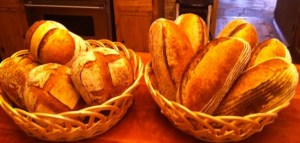
A man I know built himself an oven and bakes bread “the old way,” he told me. He goes about the process meticulously: the flour’s carefully chosen, the right amount of water is used, the fire that bakes the bread is just the right temperature. It takes time, but what a feast results!

Bread

I mentioned to him how so many homilies on the Eucharist from the days when they baked bread “the old way” see profound spiritual mysteries in this same process. The flour represents creation itself; the water and the fire represent the work of the Holy Spirit whom we invoke in this sacrament. “The Sacraments are a privileged way in which nature is taken up by God to become a means of mediating supernatural life.”(Laudato Si 235.) Simple created realities like water, oil, bread and wine speak for all creation.

In our prayer over the bread at Mass we say: “Blessed are you, Lord God of all creation, for through your goodness we received the bread we offer you, fruit of the earth and work of human hands, it will become for us the bread of life.”

The bread we offer, the wine we offer are signs of creation and the human efforts involved in creation. They’re signs of everything that the “God of all creation” gives us and of everything that comes from our hands. “The word bread stands for everything,” Augustine said in one of his commentaries on the Lord’s Prayer. (Epistle to Proba) No wonder Jesus chose these two precious signs to give himself to us.

The bread and wine stand for everything. Think what that means. Scientists say that our universe came into existence about 15 billion years ago. The bread and wine stand for the 15 billion years our universe has been in existence. About 3.5 billion years ago life began on our planet. The bread and wine represent that 3.5 billion years of life on our planet. When they’re brought to the altar the whole universe is brought here. About 200,000 years ago human life emerged on our planet. 200,000 years of human life are represented in the bread and wine. Our lives are part of the human story represented in the bread and wine .

We believe that when Jesus sat down with his disciples at the Last Supper and took bread and wine into his hands he took all creation, all life, all human life into his hands.. “This is my body.” “This is my blood,” he said. He is God in human flesh giving himself to us and to everything that God made. In love poured out, he renews the covenant God makes with us and with creation.

Pope Francis in his letter “Laudato Si.” emphasizes the cosmic dimension of the Eucharist. Our created world is there with the dignity and purpose bestowed on it. As he takes bread and wine into his hands, Jesus takes the whole universe to himself. “ Joined to the incarnate Son, present in the Eucharist, the whole cosmos gives thanks to God. Indeed the Eucharist is itself an act of cosmic love: Yes, cosmic! Because even when it is celebrated on the humble altar of a country church, the Eucha¬rist is always in some way celebrated on the altar of the world. The Eucharist joins heaven and earth; it embraces and penetrates all creation. The world which came forth from God’s hands returns to him in blessed and undivided adoration: in the bread of the Eucharist creation is projected towards divinization, towards the holy wedding feast, towards the unification with the Creator himself.” (LS, 236)

We celebrate this great mystery on the “humble altar” of our church. The created universe as it was, as it is and as it will be is before us. A marvelous sacrament, so simple in appearance and so tremendous in reality.

Good Shepherd Parish, Rheinbeck, NY

IMG_1516
I’m preaching a parish mission at Good Shepherd Parish, Rheinbeck, New York, December 5-9. The theme of the mission is “Be merciful, as your Father is merciful,” the theme of the Holy Year of Mercy that Pope Francis called for last March.

The holy year begins December 8th and ends November 20, 2016, “the Sunday dedicated to Our Lord Jesus Christ, King of the Universe–and the living face of the Father’s mercy.”

Each evening, from Monday to Wednesday, I’ll be preaching on God’s mercy.

Monday: Jesus the Living Face of the Father’s Mercy. In Luke’s gospel Jesus is truly “the living face of the Father’s mercy” from his birth till his death and resurrection. His miracles and encounters with many during his lifetime, like the blind man and Zacchaeus, the tax collector, reveal his gift for changing people and bringing them joy. We experience the mercy of God in the Eucharist and the Sacrament of Penance through Jesus Christ, our Lord.

Tuesday: Mary, Mother of Mercy. “Hail holy Queen, Mother of Mercy, our life, our sweetness and our hope.” God’s gift of grace enabled Mary to be what Jesus asked: “Be merciful, just as your Father is merciful.” It enabled her to embrace so many mysteries of God’s hidden plan, especially the mystery of suffering and death. We, “banished children of Eve,” cry out to her; she is “our life, our sweetness and our hope.”

Wednesday: Jesus, the Bread of Life. In his encyclical, Laudato Si, Pope Francis invites us to see in the Eucharist a call to care for the earth, our common home. “The Eucharist joins heaven and earth; it embraces and penetrates all creation. The world which came forth from God’s hands returns to him in blessed and undivided adoration: in the bread of the Eucharist, ‘creation is projected towards divinization, towards the holy wedding feast, towards unification with the Creator himself’. Thus, the Eucharist is also a source of light and motivation for our concerns for the environment, directing us to be stewards of all creation.” (LS 230)

31st Sunday B: Our Planet’s Keeper

To listen to today’s homily please select the audio file below:

Our first reading today from the Book of Kings describes a drought that afflicted Palestine thousands of years ago. It’s a dismal picture. There’s been no rain. The crops have failed. Water’s scarce and the land’s desolate. A poor widow is scrounging for some sticks to start a fire. The people most affected by this drought are the poor.

It’s a natural disaster. The reading reminds us that God is present, even in desperate situations like droughts and other natural disasters. But scientists today are telling us that many of the disturbances in our world now- storms, droughts, the unusual weather changes that threaten us–are not from nature alone; they’re man-made. We’re facing an environmental crisis that can bring irreparable harm to our world. We certainly need God’s help. But we need to do something about it ourselves.

I was at a symposium on the environment at Fordham University on November 3, 2015. It was entitled: Our Planet’s Keeper? The Environment, the Poor and the Struggle for Justice.” The speakers were Cardinal Oscar Rodriquez Maradiaga from Honduras and Professor Jeffrey Sachs, director of the Earth Institute at Columbia University and advisor to the United Nations on millennium environmental goals.

The symposium dealt with two important areas. One was Pope Francis’ recent encyclical Laudato Si issued on May 24, 2015. The encyclical addresses our global environmental crisis and is probably the most widely received papal document in modern times. As a South American Francis has experienced firsthand the crisis of the environment on that continent and its affect on the poor. His letter is addressed, not only to Catholics, but to the peoples of the world.

The pope timed his letter to influence another important event, namely the critical meeting on the environment to be held in late November and early December in Paris of representatives of the nations of the world. The name of the meeting is COP21, that’s bureaucrat-speak for meetings sponsored by the United Nations that have been going on for the last 21 years trying to deal with climate change. Since 1992 at the Earth Summit in Rio di Janeiro countries of the world have been seeking “stabilization of greenhouse gas concentrations in the atmosphere at a level that would prevent dangerous anthropogenic interference with the climate system”. The goal is to keep the rise in global mean temperature to 2 degrees Celsius above pre-industrial levels—beyond which disaster seems inevitable.

Unfortunately, nothing has been achieved in the 21 years of those meetings. In his encyclical Pope Francis charged that by putting “national interests above the global common good”, the world is guilty of “failure of conscience and responsibility” regarding the environment.

At the meeting at Fordham Professor Sachs welcomed the pope’s encyclical as a “moral voice” we need to hear. He saw the pope’s subsequent visit to world leaders at the United Nations as a positive influence on the upcoming meeting in Paris. He also sees a change in public opinion throughout the world and in our country concerning the environment.

Public opinion–that’s us. I don’t think we think much about issues of the environment. The media certainly doesn’t. I haven’t heard the environment brought up in our political debates so far. That’s probably because politicians, following their pollsters, think people are more interested in the economy, jobs, federal spending and health care.

That may be changing. A recent poll in October of the “National Surveys on Energy and the Environment” from the University of Michigan and Muhlenberg College reports a big spike over the summer in Americans–70%– who believe in global warming. That’s 10% increase from this time last year. One author of the poll said the reason from the increase is not that people are listening to the scientists or reports from the UN or– I would say– even the pope. They’re “responding to their perception of weather,” he said; “… what last summer or winter was like.”

So people are looking out the window or seeing the reports on television. We have had the hottest summer on record, the strongest hurricane on record, a water shortage and rationing in California, drought throughout the world displacing millions of people who are looking for another place to live.

The danger is that our world may begin to look a lot like the world described in our first reading today. Do we want to leave that kind of world to our children and the next generations? We need to know much more about this crisis than we do; we need to do more about it than we’re doing.

The cardinal at our symposium the other day urged people to read the pope’s encyclical. It’s not just about climate change, the pope is calling for a change in the way we live and the way we think. and the way we care for our world.

The title of the symposium the other day was Our Planet’s Keeper? Who’s our planet’s keeper? We are.

Care for Our Beautiful Earth

senic2
Today, cardinals, patriarchs and bishops of the Catholic church across the globe, called on the leaders of governments, business and finance, the United Nations, NGOs and other members of civil society who will negotiate issues of climate change (COP21) at a meeting in Parish, December 7-8 to produce a just and legally binding and “truly transformational” climate agreement. The Catholic leaders cited Pope Francis’ encyclical letter, “Laudato si.”

“We join the Holy Father in pleading for a major break-through in Paris, for a comprehensive and transformational agreement supported by all based on principles of solidarity, justice and participation. This agreement must put the common good ahead of national interests. It is essential too that the negotiations result in an enforceable agreement that protects our common home and all its inhabitants.”

The Catholic leaders ended with a prayer for this important meeting:

Prayer for the Earth

God of love, teach us to care for this world our common home.
Inspire government leaders as they gather in Paris:
to listen to and heed the cry of the earth and the cry of the poor;
to be united in heart and mind in responding courageously;
to seek the common good and protect the beautiful earthly garden you have created for us,
for all our brothers and sisters,
for all generations to come.
Amen.

26th Sunday: A Pope Visits Us

Audio homily here:

I’m always surprised at the way our current Mass readings throw light on what’s happening now. Pope Francis is ending his visit to our country. He’s hard to miss, a genuine celebrity, tying up traffic in three major cities and drawing immense crowds and media coverage. If he were running in our presidential elections, he might get elected.

He’s a leader, no doubt. But look at the way leadership is described in today’s readings: a kind of leadership Francis exemplifies. Our reading from the Book of Numbers (Nm 11,25-29) says the Lord blesses Moses with power, but also takes “ some of the spirit that was on Moses and bestows it on the seventy elders.” Then, when two others, not of the seventy, seem to have that same spirit, some tell Moses to stop them. They don’t belong to our group.

But Moses wont stop them. Are you jealous? he asks. “Would that all the people of the LORD were prophets! Would that the LORD might bestow his spirit on them all!”

The gospel from Mark (Mk 9, 38-48) offers a similar situation. Some are exercising a power like Jesus and his followers try to stop them. Let them be, Jesus says, “Whoever is not against us is for us.” Whoever is working for the same good cause is working with us.

The lesson, of course, is that a real leader doesn’t want power for himself or herself. Power is meant to serve all. “Would that all the people of the LORD were prophets! Would that the LORD might bestow his spirit on them all!” Moses says. In his strong address to our Congress the other day, Francis called them to be real leaders and work for the common good. Work together, not in a spirit of partisanship, or for your own gain, but for the good of all and for the good of the world, he said. Don’t be afraid to face the big challenges before us.

Of course, we might stop there and say we need better leaders, better politicians; let’s pray for a good president and a good congress that can work together for the good of us all.

But our readings seem to suggest that power is not just in great leaders like Moses and Jesus. We all have power which we’re called to use for the common good. The same partisanship and selfishness, the same lack of vision we complain about in our leaders can also be present in us.

The pope addressed our bishops before he met with congress and he told them too to be good shepherds of the gifts of God. “It’s wrong,” he said to look the other way or to remain silent.” They need to face the many challenges before them.

That challenge is addressed to us too.

Addressing congress, the pope pointed to four Americans who worked for the common good: Abraham Lincoln, Martin Luther King, Dorothy Day and Thomas Merton. Only one of those was a politician, an elected leader. The rest were people who served society using their unique gifts.

So it was not just politicians in Congress or bishops or representatives of the nations at the UN the pope challenged these last few days. He was challenging all of us to face the world today, to confront the issues before us, to work together, to follow the Golden Rule. “Do onto others what you would have them do to you.” That’s what God wants us all to do.

23rd Sunday B: Hearing Creation Groan

Audio homily follows:

When you’re reading the gospels it’s good to notice where Jesus travels, because it usually offers an insight into what he does. Mark’s Gospel today (Mark 7,31-37) says Jesus leaves the district of Tyre “and went by way of Sidon to the Sea of Galilee into the district of the Decapolis.” The cities of the Decapolis, east of the Sea of Galilee, were not Jewish areas; they were where pagans lived. That means that the deaf man Jesus cures is most likely a pagan, not a Jew. In a simple way, through these place names, Mark’s Gospel indicates that Jesus brings life to others, besides the Jews; he comes for all people.

Our story also sees an interesting connection between hearing and speech. The deaf man not only can’t hear, he can’t speak either. His deafness affects his understanding; it impedes his connection with the world and reality around him; he can’t say what he has to say.

The miracles of Jesus are about more than physical cures, of course. The deaf man who can’t hear or speak points to the spiritual deafness that can affect the way we hear God and consequently impedes our ability to speak God’s truth.

Pope Francis will be visiting us in a few weeks. He’ll be visiting three different places. In Washington he will be addressing our government, in Philadelphia he will be speaking about family life, in New York he will be speaking to the whole human family at the United Nations. He has important things to say and we should listen to him.

I think we already know some of the things he’s going to say. His recent encyclical “Laudato Si” was about the care of creation. It wont be a surprise if he speaks about that in all those places. But if recent surveys are right, it seems that American Catholics aren’t hearing the message of that encyclical very well. We don’t seem to hear what’s being said, it’s not entering into our ordinary discourse. Certainly we don’t hear too much about it in our present political discourse.

There’s an ecological crisis, the pope said in his letter. It’s a major issue endangering the whole world, all of its creatures, our human family. It’s especially affecting the poor. We have to do something about it.

Some may deny the crisis exists; some may claim it’s exaggerated; some may just throw up their hands thinking it’s too big to deal with. Some may think it can taken care of gradually by the play of “market forces.”

The pope and many others see the ecological crisis as real, it’s endangering the world and it has to be dealt with now. Recently, Francis asked Catholics and people everywhere to come together on September 1st for a day of prayer about the care of creation. We need an “ecological conversion,” he said. An “ecological conversion.” I must confess I don’t understand all he means by that, but my instincts say he’s right. I need to “hear” what that means– an “ecological conversion.”

I don’t think ecological conversion means that we have to immerse ourselves completely in science, although the pope obviously respects scientific conclusions. We should too. I don’t think ecological conversion means that a few quick moves will fix the crisis, like changing a couple of light bulbs in the house–although again, suggestions like that are important. The pope says that as Catholics we need to “rediscover in our own rich spiritual patrimony the deepest motivations for our concern for the care of creation.”

Pope Francis does that in his encyclical. He sees what the scriptures say about creation, from the Book of Genesis to the writings of the New Testament. He sees the respect we have for creation in our sacraments. The water we use in baptism, the bread and wine we take in our Eucharist, the oil we use for anointing the sick. Our spiritual patrimony has a reverence for creation. In the pope’s words, our spiritual tradition reminds us that we’re called “to be protectors of God’s handiwork.” That call “is essential to a life of virtue; it is not an optional or a secondary aspect of our Christian experience” (Laudato Si, 217). We must love God and our neighbor and creation itself.

Caring for creation and an “ecological conversion” are not going to be easy. It means great changes in the way we look at life and live life. We can’t understand all it means. We have trouble hearing and speaking about it, like the deaf man in the gospel. That’s why we need the grace of God. We need to pray for it. And while we’re at it, let’s pray for the pope.

Ecological Conversion

IMG_0943
Today, September 1st, Pope Francis asks Catholics and all people to pray for the care of creation, the subject of his recent encyclical “Laudato Si.” We may need to pray, if recent surveys are right that claim that American Catholics aren’t much interested in the pope’s recent encyclical. That might be true of Catholics elsewhere as well.

There’s an ecological crisis, the pope says in his letter, and we have to do something about it. Some may deny the crisis exists; some may claim it’s exaggerated; some may just throw up their hands thinking it’s too big to deal with. Some may think it can be easily fixed by the eventual play of “market forces.”

For the pope and many today the ecological crisis is real, it endangers the world and it has to be dealt with now. To meet it Francis recently urged Christians to “first rediscover in our own rich spiritual patrimony the deepest motivations for our concern for the care of creation.”

That’s important advice. The first step is not to immerse ourselves in conclusions of science, although the pope in his encyclical obviously respects scientific conclusions. The ecological crisis is not going to be taken care of with a few quick moves, like changing a couple of light bulbs at home. The first step, the pope says, is to undergo an “ecological conversion” guided by our spiritual patrimony.

Caring for creation isn’t going to be an easy task. People of faith are needed who, in the pope’s words, understand that “living our vocation to be protectors of God’s handiwork is essential to a life of virtue; it is not an optional or a secondary aspect of our Christian experience” (Laudato Si, 217).

In his encyclical the pope looks to the scriptures, from Genesis to the books of the New Testament, to provide wisdom for our steps. He looks to the sacraments, especially the Eucharist, as signs that creation itself figures in God’s plan.

An interesting feature in “Laudato Si” is the way Francis turns to the Eastern Church for guidance to ecological conversion, almost as if he recognizes the weakness of western theology and spirituality. A prayer suggested by the Vatican for today’s prayer service is inspired by the prayers of the Eastern Church:

We praise and bless you, O Lord,
for you are the King of all ages,
and through Christ your Son you have made all that is.
In the beginning of the beginning,
you breathed upon the waters of creation,
and filled the earth with life through your vibrant Spirit.
The heavens declare your glory, O Lord,
and the stars of the sky bring light to our darkness.
You spoke, and the earth burst forth in life,
you saw that it was good.
You called forth creation, and enlivened every creature on land and sea.
You made human beings in your image,
and set us over the whole world in all of its wonders.
You gave us share in your dominion,
and called us “to till and to keep” this garden, the work of your hands.
As day gives way to evening, we praise you for your manifold gifts.
May our adoration this night give glory to your name,
so that we may serve you with faithfulness and love.
May our daily care for your creation show reverence for your name,
and reveal your saving power in every creature under heaven.
We make this prayer in the name of Christ your Son,
in the unity of the Holy Spirit, One God forever and ever. Amen.

Day of Prayer for the Care of Creation

OLYMPUS DIGITAL CAMERA
Pope Francis is asking that September 1st be a world day of prayer for the care of creation. The Pontifical Council for Justice and Peace has provided suggestions for a 1 hour prayer service for the day:

Click to access PCJP_WorldDayPrayerCreation2015_PROPOSAL_ENG.pdf

September 1st marks the beginning of the Church Year for the Orthodox Church. Pope Francis quotes from the Orthodox tradition in his encyclical “Laudato Si”
We need a spiritual conversion, Pope Francis wrote to Cardinals Koch and Turkson. ( August 6, 2015)

“As Christians we wish to contribute to resolving the ecological crisis which humanity is presently experiencing. In doing so, we must first rediscover in our own rich spiritual patrimony the deepest motivations for our concern for the care of creation. We need always to keep in mind that, for believers in Jesus Christ, the Word of God who became man for our sake, “the life of the spirit is not dissociated from the body or from nature or from worldly realities, but lived in and with them, in communion with all that surrounds us” (Laudato Si’, 216). The ecological crisis thus summons us to a profound spiritual conversion: Christians are called to “an ecological conversion whereby the effects of their encounter with Jesus Christ become evident in their relationship with the world around them” (ibid., 217). For “living our vocation to be protectors of God’s handiwork is essential to a life of virtue; it is not an optional or a secondary aspect of our Christian experience” (ibid.).