Category Archives: easter

Tenebrae

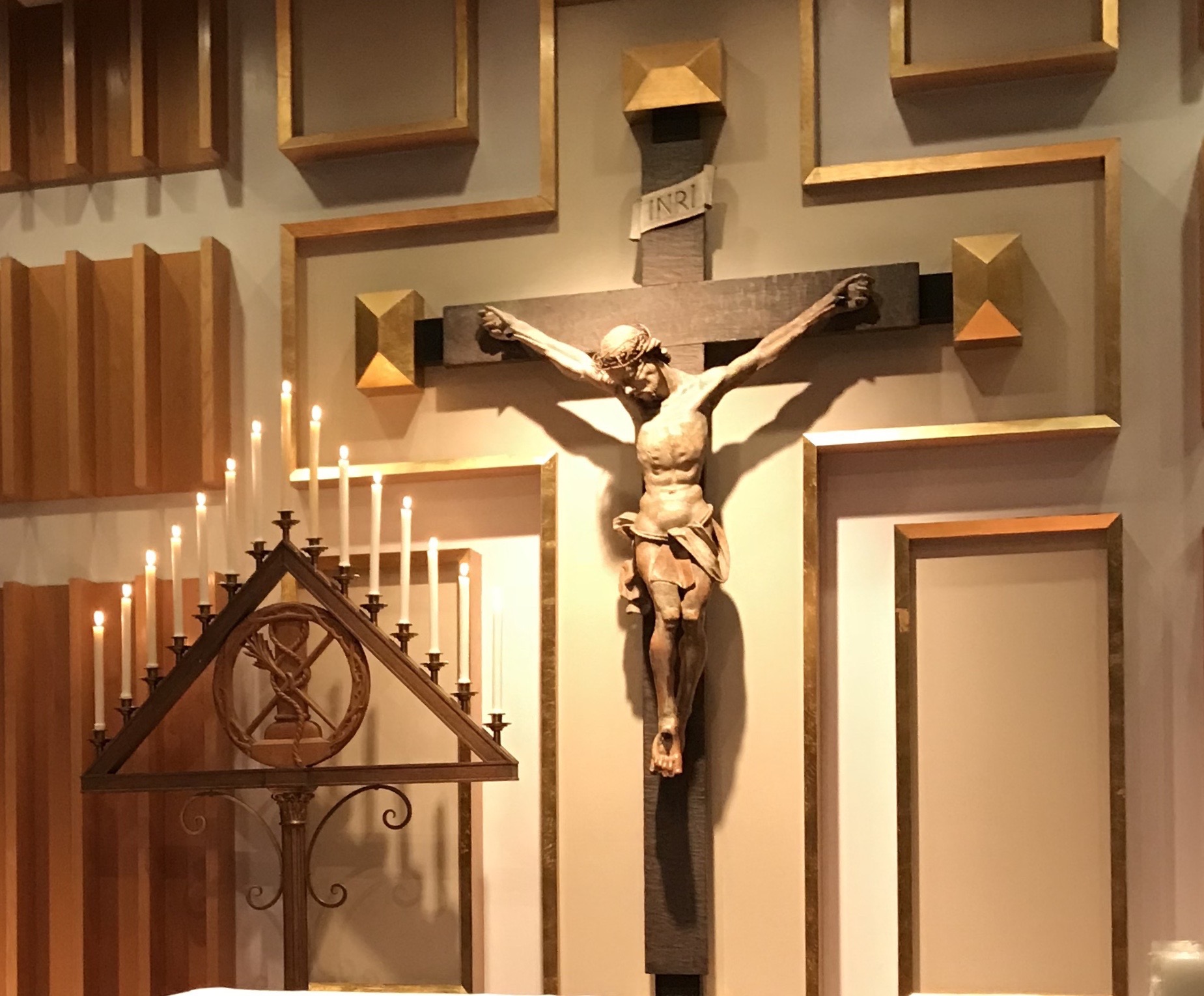
Tenebrae is an ancient Holy Week service celebrated on Holy Thursday, Good Friday and Holy Saturday. Tenebrae, a latin word, means darkness, but the 15 lighted candles at the heart of this service say that darkness never has its way. The 15 candles stand for Jesus, his twelve disciples and the two disciples who leave Jerusalem for Emmaus after Jesus’ death, having lost all hope.

In the Tenebrae service, the candles are extinguished one by one, as the scriptures are read. His disciples leave him, one betrays him. Jesus goes to death alone, but his light remains burning.

Psalm 69 is read at Tenebrae on Holy Thursday:

“I have become an outcast to my brothers,
a stranger to my mother’s sons,
because zeal for your house consumes me,
and the insults of those who blaspheme you fall upon me.”

On Holy Thursday Jesus leaves Bethany with his disciples to celebrate the Passover feast in the evening in an upper room in Jerusalem near the temple. At the table he tells them their faith will be shaken and they will leave him.

The Tenebrae readings tell us  Jesus is our great high priest whose love never fails:

“We have a great high priest who has passed through the heavens, Jesus, the Son of God, let us hold fast to our confession. For we do not have a high priest who is unable to sympathize with our weaknesses, but one who has similarly been tested in every way, yet without sin. So let us confidently approach the throne of grace to receive mercy and to find grace for timely help.”
(Hebrews 4, 14-16)

These days of Holy Week we approach “the throne of grace to receive mercy and find grace for timely help.”

A final reading on Holy Thursday from an Easter homily by St. Melito of Sardis reminds us: “He is the one who brought us out of darkness into light, out of slavery into freedom, out of death into life, and made us a people chosen to be his own. He is the Passover which is our salvation.”

We celebrated Tenebrae  Holy Thursday, Good Friday and Holy Saturday at Immaculate Conception Monastery in Jamaica, New York.
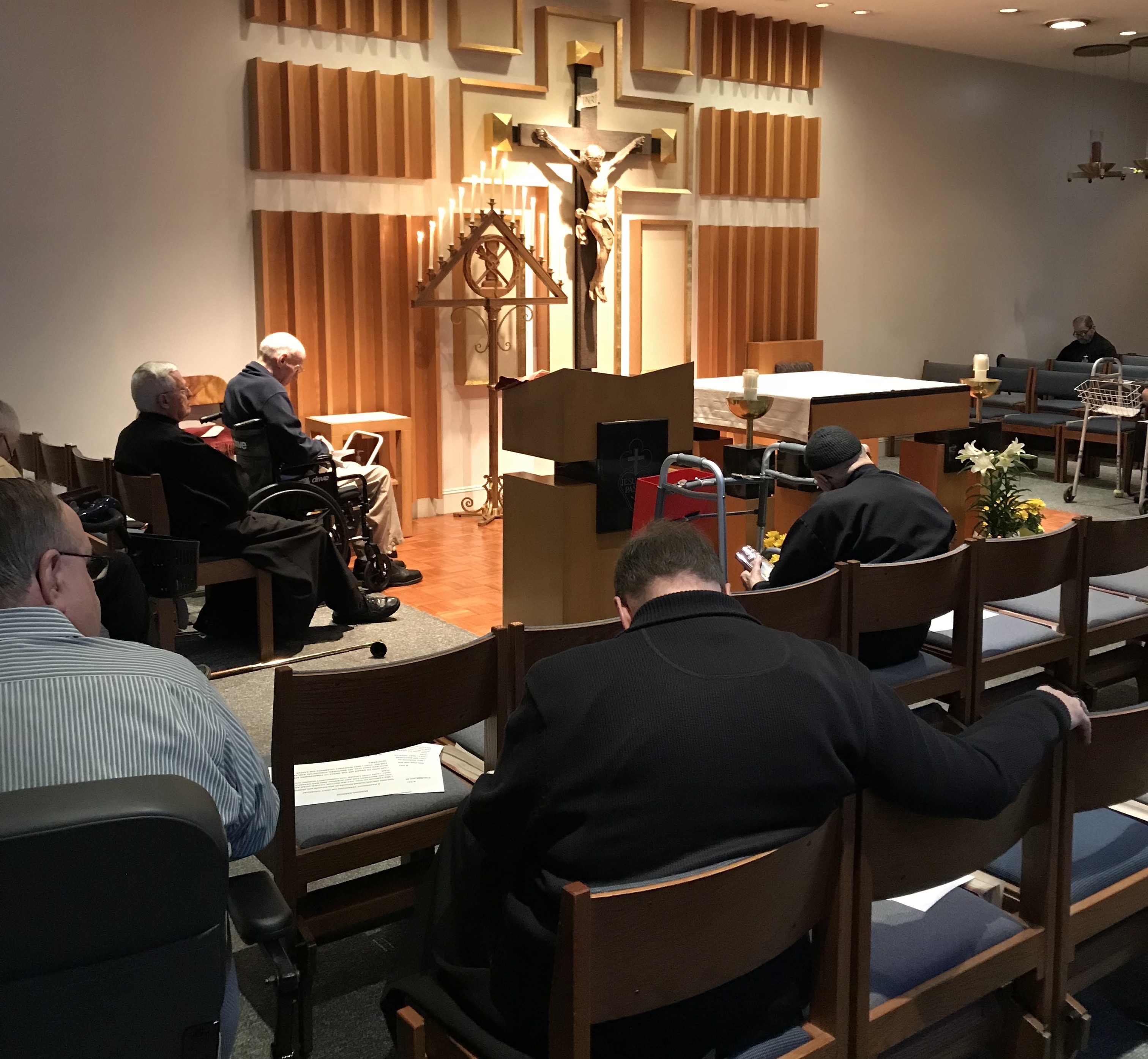
I haven’t found much on the history of Tenebrae, except indications that the prayer began in monastic circles early on. My guess is that it developed from a pastoral need. During the days of Holy Week more people must have come to monasteries to pray as  work was somewhat lessened–unlike our time when we work, feast days or not. Did the monks decide to make some accomodation to their daily office for their visitors?  

The celebration has candles, extinguished as the psalms and other scriptures are read. Everyone understands candles. The psalms are favored sources for understanding the mystery of the passion and resurrection of Jesus in monastic prayer, but they’re not easily appreciated. 

The psalm prayers and captions from St. Augustine and other saints in the church’s morning and evening prayer today are meant to help people appreciate their Christian meaning. 

So can Tenebrae still be a creative prayer form during Holy Week?  I think so. 

A Little Boy, Five Barley Loaves and Two Fish

Andrew, brother of Peter, says to Jesus when he asked his disciples to provide food for a hungry crowd: “There is a boy here who has five barley loaves and two fish; but what good are these for so many?” (John 6:1-15)

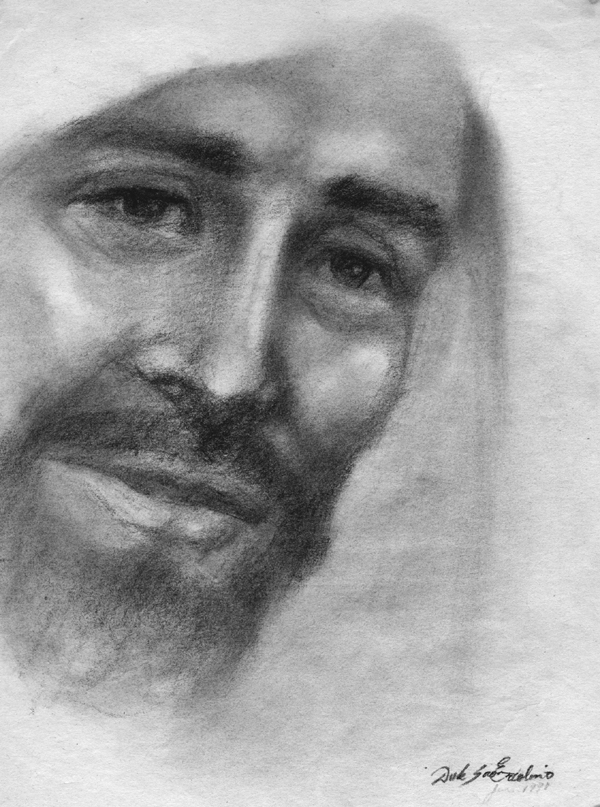
Duk Soon Fwang, an artist friend of mine, has been thinking a good while about that little boy and what he brought to Jesus. “We don’t know the little boy’s name and he only has a few loaves and fish to give. He’s like me,” she said. “But Jesus sees what he brings and makes it more.” 

She’s almost completed a painting of the boy and Jesus, which you can see above. 

At Mass this morning, we read that gospel story before we brought small pieces of bread and a cup of wine to the altar. I remembered what she said. This is our story. We bring what we have and God makes it more.

More on Duk Soon and her work here and here.

The Greatest Gift

Lord Jesus,
once in the wilderness
your people ate heavenly manna
and they were filled.
And once in a desert place
you fed the hungry 
with blessed bread.

A simple thing, we say,
costing our mighty God
little effort.

But what if bread is
a body offered for all,
and a cup of wine
your own life-blood
given to those who hardly care?

A costly thing, we say,
Is there anything more
God could have done?
Anything more
Love could do
than lay down his life 
for his friends?

From Lent-Easter Meditations and Prayers 
by Fr. Victor Hoagland, C.P.

Accounts of Jesus’ Resurrection

A Book for Lent

St. Paul Cross

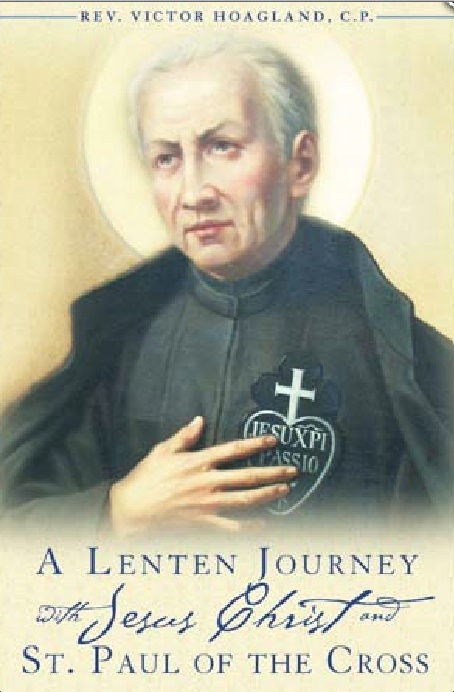
Lent begins next Wednesday, February 14th. Some years ago a publisher asked me to write a book entitled A Lenten Journey with Jesus Christ and St. Paul of the Cross, to be part of a series of reflections on the daily lenten gospels that included thoughts of saints of different religious orders. The book has just been translated into Japanese.

I was initially skeptical about the project. From early on I’ve seen lent as a time to give up something and take up some devotional practice like the Stations of the Cross. Yes, Lent was a journey with Jesus, and I appreciate the daily scriptures that take us through the season with him, but where does a saint come in, even a saint important to me, like St. Paul of the Cross, the 18th century founder of my community the Passionists ?

Working on the book made me see lent differently. First, for St. Paul of the Cross lent was a time to leave the quiet mountain at the edge of the Mediterranean Sea where he lived and prayed and go to work in the Tuscan Maremma, then a swampy, malaria infested region of Italy, overrun with robbers and desperately poor. All through lent, carrying a cross and a bible Paul went from village to village preaching God’s love to people whose lives were often on edge with fear and lost hope.

Lent isn’t a time for turning inward, away from world you live in, Paul reminds me. Lent is a time to go out to the wounded world before you.

Secondly, Paul engaged his world, the world of the Tuscan Maremma, in the light of the gospel, especially the Passion of Jesus Christ. For him that mystery was not limited to a time long ago, when Jesus suffered on a Cross; it was there in the people before him. From village to village, he held up a Cross to anyone who would hear as a mirror of their reality and a pledge of the great mercy of God. Jesus died and rose again.

The Passionists celebrate two feasts immediately before Ash Wednesday to prepare for Lent. Last Friday we celebrated the Commemoration of the Passion of Jesus Christ. Tomorrow, Tuesday before Ash Wednesday, we celebrate the Prayer of Jesus in the Garden. Both feasts come from our missionary founder.

I can see him packing his bags for his lenten journey down the quiet mountain for the villages and towns of the Tuscan Maremma. He must remind himself what he will see. He must pray so he doesn’t forget.

“May the Passion of Jesus Christ be always in our hearts.”

God’s Beloved Sheep

Tuesday of the Fourth Week of Easter

John 10:22-30

Jesus assures us in today’s Gospel reading that no one can take his sheep out of his hand. He knows each of his sheep by name and their unique identities. 

“My Father, who has given them to me, is greater than all, and no one can take them out of the Father’s hand.”

John 10:29

A cloud of mystery surrounds Jesus’ references to the Father throughout the Gospels, but his unmistakable desire is to lead us back to him, the font of Love, who is a person. 

“The Father and I are one.” Love is one and interpersonal, a communion of divine persons and the final destination of human persons. As the Son receives his unique identity from the Father, so does each of us, the Father’s adopted children.

Know that the LORD is God.
He made us, and we are his.
We are his people, and the sheep of his pasture. Psalm 100:3

-GMC

Let Us Pray

We are not alone during this pandemic. Emmanuel means God is with us every step of the way. May these uncertain times be an opportunity to grow in prayer.

Lord, have mercy.
Jesus, Eternal Son of God, have mercy on us.
Jesus, born into the human family,
Jesus, rejected by the world you came to save,
Jesus, bargained for and sold for money,
Jesus, foreseeing your torments and sweating blood,
Jesus, betrayed by a false friend,
Jesus, deserted by those you loved,
Jesus, slapped in the face and spit upon in a court of justice,
Jesus, accused by liars,
Jesus, disowned by Peter,
Jesus, insulted by Herod,
Jesus, condemned to death by Pilate,
Jesus, beaten with whips,
Jesus, crowned with thorns,
Jesus, rejected for the murderer, Barabbas,
Jesus, burdened with a cross,
Jesus, stripped of your clothing,
Jesus, nailed to a cross,
Jesus, taunted in your pain,
Jesus, abandoned,
Jesus, shedding the last drop of your blood,
Jesus, dying for us,
Jesus, laid in a tomb,
Jesus, rising in glory,
Jesus, ascending into heaven,
Jesus, sending down the Holy Spirit,
Jesus, our ransom,
Jesus, our brother,
Jesus, our God, have mercy on us.

From Lent-Easter Meditations and Prayers 

by Fr. Victor Hoagland, C.P.

3rd Sunday of Easter


Document on Human Fraternity for World Peace and Living Together


Screen Shot 2019-02-06 at 8.49.53 AM

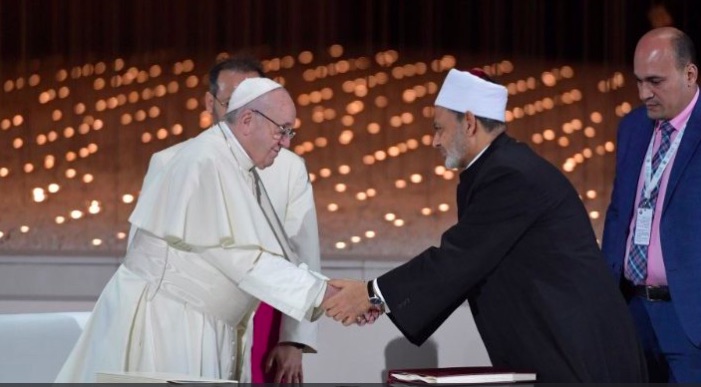
Pope Francis and the Grand Imama of Al-Azhar, Ahmad el-Tayeb,

“Something is happening.” That’s the way the great reading for our Holy Saturday liturgy, taken from an ancient homily, begins. We don’t see clearly yet, but something is happening.

And that’s the way I felt yesterday watching on YouTube a Mass at Abu Dhabi in the United Arab Emirates where more than one hundred thousand Christian migrant workers in the Middle East celebrated their faith with Pope Francis. Christianity is alive in the Middle East.

In the “Document on Human Fraternity for World Peace and Living Together” signed on Monday afternoon in Abu Dhabi by Pope Francis and the Grand Imama of Al-Azhar, Ahmad el-Tayeb, a path for the two religions and the world itself opened. Something is happening.

The document from leaders of these two great religious traditions, Christian and Muslim, is worth reflecting on.

It begins:
“In the name of God who has created all human beings equal in rights, duties and dignity, and who has called them to live together as brothers and sisters, to fill the earth and make known the values of goodness, love and peace,”

The document speaks for innocent human life, the poor, the destitute and the marginalized, the victims of destruction, calamities and war. It invokes the name of freedom, fraternity, peace and justice, the name of all people everywhere:

“In the name of God and of everything stated thus far; Al-Azhar al-Sharif and the Muslims of the East and West, together with the Catholic Church and the Catholics of the East and West, declare the adoption of a culture of dialogue as the path; mutual cooperation as the code of conduct; reciprocal understanding as the method and standard.”

“We, who believe in God and in the final meeting with Him and His judgment, on the basis of our religious and moral responsibility, and through this Document, call upon ourselves, upon the leaders of the world as well as the architects of international policy and world economy, to work strenuously to spread the culture of tolerance and of living together in peace; to intervene at the earliest opportunity to stop the shedding of innocent blood and bring an end to wars, conflicts, environmental decay and the moral and cultural decline that the world is presently experiencing.”

One commentator Tuesday said a meeting like this takes time for its meaning to be felt. “Something is happening.”

Pentecost

For this week’s homily please play the video file below: