Author Archives: vhoagland

Monica’ Last Days at Ostia

In a beautiful section of his Confessions St. Augustine describes his mother Monica’s last days at Ostia, the seaport of Rome, where they were preparing to sail for their home in Africa. Monica, taken sick, was on her way to another homeland.  

The two of them were “leaning against a window looking out on a garden…inquiring what you are and what the eternal life of the saints would be like, for ‘Eye has not seen nor ear heard no human heart conceived it’”

“For my part, my son, I no longer find pleasure in anything this life holds,” his mother said, “ What I am doing here still, or why I am still here, I do not know, for worldly hope has withered away for me. There was only one thing I desired to live for in this life: to see you a Catholic Christian before I died. And my God has granted this to me more lavishly than I could have hoped, letting me see even you spurning earthly happiness to be his servant. What am I still doing here?”

Shortly after, Monica fell unconscious from the fever. 

She revived and said to Augustine and his brother at her side, “You are to bury your mother here”. 

“It would be better for you to be buried in your own homeland,” his brother said to her.

 “‘What silly talk!’ she replied, ‘Lay this body anywhere, and take no trouble over it. One thing only do I ask of you, that you remember me at the altar of the Lord wherever you may be.’ 

“Having made her meaning clear to us with such words as she could manage, she fell silent, and the pain of the disease grew worse.”

His mother’s death was a graced time when they drank in their thirst from “the fountain of life which is you”, Augustine wrote.  

21st Week: Readings and Feasts

AUGUST 28 Mon St Augustine 1 Thes 1:1-5, 8b-10/Mt 23:13-22 

29 Tue  Passion of John the Baptist 1 Thes 2:1-8 /Mk 6:17-29 

30 Wed Weekday 1 Thes 2:9-13/Mt 23:27-32

31 Thu Weekday 1 Thes 3:7-13/Mt 24:42-51

SEPTEMBER 1 Fri Weekday 1 Thes 4:1-8/Mt 25:1-13 (Day of Prayer for Creation)

2 Sat Weekday[BVM] 1 Thes 4:9-11/Mt 25:14-30 

3 SUN 22ND SUNDAY  Jer 20:7-9/Rom 12:1-2/Mt 16:21-27 

This week we’re leaving the Old Testament to read from Paul’s Letter to the Thessalonians, which may be the earliest writing of the New Testament. We’ll be reading from Thessalonians most days till next Tuesday.

About 4 scripture readings in our morning and evening prayers are from Thessalonians, so this is a good time to deepen our understanding of this book of scripture.

We’re also leaving Matthew’s gospel at the end of this week; next Monday we start reading weekdays from Luke’s Gospel. Every year we follow this same schedule of gospel and scripture readings. Why the repetition?

We’re deepening our understanding of the scriptures through deep reading. Deep reading is different than reading for facts. Some of our learning, like learning from the gospels, from prayers and saints, takes time. We learn little by little. We are slow learners. 

Deep reading applies to the way we’re called to read and listen to our prayers. It also applies to the saints, especially to important saints, like St. Augustine, whom we recall each year.

Finally, deep reading also applies to the events and situations of our day. That’s why we celebrate a Day for Creation this Friday, September 1st. We need to see creation and other issues in a deeper way than a scientific way. From September 1 to October 4, the Feast of Francis of Assisi we’re celebrating with other Christians a Season of Creation.

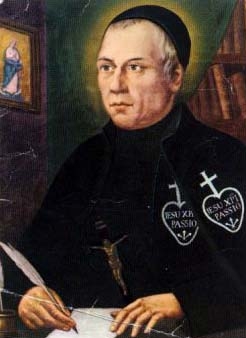
Blessed Dominic Barberi

img-Blessed-Dominic-Barberi

August 26th,  the Passionists remember one of their great missionaries, Blessed Dominic Barberi, born in Viterbo, Italy, in 1792. Early on, God inspired him to be a missionary to England. The desire to work for Christian unity grew after Dominic entered the Passionist community, where he taught theology and was a spiritual director.

In 1840, Dominic left Italy to bring the Passionist community to Ere, Belgium. In 1842, he went to England and became a popular preacher of missions and retreats, establishing a Passionist retreat at Aston Hall, near Stone. Initially,  he tried to engage the leading religious scholars at Oxford in dialogue. The Industrial Revolution was changing that country, however, and thousands of poor Catholic immigrants from Ireland and England were flocking to the great English factory towns, fleeing poverty and looking for work. Priests were needed and Dominic, though he never spoke English well, tirelessly preached and ministered to them.

Dominic never got his wish to engage the learned scholars of England as a lecturer at Oxford, but he was noticed by them all the same. One of  England’s greatest intellectuals, John Henry Newman, was attracted to Dominic, not by the religious tracts he sent to him, but by his zeal and humility. Newman was looking for those qualities in the Roman church at the time.

“If they want to convert England,” Newman wrote earlier, “let them go barefoot into our manufacturing towns, let them preach to the people like St Francis Xavier–let them be pelted and trampled on, and I will own they do what we cannot…Let them use the proper arms of the Church and they will prove they are the Church.”

Dominic, humble, zealous and faithful, used the proper arms of the Church of his time, popular missions and retreats which stressed basic catechesis and devotional prayer. They were the primary way the Roman Catholic Church reached out then to the peoples of Europe and also the Americas.

When Newman decided to enter the Catholic Church, he asked for Father Dominic Barberi to receive him. He said he was Dominic’s “convert and penitent”.

Domenic died in Reading, near London, England on August 27, 1849. His grave in Sutton, St. Helens, England is a place of pilgrimage for the English people. Pope Paul VI declared him “Blessed” on October 27, 1963 during Vatican II, calling him an example of ecumenism and an apostle of unity.

Lord, you sent Blessed Dominic to seek out the lost sheep of your flock by preaching your truth and witnessing to your love.

May we follow his example and build up the unity of your Church as a sign of faith and love. Through our Lord Jesus Christ, your Son, who lives and reigns with you in the unity of the Holy Spirit one God, for ever and ever.

Longer biography here:

Writings of Blessed Dominic can be found here.

Remembering Mary

This daughter of Jerusalem is lovely and beautiful as she ascends to heaven like the rising sun at daybreak.           
Canticle Morning Prayer


It wasn’t unusual in the liturgy in the past to have an octave following a major feast and for 8 days to continue celebrating and reflecting on this mystery of faith. After all, we’re slow learners.

We celebrated the Feast of the Assumption last week, and as a slow learner I’m still thinking about it.

I recall that Carl Jung, the famous Swiss psychiatrist and psychotherapist, an unbeliever, saw tremendous implications in the promulgation of the Dogma of the Assumption by Pius XII on November 1, 1959.

Those were dark days for humanity.  World War I ended in 1918 after four years of bloody conflict when millions perished. Millions more were killed during World War II ending in 1945.We witnessed the tragedy of the Holocaust.

Before the Feast of the Assumption we recalled two saints who died in Auschwitz during that time: St. Teresa Benedicta, Eiith Stein, the Jewish convert to Catholicism and St. Maximilian Kolbe, the Polish priest who gave his life for a companion in the camp.

The times are still dark. Conventual war and nuclear weapons still threaten the human race and the planet. Other threats are joining them now. Climate change, for example, is now part of our dark picture. And if that were not enough, we have the scandal of sexual abuse in our own church shaking an institution that should bring hope and wisdom and stability to our world.

The Assumption of Mary is a mystery of God to hold onto. She is a sign that God sees human life and creation itself sacred. When Jesus was raised from the dead, he brought a promise of life to humanity and all creation.

Mary is among the first fruits of his resurrection. She too was raised up, body and soul. Her Assumption has tremendous implications for our salvation and the salvation of our world. She’s a sign that God reaches into the darkness of death, in all its forms, and brings life.

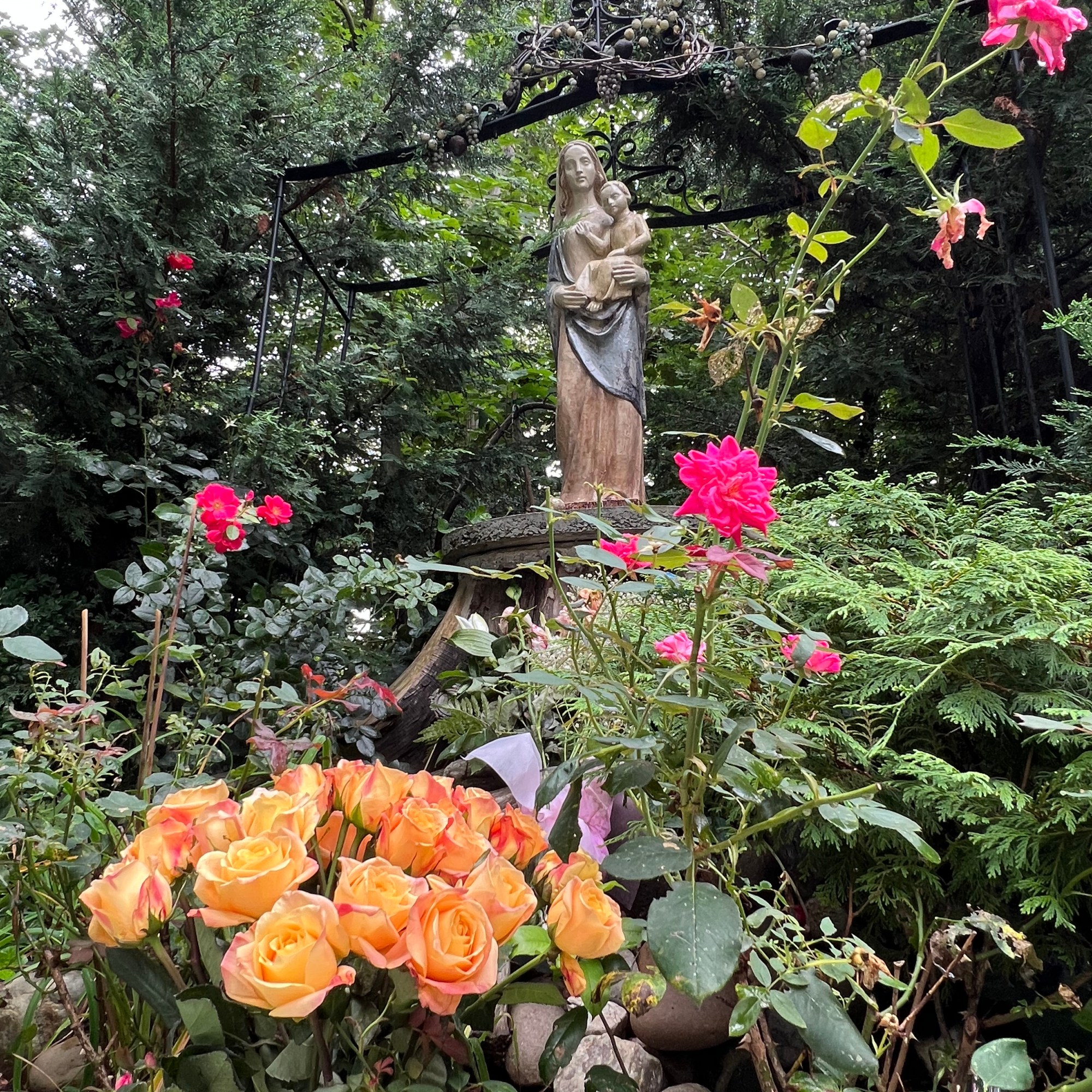
The Feast of Mary’s Assumption is the oldest and most important feast of Mary in our church calendar. We planted a Mary Garden in our garden a few years ago. We need to remember Mary.

“Barbarized by Continuous Wars”

The Jewish Encyclopedia describes the period of the Judges, the period we’re reading about this week in our lectionary, in this way:

“Israel remained for some time a rough people, barbarized by continuous wars. Sword law and the vendetta reigned supreme. Neither expeditions undertaken for pillage and plunder (comp. Judges xvii. et seq.), nor treacherous dealings with the enemy, as practiced by Samson, nor assassinations, as those committed by Jael and Ehud, gave offense; and even the lives of those nearest and dearest were sacrificed to satisfy a vow, as in the case of Jephthah.”

“Barbarized by continuous wars.” War became the only way to settle things at this time, and that led to warrior leaders, some more measured than others. The allegory of the trees which we will hear tomorrow from the Book of Judges ends with the buckhorn tree ruling over the people. That’s Abimelech, the vicious son of Gideon, who kills anyone in his way and, in turn, suffers a violent death.

The Book of Judges was an admonition to the Jewish people to beware of seeing war and violence as a way of life. It creates a barbarous society. It’s a way to death.

An admonition to us too?

20th Week: Readings and Feasts

AUGUST 21 Mon St Pius X Jgs 2:11-19/Mt 19:16-22 

22 Tue  Queenship of Mary Jgs 6:11-24a/Mt 19:23-30 

23 Wed Weekday [St Rose of Lima] Jgs 9:6-15/Mt 20:1-16 

24 Thu St Bartholomew Rv 21:9b-14/Jn 1:45-51

25 Fri Weekday [St Louis; St Joseph Calasanz ] Ru 1:1, 3-6, 14b-16, 22/Mt 22:34-40 

26 Sat Weekday [BVM] Ru 2:1-3, 8-11; 4:13-17/Mt 23:1-12 

27 SUN TWENTY-FIRST SUNDAY  Is 22:19-23/Rom 11:33-36/Mt 16:13-20 

This week’s readings from Matthew’s gospel describe various meetings of Jesus, with the Pharisees, children, a young man, as he leaves Galilee to go to Jerusalem. Matthew would have us see Jesus engaging many, especially difficult people like the Pharisees, as he goes on his way.

The readings from the Book of Judges recalls a people who fall away as they enter a promised land, abandoning their leaders and the examples of obedience they received from their ancestors. Still, God does not forget them. 

The feast of the Queenship of Mary, August 22, is closed associated with the Feast of the Assumption, August 15.

St Bartholomew is the apostle, a founder of our church, we remember this month. August 24.

St. Pius X, August 21, is one of the recent popes who promoted the liturgy as the prayer of the church.

20th Sunday a: A Great Faith

For this week’s homily please watch the video below.

Procession to a Mary Garden

Yesterday after the 11 AM Mass on the Feast of Mary’s Assumption into Heaven we had a procession to our Mary Garden, carrying herbs to be blessed and flowers in thanksgiving. This is a day for blessing herbs and recognizing the healing they bring as medicines. We added our own prescription medicines for God’s blessing. 

We also blessed our earth yesterday, praying for a good harvest. In our Mary Garden, with its four paths representing the four great rivers God made to flow out to the four corners of the earth from the original Garden of Eden, we prayed especially for those parts of the earth where harvests are endangered: the Ukraine, China, the Sudan and wherever else floods, extreme heat and wars put our fruitful earth in danger. 

I mentioned in a previous blog why we bless our fields and especially its herbs on the Feast of the Assumption of Mary into Heaven.

Today more than ever, we need to pray for good weather and a good harvest.  

19th Week: Readings and Feasts

  • AUGUST 14 Mon St Maximilian Kolbe Dt 10:12-22/Mt 17:22-27                15 Tue  ASSUMPTION OF MARY Rv 11:19a; 12:1-6a, 10ab/1 Cor 15:20-27/Lk 1:39-56                                                                                                  16 Wed Weekday [St Stephen of Hungary] Dt 34:1-12/Mt 18:15-20               17 Thu Weekday Jos 3:7-10a, 11, 13-17/Mt 18:21—19:1                               18 Fri Weekday Jos 24:1-13/Mt 19:3-12                                                      19 Sat Weekday [Saint John Eudes,] Jos 24:14-29/Mt 19:13-15                20 20th SUNDAY Is 56:1, 6-7/Rom 11:13-15, 29-32/Mt 15:21-28 

The weekday readings from Matthew’s gospel are from chapters 18-19 which call for the disciples of Jesus to care for each other as they depart from Galilee with him on their way to Jerusalem.

Readings from the Book of Deuteronomy this week parallel the gospel readings. They are excerpts of three long speeches of Moses to his people as they approach the promised land and he approaches death. He reminds them of God’s favors and the laws they need to follow. August 16-19 are from the Book of Joshua who assumes leadership of the Israelites after Moses’ death.

The Assumption of Mary, August 15, is her most important feast. The date in late summer was chosen, it seems, as the harvests of herbs and other fruits of the earth take place. It was a time for harvest and for blessing the fields for the next year. We are planning a procession to the Mary Garden after the 11 AM Mass to thank God for the promised harvest of creation signified in the Assumption of Mary.