Author Archives: vhoagland

Doctors of the Church

St. Teresa of Avila and St. Thérèse of Lisieux were named Doctors of the Church after the Second Vatican Council. The two Carmelite nuns took their among men so unlike them.  St. Ambrose, St. Augustine, St. Athanasius, St. Basil,  were public figures who produced an enormous body of homiletic and theological works in their lifetime. The two women were nuns in a cloister; their few works circulated publicly only after their death.

Doctor is a title implying extensive knowledge. A doctorate in theology, for example, comes after extensive study in an accredited university and an approved thesis writing on some theological subject. I imagine if we asked Teresa of Avila about a theological question in her lifetime she would tell us ask one of the learned priests she knew. The two women were not theologians. 

 Why, then, are they called Doctors of the Church? Perhaps the account in Luke’s gospel of the seventy two disciples whom Jesus sent out and his prayer at their return may help us with an answer: 

 “I give you praise, Father, Lord of heaven and earth, for although you have hidden these things from the wise and the learned you have revealed them to the childlike… No one knows who the Son is except the Father, and who the Father is except the Son and anyone to whom the Son wishes to reveal him.”   Turning to the disciples in private he said,“Blessed are the eyes that see what you see. For I say to you, many prophets and kings desired to see what you see, but did not see it, And to hear what you hear and did not hear it. “ (Luke 19 21ff)

The seventy two disciples knew what prophets and kings –people well versed in religious and secular knowledge– did not know. They knew Jesus Christ; they saw and heard him. They had an immediate knowledge of Jesus Christ who reveals a loving God present in this world to bring it salvation.

That’s the knowledge Teresa of Avila and Thérèse of Lisieux  had. They were experts in that knowledge. They knew Jesus Christ and through him they knew that God is a loving God who loves us all and is with us all. They had an immediate knowledge of him, and they teach us to know him in prayer and in the ordinary circumstances of life.

That message is also in the documents of Vatican II, particularly in its Constitution on Divine Revelation. “In his goodness and wisdom God chose to reveal himself and to make known to us the hidden purpose of His will…The invisible God out of an abundant love speaks to us as friends and lives among us, so that He may invite and take us into fellowship with Himself.” 

The Second Vatican Council shifted the church from a notion that God reveals himself through divine truths and a revelation based on propositions to a revelation predominantly based on a personal revelation of God to us.  “The shift is from a predominantly propositionalist notion of divine truth and revelation to a personalist notion of divine truth and revelation.”( Ormond Rush. The Vision of Vatican II: Its Fundamental Principles (pp. 39-40). Liturgical Press. Kindle Edition.) 

Mystics like Teresa and Thérèse of Lisieux  teach this. In one sense, they’re more important than all the theologians usually credited for the council. They’re Doctors of the Church. 

Prayer Advice

Here’s some good advice about prayer from St. Ambrose:

 The Lord Jesus also taught you about the goodness of the Father, who knows how to give good things: and so you should ask for good things from the One who is good. Jesus told us to pray urgently and often, so that our prayers should not be long and tedious but short, earnest and frequent. Long elaborate prayers overflow with pointless phrases, and long gaps between prayers eventually stretch out into complete neglect. 

Next he advises that when you ask forgiveness for yourself then you must take special care to grant it also to others. In that way your action can add its voice to yours as you pray. The apostle also teaches that when you pray you must be free from anger and from disagreement with anyone, so that your prayer is not disturbed or broken into.  

The apostle teaches us to pray anywhere, while the Saviour says Go into your room – but you must understand that this “room” is not the room with four walls that confines your body when you are in it, but the secret space within you in which your thoughts are enclosed and where your sensations arrive. That is your prayer-room, always with you wherever you are, always secret wherever you are, with your only witness being God. 

Above all, you must pray for the whole people: that is, for the whole body, for every part of your mother the Church, whose distinguishing feature is mutual love. If you ask for something for yourself then you will be praying for yourself only – and you must remember that more grace comes to one who prays for others than to any ordinary sinner. If each person prays for all people, then all people are effectively praying for each. 

In conclusion, if you ask for something for yourself alone, you will be the only one asking for it; but if you ask for benefits for all, all in their turn will be asking for them for you. For you are in fact one of the “all.” Thus it is a great reward, as each person’s prayers acquire the weight of the prayers of everyone. There is nothing presumptuous about thinking like this: on the contrary, it is a sign of greater humility and more abundant fruitfulness.

28th Sunday b: The Rich Young Man

For this week’s homily please watch the video below.

Mary’s Faith and Our Mary Garden

On Saturday in St. Luke’s gospel Jesus responds to the woman in the crowd who called out “Blessed is the womb that bore you and the breasts that nursed you.” “Rather, blessed are those who hear the word of God and observe it,” he replied.

Jesus does not take anything away from Mary, his mother, in his response. In fact, he praises her faith.  Luke’s gospel, as it begins, praises Mary’s faith when the angel came with a mysterious message. She believed in God’s power and accepted his word, a message only great faith could accept.

We usually begin the Rosary with the Creed, “I believe in God the Father Almighty, Creator of heaven and earth…” That belief prompted Mary’s response to the angel who came to her at Nazareth.

Mary believed in the Creator of heaven and earth, a Father Almighty,  who could do all things. She believed in God’s promise of a Messiah to her people. What she was asked was far beyond what the words of scripture promised and her tradition taught, but Mary’s faith reached out and she believed.

 We need her example of faith in times like ours, when so many expect we’re headed for disaster and there’s little hope for the future.

That leads me to Mary in our garden. There she stands with her mighty Child in her arms, looking out on creation. Don’t lose hope in this planet of ours, she says. Care for it, cherish it, and pray that God, the Creator of heaven and earth, will move the hearts of the children of Adam and Eve, so that we may flourish along with the creatures of the earth, the birds of the sky and the fish of the sea. 

“Pray for us, O Holy Mother of God, that we may be made worthy of the promises of Christ.”

Pierre Toussaint: A Prophetic Figure

Pierre Toussaint died in New York City June 30, 1853. Today the remains of Venerable Pierre Toussaint, who came to the United States as a Haitian slave, rest under the altar of St. Patrick’s Cathedral in New York City. He is venerated by the Catholic Church and his cause for sainthood is underway.

Saints are important in the Catholic Church. They witness to the presence of the Holy Spirit in their time and place, for one thing, but they also have a predictive role. They point out the direction the church and the world should take now under the guidance of the Spirit. For this reason we pay attention to them. They bless their own days and our days too.

What does Pierre Toussaint tell us about our American church today? He brings important issues, racism and systemic racism, before us. When he came to this country in 1787 about half of the households in New York City had slaves. Slaves built much of the city’s early structures. Toussaint only received his freedom in 1807. 

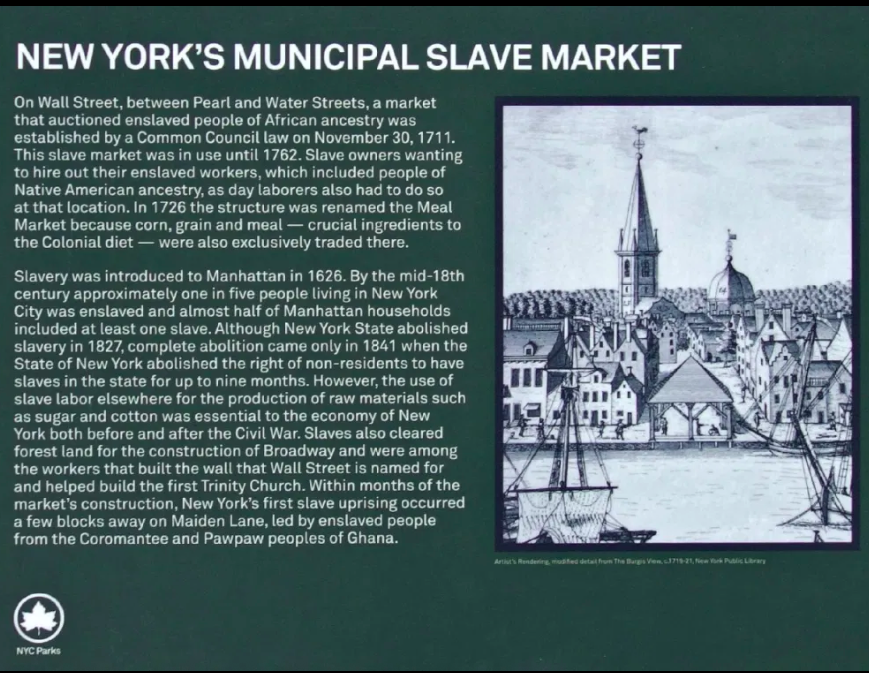
 After slavery was completely abolished in 1841 in New York, black people and people of color faced systemic discrimination in housing, education, jobs and health care. They still face these issues today. The marker pointing out the slave market once on Wall Street is only a few years old. We forget.

Toussaint was an example of the goodness and gifts of his race to the people of his time. He changed the way they thought; he gained their appreciation and challenged them to be just. Saints bless their own times and times to come.  May he bless us.

Climate Change to Climate Crisis

Last year, on the Feast of St. Francis, Pope Francis spoke, not just of climate change, but climate crisis.“The world in which we live is collapsing and may be near the breaking point.” You can’t miss the urgency for action in his letter. “No one can ignore the fact that in recent years we have witnessed extreme weather phenomena, frequent periods of unusual heat, drought and other cries of protest on the part of the earth that are only a few palpable expressions of a silent disease that affects everyone.”

Some ridicule the claims of danger; Francis takes them seriously, laying  out the facts the scientific world provides. He also pointed out the responsibility of the richer countries for this situation and deals with the arguments for inaction that are raised, even by members of the Church.

“ I feel obliged to make these clarifications, which may appear obvious, because of certain dismissive and scarcely reasonable opinions that I encounter, even within the Catholic Church. Yet we can no longer doubt that the reason for the unusual rapidity of these dangerous changes is a fact that cannot be concealed: the enormous novelties that have to do with unchecked human intervention on nature in the past two centuries.”

There’s a growing belief, the pope says, that thinks “as if reality, goodness and truth automatically flow from technological and economic power as such”. [14] As a logical consequence, it then becomes easy to accept the idea of infinite or unlimited growth, which proves so attractive to economists, financiers and experts in technology”.

Pope Francis outlined the efforts the nations of the world have made so far to deal with the crisis and finds them lacking. He called for a new level of power to arise, from the grassroots, to energize the situation of political inertia. At the same time, he calls for the nations of the world to fulfill their responsibilities at the upcoming meeting on the climate,  COP28 in Dubai.

One interesting point for us in the United States. The pope began his exhortation quoting from the US Bishops: “This is a global social issue and one intimately related to the dignity of human life. The Bishops of the United States have expressed very well this social meaning of our concern about climate change, which goes beyond a merely ecological approach, because ‘our care for one another and our care for the earth are intimately bound together. Climate change is one of the principal challenges facing society and the global community. The effects of climate change are borne by the most vulnerable people, whether at home or around the world’”.

He ended his exhortation with this observation: “If we consider that emissions per individual in the United States are about two times greater than those of individuals living in China, and about seven times greater than the average of the poorest countries, [44] we can state that a broad change in the irresponsible lifestyle connected with the Western model would have a significant long-term impact.”

Are we changing our lifestyles?

Letter to the Galatians

Our first readings this week at Mass are from the Letter to the Galatians, who were non-Jews St. Paul converted probably on his second missionary journey through Asia Minor. When Paul left, some Jewish Christians arrived and were enticing the new converts to adopt Jewish practices, especially that of circumcision. They also called Paul’s authority into question, saying he wasn’t among the original witnesses to Jesus’ life and resurrection.

Paul responds in this emotional letter written in 54 or 55 AD in which he voices amazement that the Galatians are listening to the newcomers and losing sight of the faith they’ve learned. Paul gives an account of his own call; he defends his authority to preach the gospel and his communion with the other apostles.

But the theme of his letter is belief in Jesus Christ, who was crucified. “Stupid Galatians! Who has bewitched you, before whose eyes Jesus Christ was publicly portrayed as crucified?” ( Gal 3,1) Don’t lose sight of what’s most important, what’s central to your faith–Jesus Christ!

Of course, the Galatians are not the only ones who lose sight of what’s most important ; we do too. That’s especially true in times like ours today.

Some of Paul’s most beautiful expressions of his own faith are found in this letter.  He describes his own conversion as a “revelation of Jesus Christ,” a grace by which God “revealed his Son to me.” It wasn’t a book he read or a blinding light.  Jesus revealed himself to him and that revelation continued. “I have been crucified with Christ,yet I live, no longer I, but Christ lives in me; insofar as I now live in the flesh, I live by faith in the Son of God who has loved me and given himself up for me.” (Gal 2,19-20)

Do  we need to remember too the Lord’s revelation of himself to us today?

Living in Christ means living in his Spirit, Paul continues. The Galatians are enticed by practices of the Jewish law; Paul reminds them of the law Jesus taught. “The whole law is fulfilled in one statement,’ You shall love your neighbor as yourself.’” (Gal 5,14) Bearing one another’s burdens is the way you fulfill the law of Christ, by sharing good things with one another you fulfill his law. Don’t tire of doing good, keep doing it, Paul says to his children in faith. (Gal 6,2;6:9)

Paul doesn’t give the Galatians a book he wrote once about Jesus, he speaks to them from his own faith in Jesus which is living and constantly growing. He’s likely just read the verse from the Old Testament about the curse one bears who hangs on the tree. The Son of God took on that cursed condition of hanging on a tree! What greater love can there be? Paul’s thinking too of the promise Abraham embraced who lived long before the mosaic law existed. That was the promise Abraham saw in faith and that’s the revelation the gentiles see in the Crucified Christ.

The Letter to the Galatians is about forgotten essentials that are replaced by something else. Paul recalls the essentials. “I live by faith in the Son of God who has loved me and given himself up for me.”

Keep before your eyes Jesus crucified.

Rejected By His Own: Luke 10: 13-16

“And as for you, Capernaum, ‘Will you be exalted to heaven?

You will go down to the netherworld.” Luke 10,13-16

The mystery of unbelief is hard to understand. Why was he rejected by the people of Capernaum who received him so enthusiastically when he began his ministry there? They saw him expel a demon in their synagogue. They marveled at his teaching. He cured Peter’s mother in law and made a paralyzed man walk. People came to the town from everywhere with their sick to have him cure them. They flocked around the door of the house where he stay. 

I’m sure some of Luke’s gentile readers (He wrote with them in mind) also wondered what happened in the land where Jesus was born and taught and died and rose again. Why was Jesus rejected in  Capernaum, Nazareth, Bethsaida– centers of Jesus’ life and ministry?

 “He came to his own and his own received him not,’ John’s gospel says. The mystery of unbelief was there from the beginning. Paul writes extensively about this mystery in the 9th chapter of this Letter to the Romans. Hope in the mystery of God’s mercy, Paul writes, Israel will have its day of belief.

The rejection of Jesus by his own people was a mystery  Christians could not understand then. We cannot understand it nows  as we see people abandoning Christianity and its churches. We wonder about the future of Christianity, especially among the young.

The mystery of unbelief is a mystery which calls us, not to believe less, but to believe more strongly. Believe in him with all your strength, preach him as well as you know how, Luke’s gospel says. Believing in a world of unbelief is one of the ways we enter into the mystery of the cross and resurrection.

Learning from Job

St. Gregory the Great, one the greatest of the popes, was called to that position in the 6th century, when Rome was under siege and in decline.  He didn’t want the job and for spiritual guidance he read from the Book of Job.  We would never know the greatness of Job, if suffering didn’t reveal it, he said.  Here are a few lines from his commentary on Job, our first reading this week:

“Paul saw the riches of wisdom within himself though his outward body was corruptible, and so he says ‘ We have this treasure in earthen vessels.  In Job, then, the earthen vessel had gaping sores, while an interior treasure of wisdom remained unchanged. Gaping outward wounds did not stop a treasure of wisdom from welling up within, for he said: ‘If we have received good things at the hand of the Lord, shall we not receive evil?’

By good things Job means the good things given by God, both temporal and eternal; by evil he means the blows he presently suffers.

When we’re afflicted, let’s remember our Maker’s gifts to us. Suffering will not depress us if we quickly remember the gifts we’ve been given. As Scripture says, ‘In the day of prosperity do not forget affliction, and in the day of affliction, do not forget prosperity.’”

The love of God for us was proven through the death of his Son, Jesus Christ who, like Job, was tested by suffering and death.

Guardian Angels

We usually associate Guardian Angels with children. In the gospel reading for the Feast of Guardian Angels, October 2, Jesus says we can’t get to heaven unless we become like little children whose “angels in heaven always look upon the face of my heavenly Father.”  (Matthew 18,1-5,10)

Artists, like the above, usually picture children with Guardian Angels, protecting and guiding them as they go on their way in a dangerous world.

Yet, the angels we read about  in the Bible are more than guardians of children; they’re signs of God’s guardianship of the whole world. They bring God’s message to Mary and Joseph and the prophets. They bring bread to Elijah in the desert and save Daniel in the lion’s den. Angels are part of God’s providential hand dealing with the world. They’re guardians and guides of nations, the human family and creation itself.  They’re everywhere instruments of God’s power and love and justice. 

This week’s news will be dominated, as usual,  by politics, wars, human tragedies and scandals, but here we are reading about guardian angels, who will never make the news of the day, yet are powerfully present in our world.  However smart or independent or grown-up we think are, God knows we’re still little children. We never outgrow God’s guidance and care: we have “loyal, prudent, powerful protectors and guides. They  keep us so our ways cannot be overpowered or led astray.” So that’s us in the picture above.

I think of the “principle of subsidiarity” on the feastday of the Guardian Angels. God spreads his  power around. I also remember that sometime ago I nearly hit a truck ahead of me but something suddenly stopped me. “Thanks.”

O God,
in your infinite providence you deign to send your holy angels to be our guardians. Grant to us who pray to you
that we may be defended by them in this life
and rejoice with them in the next.
Through our Lord Jesus Christ, your Son.