Author Archives: vhoagland

Good Friday: Pope Francis

Good Friday

Through the texts of Sacred Scripture and liturgical prayers we are called to Calvary to commemorate the redemptive Passion and Death of Jesus Christ. 

The Crucifix will be presented to us to adore. Adoring the Cross, we relive the journey of the innocent Lamb sacrificed for our salvation. We carry in our minds and hearts the sufferings of the sick, the poor, the rejected of this world; we will remember the “sacrificed lambs”, the innocent victims of wars, dictatorships, everyday violence, abortions.

 Before the image of the crucified God, we bring, in prayer, the many, the too many who are crucified in our time, who’d receive comfort and meaning in their suffering only from him. And nowadays there are many: do not forget the crucified of our time, who are the image of Jesus Crucified, and Jesus is in them. 

Ever since Jesus took upon himself the wounds of humanity and death itself, God’s love has watered these deserts of ours, he has enlightened our darkness.

 Let us make a list of all the wars that are being fought in this moment; of all the children who die of hunger; of children who have no education; of entire populations destroyed by wars, by terrorism. Of the many, many people who, just to feel a bit better, need drugs, the drug industry that kills… 

He enters into the abyss of suffering, he enters into these calamities to redeem and transform them. to free every one of us from the power of darkness, of pride, of resistance to being loved by God.

 By his wounds we have been healed (cf. 1 Pt 2:24), the apostle Peter says, by his death we have been reborn, all of us. And thanks to him, abandoned on the cross, no one will ever again be alone in the darkness of death. Never. He is always beside us: we need only open our heart and let ourselves be looked upon by him. 

Pope Francis


For today’s homily, please play the video file below:

For a commentary on John’s Passion narrative by Fr.Donald Senior, CP. seehttps://passionofchrist.us/commentary/

Holy Thursday

On the evening of Holy Thursday, as we enter the Easter Triduum, we will relive the Mass in which we commemorate the Last Supper and what happened there. It is the evening when Christ left his disciples the testament of his love in the Eucharist, not as a memento, but as a memorial, as his everlasting presence. 

Every time we celebrate the Eucharist we renew this mystery of redemption. In this Sacrament, Jesus substituted the sacrificial victim — the Paschal lamb — with himself: his Body and Blood grant us salvation from the slavery of sin and death. The salvation from every form of slavery is there.

On this evening, he asks us to love one another by becoming servants to one another, as he did in washing the disciples’ feet, a gesture that anticipates his bloody oblation on the cross. And indeed, the Master and Lord will die on the next day to purify not the feet, but the hearts and the entire life of his disciples. He was a servant to us and by the service of his sacrifice he redeemed us all.

Pope Francis

For today’s homily, please play the video file below:

God of infinite compassion, to love you is to be made holy. Fill our hearts with your love. By the death of your Son you have given us hope, born of faith. By his rising again fulfill this hope in the perfect love of heaven where he lives and reigns with you, and the Holy Spirit, One God, forever and ever. Amen.

The Days of Holy Week

Six days before the Passover, Jesus came to Bethany, the home of Lazarus,  whom he had raised from the dead. The next day the great crowds that had come for the festival heard that Jesus was coming to Jerusalem.  So they took branches from the palm tree and went out to meet him.

John’s gospel says that Jesus came to Bethany, the home of Lazarus whom he raised from the dead. He was honored at a Sabbath banquet there, John’s gospel for Monday tells us. The next day, our Palm Sunday,  crowds that have come to Jerusalem for Passover will honor him by placing palm branches before him as he goes into city. 

We have a picture day by day as we approach the mystery of Jesus’ death and resurrection.

Palm Sunday c: The Passion from St. Luke

For this week’s homily please watch the video below.

Thursday, 4th Week of Lent

Lent 1

Readings

In the final weeks of Lent the readings from John’s Gospel describe Jesus’ various visits to Jerusalem to celebrate different Jewish feasts. In John’s gospel today, Jesus is in Jerusalem celebrating the Jewish feast of Pentecost, which took place 7 weeks after Passover. (John 5, 31-47)  Our Pentecost comes from the Jewish feast.

The Jewish feast of Pentecost goes by different names. It’s called Shavuot, meaning weeks, which originally celebrated the beginning of the barley harvest, but also recalls Moses handing on the law to the Jews as he comes down from Sinai. This year the Jewish feast begins at sundown, June 11. The Christian feast of Pentecost falls on Sunday, June 19th, this year. 

Our first reading today recalls the descent of Moses from Sinai to an unbelieving people.”I see how stiff-necked this people is. Let me alone, then, that my wrath may blaze up against them to consume them.Then I will make of you a great nation,” God says to him. (Exodus 34:7-14)

But Moses pleas for his people, lest Egypt be convinced the God of Israel is cruel. Moses also recalls God’s covenant made to Abraham. Jesus appears as the new Moses on this feast, pleading for forgiveness for his people and promising to open the graves of their dead. 

The miracles and his works of healing testify to him, Jesus says. The scriptures, long searched by the Jews as the way to eternal life also “testify on my behalf,” Jesus says. Above all, his heavenly Father, who through an interior call draws to his Son those who are humble, speaks for him.

Faith in Jesus still comes in these ways. The Jewish scriptures still point him out. On their feast of Shavuot, Jews study the Torah, the law of Moses. One Jewish custom is to stay up all night and read the Torah.

Our heavenly Father draws us to his Son in lent. The voice of the Father says once more: “listen to him.” We listen to him in the scriptures.

We’re reminded by scholars that in these passages from John’s Gospel, “the Jews” who condemned Jesus are not the Jewish people but a powerful group that turned against him at that time. We approach the mystery of God together with our Jewish brothers and sisters..

Prayer

O God
I come to you
who have given so much to me. You know “my inmost being” and “all my thoughts from afar.” I want to listen to you
and be changed by what I hear.

Help us all to be changed by you. Amen.

Bethesda

There was a feast of the Jews, and Jesus went up to Jerusalem.
Now there is in Jerusalem at the Sheep Gate
a pool called in Hebrew Bethesda, with five porticoes.
In these lay a large number of ill, blind, lame, and crippled.
One man was there who had been ill for thirty-eight years.
When Jesus saw him lying there
and knew that he had been ill for a long time, he said to him,
“Do you want to be well?”
The sick man answered him,
“Sir, I have no one to put me into the pool
when the water is stirred up;
while I am on my way, someone else gets down there before me.”
Jesus said to him, “Rise, take up your mat, and walk.”
Immediately the man became well, took up his mat, and walked.

Now that day was a sabbath.
So the Jews said to the man who was cured,
“It is the sabbath, and it is not lawful for you to carry your mat.” 
He answered them, “The man who made me well told me,
‘Take up your mat and walk.'”
They asked him,
“Who is the man who told you, ‘Take it up and walk’?”
The man who was healed did not know who it was,
for Jesus had slipped away, since there was a crowd there.
After this Jesus found him in the temple area and said to him,
“Look, you are well; do not sin any more,
so that nothing worse may happen to you.”
The man went and told the Jews
that Jesus was the one who had made him well.
Therefore, the Jews began to persecute Jesus
because he did this on a sabbath.

The miracle Jesus worked on the paralyzed man on the Sabbath is behind the dialogue he has with the Jews found in our readings for Wednesday and Thursday of this week. “My father is at work until now, so I am at work.”

Like the man born blind,  the paralyzed man does not approach Jesus. Jesus approaches him. The man never enters the healing waters. God’s Healing Water, God’s Son, heals him.

John’s gospel describes the place where the miracle happened in Jerusalem. It is close by the temple. In our first reading today Ezechiel promises life-giving water will flow from the temple. Jesus, the new Temple, offers life and light to a paralyzed world.

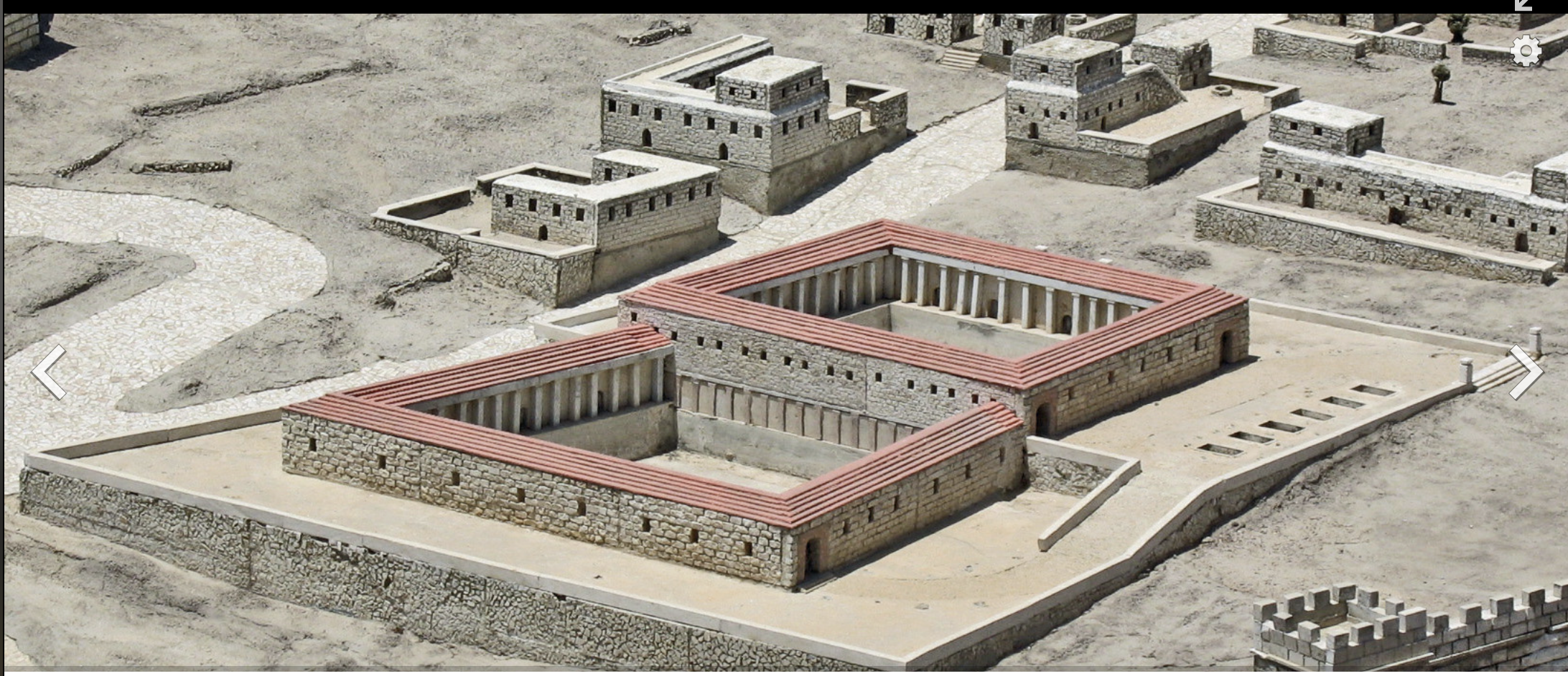
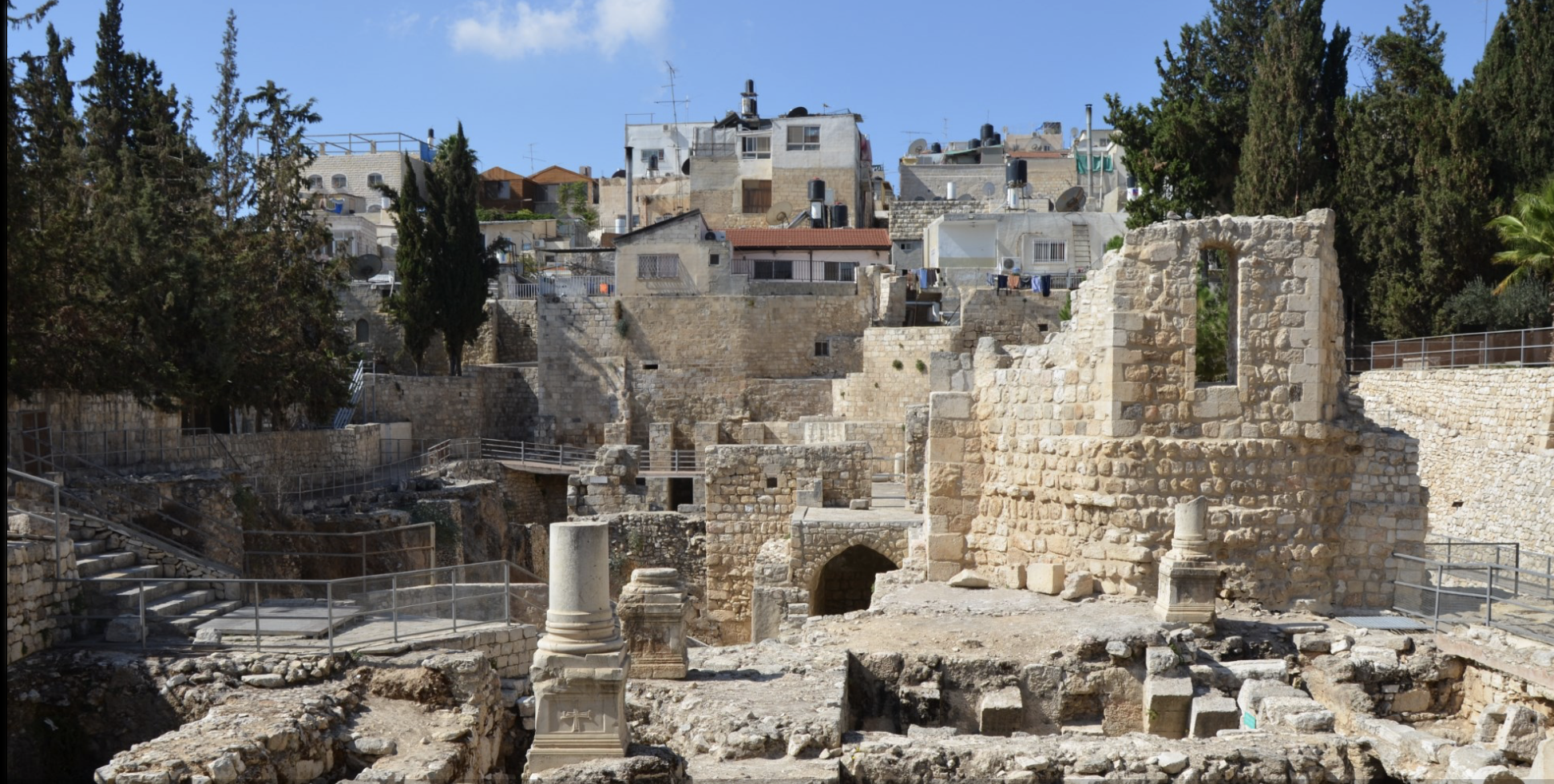
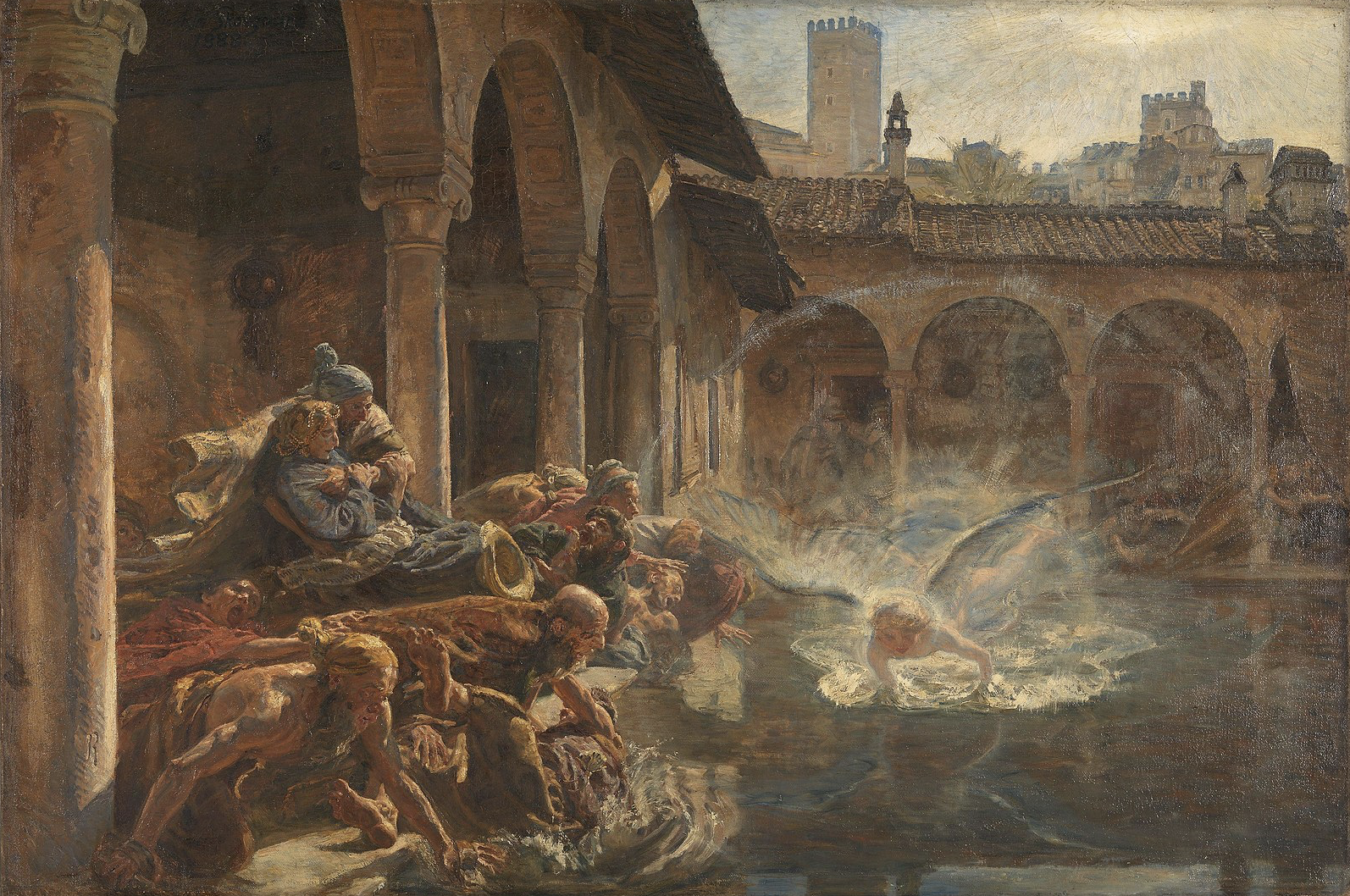
Archeologists have uncovered the place. Here are some pictures:

Jerusalem model, Jewish Museum

Reconstruction of Bethesda, located near the temple and the Fortress Antonia, where the paralyzed man was healed; from the Jerusalem model, Jewish Museum

Wikipedia Commons

Ruins of the healing pool of Bethesda.

Until the 19th century, there was no clear archaeological evidence for the pool but archeologists have uncovered the ruins of the ancient healing place marked by ancient churches since the 5th century. The beautiful 12th century church of St. Ann stands today next to the ruins. Tradition says the birthplace of Mary, the mother of Jesus, is nearby. The site, near St. Stephen’s gate, is a popular pilgrim destination today.

Joakim Slpvgard, Museum of Art, Norway

Artist rendering of the pool. The Fortress Antonia is in the background. Not only the Jews, but also the gentiles were among the ill, the blind, the lame, to be healed in this pool.

4th Week of Lent: Readings and Feasts

Until now, many of our lenten gospels were from St. Matthew’s account of the Sermon on the Mount  – Jesus’ teaching on prayer and mercy and forgiveness– and also some important readings from Luke’s Gospel, like the parable of the Prodigal Son and the parable of the Pharisee and the Publican. They originate in Galilee where Jesus taught and worked wonders, but finally was not well received. 

Our gospel readings for this week and the remaining days of lent are from St. John’s gospel and bring us to Jerusalem where Jesus celebrated various Jewish feasts.  During the feasts  he worked wonders, gave sight to a man born blind, raised Lazarus from the dead and taught in the temple  

 All the while, opposition in the Holy City mounted until he was arrested, judged guilty, crucified and died;  then he rose from the dead.

 John’s gospel sees  Jerusalem as the place where Jesus manifests himself. Because he worked wonders in Jerusalem he’s welcomed into Galilee. “When he came into Galilee, the Galileans welcomed him, since they had seen all he had done in Jerusalem at the feast; for they themselves had gone to the feast.” (John 4:45) Jesus speaks and works wonders on the Jewish feasts.

More than other gospel writers, John describes a glorious Christ accomplishing his mission to bring life to the world, even as the world opposes him and clings to darkness.  Jesus Christ, God’s only Son, suffers and dies and rises again. God’s mercy, made flesh in Jesus Christ, is revealed in Jerusalem, on a Passover feast. 

What does he accomplish by the mystery of his death and resurrection? The Prophet Isaiah announces it in our first reading on Monday:

Thus says the LORD:

Lo, I am about to create new heavens

and a new earth;

The things of the past shall not be remembered

or come to mind.

Instead, there shall always be rejoicing and happiness

in what I create;

For I create Jerusalem to be a joy

and its people to be a delight… ( Isaiah 65:17)

A God Moment?

Dear Jesus, what is a God moment?
– Is it when we see something beautiful and realize You put it there just for us?
– Is it a sudden feeling of happiness or a strong feeling of empathy?
– Is it a  thank You that comes out of nowhere to You , my God?
– Is it a thought or a vision that we realize comes from you?
– Is it a need to get on that Cross with You and empty ourselves of all that is of this world?
-Is it the realization that we are not of this world, but only visitors?
– Is it a word of love ; a look of understanding; a smile from a stranger; a touch from someone when we need it the most?
– What about when we share  with others Your love, my God? We love together. We are one with each other and with You!
– Is it when I look at my husband, my children, my grandchildren, my friends, my Church, my life, and see that they are all gifts from you?
Thank You my God! We need moments with You now more than ever! Have mercy on us!
Fill us with Your Light,  Your Love! , Your All!!
We Love You! 
Thank You!
Berta Hernández