Our first reading today from the Book of Kings about Naaman the Syrian is one of the stories that got Jesus into trouble in Nazareth. He compared Naaman’s faith to the faith of the people from Nazareth and they were angered enough to want to throw him off the cliff outside the town.
Naaman’s story is filled with interesting lessons. A little Jewish slave girl brings a great general with leprosy to Israel. Israel’s king is terrified about the political consequences of the visit. Naaman is angery about being told to wash in the Jordan. A cure comes from the water, which associates it with Christian baptism.
Our reading today, though, omitted part of the story I like. Returning to the Prophet Elisha after he’s cured, Naaman wants to shower the prophet with gifts, but he won’t take any. “Naaman said: “If you will not accept, please let me, your servant, have two mule-loads of earth,* for your servant will no longer make burnt offerings or sacrifices to any other god except the LORD.”
“Two mule-loads of earth.” The Empress Helena brought earth from the site of Calvary to the church of the Holy Cross in Rome in the 4th century when she brought relics of the cross to be honored there. The earth is still there.
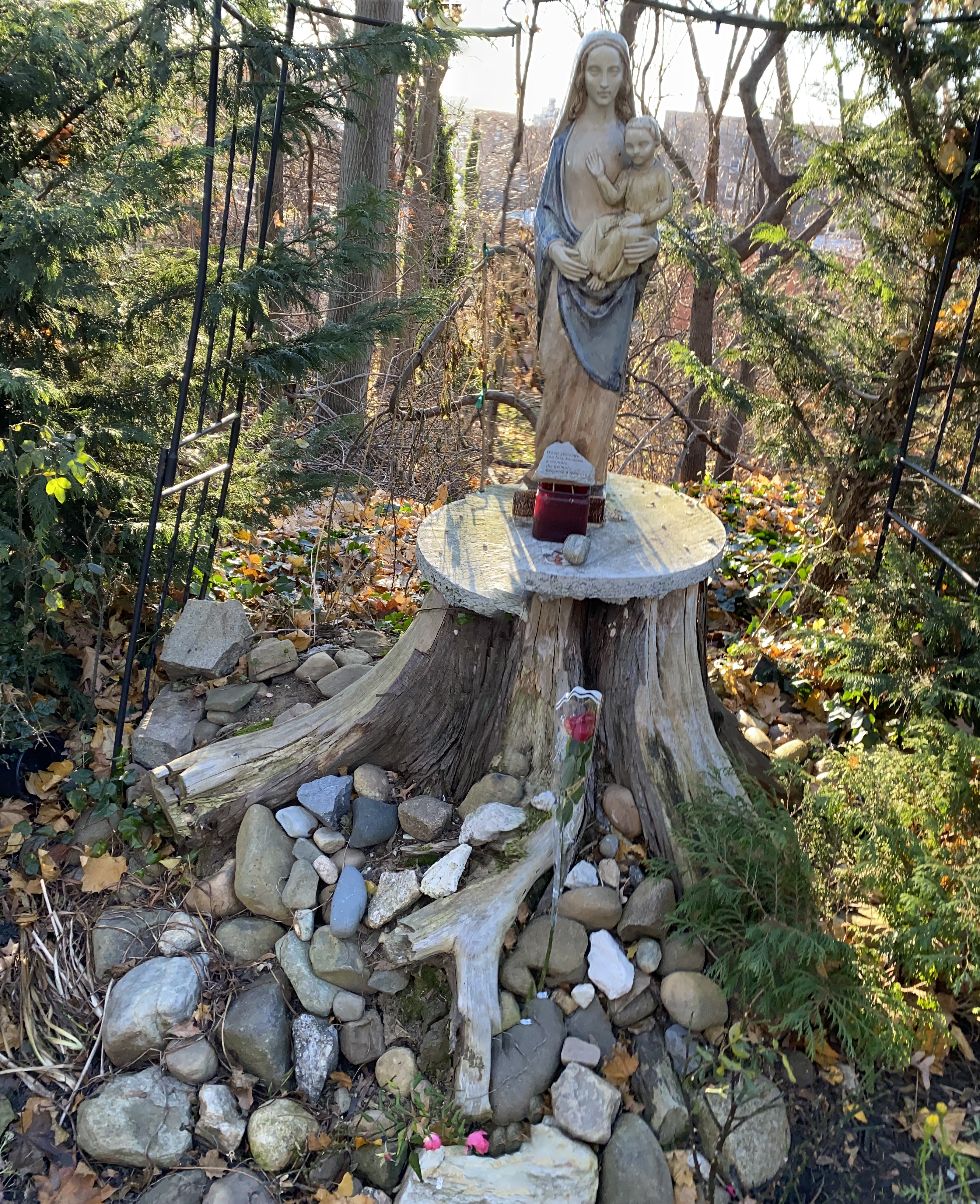
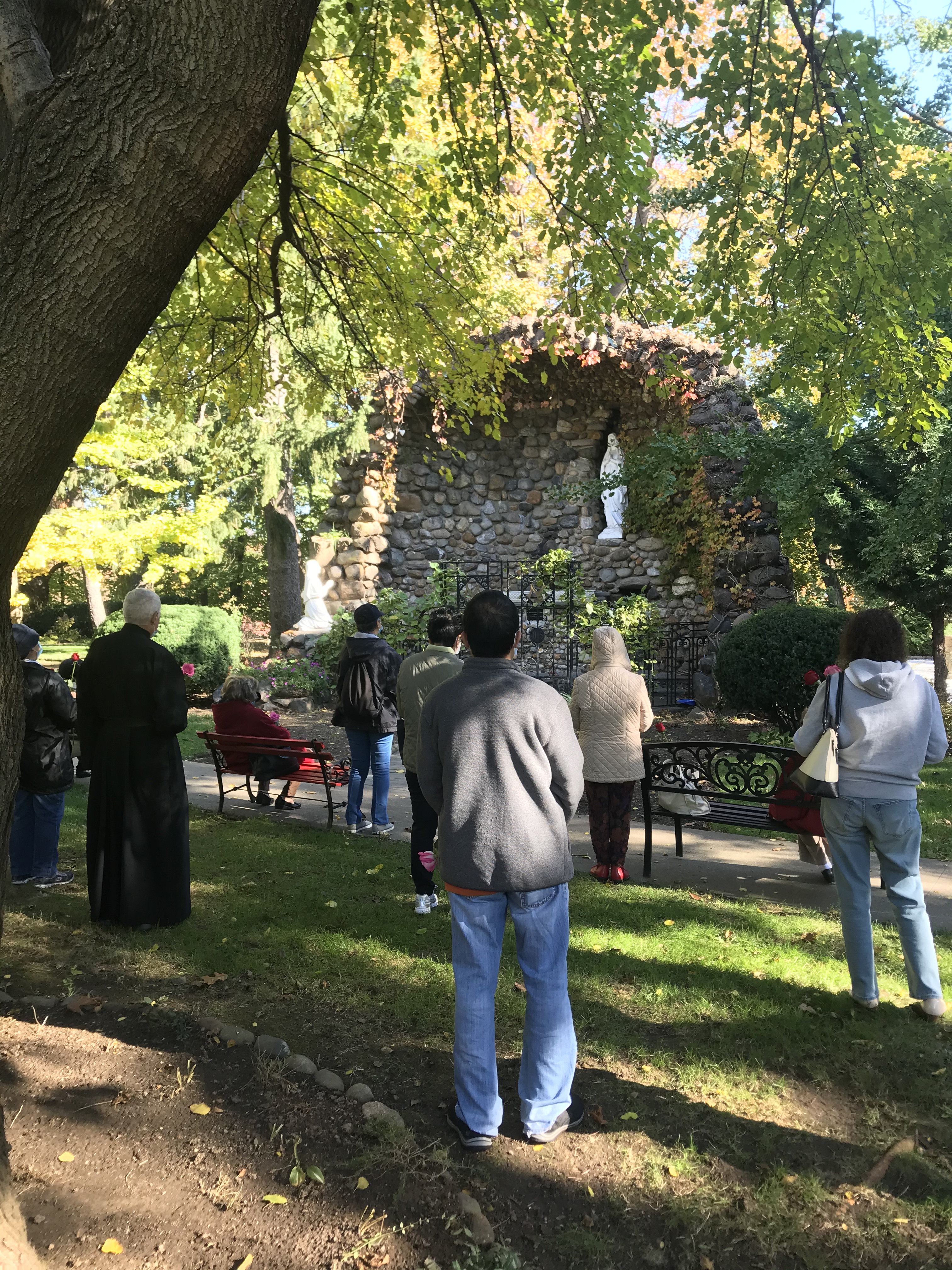
We’ve placed rocks from many countries of the world in our Mary Garden at the foot of the statue of Mary and her Child. (Above)
Earth itself is holy. So simple it can be ignored. Yet all life depends on about 6 inches of soil. Of all the memorabilia Naaman could have taken from Israel, he took two mule-loads of earth. He had it right.
March 21 Mon Lenten Weekday 2 Kgs 5:1-15b/Lk 4:24-30
22 Tue Lenten Weekday Dn 3:25, 34-43/Mt 18:21-35
23 Wed Lenten Weekday Dt 4:1, 5-9/Mt 5:17-19)
24 Thur Lenten Weekday Jer 7:23-28/Lk 11:14-23
25 Fri Solemnity of the Annunciation of the Lord Is 10:7-14; 8:10; Heb 10:4-10; Lk 1:26-38
26 Sat Lenten Weekday Hos 6:1-6/Lk 18:9-14
27 SUN FOURTH SUNDAY OF LENT 1 Sm 16:1b, 6-7, 10-13a/Eph 5:8-14/Jn 9:1-41 or 9:1, 6-9, 13-17, 34-38
Last week’s weekday readings ended with the story of the Prodigal Son; this week’s end with the tax collector who prays in the temple and finds mercy. There are also readings from the Book of Hosea this week; he’s the prophet whose unbroken love for his unfaithful wife reminds us of God’s relationship with humanity. God wants us back.
Last Sunday’s readings from cycle A, are basic catechetical teachings. The Book of Exodus and John’s multi-leveled account of the Samaritan woman who meets Jesus at the well prepare us to meet him in sacraments. The story of Naaman the Syrian general (Monday) is also a multi-leveled story. Naaman’s appreciation of the saving water of the Jordan recalls the mystery of baptism, celebrated in the Easter mysteries.
Naaman and the Samaritan woman, both interesting people, remind us that sacraments are meant for real complicated people who are drawn gradually into the mysterious reality of God’s grace.
Sacraments can be easily forgotten or unappreciated, simple signs as they are. They draw on the natural world, which can also be unappreciated, as we are learning today. Can a renewed appreciation of nature lead to a greater understanding of the sacraments? Can figures like the Samaritan woman and Naaman remind us that the sacraments are meant for people immersed in their own time and place?
The Feast of the Annunciation, March 25, is a reminder that Jesus who comes among among us, was conceived by the Holy Spirit, born of the Virgin Mary. He was truly human as well as divine. The feast is a feast of hope. “The Lord is with you,” the angel says to Mary, “Do not be afraid.” The angel announces to her that a Child will be born to her who will bring God’s kingdom to us. The Lord is with us, do not be afraid.
MARCH 14 Mon Lenten Weekday. Dn 9:4b-10/Lk 6:36-38
15 Tue Lenten Weekday Is 1:10, 16-20/Mt 23:1-12
16 Wed Lenten Weekday Jer 18:18-20/Mt 20:17-28
17 Thu Lenten Weekday [St. Patrick) Jer 17:5-10/Lk 16:19-31
18 Fri Lenten Weekday (St. Cyril of Jerusalem) Gn 37:3-4, 12-13, 17-28/Mt 21:33-46
19 Sat ST JOSEPH, Solemnity2 Sm 7:4-5, 12-14, 16/Rom 4:13, 16-18, 22/Mt 1:16, 18-24
20 SUN THIRD SUNDAY OF LENT Ex 3:1-8a, 13-15/1 Cor 10:1-6, 10-12/Lk 13:1-9 or, for Year A, Ex 17:3-7/Rom 5:1-2, 5-8/Jn 4:5-42 or 4:5-15, 19b-26, 39a, 40-42
Our readings for this week, beginning with the Old Testament reading from Daniel, proclaim the mercy of God. The New Testament readings on Monday, Thursday and Saturday are from St. Luke– a gospel of mercy. Jesus proclaims God’s mercy, especially extended to the poor. The story of the Prodigal Son, Luke’s great parable of God’s mercy, is usually read on Saturday, but not this year since the readings for the Feast of St. Joseph are read.
Matthew’s Gospel for Wednesday reminds us that temptations about power, so obvious in the story of Jesus’ temptations, also occur in his disciples, like James and John. Can we see it too in the elder brother from the Parable of the Prodigal Son?
The readings from the Old and New Testaments complement each other during Lent. Celebrations of the saints are fewer, but they can’t be totally omitted because they remind us that the gospel takes form in generations after the time of Jesus. The feast of St. Patrick recalls the coming of the gospel to Ireland. Cyril of Jerusalem is one of the great bishops of that holy city.The Feast of St. Joseph celebrates the spouse of Mary and the foster-father of Jesus.
Readings from cycle A can be substituted for the reading cycle of the year, especially when a community is preparing new members for Baptism. The gospel for the 3rd Sunday of Lent in cycle A is the story of Jesus and the Samaritan woman, a key story for Lenten catechesis. Cycle A is also a good source for the catechesis of children.
I have been thinking about imperfections this lent. They can be dangerous.
We can forget our nothingness and the reality of our own imperfect nature.
We’re creatures of God who have lost the capability of being perfect due to original sin. We’re lukewarm in faith and proud. We’re not able to do any good deed or work without the bountiful grace of Christ sustaining us.
Lent is a good time to face our lukewarm faith and turn to Christ with humility. It’s a virtue that can change us– humility. So many of us lack this crucial virtue. We can forget we going to die as we pursue empty pleasures.
St. John Marie Vianney, a great saint, patron of diocesan priests, and a perfect model for catholic priests throughout the world, commented on Saint Peter’s cowardice during Christ’s passion and said, “Alas! To show him how man, left to himself is nothing at all.” Peter during the passion of Jesus is a good example to remember in lent.
Let’s pray for the grace of profound humility during lent. It’s what we need now and for the rest of our lives. So instead of giving up some drink or food at this time, how about praying for humility?
The liturgy is the primary catechism of our church. ( Second Vatican Council, SC 2) The liturgy’s more important than any church document, or theologian, or devotion, or church council. It’s more important than going to a university or taking an online course in theology. The liturgy is the daily bread that feeds and nourishes faith.
Lent and easter are especially important times in the liturgy for feeding and nourishing faith, for those entering our church and those already baptized.
The Old and New Testament readings for this 1st week of Lent offer a complete catechism on prayer, for example. The gift of prayer is like rain and snow come down from heaven, the Prophet Isaiah says, completing Jesus’ teaching on the Our Father. (Tuesday)
Thursday’s reading from Ezekiel says that the wicked can become good and the good can become wicked. As we come before God’s altar we all know weakness. “The Eucharist is not a prize for the perfect but a powerful medicine and nourishment for the weak.” ( Pope Francis) We’re all weak. We all pray for mercy.
Wednesday’s Old Testament reading from the Book of Esther is a timely reminder that prayer can save a whole people. Prayer’s not limited to ourselves and our own needs. Prayer can change society. It can change the fortunes of people. It can prevent genocide. It can change the situation in the Ukraine.
A lot of people question that.
Queen Esther was a very beautiful Jewish girl chosen for the harem of a Babylonian king, but she was changed by the threatened extinction of her people. She prayed for them and worked to save them.The Jews celebrate Esther in their Feast of Purim, celebrated in late February to March.
Our Old Testament reading this Wednesday recalls, not her clever way to get into the king’s graces, but Esther’s prayer. She prostrated herself on the ground for a whole day and pleaded with God in her nothingness.
Our Lady of Vladimir, Russia
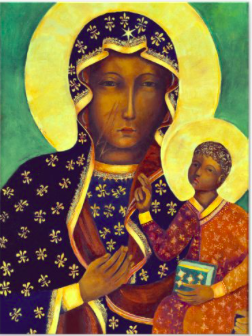
The Christian peoples of eastern Europe and Russia have a great devotion to Mary, the Mother of Jesus. Most of the icons of Mary they honor, like Our Lady of Czestochowa and Our Lady of Vladimir are associated with wars when Mary saved their lands. The Ukrainians have an icon in Liev, in Western Ukraine, closely associated with Fatima and the conversion of Russia, their powerful eastern neighbor.
Icons like that of Our Lady of Vladimir (above) picture the tenderness between the Christ Child and his mother as their cheeks press together. Tenderness is the grace God must give to the world, lest it fall into hatred and violence. It’s a grace we need today. So lacking today.
Interestingly, according to the Book of Esther it’s the grace felt by the Babylonian king when he received her into his court.
I was looking recently through a New York Times’ section explaining the situation in the Ukraine to children. Lesson plans for teachers. Nothing about religion.
How can we understand what we see in the Ukraine without recognizing religion and the questions religion asks?
Hail Mary, full of grace, the Lord is with you.
Blessed are you among women and blessed is the fruit of your womb, Jesus.
Holy Mary, Mother of God, prayer for us sinners, now and and the hour of our death. Amen.
I spoke yesterday at Mass in our monastery chapel to our First Saturday Prayer Group, begun after the 2nd World War by returning American war veterans anxious over the threat of nuclear war arising after that war. They were praying to Our Lady of Fatima for the conversion of Russia, source of that threat then. Now we’re praying for the threat leveled today.
When I look online for news of the war in Ukraine today, I look for interviews with retired American military men, like Generals Petraeus, McMaster, McCaffery, who have been to war and led armies. They’re not only knowledgeable about war, but very cautious about it, learned no doubt from bitter experience.
The other day an excited interviewer asked one of the generals, “Why don’t we send in missiles to destroy that 40 mile column of the Russian army outside Kiev?” The general immediately rejected the suggestion. Probably bring on World War III, he said, but also we need to leave room for diplomacy to work. We can’t let an enemy feel like a trapped animal.
So different from what someone playing video war games online might say. More like what our gospel response Saturday says:”I take no pleasure in the death of the wicked man, says the Lord, but rather in his conversion, that he may live.” (Exodus 33;11)
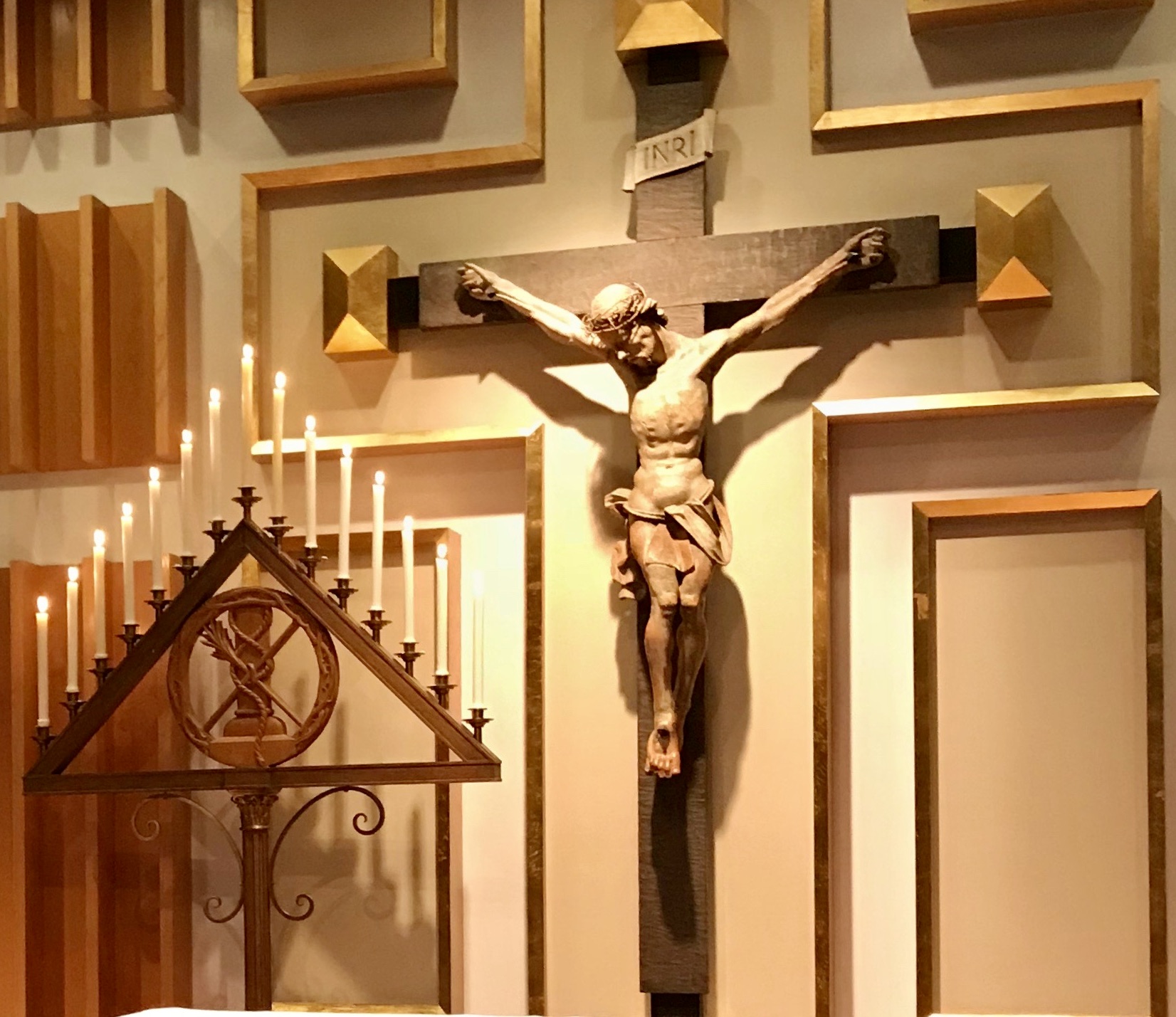
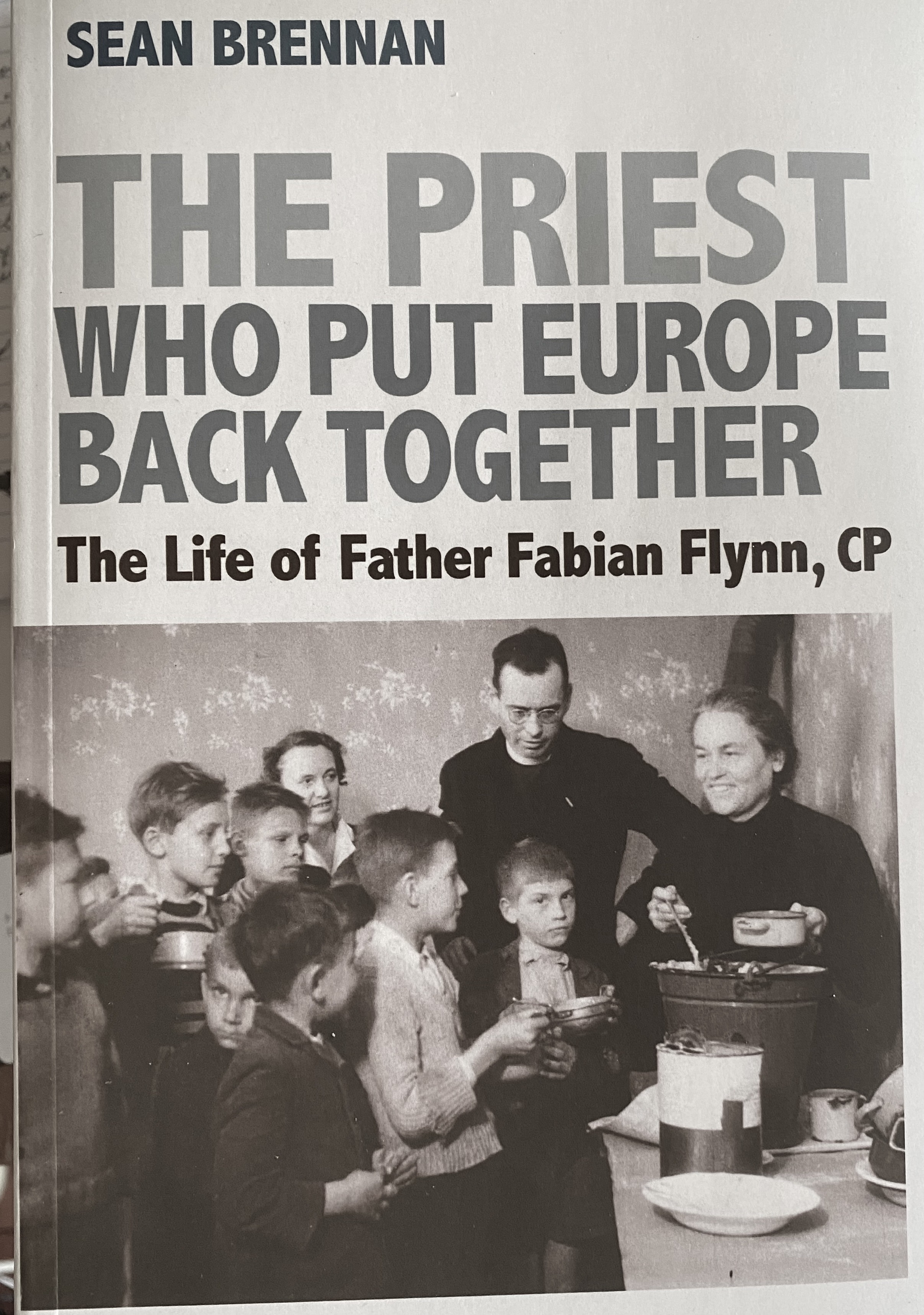
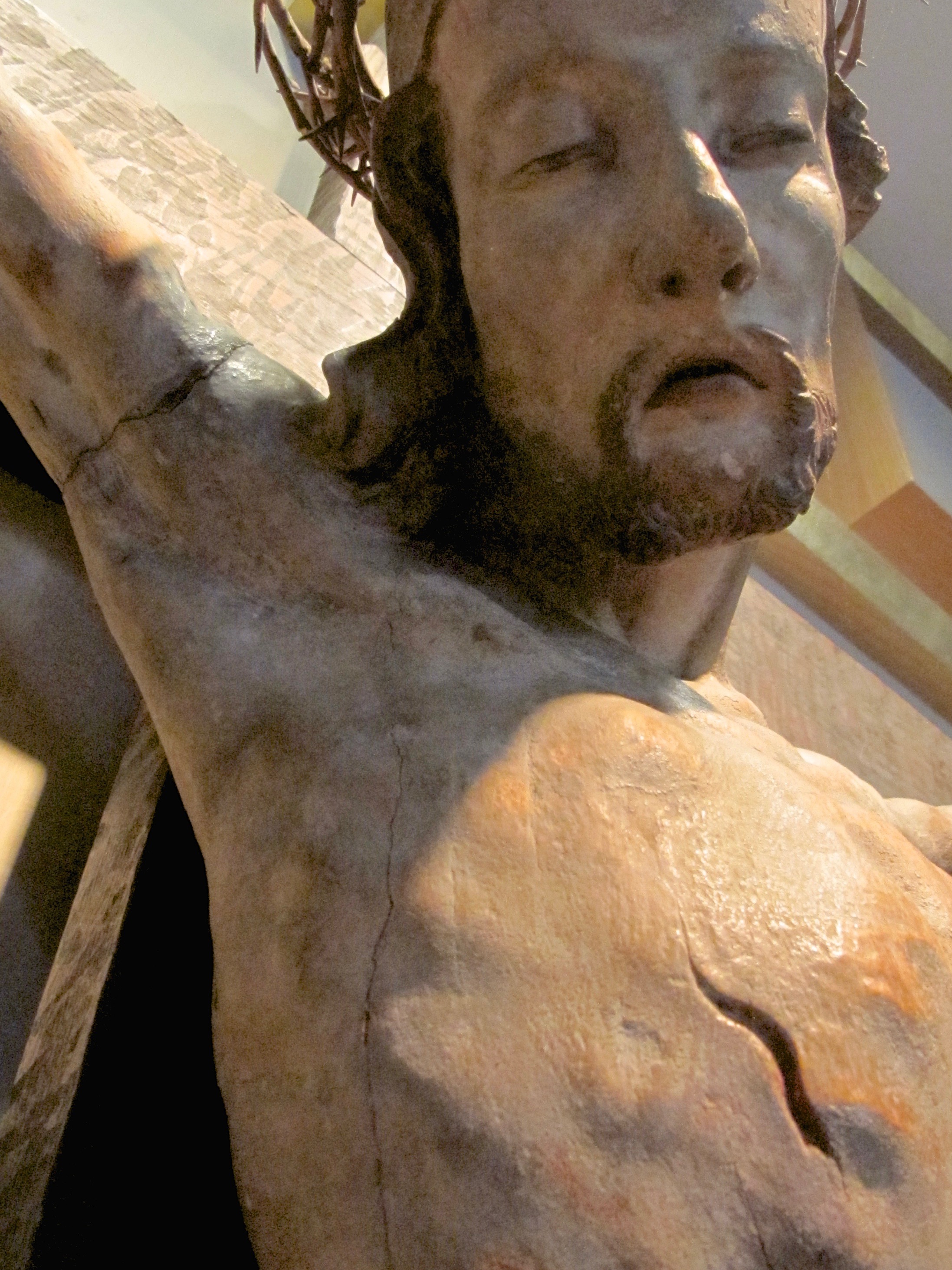
We have an extraordinary crucifix in our monastery chapel (Above), gift of the German bishops of Bavaria to Fr. Fabian Flynn, a member of my community, for the life he brought to a broken Europe after the 2nd World War. There’s a book about him and his work “The Priest Who Put Europe Back Together” by Sean Brennan, (Washington, DC, 2018)
Father Fabian was ordained here in our monastery in 1931 and served in our retreat house after ordination, then he went on to become an editor for The Sign magazine, a Passionist publication.
He became an army chaplain with the 1st Infantry Division in 1943 during the 2nd World War and served in combat in North Africa, Sicily, France and Germany for 16 months. His unit ended up in Nuremberg, Germany at the time of Nuremberg war trials; Fabian became chaplain for the Allied participants in that trial. He also ministered to the Germans in Nuremberg, including those on trial as war criminals.
During the trial, he celebrated Mass in one of Nuremberg’s war-damaged Catholic Churches, for Allied personnel and German Catholics together.
After army service, he became Director of Catholic Relief Services in Germany and Hungary from 1946-49, and until his death in 1973 he worked for the relief of millions of refugees displaced by wars and other tragedies in Europe and elsewhere.
The crucifix given in gratitude to Fr. Fabian at the end of his service by the German bishops is an old crucifix. I think it may come from a bombed out German church. It’s a fitting expression of the work he did then, and the work we have before us now as we look at this war in Ukraine.
How shall we look at this war? What shall we do?
Jesus looked from his cross and said “Father, forgive them for they know not what they do.” His plea for mercy was a plea for his world then and a plea for our senseless world now. We need to pray for our world: “Father, forgive us for we know not what we do.”
In Jesus on the cross we also see those who suffer most in this war, refugees, mothers holding their children, the old, the sick, the wounded, the dying. They are all there.
On the cross Jesus is a sign of all who suffer. “What you do for the least, you do for me,” he says. We must help when we can.
The generals tell us military solutions won’t do it. Neither will economic sanctions. The Cross of Jesus tells us the human heart must be touched and changed, and so we pray to God to touch and change our hearts.
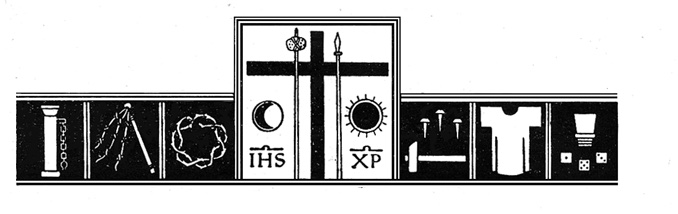
Lent is coming. Let’s join those disciples in our picture above following Jesus. One way to follow him is by reflecting on the lenten scriptural readings recommended for the Sundays and weekdays till Easter. They’re the basic book for lenten reading.
On the 1st Sunday of Lent, this coming Sunday, Luke’s gospel takes us to the Jordan River where Jesus is led into a deserted place by the Spirit and tempted for 40 days after his baptism. Our journey begins in a desert. Readings from Luke’s Gospel lead us through the Sundays of Lent this year.
The weekday gospels for the first three weeks of lent are mostly from Matthew, the early church’s favorite gospel for catechesis during Lent. Matthew brings us to Galilee where Jesus speaks “the words of eternal life” in his Sermon on the Mount. (Matthew 5-7) Be faithful to prayer and you will grow in wisdom, Jesus says. ( Tuesday and Thursday, 1st week of Lent) Love your neighbor, even your enemies and “the least,” whom we easily overlook. ( Monday, Friday, Saturday, 1st week of Lent)
Peter’s confession at Caesaria Phillipi is the highpoint of the first part of Matthew’s gospel. “You are the Christ, the Son of the living God,” Peter says to Jesus. “You have the words of everlasting life.” Lent invites us to join him in that same confession.
Yet, can we possibly love and believe that way, so lofty and challenging? We’re rather weak disciples. Jesus doesn’t call perfect disciples, the reading for Saturday after Ash Wednesday reminds us. He called Matthew the tax collector and people like him–not very good keepers of the law. Outsiders and sinners like them tell us we belong in the lenten season. (Luke 5, 27-32)
Matthew’s gospel takes us up the Mount of the Beatitudes. Like most sacred writers, Matthew likes mountains; you see ahead more clearly from them. On the 2nd Sunday of Lent, we go up to the Mount of the Transfiguration to glimpse the glory found ahead.
By the 4th week of Lent, we arrive in the Holy City, Jerusalem, to the temple mount and then the Mount of Calvary. Starting with the 4th week most of the weekday lenten gospels will be from the Gospel of John. I’ll say something about them before we get there.




 The Victor's Place