Author Archives: vhoagland

Where did it happen?

We wonder where the gospel events took place, especially during Holy Week.. Where was Jesus judged by Pilate? What way did he go to Calvary?  Where was he crucified and where was he buried?

Reliable historians generally agree that the tomb of Jesus and the site of Calvary are  in the Church of the Holy Sepucher.  “Is this the place where Christ died and was buried?” Jerome Murphy-O’Connor asks in his solidly researched “The Holy Land: An Oxford Archaeological Guide” (New York, 2008). “Yes, very probably,” he answers. (p 49)

Holy sepul

Church of the Holy Sepulcher, Jerusalem

Jerusalem’s “Via Dolorosa”, the traditional way of the cross,  is less historically reliable. Beginning near St. Stephen’s Gate, where the Fortress Antonia once stood, it winds up at the Church of the Holy Sepulcher.  Murphy-O Connor says it is “defined by faith and not by history.” (pp 37-38) Early Christian pilgrims created it.
DSC00267

Pilgrims on the Vis Dolorosa

After the Christian church was established by Constantine in the 4th century, pilgrims from Mount of Olives, where many stayed, walked through St. Stephen’s Gate up to the Church of the Holy Sepulcher, stopping at certain places to recall incidents from the passion of Jesus. The present Via Dolorosa was formed from their devotions over the centuries.   (cf. Murphy-O’Connor, p 37) Pilgrims, not archeologists, have given us the present Via Dolorosa.
Jerusalem

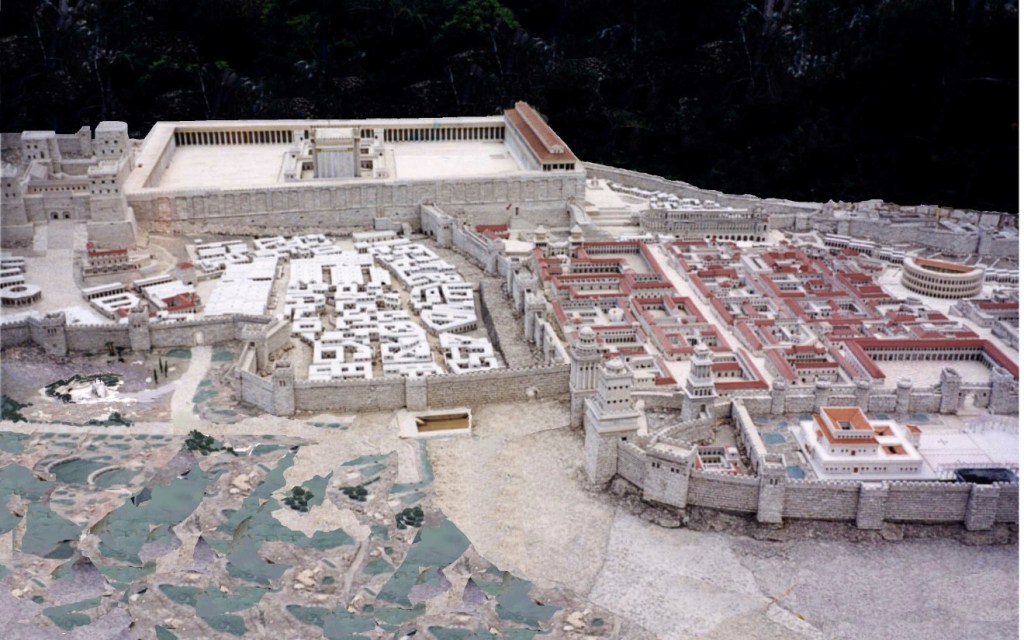
Jerusalem at the Time of Jesus

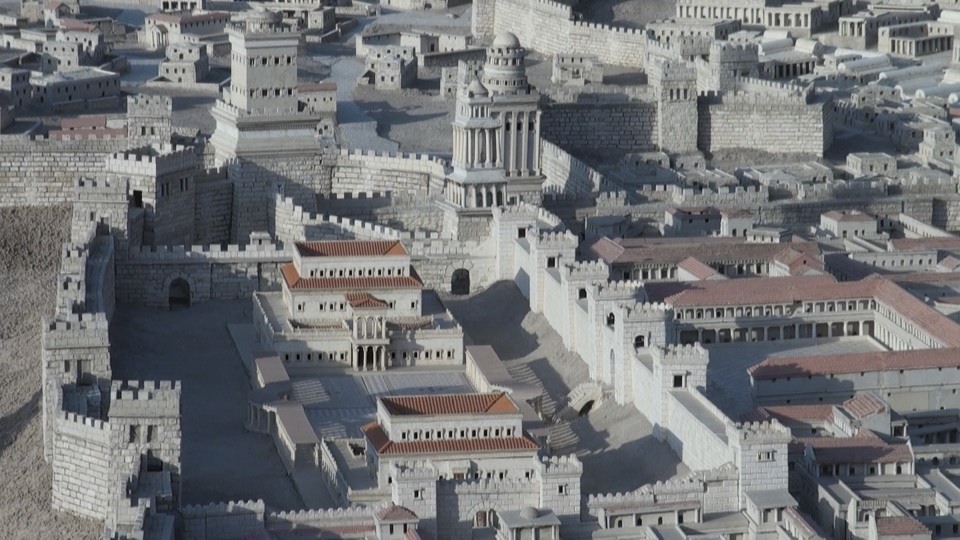
Is their a more reliable way?  A reconstruction of Jerusalem (above) from the time of Jesus at the Israel Museum–somewhat altered here– suggests another way that  Jesus was led to Calvary.  At the bottom right is the luxurious palace complex built by Herod the Great. (below) When Pontius Pilate came from Caesaria Maritima for Passover he probably stayed there and judged Jesus in the courtyard outside the palace.
DSC00291

Herod’s Palace, the Citadel

After sentencing Jesus to death, Pilate handed him over to a detachment of soldiers quartered somewhere in the great towers to the left of the palace, who scourged him and crowned him with thorns.

They then led him away to Calvary, probably parading him through part of the upper city as a warning to others. In our map of Jerusalem above, the rock outcropping near to the city wall is the site of Calvary where Jesus was crucified. The gospels say  he was buried in a tomb only a stone’s throw away.
DSC00317

In Jerusalem today the Citadel stands on the ruins of Herod’s palace, still dominating the western part of the Old City.

You can walk on the southern ramparts of the city wall where Herod’s palace once stood and view some few remains of Herod’s building;  the towers have been rebuilt.

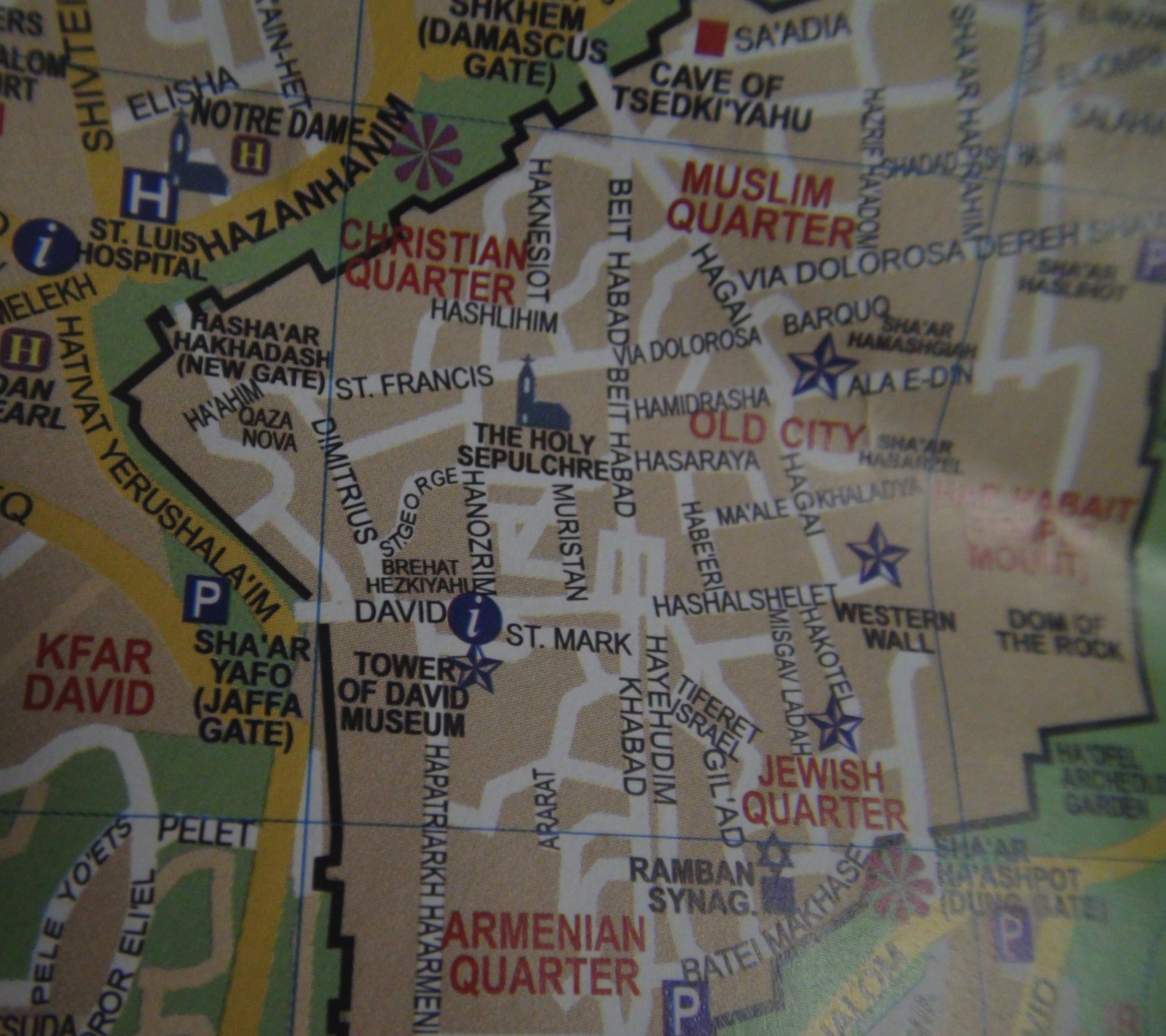
Murphy-O’Connor suggests a way  Jesus was taken to Calvary from here. “If, as seems likely, Jesus was brought into the city on his way to execution, the approximate route would have been east on David Street, north on the Triple Suk, and then west to Golgotha.” (p.38)

I walked that way some years ago, down David Street, to the Triple Suk and then west to Golgotha and the Church of the Holy Sepulcher.  My sense is Murphy-O’Connor is right, but I think we better not change the Via Dolorosa. For one thing,  good piety has given us the present Via Dolorosa and it has a truth and beauty all its own.  More importantly, it would start a war in Jerusalem, and the city has enough grief now.
DSC00289

For more information on the places of the Passion, see

The Agony in the Garden

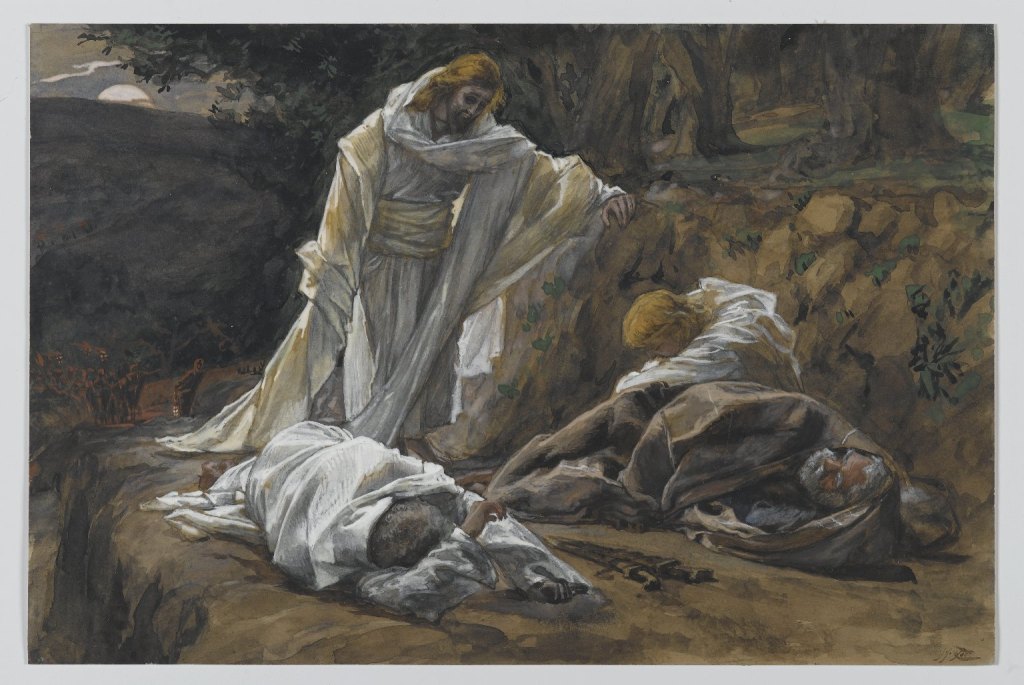
“Stay awake and pray”, Jesus tells his disciples as he enters the Garden of Gethsemane on Holy Thursday night before he died. He teaches all of us there that prayer brings you through times of testing and temptation.

Facing the weakness of the flesh, death by crucifixion, Jesus doesn’t wave it away in stoic resignation or look to himself. “Not my will, but your will be done,” he says. Facing the consequences of his mission, the limits of human power, the “form of a slave,” he depends on his Father for the strength he needs.

In the garden Jesus teaches his disciples how to face trials that come. He kneels on the ground and humbly looks beyond himself to his Father, “Abba”, who hears him. He falls to the ground, trusting his Father’s strength and not his own. Troubled and distressed, for an hour’s time he pleads for help. 

“He was in such agony and he prayed so fervently that his sweat became like drops of blood falling on the ground.” Luke says. Then, an angel comes to strengthen him. The cup of suffering isn’t taken away; he will drink from it, but it will not crush him. God will raise him up.

He teaches us pray as he did and promises to support us in our trials.

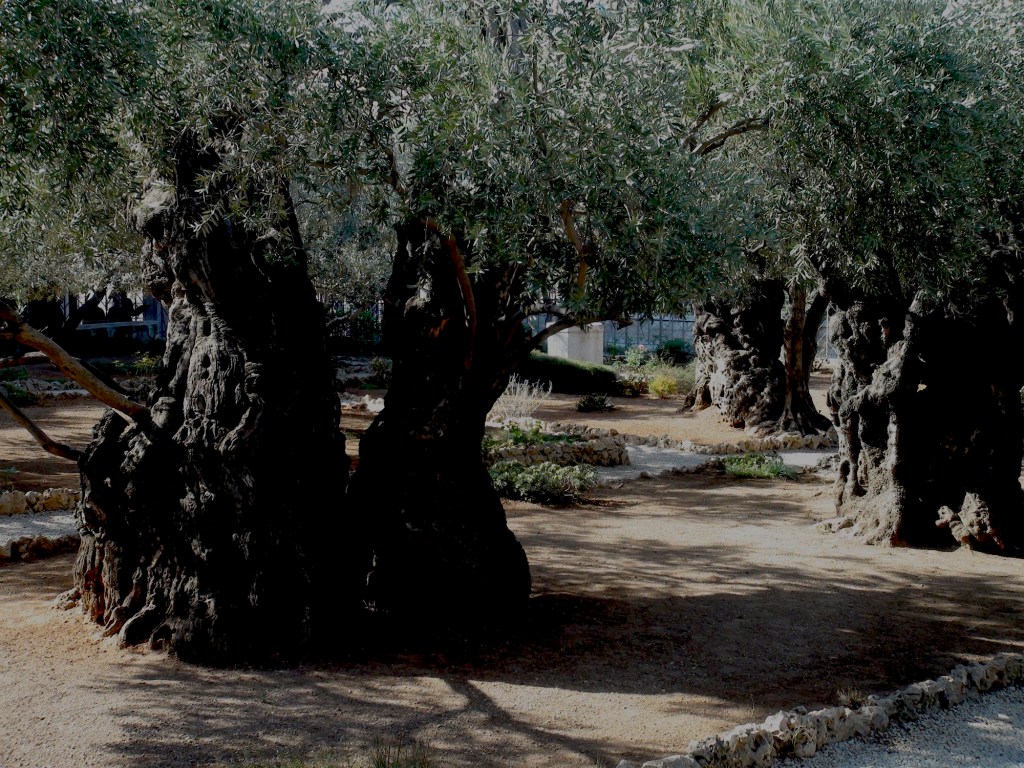
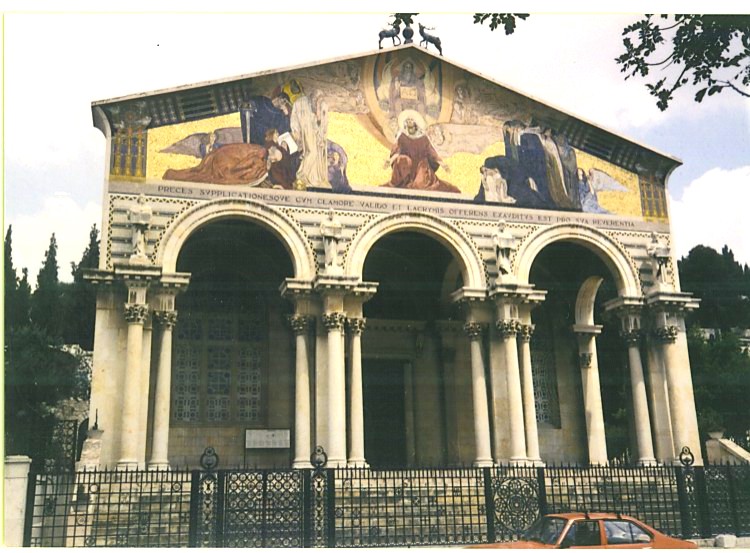
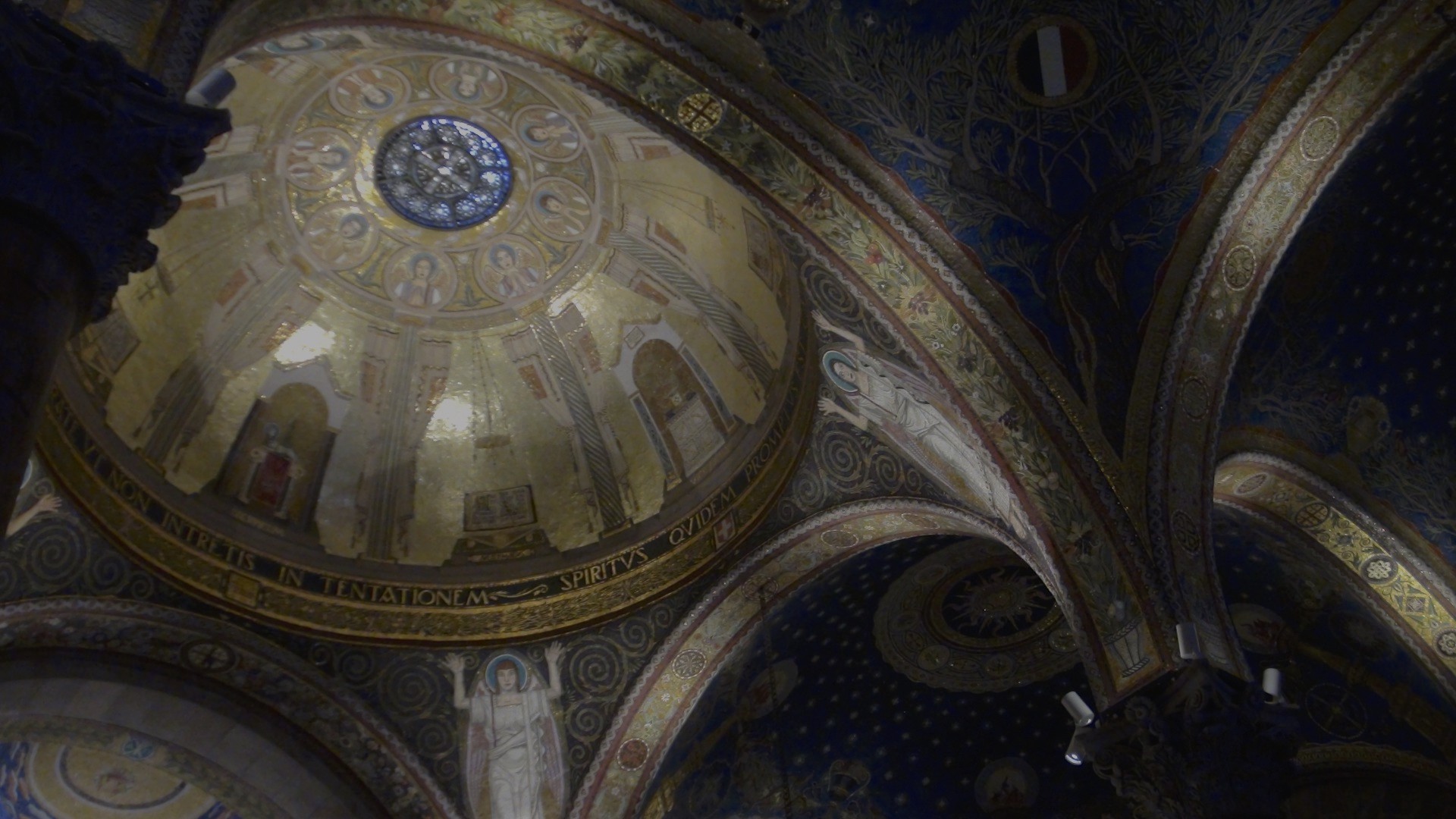
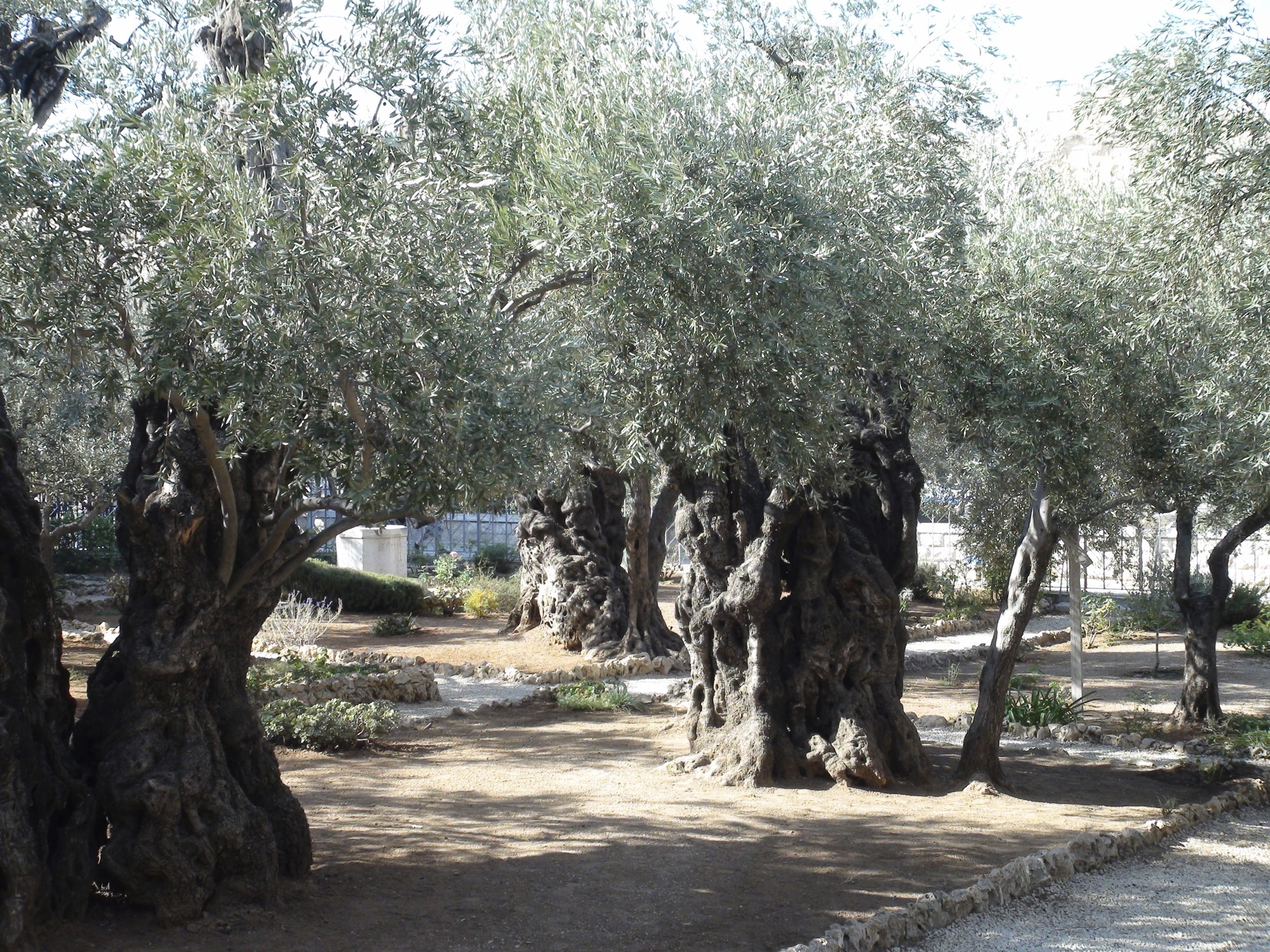
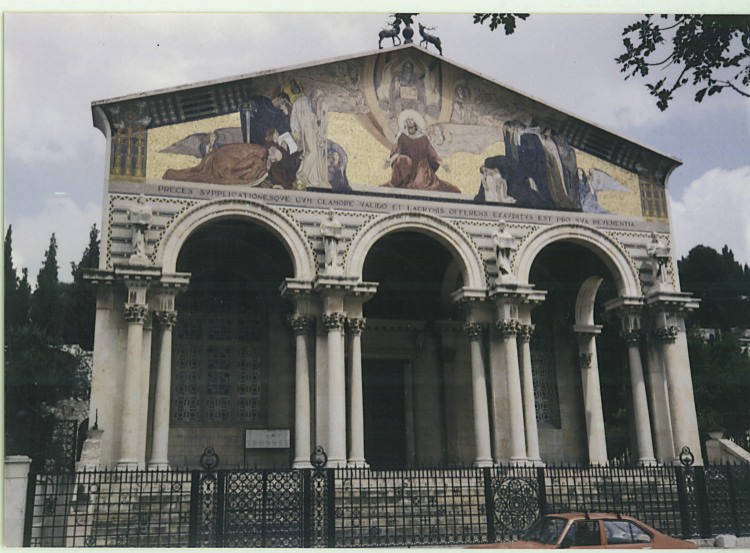
A Franciscan church in the midst of an olive garden stands today on the Mount of Olives where tradition says Jesus prayed. Pilgrims come to pray for themselves and for all facing trial and temptation.

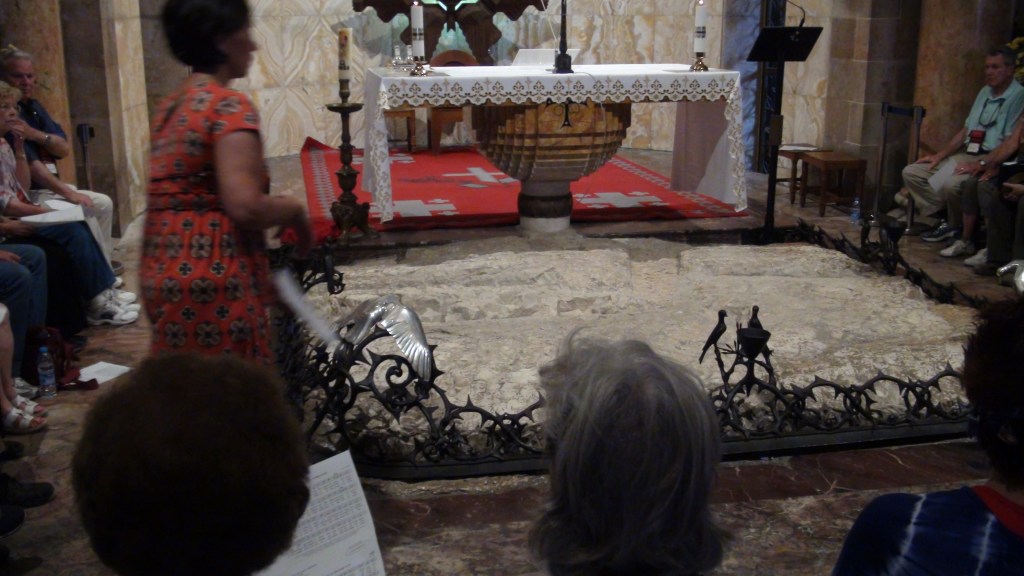
The church is dark as that night was and Jesus kneels on a rock. There’s a rock exposed before the altar of the church. “The Lord is my rock,” we read in the psalm for today. Yes, God is our rock.

The Mount of Olives

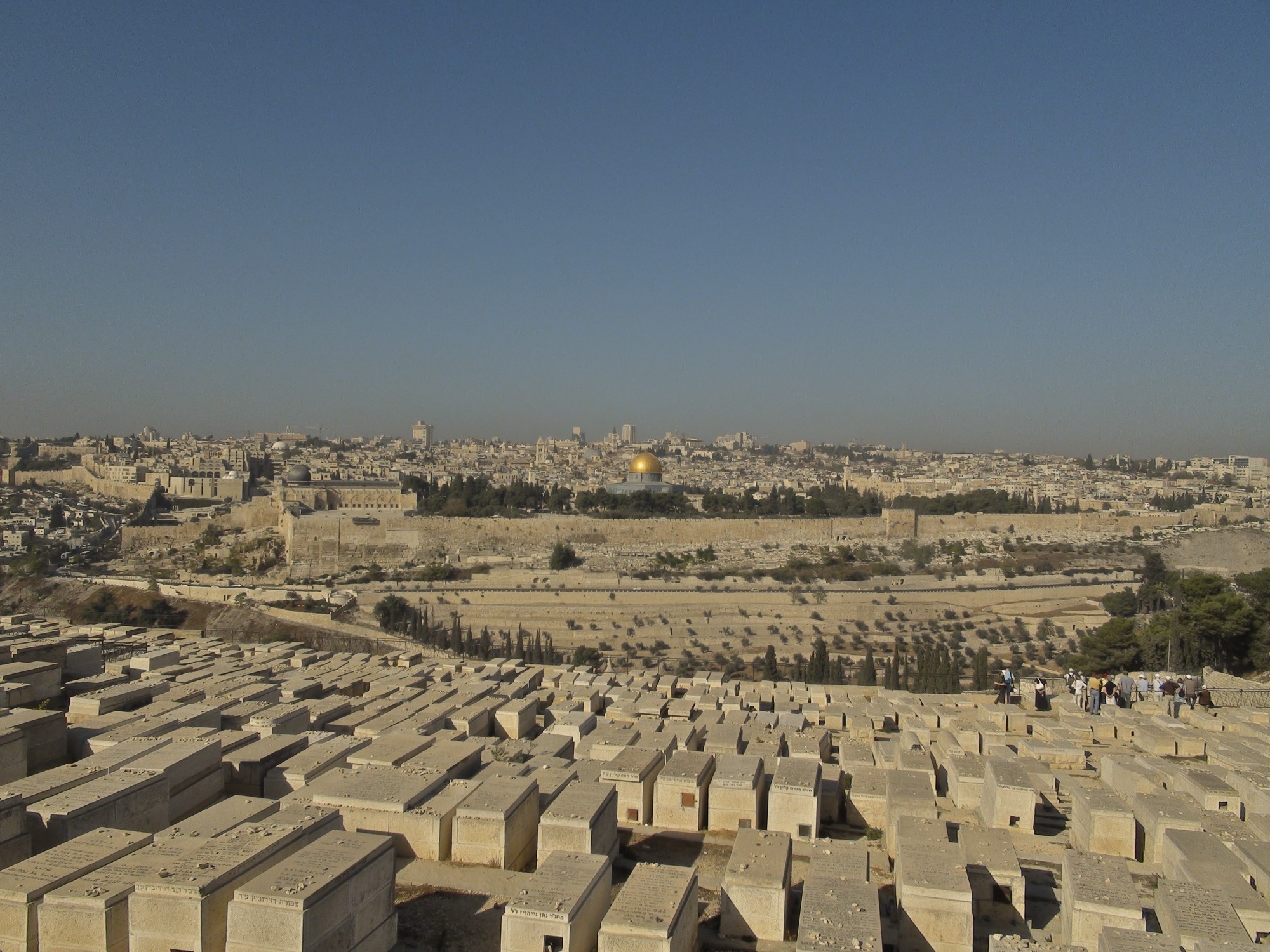
Mountains last for centuries. The Mount of Olives, the two mile mountain ridge facing the Old City of Jerusalem goes back well beyond the time of Jesus Christ, over two centuries ago. On its slopes, olive trees that gave it its name still grow.

Tombs on the Mount of Olives

Ancient tombs along the mountain and into the Kidron Valley below tell us this place is holy. One day “God’s feet will stand on the Mount of Olives,” calling the dead to be raised, the Prophet Zechariah said. (Zechariah 14,4) The tombs are mostly Jewish, though some ancient Jewish-Christian tombs are there.  Mary’s tomb is near the garden of Gethsemane. Facing the ruins of holy city and its temple, the tombs signify humanity waiting for the promised resurrection on the last day. 

Jesus as a boy knew this mountain when he came to Jerusalem to celebrate the Jewish feasts. Most likely he stayed at Bethany, a village on its eastern slope of the mountain. Galilean pilgrims to Jerusalem stayed there. (Luke 21,37-38)

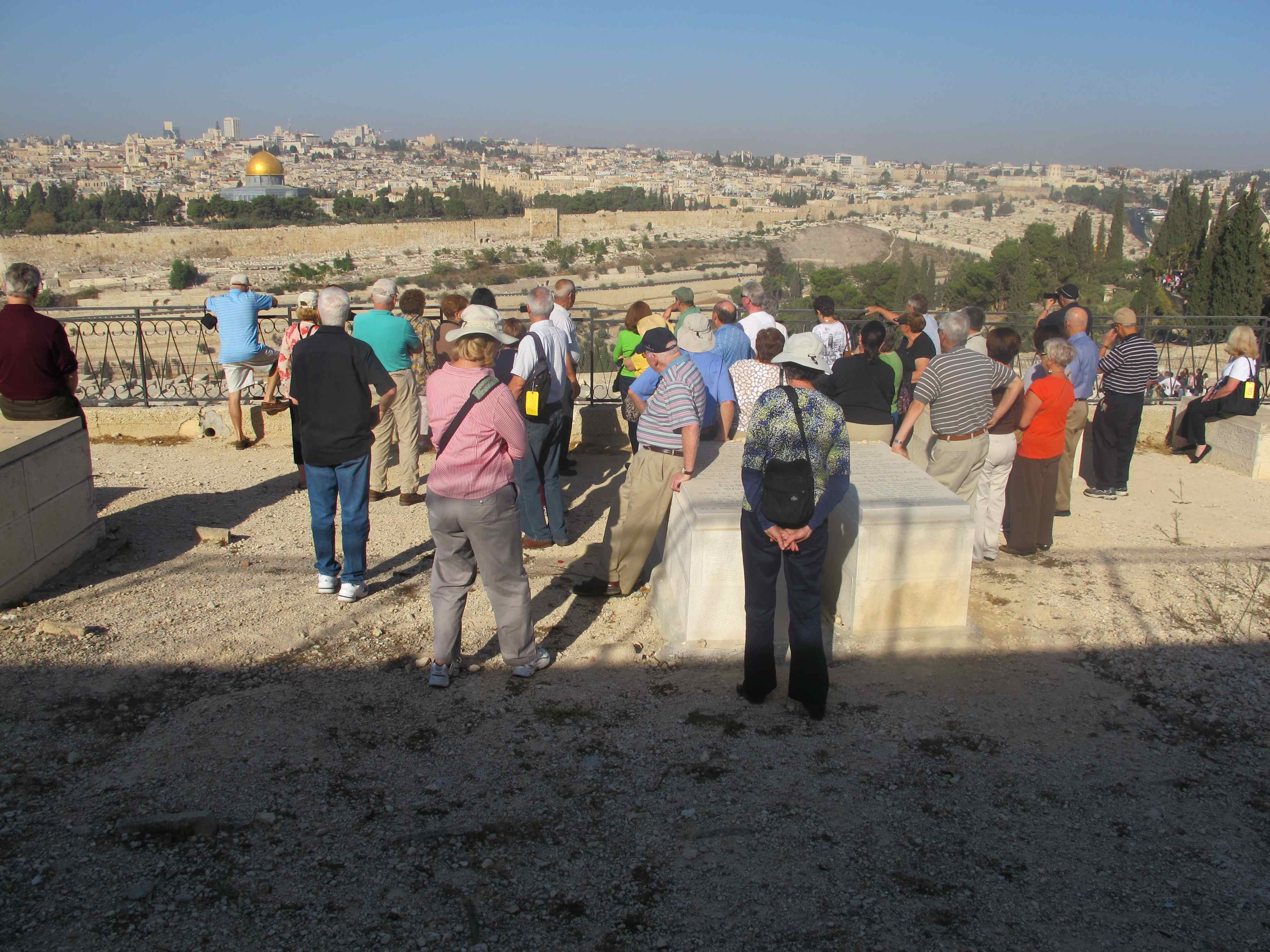
Pilgrims Viewing Jerusalem from Mount of Olives

Like many today,  he would have stopped on this mountain to gaze at the ancient city across the way. The gospels say he spoke to his disciples about the days to come here. (Mark 13,3-27; Matthew 24,3-25,46) He wept over the city here: “Jerusalem, Jerusalem, you who kill the prophets and stone those sent to you, how many times I yearned to gather your children together, as a hen gathers her young under her wings, but you were unwilling! Behold, your house will be abandoned, desolate.” (Luke 19,29-44) 

Roman legions under Titus fulfilled that prophecy in 70 AD, when they destroyed Jerusalem and its temple. Some of the temple stones thrown down can still be seen at the base of the old walls.

On the ancient path to Jerusalem

Days before he was crucified, Jesus rode on a donkey down this mountain to the city from Bethphage, surrounded by followers and admirers who sang and danced and cast palm branches before him. (Mark 11,1,11; Matthew 21,1-11; Luke 19, 28-40; John 12,12-19) The ancient path down the mountain to the city may well be the one he took.

Mount of Olives, Sunset

On the night before he died, Jesus prayed with his disciples here in a garden at the foot of the mountain. He fell into an agony as he prayed. Judas, a disciple, knew the place and led soldiers here who arrested him and led him away to be tried and humiliated and crucified. (Mark 14: 32 ff; Matthew 26,36 ff; Luke 22: 39ff; John 18:1ff)

When Jesus died, Matthew’s gospel says “The earth quaked, rocks were split, tombs were opened, and the bodies of many saints who had fallen asleep were raised. And coming forth from their tombs after his resurrection, they entered the holy city and appeared to many.”(Matthew 24: 51-54) Tombs like those around the Mount of Olives– all the dead– received the promise of Jesus’ resurrection. “He descended into hell.” Every grave, like the tomb of Jesus, is open to the promise of risen life.

Pilgrims at Lazarus’ Tomb, Bethany

Jesus taught his disciples for 40 days and then ascended into heaven from the Mount of Olives, Luke’s Gospel says. (Luke 24,50; Acts 1,1 ff) No wonder, then, that Christians early on were attracted to this holy place so associated with Jesus.

In the 5th century the Emperor Constantine built a large church on this mountain where tradition said Jesus taught and prayed with his disciples and ascended into heaven. It was called Eleona, after the emperor’s mother, Helena, an early pilgrim devoted to the Holy Land. Luke’s unique view of the ascension, which inspired the building of this church, also inspired our celebrations of the Feast of the Ascension and Pentecost and the easter season.

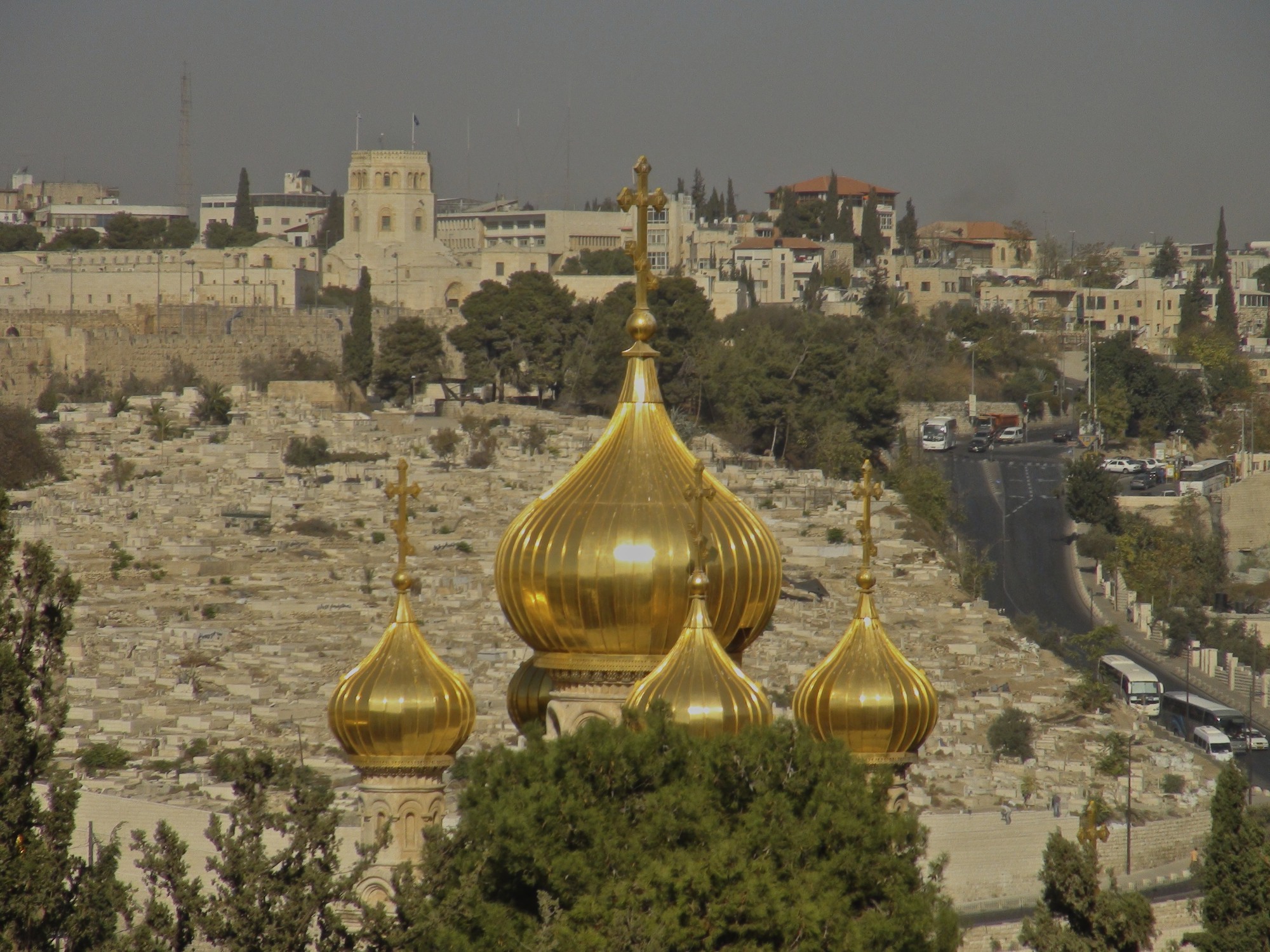
Russian Church, Mount of Olives

Great numbers of Christians flocked to the three major shrines built by Constantine: the church over the tomb of Jesus in Jerusalem; the church over the cave in Bethlehem and the church on the Mount of Olives where he ascended into heaven. Soon other churches were built to mark events in Jesus’ life. On the Mount of Olives, a church marked the place where Jesus wept over Jerusalem, “Dominus Flevit,” another where he prayed in agony. The churches have been destroyed and rebuilt over the centuries.

The Mount of Olives became a Christian sanctuary; monks and nuns built large monasteries and pilgrims came, as once Jesus and Jewish pilgrims from Galilee did.

Palm Sunday

For this week’s homily please play the video below.

For a commentary of the Passion Narrative from the Gospel of Luke, cf. Fr. Donald Senior, CP.

Discovering Him

 I retired about fourteen years ago. My husband, Orlando and I had great plans for our retirement. We wanted to travel, to relax, to have fun! But that wasn’t to be. God had other plans for us! Orlando’s parents in Florida got very ill and we were needed there. We became snowbirds , 6 months here and 6 months in Florida. Around that same time Orlando and I baptized our fourth grandchild, Isabel in a church if Florida. The day of the baptism our son and his wife had a surprise for us. After the baptism we were able to renew our marriage vows in front of our Lord Jesus Christ. For us that was very special because we had not gotten married in the church, we had been married about 25 years but at the court. It didn’t matter to us back then. We had spent over 40 years without God, at that time a church wedding hadn’t been important to us. Neither one of us had come from a religious family. When the priest started blessing us and our rings something happened to us in that ceremony. We were crying and laughing both at the same time. Grace was being poured on us from above!

    After that experience Orlando started convincing me to go to church on Sundays. He had been caught by the fever! Jesus had gotten his hands on him. Not so for me! Going to mass was a burden. Many times I would leave the church worse than how I had gone in. It was boring and ritualistic. But yet I wanted to make Orlando happy, so I would go. For some reason around that time I started having the urge to get married in front of God. I loved Orlando so much that I felt that maybe this would make our marriage even stronger.

    I had never been confirmed. My parents weren’t very religious. In Cuba, where I come from, I got baptized and had my First Communion but after that church did not come back into my life. Here in the U. S. life was hard. We were refugees . The Catholic Church was a great help but it didn’t inspire us to go back to it.

Well you can see what my problem was. I tried to marry Orlando in the Catholic Church but then I found out I needed to be confirmed. Was it worth it? Did I really need to marry Orlando in front of God? How was I going to work it out? I was here in NY for 6 months and in Florida the next 6 months. How would it work out with RCIA? You know now I realize that God had a plan for us as a married couple. Things worked out between our local parish here, American Martyrs Church in Bayside. NY,  and the local church in Hallandale Beach, FL where we were renting.

     In 2011 I was finishing my RCIA in St Matthew’s Church in Florida. We were told there was going to be a four day Mission at the church. We weren’t sure what that was but yet we were intrigued by what it might be. The first day we were there a priest all dressed in black with a giant heart on the left side of his chest, a giant rosary hanging from this thick belt, and a giant crucifix in his hand came to the pulpit and introduced himself, ” I am Fr. Vincent Youngberg and I am an alcoholic. ” That was a great way to start! He was a sinner just like me! During the next few days with his story and his preaching he slowly brought me closer to understanding why I was doing what I was doing. He led me to believe that Jesus, that God, wanted a relationship with me. He helped me to believe that he did exist!

The last day of the Mission Fr Vincent led us in a meditation. He said:

    “Everyone please close your eyes. Now imagine yourself sitting on the sand. You’re watching the ocean, relaxing under the warm sun. From the corner of your eye you notice a person walking towards you. You can’t see him well yet, but he looks like he might be walking straight for you. He is getting closer and closer and your heart is beating faster and faster because you can’t believe your eyes. Suddenly you realize that the person you saw in the distance that now is so close to you is no other than our Lord Jesus Christ. He comes close to you extends his hand towards you and gets you to stand up…..”

    Fr. Vincent continued but I was no longer listening. I was face to face with Jesus! I couldn’t believe what was happening to me. I was crying and laughing. I couldn’t find words to say, but I didn’t have to. He took me in his arms and said, ” Berta, you have no idea how much I love you. I have been wanting you to open the door to me for a long time. I am so happy that you are in my arms now. I will never let you go!” I had melted into his body. The hug he was giving me was delicious! Life was perfect. But then I became aware of Fr. Youngberg’s voice again bringing us back. I didn’t want to leave my Jesus, now that I had met him. But it was time and we had to part. I was back in the church crying like a little girl. They weren’t tears of sadness,no , they were tears of joy! Now I understood! I had been looking for him all my life, but didn’t know it. I knew for many years that there was something missing in my life and on that beautiful Lenten day I found it . God put Fr. Vincent Youngberg in my path. He was the one that led me through the whole process. My husband, my son and his wife, Isabel my granddaughter, the RCIA teachers and volunteers, the priests with their homilies, the new friends I had met in church, they all had a hand in leading me to meet Him!It was all designed by Him!

    In 2011 I became confirmed  during the Easter Vigil at American Martyrs Church. That summer Orlando and I convalidated our marriage on August 7, 2011 in front of our dear God, our family and our friends. In September 2011 I had my first retreat at Bishop Molloy Retreat House in Jamaica, Queens. I had found out that Fr. Vincent was a Passionist priest and his order had a Monastery and a Retreat House 15 minutes from my house! Orlando and I felt the need to go to the Holy Land and in November 2011 we joined a group from Texas and ended up with a Franciscan guide and our beautiful Lord Jesus leading us !

    All I can say about my new life is ” Thank You Jesus for your Love, and the blessings and grace you have brought into our lives! ” “Thank you for the beautiful Passionist priests that are now our friends, thank uou for the prayer group we are part of, thank you for my new friends, thank you for knowing that I am never alone! I love you my Triune God, without you I am nothing!!!!!”

Berta Hernandez

BELIEVE

The Gospel of John, Chapter 11, verses 1-45 tells the story of the raising of Lazarus. Ten years ago, after my conversion, this Gospel was the most important to me. Of all the biblical characters, Lazarus was the one that I most related to for a number of years. Part of the reason is because I ended up “playing” him on four different occasions. 

     On two different Fifth Sundays of Lent , at St. Joseph’s Parish in Miami Beach, FL, they dressed me up like him, one year wrapped in toilet paper, the other year shrouded by a huge white sheet. I would “come out” in front of the catechumens at the moment when the teacher read the climactic part of the Gospel to the group. From the stricken looks on their faces I must have looked more disturbing than funny in that get-up. Death is serious business. I was so touched that I could not stop crying.    

 Two years later at the Holy Week Retreat in Bishop Molloy Retreat House in Jamaica,NY, a group of us helped out by playing different characters from the Gospels before the large group of retreatants. We were “remembering” Jesus on Holy Saturday, after He had been buried. I played risen Lazarus and improvised on my imagined memories of his childhood , playing among the olives above Bethany, with Mary and Martha, his little sisters, and of course Jesus, who was already special. I “recalled” His visits, His preaching, our belief in Him. I described how:   “I got so sick and eventually lost all consciousness. Suddenly in the darkness, I heard His powerful voice saying, ‘Lazarus, come out!.’ Somehow I found myself blinking in the dazzling light before Him. It turned out the Lord had brought me back to life! But then, a few days later, here He was dead and buried like I had been. I was so grief stricken, dazed and confused, but there was this strange hope in my heart.’   

 The fourth time I felt possessed by Lazarus was when I was crawling out of this dark, ancient tomb, way under ground, in Al-Azariah, Palestine, on the eastern side of the Mount of Olives. Al-Azariah means in Arabic: “the town of Lazarus”. Not far up the street from the Church of Lazarus, Mary and Martha, the Arab owner of Avery old private house, charges to let pilgrims wind down a steep staircase to the “grave”. It is a dreary place, specially after one crawls, one at a time, into the claustrophobic “cave”. As I was crawling back out, Fr. Vasko, our guide, took a picture of me.  

   I did not look very happy. Why? I had just been meditating on my sinful God-less life, the darkness where my soul languished on life-support. My Lord had the stone that covered my grave be taken away. He brought me back to life. He removed so many things that had bound me. He freed me in so many ways. I thank and love Him so much for that. So why that unhappy look? Perhaps because there were so many souls still stuck behind me in that hole. In a way our whole world seems to our earthly eyes to be still inside that hole. The mystery of suffering was weighing upon my mind on that day. Like Mary and Martha, I felt like complaining to the One Who saves me: “Lord, if You had been here, my brother would not have died.” Why all this suffering dear Lord?  

   It has taken me a few years to come to terms with this mystery. Surrender to the will of God in prayer helps a lot. We get some inner peace. And yet I must admit, I am still trying to cope with the mystery of suffering every day, when my Lord faces me like He did Martha and challenges me: “I am the Resurrection and the Life; whoever believes in me, even if he dies, will live, and everyone who lives and believes in me will never die. Do you believe this?”   

 Humankind has come down with a serious illness, like Lazarus. All of us friends of Jesus, cry out to Him: “Master, the one you love is ill.” Please bring a miracle. Deliver us from this disease. So many of us are suffering and dying. You, my Lord, can stop this pandemic.   

 He told us to “Ask and you shall receive.” No matter how desperate, I feel it’s my duty to ask God for the welfare of everyone on this Earth. I am doing this with all hope and faith. Yet I realize, that in another way I must be part of the answer to that prayer for someone else, just letting them know in their enclosed isolation and fear the I am there for them, even if just to listen, to pray together, because most importantly, our God is there with us. I truly believe that in God’s own time our Lord will again cry, “Come out!” And we will be able to emerge from the confining insides of our houses, from the hospitals, and we will praise our loving God. Sadly for us, some will open their eyes to be before Him, like Lazarus, but now in the delight of Eternal Life. We will mourn them, but pray for God’s grace so that we will be able to cry out to Him with tears similar to the ones He shed at Bethany: 
                                                          “Yes Lord we believe. We believe that You are the Resurrection and the Life!”
Orlando Hernández

The Blind Man: John 9

The story of the man born blind (John 9) is an important story in John’s gospel– as you can guess from its length. It’s a sign summarizing Jesus’ teaching in the temple during the Feast of Tabernacles, our gospel readings for most of this week.

 Jesus claims that he not just a prophet, or the successor to Abraham. He is God’s only Son. “I Am.” True God from true God.

The story of the blind man reminds us that belief in Jesus Christ is a gift God gives, a gift we only grasp little by little. The story is a good example of biblical catechesis, meant to deepen our faith in the lenten season, and so we’re encouraged to reflect on it these last weeks of Lent.

5th Sunday of Lent c: The Prodigal Daughter

For this week’s homily please watch the video below.

March 28-April 3:  Readings for the Fourth Week of Lent

MARCH 28 Mon Lenten Weekday6 Is 65:17-21/Jn 4:43-54                                         

29 Tue Lenten Weekday Ez 47:1-9, 12/Jn 5:1-16                                               30 Wed Lenten Weekday Is 49:8-15/Jn 5:17-30                                                31 Thu Lenten Weekday Ex 32:7-14/Jn 5:31-47                                       APRIL 1 Fri Lenten Weekday  Wis 2:1a, 12-22/Jn 7:1-2, 10, 25-30                2 Sat Lenten Weekday [St Francis of Paola] Jer 11:18-20/Jn 7:40-53                 3 SUN FIFTH SUNDAY OF LENT Is 43:16-21/Phil 3:8-14/Jn 8:1-11 or, for Year A, Ez 37:12-14/Rom 8:8-11/Jn 11:1-45 or 11:3-7, 17, 20-27, 33b-45

Our gospel readings for this week and the remainder of lent are mostly from St. John’s gospel. Until now, they were often from the Sermon on the Mount from Matthew’s Gospel – Jesus’ teaching on prayer and mercy and forgiveness of others. Some readings from Luke’s Gospel presented Jesus’ journey through Galilee where he taught and worked wonders, but he was not well received. 

Yet God’s Mercy, made flesh in Jesus Christ, continues a saving journey.

As he reaches Jerusalem, Jesus works wonders, gave sight to the man born blind, raised Lazarus from the dead and taught in the temple, but opposition to him grew stronger, John’s Gospel reports. 

More than the other gospels, John sees Christ on his glorious way to accomplish his mission to bring life to the world, even if that world opposes him or clings to the darkness, like Nicodemus. (John 4:43-54)

John’s Gospel dominates the readings for the next few weeks of Lent.

4th Sunday of Lent c: The Prodigal Son

For this week’s homily, please watch the video below.