Monthly Archives: February 2026

Monday, 1st Week of Lent

“’Lord, when did we see you hungry and feed you, or thirsty and give you drink? When did we see you a stranger and welcome you, or naked and clothe you?  When did we see you ill or in prison, and visit you?’…Amen I say to you as long as you did it for one of the least, you did it for me.” Matthew 25, 31-46 Readings

Jesus was tempted to be a messiah of another kind, a messiah marked by ” power, success, and dominion and not by the total gift on the Cross, not by the messianism of gift and selfless love.” (Benedict XVI)

You don’t need to be hungry, thirsty, or sick; you don’t have to die. You can be above all that, Satan said to him. You can have all the kingdoms of this world. You can be a privileged religious leader who tells God what to do. One who receives instead of gives.

“Away with you, Satan,” Jesus says and he leaves the Jordan Valley. He goes, not to Jerusalem, center of religious and political power, but fo Galilee to give to those who “live in darkness and the shadow of death.”, to those described in today’s gospel as “the least:” the hungry, the thirsty, the naked, the stranger, the sick, the prisoner. Jesus identifies with them.

“You shall love your neighbor as youself,” Moses teaches in today’s first reading. We must follow him. How? The readings this week tell us–by prayer.  “When did we see you?…” they say. Prayer helps us to see. Remember how much prayer was a part of Mother Teresa’s ministry to the poor. She saw in “the least” “Christ in disguise.” She saw because she was a woman of prayer which gave her eyes to see. Duk Soon Fwang in her painting of the saint befow has tears from her eyes giving life to an abandoned child.

There’s a grace in this season for seeing the least this way. Let’s ask for it

Lord Jesus Christ, may I see you in my neighbor, especially those “in disguise.” those in need who may seem unlike you.

May I love you in my neighbors, and find you in the least of them. Amen.

I ask myself who gave me the gift of life? I breathe, I know things, above all I know God and can hope for the kingdom of heaven and the sight of glory, however darkly as in a mirror I see it now.

I’m a child of God, one with Christ. Where did I get this; who gave it to me? I look at the world around me. Who gave me eyes to see the beauty of the sky, the sunlit universe,  the countless stars, the harmony of living things?

I feel the rain nourishing the earth bringing food to us all. I have family, friends. Who gave them to me? Can I see how generous God is to me and not be generous to all creation? How can I misuse the gifts I have been given?

God sends down rain on the just and the unjust. The sun rises on all creation. Birds have the air; fish have water. God gives abundantly. How can I say it’s only mine that’s meant for all?

Adapted from a reading from St. Gregory Nazienzen

For Today’s readings; http://www.usccb.org

For more: http://www.passionistspray.org
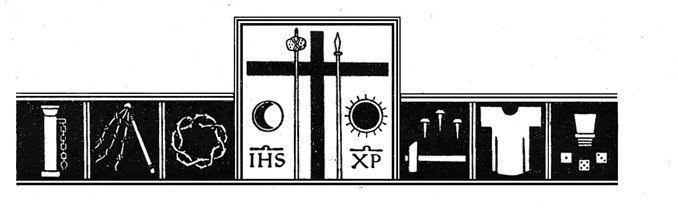
Following Jesus Christ in Lent

Lent always begins with two stories from the gospel. On the 1st Sunday of Lent we follow Jesus Christ after his baptism into the desert where he’s tempted by Satan for forty days.

The 2nd Sunday of Lent we follow him up the mountain where he reveals his glory to his disciples. His transfiguration.

This year we listen to these two stories from the Gospel of Matthew.

The two stories are highly symbolic. Jesus is the new Adam. The first Adam was banished from Paradise to a desert land. Jesus, the new Adam, enters that desert to lead humanity back to Paradise. He breaks the hold of Satan, who tempted the first Adam in the garden.

When Jesus goes up the mountain with his disciples and is transfigured before them he shows them the glory they will share through his resurrection after his death on the mountain of Calvary.

Lent is a time when we “grow in understanding” of these mysteries of the death and resurrection of Jesus.

Grant, almighty God, through the yearly observances of holy Lent, that we may grow in understanding of the riches hidden in Christ and by worthy conduct pursue their effects. Through our Lord Jesus Christ, your Son, who lives and reigns with you in the unity of the Holy Spirit, God, for ever and ever. (Collect, 1st Sunday of Lent)

On the 2nd Sunday of Lent we follow him up the mountain where he reveals the glory that awaits us. Lent is a time of revelation, the prayer that begins this season says. Jesus reveals his glory to us as well as to the disciples who accompanied him then.

Now is a time to  “grow in understanding”of the Paschal Mystery. We know so little of the mystery we celebrate. The riches are “hidden in Christ” and not immediately obvious. We must pursue them humbly, dig for the treasures hidden in the field, find Jesus Christ in the desert world we live in.

This is not just an intellectual effort either. By “worthy conduct”, good deeds, patient love for others, we uncover the “riches hidden in Christ”.

All our efforts mean little, though, unless the Almighty God grant it, “Through our Lord Jesus Christ, your Son, who lives and reigns with you in the unity of the Holy Spirit, God, for ever and ever. Amen.”

O God, who have commanded us to listen to your beloved Son, be pleased, we pray, to nourish us inwardly by your word, that, with spiritual sight made pure, we may rejoice to behold your glory. Through our Lord Jesus Christ, your Son, who lives and reigns with you in the unity of the Holy Spirit, God, for ever and ever. Amen. (Collect, 2nd Sunday of Lent)

The Transfiguration of Jesus is a strongly visual mystery. Jesus is revealed in  glory on the mountain. Yet, we are told to “listen” to God’s beloved Son. His words we hear within will give us the spiritual eyes we need to behold his glory. 

What about our eyes that long to see? The stories of Abraham who is told to search the starry skies and look at the land he has been given tell us the treasures of the natural world can nourish our  desire to see more, namely, the glory revealed in Jesus Christ, God’s Son. Now we listen, then we shall see.

1st Sunday of Lent a: The Temptation in the Desert

For this week’s homily please watch the video below.

Our pilgrimage on earth cannot be exempt from trial. We progress by means of trial. No one knows himself except through trial, or receives a crown except after victory, or strives except against an enemy or temptations.

But we are not left on our own. Christ chose to foreshadow us, who are his body, by means of his body, in which he has died, risen and ascended into heaven, so that the members of his body may hope to follow where their head has gone before.

  He made us one with him when he chose to be tempted by Satan. We have heard in the gospel how the Lord Jesus Christ was tempted by the devil in the wilderness. Certainly Christ was tempted by the devil. In Christ you were tempted, for Christ received his flesh from your nature, but by his own power gained salvation for you; he suffered death in your nature, but by his own power gained glory for you; therefore, he suffered temptation in your nature, but by his own power gained victory for you.

  If in Christ we have been tempted, in him we overcome the devil. Do you think only of Christ’s temptations and fail to think of his victory? See yourself as tempted in him, and see yourself as victorious in him. He could have kept the devil from himself; but if he were not tempted he could not teach you how to triumph over temptation.”

Commentary on Psalm 60, St. Augustine

Saturday after Ash Wednesday

Lent 1


Luke 5,27-32

Jesus saw a tax collector named Levi sitting at the customs post.
He said to him, “Follow me.”
And leaving everything behind, he got up and followed him.

It’s hard to imagine a more unlikely apostle than Levi, also called Matthew. Tax collectors like him, agents of a feared and hated government, were despised by ordinary Jews because they belonged to a profession considered greedy, unfair and unclean. They were unwelcome in the synagogues and temple. No good Jew wanted  anything to do with them.

Yet Jesus called Matthew and ate with him and his friends. Jewish leaders in Capernaum were outraged: “Why does he eat with tax collectors and sinners?” Jesus’ answer is the answer of a merciful God. “The healthy don’t need a physician, but the sick do.”

There are no incurables whom God won’t cure. Tax collectors are God’s children and belong to God’s family as anyone else does. The call of Matthew is a lenten reminder that God doesn’t reach out to a favored few; he reaches out to the whole wounded world. So should we.

When St. Paul of the Cross, the founder of the Passionists, preached missions in the 18th cenury in the towns of the Tuscan Maremma, he set up a platform in the village square to speak to all who came by. The crucifix he held high in his hands was a sign of God’s mercy offered to all and denied to none. Bandits were common in Tuscan Maremma, and Paul brought many of these “unofficial Tax-collectors” back into society. Jesus wanted them to be saved.

“I rejoiced that our great God should wish to make use of so great a sinner…I tell my beloved Jesus that all creatures shall sing his mercies.” (Diary)

Lord,
who are the tax collectors I wont eat with
and the sick I won’t heal?
Let me see them
and welcome them as you did.

Stations of the Cross, A Lenten Devotion


STATIONS OF THE CROSS FOR CHILDREN

The Stations of the Cross, one of the most popular devotions to the Passion of Christ, follows the final earthly journey of Jesus. His journey begins at the Garden of Gethsemane and ends at Calvary where he was crucified. Then, he was placed in a new tomb in the garden. The Stations are found everywhere in the Catholic world in churches, shrines and country pathways.

The devotion grew in the high middle ages and became especially popular in the 18th century inspired by the preaching of St. Leonard of Port Maurice (+1771). St. Paul of the Cross and the Passionists encouraged the devotion.

The devotion is a journey, a pilgrimage, and promise of a passage from this life to a risen life. The Passion of Jesus is a book of life that reveals the wisdom and power of the Cross. 

Like other devotions, the Stations of the Cross is not limited to set words or actions. It’s a meditational prayer. Like the four gospels it opens our minds to see the Passion of Jesus in different ways.

The Stations of the Cross offer a message of hope in Jesus who died and rose again. It’s a prayer for children and for all ages. It leads to the mystery of the Risen Jesus who conquered death and brings life.

The first video above describes the history of the devotion. The video for children can also be found on the internet.

For further information on the Passion of Jesus Christ, see www.passionofchrist.us in PassionistPray.org

Friday after Ash Wednesday

 The disciples of John approached Jesus and said, “Why do we and the Pharisees fast much, but your disciples do not fast?” Jesus answered them, “Can the wedding guests mourn as long as the bridegroom is with them?The days will come when the bridegroom is taken away from them,and then they will fast.”  (Matthew 9,14-15)

The disciples of John and the Pharisees seem to measure fasting in terms of quantity and a neat little list they consult. Like the Pharisee in Jesus’ parable of the Pharisee and the Taxcollector they have it down to numbers, “I fast twice a week, I pay tithes on all my income.” (Luke 18:24) Fasting twice a week, paying tithes takes care of it. The job is done.

Lent is meant to unsettle us, not to make us smug. Our reading from Isaiah warns against that kind of rote fasting and dangerous self-satisfaction. It’s not a matter of numbers or how many times you bow your head to the ground, the prophet says. In fact, like the Pharisee in the temple we can miss what’s really important– mercy, an unsettling gift.


This, rather, is the fasting that I wish:
    releasing those bound unjustly,
    untying the thongs of the yoke;
Setting free the oppressed,
    breaking every yoke;
Sharing your bread with the hungry,
    sheltering the oppressed and the homeless;
Clothing the naked when you see them,
    and not turning your back on your own.

Fasting should come from seeing the needs of others and doing something about it– not “turning your back on your own.” Jesus Christ saw the needs of others and did something about it. He saw everyone as “his own” and turned to them.

He is the “Bridegroom” with us this holy season. May we see our world with his eyes and his heart.

Open our eyes, O God, to the gift of your Son, Jesus Christ,

The Word who made the universe,

The Savior sent to redeem us.

Give us grace to rejoice in his presence these days of Lent

and listen to him, learn from him, be with him..

He graces us these days, these holy days of lent,

Help us be friends of the Bridegroom.

Readings for this Friday of Lent.

What am I going to do for Lent?

table

Lent begins  Ash Wednesday. What am I going to do for Lent? The supper table is a good place for asking that question , It represents life that’s closest to us here and now. Lent is about renewing ourselves as we are here and now. The people across the table where we live, or work or go to school with are a good start.

A scripture reading early on in Lent says: “Don’t turn your back on your own.”  Have we turned our backs on those closest to us? Let’s start with paying attention to them. Lent is a time for renewing ourselves where we are, in real life and real time, with those who are “our own.”.

The Ash Wednesday scriptures say: pray, fast and give alms. Let’s pray with the church during Lent. The scriptures for each day are a good place to start. Here’s where you can find the Lenten scriptures. www.usccb.org

See what’s going on in the churches nearby. Pray with others. We don’t pray with others enough.

Fasting takes many forms. Lent is a good time to fast from our own hard opinions of others. Too many people seem to be spoiling for a fight these days.

Can I give something to someone, maybe my time or attention. Can I give to some good cause?

Let’s keep before our eyes the terrible sufferings going on in our world today, but let’s see them in the light of the great mystery we celebrate: the death and resurrection of Jesus. Keep his Passion in mind. He gives us new hope.

Let’s not forget something else, though. What’s God does during Lent. That’s important. Lent is a time of God’s grace, an “acceptable time” when God pours out grace for us and the world we live in. The great sign of God’s limitless love is the Passion of his Son, a wondrous love beyond all others.

Thursday after Ash Wednesday

Lent 1


Today’s Readings

Then Jesus said to all,
“If anyone wishes to come after me, he must deny himself
and take up his cross daily and follow me.
For whoever wishes to save his life will lose it,
but whoever loses his life for my sake will save it.

Jesus offers a blunt challenge in this reading from Luke’s gospel;  a challenge to his disciples then and to us now. “If anyone wishes to come after me, he must deny himself and take up his cross daily and follow me.” In fact, he speaks to all.

No one escapes the cross. It’s there each day.  It may not look  like the stark cross Jesus received from the hands of the chief priests, the elders and the scribes in Jerusalem, but it’s there all the same. We may not see it because it’s so much a part of  life, but if we look closely our cross is there.

Actually, taking up our cross is a way of choosing life, which Moses urges in our first reading today, choosing not some “good” life, or idealized life, but life as it is. It means accepting life gratefully, fully, without resentfulness. If we listen to Moses in today’s first reading, choosing life affects not only ourselves but others too. Listen to him:

I have set before you life and death,
the blessing and the curse.
Choose life, then,
that you and your descendants may live, by loving the LORD, your God,
heeding his voice, and holding fast to him.

A traditional Christian practice to begin the day is to make the Sign of the Cross. We do it to remind ourselves of the daily cross we bear and remember we do not bear it alone. God helps us bear whatever life brings each day. Christ bears it with us as he promised. The Sign of the Cross calls us to change the world we live in, as well as bearing with it. Let’s remember this basic Christian practice in lent for the patience and courage it gives us.

St. Paul of the Cross once wrote a letter to Teresa, a woman overwhelmed by life.  What shall I do? she said. Paul urges her to let God’s Will decide for her what to do. He wanted people to find their cross and embrace it. It’s there before us.

“Teresa, listen to me and do what I’m telling you to do in the Name of the Lord. Do all you can to be resigned to the Will of God in all the sufferings that God permits, in your tiredness and in all the work you have to do. Keep your heart at peace and be recollected; don’t get upset by things. If you can go to church, go; if you can’t, stay home quietly; just do the Will of God in the work you have at hand.” (Letter 1135)

Bless me, Lord,
and help me take up the cross
that’s mine today,
though it may not seem like a cross at all. Let me accept it gratefully.

In the name of the Father, and of the Son and of the Holy Spirit. Amen.

Lent Online

Lent begins. If you are following this blog, I’ll be providing daily reflections on the lenten liturgy. For additional lenten material I invite you to scan PassionistsPray ..

The Passion of Jesus:   http://passionofchrist.us

Commentary on the Passion Gospels: https://passionofchrist.us/commentary/

Stations of the Cross:   Video  https://www.youtube.com/watch?v=waaMOBJ5e1Q&list=PLLUFZUgOPMFxkmfgBNS4Kfm8XxEwoAd6f&index=11

Stations of the Cross for Children: https://passionofchrist.us/stations-of-the-cross-children/

Prayers :  https://passionofchrist.us/prayers/

Studies on the Passion of Jesus: https://passionofchrist.us/recent-studies/

For material for leading children into the lenten season see: https://ourchildrenpray.com

Scripture Readings for the lenten season: https://www.vaticannews.va/en/word-of-the-day.html

The Passion of Jesus is a wise and tender book that reveals God to us. “Taste and see the goodness of the Lord” this Lent.