Monthly Archives: January 2026

Calling Disciples:Mark 1:14-20

DSC00036
James Tissot, Calling Disciples

Mark’s account of Jesus’ ministry in Galilee is succinct. John has been arrested and Herod, who rules in Galilee, is ready to behead him. Not a good time, in human thinking, to begin a ministry. Better wait, we say.

But this is God’s time, different from ours. The Good News is God’s message, not ours. God will act according to his plan, not ours. (Mark 1:14-20)

The call of the four fisherman, Peter, Andrew, James and John occurs by the Sea of Galilee in Mark’s gospel. For the Jews the sea, like the wilderness, was a dangerous place; storms unsettled it; unpredictable winds made it fearful. Even an inland body of water twelve miles long and six miles wide was something to be wary of. They made a living on it, but still the sea was a dangerous place.

Mark’s gospel wants us to understand the call of disciples takes place by the sea.

Jesus says simply, “Come after me and I will make you fishers of men.” Mark’s Gospel sees the four fishermen with a lot to learn to be fishers of men. They slowly understand his call. Later on, twelve would be called, (Mark 3,13-19), still later their ministry would be explained. (Mark 6,7-13)

They keep learning, not something you learn in a book, or by yourself. “I will make you fishers of men,” Jesus said. “Come away by yourselves and rest awhile,” he said to his disciples who returned to him with reports of all they had done. (Mark 6,30ff) Every disciple has to learn what the call means for him and for her, and a great deal of it we learn with others. And a great t deal of that learning comes from prayer
photo

Remembering the Baptism of Jesus

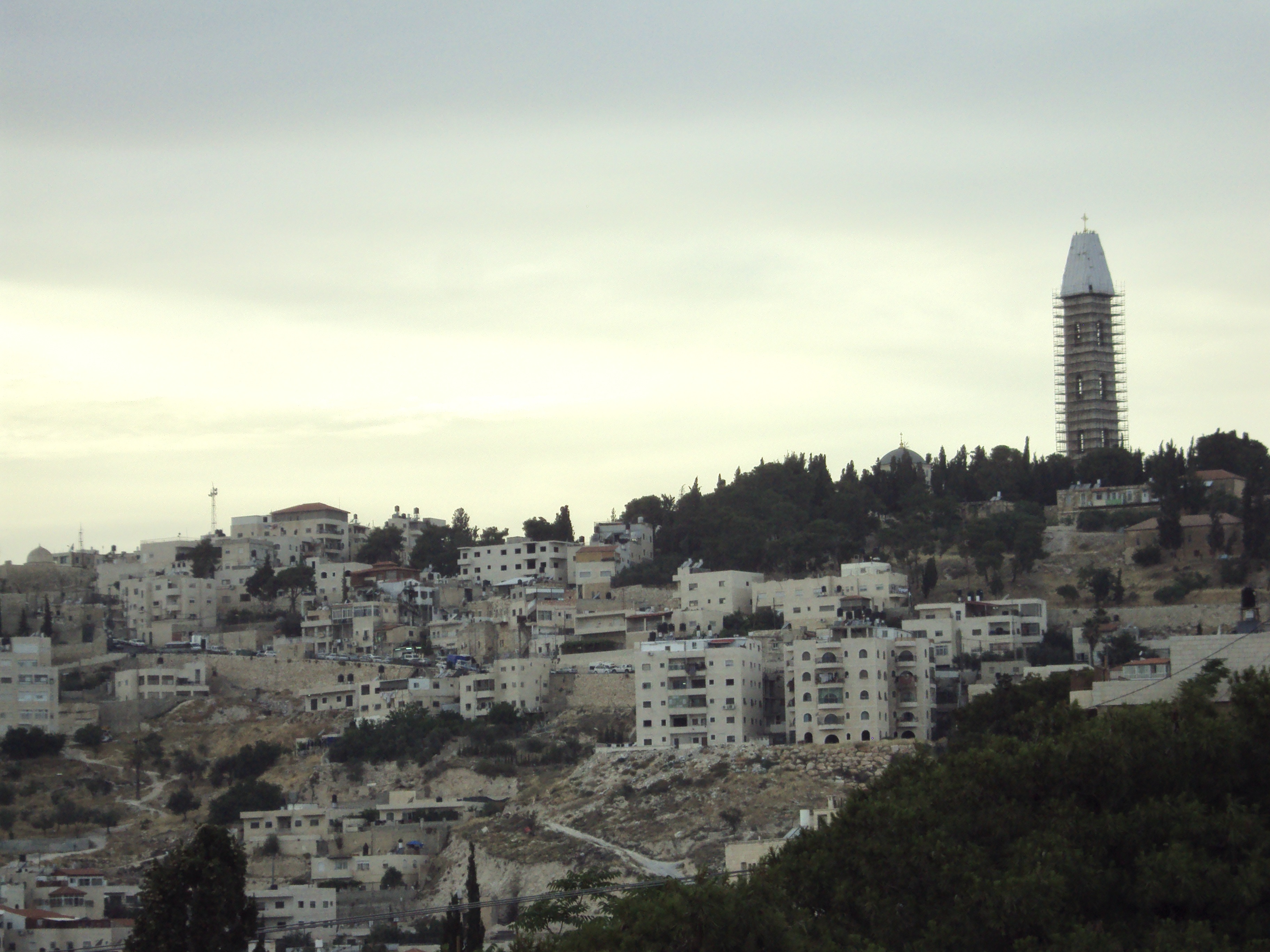
On the Mount of Olives in Jerusalem the Russian government in the last century built a high tower  (above) so that Christian pilgrims could see key places associated with the life, death and resurrection of Jesus.

Looking westward is the Church of the Holy Sepulcher where he was crucified and rose from the dead. Just down below is the garden of Gethsemane where Jesus prayed and was arrested. In the distance to the southeast is Bethlehem where he was born. On the eastern side of the Mount of Olives where this picture above was taken is the village of Bethany where Jesus stayed when he came to Jerusalem and where he raised Lazarus from the dead. Further east, about 20 miles down the Jordan Valley is where he was baptized in the Jordan River by John the Baptist.

The tower was built, I understand, because some pilgrims could not get to one of these destinations, a 20 mile trip to the Jordan River.

The tower attests the importance of  pilgrimage to the Jordan River where Jesus was baptized. The Baptism of Jesus is a mystery that includes all the mysteries of Jesus we celebrate as Christians. That’s why we celebrate it as we conclude the mysteries of the Christmas season. In our baptism we are brought to share in his baptism and in his life.

In the Jordan River,  God the Father, “a voice from heaven,” proclaimed him “my beloved Son, with you I am well pleased.” (Mark 1,11) We believe that when we are baptized we become children of God with him..

As we take Holy Water into our hands and bless ourselves, we remember the great gift we have in Jesus Christ. “In the name of the Father, and of the Son and of the Holy Spirit. Amen.”

We celebrate the Feast of the Baptism of Jesus today. This week we begin readings Mark’s Gospel at Mass till Ash Wednesday. Mark is a good follow-up for this feast since it begins with the baptism of Jesus and relies heavily on the symbolism of baptism and water in his narrative.

The Baptism of Jesus

For this week’s homily, please watch the video below.

Mary, Mother of Jesus, Mother of God


Mary is an important figure in the events of Advent and Christmas Time. The angel visits her at Nazareth, she visits  her cousin Elizabeth, the birth of Jesus in Bethlehem, the coming of the Magi, the flight into Egypt, the presentation of the Child Jesus in the temple, the finding of the Child Jesus in the temple after his loss for three days. All events in Luke and Matthew’s gospels where Mary has a role.

We remember her especially on her feast during Christmas time:  the Feast of Mary, the Mother of God. (January 1st)

Because they focus on Jesus, the gospel writers touch lightly on Mary, but she is an important witness to his humanity and divinity just the same. “For us and our salvation he came down from heaven, and by the Holy Spirit was incarnate of the Virgin Mary and became man.” (Creed)

Through her, the Christmas liturgy reminds us, Jesus took “a body truly like our own.” (Collect, Monday of Christmas Time) Jesus “accepted from Mary the frailty of our flesh.” (Collect, Monday of Christmas Time) She’s the way the Word became flesh.  The First Letter of John, read in Christmas Time, calls this a fundamental truth of faith.

By taking a body “truly like our own” and accepting “from Mary the frailty of our flesh,” Jesus humbled himself, assuming the limitations that come from being human. Mary is his way, giving him birth, nursing him as a infant and raising him as a child.

“Can anything good come from Nazareth?” For 30 years Jesus led a silent hidden life in that small town in Galilee, and Mary was his mother. “I confess I did not recognize him,” John the Baptist says twice when Jesus comes to the Jordan to be baptized. (John 1,29-34) His own in Nazareth did not recognize him either.

He went unrecognized, and so did Mary, who shared his hidden life. She performed no miracles, did not publically teach; no angel came again after the first announcement to her.

We can pass over the Hidden Life that Jesus embraced so quickly, even though the Christmas mystery invites us to keep it in mind. We forget that to be transformed into glory means accepting “the frailty of our flesh,” which Jesus did.

“…though invisible in his divine nature, he has appeared visibly in ours;
and begotten before all ages, he has begun to exist in time;
so that, raising up in himself all that was cast down,
he might restore unity to all creation
and call straying humanity back to the heavenly kingdom.”
(Preface II of the Nativity)

St. Mary Major is the main church in Rome dedicated to Mary, the Mother of God. You can visit it in the video above. It was built in the 5th century to honor Mary’s role as witness to his divine and human natures. The church is also called “Bethlehem in Rome” because many of the Christmas mysteries were first celebrated there; relics from Bethlehem were brought there after the Moslem invasion in the 8th century.

SuperStock_1788-1275[1]

The great mosaic of Mary in heaven crowned by Jesus, her Son, stands over the altar in the church as its focal point. Companion in his hidden life, she was raised up by her Son, who was human and divine,  through the mystery of his resurrection.

The Hudson and the Waters of the World are Blessed

img_1960
, New York Harbor

The Feasts of the Epiphany and the Baptism of Jesus are celebrated on cold days in my part of the world. The New York papers sometimes carry a story around this time about the Greek Archbishop of New York going down to the Hudson River and throwing a cross into its waters, which is then retrieved by some hardy Greek divers.

Like the world itself, the waters of the Hudson are grim and cold this time of year, but that dramatic gesture– the cross in the water, the cross representing Jesus Christ —says the Hudson River is blessed. Whatever it looks like, uninviting as it seems, Christ’s presence and Christ’s blessing are there.

When Jesus entered the River Jordan, he entered the Hudson, the waters of Long Island Sound, the rivers and waters of the world. The waters are holy the world over, this gesture says. The Spirit still broods over the waters. The grace of God is given to the Magi and all the peoples of the world they represent.

Here’s the way one of the saints of the Greek church, St. Proclus of Constantinople explains it:

“Our feast of the Epiphany and the Baptism manifests even more wonders than the feast of Christmas… At Christmas our King puts on the royal robe of his body; at Epiphany he, as it were, clothes the river.

On the feast of the Savior’s birth, the earth rejoiced because it bore the Lord in a manger;  but on today’s feast the sea is glad because it receives the blessing of holiness in the river Jordan.”

The United States Geological Survey has a wonderful site on water. Water is everywhere, not only in the seas and rivers, but in the air, the foods we eat, even our bodies. 71% of the earth’s surface is water.  60% of our bodies is water. Water’s a precious gift, a pervasive presence in our world.

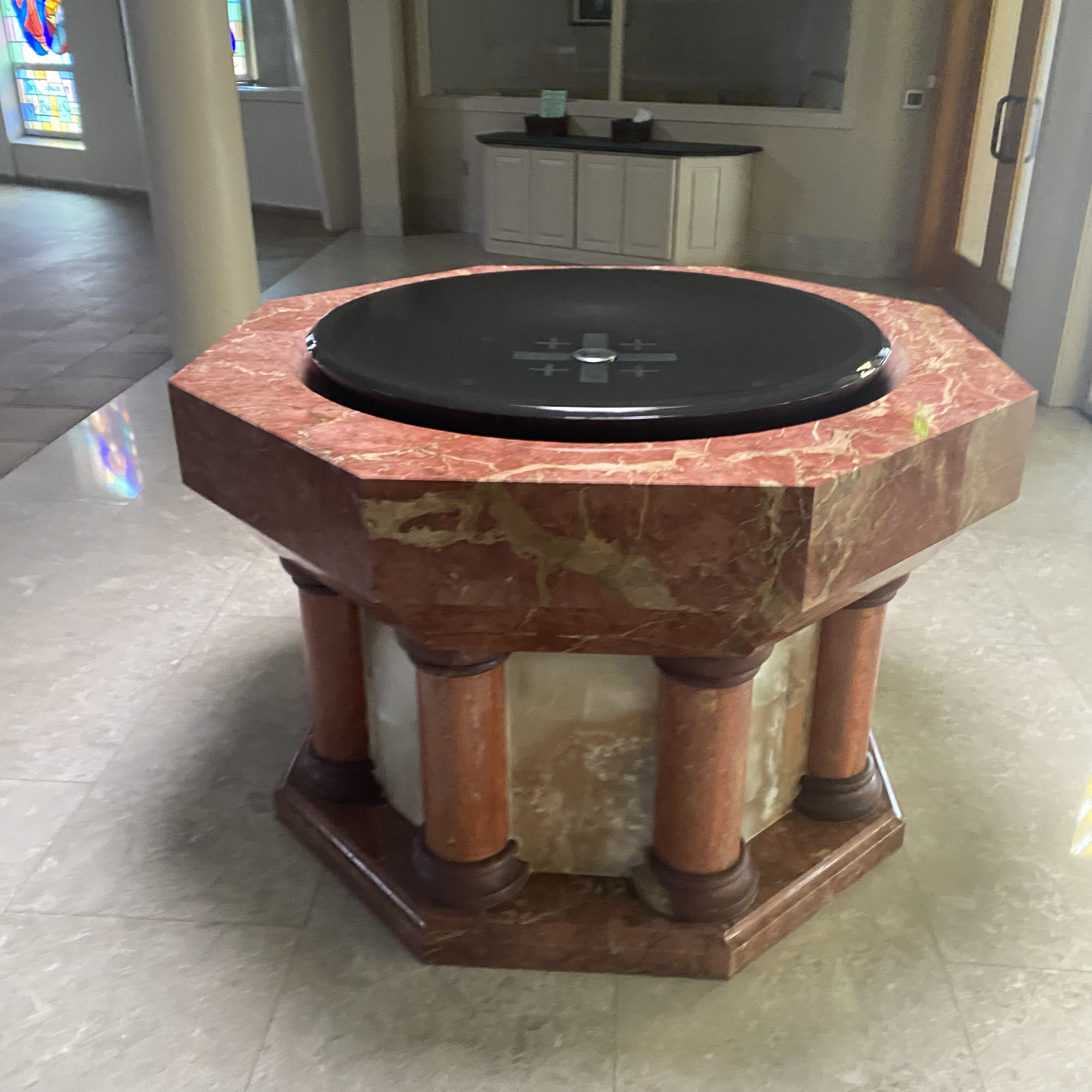
That’s why water is the sign we receive in the Sacrament of Baptism. God tells us that, not only does he support us in life, but God promises support for this world of ours. God will be more present than water, through his Son, Jesus Christ. That’s why our Baptismal fount is such and important part of the church.

We bless ourselves with water when we enter and leave our church. Many people bless themselves with holy water when they enter and leave home. We don’t want to lose a sense of God’s power and presence with us, which can easily happen today. That’s why the feasts of the Epiphany and the Baptism have become more important to the western Christian churches.

Pope Francis said that many of our rivers are “rivers of blood” because of war. He was speaking of the Dneiper and other rivers of the Ukraine. God gives us life. Let’s keep our world life-giving.

Dneiper River, Ukraine

Love Someone Near: 1 John 4:19–5:4

Jesus Christ reveals the love of God and teaches us what love means,  St. Augustine says in a beautiful commentary on today’s reading from the first letter of John:

“You are told ‘Love God’. If you say to me ‘Show me whom I should love’, what can I say except what John says? No one has ever seen God. But you must not think yourself wholly unsuited to seeing God: God is love, says John, and whoever dwells in love dwells in God. So love whoever is nearest to you and look inside you to see where that love is coming from: thus, as far as you are capable, you will see God.

So start to love your neighbor. Share your bread with the hungry, bring the homeless pauper into your house. Clothe the naked, and do not despise the servants of your kin.

”What will you get from doing all this? Your light will break forth like the dawn. Your light is your God, your dawn, because he will come to you to end the night of this world — he who, himself, neither rises nor sets but is eternal.

“By loving your neighbor, by having care for your neighbor, you are travelling on a journey. Where are we journeying, except to the Lord God, whom we must love with all our heart and all our soul and all our mind? We have not yet reached the Lord, but our neighbor is with us now. So support your neighbor, who is travelling with you, so that you may reach him with whom you long to dwell.”

Today’s gospel is an interesting commentary on loving your neighbor. Jesus returns to his neighbors at Nazareth. In Luke’s gospel, they’re the first Jesus approaches with the good news of the Kingdom of God. Our reading today ends with their initial response to him:  “And all spoke highly of him and were amazed at the gracious words that came from his mouth.”

Yet, they turned against him.

Still, Jesus came first to his neighbors. 

Until He Comes

Christ has come, yet his glory has not yet been revealed. “For we are the children of God, and what we shall become has not yet appeared. We know that, when he appears, we shall be like him, for we shall see him as he is.” St. John says in his letter.

What shall we do till he comes? Study him as he appears to us now, as a servant. Follow him in his humanity, St. Augustine says. See him one with the leper, the poor, those cast aside. Until he comes:

“Until this comes to pass, until he gives us the sight of what will completely satisfy us, until we drink our fill of him, the fountain of life — while we wander about, apart from him but strong in faith, while we hunger and thirst for justice, longing with a desire too deep for words for the beautiful vision of God, let us fervently and devotedly celebrate the anniversary of his birth in the form of a servant.

We cannot yet contemplate the fact that he was begotten by the Father before the dawn, so let us hold on to the fact that he was born of the Virgin in the night. We do not yet understand how his name endures before the sun, so let us acknowledge his tabernacle placed in the sun.

Since we do not, as yet, gaze upon the Only Son inseparably united with His Father, let us remember the Bridegroom coming out of his bride-chamber. Since we are not yet ready for the banquet of our Father, let us acknowledge the manger of our Lord Jesus Christ.”

Baptism and the Storm at Sea

After the five thousand had eaten and were satisfied,
Jesus made his disciples get into the boat
and precede him to the other side toward Bethsaida,
while he dismissed the crowd. And when he had taken leave of them,
he went off to the mountain to pray. 
When it was evening,
the boat was far out on the sea and he was alone on shore. 
Then he saw that they were tossed about while rowing,
for the wind was against them. 
About the fourth watch of the night,
he came toward them walking on the sea. 
He meant to pass by them.  
But when they saw him walking on the sea,
they thought it was a ghost and cried out. 
They had all seen him and were terrified. 
But at once he spoke with them,
“Take courage, it is I, do not be afraid!” 
He got into the boat with them and the wind died down. 
They were completely astounded. 
They had not understood the incident of the loaves. 
On the contrary, their hearts were hardened.  (Mark 6:45-52)

Just as the miracle of the loaves foreshadows the mystery of the Eucharist, the storm at sea foreshadows the mystery of Baptism. Two mysteries  Mark’s gospel links together in our reading today. 

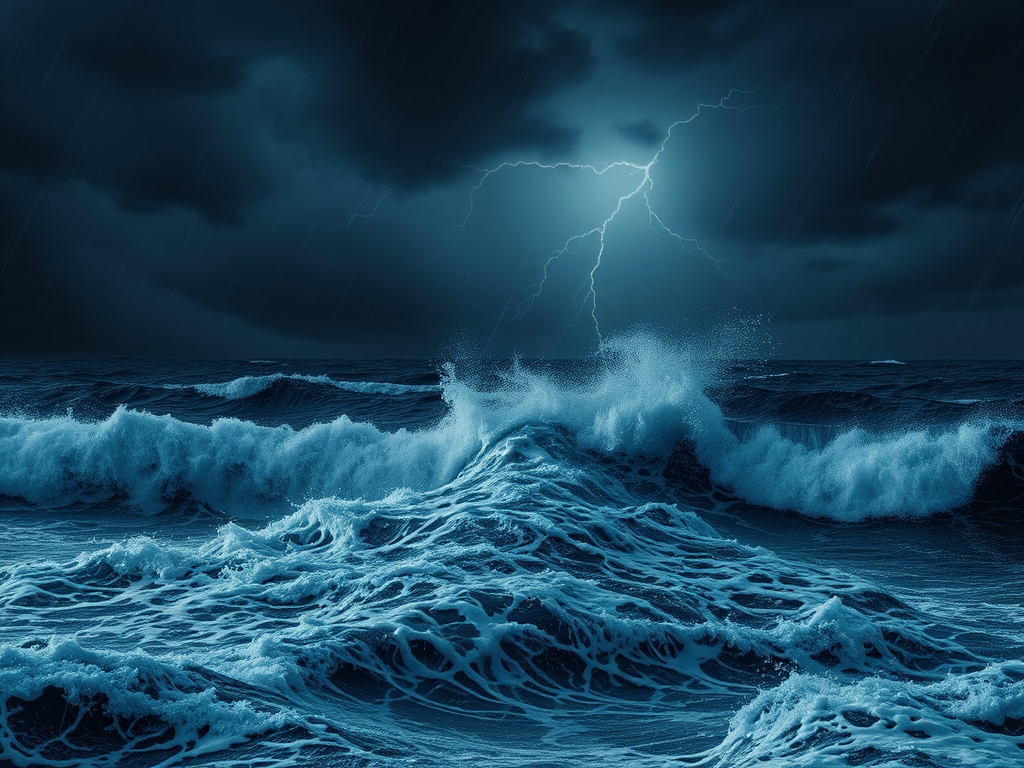
Life is a journey. Mark presents it as a water journey, a journey we take in Baptism as we enter the water with Jesus Christ. It’s not a journey without storms.

In Mark’s account, Jesus is not asleep in the boat but on the mountain in prayer as he sends his disciples on their way. Yet he watches over them on the water. 

He sees them tossed by the waves and the winds and he comes to them. He walks on the water, for he is Lord of land and sea. When they cry out for help, he says to them “Take courage, it is I, do not be afraid” and he enters the boat and the winds die down. 

The sacraments are the great signs Jesus is with us. We may see him far off, but the sacraments tell us he is near. We plan to go through a  life without storms, “smooth sailing”, but life is not like that. 

The gospel readings reveal the sacraments to us as signs of the abiding presence of Jesus Christ who, when he entered the waters of the Jordan, became forever one with us.  

He is Lord of the storms. Companion on the journey.

The Whole World Comes to a Manger

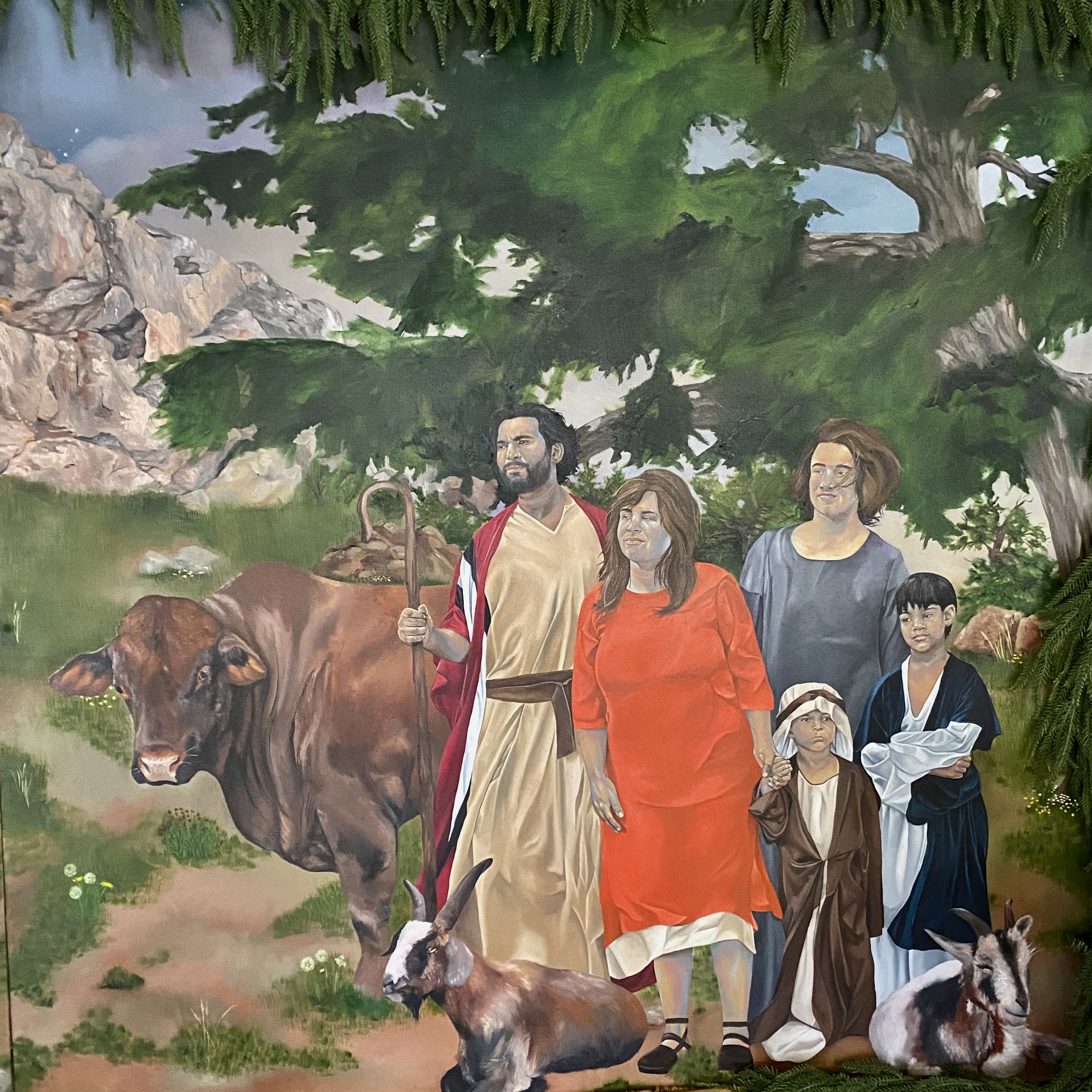
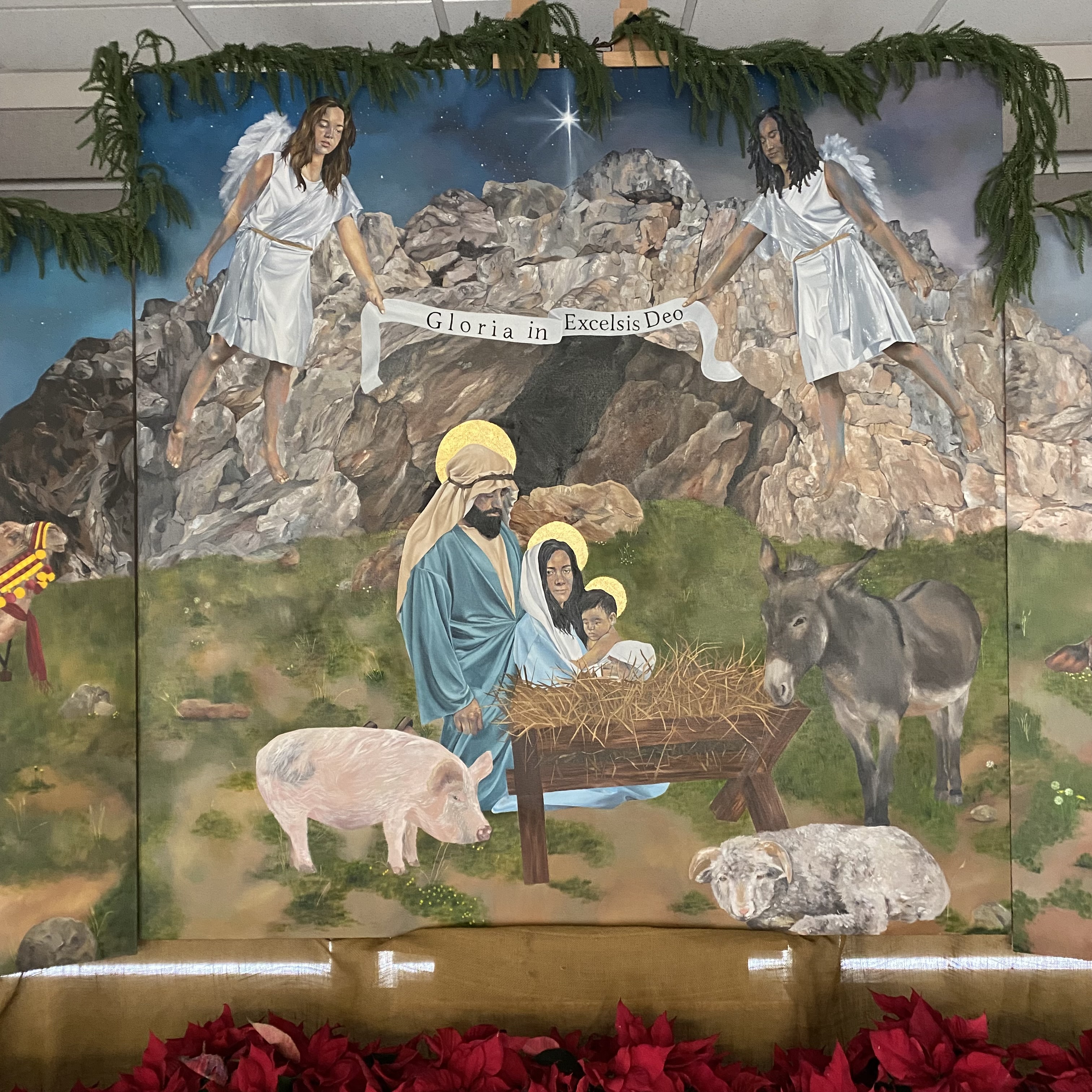
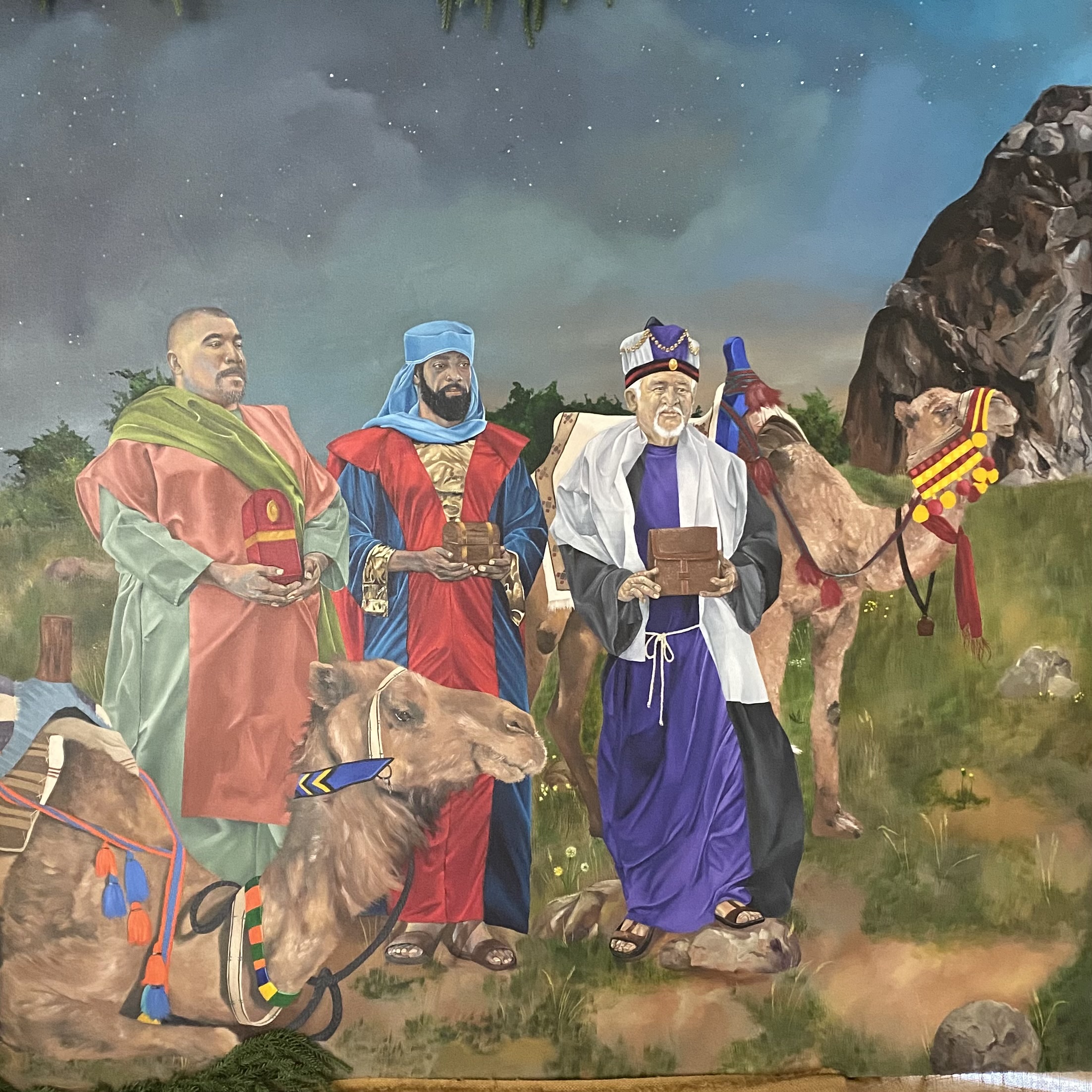
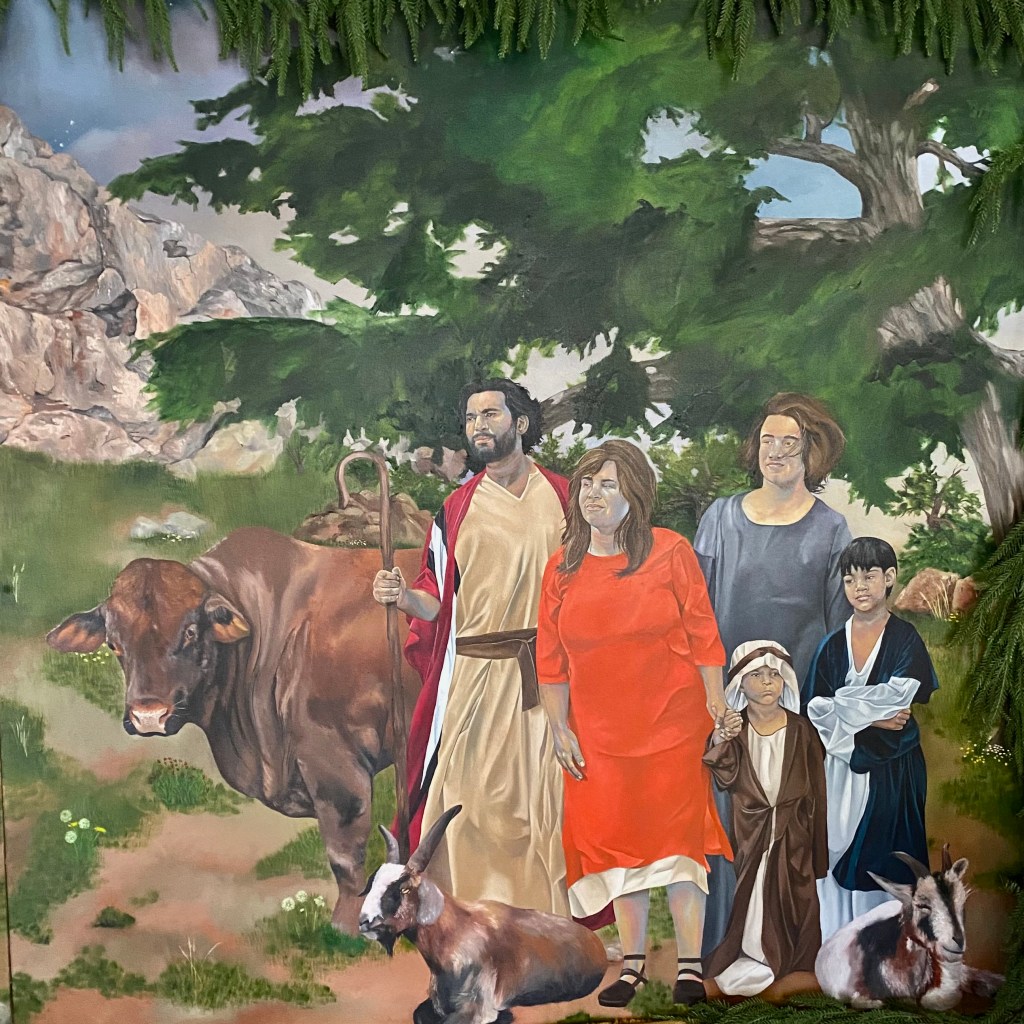
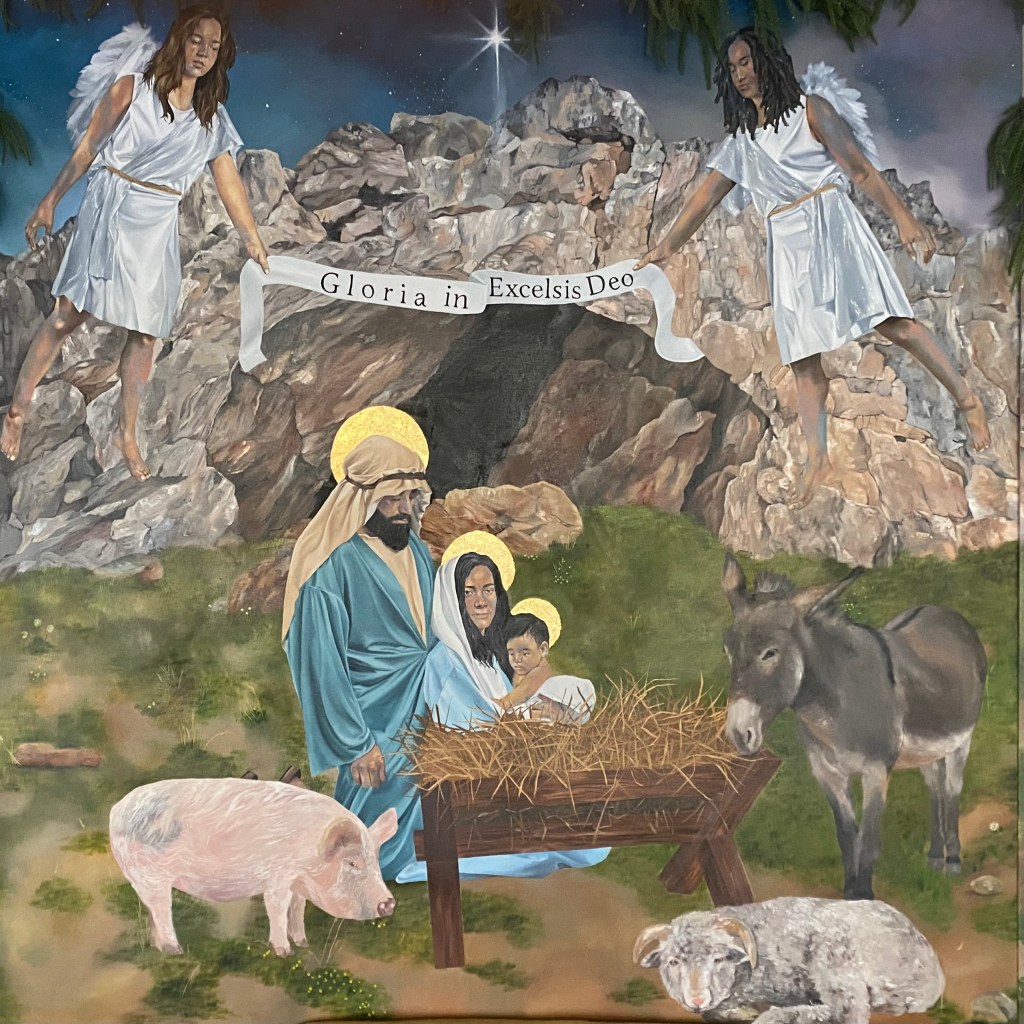
A large painting of the Christmas mystery in the gathering space of St.Mary’s Church in Colts Neck, New Jersey, is worth a visit before its taken down soon. The artist commissioned to make the work evidently wants to expand the way we look at this mystery in the three panels he created. 

In the right panel the shepherds coming to the Child are not the usual band of men followed by their sheep. There’s one shepherd and two women and two children and a water buffalo and two other animals who look like they may be wild mountain goats. No sheep. 

Who are the women? The shepherd’s wife and maybe his sister? The women look like they’ve been summoned quickly from their homes. Did the shepherd call them to come  see what the angels proclaimed in the fields? Don’t worry how you look, and bring the kids. Come and see.

Are the animals representatives of the animal world waiting , like the human world, for the angels’ message?

In the left panel, the Magi, elegantly dressed, hold their gifts for the Child as they come from a star-filled sky. Their camels finally rest from the long journey. The three represent the young and the old, and the different races called by the star. 

In the central panel, Mary seated holds in her arms the Child whom she wrapped in swaddling clothes and laid in a manger after she gave him birth.  Joseph stands protectingly over them. They’re dark skinned and dark haired, yet it’s hard to tell what race they belong to. 

Two angels above them announce “Glory to God” and a star shines brightly over the cave dug into the mountain. 

A donkey eats the straw from the manger, and a sheep lays on the ground beneath the manger. Right at Joseph’s feet there a large pig. Why is  he there, so close to the Child?  

In those days pigs were unclean animals. The Jews refused to eat them. On a journey to Joppa, Peter had a dream in which God commanded him to eat all kinds of food. There’s no fool that’s unclean, God said. All creation is  made clean through the saving power of his Son.

The whole world is welcome to the Manger. 

Artists remind us we can never exhaust the mysteries of life and the mysteries of God. There’s always more. 

A Holy Banquet: Mark 6

Miracle of the Loaves and Fish. James Tissot

God loves his people and calls them to a banquet. We may remember that promise of God from Isaiah from Wednesday, the 1st week of Advent: “On this mountain the LORD of hosts will provide for all peoples. A feast of rich food and choice wines, juicy, rich food and pure, choice wines.” (Isaiah 25,6-10)

Today, the Tuesday after the Epiphany, Mark describes a holy banquet in Galilee. Jesus, whose heart is moved with pity for those who follow him, feeds a vast crowd bread and fish:

So he gave orders to have them sit down in groups on the green grass. 
The people took their places in rows by hundreds and by fifties. 
Then, taking the five loaves and the two fish and looking up to heaven, 
he said the blessing, broke the loaves, and gave them to his disciples
to set before the people; he also divided the two fish among them all. 
They all ate and were satisfied. And they picked up twelve wicker baskets full of fragments and what was left of the fish.  Those who ate of the loaves were five thousand men. “And they all ate and were satisfied.” (Mark 6, 34-44)

The miracle will be performed again across the Sea of Galilee in an area predominantly pagan, “the Galilee of the Gentiles”. “All” people will eat and be satisfied. 

The love of God should fill us with wonder and praise. Yet Mark’s gospel goes on to say that those who ate the loaves “did not understand” the mystery they had experienced.(Wednesday) 

Still true? Do we understand the mystery of God’s love and the signs we experience here and now? One of these signs is the Holy Eucharist, the promise of a banquet for all people.