Statue of Christ the King at the Passionist Monastery in Jamaica, NY (Photo: Gloria M. Chang)
Christ the King Reigns Forever
“On the last Sunday of each liturgical year, the Church celebrates the Solemnity of Our Lord Jesus Christ, King of the Universe, or Christ the King.
Pope Pius XI instituted this feast in 1925 with his encyclical Quas primas (“In the first”) to respond to growing secularism and atheism. He recognized that attempting to ‘thrust Jesus Christ and his holy law’ out of public life would result in continuing discord among people and nations. This solemnity reminds us that while governments come and go, Christ reigns as King forever.”
“No future without history.” Don’t omit faith in that history.
I remember a guide explaining the Black Forest in Germany to visitors years ago. The Romans called it “black”, he said, because it was such a forbidding, dark land. Now, of course, it’s one of the loveliest spots in Europe, where visitors enjoy nature and its farms provide some of the best produce on the continent. It’s become a model for environmental planning in northern Europe.
Monks fleeing from dangerous conditions in the towns along the Rhine River were the first settlers here, our guide said.
Were they just fearful escapees, I asked, or did a vision of faith bring them here? Were they inspired by the Book of Genesis to create a new garden here, where they would live close to the earth, their buildings and lifestyle taking on the rhythms of nature, in the Benedictine tradition. Or were they just refugees?
I wondered too if the many small chapels found in the Black Forest today (see above) suggest that the people coming after the monks absorbed that same ideal?
Europe and North America have become increasingly secularized. It’s not just that people aren’t going to church; it’s evident also in a way people today see and understand things– past, present and future– without reference to the spiritual. I notice it in the documentaries, like Ken Burns’ new documentary on Leonardo DaVinci. A spark of wonder with him started it all.
Our guides on our trip along the Rhine some years ago were polished, informed, personable presenters, but spiritual realities didn’t have much of a place in their explanations.
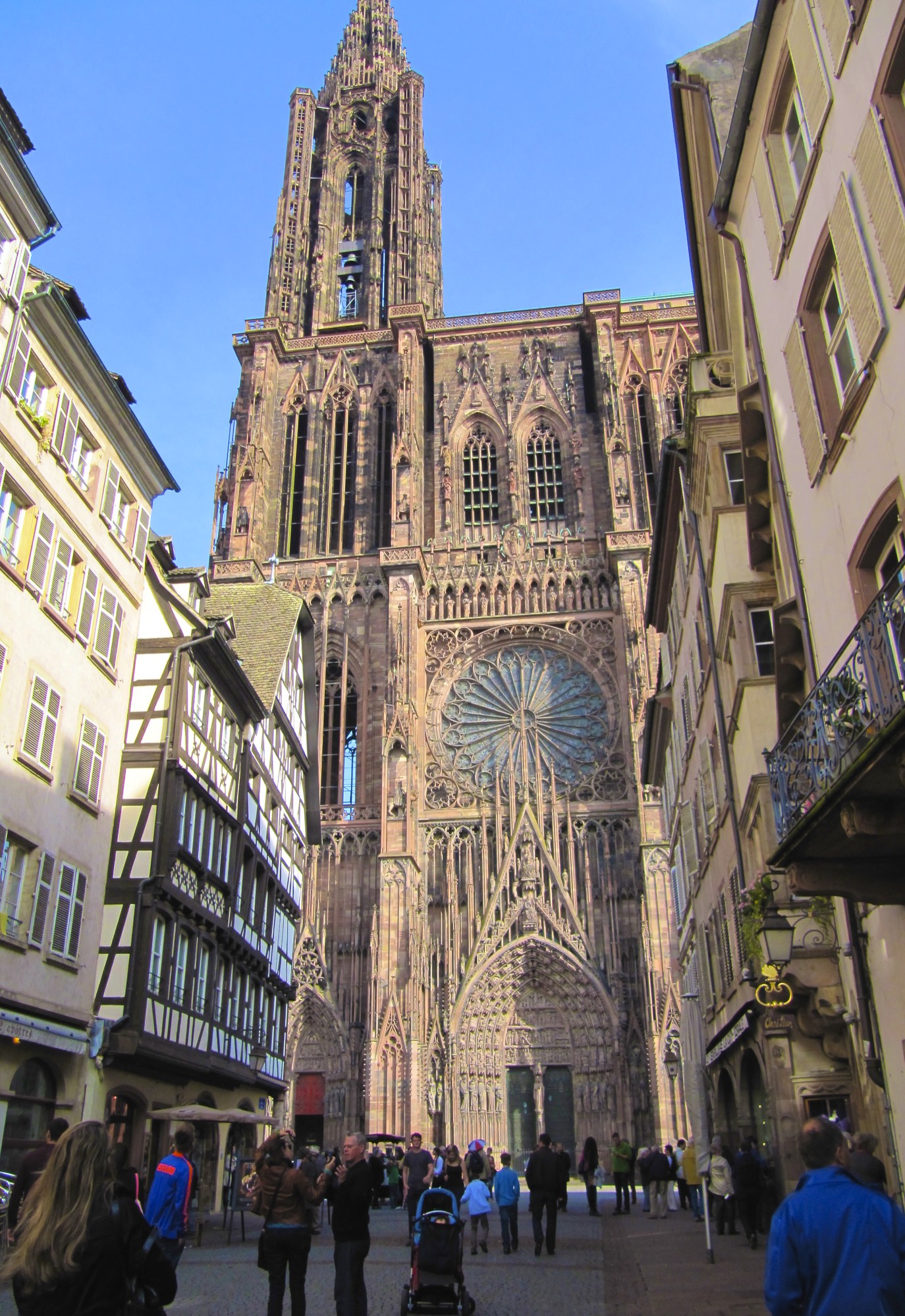
An example? Our guide in Strasbourg on the way to the cathedral through the maze of shops and colorful streets suggested that the great cathedral with its exquisite spire was a beacon drawing shoppers to the city’s abundant bazaars. A medieval version of MacDonald’s Golden Arches?
Medieval planners of the cathedral would be jolted by a suggestion like that. They built their great churches as places of splendor for relieving the monotony, squalor and hardships people experienced in their cities. Seeing them, people walking the streets saw beauty pointing to the heavens. Within them people knew themselves as the people of God.
A billboard for Donald’s? We have no future without history.
The Parable of the Talents. which we read today in Luke 19: 11-28 is also found in Matthew 25,14-30 and in a much shorter version in Mark 13, 34.
Why is Jesus so hard on the servant with one talent? A crucial point in the parable is that the Master entrusts talents to his servants according to what they can do. He gives to each one “according to his ability,” Matthew says. God certainly doesn’t expect anyone to do what’s beyond one’s ability, but God does expect us to use what we have, to trade till he comes, to live responsibly.
This is a lazy servant, who could do something and doesn’t do it. In a subtle way he blames his Master instead of himself. I suppose we might say, he’s guilty of sloth.
Sloth doesn’t seem to be a big sin. Pride, lust, anger, envy are more notorious. But sloth brings on inertia, uncaring, non-involvement that prevents the coming of the kingdom.
St. Paul the Apostle saw it as a problem in his community at Thessalonika, it seems. “Anyone who would not work, should not eat. We hear that some of you are unruly, not keeping busy, but acting like busy-bodies. We enjoin all such, and we urge the strongly in the Lord Jesus Christ, to earn the food they eat by working quietly. You must never grow weary of doing what’s right, brothers.” 2 Thessalonians, 3, 10-13)
The Book of Revelation has an important place in the church’s evening prayer. A selection occurs every Sunday, Tuesday, Thursday and Friday evening through the four week cycle of the Liturgy of the Hours. It’s the last prayer of the evening.
The selections are not grim passages about battles fought against Babylon and the enemies of God, but rather invitations to share in the heavenly triumph of Christ. They bring us before God’s throne and the Lamb who was slain to offer praise with all the saints who have gone before us. From this world, which can be so small and constricted, so frightening and dangerous, where we can become so self-absorbed and unsure, we come into the welcoming presence of God, who calms the fear of darkness and death.
O Lord our God, you are worthy to receive glory and honor and power. For you have created all things; by your will they came to be and were made. Worthy are you, O Lord to receive the scroll and break open its seals. For you were slain; with your blood you purchased for God men of every race and tongue, of every people and nation. You made them a kingdom, and priests to serve our God, and they shall reign on earth. Worthy is the Lamb that was slain to receive power and riches, wisdom and strength, honor and glory and praise. Glory to the Father and to the Son, and to the Holy Spirit:as it was in the beginning, is now, and will be for ever. Amen. ( Tuesday Evening)
At the end of the day, we visit heaven; we go into the night listening to the songs sung there. Prayers from Revelation offer the promise of future life.
Luke tells many stories of God’s mercy. Today’s reading at Mass is the story of Zacchaeus, the chief tax collector in Jericho, a wealthy man, Jesus called him down from a tree and stayed with on his way to Jerusalem. (Luke 19, 1-10)
As chief-tax collector, Zacchaeus was an agent for Herod Antipas, ruler of Galilee and Perea in Jesus’ day. Uncovering the ruins of Herod’s building projects in Galilee and elsewhere, archeologists point out that Herod built on a grand scale and lavishly, to impress his allies the Romans.
You needed money for building like that, of course, and that’s where tax-collectors came in. There was no dialogue or voting on government spending then. Herod told his army of tax-collectors, “Here’s how much I need; you go out and get it. Go to the fishermen along the Sea of Galilee and the farmers around Nazareth and the shepherds in the Jordan Valley and the merchants in Jericho and get what I need; I don’t care how, but get it.”
And so the tax collectors went out and got the money, keeping some for themselves. You needed to be tough and relentless for the job. It left you hard headed and hard hearted. An unsavory profession. The people resented them.
Zacchaeus, the chief tax collector in Jericho, was the one whom Jesus called and the one he stayed with on his way to Jerusalem. Objections came, not just from the Pharisees and scribes, who usually objected to Jesus’ actions, but everyone objected.
The only thing Jesus says is: “Today salvation has come to this house because this man too is a descendant of Abraham. For the Son of Man has come to seek and to save what was lost.” No thunderous warnings or stern corrections. Salvation has come and they sit down for a feast. You can hear in the story echoes of the Parable of the Prodigal Son, also from Luke’s gospel.
J
Notice that Jesus doesn’t call Zacchaeus to follow him to Jerusalem, like the blind man cured by Jesus in Jericho. He does not call him to follow him as he did the other tax collector, Matthew. He doesn’t tell Zacchaeus to give up his job and get out of that dirty, complicated situation. No, as far as we can tell Zacchaeus was still chief tax-collector in Jericho after Jesus left, still taking orders from Herod Antipas, still part of a sinful world. But that’s where Zacchaeus will experience salvation, even there.
God’s mercy works in the real world and in real life.
Our weekday readings at Mass for the 33rd and 34th weeks, the final weeks of the church year, are from the Book of Revelation, which describes the last days when God fulfills his promise of a kingdom. The Gospel readings for these weekdays are from Luke 17-21, also about the coming of God’s kingdom.
The Book of Revelation is a hard book to understand. John, writing from the prison island of Patmos to the churches of Asia Minor, uses strong, imaginative and apocalyptic images to picture the final triumph of Christ over Satan. John tells the churches to be alert. The kingdom is coming soon.
John borrows from Jewish apocalyptic writings, Daniel, Ezechiel and others, and he writes to give hope and warn a people in crisis, suffering like him. Commentators say he is possibly a disciple of John, the apostle, whom tradition associates with the church in Asia Minor, and they date the book to the time of a Roman persecution under the Emperor Domitian (A.D. 81–96).
Other commentators question whether the book responds to a persecution under Domitian. Instead, they see Revelation directed against Christians throughout Asia Minor who have become too much at home in Roman society, following the approach seen in the Pastoral Epistles of Paul. To John, the Asia Minor churches have lost their zeal for the gospel and he warns them about their increasing mediocrity. (cf. Revelation, Wilfrid J. Harrington, OP, Sacra Pagina, Liturgical Press 1993)
We are invited in Revelations to look to God’s glory in heaven’s court, resplendent with gems and other traditional symbols expressing God’s majesty. A great assembly praises God “who created all things” and the triumphant Christ, the Lamb who was slain, who reveals the plan of God:
“Worthy are you, O Lord, to receive the scroll and break open its seals, for you were slain and by your Blood you purchased for God those from every tribe and tongue, people and nation. You made them a kingdom and priests for our God, and they will reign on earth.” (Revelation 12,10-12)
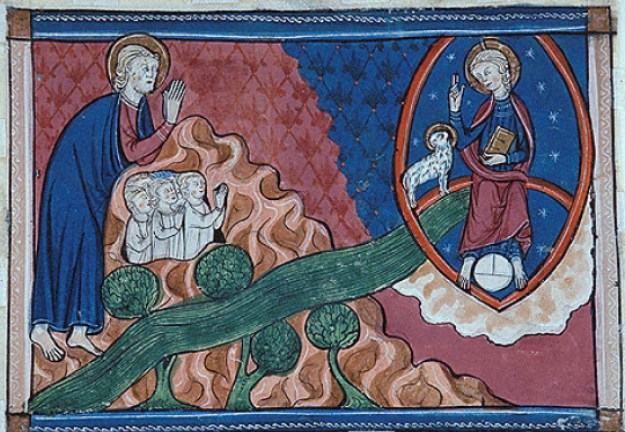
Our medieval illustration above presents the church on earth prayerfully fixed on Christ in glory; a green road, the tree of life, is bent to provide the way to glory. The writer of Revelation is not concerned with living comfortably here on earth. Christ is not just an earthly companion seeing us through the day; he calls us to a life beyond this.
“‘Behold, I stand at the door and knock. If anyone hears my voice and opens the door, then I will enter his house and dine with him, and he with me. I will give the victor the right to sit with me on my throne, as I myself first won the victory. and sit with my Father on his throne.” ( Revelation 3, 14)
The best commentators on scripture are the scriptures themselves, St. Augustine taught, and so as we see from Luke’s Gospel read with the Book of Revelation Jesus calls sinners as he makes his way to Jerusalem then dies on the cross. He never tells Zachaeus the publican to give up his job. He warns against burying your talent in the ground while the Master’s not here. He also says not to search into the time and the day the Son of Man will come. Keep your eye on the daily cross that’s yours.
Luke’s narrative of Jesus’ last journey to Jerusalem, which we’re reading this week, summarizes his whole ministry. It’s a journey of mercy.
Like Mark and Matthew, Luke says that on his last journey to Jerusalem Jesus passed through Jericho and then took the road up to the Holy City about 20 miles away. At Jericho he met a blind man asking him to cure his blindness. Calling him over, Jesus gave him back his sight, and the blind man followed him.
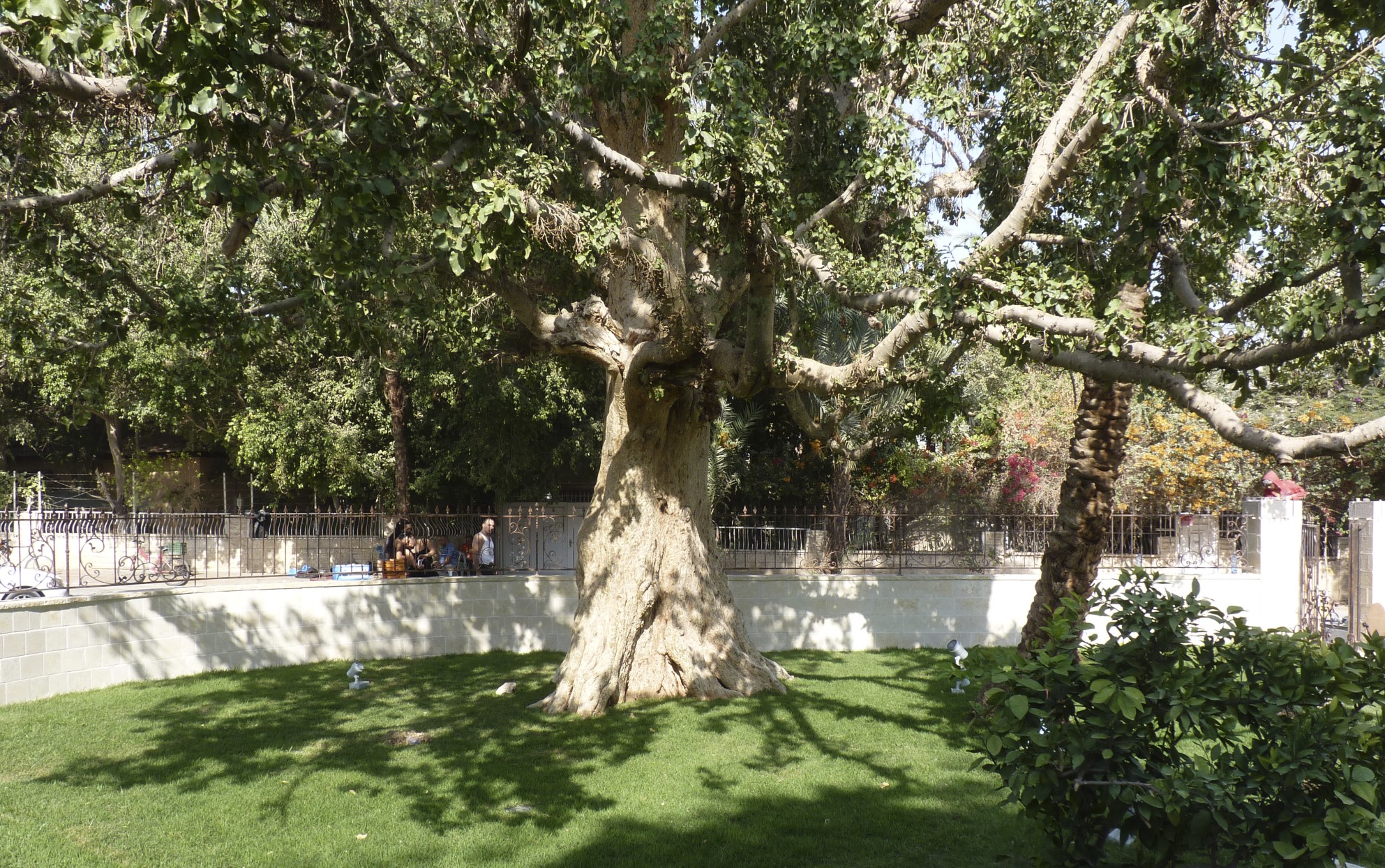
Luke adds a story not found in Mark and Matthew. Jericho’s chief tax-collector, Zachaeus, wants to see Jesus, but because he’s a short man, he has to climb a sycamore tree to get a glimpse of him. Calling him down, Jesus not only speaks with him but asks to stay in his house.
The two stories summarize Jesus’ activity in Galilee where he cured and reconciled so many. Luke’s gospel has been called the Gospel of the Outcasts because Jesus reaches out to so many like them. He brings salvation. As the name implies, outcasts can be hard to take, but Jesus embraced them all.
Jesus doesn’t take control of the lives of the blind man or the tax-collector either. He doesn’t ask for anything from the wealthy chief-tax collector except a day’s hospitality. He doesn’t tell him to quit his job and get another one. He usually told those he healed, like the bind man, to go back to their families and do what they did before. Maybe he had no home to go to, but the blind man followed Jesus up to Jerusalem.
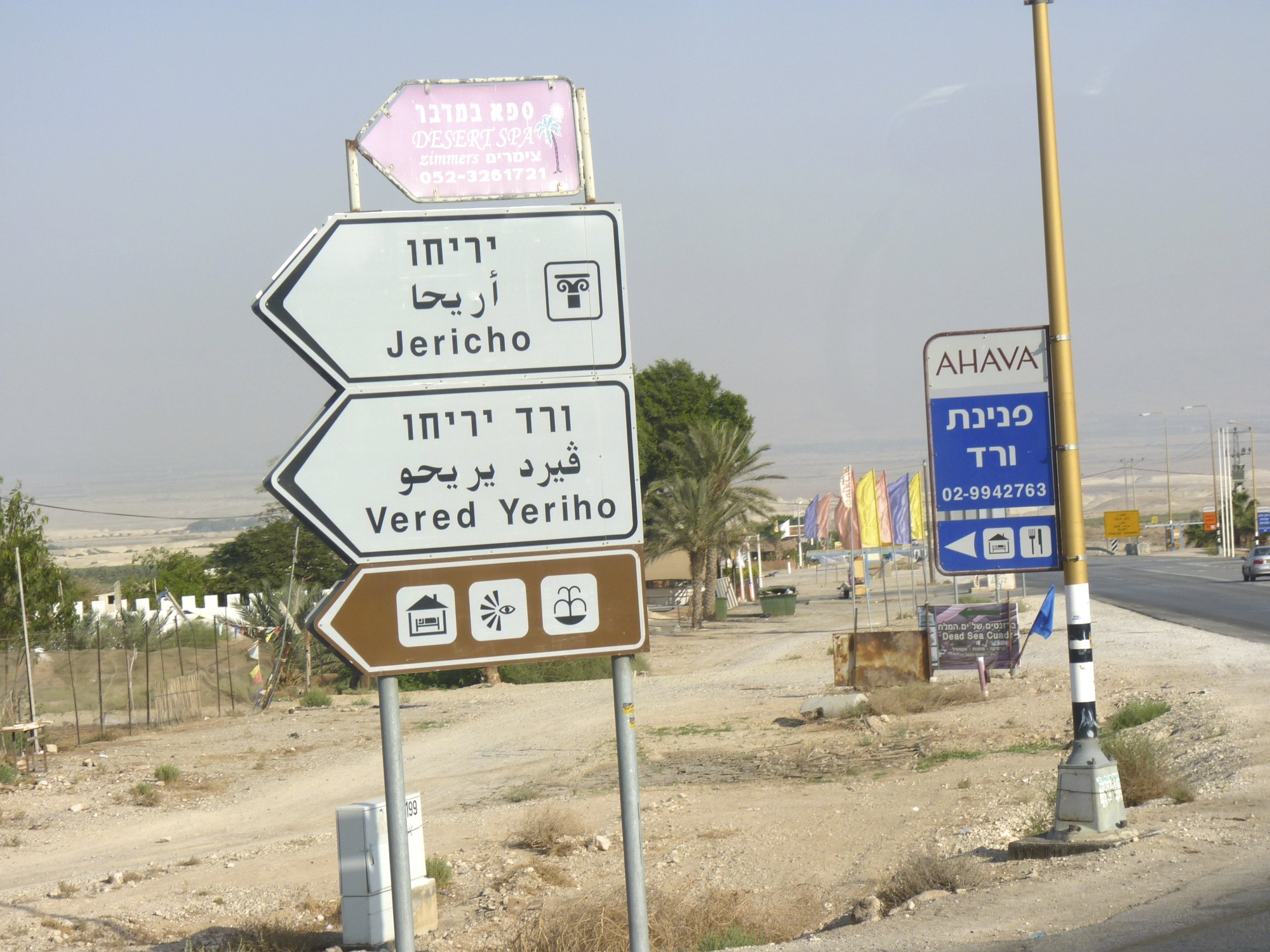
In Jericho years ago I took a picture of a sycamore tree in Jericho’s town square. Was it like the one Zachaeus climbed? Could the picture of the road sign (above) be where the blind man sat when he heard Jesus was passing by?
For this week’s homily please watch the video below.
33rd Sun b
“The sun will be darkened, and the moon will not give its light, and the stars will be falling from the sky, and the powers in the heavens will be shaken.” “It shall be a time unsurpassed in distress since nations began until that time.”
We’ll hear words like this in the gospels of Mark and Luke, Revelation and the Book of Daniel, in our readings at Mass for the next few weeks. They’re apocalyptic writings that appear in the scriptures when something is beyond our comprehension, something so big that only the biggest and most dramatic words try to describe it.
Apocalyptic language is used when the earth and the universe itself seem to be turned upside down. That occurs when Jesus dies and rises from the dead.
In the 13th chapter of St. Mark. Jesus and his disciples arrive in Jerusalem where he will be put to death and rise from the dead, an event that will change the course of history and bring a new promise of life to the world itself. How describe it?
The disciples were not thinking of his suffering and death as they arrive in Jerusalem; their attention is on something else. One of his disciples points to the temple: ‘Look, teacher, what stones and what buildings!’
He pointed out the magnificent new temple begun by Herod the Great, one of history’s great builders. The new temple, a wonder of its time, stood in Jerusalem, the place of their dreams.
To the disciples of Jesus a picture of what Israel could be was before them. In the newly built temple they saw a flourishing Israel and also a promise of human flourishing. This was what the world could be.
“Do you see these great buildings? There will not be one stone left upon another that will not be thrown down.” Jesus told his disciples, pointing out not only the impermanence of Jerusalem and its temple, but also the impermanence of all human civilizations.
The temple of Jerusalem was destroyed by the Romans in the year 70 AD; the Roman Empire itself came to an end a few centuries later.
Jesus spoke of human impermanence. At the same time he pointed to another future, God’s future, God’s kingdom, greater than any we can imagine.
Like his disciples, we hold on to our earthly dreams. How difficult for us to make our own the words of this Sunday’s responsorial psalm. “You are my inheritance, O Lord.”
“Learn a lesson from the fig tree. When its branch becomes tender and sprouts leaves, you know that summer is near. In the same way, when you see these things happening, know that he is near, at the gates.”
Let’s not overlook this simple teaching of Jesus. He tells us to learn from the natural world which now enters its winter sleep but comes to life again as summer draws near. Another world awaits us.
Finally, this section of the scriptures, rich in apocalyptic language, prepares us for reading the scriptural accounts of the death and resurrection of Jesus. Mark’s final words describing Jesus death begins:
“At noon darkness came over the whole land until three in the afternoon. And at three o’clock Jesus cried out in a loud voice, “Eloi, Eloi, lema sabachthani?” which is translated, “My God, my God, why have you forsaken me?” Jesus’ words about the days when “the sun will be darkened and the moon will not give its light” are fulfilled.
“The veil of the sanctuary was torn in two from top to bottom.” Mark announces as Jesus breathes his last breath.
“The earth quaked, rocks were split, tombs were opened, and the bodies of many saints who had fallen asleep were raised. And coming forth from their tombs after his resurrection, they entered the holy city and appeared to many.” Matthew adds. (Mat 27: 51-53)




 The Victor's Place