Tag Archives: Zechariah

December 23: Birth of John the Baptist

birth john


Luke’s gospel today recalls in detail the birth of John the Baptist . “The hand of the Lord was with him. The child grew and became strong in spirit, and he was in the desert until the day of his manifestation to Israel.” (Luke 1:80)

Just as Luke recognizes the role of Mary and Joseph in the birth and raising of Jesus, he recognizes the role of Elizabeth and Zechariah in the birth and raising of John. Each help John grow and become strong in spirit. However lonely and independent he appears later in the gospels, John was influenced by them and the extended family that surrounded him from his birth.

Luke’s gospel often see one person’s fidelity influencing another. “The hand of the Lord was with him,” Luke writes, but human hands were on him as well.

John had faith like his mother Elizabeth who recognized the Spirit’s presence in her pregnant relation Mary visiting from Nazareth. John later would point out the Lamb of God among all those who came to the Jordan River for baptism.

He had faith like his father Zechariah who devoutly celebrated the mysteries of God in the temple of Jerusalem as a priest. At his birth, Zechariah signs away the gift of his name– and probably his hope that his son would follow in his steps. John would have a different calling. At the Jordan River, John called pilgrims to prepare the way of the Lord as they made their way to the temple and the Holy City, Jerusalem.

Undoubtedly, John was a unique figure, a messenger from God, a voice in the desert preparing the Lord’s way. But there were faithful people behind him, as they are behind us.

Don’t forget his relative, Mary of Nazareth. At the end of his account of her visit with Elizabeth, Luke mentions “Mary stayed with her for three months, then returned to her home.” (Luke 1:56) That would mean she stayed on till the birth of John, wouldn’t it?

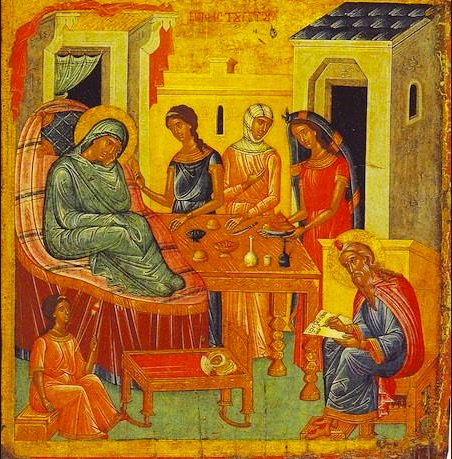
I don’t see Mary in the icon of John’s birth (above), but was she there? Were there other times too these families met? Artists portray the children playing together later. They could be right. We influence one another more than we think.

December 22: The Magnificat and the Benedictus

Mary concludes her visit to Elizabeth praising God, who is “mighty and has done great things to me.” Her Magnificat is part of St. Luke’s beautifully crafted narrative preparing for the Christmas feast.

After John the Baptist’s birth, his father Zechariah also praises God. “Blessed be the Lord, God of Israel. He has come to his people and set them free.”–his Benedictus. (Luke, 1:67-79)

We pray Mary’s “Magnificat” each day in the church’s evening prayer, thanking God for the blessings of the day. “My soul proclaims the greatness of the Lord and my spirit rejoices in God my Savior.God has come to the help of his servant Israel, remembering his promise of mercy, the promise he made to our fathers, to Abraham and his children forever.” Like Mary, we rejoice in God’s promises and wait for their fulfillment.

In the church’s morning prayers each day we pray Zechariah’s Benedictus, which ends the silence and darkness of night and welcomes a blessed day.  “In the tender compassion of our God, the dawn from on high shall break upon us, to shine on those who dwell in darkness and the shadow of death and to guide our feet in the way of peace.”

The gospel mysteries become our mysteries. No matter what the day, we end it singing God’s praises with Mary. No matter what the day, the Dawn which is Jesus Christ blesses our world and guides our steps, even if we come slowly to belief, like Zechariah.

Commentators on Luke’s gospel say that Luke probably uses Jewish Christian prayers, applying them to Zechariah and Mary. The New American Bible says: “ Because there is no specific connection of the canticle to the context of Mary’s pregnancy and her visit to Elizabeth, the Magnificat (with the possible exception of v 48) may have been a Jewish Christian hymn that Luke found appropriate at this point in his story.”

The Magnificat and the Benedictus, attributed appropriately to Mary and Zechariah, are our prayers too. Daily prayers.

Gracious God,

Let me not doubt your promises, your tender mercies, but let me rejoice in them as Mary and Zechariah did, and look for their fulfillment, through Christ, our Lord. Amen.

December 20: The Annunciation

St. Luke’s account of the Annunciation to Mary, read today at Mass,  follows the announcement of the birth of John to Zechariah in yesterday’s advent readings. Mary responds to the angel so differently than the priest Zechariah. (Luke 1, 5-25,)

In the temple where great mysteries are celebrated, the priest won’t believe he and his wife can conceive a child. They’re too old. He doubts.

In  Nazareth, an unlikely place for a great revelation, the angel approaches Mary with a message far more difficult to grasp. “ The Holy Spirit will come upon you and the power of the Most High will overshadow you. Therefore the child to be born will be called holy, the Son of God.”

Mary believes and does not doubt and by God’s power conceives a Son who will be born in Bethlehem. “Behold, the handmaid of the Lord, be it done to me according to your word,”

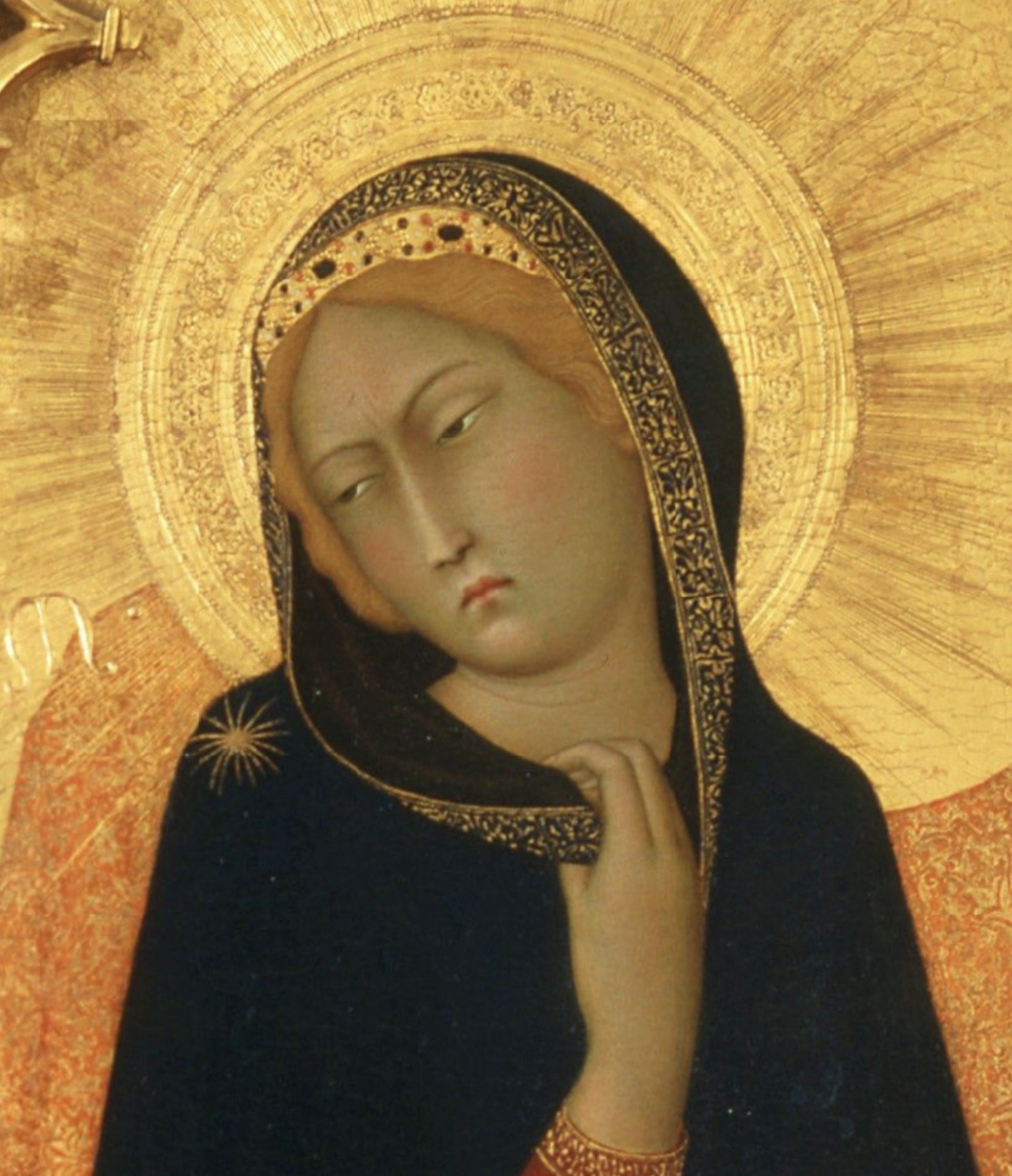
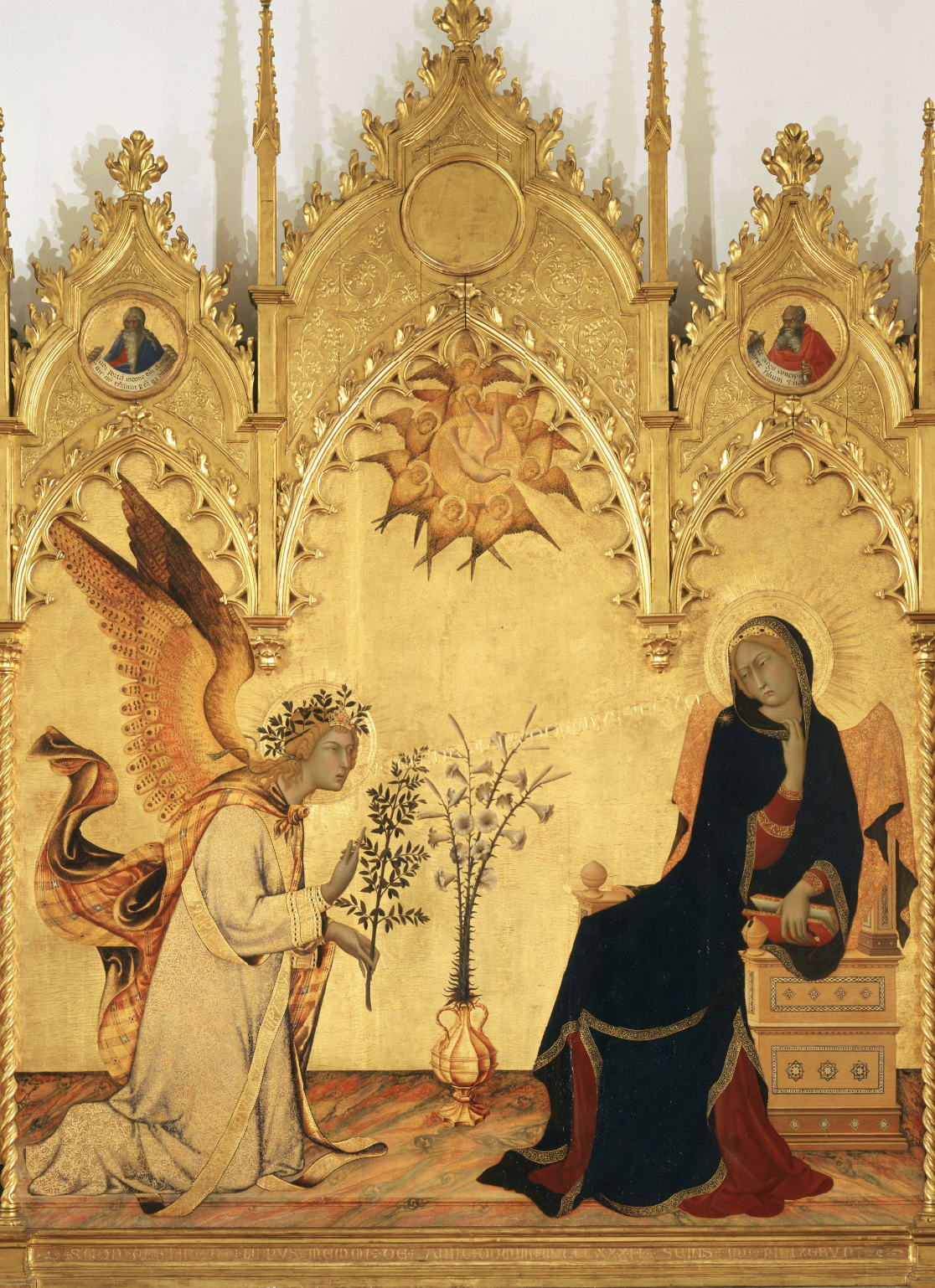
This is a golden moment, the 13th century painting above by Simone Martini and Lippo Memmi indicates. Mary is at home in prayer when the angel comes. Prayer enables her to believe and accept what is revealed. That’s true for all of us: prayer helps us discern and say yes to what God reveals.

“How can this be. I do not know man?” Mary says to the angel. Our painting seems to capture that moment in our gospel passage, but Mary will go on to respond in faith, “Be it done to me according to your word.” Mary is a woman of faith; we learn from her.

Today we pray:

O Flower of Jesse’s stem, you have been raised as a sign for all peoples; kings stand silent in your presence; the nations bow down in worship before you. Come, let nothing keep you from coming to our aid. 

Readings www.usccb.org

December 19: Zechariah in the Temple

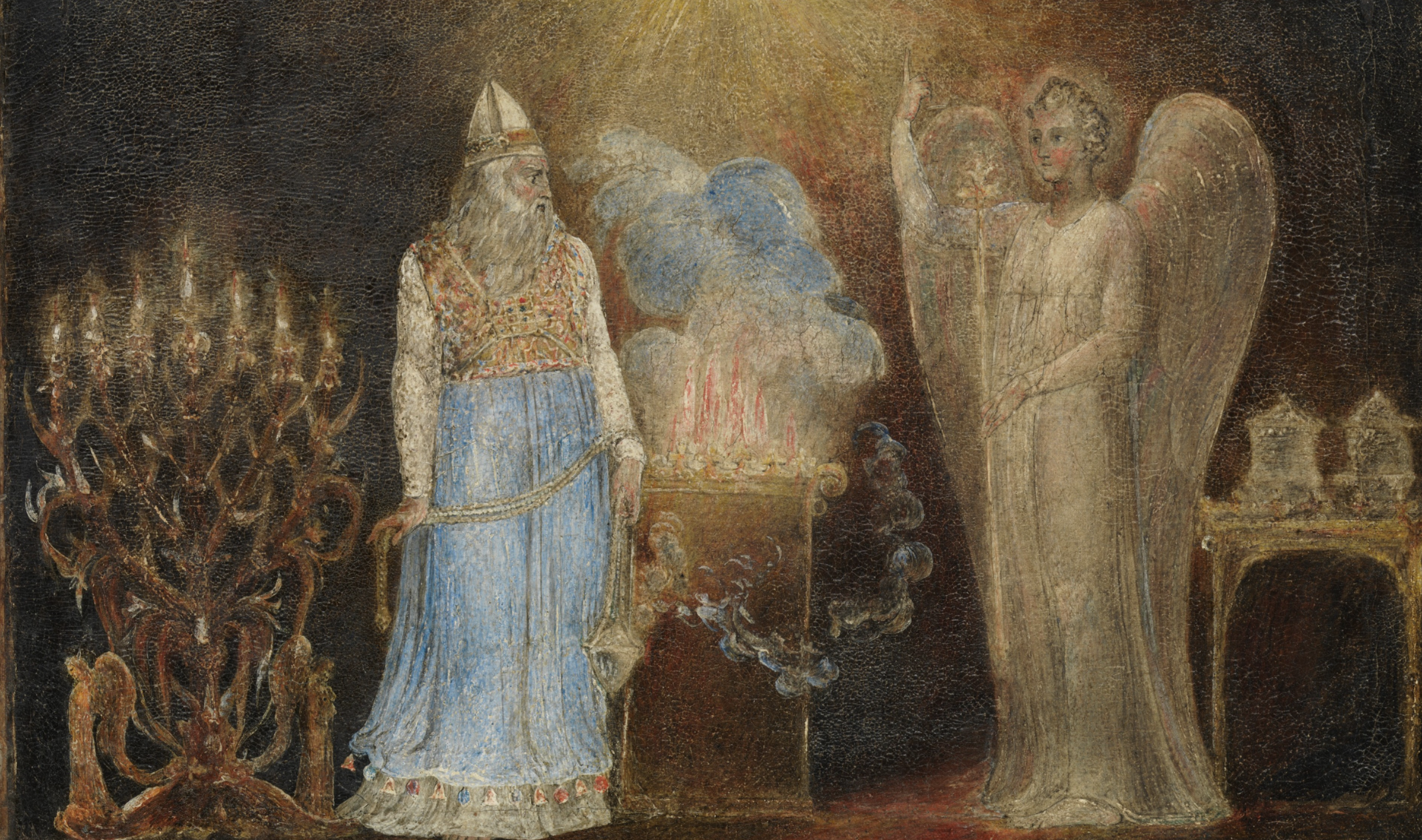
Zachariah in Temple, William Blake Wiki Commons

The priest Zachariah goes into the temple bearing incense to worship the Lord , “In the days of King Herod”, our Advent readings says today. An angel appears next to the altar of incense and says to him. “Your prayer has been heard,..Your wife will bear you a son.”

Surely, the old priest was no longer praying for a son. Childbearing was over for his wife and himself. The promise of new life was long gone; there’s no hope for a child.

But the angel promises a child “great in the eyes of the Lord” to be called John, who will more than fulfill their hopes, turning “many of the children of Israel to their God.”

The old priest doubts and is punished with silence. He won’t speak until after the child is born. Then he speaks again,  as he announces to those at his birth that “his name is John.”

You lose your voice when you lose hope in God’s promises. You get it back when you believe. When John is born, Zechariah sings a song of praise at God’s unexpected  gift.

The Communion Prayer for today’s Mass says: “As we give thanks, almighty God, for these gifts you have bestowed, graciously arouse in us, we pray, the desire for those yet to come.”

Never doubt the gifts God wants to give, Zechariah tells us. Doubt silences us. God’s gifts give us a voice.

O Root of Jesse’s stem,
sign of God’s love for all his people:
come to save us without delay!

Readings here.

READINGS: DECEMBER 17 TILL CHRISTMAS

The Gospel of Luke is our principal guide through the final days of Advent till the feast of  Christmas. These days are our “novena” preparing for the mystery of Christmas.

 December 17th and December 18th we read Matthew’s genealogy of Jesus and his account of Jesus’ birth.

December 19 The angel’s announcement to Zechariah the priest about the birth of John the Baptist. (Luke 1: 5-26)

December 20. The angel announces to Mary that she will bring “the Son of God” into the world. (Luke 26-38) 

December 21. Mary visits her cousin Elizabeth to share this Good News. ( Luke 1:39-45 )

December 22. The 4th Sunday of Advent. The gospel account of Mary’s visit to Elizabeth is repeated. ( Luke 1:46-56) 

December 23. Elizabeth gives birth to John, who will announce the coming of Jesus: (Luke 1:57-66)

December 24. Zechariah praises God’s compassion towards those who “dwell in darkness and the shadow of death.” (Luke 1:67-79.)

December 25 Christmas. The evening readings for Christmas are:  

Isaiah 9: 1-6

Timothy 2:11-14

Luke 2:1-14, The story of the Birth of Jesus Christ

Old Testament readings add their voice to the gospel accounts.  A number of stories, like the unpredictable births of Sampson and Samuel accompany the story of the birth of John the Baptist and Jesus. They remind us that “nothing is impossible with God.” The prayers in Advent speak too of the gentle rain that makes the earth fertile and the numerous “miracles” found in the ordinary course of nature. From the created world we can gain a sense of wonder for this great wonder of God.

Our readings are stories of belief and doubt. Isaiah offers King Ahaz, the consummate doubter and cold calculator on December 20. He was mentioned on Wednesday mornings at morning prayer each week of Advent. Ahaz stands in contrast to Mary, who believes and accepts the angel’s promise. She wonders “how can this be?” before this mystery of God, but she believes. 

Looking Ahead

Looking ahead realistically is always hard, but maybe it’s harder today, especially for a religious congregation like mine, whose membership is old and whose financial resources are stretched.

We mirror the church in this country, in fact, which is losing members and running short on finances. So, we have to plan for diminishment’

But God’s plan is not to fade away, but to grow; to live and not to die. The wonderful first reading from Zechariah for today’s Mass talks about growth, not decline. Keep a “measuring line” in your hand for what is new, it says. Don’t be afraid to think big.

Here’s the reading from Zechariah in full:

“I, Zechariah, raised my eyes and looked: 
there was a man with a measuring line in his hand.
I asked, “Where are you going?”
He answered, “To measure Jerusalem,
 to see how great is its width and how great its length.”

Then the angel who spoke with me advanced,
and another angel came out to meet him and said to him,
“Run, tell this to that young man:
People will live in Jerusalem as though in open country,
because of the multitude of men and beasts in her midst.
But I will be for her an encircling wall of fire, says the LORD,
and I will be the glory in her midst.”

Sing and rejoice, O daughter Zion!
See, I am coming to dwell among you, says the LORD.
Many nations shall join themselves to the LORD on that day,
and they shall be his people and he will dwell among you.”

We need God’s “measuring line” when we look ahead.