The brilliant Italian scientist Galileo Galilei was one of the great figures of the 17th century. Born in Pisa, in Tuscany, Galileo studied, taught and lectured in Pisa and Padua as well as in Florence, where he and his family made their home. The father of experimental science, his work in astronomy drew criticism from the church of his time and made him a symbol of the conflict between faith and science.
He was a deeply religious man; Catholic to the core. Two of his daughters entered the convent outside Florence and one of them, Sister Maria Celeste, carried on a long, tender correspondence with her brilliant father.
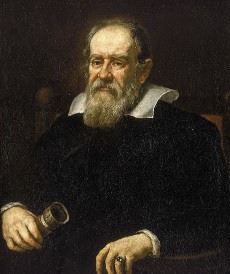
Galileo believed that nature was a teacher along with the bible, and he wanted the church to accept the evidence that science provides, otherwise it could be called an enemy of truth and human progress. Like others then and now, he believed that the bible taught you how to go to heaven and not how the heavens go.
His story is beautifully and carefully told today in a recent book I’m reading now:
Galileo’s Daughter: A Historical Memoir of Science, Faith and Love, Dava Sobel, New York 1999
There’s a television version: Galileo: Battle for the Heavens, that you can find on Nova’s site on the internet.
I admire the author’s even-handed description of the relations between the scientist and the churchmen who condemned him for what they saw as his heretical ideas. “A tragic mutual incomprehension has been interpreted as the reflection of a fundamental opposition between science and faith, “ Pope John Paul said regretfully in 1992.
I’m going in October on a pilgrimage through some of the Tuscan cities and Venice, where Galileo achieved so much. He was a believer and a scientist. May others follow him and may our church welcome the knowledge they bring to the human family.
 The Victor's Place