Tag Archives: Risen Christ

Welcoming the Night Visitor

Jesus engaged Nicodemus at night. Will he engage the hesitant visitors in our age, that growing group whom surveys say are leaving religious traditions they were raised in because they have stopped believing in their teachings.

Charles Taylor in his book “A Secular Age” may have insights into the “Nones”. Some become unaffiliated because they do not believe in God or the teachings of most religions. Many leave a religion because “they think of religious people as hypocritical or judgmental, because religious organizations focus too much on rules or because religious leaders are too focused on power and money.”

It’s interesting to see, Taylor writes,  that “ far fewer say they became unaffiliated because they believe that modern science proves that religion is just superstition.”

The theory that religion will disappear as science advances doesn’t hold up, Taylor says, because there’s a search for “human fullness” for a “higher world” that doesn’t go away. Surveys indicate that’s the case among the unaffiliated today

But Taylor also recognizes that people find religions difficult today.  In the western world, our secular age is an age of “expressive individualism;” people want reasons to believe and belong. They need religious places that meet them as they are. They’re looking for religious experience.

“Those who believe in the God of Abraham should normally be reminded of how little they know him, how partial is their grasp of him. They have a long way to go…Many believers (the fanatics, but also more than these) rest in the certainty that they have got God right (as against all those heretics and pagans in the outer darkness). They are clutching onto an idol, to use a term familiar to the traditions of the God of Abraham.”  (p.769)

Churches need to engage the world with reasons, not with condemnations.  Belief leads us to the mysterious Unknown, not sharp certainties. Jesus kept speaking to Nicodemus many nights, it seems. His story and the story of the disciples on the way to Emmaus says it takes time to believe. We’re slow learners. We have to keep talking to the “Nones” at night, praying they find him “in the breaking of the bread.”
Weekday Readings: Third Week of Easter


Monday Acts 6,8-15; John 6,22-29
Tuesday Acts 7,58-8,1; John 6,30=35
Wednesday Acts 8,1-8; John 6,35-40
Thursday Acts 8,26-40; John 6,44-51
Friday Acts 9,1-20; John 6,52-59
Saturday Acts 9,31-42; John 6,60-69

The Mass readings this week continue from the Acts of the Apostles with the story of the Greek-speaking deacon Stephen. His fiery preaching against temple worship and “stiff-necked” Jewish opposition to Jesus results in his death and a persecution that drives Hellenist Christians out of Jerusalem. (Monday and Tuesday) But Stephen’s death, like the death of Jesus, brings new life. The church grows. “The death of Christians is the seed of Christianity.” (Tertullian )

Philip the Deacon, one of those displaced, preaches to the Samaritans north of Jerusalem. Then, led by the Spirit, he converts the Ethiopian eunuch returning home after his pilgrimage to Jerusalem. (Wednesday and Thursday} Following Philip’s activity, Paul, the persecutor, is converted by Jesus himself. (Friday)

Before Paul’s ministry begins, Peter leaves Jerusalem to bless the new Christian communities near the coast; at Joppa he’s told by God to meet the Roman centurion in Caesarea Maritima. The mission to the gentile world begins with that meeting. (Saturday)

Stephen, Philip, Peter and Paul serve God’s mysterious plan. It’s not human planning. The Holy Spirit is at work.

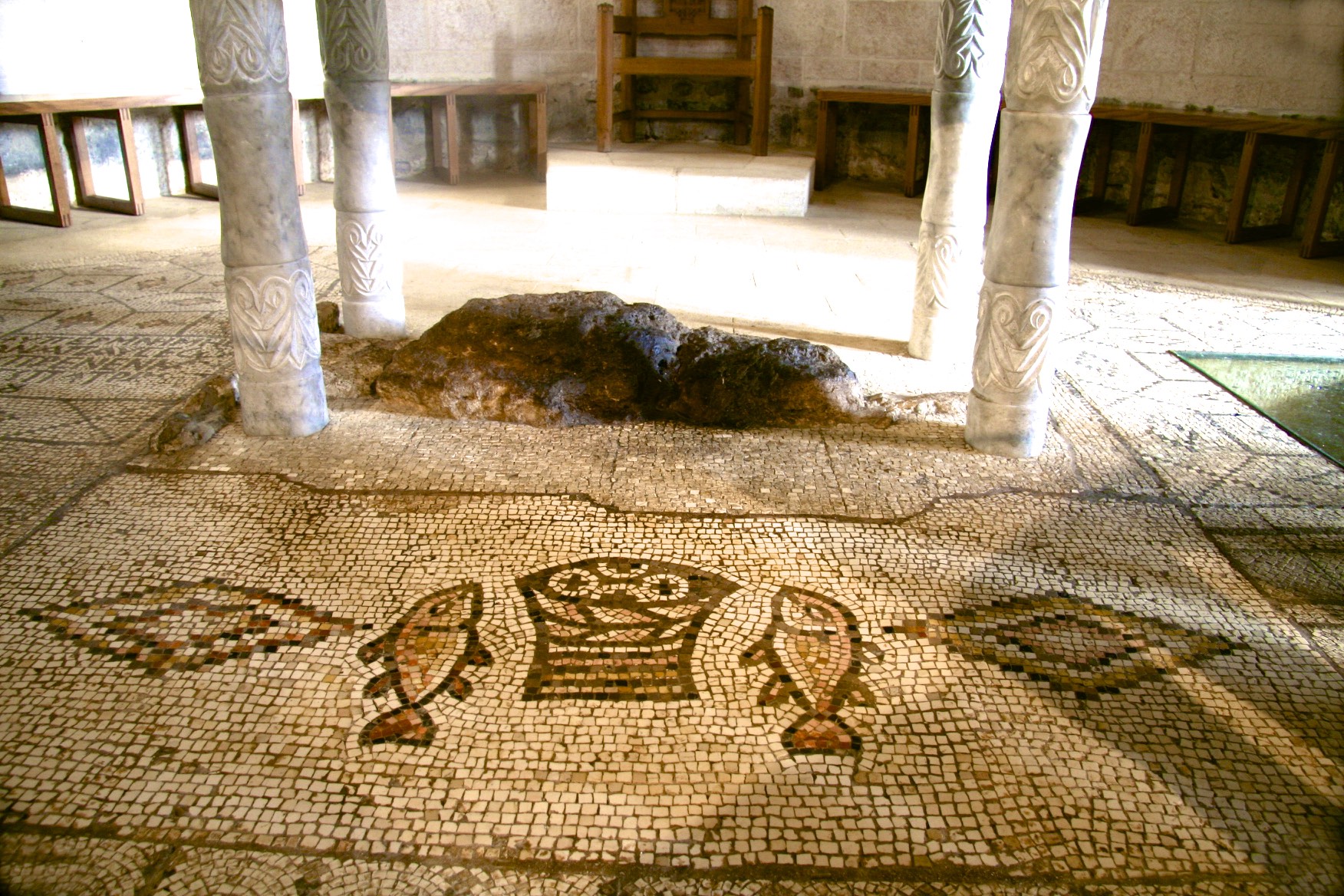
The gospel readings this week are from St.John’s gospel– segments of Jesus’ long discourse on the Bread of Life to the crowd at Capernaum after the miracle of the loaves. (John 6) In the Eucharist we meet the Risen Christ.  He not only feeds us personally, but a growing church is fed.

The Thomas in us all

Thomas

Some things — like telling time or tying your shoes — you learn once, but we know Jesus Christ gradually, day by day. Human and divine, he makes himself known to us as he promises and as we are ready to receive him.

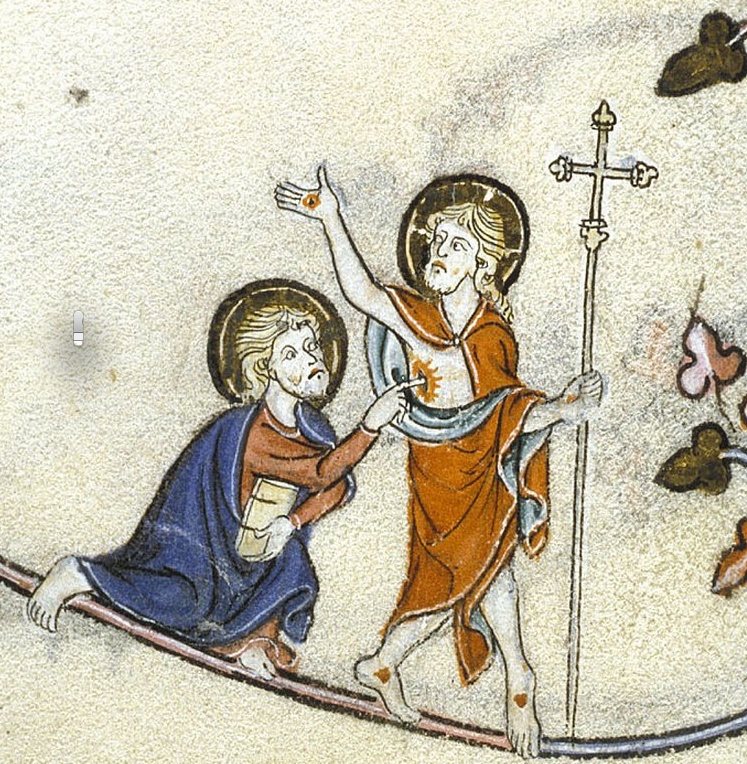
That’s why Thomas, the apostle, whose feast is today, is such an important figure. Far from being a lonely skeptic, an isolated dissenter, he represents the slowness of heart and mind, the recurrent skepticism, that affects us all.

Yet, Thomas is a sign of hope. He reminds us that the Risen Jesus offers, even to the most unconvinced, the power to believe.

Lord Jesus,
the Thomas in us all
needs the wounds in your hands and side,
to call us to believe
you are our Lord and God.

Risen, present everywhere,
bless those who have not seen,
blind with doubts
or weakened faith, or no faith at all.

Bless us, Lord,
from your wounded hands and side,
strengthen our faith
to believe in you.

Follow Me

Galilee shore

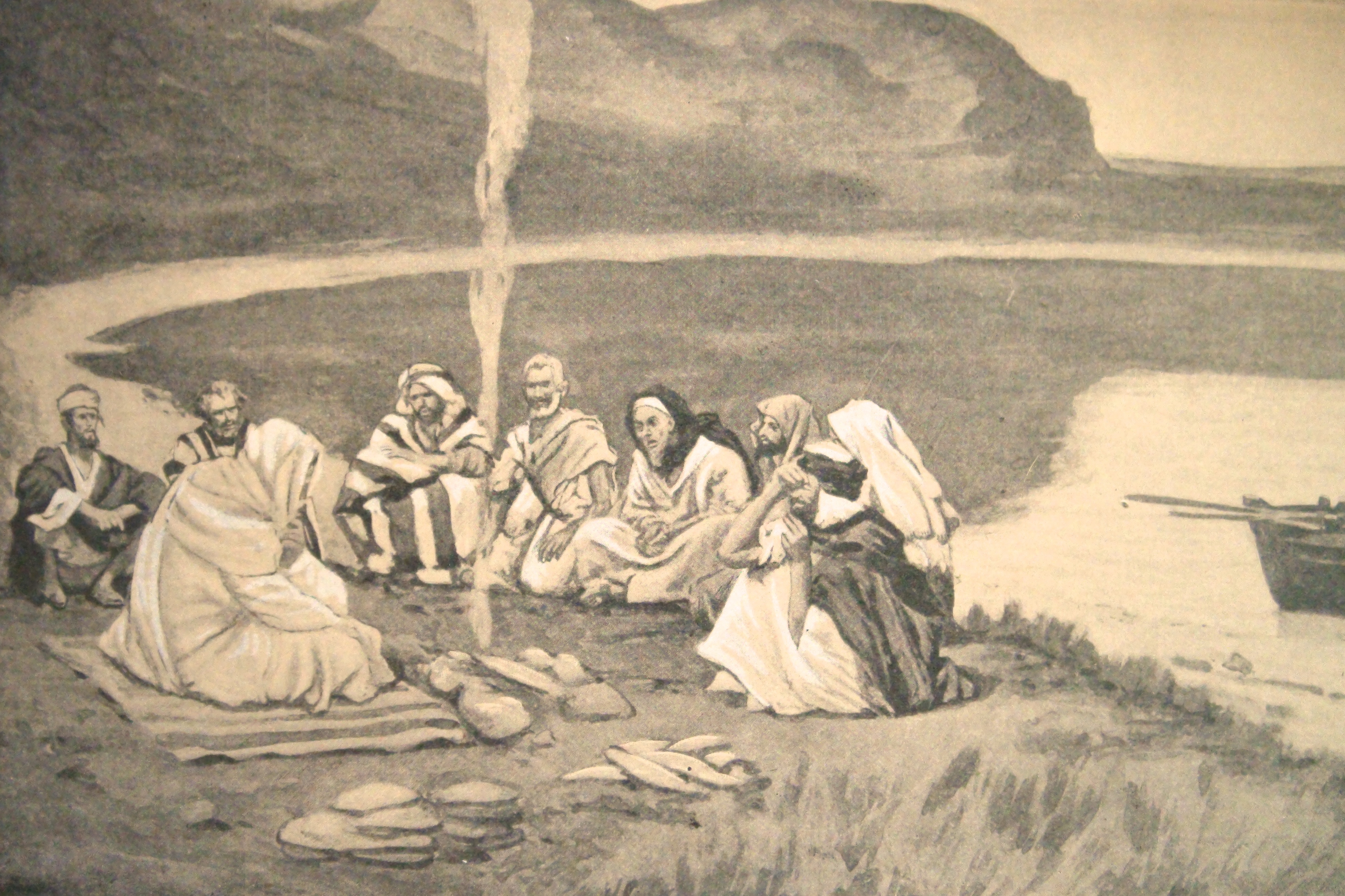
The gospel of John is read at Mass these last days before the Feast of Pentecost. We’re brought to the Sea of Galilee where the Lord first called Peter and John and others to follow him. Now, from the shore the Risen Jesus calls them again. They’ve fished all night and caught nothing. Not only are their boats empty; some days earlier in Jerusalem they deserted the One they promised to follow forever. Their spirits are empty.

From the shore Jesus tells them to cast their nets into the sea again and an abundant catch of fish pours into their boats. Calling them ashore, Jesus feeds them some loaves and fish. As he did in the supper room the night before he died, Jesus offers them his life-giving love.

Taking Peter aside, he asks the disciple who denied him three times “Do you love me?” “Yes, Lord, you know I love you,” Peter answers three times. “Feed my sheep,” Jesus tells him.

Then, renewing the invitation he made at this same shore at the beginning of his ministry, Jesus says to his disciple, “Follow me.”

The Feast of Pentecost is a feast for a church that has failed, for disciples facing their weakness and broken promises, for those who work and have nothing to show for it. The Holy Spirit, whom Jesus breathed upon the disciples after his resurrection, comes to our world as he promised, to renew the face of the earth. “Come follow me,” the life-giving Spirit says.

Signs of the Risen Christ

At Easter we see the Risen Christ in sacraments, especially Baptism, Confirmation and the Holy Eucharist. St. John Chrysostom, following the Gospel of John, says that these are signs already revealed on Calvary. Jesus is dead when the soldier pierces his side; he is still on the cross. From his wounds the sacraments of Baptism and the Eucharist are given to his church.

Water comes forth and then the blood, Chrysostom says, “because first comes baptism and then the mysteries (the Eucharist).” With his spear, the soldier pierced the temple wall, the saint goes on, “but I am the one who finds the treasure and gets the wealth.” (cf. John 2,19)

From the sacraments the church is formed, the saint continues. Like Adam, who was cast into a deep sleep to form Eve, Christ dies the sleep of death and from his side the church is taken. “From his side Christ formed the church just as he formed Eve from the side of Adam.” (Baptismal Homilies, 3,16-18)

In an early baptismal homily preached in the church of the Holy Sepulcher in Jerusalem which the Emperor Constantine constructed atop of the remains of Calvary and the newly discovered tomb of Jesus, Cyril, bishop of Jerusalem (+387), says: “… you descended three times into the water and ascended, showing the symbol of the three days of Christ’s burial… How kind and loving! Christ received nails in his hands and feet, while I without pain and trials receive freely a gift of salvation because I share in his suffering.”

At Easter we recall our baptism and the Eucharist. Sacraments are real signs that bring us into the mystery of the Passion and Resurrection of Jesus. We meet the Risen Christ in them.

Successful and Unsuccessful Saints

In yesterday’s post I offered a summary of Bishop N.T. Wright’s talk to the Italian Catholic Bishops in which he stated that our understanding of the resurrection of Jesus is influenced today by the thinking of the Enlightenment, which placed God (if God exists) beyond our world. We are the lords of creation, according to that thinking. This life and all in it is in our hands to shape and control as we think best.

Yet, the Risen Christ is Lord of creation, still present in our world, fashioning it to become God’s new creation. He has not just come and now is gone, with us only at our death to take his own into heaven. Nor is he just lord of the perfect. Every knee bows before him.

I wonder if the thinking of the Enlightenment has also influenced our thinking about the saints. We like “successful saints” who seem to leave their mark in society by what they accomplish: building schools, hospitals, blazing new trails on the world scene. We like saints who do something big.

What about saints like Saint Gemma, Saint Pio–who seem to be sidelined most their lives without obvious human accomplishments­– aren’t they witnesses to the power of the Risen Christ to reach into humble life and be present there?

I heard recently that Saint Pio is probably the most popular saint in the church right now. Interesting. Books about St. Gemma are the most popular books we distribute at Passionist Press. Interesting.

Is holiness only for the perfect, the bright, the accomplished? Or does the Risen Christ reveal himself to the humble, sometimes giving them the treasures of his wounds? Maybe the voice of the faithful is telling us something.

His Glorious Wounds

A reflection by Athanasius of Antioch in Wednesday’s Office of Readings speaks about the glory of Jesus. First, he had a glory before the world began. It was a glory far beyond the light of the sun, a light inaccessible to us. We could not even look at him.

None of the appearances of the Risen Jesus in the gospels reveal a glory like that. Becoming human, he relinquished that glory and experienced death on the cross

His glory now appears in the mystery of the cross, as he repeatedly shows his disciples the wounds in his hands and his side.

“ It was necessary for Christ to suffer: it was impossible for his passion not to have happened. He said so himself when he called his companions dull and slow to believe because they failed to recognise that he had to suffer and so enter into his glory.

“Leaving behind him the glory that had been his with the Father before the world was made, he had gone forth to save his people. This salvation, however, could be achieved only by the suffering of the author of our life, as Paul taught when he said that the author of life himself was made perfect through suffering.

“Because of us he was deprived of his glory for a little while, the glory that was his as the Father’s only-begotten Son, but through the cross this glory is seen to have been restored to him in a certain way in the body that he had assumed. `

“Explaining what water the Saviour referred to when he said: He that has faith in me shall have rivers of living water flowing from within him, John says in his gospel that he was speaking of the Holy Spirit which those who believed in him were to receive, for the Spirit had not yet been given because Jesus had not yet been glorified. The glorification he meant was his death upon the cross for which the Lord prayed to the Father before undergoing his passion, asking his Father to give him the glory that he had in his presence before the world began.”

For more on the wounds of Christ:

http://www.cptryon.org/xpipassio/wounds/index.html

The Jesus Seminar

Many of the gospels readings read at Mass in the Easter season come from the gospel of John, and often enough from the long discourse at the Last Supper found in chapters 13-17.  Today’s gospel, from John 15,9-17, is one of them. Jesus tells his disciples of his love for them and urges them to love one another.

A simple message, it seems, spoken long ago.

If we listen the group of scholars who make up The Jesus Seminar these are not just words from long ago, but Jesus never said them. They were made up by Christians later on.

The scholars and others who make up The Jesus Seminar, a group founded in 1985 by the late Robert Funk and John Dominic Crossan, are interested in the historical Jesus. They want to know what he really said and did, and so they meet about twice a year and try to decide what we know for sure.

The seminar people assume that the gospels, written forty, fifty, sixty years after the death of Jesus. are not simply historical accounts, but that religious and ideological motives are also behind their composition. True enough.

They  have an interesting way of deciding what Jesus really said and did and what he didn’t. They vote on it. After discussing a particular section of the gospels, its members vote with color-coded beads. Red: that’s Jesus; pink: sounds pretty much like him; gray: well, maybe; black, no, that’s not him.

As the scholars get tougher with their criterion, what Jesus really said and did becomes more and more reduced.  Today’s gospel would probably get a black vote, I think. In general, the Jesus Seminar tends to dismiss John’s gospel as an historical source.

But does historical study determine everything?

Though much of what The Jesus Seminar says may be true, I think they limit our understanding of Jesus and the scriptures. They do it by discounting his resurrection and his risen life.  For example, they may state that the community from which John’s gospel emerged made up many of his words or actions.

But we can also say that they experienced the Risen Jesus, who promised to remain always with his own who were in the world? The Risen Lord spoke to them and they recorded his words in a way that was congruent to what he did and said in his earthly life.

The Risen Christ abides with his church. His appearances to his disciples after his resurrection would go on in other forms.

For those who believe in his risen, abiding presence, Jesus’ voice is not silenced nor are his deeds done at his death. He remains with us and speaks now. This is especially so when we come together for the breaking of the bread and for prayers. The lengthy supper discourse from John seems to verify that.

We do not have to see Jesus solely through the lens of history, therefore, nor is his presence limited to his disciples then; the Risen Christ speaks to us now:

“No one has greater love than this,
to lay down one’s life for one’s friends.
You are my friends if you do what I command you.
I no longer call you slaves,
because a slave does not know what his master is doing.
I have called you friends,
because I have told you everything I have heard from my Father.
It was not you who chose me, but I who chose you
and appointed you to go and bear fruit that will remain,
so that whatever you ask the Father in my name he may give you.
This I command you: love one another.”