Tag Archives: Resurrection

Something Strange is Happening

DSC00118
From an ancient homily for Holy Saturday

The Lord’s descent into the underworld

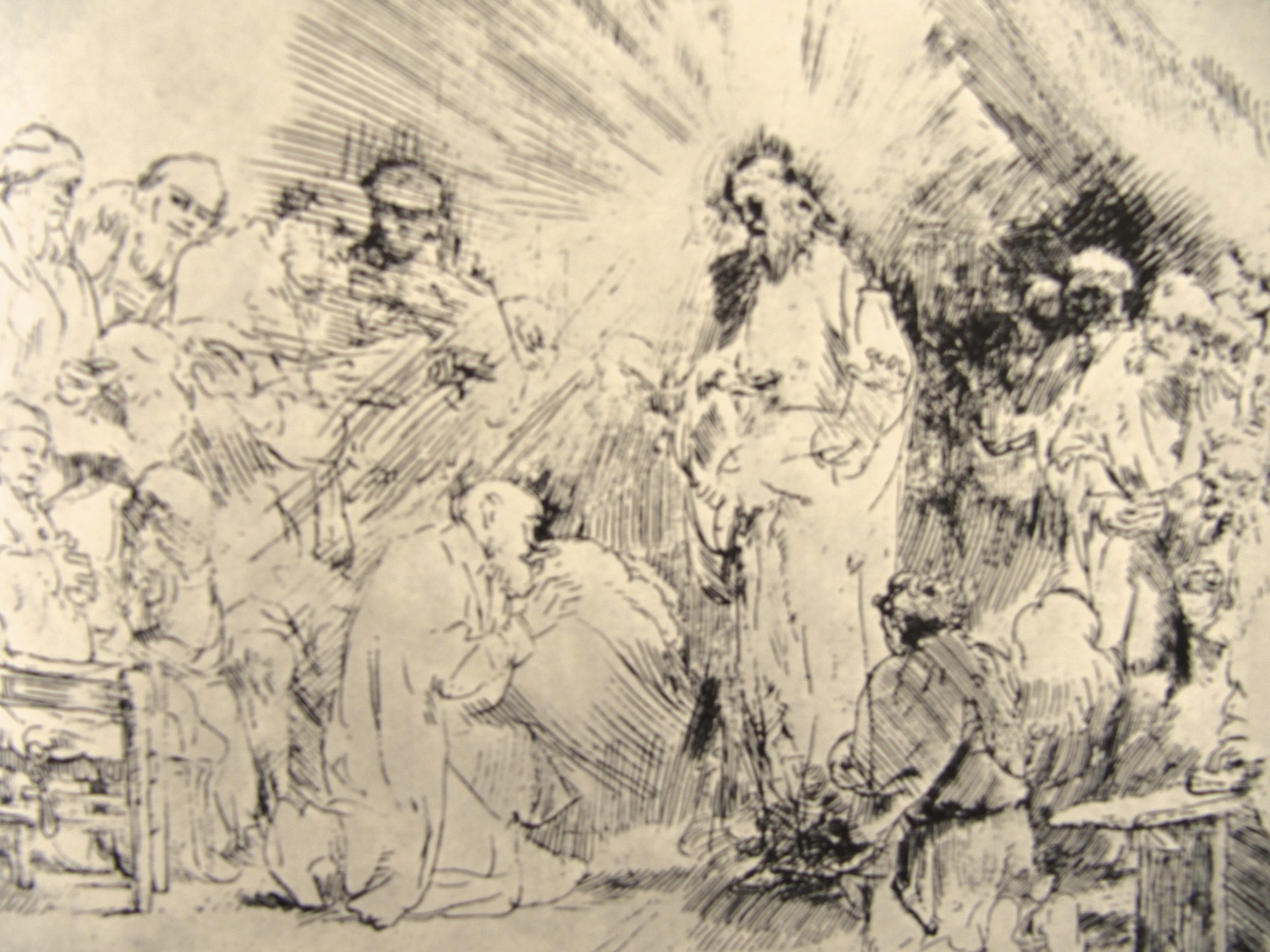
Something strange is happening – there is a great silence on earth today, a great silence and stillness. The whole earth keeps silence because the King is asleep. The earth trembled and is still because God has fallen asleep in the flesh and he has raised up all who have slept ever since the world began. God has died in the flesh and hell trembles with fear.

He has gone to search for our first parent, as for a lost sheep. Greatly desiring to visit those who live in darkness and in the shadow of death, he has gone to free from sorrow the captives Adam and Eve, he who is both God and the son of Eve. The Lord approached them bearing the cross, the weapon that had won him the victory. At the sight of him Adam, the first man he had created, struck his breast in terror and cried out to everyone: “My Lord be with you all.” Christ answered him: “And with your spirit.” He took him by the hand and raised him up, saying: “Awake, O sleeper, and rise from the dead, and Christ will give you light.”

I am your God, who for your sake have become your son. Out of love for you and for your descendants I now by my own authority command all who are held in bondage to come forth, all who are in darkness to be enlightened, all who are sleeping to arise. I order you, O sleeper, to awake. I did not create you to be held a prisoner in hell. Rise from the dead, for I am the life of the dead. Rise up, work of my hands, you who were created in my image. Rise, let us leave this place, for you are in me and I am in you; together we form only one person and we cannot be separated. For your sake I, your God, became your son; I, the Lord, took the form of a slave; I, whose home is above the heavens, descended to the earth and beneath the earth. For your sake, for the sake of man, I became like a man without help, free among the dead. For the sake of you, who left a garden, I was betrayed to the Jews in a garden, and I was crucified in a garden.

See on my face the spittle I received in order to restore to you the life I once breathed into you. See there the marks of the blows I received in order to refashion your warped nature in my image. On my back see the marks of the scourging I endured to remove the burden of sin that weighs upon your back. See my hands, nailed firmly to a tree, for you who once wickedly stretched out your hand to a tree.

I slept on the cross and a sword pierced my side for you who slept in paradise and brought forth Eve from your side. My side has healed the pain in yours. My sleep will rouse you from your sleep in hell. The sword that pierced me has sheathed the sword that was turned against you.

Rise, let us leave this place. The enemy led you out of the earthly paradise. I will not restore you to that paradise, but I will enthrone you in heaven. I forbade you the tree that was only a symbol of life, but see, I who am life itself am now one with you. I appointed cherubim to guard you as slaves are guarded, but now I make them worship you as God. The throne formed by cherubim awaits you, its bearers swift and eager. The bridal chamber is adorned, the banquet is ready, the eternal dwelling places are prepared, the treasure houses of all good things lie open. The kingdom of heaven has been prepared for you from all eternity.

Ist Sunday of Easter: The Thomas in Us All

Audio of the homily below:

The yearly feast of Easter is a celebration, not of one day, but of fifty days, from Holy Saturday till the feast of Pentecost. We also celebrate Easter each Sunday of the year.

Why this extensive celebration? Because we’re so slow to realize what it means, and need reminding over and over.

Some things — like telling time or tying our shoes — we learn once, but the resurrection of Jesus is a mystery not learned at once. Never grasped completely, it unfolds as life unfolds, day by day.

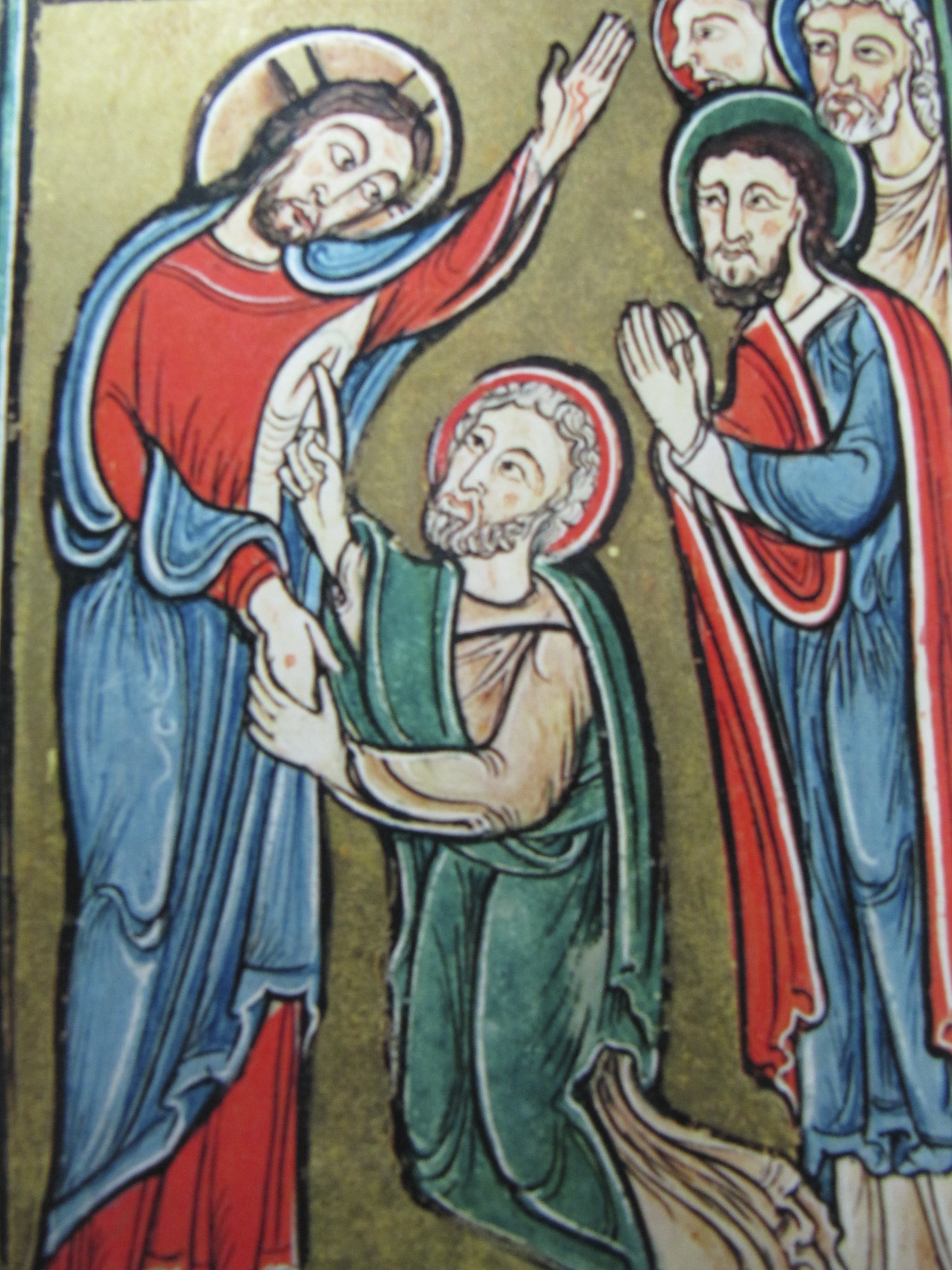
That’s why Thomas, the apostle, whom we remember on the 2nd Sunday of Easter, is such an important figure. Far from being a lonely skeptic, an isolated dissenter, he represents the slowness of heart and mind, the recurrent skepticism, that affects us all.

Yet, Thomas is still a sign of hope. He reminds us that the Risen Jesus offers, even to the most unconvinced, the power to believe.

Lord Jesus,
the Thomas in us all
needs the wounds in your hands and side,
to call us to believe
you are our Lord and God.

Risen, present everywhere,
bless those who have not seen,
blind with doubts
and weakened faith.

Bless us, Lord,
from your wounded hands and side,
give us faith
to believe in you.

Spanish
El Tomás Dentro de Todos Nosotros
Juán 20, 19-31, Segundo Domingo de Pascua

La fiesta anual de Pascua florida es una celebración, no de un día, sino de cincuenta días, desde el Sábado Santo hasta la fiesta de Pentecostés. También celebramos el Domingo de Pascua cada domingo del año.

¿Por qué esta extensa celebración? Porque somos tan lentos en realizar lo que significa, y también necesitamos ser recordados una y otra vez.

Algunas cosas – como leer el reloj o amarrarnos los zapatos – las aprendemos una sola vez, pero la resurrección de Jesús es un misterio que no se aprende de una vez. Nunca comprendido completamente, se revela gradualmente mientras la vida se despliega día por día.

Por eso es que Tomás, el apóstol a quien recordamos el Segundo Domingo de Pascua, es una figura tan importante. Lejos de ser un escéptico solitario, un disidente aislado, él representa la lentitud de corazón y mente, el esceptisismo recurrente, que nos afecta a todos.

Sin embargo, Tomás sigue siendo un signo de esperanza. Él nos recuerda que el Jesús Resucitado nos ofrece hasta el menos convencido de nosotros, el poder de creer.

Señor Jesús, el Tomás en todos nosotros
necesita las heridas de tu costado y manos,
llamándonos a creer que eres nuestro Señor y Dios.
Resucitado, presente en todas partes,
bendice a los que no han visto,
ciegos con dudas y fé debilitada.
Bendícenos Señor; a través de tus heridas manos y costado,
danos fé para creer en Tí.

Easter Sunday

Lent 1
John 20,1-9

The gospels and other New Testament writings say that many of his followers saw the Risen Jesus after he came from the tomb. He appeared to many at once and to individuals like Mary Magdalene early Easter morning. Mary Magdalene is a key witness to the resurrection of Jesus. Her story is told in John’s gospel which speaks of their meeting in the garden where Jesus was buried. For the rest of her years Mary would remember those moments by the tomb.

In the morning darkness she came weeping for the one she thought lost forever. Then, she heard him call her name, “Mary”. She turned to see him alive and the garden became paradise.

She was sent by Jesus like a new Eve to bring news of life to all the living. She was his apostle to the apostles. The belief of Christians in the resurrection of Jesus rests in part on this woman’s word. Today in its liturgy the church questions her:
“Tell us, Mary, what did you see on the way?
’I saw the tomb of the now living Christ.
I saw the glory of Christ, now risen.
I saw angels who gave witness;
the cloths, too, which once covered head and limbs.
Christ my hope had indeed arisen.
He will go before his own into Galilee.'”

The Easter mystery has brightened the vision of Christians ever since. Here Paul of the Cross reflects on its wonder:
“O True God, what will our hearts be like when we swim in that infinite sea of sweetness! What will it be like when we are all transformed by love in God, and we will be happy with that infinite goodness with which our God is happy! We will sing in eternity the divine mercies, the triumphs of the Immaculate Lamb and of Mary, our most holy Mother! What will it be when we sing “Holy, Holy, Holy,” and when with all the saints we sing Alleluia! When we are united to God more than iron is united to fire, for without ceasing to be iron, it seems all fire, so we are transformed into God that the soul will be completely divinized. Oh, when will that day come! When, when will death come to break the wall of this prison!”
(Letter 162)

Give thanks to the Lord for he is good,
for his mercy endures forever
The stone that the builders rejected
has become the cornerstone.
By the Lord has this been done,
it is wonderful in our eyes. Ps 118

Spanish

Domingo de Pascua Florida
Juan 20, 1-9

Igualmente que Pedro, María Magdalena es testigo clave de la Resurrección de Jesús. Su historia es relatada en el Evangelio de Juan que habla de su encuentro en el jardín. Por el resto de su vida María recordaría esos momentos al lado de la tumba. En la obscuridad del amanecer ella vino sollozando por El que creía perdido para siempre. Ella lo oyó llamando su nombre, “María.” Se volteó y al verlo vivo el jardín se convirtió en paraíso.

Como una nueva Eva ella fué enviada por Jesús para traer noticias de Vida a todos los que viven. Ella fué su apóstol a los apóstoles. La creencia de los cristianos en la Resurrección de Jesús se basa parcialmente en la palabra de esta mujer. Hoy nuestra iglesia le pregunta:
” ¿ Dinos, María, qué vistes en el camino?
‘ Yo ví la tumba del Cristo vivo.
Yo ví la gloria del Cristo levantado.
Ví ángeles que dieron testimonio;
los lienzos, también, que cubrieron su cara y su cuerpo.
Cristo mi esperanza en verdad resucitó.’
Él va ir frente a los suyos en Galilea.’ ”

El misterio del día de Pascua ha iluminado las almas cristianas desde entonces. Aquí, Pablo de la Cruz reflexiona sobre esta maravilla:

” O Verdadero Dios, cómo serán nuestros corazones cuando nademos en ese mar infinito de dulzura! Cómo será cuando todos somos transformados por el amor en Dios, y seremos felices con esa infinita bondad con la que nuestro Dios es feliz! Cantaremos en la eternidad las mercedes divinas, los triunfos del Cordero Inmaculado y de María nuestra más Santa Madre! Cómo será cuando cantamos ‘ Santo, Santo, Santo,’ y cuando con todos los santos cantamos Aleluya! Cuando estamos unidos a Dios más que lo que el hierro se puede unir con el fuego, que todo parece fuego, y así somos transformados en Dios y el alma será completamente divinizada. O, cuándo llegue ese día! Cuándo, cuándo, vendrá la muerte a romper las paredes de esta prisión! ”

Den gracias al Señor, porque él es bueno,
porque su merced es eterna.
La piedra que los constructores despreciaron
se ha convertido en la piedra principal.
Esto lo ha hecho el Señor
y estamos maravillados (Salmo 118).
Amén.

Rest in Peace

Two friends of mine have died and their funerals will take place in the next few days. “Eternal rest grant to them, O Lord, and let perpetual light shine upon them. May they rest in peace. Amen.”

What do we mean when we pray that those who die “rest in peace?”

The Book of Genesis says that God “rested” on the seventh day after completing the work of creation. God’s rest was a time of delight in what was done, and so we wish that those who die experience delight for the life they led on earth and the new life they share with God. The Letter to the Hebrews, read in the last weeks of January, also speaks of the rest of delight that those who go before us share with Jesus, our High Priest.

That doesn’t mean they will forget those they leave behind or the world they no longer live in. When Jesus rose from the dead he entered into his rest, but his work was not done on earth. God’s Kingdom must still come. As our High Priest, who shared our human life and its weakness and death, he continues to intercedes for us on earth. He is a compassionate and loving  High Priest.

Like Jesus, those whom God calls into his rest still love this world and those still journeying here. They don’t forget us. Resting in God, they’re restless  till God’s kingdom come. Given clearer sight as they commune with God, they accompany us on our way.  They’re in blessed communion with us, a communion of saints.

Mary Magdalene

Today’s the feast of Mary Magdalene. Some recent writers in an attempt to “de-mythologize” Jesus would like to romanticize his relationship with Mary, basing themselves on flimsy late evidence from the gnostic writings of the 3rd and 4th century. They claim he was even married to her. However,tohe gospels see Mary primarily as a disciple who loved him and followed him along with other women. According to the earliest authentic sources we have Jesus was unmarried and his ministry and life was transparent to his early followers.
The media loves sensationalism; it sells and draws an audience. Unfortunately, it takes on a life of its own.

Mary Magdalene

Along with Peter, Mary Magdalene is a key witness to the resurrection of Jesus. Her story is told in John’s gospel which describes their meeting in the garden. For the rest of her years Mary would remember those moments by the tomb.
In the morning darkness she had come weeping for the one she had thought lost forever. She had heard him call her name, “Mary”. She had turned to see him alive and the garden became paradise.
Like a new Eve she had been sent by Jesus to bring news of life to all the living. She was his apostle to the apostles. The belief of Christians in the resurrection of Jesus would be founded on this woman’s word.
On Easter Sunday the church questions her:
“Tell us, Mary, what did you see on the way?
‘I saw the tomb of the now living Christ.
I saw the glory of Christ, now risen.
I saw angels who gave witness;
the cloths, too, which once covered head and limbs.
Christ my hope had indeed arisen.
He will go before his own into Galilee.'”
–Easter sequence

Fascinated by her story, medieval spiritual writers added simple human details to the Gospel accounts. According to the author of the Meditations on the Life of Christ, Mary held the feet of Jesus when he was taken down from the cross, because she had kissed them and washed them with her tears once before.

“(At the tomb) she could not think, or speak, or hear anything except about him. When she cried and paid no attention to the angels, her Lord could not hold back any longer for love… ‘Woman, whom do you seek? Why do you weep?’ And she, as if drugged, not recognizing him said, ‘Lord, if you carried him away, tell me where, and I will take him.’ “Look at her. With tear-stained face she begs him to lead her to the one seeks. She always hopes to hear something new of her Beloved. Then the Lord says to her, ‘Mary’.

“It was as though she came back to life, and recognizing his voice, she said with indescribable joy, ‘Rabbi, you are the Lord I was seeking. Why did you hide from me so long? …I tell you so much grief from your passion filled my heart that I forgot everything else. I could remember nothing except your dead body and the place where I buried it, and so I brought ointment this morning. But you have come back to us.’

“And they stayed there lovingly with great joy and gladness. She looked at him closely and asked him about each thing, and he answered willingly. Now, truly, the Passover feast had come. Although it seemed that the Lord held back from her, I can hardly believe that she did not touch him before he departed, kissing his feet and his hands.”
For more on Mary Magdalene, see http://www.cptryon.org/holylives/nt/magd/

The Higgs-Boson Particle

Scientists all over the world are celebrating the discovery last week at a research center in Switzerland of a mysterious particle called the Higgs Boson particle. It’s a particle that’s found in all matter and its existence contributes to a new understanding of the nature of our universe.

After fifty years of searching for it, physicists seem to have found it.

I certainly can’t explain what they found, but I admire the scientists for their curiosity, their imagination and their patient searching for this mysterious piece in the puzzle of our universe. They want to know and I admire their drive to know.

I also admire their humility. The scientists say they’re only beginning to see how this world of ours began and how it works. To use a religious analogy, like Moses on the mountain, they’re approaching this mysterious universe with shoes off.

Our search for God is similar to theirs. We know God step by step, little by little. We can’t look straight at the sun; neither can our minds know God completely and at once. We search, not for particles, but for signs and experiences of life that reveal God little by little.

The truth of it is that God does not hide from us. In fact, we believe God revealed himself in the extraordinary sign of Jesus Christ, God’s  Son, who came humbly into our world as God’s Word.

Today’s gospel for the 14th Sunday of the year (Mark 6,1-6 ) recalls the rejection  of Jesus by his own people in Nazareth, a town in Galilee where he was brought up. He suffered the rejection that prophets often receive; later he would suffer a cruel death on a cross, but he did not turn away. In his life, death and resurrection, we see God’s love, God’s desire that we know him.   In him, we have God’s invitation to share his life more deeply, face to face.

We have to fix our eyes on him, patiently and steadily. If we do, we will find him.

The Fear of Death

Great mysteries are expressed and deep truths revealed in these days between Easter and the Ascension, St. Leo the Great says in a sermon:

“In those days the fear of death was removed with all its terrors, and the immortality not only of the soul but also of the flesh was established.”

To remove the fear of death, keep your eyes on the two disciples on the way to Emmaus whom Jesus accompanied “to sweep away all the clouds of our uncertainty.”

“He reproached them for the slowness of their timid and trembling hearts. Their enlightened hearts catch the flame of faith, and lukewarm as they have been, they are made to burn while the Lord unfolds the Scriptures. In the breaking of bread also their eyes are opened as they eat with him. How much more blessed is that opening of their eyes, to the glorification of their nature, than the time when our first parents’ eyes were opened to the disastrous consequences of their transgression.”

Keep your eyes on all the disciples at this time, the saint says: “the most blessed Apostles and all the disciples, who had been both bewildered at his death on the cross and backward in believing his Resurrection, were so strengthened by the clearness of the truth that when the Lord entered the heights of heaven, not only were they affected with no sadness, but were even filled with great joy.”

All Souls Day

All Souls Day, says a homily I received in email this morning from the Congregation of the Clergy in Rome, recognizes our fears before the mystery of death. “From the perspective of Gospel wisdom, death teaches us an important lesson because it makes us see reality without filters.  It encourages us to recognise the falling away of all that appears great and strong in the eyes of the world.  Before death every motive of human pride and jealousy is lost and instead all that is truly worthwhile reappears.”

All Souls Day is a frank admission that we find it hard to face death in ourselves and in others. It’s an experience we cannot prepare for adequately, despite all the resources of faith and reason we have at hand.

Yes, the hope of resurrection encourages us. But as a holy bishop says in our readings for the Office of the Dead:

“As we are saying all these things some unknown feeling causes us to burst into tears; some hidden feeling discourages the mind which tries to trust and to hope. Such is the sad human condition; without Christ all of life is utter emptiness.

“O death! You separate those who are joined to each other in marriage. You harshly and cruelly divide those whom friendship unites. Yet your power is broken…We do not really belong to ourselves; we belong to the One who redeemed us.”   (Saint Braulio)

This is day that recognises our “sad human condition” as its struggles to believe.  And as our prayer for today says:

“Merciful Father, as we renew our faith in your Son who you raised from the dead, strengthen our hope that all our departed brothers and sisters will share in his resurrection, who lives and reigns with you and the Holy Spirit, One God, forever an ever. Amen.

Following Jesus Christ: Oct 4, 2011

Tonight we look at the resurrection story from the Gospel of Matthew, a mystery at the center of our faith. As St.Paul said, “If Christ is not risen, your faith is in vain.”

The gospels not only proclaim the resurrection of Jesus from the dead but see this central mystery of our faith shaping the way we live and think. Each gospel also presents this mystery to the church of its time. If we look carefully, we can see its relevance for the church of our time too. That’s true particularly of the Gospel of Matthew.

What was the Jewish-Christian church in Palestine or Syria like about 80 AD  when Matthew wrote? The followers of Jesus, mostly Jewish-Christians,  were facing hard times. They were being confronted by a resurgent Judaism led by the Pharisees. At the same time, gentiles were accepting the message of Jesus and seeking baptism.  As it faced a large influx of  strangers and attacks from its own people, this predominantly Jewish- Christian church was to be radically changed.

Recall that the temple and the city of Jerusalem had been completely destroyed by the Romans in 70 AD, which caused many Jews led by the Pharisees to flee into Galilee and Syria and there begin to build up Judaism again. They saw the followers of Jesus, numerous in those regions, as a fringe group standing in the way of Jewish restoration, so a confrontation began. Jewish-Christians were being driven out of the synagogues in Galilee and a campaign was begun to discredit the Christian movement. Signs of that confrontation are evident in the chapters of Matthew’s Gospel.

This gospel responds to the situation by reminding Christians then that God’s plan is present even when things are uncertain. The Passion of Jesus is their guidebook. Did not Jesus live faithfully through the awful confusion of his arrest, his brutal treatment and his unfair death?  So, like him, should they face uncertainty and hardship. God brought him to new life; God would bring them to new life too.

The story of the Jewish guards at the tomb, unique to Matthew’s gospel, is an example of the Christian response to a story circulating at that time denying that Jesus rose from the dead, but claiming instead that his body was stolen by his followers.

You can see Matthew’s gospel, and all the gospels for that matter, insisting  that Jesus really died;  he experienced death in all its harsh reality. “My God, my God, why have you forsaken me?” he cries out after a long silence on Calvary. He was buried, then he rose again. Pilate and his soldiers become important, credible witnesses to his death and burial.

Jesus also really rose from the dead, Matthew’s gospel insists. Even as he died, the earth quakes, rocks are split and tombs we are opened.  An angel clothed like light sits triumphantly on the stone rolled away from an empty tomb. Death has been conquered.

What’s particularly interesting about Matthew’s resurrection account, however, is that  Jesus appears to his disciples, not in Jerusalem or at the tomb outside the city, but on a mountain in Galilee.  From there, he sends his disciples into the whole world to preach the gospel, baptizing in the name of the Father and of the Son and of the Holy Spirit.

It’s true that, as the women run from the tomb to tell the disciples,  Jesus briefly appears and they “took hold of his feet and worshipped him.” (Matthew 28,9) But they’re off quickly to tell his disciples to go to Galilee “and there they will see me.”

A neutral observer on the scene in Galilee and Syria in those days might reasonably judge the followers of Jesus of Nazareth to be in bad straits. They were losing in their confrontation with their Jewish opponents and were being pushed out of their synagogues and their homeland.   In the following centuries, Christianity hardly survives in Galilee, where Jesus began his ministry. After the fall of Jerusalem it becomes a Jewish stronghold.

But that’s not the story Matthew tells. The Risen Jesus appears on a mountain in Galilee urging his followers to a new global mission.  A new step is to be taken to bring about the kingdom of God.

The eleven* disciples went to Galilee, to the mountain to which Jesus had ordered them.

When they saw him, they worshiped, but they doubted.

Then Jesus approached and said to them, “All power in heaven and on earth has been given to me.

Go, therefore,* and make disciples of all nations, baptizing them in the name of the Father, and of the Son, and of the holy Spirit,

teaching them to observe all that I have commanded you. And behold, I am with you always, until the end of the age.” (Matthew 28,16-20)

Matthew doesn’t forget that the Risen Christ emerged from the tomb in Jerusalem, but he sees him bringing new life and direction to his struggling church and his struggling followers in Galilee. The Risen Lord is where his followers are, leading them on. He leads them into the future, uncertain as it is. He commands them to leave Galilee which now, instead of a place where his church seems to be dying, is a place of hope and new beginnings. From a mountain he points to a beautiful unknown.

Jesus is not a simply a figure of the past; the Risen Jesus constantly calls his followers onward and accompanies them to a wider mission. His call is by no means obvious, though. Matthew alludes to the chronic uncertainty of Jesus’ disciples: “When they saw him they worshipped, but they doubted.”

Matthew’s Gospel could have been written for our church today. The Risen Jesus makes our church– to most observers a church in crisis and severe decline–  a place of hope and new beginnings. He gives us “resurrection thinking” – the ability to look into the ruins and see beyond them.

Just as his disciples learned to see not death but resurrection in what happened during Jesus’ last hours , so we need to immerse ourselves in these mysteries to gain eyes that really see.

Shelter Island Thoughts


I spent this past week on vacation with two other members of my community on Shelter Island at a retreat house for youth that we’ve recently closed and now are in the process of selling. It’s a place of memories for us, a summer paradise for swimming and sports and a vibrant place where thousands of young people over the years found spiritual nourishment in programs for the young.

Now, like so many other good places devoted to spiritual purposes throughout the county, it’s closing. You have to feel a sense of failure and disappointment. What’s happening, we ask?

Finances and personnel are the reasons we point to, but these don’t answer the question adequately. Our society has lost its interest in God. Not everybody, to be sure, but for many the search for God has fallen down the list of their priorities. As I write, I’m watching an instructor teaching children how to play tennis in this place where young people were once taught to pray.

Religious people like ourselves, supposedly the guardians and promoters of religion, wonder if we are to blame. On EWTN the other night, Fr. Benedict Groeschel seemed to think so; he criticized religious communities for their “worldliness” and there’s some truth in his criticism, but it’s not the complete answer by any means.

I’m reading Pope Benedict’s book “ Jesus of Nazarth” these days and there are two sections in it I find particularly helpful. The first, is his section on the Kingdom of God, and as I read it this place came to mind.

The Kingdom of God is a complex concept; the first disciples of Jesus were not sure what it was. They had  kingdoms of their own in mind that they thought might fit the bill. But Jesus said his kingdom was not like theirs. If it were, his followers would have risen up to stop his enemies putting him to death, but his kingdom was not of this world.

Our kingdoms tend to be like those of Jesus’ first disciples. They may be treasured, holy,  wonderful places in themselves, but they’re kingdoms of the world. Our temptation, like the last temptation of Jesus in the desert, is to hold on to them as if they were the Kingdom of God. But God lets them pass away so that we may search again. Is that what God is doing now?

“Thy Kingdom come,” we say in our prayer, not “My Kingdom come.”

The second section of the pope’s book I found helpful was his thoughts on “Resurrection Thinking,” (my phrase, not his). After the resurrection the disciples of Jesus did a lot of thinking about what had happened before. “When he was raised from the dead, his disciples remembered that he had said this; and they believed the scripture and the word Jesus had spoken.” (John 2,22) Over and over the gospels tell us his disciples remembered something he said or did, sometimes they were terrible things like the events of his passion and death, but now they saw them in a new light.

They didn’t even delete their own sinfulness and lack of faith from the remembered story.

“The Resurrection,” the pope says, “teaches us a new way of seeing.” (p.232) We can look into ruins and see another life rise in them. “Behold, I make all things new.”

What will be the new life we see rising from here? The pope says “all” the disciples were involved in this “Resurrection Thinking.” It takes place through prayerfulness.  A guide, the Spirit of Truth, is there to point our way to the future.

What’s involved today here at Shelter Island, and in so many other places like it, is more than waiting for a buyer.