Tag Archives: penance

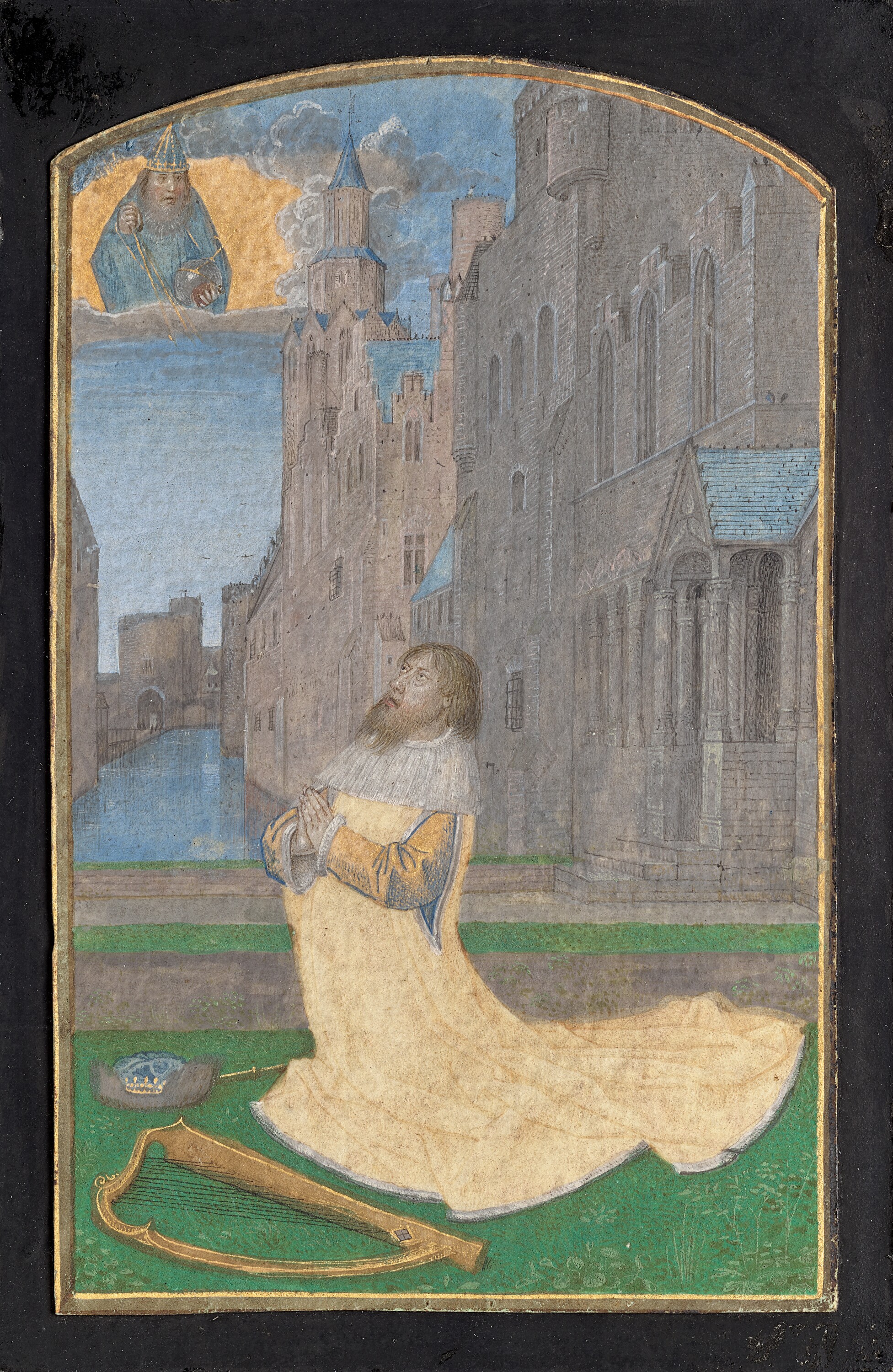
David, the Penitent

We’re reading at Mass from the Second Book of Samuel. The first 8 chapters describe David’s accomplishments as an ideal king. He unites the tribes of Israel, conquers Jerusalem and makes it his capitol. He brings the Ark of the Covenant and places it in a special tent in Jerusalem. He acknowledges God’s primacy over this kingdom. He listens to the Prophet Nathan who tells him “Your house and your kingdom shall endure forever before me; your throne shall stand firm forever.’” David is blessed by God.

Chapters 9-20 of Second Samuel describe the darker side of David, culminating in his murder of Uriah and taking his wife Bathsheba. The Prophet Nathan accused him of sin and tells him he must face the consequences. 

The consequences? David’s own son Absalom betrays him and turns the people against him. Pursued by his son he escapes from Jerusalem over the Mount of Olives and meets a relative of Saul who curses him and throws rocks at him. The king humbly accepts it all. 

Have mercy on me, God, in your kindness.

  In your compassion blot out my offence.

O wash me more and more from my guilt

  and cleanse me from my sin.

My offences truly I know them;

  my sin is always before me.

Against you, you alone, have I sinned;

  what is evil in your sight I have done.

That you may be justified when you give sentence

  and be without reproach when you judge,

O see, in guilt I was born,

  a sinner was I conceived.

Indeed you love truth in the heart;

  then in the secret of my heart teach me wisdom.

O purify me, then I shall be clean;

  O wash me, I shall be whiter than snow.

Make me hear rejoicing and gladness,

  that the bones you have crushed may revive.

From my sins turn away your face

  and blot out all my guilt.

A pure heart create for me, O God,

  put a steadfast spirit within me.

Do not cast me away from your presence,

  nor deprive me of your holy spirit.

Give me again the joy of your help;

  with a spirit of fervour sustain me,

that I may teach transgressors your ways

  and sinners may return to you.

O rescue me, God, my helper,

  and my tongue shall ring out your goodness.

O Lord, open my lips

  and my mouth shall declare your praise.

For in sacrifice you take no delight,

  burnt offering from me you would refuse,

my sacrifice, a contrite spirit.

  A humbled, contrite heart you will not spurn.

In your goodness, show favour to Sion:

  rebuild the walls of Jerusalem.

Then you will be pleased with lawful sacrifice,

  holocausts offered on your altar.

Glory to the Father and to the Son,

  and to the Holy Spirit:

as it was in the beginning, is now,

  and will be for ever. Amen.

The Sacrament of Penance

Prodigal son

Penance is a neglected sacrament in our church today. Few Catholics receive it. It was among the last sacramental rites to be revised after the Second Vatican Council and little catechesis accompanied its introduction. The Mass, with its changes in language and form, got most attention after the council. It seems to me that Penance needs to be better known and better celebrated.

Like the Mass, this sacrament has different names. It’s called the Sacrament of Reconciliation, the Sacrament of Penance and also Confession. Each term describes something about it.

It’s called the Sacrament of Reconciliation because God shows us mercy here, a mercy that reconciles us to him and to our world. The prayer the priest prays after the penitent confesses sin explains the sacrament:

“God the Father of mercies through the death and resurrection of his Son has reconciled the world to himself and sent the Holy Spirit among us for the forgiveness of sins. Through the ministry of the church may God grant you pardon and peace. I absolve you from your sin in the name of the Father, and of the Son and of the Holy Spirit. Amen.”

Reason can point to a God all-powerful and infinitely wise, but faith says God is “the Father of mercies.” God reveals himself as merciful in Jesus Christ who died and rose again from the dead. Appearing to his fearful disciples on Easter Sunday evening he said to them:

“’Peace be with you.’ When he had said this, he showed them his hands and his side. The disciples rejoiced when they saw the Lord. Jesus said to them again, ‘Peace be with you. As the Father has sent me, so I send you.’ And when he had said this, he breathed on them and said to them, ‘Receive the Holy Spirit. Whose sins you forgive are forgiven them, and whose sins you retain are retained.’” (John 20,19-23)

God is merciful and mercy brings “pardon and peace.” The mercy of God is a favorite theme Pope Francis stresses today in his preaching and ministry. It is a prominent theme in the recent Synod on the Family. We need to believe in it.

Besides the Sacrament of Reconciliation, the sacrament is called the Sacrament of Penance. To do penance is to try to heal the wounds and damage we have caused through what we have done or left undone in life. The penance given the penitent by the priest in confession is part of a life-long way of penance. We’re also part of a church that must be always penitential, a church always needing to be reformed.

The sacrament is called Confession because we look at ourselves in the light of God’s word and try to uncover and express what are our sins and how they prevent us from loving God and neighbor as we should.

Reconciliation, Penance, Confession. The simple steps taken in this sacrament are concrete expressions of these themes. We can confess individually, probably the most familiar way, or as part of a group. There are two ways for celebrating the sacrament in groups, one ending with individual absolution, the other with general absolution.

Briefly, individual confession before a priest can be done either kneeling or face to face. It begins with the Sign of the Cross, a sign of God’s blessing and God’s presence. Then there is a short reflection on God’s word so that we might know our sins and be encouraged to confess them to our God. This step should also take place in our preparation for confession.

We express our sins to the priest, receive a penance from him and pray that God forgive us.

The priest then declares the mercy of God and the grace of pardon and peace in the prayer mentioned above.

The sacrament concludes with an expression of thanksgiving to God, who is merciful.

A fuller treatment of the Sacrament of Penance can be found in The United States Catholic Catechism for Adults,  now free online.