Tag Archives: Passionists

Mission: Plainville, Ct April 4

Learning from Jesus Christ

We know Jesus Christ through the scriptures, and one goal of the Second Vatican Council was to promote the reading of scripture in the liturgy and catechesis of the church.

Scholars and believers have brought new insights from the scriptures into our faith and our church.  Our task now is to let the scriptures nourish our prayer and our reflections on our faith.

That’s a goal of our mission this week.

In the morning Masses we are going to reflect on the daily readings for Lent.

In the evening services for Monday and Tuesday we are going to reflect on the part of the Gospel of Matthew called the Sermon on the Mount which is read in the first part of lent. Jesus, our Teacher, tells us how to live and how to pray.

On Wednesday, we will go to another mountain, Mount Calvary, to learn from Jesus how to love.

This morning, the story of the official who approaches Jesus asking that he heal his son who is dying draws our attention to the mystery of death. Why does it happen? What does Jesus teach us about death?

He came to conquer death. “Dying you destroyed our death, rising you restored our life, Lord Jesus come in glory.”

The two most important moments of our life are now and at the hour of our death.

Holy Mary, mother of God,

pray for us sinners, now and at the hour of our death.
Mission: Plainville,Ct April 3,2011

Sunday evening, April 3rd

Learning from Holy People

“We have to do the works of the one who sent me while it is day.

Night is coming when no one can work.

While I am in the world, I am the light of the world.”  John 9

In the gospel for today, Jesus gives the blind man– blind from birth– sight he never had. Jesus is the light of the world.

But we share in his work. “We” have to help people to see. It’s our mission to  light up the world with our love and our lives. “You are the salt of the earth; you are the light of the world,” Jesus says in the Gospel of Matthew.

The new US Catholic Catechism for Adults offers short biographies of holy people, many of them from our own time and country, to exemplify different aspects of our faith. So, St Elizabeth Ann Seton demonstrates  the search for God that goes on, uniquely, in all of us.  Faith doesn’t exist in the abstract.  The profiles of holy people in the new catechism say that you don’t find faith in a book, or in a list of propositions, you find it in people.

Growing in faith means growing in the knowledge of God, but it also means growing to appreciate people, made in the image of God.

I offer two examples at our mission service tonight  of people who have helped me to see.  One of them is Father Theodore Foley, a Passionist priest from Springfield, Ma, who is a candidate for canonization.

Read about him at http://www.theodorefoley.org/

There’s a video at  http://vimeo.com/20519385

And                          http://www.youtube.com/watch?v=SrqTClkJidk


How about those who help you to see? Can you name one or two?


Lord Jesus Christ,

I am blind to so much,

help me to see.

Some other web resources you may be interested in:

The Passionists:   www.thepassionists.org

St. Paul of the Cross:   https://vhoagland.wordpress.com/st-paul-of-the-cross/


Victor’s Place: https://vhoagland.wordpress.com/


A Mission in Plainville, CT

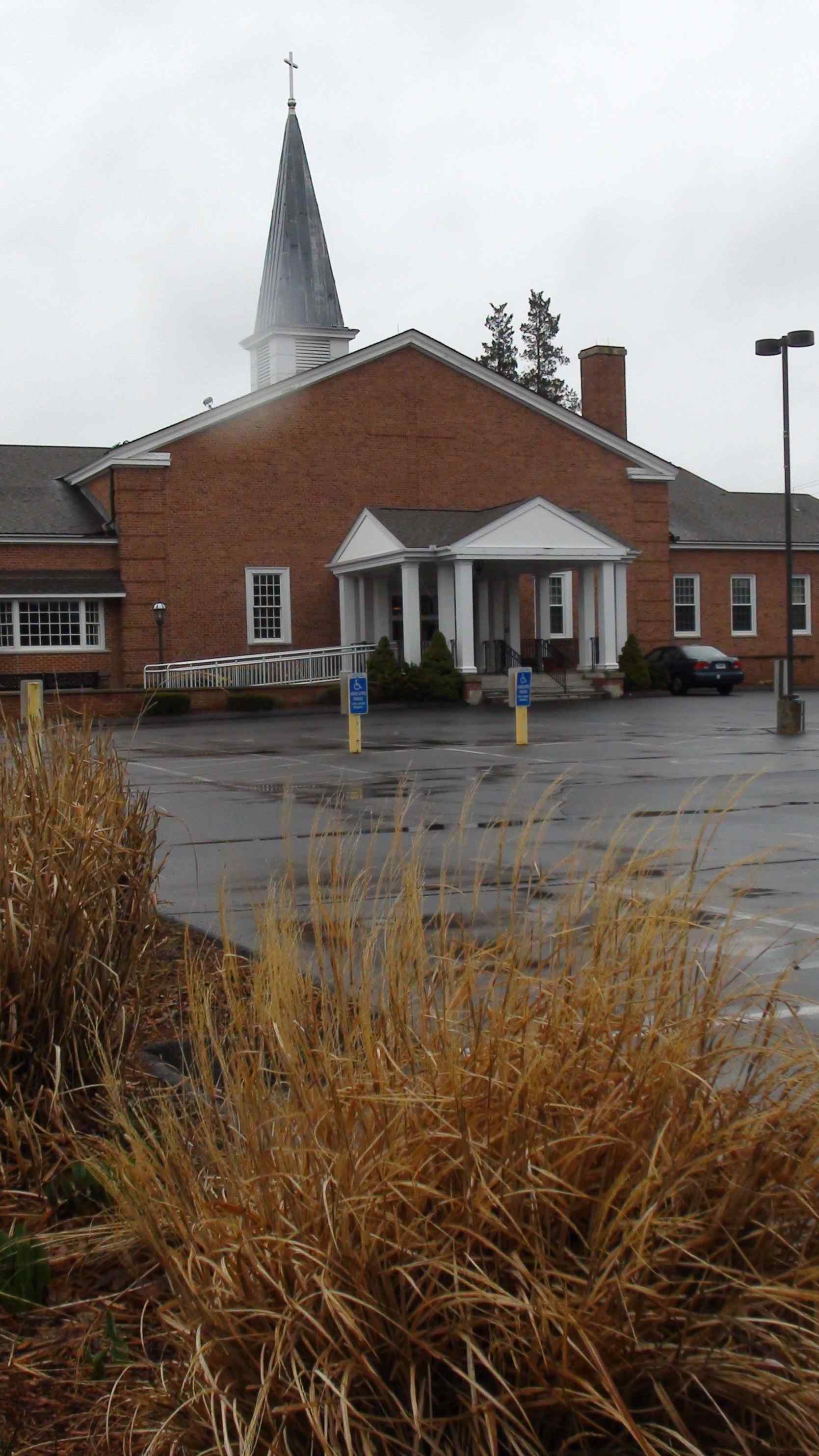
I’m beginning a mission at Our Lady of Mercy Parish in Plainville, Ct today and I’ll be preaching at all the Masses over the weekend. We will have a mission service each evening at 7 o’clock from tomorrow evening till Wednesday. I’ll be preaching at the morning Masses at 8 o’clock  too. Confessions after each service.

John’s gospel for Sunday about the blind man receiving his sight is a wonderful gospel with which to begin a mission: a dramatic story, involving Jesus and his disciples, the blind beggar, his parents, the neighbors, the Pharisees, and of course ourselves.

I like especially the way John’s Gospel links the disciples with Jesus.

“We have to do the works of the one who sent me while it is day.

Night is coming when no one can work.

While I am in the world, I am the light of the world.”  John 9

We receive light from Jesus, but also from his disciples who share his mission to be light  for the world. So besides Peter and James and John and the others, we have a mission too. I’m going to speak about that at the mission tomorrow night.

We also are there in the blind man, who can do nothing for himself. Like him, we wait for God, like beggars with empty hands and no eyes.

We are there too in the blind man’s parents who don’t want to get involved in all of this, even if he is their son. We don’t like involvement.

We’re there in the curious neighbors, like a Greek chorus chiming in as the events unfold.

Then, there are the Pharisees, blind in a different way but convinced they see. We can find ourselves in them too.

I’ll be posting blogs during the mission for those who can’t make it, or would like to follow it from a distance. I’ve done this before and it seems to work.

A mission is like the spit and clay Jesus used to heal. Doesn’t look like much, but it can bring some to see again. Please God, this one will do it also.

The Last Days

When Jesus came up to Jerusalem before his death, he was not a hapless Galillean peasant who would be cut down by a powerful Jewish-Roman elite. He was not simply a healer who was killed because he stirred up crowds and might also stir up revolution in the sensitive land of his day.

Those who believed in him saw him as a great teacher, a  “Rabbi” well aware of his times and his tradition. Matthew’s gospel emphasizes his role as teacher. But he was more than that, as Peter testifies in the 9th chapter of Matthew. “You are the Christ, the Son of the living God.”

In the chapters of the synoptic gospels  preceding his passion, Jesus Christ speaks about the world and its future, the “end times.”  In his new book,” Jesus of Nazareth, Part 2,” Pope Benedict calls this part of the gospel the most difficult part to explain.

Jesus sees the destruction of the temple in Jerusalem and what follows it. That’s important as he goes to his death.

He sees himself as the new temple. In a new age, when the gentiles are called to believe in him, the old temple will be abandoned. Its sacrifices for sins now take place through the blood of the Lamb. His blood is shed for us and we are united to God through him.

So much of what Jesus does at the Last Supper begins that replacement of the temple and its sacrifices.

The temple and everything about it was dear to him. That’s obvious from what he says about it and his devotion to its worship. Like a mother hen he would have sheltered the Holy City under his wings, but it turned away, as it turned away from Jeremiah and the other prophets.

There are signs up on the buses from Union City to New York City that Judgment Day is  coming on May 21st. That’s the word from Harold Camping on Family Radio, who has it all figured out.

The pope’s summary of the end times in his book is so much more nuanced than that of the biblical  fundamentalists. He keeps the future mysterious, and repeats Jesus’ message to “stay awake” each day.


The Courtyard of the Gentiles

Last week Pope Benedict addressed people attending the opening of the Courtyard of the Gentiles before the great cathedral of Notre Dame in Paris. It’s a space he hopes will be created throughout the world before our important Christian buildings to meet the world which Jesus invites into his temple. As I mentioned in yesterday’s post, Benedict sees the incident of Jesus cleansing the temple as a symbolic preparation for the entrance of the Gentiles to this holy place. “Come, let us climb the Lord’s mountain, to the house of the God of Jacob, that he may instruct us in his truth and we may walk in his ways.” Isaiah 2, 2-5  Here are the pope’s words:

“I am grateful to the Pontifical Council for having taken up and extended my invitation to open a number of “Courts of the Gentiles” within the Church. This image refers to the vast open space near the Temple of Jerusalem where all those who did not share the faith of Israel could approach the Temple and ask questions about religion. There they could meet the scribes, speak of faith and even pray to the unknown God. The Court was then an area of separation, since Gentiles did not have the right to enter the consecrated area, yet Jesus Christ came to “break down the dividing wall” between Jews and Gentiles, and to “reconcile both to God in one body through the cross, thus putting to death that hostility in himself”. In the words of Saint Paul, “He came and proclaimed peace…” (cf. Eph 2:14-17).

At the heart of the “City of Light”, in front of the magnificent masterwork of French religious culture which is Notre Dame, a great court has been created in order to give fresh impetus to respectful and friendly encounter between people of differing convictions. You young people, believers and non-believers alike, have chosen to come together this evening, as you do in your daily lives, in order to meet one another and to discuss the great questions of human existence. Nowadays many people acknowledge that they are not part of any religion, yet they long for a new world, a world that is freer, more just and united, more peaceful and happy. In speaking to you tonight, I think of all the things you have to say to each other. Those of you who are non-believers challenge believers in a particular way to live in a way consistent with the faith they profess and by your rejection of any distortion of religion which would make it unworthy of man. Those of you who are believers long to tell your friends that the treasure dwelling within you is meant to be shared, it raises questions, it calls for reflection. The question of God is not a menace to society, it does not threaten a truly human life! The question of God must not be absent from the other great questions of our time.

for full text.

Be interesting to have a Court of the Gentiles before all our Christian institutions.

The New Temple

In his new book, Jesus of Nazareth, Benedict begins the account of the Passion of Jesus with the incident in the temple in Jerusalem when Jesus drives out those who buy and sell there. Unlike the other gospels that put that event immediately before his passion and death, John’s gospel puts it further back, at the beginning of Jesus ministry, as he goes up to the Holy City to celebrate the Passover.

Unlike the other gospels that present one journey of Jesus to Jerusalem, John’s gospel sees Jesus making three journeys there. His chronology is more accurate. He wishes to show that opposition to Jesus at the highest levels began early on. If he overturned the tables in the entranceway of the temple, what would he do next?  Destroy it? Alarmed, the city’s leaders kept a close watch on this Galilean trouble-maker.

The pope calls attention to three interpretations for Jesus’ action. First, some say he was trying to reform a system gone bad as abuses crept in. People, including those in charge of the temple, were making money on the system and Jesus was calling attention to their corrupt practices.

Benedict sees more to the event than that.

Others say that Jesus was a Zealot,  belonging to a Jewish party intent on forcefully overthrowing a Judaism become too “Hellenized,”  too influenced by the prevailing Greco-Roman culture of its conquerors.

There are flaws to this interpretation too, Benedict notes, and points to the way the synoptic gospels describe Jesus as he enters Jerusalem immediately before he cleanses the temple. He rides into the city on a donkey, the humble beast who carries a humble Messiah. The warrior would come on a horse and chariot. He is the shepherd slain for his sheep, the suffering servant of Isaiah 53, who takes his people’s sins on to himself.

The temple was conceived as more than a place of Jewish worship. According to the Prophet Isaiah ( Isaiah 2,2-5) it was seen as a place where all peoples could come to worship the one God. The court of the Gentiles in the temple symbolized their future place. Jesus‘ action symbolically readied Judaism to receive new nations.

In the gospel of John, 12:20 ff, some Greeks ask to see Jesus, just before his passion and death. They represent the new peoples who find their way to the Father through Jesus himself. His death will bring much fruit.

In John’s gospel, he tells the Samaritan woman, “the hour is coming when you will worship the Father neither on this mountain nor in Jerusalem.” Jn 4, 21  Jesus becomes the new temple.

Jesus of Nazareth, Holy Week

I’m reading Pope Benedict XVI’s “Jesus of Nazareth: Holy Week,” which treats of his journey into Jerusalem to his resurrection. The pope introduces the book by saying he’s   not going to overwhelm us with the historical questions that so many of the studies about Jesus concentrate on today. By reducing Jesus to his history, we can miss his presence with us today, he says.

Still,  Benedict is obviously trying to incorporate into his study the work of recent scriptural scholars which give us renewed appreciation of Jesus Christ.

He begins with the different approaches to his journey to Jerusalem found in the gospels. Matthew, Mark and Luke describe one journey. John’s gospel describes three journeys to the Holy City, beginning with the ominous one where he overturns the tables in the temple, which creates a growing suspicion among the Jewish leaders that he’s a danger to Judaism and its temple.

Jesus “ascends” to Jerusalem. His ascent is concrete, first of all. From the Sea of Galilee, 690 feet below sea level, to Jerusalem almost 2,500 feet above sea level. But he “goes up” to Jerusalem in a spiritual sense as well. He makes his way to the Jerusalem which is above, the “new Jerusalem,” and he brings his followers with him, beginning with the twelve but then with others who join him on the way.

As he goes through Jericho, also a symbolic city of  journeys, he meets the blind man, Bartimaeus, who shouts out “Jesus, son of David, have mercy on me!” When Jesus calls him over and gives him his sight, he says to Bartimaeus, “Go on your way;  your faith has made you well.” And the man begins to “follow him on the way.”

The pope doesn’t overwhelm us either with obvious conclusions from the scriptural sources. They tell us that others joined Jesus on his way to Jerusalem, in great numbers, including this poor blind man, who follows him on the way.

And what about us, as well? The crowd around him try to shout him down, but the blind man keeps calling. “Jesus, son of David, have mercy on me.” Surely, we are among those who call and follow.

I downloaded the pope’s book from Amazon and I’m  reading it on my iTouch. I’m trying to discover the limits and possibilities of ebooks these days of Lent. So far, so good.

Temptations are Teachers

There are two wonderful posts in the blogs from Commonweal Magazine for March 22,

One by  Fr. Joseph Komonchak, “Finding  out who you are,” the other by J.Peter Nixon “Spiritual Excercises.”

The first is a quote from St. Augustine on temptation. I hope Fr. Komonchak wont mind if  I give in to the temptation to steal from him:

“Is God so ignorant of things, does he know so little about the human heart, that he can find what a man is only by testing him? Of course not, the testing is so that the man can find himself….

“You should recognize that God does not need to test in order to learn something he did not know before; it’s so that by his testing, by his investigating, what is hidden in someone might come out. A person is not as well known to himself as he is to his Creator, an ill person doesn’t know himself as well as his doctor. Someone becomes ill, and he’s the one suffering, not the doctor, but it’s from the one not suffering that the sufferer expects to hear what’s wrong.

“The Psalmist cries out: “Cleanse me, Lord, from my hidden things” (Ps 18:13). In any person there are things hidden to the very one in whom they exist. They don’t come out, aren’t laid open, aren’t discovered, except by his being tested. If God ceases to test, the teacher ceases to teach….

“Why do I say this? Because a person is ignorant of himself until he learns who he is by being tested. But once he has learned who he is, let him not be careless about himself. If he was careless when he lay hidden from himself, let him not be careless now that he knows himself.” (Augustine, Sermon 2, 2-3; PL 38-28-29)

St. Paul of the Cross has a similar view of temptation, as far as my reading of him teaches me. He tells people not to be afraid of temptations, or be ashamed of them; they’re teachers of humility and messengers to remind us who we are.  They lead us to God, our teacher, our doctor, the One who makes us whole.

J.Peter Nixon’s blog is about taking care of your body. See what he says for yourself.


The Arrogance of Science

“Teach us the meaning and value of creation, so that we may join its voice to ours as we sing your praise.”

That’s from the church’s morning prayer today. I thought of the article I read in yesterday’s New York Times called “A Country’s Lasting Aftershocks,” by Satoru Iekuchi, Genichiro Takahashi and Mitsuyoshi Numano. It’s was about science’s arrogance, which is a division of human arrogance.

Here’s an excerpt from that Japanese article:

“The physicist Torahiko Terada wrote in 1934, “The more civilization progresses, the greater the violence of nature’s wrath.” Nearly 67 years later, his words appear prescient.

Humans have become increasingly arrogant, believing they have conquered nature. We build ever larger, ever more concentrated, ever more uniform structures. Scientists and engineers think that they are responding to the demands of society, but they have forgotten their larger responsibilities to society, emphasizing only the positive aspects of their endeavors.

The catastrophe facing the Fukushima Daiichi nuclear power plant epitomizes this phenomenon. Although earthquakes are so frequent in Japan that it has been described as “a nation lying atop a block of tofu,” we have built some 54 nuclear reactors along the coast, vulnerable to tsunamis. It should have been foreseen that an earthquake of this magnitude might occur, and if the plant could not withstand such an event, it should not have been constructed.” For more…

We usually think of Lent in terms of human reconciliation, how we relate to our neighbor. How about our relationship to creation?

Words Can Kill

In today’s gospel Jesus seems to almost equate anger and harsh words with murder. They’re liable to judgment, he says.

Does that exaggerate the damage words can cause? If you think about it, angry words can just about destroy someone.  Killing someone’s spirit, taking away someone’s reputation may not draw a jail sentence here on earth, but God sees the harm that’s done. Sometimes, so do we.

Murder takes away physical life; we also need to respect another kind of life that people have. “Respect” is a wonderful word. It means “to look again” in Latin, to look again at someone and see a value we may have denied or missed, to constantly reassess how we judge another. Jesus tells us to do this as we come before God’s altar to offer our gift. It’s one of the reasons behind the sign of peace we offer our neighbor at Mass. It’s a sign of respect.

As we look honestly and respectfully at others, we also have to look honestly at ourselves. Respect is a form of love, St. Paul of the Cross writes. It’s “love toward your neighbor, putting up with the faults of others, looking at all with charity and compassion, having a good opinion of everyone and a bad opinion only of yourself. A simple eye lets you see your neighbor as full of virtues and yourself full of vices, but without discouragement, peacefully, humbly.” (Letter 525)

Lord,

make me an instrument of your peace,

bringing life and hope to others, not death.