Tag Archives: Passionists

Pilate Remembers


A friend from Belgium, Father Harry Gielen, has been collecting poems on the Passion of Jesus for years. He sent a selection of them to me recently and I hope to offer one each Friday.


Pilate Remembers

I wonder why that scene comes back tonight,

That long-forgotten scene of years ago.

Perhaps this touch of spring, that full white moon,

For it was spring, and spring’s white moon hung low

Above my garden on the night He died.

I still remember how I felt disturbed

That I must send Him to a felon’s cross

On such a day when spring was in the air,

And in His life, for He was young to die.

How tall and strong He stood, how calm His eyes,

Fronting me straight and while I  questioned Him;

His fearless heart spoke to me through His eyes.

Could I have won Him as my follower,

And a hundred more beside, my way had led

To Caesar’s palace and I’d wear today

The imperial purple. But He would not move

One little bit from His wild madcap dream

Of seeking truth. What wants a man with “truth”

When he is young and spring is at the door?

He would not listen, so He had to go.

One mad Jew less meant little to the state,

And pleasing Annas made my task the less.

And yet for me He spoiled that silver night,-

Remembering it was spring and he was young

William E. BROOKS, in: Chapter into Verse, Oxford University Press, 2000

How to Read the Bible

We’ve been blessed in recent times with a better understanding of the bible, thanks to scholarly studies of the last century or so.  Historians, archeologists, linguists are giving us a clearer picture of these ancient books, their meaning, when they were written, their historical context. New discoveries, like the Dead Sea Scrolls, have increased our knowledge of this book, which is really a library of Christian spirituality.

We know more about the scriptures today than we’ve known for centuries. Our new knowledge helps us to know Jesus Christ better, of course, so shouldn’t we be more acquainted with these readings? Unfortunately, Catholics are still slow to go to the bible for their spiritual nourishment, even though our liturgies have been enriched by readings from scripture since the liturgical reforms of the Second Vatican Council.

What bible should you read? Visit a book store like Barnes and Noble, go to the section where they’re selling bibles and you’ll find a bewildering collection of editions available today, going back to the old King James version.

The King James Bible is still the most popular bible read in the English-speaking world. For some fundamentalists it’s the only “Word of God.” But the King James version, for all its historical and literary qualities, has serious drawbacks. Since the time it was published in 1611, scores of ancient versions of the bible have been found, earlier than those on which this translation was based, and significant progress in biblical studies has also been made.

Because of this, many new translations of the bible have been published which take advantage of the new biblical resources. There are at least 30 new translations on the market today. In 1989, the New Revised Standard Version, a revision of the highly regarded Revised Standard Version, was published enlisting scholars from the major Christian denominations and authorized by these denominations. A fine translation.

In March 2011, a revised edition of The New American Bible (NABRE) was published. It’s a bible sponsored by the Catholic Church and it provides the readings found in its liturgies.  The last edition published 20 years ago was revised to take account of the new resources.

I like this bible myself for a number of reasons. For one, it’s available online free, so it’s always available if you have a computer, iPad, or iPhone. I appreciate especially the notes and introductory material, which may not be found in other versions of the bible. They are concise, clear and based on the latest scholarly research.

Another bible to take a look at is The Jerusalem Bible.

Catholics and other mainstream Christians hear the scriptures regularly from the lectionary during worship. The lectionary breaks down the books of the bible into parts, but there’s one drawback to reading the bible this way, I believe. We can read these parts in isolation, without enriching our reading with a fuller, more complete view that comes from reading the entire gospel or epistle, or prophet.

This month’s Sunday gospels from the 6th chapter of John, which begins with the miracle of the loaves and the fish, is an example. On the following Sundays we read sections of Jesus’ dialogue with the crowd, which is triggered by this powerful sign. Separated as they are from this key event, the readings can become disconnected from miracle and the overall themes that surround it.

There’s something to reading  from the bible itself, rather than settling for selections in the lectionary.

The Hand of the Lord Feeds Us

The Gospel of John, written around the year 90, is skillfully constructed  around seven wondrous actions of Jesus, seven “signs” that lead to his passion and resurrection. Our reading last week was about the fourth sign; Jesus multiplies a few loaves and fish to feed a hungry crowd of people near the Sea of Galilee. (John 6, 1-15)

After each sign, Jesus explains its meaning, and the gospels read on Sundays for the remainder of the month– all from the sixth chapter of John’s gospel– are the dialogue Jesus has with the crowd following this miracle.

They’ve followed him and are clamoring for more. He’s the bread come down from heaven, Jesus says, and he reminds them of a previous sign God gave their ancestors in the desert when he sent manna from heaven as they journeyed from Egypt to the Promised Land. They were hungry and God fed them.

He’s the new Moses come down from above to dwell with humanity, Jesus tells them, and he will feed them and lead them on their journey to God’s kingdom. Yet, like their ancestors described in our first reading from the Book of Exodus, this crowd grumbles too. Yes, they experienced a wondrous gift yesterday or so, but that was yesterday. They want daily miracles, something for their stomachs today.

But miracles of that kind don’t happen everyday. Miracles and exceptional signs from God are rare; we spend most of our years living by faith.

Yet, faith also needs something to go on, signs to help us on our way, and so Jesus leaves a reminder of the miracle of the loaves and the fish. He gives the Bread of the Holy Eucharist as a sign that he abides with humanity. We remember him in this sign, we recognize him and we receive him, the “true bread come down from heaven.”

Jesus came to satisfy our hunger, not just our basic hunger for food and drink, but the hungry for life in so many forms. “The hand of the Lord feeds us, he answers all our needs.”


Mercy

Blessed are the merciful, for they shall receive mercy. ‘Mercy’ is a beautiful word: more beautiful still is mercy itself. All wish to receive it, yet not all behave in a way that deserves it…You must show mercy in this world if you want to receive mercy in heaven.. What is human mercy? Exactly this: to have care for the sufferings of the poor. What is divine mercy? Without doubt, to grant forgiveness of sins. Whatever human mercy gives away on the journey, divine mercy pays back when we arrive at last in our native land. For it is God who feels cold and hunger, in the person of the poor. As he himself has said: As much as you have done for the least of these, you have done it for me. What God deigns to give in heaven, he yearns to receive on earth.

St. Peter Chrysologus

Songs of the Saints

Ann, Mary, the Child Jesus, Massacio

Someone told me about a recent program on NPR on which a scientist said our hearing is wired to hear the song of birds. Our earliest ancestors learned to listen to the song of birds, I suppose because birds could tell them there was water and food nearby–or perhaps their silence warned of enemies.

I wrote about this awhile ago on this blog.

It may be a good analogy for discussing saints.  Saints are like the song of birds telling us there’s another kind of water and food nearby; they point to the presence of God. And we have different saints, just as we have different kinds of birdsong.

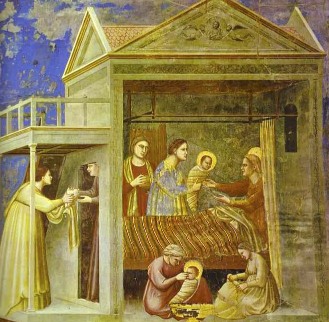
What kind of saint is St. Ann? Like all saints she faced challenges in her life. Her greatest challenge was that she and her husband Joachim were not able to have a child for a long time. This was at the time when children were looked upon as treasures and those who did not have children were sometimes seen as cursed by God. Besides, as descendants of David they had a duty to continue his line.

Ann and her husband had a long, hard wait before she conceived Mary, who became the Mother of Jesus. Once, she’s described as bursting into tears as she looked up and saw some sparrows building a nest in a laurel tree. “Why was I born, Lord?” she said, “The birds build nests for their young and I have no child of my own. The creatures of the earth, the fish of the sea are fruitful, but I have nothing. The land produces fruit, but I have no child to hold in my arms.” (Protoevangelium)

You can see why some pray to St. Ann for help in marriage or to have children. Perhaps grandparents today as they’re called to help out with younger grandchildren can see in her an older person who did that too.

Saints have different lessons to teach, but all saints have this in common: they have a deep faith in God’s will and they’re constant in prayer. They’re faithful in prayer, in good times and in bad. Prayer is their daily song to God. It may be a sorrowful song like Ann’s in the example above. Or it may be joyful. But prayer gives them wisdom and strength and peace, from moment to moment, from day to day.

One of the great early saints from the Egyptian desert, St. Anthony, was asked once what’s the hardest thing you have to do in life? “ The hardest thing you have to do in life is pray,” he said, “Everything else you can stop doing, but you can’t stop praying.”

I’m afraid today daily prayer isn’t high on our priorities. I think it’s going the way of Sunday Mass, becoming “occasional prayer.” We only think about prayer when a tragedy like yesterday’s shootings in Colorado happens.

Daily prayer gets us ready for what God gives us to do each day.  Jesus taught his disciples the Our Father; that’s a daily prayer. It tells us who we are each day: we’re children of God and should act like God’s children. We need to remember God’s kingdom is coming and we’re to work for it day by day. We need daily bread of all kinds. We’re part of a messy, noisy world that’s torn apart by selfishness and smallness and pride. We’re bring our share of sin into the world, so we ask for forgiveness each day and forgive others day by day.

“Deliver us from evil” today. Deliver all of us from evil, today.

Passing On The Faith

Basilica of St. Ann, Jerusalem, 11th century

Devotion to St. Ann began in Jerusalem, probably at a 5th century basilica near the pool of Bethesda, where Jesus cured the paralyzed man waiting to get into its healing waters. Ruins of the basilica can be seen today in the ruins of the Bethesda pool. The present basilica of St. Ann, begun in the 12th century, stands nearby.

Would the early basilica be near the place where Joachim and Ann lived in the city, or was its site chosen for convenience? The ancient stories of the Protoevangelium associate Mary’s family with the temple and describe Joachim participating in the temple sacrifices. I wonder if we dismiss these stories too quickly as “myths.”

The Protoevangelium says that Mary was presented in the temple and dedicated to God as a child. At the least, this indicates that Mary would be well acquainted with the temple, its worship and the teachings of Judaism. If we accept this reconstruction, Mary would be far from a peasant girl from Nazareth. She would be better formed in Judaism and particularly in temple worship than we sometimes think.

Mary’s family was related to the family of John the Baptist, whose father Zachariah is a priest in the temple. (Luke 1,3-25) They live in the hill country near Jerusalem. Mary’s visit before Jesus’ birth to Elizabeth, Zachariah’s wife, connects her closely with them.

Later, as a young boy Jesus engages the teachers of the law on a pilgrimage to Jerusalem. (Luke 2,41-52) He amazes them with his wisdom. Could some of that  wisdom have come from a mother’s teaching?

“And Jesus advanced in wisdom and age and grace before God and man,” (Luke 2,52)

Mary and Joseph, Ann and Joachim certainly contributed to his growth.

Today at the novena, I’m going to talk about how Mary and Ann may have taught Jesus about the temple and what to do there. Like them, we must pass on our faith to others, particularly to the next generation.

Basilica of St. Ann, Jerusalem

The Spirit of the Child

For most of our novena the gospel readings at Mass are from the 11th and 12th chapters of Matthew’s gospel, which deal with the growing opposition to Jesus as he preaches and performs miracles in Galilee. It’s a rather dark section of the gospel.

Jesus is opposed by the Pharisees, who now take “counsel against him to put him to death” (Matthew 12.14) and by “this generation” of Israelites, the towns “where most of his mighty deeds had been done.”  (Matthew 11,16-19). He meets little success.

Concluding this section, Matthew adds another source of opposition to Jesus that may surprise us. His own family from Nazareth seems to oppose him.

Yet, in this bleak section of the gospel, when so many turn against him, Jesus praises his Father, Lord of heaven and earth, “for although you have hidden these things from the wise and the learned you have revealed them to the childlike.”  (Matthew 11,25)

He praised those who have the spirit of the child and keep it. Certainly, St. Ann taught her daughter Mary that spirituality. On this day of the novena, we will  reflect on it.

St. Leo the Great, an early pope, said that becoming like a child– remember Jesus told his disciples to become like little children– does not mean going back to infancy physically. It means, like children, to be free from crippling anxieties, to be forgetful of injuries, to be sociable, and to wonder before this world.

The Amos Principle

In our Sunday reading from the Old Testament (Amos 7, 12-15) the priest Amaziah tells Amos, a poor shepherd, uneducated and without training, not to speak up in the temple at Bethel. In fact, he should leave there right away. He doesn’t have the credentials.

But the Prophet Amos replies:  God calls him to speak out. That’s all the credentials he needs. Obviously, the reading is meant to support Jesus’ call of his twelve apostles in our gospel. (Matthew 6, 7-13) They’re not educated either, but God calls them.

The example of Amos can be applied to more than the twelve apostles, however. Let’s call it “The Amos Principle.” It can be applied to us all. We’ve all been called to live our faith and bring it to others.

Now Amos the prophet was a man; the apostles were all men. How about women? Let’s not  forget what part they played in Jesus’ life and the part they play in the church today.

Consider some recent statistics from Rome. There are about 460,000 priests and men in religious orders in the church worldwide today. There are over 740,000 religious women. In many unsung ways, these women represent our faith to others. Do they get  much recognition?

Though the gospels pay more attention to men, my guess is that more women than men supported Jesus in his lifetime.

Look at the gospels. Who was the closest to Jesus through his life? Wouldn’t it be Mary his mother? She was with him from the beginning, at his birth, in the years at Nazareth, as he suffered on the cross. She buried him in the tomb and saw him risen. St Luke says, “ She treasured all these things and kept them in her heart.” So much of what we know of Jesus comes to us from this woman.

The gospels tell of other women who believed in him. As an infant, Anna, the prophetess, sung his praises when he’s brought into the temple. The Samaritan woman (John 4,1-39) came to believe in him at the well and then brought her whole village to see him. The Syro-phoenician woman (Mark 7,24-30) calling him to help her daughter, the woman who touched his cloak in the crowd (Matthew 9,20-22), the woman who came looking for pardon for her sins represent the many women who believed in him.

When he came to Jerusalem for the feasts, Jesus must have stayed in nearby Bethany with his friends Martha and Mary and Lazarus. When Mary poured perfume on him in Bethany before his burial, Jesus says she will be remembered forever for her love, when that story is told.

In his parables you can see the high regard Jesus has for women. He praised the poor widow who gave her little coin in the temple, the woman who searched so earnestly for her lost money, the widow who looked for justice from the unjust judge.

St. Luke in his gospel speaks of the many women who followed Jesus from Galilee and actually supported him from their means. Luke names some of them: Mary Magdalene, Joanna, Susanna and “many others,” (Luke 8, 2-3)

All the evangelists say that women were with Jesus during his last hours. They did not abandon him when he was taken prisoner, condemned and was crucified. His twelve disciples fled, but they didn’t. Mary Magdalen, one of his staunchest disciples, stayed with him during his passion and was the first one to go to his tomb on Easter morning. He meets her and sends her as witness and announcer of his resurrection the others. She’s called “the apostle to the apostles,” because of her faith.

The picture didn’t change in the early years of the church. True, Paul and Peter are featured in that early history, but look closely and you can see there were women with them. They were there at the beginning of the church and they have been with the church ever since.

A few days ago I took some visitors to the shrine of Elizabeth Seton on State Street in lower New York City, near the Staten Island Ferry. She is one of the founders of the Catholic Church in this country, the foundress of our system of Catholic schools and of a religious community of women, one of many, that worked tirelessly to establish the immigrant church. Not far from her shrine, Mother Cabrini cared for poor Italian immigrants who came to this country and sought their livelihood in a strange land.

We should not forget these women from our past, and we should not forget the women who belong to our church today. They have been called.

Waiting for Next Year’s Words

Years ago, I took a theology class taught by Bernard Lonergan, SJ., and recently I’ve started reading a book by him called “The Way to Nicea: The Dialectical Development of Trinitarian Theology,”  Philadelphia, 1964. The book’s an English translation of a course he taught in Latin on the Trinity.

Theologians, like the physicists who gave us the Higgs-Boson particle some weeks ago, like to explore. What makes up matter, physicists ask? Speculative theologians, like Lonergan, ask questions about God and, like physicists, they’re not always easy to follow.

How did we get from the fulsomeness of the scriptures, writings that “penetrate the sensibility, fire the imagination, engage the affections, touch the heart, open the eyes, attract and impel the will of the readers,” to the spare words of the Nicene Creed that seem “to bypass the senses, the feelings and the will, to appeal only to the mind?” That’s a question Lonergan asks and he’s not asking simply an historical question. He quotes from Wilfred Cantwell Smith in his preface: “ All religions are new religions, every morning. For religions do not exist in the sky, somewhat elaborated, finished and static. They exist in men’s hearts.”

Our thinking about God develops; Lonergan uses the development of early Trinitarian Theology to understand how. We hold to the faith of Nicea, but we’re people of today and our religion is new every morning, so we need to express it ourselves and in our time. “For last year’s words belong to last year’s language And next year’s words await another voice. And to make an end is to make a beginning. (T.S. Eliot, “Little Gidding)

I hope the Year of Faith, which we’re beginning in October, is not just about last year’s words. We need words for today and tomorrow. Besides poets, mystics and artists, we need speculative theologians like Bernard Lonergan.

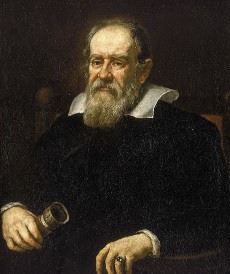
Galileo Galilei


The brilliant Italian scientist Galileo Galilei was one of the great figures of the 17th century. Born in Pisa, in Tuscany, Galileo studied, taught and lectured in Pisa and Padua as well as in Florence, where he and his family made their home. The father of experimental science, his work in astronomy drew criticism from the church of his time and made him a symbol of the conflict between faith and science.


He was a deeply religious man; Catholic to the core. Two of his daughters entered the convent outside Florence and one of them, Sister Maria Celeste, carried on a long, tender correspondence with her brilliant father.

Galileo believed that nature was a teacher along with the bible, and he wanted the church to accept the evidence that science provides, otherwise it could be called an enemy of truth and human progress. Like others then and now, he believed that the bible taught you how to go to heaven and not how the heavens go.

His story is beautifully and carefully told today in a recent book I’m reading now:

Galileo’s Daughter: A Historical Memoir of Science, Faith and Love, Dava Sobel,  New York 1999

There’s a television version:  Galileo: Battle for the Heavens, that you can find on Nova’s site on the internet.

I admire the author’s even-handed description of the relations between the scientist and the churchmen who condemned him for what they saw as his heretical ideas. “A tragic mutual incomprehension has been interpreted as the reflection of a fundamental opposition between science and faith, “ Pope John Paul said regretfully  in 1992.

I’m going in October on a pilgrimage through some of the Tuscan cities and Venice,  where Galileo achieved so much.  He was a believer and a scientist. May others follow him and may our church welcome the knowledge they bring to the human family.