Tag Archives: Passionists

The “Real Reason” the Pope’s Resigning

If we see the pope’s resignation only through the eyes of CNN or The New York Times we’ll miss so much. The pope himself chose to explain his action to the crowd in St. Peter’s square today in the context of the gospel story of the Transfiguration of Jesus and his  journey to Jerusalem.

He saw his own decision as a choice to ascend the mountain of prayer, which is not a way of escaping life, but of understanding it. He wants to serve the church, not  leave it, and so he embraces a life of prayer.

“We can draw a very important lesson from meditating on this passage of the Gospel. First, the primacy of prayer, without which all the work of the apostolate and of charity is reduced to activism. In Lent we learn to give proper time to prayer, both personal and communal, which gives breath to our spiritual life. In addition, to pray is not to isolate oneself from the world and its contradictions, as Peter wanted on Tabor, instead prayer leads us back to the path, to action. “The Christian life – I wrote in my Message for Lent – consists in continuously scaling the mountain to meet God and then coming back down, bearing the love and strength drawn from him, so as to serve our brothers and sisters with God’s own love “(n. 3).

Luke’s account of the Transfiguration sees this mystery pointing to the primacy of prayer in the life of Jesus and his disciples. Why not take the pope at his word? He intends to pray.

“Dear brothers and sisters, I feel that this Word of God is particularly directed at me, at this point in my life. The Lord is calling me to “climb the mountain”, to devote myself even more to prayer and meditation. But this does not mean abandoning the Church, indeed, if God is asking me to do this it is so that I can continue to serve the Church with the same dedication and the same love with which I have done thus far, but in a way that is better suited to my age and my strength. Let us invoke the intercession of the Virgin Mary: may she always help us all to follow the Lord Jesus in prayer and works of charity.”

Where do we learn about life after death?

I mentioned in a previous blog on the Resurrection of Jesus (Feb 20, 2013) that books about life after death are popular today. The blog for Publishers Weekly lists among recent best sellers: Proof of Heaven: A Neurosurgeon’s Journey Into the Afterlife Eben Alexander, Author. Does the book tell us we would rather learn about life after death from scientists rather than from people of faith? How much can science tell us anyway?

I was thinking of the parable of the Rich Man and Lazarus in the gospel. The rich man wants someone to come back from the dead to warn his brothers who, like him, aren’t paying any attention to the poor. No one will be sent, says Abraham from the world beyond.

‘They have Moses and the prophets. Let them listen to them.’

He said, ‘Oh no, father Abraham, but if someone from the dead goes to them, they will repent.’

Then Abraham said, ‘If they will not listen to Moses and the prophets, neither will they be persuaded if someone should rise from the dead.’  Luke 16,19ff.

We have to listen to people of faith. In that same blog there was the encouraging news that sales of  Benedict’s books on Jesus of Nazareth are up since his resignation.

The Passion According to Luke

DSC00234

Last night at the mission in St. Augustine Church, Ocean City, NJ,  I read from St. Luke’s Passion narrative. (Luke 22, 26-49) Luke sees Jesus beginning his journey back to God from Galilee. After his condemnation by Pilate he goes to his death on Calvary, but his journey does not end here; it ends when he ascends into heaven.

Jesus did not make the journey from Galilee to Jerusalem  alone; he gathered disciples to accompany him. Now, as he goes to Calvary, he does not go alone into the mystery of death.  Simon of Cyrene and a large crowd of people including “many women who mourned and lamented him” go with him.

Luke notes that “after laying the cross on him, they made him carry it behind Jesus.” Simon, like all the other followers of Jesus, must be part of his journey. He must take up his cross and follow him, a theme emphasized in Luke’s gospel.

Jesus’ words to the women “who mourned and lamented him” are puzzling. Some say he offers them comfort, even as he goes to his death. But other commentators  see his words as a prophetic announcement of the judgment that must inevitably come from such an injustice as his condemnation and death. The great city Jerusalem will be destroyed as a consequence. He tells us every unjust act, every sin has consequences that cannot be waived away.

Two criminals accompany Jesus to Calvary, the place of execution just outside the Jerusalem city gates where so many people passed. The Romans saw it as an ideal place to display their fierce justice. Jesus would die at this hellish place of torture and death. Not a place one wished to be or to see.

Luke, like the other evangelists, sees this place of death in another light. Instead of harsh justice, injustice and death, Jesus offers forgiveness and new life here: “Father, forgive them, for they know not what they do.”

Here God is revealed, who does not just forgive but brings new life. The two criminals crucified with Jesus reveal God’s power at work.  One criminal mocks Jesus on the opposite cross. “Are you not the Messiah. Save yourself and us.” The other rebukes him and turns to Jesus with a plea to be remembered.  “Jesus, remember me when you come into your kingdom.”

More than simply remembering him, Jesus promises to take him on his journey to God. “Amen I say to you, today you will be with me in paradise.” As he did so often, in tender mercy Jesus reaches to one without hope.

Like Simon of Cyrene, the thief symbolizes humanity. He’s been promised life and safe passage through the mystery of death. He dies with Jesus. He’s the first, a reminder that eternal life is never denied to anyone.

The thief is a powerful sign of the promise made to us all. We will die, but we die with the Lord.

The Weather of God’s Blessings

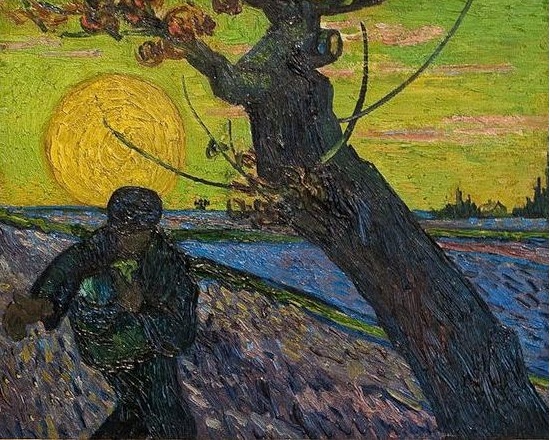
sower

The first reading from today’s Lenten Mass describes God’s blessings in terms of the weather.

“Just as from the heavens

the rain and snow come down, and do not return there

till they have watered the earth,

making it fertile and fruitful,

Giving seed to the one who sows

and bread to the one who eats,

So shall my word be

that goes forth from my mouth;

It shall not return to me void,

but shall do my will,

achieving the end for which I sent it. (Isaiah 55,10)

Can this reading help us understand how God blesses us?  Like rain or snow God’s blessings come, making our lives fruitful. Yes, they will surely come, but how about the times we have to wait, when no rain or snow comes at all?

God’s blessings are like the weather.

Or think of God’s blessings through the Sign of the Cross. We say “we bless ourselves” when we make this sign. Sometimes God’s blessing comes through the cross of glory and we receive blessings never imagined through his tender mercy.

Sometimes his blessings takes another form of his cross; disappointment, suffering, failure, sickness, death. There God’s blessings are mostly hidden and hard to see.

In Matthew’s gospel today Jesus offers us a way of praying. Does this blessing also follow the weather. Prayer is a gift, but it’s a gift like the rain and snow. It’s one of God’s greatest gifts to us, yet sometimes we find it hard to pray while at other times it wells up within us.

The blessings of God are like the weather.

The Pope’s Decision

We’re learning things all the time. One thing most of us may have learned for the first time from Pope Benedict last Monday was that popes could resign.  But I think there are two other things we learned from the pope that may be far more important, namely we should make decisions conscientiously and we need to accept reality as we go through life.

I’d like to reflect on those two lessons from the pope’s statement of resignation:

“ After having repeatedly examined my conscience before God, I have come to the certainty that my strengths, due to an advanced age, are no longer suited to an adequate exercise of the Petrine ministry. I am well aware that this ministry, due to its essential spiritual nature, must be carried out not only with words and deeds, but no less with prayer and suffering.

“However, in today’s world, subject to so many rapid changes and shaken by questions of deep relevance for the life of faith, in order to govern the barque of Saint Peter and proclaim the gospel, both strength of mind and body are necessary, strength which in the last few months has deteriorated in me to the extent that I have had to recognise my incapacity to adequately fulfil the ministry entrusted to me.”

First, notice that a lot of the reasons people usually give for a decision like that are absent from the pope’s statement. He doesn’t say the doctors told him to step down, or his friends advised him, or he’s just sick and tired of it all, or for political reasons someone else is needed at this time.

No. He says simply that he has stood repeatedly before God as his ultimate judge; he’s looked honestly at himself and his situation and come to a decision. He’s brought himself as he is to God and asked God to judge his action. He’s trying to live conscientiously, following his conscience in its best sense. Conscience doesn’t mean  where I stand, but where I stand before God.

To me the pope’s decision looks like a good example of living conscientiously.  That’s what we’re all called to do too. We all called to decide on things by standing before God and looking honestly at ourselves and our situation.

Of course, facing  reality and our own situation isn’t easy. Last year I read Pope Benedict’s book “Jesus of Nazareth” in which he comments on the Temptation of Jesus in the desert, which we read on the 1st Sunday of Lent. I went back to that book recently and I think it can put some perspective on the difficulty we have in facing reality.

After his baptism in the Jordan River, the Holy Spirit leads Jesus into the desert to be tempted for 40 days. The pope calls that command a surprise. After his baptism we would expect a celebration, but instead of celebrating, Jesus is led into the desert to confront Satan.

The 40 day experience Jesus has there is a mirror of what he will experience the rest of his life.  “He descends into the perils besetting humanity, for there is no other way  to lift fallen humanity. Jesus has to enter the drama of human existence, for that belongs to the core of his mission. He has to penetrate it completely, down to its uttermost depths, in order to find the lost sheep, to bear it on his shoulders and bring it home.” (Jesus of Nazareth, from the Baptism of Jesus in the Jordan to the Transfiguration, New York 2007,   p 26)

Jesus is the Messiah whom God sends to save his people. But in the desert–and all through his life– he’s tempted by Satan to be a Messiah of another kind. Satan “offers Jesus another messianic way, far from God’s plan… an alternative messianism of power, of success, not the messianism of gift and selfless love.”

Luke’s gospel describes the temptations of Jesus in interesting detail.  Jesus is hungry; “Turn these stones into bread,” Satan says. “You’re above the ordinary laws of life.”  From a mountain, Satan shows Jesus all the kingdoms of the world. “Here’s political power,” Satan says. From the pinnacle of the temple in Jerusalem, Satan says “Throw yourself down; you can have religious power.”

The temptations Jesus faced are those we face.  We’re tempted to want to control things: our health, our wealth, other people, the world we live in. These are messianic temptations.  We’d like the world to be on our side, to be liked, to be respected, to fit in; we like to control God. In the Our Father we say “ your will be done, your kingdom come.” Our temptation is to say “my will, my kingdom come.”

I may be mistaken but did the pope experience this mystery in making his great decision? We all experience it, that’s why this gospel is the first gospel we read in Lent, the first lesson we learn in this season. Like Jesus we experience temptation. Like Jesus we’ll have angels to come and support us. We pray they support the pope.  “Lead us not into temptation, but deliver us from evil.”

The Scandal of the Incarnation

Nazareth, Annunciation ch

The four gospels take a dim view of Nazareth, the hometown of Jesus Christ. Early in his gospel, John says that Philip, one of Jesus’ first disciples,  invited Nathaniel to meet “Jesus, son of Joseph, from Nazareth.” “Can anything good come from Nazareth?” Nathaniel replies. (John 1,46).

 The other gospels recall the sad rejection of Jesus by his hometown after his baptism by John the Baptist. According the Matthew, it takes place after Jesus has spoken to a large crowd in parables. Then, he goes to Nazareth and speaks in the synagogue to his own townspeople, who are at first astonished at his wisdom, but then wonder where did “the carpenter’s son” get all this. They know his mother and his family, and they reject him. (Matthew 13,54-58)

Mark’s gospel puts the event after Jesus has raised a little girl from the dead. Going to Nazareth with his disciples, he’s greeted in the synagogue with astonishment because of his wisdom; they’ve heard of his mighty deeds, but then they ask where did this “carpenter” get all of this? He’s “Mary’s son” and they know his family. Jesus “was amazed at their lack of faith.”    (Mark 6,1-5)

Luke’s gospel has the most detailed description of the event, which he places at the very beginning of Jesus’ ministry. Last Sunday we read the first part of his account: in the synagogue Jesus takes up the scroll from Isaiah and reads “the Spirit of the Lord is upon me.” And he says,  “This reading is fulfilled in your sight.”

This Sunday we hear about the reaction to his claim. “They are amazed at the gracious words that come from his mouth,” but then ask “Isn’t this Joseph’s son.” Then, enraged by his sharp rebuke to them for refusing to accept him, they take Jesus to the steep hill on the outskirts of their town and are ready to throw him over, but he passes through their midst. (Luke 4,16-30)

Why do they reject Jesus? The reason seems to be that they know his family and what he’s done for a living, and they can’t believe someone like him could be a messenger of God to them.  He’s just a carpenter. What does he know? He came from an ordinary family, some of whom may not have been nice people at all. So they dismiss him.

At Nazareth we see an example of what’s called the “scandal of the incarnation.” People can’t believe that God could come to us as Jesus did.

That scandal still continues.  One obvious instance of it is when people claim to be “spiritual, but not religious.” They want God and not the human ways God comes to us. They want God to be in the beauty of a sunset, but not in a church. They want God as they would like him to be, and not in the messiness of humanity.

I think of that line from one of the English poets:

“I saw him in the shining of the stars, I marked him in the flowering of the fields, but in his ways with men, I knew him not.”

The scandal of the Incarnation is always with us.

Brother Jim Fitzgerald, CP

Yesterday, Fr. Jerome Vereb took three of us on a trip through Brother Jim Fitzgerald’s Pittsburgh. We went first to Knoxville, where Jim as little boy of 5 or 6, studied in the 1930s under some teachers from Pittsburgh’s famous King’s School for Oratory and began his career as a child actor in radio. Pittsburgh then was a center for commercial radio broadcasting in the United States.

White building to left of picture

King’s School: White building to left of picture

Jim’s mother, sensing possibilities for her talented child, got him jobs on KDKA and WWSW. When World War II broke out, Jim became a regular announcer at WWSW as a high school student and in his later years had his own show and worked in different radio stations in the northeast. He died a Passionist brother last December 15th.

On Sunday, we celebrated a memorial Mass for Jim with his family and friends at St Paul’s Monastery, Pittsburgh.

Jim was an extraordinarily talented man, intelligent, a gifted speaker, and yet simple and deeply spiritual. I suppose his simplicity was the reason he liked stories of the desert saints, who lived in Egypt and deserted places in the middle east from the 3rd century onward.

One of the saints he liked was John the Short. A little man. Stories describe him as very human and very heroic. Here are two:

It was said of John the Short that one day, fed up living with others, he decided to live an angelic life by himself, so he left his monastery and went into the desert. Night came, and sounds of wild beasts and strange movements in the dark. There was no place to sleep or food either, so John decided to go back to his community.

His knock on the door was answered by a voice from within: “Who is it?”

“It’s me, John,” he answered.

“John doesn’t live here any more.” The voice inside said. “He’s living with angels.”

“No, no,” John said, “ It’s me. Please let me in.”

“Well, all right, I’ll let you in,” the voice said, “ But remember, we’re not angels here, we’re human beings. If you want to live with us you have to take us as we are.”

It was said of John the Short that he went to his spiritual guide one day and asked, “What shall I do? And his guide gave him a stick and told him to go plant it in the desert and water it.

John went and planted it in the desert and watered it, for three years.

After three years, the stick began to sprout green leaves, then new branches and finally lush grapes.”

His guide came and took the fruit into the church and holding it up before everyone said: “Behold, the fruit of loyalty.”

The Long Loneliness

On our retreat this week on the American saints I recommended Dorothy Day’s autobiography “The Long Loneliness.”  I have the original edition with Fritz Eichenberg’s haunting illustrations from 1952, reprinted in 1981 with an excellent introduction by Daniel Berrigan. I wrote about Dorothy before.

The Long Loneliness is filled with stories of ordinary people Dorothy met during her early years, like the poor elderly lady in bed in Kings County Hospital when Dorothy was a nurse there. The woman demanded her wig.  Easy to dismiss the woman, since she was well cared for, Dorothy writes, but more than love, the woman wanted respect. ( p 88) Dorothy was certainly at home with humanity, broken humanity. I hope this book lands in many people’s hands as a result of new interest in her.

Her separation from her companion after the birth of her daughter, Tamar, offers an heroic picture of faith, stark faith. (138 ff.) It’s one of the highlights of the book. “Diligo” “To love” means also “to choose” she writes.  I found her description of Foster, falling apart as he loses her and sees some of his secular hopes dashed, a touching picture of the darkness unbelievers face. She doesn’t dismiss or belittle him.

Dorothy wasn’t a solitary person. She needed people:

“I had heard many say that they wanted to worship God in their own way and did not need a Church in which to praise him, nor a body of people with whom to associate themselves. But I did not agree to this. My very experience as a radical, my whole make-up, led me to want to associate with others, with the masses, in loving and praising God.” (139)

I also recommended “The Duty of Delight: The Diaries of Dorothy Day, edited by Robert Ellsberg, Milwaukee University Press, 2008.

Ellsberg chose that title for her diaries from her entry from February 24, 1961. ‘Today I thought of a title for my book ‘The Duty of Delight’ as a sequel to “The Long Loneliness.” I was thinking how, as one gets older, we are tempted to sadness, knowing life as it is here on earth, the suffering, the Cross. And how we must overcome it daily, growing in love, and the joy which goes with loving.”

That phrase is also found in the lovely postscript of “The Long Loneliness.”

Besides the books, The Catholic Worker website www.catholicworker.org  offers a wealth of information about this wonderful woman. Worth looking at, and following.

Talking About Saints

I’m beginning a four day retreat for seminarians at the Jesuit retreat house in southern Maryland today.  I’ll be speaking to them about American Catholic spirituality as we see it in our saints and other important figures of our church.  I’ll use the US Catholic Catechism for Adults as a basis for my talks. One of its features–which I’ve commented on recently– is its insertion of stories of the saints and others into the catechism to illustrate its teachings.

You can’t expect the short biographies in the US Catholic Catechism for Adults to tell you everything about these personalities of our church and their impact on our church and our world, but they are a start.

As I see it, writings about the saints has changed in recent times. For one thing, saints are more than people we pray to for some favor or miracle-workers we marvel at. They tell us how to live in this world.  They are part of the communion of saints. “From their place in heaven, they guide us still.” (Preface of the Apostles)

Recent studies on the saints tend to dwell on the world they lived in and how they helped to shape that world. That’s also our task: to live in this world and to prepare it for God’s Kingdom that’s coming.

You can’t understand someone like Dorothy Day, for example, without looking at the social history of the United States from the 1930s onward. She reacted to the problems of her time, and so should we.

Recent studies on the saints tend to be less panegyric. Saints are not perfect. Writing on the saints follows the recent trend in biography which tries to tell as much as can be known about figures in the political or social or intellectual or religious worlds, their faults and failures as well as their virtues and accomplishments.

I hope to talk this week about Elizabeth Seton, John Neumann, the Jesuit Martyrs, Dorothy Day, Pierre Tousaint, Mother Cabrini and Theodore Foley.

What Does Christmas Mean?

On Thursday, December 20th, Pope Benedict XVI wrote an article on the meaning of Christmas for the Financial Times of London. So different from the recent article in Newsweek by Bart Ehrman, struggling over what’s historical in the infancy narratives and what isn’tadoration. The pope’s article, summarizing his recent book, is about what the birth of Jesus says to our world today. Here’s his text from Vatican Radio:
A time for Christians to engage with the world

“Render unto Caesar what belongs to Caesar and to God what belongs to God,” was the response of Jesus when asked about paying taxes. His questioners, of course, were laying a trap for him. They wanted to force him to take sides in the highly-charged political debate about Roman rule in the land of Israel.

Yet there was more at stake here: if Jesus really was the long-awaited Messiah, then surely he would oppose the Roman overlords. So the question was calculated to expose him either as a threat to the regime, or a fraud.

Jesus’ answer deftly moves the argument to a higher plane, gently cautioning against both the politicization of religion and the deification of temporal power, along with the relentless pursuit of wealth. His audience needed to be reminded that the Messiah was not Caesar, and Caesar was not God. The kingdom that Jesus came to establish was of an altogether higher order. As he told Pontius Pilate, “My kingship is not of this world.”

The Christmas stories in the New Testament are intended to convey a similar message. Jesus was born during a “census of the whole world” taken by Caesar Augustus, the Emperor renowned for bringing the Pax Romana to all the lands under Roman rule. Yet this infant, born in an obscure and far-flung corner of the Empire, was to offer the world a far greater peace, truly universal in scope and transcending all limitations of space and time. Jesus is presented to us as King David’s heir, but the liberation he brought to his people was not about holding hostile armies at bay; it was about conquering sin and death forever.

The birth of Christ challenges us to reassess our priorities, our values, our very way of life. While Christmas is undoubtedly a time of great joy, it is also an occasion for deep reflection, even an examination of conscience. At the end of a year that has meant economic hardship for many, what can we learn from the humility, the poverty, the simplicity of the crib scene?

Christmas can be the time in which we learn to read the Gospel, to get to know Jesus not only as the Child in the manger, but as the one in whom we recognize God made Man. It is in the Gospel that Christians find inspiration for their daily lives and their involvement in worldly affairs – be it in the Houses of Parliament or the Stock Exchange. Christians shouldn’t shun the world; they should engage with it. But their involvement in politics and economics should transcend every form of ideology.

Christians fight poverty out of a recognition of the supreme dignity of every human being, created in God’s image and destined for eternal life. Christians work for more equitable sharing of the earth’s resources out of a belief that, as stewards of God’s creation, we have a duty to care for the weakest and most vulnerable.

Christians oppose greed and exploitation out of a conviction that generosity and selfless love, as taught and lived by Jesus of Nazareth, are the way that leads to fullness of life.

Christian belief in the transcendent destiny of every human being gives urgency to the task of promoting peace and justice for all.

Because these goals are shared by so many, much fruitful cooperation is possible between Christians and others.

Yet Christians render to Caesar only what belongs to Caesar, not what belongs to God. Christians have at times throughout history been unable to comply with demands made by Caesar.

From the Emperor cult of ancient Rome to the totalitarian regimes of the last century, Caesar has tried to take the place of God. When Christians refuse to bow down before the false gods proposed today, it is not because of an antiquated world-view. Rather, it is because they are free from the constraints of ideology and inspired by such a noble vision of human destiny that they cannot collude with anything that undermines it.

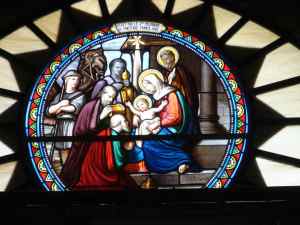
In Italy, many crib scenes feature the ruins of ancient Roman buildings in the background. This shows that the birth of the child Jesus marks the end of the old order, the pagan world, in which Caesar’s claims went virtually unchallenged.

Now there is a new king, who relies not on the force of arms, but on the power of love. He brings hope to all those who, like himself, live on the margins of society. He brings hope to all who are vulnerable to the changing fortunes of a precarious world. From the manger, Christ calls us to live as citizens of his heavenly kingdom, a kingdom that all people of good will can help to build here on earth.