Tag Archives: Passionists

Hunger

Manna in the Desert

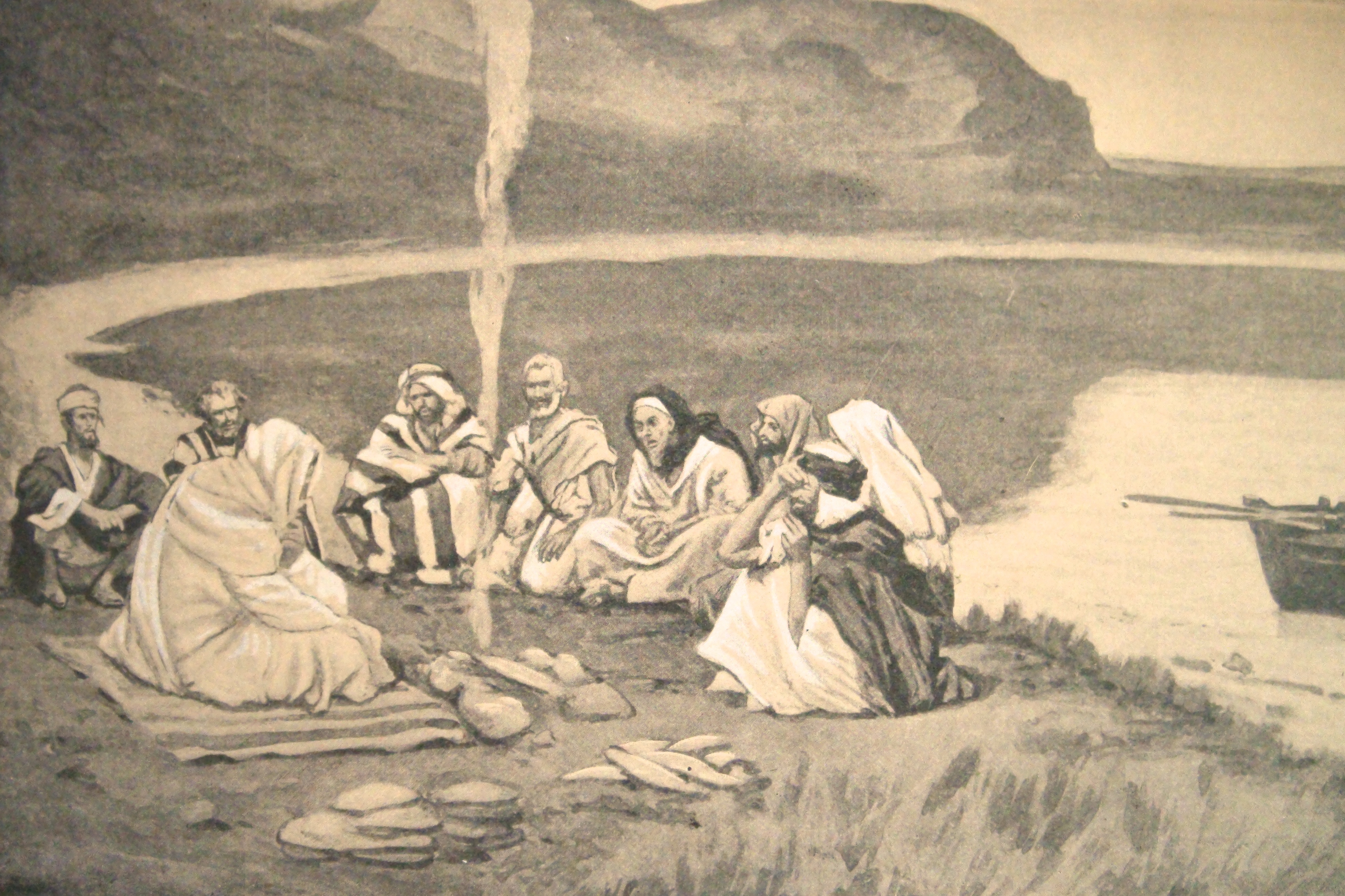
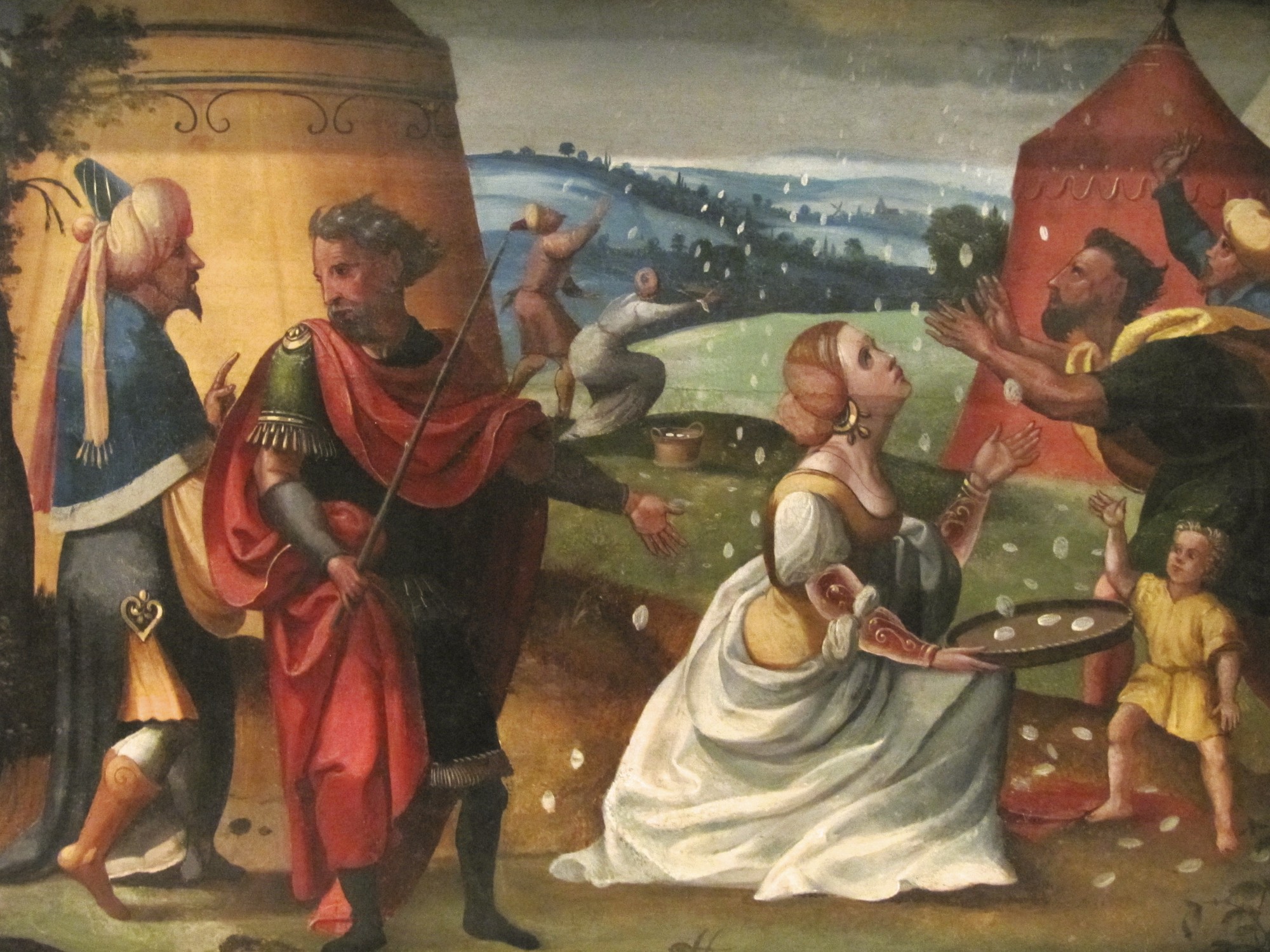
The next five Sundays we’ll read from the 6th chapter of St. John’s gospel, beginning this Sunday with the miracle of the loaves and the fish. All four gospels recall this miracle, Mark and Matthew report it twice. The miracle and Jesus’ words that follow it in John’s gospel are about the Holy Eucharist. Jesus, the Bread of Life, is the answer to our hunger.

The miracle takes place across the Sea of Galilee, in a “deserted place,’ as Matthew’s gospel describes it. There’s no place to buy food for a hungry crowd.

There’s only five barley loaves and two fish a small boy has. Barley loaves were the ordinary food for the poor.

Jesus initiates this miracle by pointing out to his disciples  a hunger in the crowd. They seem hardly aware of it and have no answer what to do, except to say “We don’t have enough!”  Taking what’s there, the five barley loaves and two fish, Jesus multiplies this food and feeds a multitude. John notes the Passover is near; it’s spring and green grass has grown up in this deserted place. Not only is it enough, but fragments are left over as the crowd has its fill.

Keep in mind the basic reality the miracle addresses: hunger. It’s bodily hunger, yes, but hunger of all kinds is addressed here. Like the disciples, we may be hardly aware of it. Humanity is hungry, this gospel says. Only God can fill its silent, hidden hunger, this miracle says. Only Jesus can.

Hunger

“I come among the peoples like a shadow,

I sit down by each man’s side,

None sees me,

but they look on one another and know that I am there

My silence is like the silence of the tide that buries the playground of children

Like the deepening of frost in the slow night, when birds are dead in the morning.

Armies travel, invade, destroy with guns roaring from earth and air.

I am more terrible than armies.

I am more feared than cannon, kings and chancellors

I give no command to any, but I am listened to more than kings

and more than passionate orators

I unswear words and undo deeds,

Naked things know me.

I am more the first and last to be felt of the living.

I am hunger. “

Lawrence Binyon

No Nest, No Den

RUN08875
We’re reading from the 9th chapter of Luke’s gospel this Sunday. (Luke 8,51-62) Jesus has completed his mission in Galilee, in the small towns around the lake, and sets out for Jerusalem. That’s how today’s gospel begins:

“When the days for Jesus’ being taken up were fulfilled,
he resolutely determined to journey to Jerusalem.”

Luke doesn’t describe a journey from place to place. Rather, Jesus gathers disciples on the way. He’s not making this journey alone, or just with the twelve. He’s calling many others to experience with him the mystery of his death and resurrection.

It’s a hard call. You have to go through tough places, Jesus says, like the Samaritan town that he and his disciples passed through, where you’re not accepted. You may not feel powerful or secure. If you follow me, Jesus says, you won’t have nests like the birds or dens like the fox. You’ll meet circumstances and difficult situations that may seem unreasonable.

But don’t worry, by following Jesus you’ll made the journey.

Last week I had some visitors from Australia and I took them on a tour of downtown New York, to visit a saint who once lived on Wall Street. She’s St. Elizabeth Seton, Mother Seton; she lived with her family on Wall Street and a number of other places downtown in colonial times. One of the last places she lived in New York City is on State Street, right across from the Staten Island Ferry. A church honoring her is built over that house.
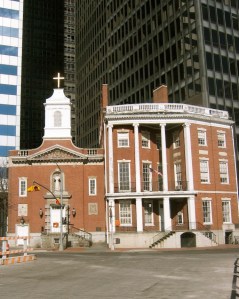
Setonshrine - Version 2

She’s a good example of what it means to follow Jesus, according to today’s gospel.
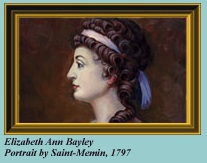
1.Elizabeth Seton 1797

I took my visitors on the Staten Island Ferry to show them where the quarantine stations were in the harbor. Mother Seton’s father, Doctor Richard Bayley, was New York City’s first health officer and his job was to isolate and care for people with diseases like yellow fever who were coming into the country on ships from overseas.
Quarantine 1833

In the summer of 1801, his daughter described the conditions at the quarantine station at Tomkinsville, Staten Island, where she was staying with her father. A boatload of Irish immigrants with yellow fever had just been taken off a ship:
“I cannot sleep–the dying and the dead possess my mind. Babies perishing at the empty breast of the expiring mother…Father says such was never known before: twelve children must die for want of sustenance…parents deprived of it as they have lain for many days ill in a ship without food or air or changing…There are tents pitched over the yard of the convalescent house and a large one at the death house.” (Letter July 28, 1801) Her father contacted yellow fever himself then and died shortly afterwards.

Through her life, Mother Seton experienced hard things like that. She was four years old when her mother died, and her father quickly remarried. Her stepmother never had much time for her, but neither did her father, a good man absorbed in his work as a doctor and away a lot.

She describes how lonely she was as a child. What kept her going was looking up into the clouds and believing that God was her father and he loved her.

Her fortunes changed dramatically when as a young woman Elizabeth Bayley met William Seton, one of the wealthiest young men in New York. They got married and had children and became part of New York’s high society. Alexander Hamilton was a neighbor, George Washington lived down the street. They were on top of the world and blissfully happy.
Wall St. 1825 copy

William Seton was one of the venture capitalists of his day. He was into banking and shipping. But as we know venture capitalists can go bankrupt as well as make millions. That’s what happened to the Setons. They went bankrupt, he died of sickness and his wife became a widow with five kids.

Elizabeth Seton went through a spiritual crisis. She was attracted to the Catholic faith, but the Catholic Church then was looked down on by New Yorkers. She lost most of her friends when she decided to become a Catholic. She had to leave New York and go to Maryland where she began a school and a religious community of women, the Sisters of Charity.
IMG_3158

Her school was the beginning of Catholic Parochial School system in the United States and she’s honored as our first native born American saint. In the new United States Catholic Catechism for Adults she’s presented as an example of how our search for God takes place. Sometimes we’re on top of the world, other times we’re like birds without nests and foxes without dens.

Sometimes we may think that the gospel is an old book about things from long ago. But if you look at it with yourself in mind you can see how it applies. There are times when our lives are transfigured, as the lives of the disciples were when Jesus took them up the mountain. At other times we are not sure where we are. Sometimes we can feel like we’re going through a Samaritan town where nothing makes sense. To follow Jesus is like that.

Saints like Elizabeth Seton are good guides too. Take a look at them. They’re better guides to life than movie celebrities, and more real.
The Sinful Woman

Sinful woman
We’ve been reading from the Gospel of Luke most Sundays at Mass this year and for the last few weeks Luke speaks about women in the ministry of Jesus and of his church. Last Sunday there was the story of the widow of Naim, who was bringing her dead son to be buried. Jesus stopped the funeral cortege raised the boy to life and gave him back to his mother.(Luke7.11-17) This week there’s the story of the sinful woman of the town in a Pharisee’s house. Weeping, she pours an ointment over Jesus’ feet along with her tears. Then she dries them with her hair.(Luke 7,36-8,3)

Recall too the story from last Sunday’s Old Testament readings about a widow whose only son had died. Elijah raised her boy to life. (1 Kings 17,17-24)

Are these stories related? I think they may be. In Jesus’ day women who were widowed were especially vulnerable. Losing their husbands, they lost their support. If they lost their sons their plight was worse. In a society where men were the sole providers, women had nothing without them. It could happen in such a situation that women sold themselves, which leads us to the story for today. Was the woman in the gospel one of those women?

It’s a situation that exists even in our time. “Doesn’t he know what kind of woman she is?” Jesus’ host asks. Yes, he does. He understands her circumstances quite well. Luke’s gospel especially takes up their cause.

You notice how the gospel ends today with Luke’s summary of Jesus’ journey to Jerusalem.

Accompanying him were the Twelve
and some women who had been cured of evil spirits and infirmities,
Mary, called Magdalene, from whom seven demons had gone out,
Joanna, the wife of Herod’s steward Chuza,
Susanna, and many others who provided for them
out of their resources. (Luke 8,1-3)

Luke carefully notes that women followed Jesus. He had empowered them; then they empowered him and his gospel. That’s the way love and forgiveness works. Luke reminds the men of his church that women had an important place in the life and ministry of Jesus. For him women’s issues were not just women’s issues, they were men’s issues as well.

Today is Fathers’ Day. As we honor fathers, let’s remember that the scriptures expand the definition of father beyond biological terms. God is “Our Father in heaven”, “Father of the poor”, “Father of the widow”, “Father of orphans.” He the God of the vulnerable. Luke embraces this expanded understanding of mother and father in his gospel. Let’s make it our own too.

Follow Me

Galilee shore

The gospel of John is read at Mass these last days before the Feast of Pentecost. We’re brought to the Sea of Galilee where the Lord first called Peter and John and others to follow him. Now, from the shore the Risen Jesus calls them again. They’ve fished all night and caught nothing. Not only are their boats empty; some days earlier in Jerusalem they deserted the One they promised to follow forever. Their spirits are empty.

From the shore Jesus tells them to cast their nets into the sea again and an abundant catch of fish pours into their boats. Calling them ashore, Jesus feeds them some loaves and fish. As he did in the supper room the night before he died, Jesus offers them his life-giving love.

Taking Peter aside, he asks the disciple who denied him three times “Do you love me?” “Yes, Lord, you know I love you,” Peter answers three times. “Feed my sheep,” Jesus tells him.

Then, renewing the invitation he made at this same shore at the beginning of his ministry, Jesus says to his disciple, “Follow me.”

The Feast of Pentecost is a feast for a church that has failed, for disciples facing their weakness and broken promises, for those who work and have nothing to show for it. The Holy Spirit, whom Jesus breathed upon the disciples after his resurrection, comes to our world as he promised, to renew the face of the earth. “Come follow me,” the life-giving Spirit says.

First Holy Communion

In our parish children are receiving their First Holy Communion these Sundays of the Easter season. They will come into the church together, each one with her or his name printed on their clothes and we will greet each one of them by name at the altar. Their families and relatives will be here.

Later, we will call them to stand around the altar at the Eucharistic prayer and they will be the first to receive Communion. Afterwards, they’ll be joining their families to celebrate this important step in their life of faith.

We call them by name. In baptism, that’s the first thing we ask parents who bring their children to the baptized: “What’s his/her name?” and later we baptize them “in the name of the Father, and of the Son and of the Holy Spirit.”

God calls us by name. It’s my name and it stands for me. In baptism we are called by God, who takes us into his hands forever. We are baptized with water, with life, in the name of the Father, and of the Son and the Holy Spirit. We know God’s name: Father, Son and Holy Spirit.

Baptized as infants, we didn’t speak for ourselves; our parents spoke for us, and they were entrusted to bring us up in this belief: that we are God’s children, God who is Father, Son and Holy Spirit.

At first Holy Communion we speak for ourselves; no one holds us in their arms or speaks for us as they did in baptism. When we receive Jesus in the bread we say “Amen.” I believe he comes to me; I know who he is; He is my Lord and my God who loves me. He gave his life for me and he calls me to eternal life.

Our First Communion should be the beginning of many communions. Jesus wants us to know his name and to know us. That’s what the word “communion” means.

Sunday Readings: Fifth Week (C)

Acts 14, 24-27
Revelations 21,1-5
John 13,31-33,34-35

Jesus came to cast the fire of love on the earth. A few verses earlier in John’s gospel, which we read today, Jesus gives Judas “a morsel” of bread just before the disciple leaves the supper table and goes out into the night. Even as the disciple prepares to betray him Jesus offers him a sign of love. Before that he knelt before Peter and washed the feet of the disciple who would deny him three times. The rest, confused about the betrayal taking place, cannot grasp the love Jesus offers. They’re like children who do not understand. They’re like us. “I give you an new commandment,” Jesus says, “Love one another as I have loved you.” Love is the sign and the key.

The Risen Lord brings new life to all of creation as well as to humanity, according to the Book of Revelations. John sees “a new heaven and a new earth.” Creation is not restored to its original state, but transformed and perfected by God to be a new habitation for humanity. “God will dwell with them and they shall be his people.” A new Jerusalem adorned as a bride will be its city. No evil will be found in this new creation.

Revelations rejects the belief that God sees creation as evil and will destroy it in the future, a belief some Christians today unfortunately hold. In Christ God promises and will bring about a renewal of creation and our task is to work for its renewal. That means we don’t turn away from the world in which we live and simply pursue our own aims. We are called to work in this world for justice and good so that God’s kingdom will come.

In the Acts of the Apostles Paul and Barnabas say to the embattled churches of Lystra, Iconium and Antioch “We must undergo many trials if we are to enter the reign of God.” They install “elders” for the better organization of these churches, but the goal of the churches goes beyond good organization. Their goal is to work for the reign of God as they undergo many trials. Like seed, the church grows in this world, and we hardly recognize its growth.

Reasoning to faith

I mentioned in my last blog how Elizabeth Seton came to believe in the presence of Jesus Christ in the Eucharist. She offers a an example of how ordinary reasoning leads to faith. “She thought of the Filicchis’s devotion and asked how God created her ‘ and how a hundred other things I know nothing about? I am a mother, so the mother’s thought came also. How was my God a little babe in the first stage of his mortal existence in Mary?’”

Three simple things influenced her: the Filicchis’s belief in the Eucharist, the many mysteries she found in her own life and could not explain, and finally the mystery of the Incarnation itself. Humbly, Jesus became flesh in the womb of Mary. Could not the One who “emptied himself and took on the form of a slave” choose to be really present in bread and wine?

Commentators say that the long narrative in the 6th chapter of John’s gospel on the miracle of the loaves and fish is meant to meet questions that arose in his church in the last decade of the 1st century. The first disciples and eyewitnesses are gone. Some Christians, probably influenced by Gnostic pessimism, questioned the Incarnation of Christ. Would God become human and part of our created world? The authors of John’s gospel use the miracle of the loaves and fish and Jesus’ words that he is “the bread of life” to assert that he works through creation. He is the Word made flesh.

Elizabeth was raised an Episcopalian and belonged to Trinity Church and St. Paul’s Chapel in lower Manhattan. From my reading it seems that her church at the end of the 18th century was emerging from the heavy influence of the Enlightenment, which stressed a rational approach to religion. Then, Henry Hobart,a new ministerarrived and began to preach a biblical message based on the words and ministry of Jesus; Elizabeth responded warmly to his message.

I like best her simple reasoning for belief in Jesus present in the Eucharist: “I am a mother, so the mother’s thought came also. How was my God a little babe in the first stage of his mortal existence in Mary?”

Good Friday

We solemnly celebrate the death and Resurrection of our Lord on Holy Thursday, Good Friday, and Holy Saturday, using the simplest of signs.

On Holy Thursday Jesus knelt before his disciples and washed their feet. At table he gave them in bread and wine his own body and blood as signs of his love for them and for all humanity.

On Good Friday we take another symbol, the cross, a powerful sign of death, which first struck fear into the hearts of Jesus’ disciples, but then as they recalled the Lord’s journey from the garden to Calvary, as they saw the empty tomb, as they were taught by the Risen Jesus himself, they began to see that God can conquer even death itself.

On this day, we read the memories of John, the Lord’s disciple, who followed him from the Sea of Galilee, to Jerusalem, its temple and its feasts, to Calvary where he stood with the women and watched the Lord die. Like the others, he recoiled before it all, but then saw signs of victory even in the garden, in the judgment hall, before Pilate, and finally in the cross itself.

On this darkest of days, Christ’s victory is proclaimed in John’s Gospel.

“ Go into my opened side,

Opened by the spear,

Go within and there abide

For my love is here” (St. Paul of the Cross, Letter, September 5, 1740).

Betrayal

John 13, 21-38

The Gospels for Monday to Thursday in Holy Week take us away from the crowded temple area in Jerusalem where Jesus spoke to the crowds and his avowed enemies and bring us into homes where “his own” join him to eat a meal.

In Bethany six days before Passover he eats with those he loved: Martha, Mary, and Lazarus, whom he raised from the dead. In Jerusalem on the night before he dies he eats with the twelve who followed him. During the meal in Bethany, Mary anoints his feet with precious oil in a beautiful outpouring of her love.

But the Gospels for Tuesday and Wednesday point not to love but betrayal. Friends that followed him abandon him. Judas betrays him for thirty pieces of silver and goes out into the night; Peter will deny him three times; the others flee. Jesus must face suffering and death alone. (Judas’ Betrayal, J.Tissot)

Are we unlike them? Does a troubled Jesus face us too, “his own,” to whom he gave new life in the waters of baptism and Bread at his table. Will we not betray or deny? Are we sure we will not go away? The Gospels are not just about long ago; they’re also about now.

The Passover Meal

During these days of Holy Week I’ve been thinking of the Passionist house of St. Martha in Bethany where I stayed about a week a few years ago. Looking eastward from the roof of the house on a clear day you can see down to the Judean desert miles away. The ancient road Galilean pilgrims took to Jerusalem for the feasts began there in Jericho and passed by this site. The Passionist house stands over parts of the ancient village of Bethany; 1st century ruins stretch out on its eastern side. From the roof you could see the traditional tomb of Lazarus if the modern Israeli security wall didn’t block your view.

It’s a place that stirs your imagination.

Most likely Jesus lived here with his friends during Jewish feasts when he came from Galilee. It was the obvious place for Galilean pilgrims to camp in those times when the city would be so crowded. The Mount of Olives just west of Bethany was sometimes called the “Mount of the Galileans.” Here Jesus would likely be among friends, like Martha, Mary and Lazarus. A safe place. From here he walked to Jerusalem, a few miles away, over the Mount of Olives to teach and pray in the temple. Likely, followers from Galilee would accompany him back and forth, and they were armed.

Would this explain why the temple leaders reached out to an insider like Judas as a way of capturing Jesus, who seemed so secure? Perhaps his disciples thought so too; they’re so complacently confident that nothing will happen to him. They’ll take care of that.

“Where do you want us to prepare the Passover supper for you?” his disciples ask (Matthew 26,27) Surely, Jesus could have chosen to eat the Passover there in Bethany, which Jewish law saw as part of Jerusalem in times of feasts when the city’s population multiplied. It would have been a meal among his own, like that he enjoyed after raising Lazarus from the dead.And it would have been safer.

Instead, he chose to eat the Passover close by the temple. The traditional site of the Last Supper places the site just south of the temple. They would have eaten it there, as the lambs were being slaughtered for sacrifice. It certainly wasn’t a place chosen for security.