Tag Archives: Passionists

Is Francis Speaking Now?

These days it’s hard to think of St. Francis without thinking of the one who recently took his name, Pope Francis. Like Francis of Assisi, this Francis seems bent on recalling the church to simplicity and poverty. There’s something radical in his approach and it’s winning respect from people in the church and beyond it.

Francis of Assisi (1181-1226) was born into a well-to-do family which was prepared to give him all he could possible wish for. You could say he had it all. Yet he chose to follow Jesus Christ who embraced a cross.

Recently in one of his daily homilies, the pope described similar choices we have before us. He reminded me of his namesake, Francis of Assisi.

“The Holy Father spoke of the different attitudes a Christian can take: either you follow Jesus to a certain point or you follow him to the end. The danger you run, he warned, is giving in to ‘the temptation of spiritual well-being, of thinking that we have everything already: the Church, Jesus Christ, the sacraments, Our Lady and so on– no need to search for anything. But ‘this is not enough. Spiritual well-being is fine to a certain point.’ the Pope explained.

“’What’s missing is the anointing of the cross, the anointing of humiliation. He humiliated himself unto his own death, a death on the Cross. This is the touchstone, the measure of our Christian reality. Am I a Christian of the culture of well-being or am I Christian who accompanies the Lord unto the Cross?’”

Sounds like Francis of Assisi, doesn’t it?

Here’s how the pope sounds to a group at Georgetown, Washington, DC. A wonderful roundtable with David Brooks, Mark Shields and other on Catholic Social Teaching.

The Rich Man and Lazarus

In the parable from Luke that we read this Sunday the rich man is so absorbed in himself and his “good” life that he sees nothing else, not the poor man at his door nor his own inevitable death and judgment. Living in the bubble of the present, nothing else, no one else matters to him.

Jesus often warns against this kind of blindness. The scriptures are filled with similar warnings too. Psalm 49 says “In his riches, man lacks wisdom; he is like the beasts that are destroyed” (Psalm 49). Having too much can make you lose perspective.

It would be a mistake to see this parable directed only to the rich, however. That same psalm calls for “people both high and low, rich and poor alike” to listen.

You don’t have to be rich to be like the rich man in the parable. People who don’t have much can also be small-minded and shortsighted and self-absorbed and blind to those around them. Not only the rich, but we all can be self-centered and locked in our own small worlds, in love with success and blind to the poor at our gate.

The parable says that we’re destined for a life beyond this and how we live and how we help one another now is really what matters. We won’t be judged by how well we took care of ourselves, or the honors we have accumulated. We’ll be judged by how we reached out to one another, especially the poorest, the slowest, and those who seem to fail at life.

The rich man in the parable suddenly became aware of this. He finds himself left out, with not a drop of water to quench his thirst. The tables are turned.

Jesus’ parable reminds us that the kind of blindness the rich man has is very difficult to break down. “Send someone back from the dead to tell my brothers,” the rich man pleads. But even if someone comes back from the dead, they will not believe.

No matter how often we hear them, the parables of Jesus have their surprises. Did you notice that the rich man has no name in the parable, yet the poor man does? His name is Lazarus. Probably in his lifetime, everyone knew the rich man’s name, as one of the rich and famous. Probably few knew the name of the beggar looking for scraps of food at the rich mans’s door.

But God knew poor Lazarus’ name. He knew Lazarus on earth and beyond this life in heaven. Probably a good test: how many Lazarus’s do we know?

Lord,
source of all good,
good beyond what we have or can see,
give us wisdom to know you and your gifts
and to see others as you see and love them.
Like the blind man, we want to see.
Amen.

Catechetical Sunday

We call this Sunday “Catechetical Sunday,” because most parishes are beginning classes in religion this month and we’re asking God’s blessing on young people and teachers and all who are involved in religious formation programs. Passing on our faith to the next generation is one of the important challenges we face as a church.

Let’s remember, though, that children and young people are not the only ones who need to grow in faith. We all do. We may be able to recite the Creed at Mass and respond to the prayers pretty well, though some of us may still be learning the new wording that came out last year. But learning the words isn’t enough. We need to know what they mean and how they apply to our lives; that’s a life-long task
.
I can still recite answers to questions from the catechism years ago. “Who is God?” “Why did God make you?”

But is that enough? For one thing, the Second Vatican Council, which took place 50 years ago, gave some important new directions for growing in our faith. It told us to know God and love with our neighbor using the bible and the liturgy as guides.

For example, there’s a longer and fuller answer to that catechism question “Who is God?” in the scriptures today. (Luke 15, 1-32) God is like a woman who doesn’t want to lose what belongs to her and keeps searching for a coin she has lost. God is like a shepherd searching for a lost sheep. God is a wonderful father whose son–representing the whole human race–finds himself far from home and the place where he should be.
We are God’s children; we belong with him. God is the One who welcomes us, searches for us, waits for us, wishes the best for us, because we are his own.

No catechism question and answer could describe God better than Jesus does in the story of the Prodigal Son and in his parables. The scriptures give us a way to know God that’s never exhausted. At the heart of scripture is Jesus Christ, God’s Word to us. He lives what he teaches. We know God through him, and with him and in him. The more we know him, the more we know the One who sent him. The more we know him, the more we know how to love our neighbor.

Faith is not a private affair between ourselves and God. We don’t live it in a bubble. Knowing and loving God means knowing and loving our neighbor, for God and our neighbor belong together. “No one has seen God, if we love one another, God lives in us and his love is perfected in us.” (1 John 4,12)

The Second Vatican Council made clear in its Constitution on the Church in the Modern World, for example, that faith leads us to life in our world, however complex that world may be. The scribe in the gospel asks Jesus, “Who is my neighbor?” He doesn’t ask Jesus “Who is God?” Perhaps that’s because our relationship with our neighbor is more immediate and complex than our relationship with God.

We can’t reduce loving our neighbor to a few things like lying, or cheating or killing one another. I was looking recently at the US Bishops’ site on the internet–a wonderful resource site about our faith, by the way– and noticed the many “neighbor” questions there. Questions like income inequality, immigration, housing, restorative justice, …They’re social questions, “neighbor” questions, dealing with a complex world that changes all the time.

The Second Vatican Council also opened the window to new cooperation with others who do not have the faith we have and urged us to work together for a better world.

Living our faith today is a challenging, life-long task. We’re all still in school.
Lord of the Sabbath

Jesus and his opponents often clash over the Sabbath, as they do in today’s reading from Luke’s gospel.(Luke 6,1-5) Jesus’ disciples take some grain as they walk through the fields in Galilee. “Why are you doing what is unlawful on the Sabbath?” some Pharisees ask. All four gospels cite incidents like this. The question of the Sabbath was raised repeatedly in Jesus’ ministry.

We may think the question is about a Jewish law, but it’s really about God. How would God act if someone was hungry, or thirsty, or in need? That’s not a bad question to ask ourselves as we look out into our world. What would God do for the people we see in need? How would God look at those who belong to a different race or culture or nationality than we do? How would God act towards those who harm others or live unjust lives?

The Sabbath is God’s day, a day to remember who he is and what he has done. It’s not a day that restricts how we live, but a day that expands our vision to God’s vision. It’s a day to help us live other days of our lives. On the Sabbath, God gives us hope.

No wonder Jesus spoke of himself as “Lord of the Sabbath,” for he reveals the God we want to know. Too bad so many think of him as someone who restricts the way we live. It’s just the opposite. He teaches how live and offers a hope beyond any we could conceive.

Pilgrim Places of September

September is a month for celebrating two places of pilgrimage in the Holy Land. We recall the dedication of the Church of the Holy Sepulcher in Jerusalem on September 14, the Feast of the Exaltation of the Holy Cross. On September 8th we celebrate the Feast of the Birth of Mary at the Church of St. Anne near the ancient pool of Bethesda, not far from the temple mount.

Pilgrims to these ancient sites can face a dizzying array of archeology, history, art and devotion as guides hurry them through on their way to the next holy place.

The two feasts can bring perspective to these important pilgrim places. They can remind those who have been to the Holy Land of what they experienced there and prepare those who may be going for what they may find there.

Feasts and holy places are teachers of faith. We return to them again and again to learn what they teach. Like good teachers, they never run out of the wisdom of life.

Besides these two pilgrim places, what others in the Holy Land should we remember? Certainly in Jerusalem there’s Gethsemani where Jesus prayed before his death, the Mount of Olives where he taught his disciples, Bethany where Lazarus was raised from the dead, Mount Zion where he ate with his disciples before he died.

Beyond Jerusalem, there is Bethlehem where he was born, Nazareth where he was raised, Capernaum and the Lake of Galilee where he ministered, the Jordan River where he was baptized.

I hope to offer some reflections on the two September feasts in the next few days.

What’s Evangelization?

The Year of Evangelization in the Catholic church is coming to a close this November. It’s a year dedicated to bringing the gospel of Jesus Christ to others through words and actions. We’re trying to get someone who has never been to church to come, and to get others who have left our church to come back.

That’s not easy to do. It’s more than knowing how to say the right things to someone else. Evangelization needs a lot of time and a lot of hard patience.

I was thinking about that as we remembered two saints last week in our church calendar ¬–St. Monica and St. Augustine. He’s one of the greatest intellects the world has every known; he has strongly influenced the way we think in our western world. Monica was his mother.

Most of us have heard these moving words to God from Augustine’s Confession:

“O beauty every ancient, O beauty ever new. Late have I have loved thee. You were within me, but I was outside, and it was there that I searched for you. In my unloveliness I plunged into the lovely things which you created. You were with me, but I was not with you. Created things kept me from you; yet if they had not been in you they would have not been at all. You called, you shouted, and you broke through my deafness. You flashed, you shone, and you dispelled my blindness. You breathed your fragrance on me; I drew in breath and now I pant for you. I have tasted you, now I hunger and thirst for more. You touched me, and I burned for your peace.”

In his Confessions Augustine tells God that God’s grace brought him to believe–so late, he admits. But in the Confessions, Augustine also acknowledges it was a mother’s tears and prayers that brought him to Jesus Christ. She was like the woman in the gospel who was bringing her dead son through the gates of the town of Naim to bury him when Jesus came upon them. Seeing her tears, he stopped the funeral procession and raised her son to life.

“ I was like that son,” Augustine says. ‘I was dead. My mother’s tears won me God’s life.”

You can see why the church celebrates her feast on August 27th, the day before her son’s, and why we read that story of the widow of Naim as the gospel for Mass that day.

Like many women from that time, we don’t know much about Monica. She was married to a man named Patricius, a tough husband who put her down and went out with other women. They had three kids. She had a feeling that Augustine was someone special, and she followed him, trying in her own way to get him to be the person she knew he could be. She wanted him to have faith.

It was a hard thing to do. He was so smart, so well educated, so hooked on the “lovely things” about him. He was deaf to her advice, blind to the path she wanted him to take, but she kept following him anyway. She was convinced God had something big for him to do, and she finally got her wish.

She sounds like so many people today, loving their kids, or the husbands or their wives or their friends, but worried about them getting mixed up in the wrong things. They’re not going to church, they not listening to the gospel. But they stick by them anyway.

Is that evangelization too?

Dominic Barberi, CP

In today’s reading at Mass from St. Paul’s First Letter to the Thessalonians the apostle tells them to remember those who brought them to faith. The gospel came to them, not in words alone, but through holy people.

Today, the Passionists remember one of their holy people, Blessed Dominic Barberi, born in Viterbo, Italy, in 1792. He was devoted to the cause of Christian unity and in 1842 went to England with a dream of bringing the English church and the Catholic church together as one.

He received John Henry Newman, the great Oxford scholar, into the Catholic church. Newman admired the zeal and humility of this holy man.

Though he never mastered the English language, Dominic preached tirelessly throughout England, especially to poor immigrants coming into the country to work in factories built during the Industrial Revolution.

Before coming to England, Dominic wrote to the scholars of Oxford about his dream of a united church:

“The time will surely come when we shall all with one voice glorify God, the Father of our Lord Jesus Christ. That time is not far distant. We shall see it with our own eyes. I feel this hope in the depths of my soul. In the meantime, let us do penance in sackcloth and ashes, as we await the blessed hope. Not only the French, but also the Italians, Spaniards, Germans and all other Catholics join you in this. With you they hope, with you they long for the day when it will be possible to embrace one another as brothers and sisters and to be gathered into one fold under one shepherd. Let there be one fold and one shepherd soon! Amen. Amen.”

Still a dream to believe in and work for.

Wherever you go, I will go

The story of Ruth, the Moabite woman, who stays with her mother-in-law after her own husband’s death and devotes herself to the older woman after she returns to her own people, is one of the most beautiful stories of the Old Testament. We read a portion of it today at Mass.

“Do not ask me to forsake you or abandon you,” Ruth says to her, “for wherever you go, I will go, wherever you lodge, I will lodge. Your people shall be my people, and your God will be my God.”

The Book of Ruth is more than a story of love and loyalty, however. The author of Ruth reminds us over and over that she’s a Moabite, from a people often enemies of the Jews. The tender story is placed among the books of Joshua and Judges which often call for fighting and exterminating foreigners. Be careful, this story says. Your enemies may be better and more loving than you. Don’t demonize outsiders. Admire and imitate what you see.

If we look, stories of love are found everywhere. What’s more, Ruth is among the ancestors of Jesus Christ, whose love extends to all. “Boaz became the father of Obed, whose mother was Ruth. Obed became the father of Jesse, the father of David,” Matthew writes, tracing his family roots. (Matthew 1, 5-6)

Like her, he never forsakes or abandons us. We are his people and he is our God.

The Transfiguration of Jesus

DSC00070
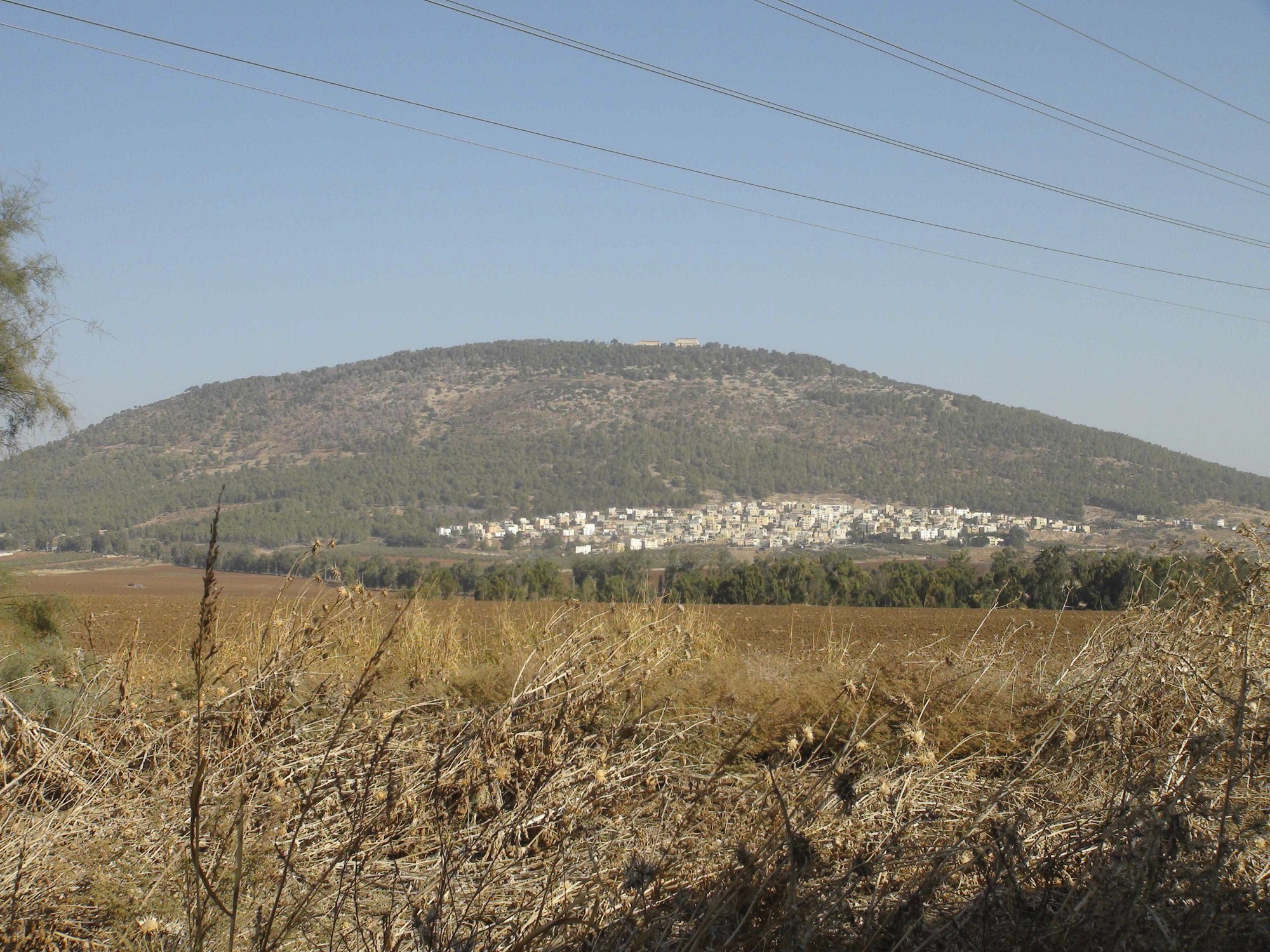
Today’s Feast of the Transfiguration was celebrated as far back as the 4th century by the Syrian church. Then, it spread to other eastern churches, and finally in the 15th century came into our Roman liturgy, probably through western pilgrims to the Holy Land who visited the great mountain shrine of the Transfiguration in Galilee and brought the feast back to Europe. Some of our feasts have come to us like this– from pilgrims to the Holy Land.

All three synoptic gospels have the account of Jesus ascending the mountain with Peter, James and John after he has announced his passion and death. He’s transfigured before them. His face is changed in appearance,“dazzling like the sun,” Matthew’s gospel says. “His clothes are dazzling white;” the other gospels say, reflecting a body we can’t look at directly. It happens “while he was praying,” Luke says, who always sees prayer opening up the mysteries of God.

The mountain in the scriptures is a favorite place where God reveals himself. It’s where you can take in everything, everywhere. Later this week in our readings from Deuteronomy (4,32-40), Moses tells the children of Israel to remember that God’s voice came from the heavens and spoke to them from the mountain of Horeb and led them by a cloud to a land that was their heritage.

Now, God speaks from the Mount of Transfiguration. A cloud envelopes Jesus and his disciples. “This is my chosen Son; listen to him,” God says. “Keep this mystery in mind,” Peter says in his letter; it’s “like a lamp shining in a dark place, until the first streaks of dawn appear and the morning star rises in your hearts.”

Our liturgy today tells us that Jesus “revealed his glory to his disciples to strengthen them for the scandal of the cross,” that’s the dark place God wishes to lighten. “His glory shone in a body like our own, to show that the Church, which is his body, would one day share his glory,” our liturgy says. So our bodies share this mystery with him.

Moses and Elijah are there speaking to him, Luke says, “about his passage, which he was about to fulfill in Jerusalem.” The passage from Egypt to the Promised Land will take place now through the mystery of his passion and resurrection.

The disciples fall silent after experiencing this mystery. They can’t explain it, even if they wanted to. So they fall back on the familiar stories of Moses and Elijah who spoke to God face to face. The mystery of the death and resurrection of Jesus is a mystery we anticipate, we cannot explain. Later, his disciples will say simply: “We have seen the Lord. He is risen, as he said.”

Ann and Her Daughter Mary

ann
A few years ago on pilgrimage to Jerusalem I visited the western wall that once supported the ancient Jewish temple where Jesus worshipped and taught. He announced that he would replace this temple through the mysteries of his death and resurrection. Some years later, in AD 70, the temple was destroyed.

The day I visited this holy place, Jewish mothers and their daughters were fervently praying at one section of the battered wall, all that’s left of the glorious buildings that once filled pilgrims with awe and pride. I wondered what they were praying for at this majestic ruin.

Tradition says that the parents of Mary, Ann and Joachim, whose feast we celebrate today, were closely connected to the temple of Jerusalem and may have lived near it or in a town close by. Joachim had a role in providing for the temple, tradition says. Like the Jewish women I saw, Ann and her daughter Mary must have prayed often in this holy place.

What did they pray for; what did they believe? God is here, the Prophet Isaiah said; all the peoples of the earth will stream toward this place when the Messiah comes. Pray even when dreams seem gone. God raises up the poorest to do great things. God’s kingdom will come, no matter how dim the present seems. God works even in ruins.

Ann was old when she conceived Mary, tradition says. Too old to conceive. “Nothing is impossible with God,” the angel said to her daughter when she conceived her Son.

We ask the grace to believe and pray as these two women did. I can’t help thinking that the Jewish mothers and their daughters I saw that day praying at the wall are their descendants too.