Tag Archives: Passionists

The Kingdom of God is Coming, It’s Here: 25th Sunday

To listen to the audio for this week’s homily please select the audio slider below:

Matthew 20,1-19   25th Sunday A

The kingdom of God is coming, it’s here, Jesus says in the gospels. Often he describes the kingdom of God as a harvest, as he does in today’s gospel from Matthew. It’s an abundant harvest, bigger than you think. Pray that God’s kingdom come, he says to his disciples. Pray that it comes here on earth as in heaven. Don’t underestimate the kingdom, the harvest God sends.

It looks like the owner of the vineyard in our parable today has underestimated the size of his harvest. The first crew he sends out at 9 in the morning aren’t enough, so he calls more workers at noon, then 3 in the afternoon. At 5 in the afternoon he’s still adding to his workforce. Looks like he didn’t expect much.

That’s one of the first lessons to draw from the gospel. Don’t underestimate the power of God. Unfortunately, that’s what we do. We can expect too little from God. We forget that his kingdom will come on earth as it is in heaven. We think he has nothing or little to do with human affairs, or our world or the things here on earth.

The workers in the vineyard don’t seem to appreciate a big harvest either. They’re interested in something else– how much they’re getting paid and how much the other fellow is getting paid. The owner’s not fair, they say, because he pays the last workers the same as those who came first to work in the vineyard. They’re concerned with themselves, blinded as they are by envy and jealousy.

“Are you envious because I am generous,” the owner of the vineyard, who now seems to be a figure of God, says to them. Is this another lesson to draw from the parable? Envy and jealousy and measuring everything from our own perspective blinds us to God’s generosity. They blind us to the coming of God’s kingdom.

On his way through the towns of Galilee, Jesus announced the coming of the kingdom of God. He was bringing it to the world. It was an abundant harvest, yet even as he announced it, powerful voices were denying it was true. The scribes and Pharisees called him a false teacher, even his own disciples’ and his own family didn’t understand him. Still, he proclaimed God’s great kingdom. In the darkness of calvary he proclaimed it to a thief on a cross, and then he proclaimed it to his own disciples as he rose from the dead.

But let’s admit it, as we look at our world today we don’t see signs of a great harvest. Where is the harvest Jesus spoke of? Where is the kingdom of God. The kingdom of God seems far off, hardly here or ready to come. We’re living in a post-modern age, they say, when cynicism and questioning touch everything.

More than ever, we need to look at our world, not with our own eyes, but with the eyes of Jesus.

I like the story from John’s gospel describing Jesus meeting the Samaritan woman on his journey from Jerusalem to Galilee. It’s a hot afternoon; Jesus is tired and stops by a well to get a drink of water. It’s not a friendly place; the Samaritans don’t like the Jews and the Samaritan woman doesn’t like this Jew sitting at their well. But as they talk a new world appears, a light pierces the darkness and  the woman recognizes Jesus as the Messiah and calls the people of her town to see him.

“‘In four months the harvest will be here’”? Jesus says to his disciples, “ I tell you, look up and see the fields ripe for the harvest” He sees the kingdom of God coming in this small unexpected event. In the awakened faith of the woman before him, he sees the kingdom come.

That’s one of our greatest challenges today, to look up and see, in simple signs and in spite of everything, that the fields are ripe for the harvest. The kingdom of God has come.
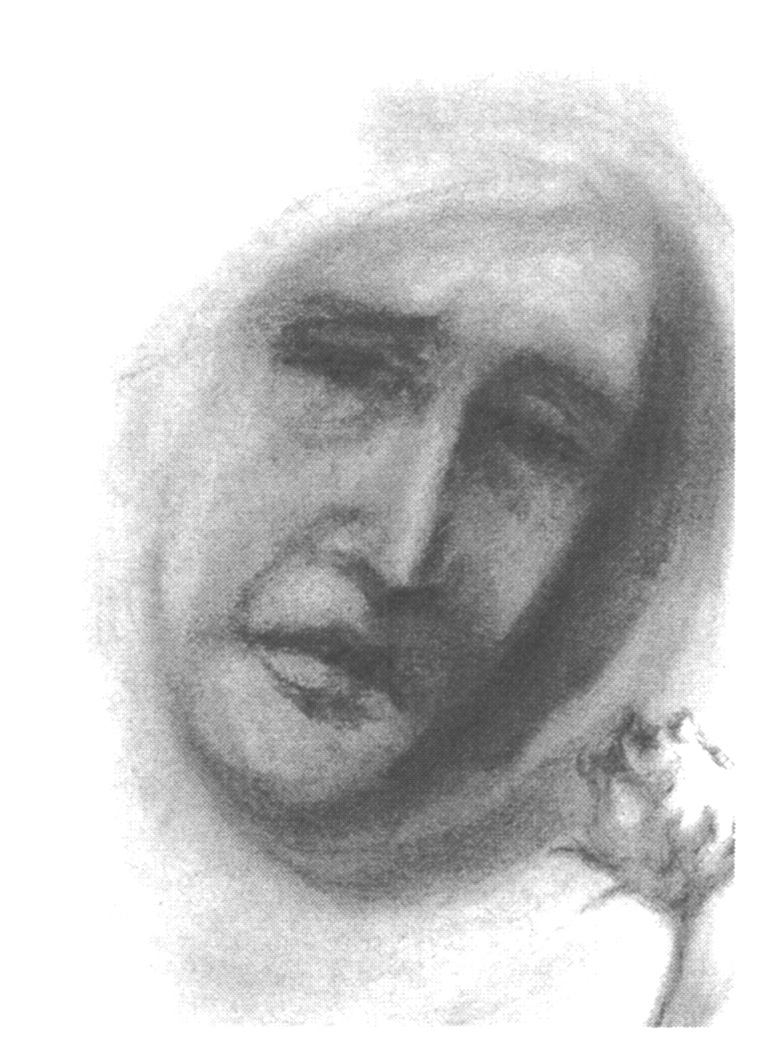
Mother of Sorrows

Mary sorrow

We remember the sorrows of Mary on September 15th, the day after the church celebrates the Feast of the Exaltation of the Cross. In John’s Gospel Mary stands bravely close to Jesus while others flee the dark happenings on Calvary. Standing beneath the cross of her dying Son was certainly her greatest sorrow.

Her sorrows were not confined to Calvary, however. They began earlier.  Early in Luke’s gospel, the priest Simeon in the temple, taking the Child Jesus in his arms tells Mary this child will cause a sword to pierce her heart. His words were etched in her mind as she left the temple holding her endangered Child. Fleeing to Egypt, she protected him in her arms. Later, she sought him anxiously when he was lost on a Jerusalem pilgrimage.

These were hardly all the sorrows she faced, though. What of her long waiting in Nazareth, not knowing all to expect? What of the years her Son ministered in Galilee, when he faced rejection even from his own family? What of the ominous journey to Jerusalem? Those years brought, not physical sufferings, but sufferings of another kind.

Mary’s sorrows were the sorrows of her Son. Mary’s cross was a daily one she bore day by day.  “O Lady Mary, thy bright crown is no mere crown of majesty. With the reflect of his own resplendent thorns, Christ circled thee.” (Francis Thompson)

Mary teaches us  that our sorrows, whatever they may be, reflect the Cross of Jesus. They will not crush us or beat us down; they lift us up to glory.

How do you tell people they’re wrong? 23rd Sun. A


To listen to the audio of today’s homily please select below:

One of the hardest things we have to do in life is to tell somebody they’re wrong. Our readings today are about that. You need help correcting people. The Gospel of Matthew (18,15-20) today suggests that sometimes help may be sitting right next to you.

Awhile ago, on a crowded train from Toronto to New York I had  hoped to pass the long ride by napping and reading a book. But around Buffalo, two women got on and sat across from me.  One of them must have been hard of hearing because at least half the car could hear her conversation.

They never stopped talking, about food, clothes, their families, their health, the different medicines they were taking.  Then, one woman brought up her husband. She had had trouble with him. After the kids got married, he started to drink and he got nasty when he drank. It got so bad, she said, that she told him to get out of the house and get straightened out. She wasn’t going to leave the house; he had to get out.

Well, he got mad, she said, and went to live his brother for awhile, but after a couple of months he was back. He told her she was right. He stopped drinking. It was a hard thing being so strong with him, she said, she loved him very much,  but she remembered the story in the bible where the father threw his son out of the house and after awhile he came back.

The other woman said she knew that story too and wondered where it was in the bible.

I was ready to chime in and tell them that story’s in St. Luke’s gospel, chapter 15, and actually the father didn’t throw the son our of the house. He left on his own. But something told me to keep my mouth shut.

Just then, another woman a few seats down the aisle turned to the women and said, “You must be angels sent by God. I’ve been praying for months, trying to figure out what to do with my son, and I think you’ve got the answer.”

Her son was on drugs, she said. “He’s a good kid, but he’s in the wrong crowd.” He was having a bad influence on his younger brothers and sisters, but she felt she had to keep him home. He just couldn’t manage on his own. Her husband was no help; he wanted to ignore the problem.

She talked to her minister in church and he told her she was being too easy on her son, but she wasn’t convinced.

Now, listening to these women, she felt God was telling her something. She had to be like that father in the gospel story that threw his son out of the house. She was going to look that story up in the bible.

Again, I was going to tell them the location of the story in St. Luke’s gospel and that the father doesn’t really throw the son out of the house, but I thought better of it. Maybe the version they had in their minds was the version God meant them to hear.

By the time the train reached Albany where two of the women got off, they were all fast friends. They had exchanged phone numbers and emails and promises to keep in touch, and they were thanking God for this time on the train as a  special grace.

Sometimes we think the scriptures are about a world long gone. But this gospel isn’t about a world long gone. It’s also about those three women– and all of us– who sometimes need to say and do hard things and don’t know how to do it.

God sends help, often in the simplest ways–maybe even on a long train ride. That one, I remember,  ended up in New York City 5 hours late.


22st Sunday of the Year. A. Thinking Like Human Beings


To listen to this weeks homily just select the audio below:

Last week in the gospel Jesus called Peter the rock on which he would build his church. Today he calls him “Satan” and tells him to get away from him.

In the gospels Peter is usually the voice of common sense. That’s what you would expect from a fisherman making his living on the sea. When storms come, get out of their way and head for port.

And so when Jesus speaks of the storms of suffering and death he will face on his journey to Jerusalem, Peter advises him to turn away. “God forbid, Lord, no such thing shall ever happen to you.” The voice of common sense.

But Jesus reminds Peter (and us along with him) that he is thinking “as human beings do.” He even calls him “Satan.” He tells Peter, and all of us, to think as God thinks.

Our readings today remind us of the limitations of human thinking. Jeremiah the prophet says to God in our first reading “You have deceived me.” “You have let me down; you don’t love me; you don’t care.” We only see so far as human beings. When the mystery of the cross casts shadows of sickness, failure and disappointment over us, it’s hard for us to say “I see, I understand, your will be done.”

We’re limited in the way we think. How, then can we think as God wishes us to think? Certainly we can’t know all that God knows. God’s thoughts, God’s mind is infinitely beyond ours.

Thinking like God means knowing the world God made and living in it as God wants us to.

I wonder if the signs of the bread and the wine we bring to the altar can help us see what it means to know the world God made and live in it as God wishes us to live in it.

As we offer the bread to God at Mass we say: “Blessed are you, Lord God of all creation. Through your goodness we have this bread to offer, fruit of the earth and work of human hands, it will become for us the bread of life.”

The bread is a sign of everything, of all creation, we say, creation as it has been given to us by God and creation our hands have fashioned.

Scientists say that our universe came into existence about 15 billion years ago.

About 3.5 billion years ago life began on our planet. The universe is represented in this bread; it holds the story of the universe.

About 200,000 years ago human life emerged on our planet. 200,000 years of human life are represented in this bread. Our lives are part of the human story.

We believe that God created our world and it’s is good. The Book of Genesis tells us that. God has a plan for this universe. The scriptures say there’s wisdom and love in that plan. His kingdom will come.

We all have to care for this world, each of us has a part to play in that greater plan.

But we also know the mystery of evil is at work in our world and the mystery of evil is also represented in this bread.

When Jesus took bread into his hands at the Last Supper we have to see the magnitude of that action. He took all created reality, all human existence, the goodness and evil of life in his hands. He was a sign of God’s love and care for all of it. He took it in his hands and gives it to us, in turn, blessed by his presence.

“This is my body.” “This is my blood.”

How significant it is that he gives himself to us in bread and wine. It’s an invitation to live in this world, depending on his wisdom and power. He will show us the way.


21st Sunday of the Year: Listen to the Prayers


To listen to the audio for the Homily, please select the link below:

One of the most important things we do as Catholics is to come to Mass and pray. I’d like to reflect on the prayers of the Mass, in particular the Eucharistic Prayer. They’re good guides to prayer at Mass, but before reflecting on the prayers themselves I want to say something that has to be said today.

Praying at Mass begins with us being there. Praying at Mass begins with us showing up.

Someone once said “Most of life is showing up.” I don’t think we realize how much we need each other “showing up” in church. Suppose the music ministers didn’t show up, the readers, the ministers of communion, the altar servers, the ushers, the deacon, the priest didn’t show up?

We notice people at Mass week after week, year after year. We encourage each other. I often feel in awe watching someone coming into church in a wheelchair or on oxygen support, or mothers and fathers dragging their kids in. Showing up together is a key to praying at Mass.

We’re at Mass to give thanks. “Let us give thanks to the Lord our God,” the priest says at the beginning of the Eucharistic Prayer. When we celebrate Mass, the Sacrament of the Eucharist, we give thanks to God together.

What does it mean to thank God? The English writer, C.S. Lewis, has a wonderful reflection on thanking God in a little book he wrote on the psalms. (Reflections on the Psalms) Lewis turned away from God for awhile. When he returned and began to pray again he was bothered by the way our prayers urge us again and again to thank God. Why do we keep on praising God, he wondered? Was God a “prima donna” or a dictator looking for our adulation?

After thinking about it, Lewis said he realized that thanksgiving and praise are embedded in ordinary human life. To be thankful and to praise are actually signs of a healthy life. Ordinary life rings with praise and thanksgiving, he wrote:

There’s “…praise of weather, wines, dishes, actors, motors, horses, colleges, countries, historical personages, children, flowers, mountains, rare stamps, rare beetles, even sometimes politicians and scholars.”

Healthy people praised most, Lewis noticed; cranks and malcontents praise least. He came to the conclusion that praise and thanksgiving are indications of an “inner health made visible.”

That’s true, isn’t it? People who are inwardly healthful praise most; cranks and discontented people praise least. The self-absorbed see only themselves and their little world. Those who lose an appreciation of life because of hurt, loss, or disappointment can lose the ability to enjoy and give thanks and praise.

When we come to Mass, it seems to me, we’re looking for the inner health God wants us to have. It’s so easy to sink in smallmindedness, self-absorption. It’s so easy to let the hurts and sufferings of life get us down. We need to be lifted up to a higher vision of things.

That’s what happens in the mystery of the Eucharist. Do you remember the prayers at beginning of our Eucharistic prayer, the little dialogue that introduces the prayer?

“The Lord be with you.” “And with your spirit.”

“Lift up your hearts.” “We have lifted them up to the Lord.”

“Let us give thanks to the Lord, our God.” “It is right and just.”

The Lord is with us, lifting up our hearts and minds to a greater world that God wants us to see. Like the water poured into the wine, we enter the prayer and vision of Jesus Christ and are lifted up into another, higher world, the world of God’s creation. We give thanks to the Lord, our God in that world, and it’s the right thing to do.

In the Eucharistic Prayer we give thanks for the special gift of the God of Creation: Jesus Christ, who came into the world as God’s Son. Remembering the mysteries of his birth, his life, his death and resurrection, we give thanks for him. And he blesses us with the blessings of his birth, his life, his death and resurrection.

He refreshes us by these mysteries. We’re fed by them. They’re food from heaven that gives us a heavenly vision.

Listen carefully to the prayers of the Mass and make them your own

Water and Wine

A woman at the church where I go on weekends stopped me recently and asked for the pope’s address; she wanted to write him about something. I was curious and enquired what it was about.

 “The prayers at the offertory of the Mass are so beautiful,” she said, “and I want him to tell all the priests to recite those prayers out loud so we can hear them.”

 I’ve heard comments like hers lately; people are listening to the prayers at Mass and elsewhere and want to know more about them. There’s criticism of the present translations of our Mass texts, of course, but still the prayers and actions of the Mass remain the best ways we have to understand the mystery we celebrate.

The woman was especially touched by the mingling of water with the wine that takes place after they’re brought to the altar. As he pours a little water into the wine, the priest says:

“By the mystery of this water and wine

may we come to share in the divinity of Christ

who humbled himself to share in our humanity.”

The wine represents the humble Christ who comes into our world that we may share in his life. The water, so insignificant, represents us who become sharers in his divinity in this mystery.

A priest I know helped out in one of Mother Teresa’s missions in India for awhile and when he was leaving, he told her he was going to pray for her and her sisters. “Just remember us when you put the little drops of water into the chalice at Mass,” she told him.

We’re the water mixed with wine.

The Storm at Sea: 19th Sunday A

You can hear the homily here: 

I visited Magdala along the Sea of Galilee a few months ago and since then I think differently about the apostles, especially  fishermen apostles like Peter and Andrew, James and John. Magdala, the city of Mary Magdalen, was a center for the fishing industry in Galilee in Jesus’ time, according to archeologists who recently uncovered the city.

It evidently was a prosperous place, and so far from being “poor and ignorant” many of the Galilean fishermen were well-off, savy businessmen who knew their way around.

Did Jesus choose them and the tax-collector, Matthew, because they knew the territory well and would be good guides to  the places he wanted to visit? They knew where to go and how to get there: the Sea of Galilee was their usual highway

But a storm like that described in our gospel today (Matthew 14,22-33) would shake anybody, even the most self-asssured.

When we read a miracle story like the calming of the sea and someone walking on water, we shouldn’t just stop in amazement at the power of Jesus. There’s a lesson to be learned in the story. What’s the lesson here?

Perhaps  like Peter and the rest of the disciples we can easily fall into thinking that there are some things beyond God’s power–and ours– to do. These were confident men, yet their faith was shaken, like ours often is. When told by Jesus to walk on the water, Peter believed up to a point, then he said, “This can’t be; it’s not possible; it’s beyond his power and mine to do.” In fear and doubt he began to sink.

Doesn’t this happen to us too? We believe, up to a point, and then we doubt. Our doubts about God’s power can be brought about by major events in our world, as ovewhelming as a storm at sea. Wars, terrorist attacks, global warming. How quickly we throw up our hands as if this is all beyond God’s power and ours.

We are all in the same boat. Take a look at the boat on the Sea of Galilee–it’s  the world on the sea of history, it’s the church in time. In storms, they may both look like they’re going to sink. But they wont. Jesus is in the boat.

That’s what the mystery of the Incarnation tells us.

Father Quentin Amrhein (1926-2014)


Sower


Yesterday I preached the homily at the Mass for Christian Burial for Father Quentin Amrhein, a Passionist priest who died at Queens Hospital, New York City, on July 31st and was buried at St. Paul’s Monastery, Pittsburgh, Pa., August 7, 2014. He was a member of the community at Immaculate Conception Monastery, Jamaica, New York, at the time of his death.

“Each of us is a witness to the gospel; we’re living gospels, however imperfect we may seem. What gospel did we see in Quentin?

We’ve been reading the parables of Jesus recently at Mass; the parable of the sower; the parable of the treasure hidden in the field, the mustard seed, the parable of the net cast into the sea. I wonder if Quentin’s life might tell what some of those parables mean. Parables need to be explained and sometimes the best explanation comes, not from books, but from people who are living gospels.

God the Sower is one of Jesus’ most important parables. He’s the sower who sows seed in the field of humanity. He never stops sowing; from the first moment of creation, from the first moment of our lives, God is at work sowing good seed. Sometimes the growth is quick and obvious, sometimes it isn’t. Sometimes the growth is delayed, but all our life long, God is the sower sowing good seed. And he doesn’t stop.

In a poem called “Putting in the Seed” Robert Frost describes what he calls “a farmer’s love affair with the earth.” It’s spring and getting dark, but the farmer keeps working his field. Someone from the house goes to fetch him home. Supper’s on the table, yet he’s a

“ Slave to a springtime passion for the earth.

How Love burns through the Putting in the Seed

On through the watching for that early birth

When, just as the soil tarnishes with weed,

The sturdy seedling with arched body comes

Shouldering its way and shedding the earth crumbs.”

Isn’t that a good image of God: a Sower, passionately in love with our world, casting saving grace on it in season and out, and watching it grow?

God blessed Father Quentin. He came from a good Pittsburgh family with strong Passionist roots. His grand uncle, Father Joseph Amrhein, served the Passionist community in Rome and in the United States. His uncle, Father Leonard Amrhein, was a missionary in China and then the Philippines. His younger brother, Raphael, was a Passionist priest, and his sister, Mary, was a Passionist Nun who died a missionary in Japan. Quentin was always proud and grateful for his family.

He was blessed by God with a keen mind and an exceptional memory. Those who knew him marveled at the way he recalled in detail things that took place 20, 30, 40 years ago. I remember him telling me the line-up of the 1944 Pittsburgh Pirates.

But much of Quentin’s life was clouded by sickness of one kind or another, which prevented him from doing many of the ministries a Passionist priest does. He loved preaching, yet for many years he wasn’t able to preach. He loved to study, and yet sickness kept him from doing that as well.

What we noticed in him in recent years, though, was not the sickness but the way he persevered through the suffering and disappointments that sickness brings. He wasn’t beaten by it; he fought the good fight. He was an exceptional fighter. At our wake service for him in Jamaica, a doctor and members of the medical community who cared for him through recent life-threatening crises spoke admiringly of Quentin’s determination to live. He came back again and again from death’s door.

How did he do it? Was it simply him? Was it his strong personality, good constitution, or German determination? We usually explain things like this in purely human terms.

Yet, if the gospel is at work in us, was God at work in him? Do we see in him God the Sower tending the life of his seed and seeing it grow?

Last week before he died, Father Quentin celebrated and preached at the community Mass at our Jamaica monastery. He hadn’t done that in years. The thirty of us who were there that day will remember that Mass for a long time, I think. It was a beautiful Mass: we were watching a promise come true. A resurrection, a Lazarus come to life.

It was like watching the birth of a seed, as Frost describes it in his poem:

“The sturdy seedling with arched body comes

Shouldering its way and shedding the earth crumbs.”

I said to Father Quentin after that Mass, “ I hope you are going to do that again.” “Yes, I am,” he said, “ the vicar has me down for celebrating Mass for the Feast of the Transfiguration.” Then he went on to tell me with his usual enthusiasm, how the Lord shares his glory with us as he did Moses and Elijah and the apostles. But first, we have to follow him in suffering, as he told his apostles when he predicted his passion to them.

Last Wednesday was the Feast of the Transfiguration, but Quentin was not going to preach that day. God was going to bring him up the mountain to share his glory with him.

We’re living gospels and Quentin was a gospel to us. He’s a reminder that God the Sower is always at work in the world, in a world where we think that people with long term disabilities are going nowhere, in a world where we think that life ends with youth, in a world where we think that suffering has no meaning, where we think there’s no resurrection and God has given up on us.

The Gospel of Quentin. I know he would be the last to call it his gospel, because he saw it as the gospel of Jesus, whom he served and love and prayed to and relied on all his life. Today as we commend him to God we read from the Gospel of John a passage he himself chose for this Mass.

“The hour has come for the Son of Man to be glorified. Amen, amen, I say to you, unless a grain of wheat falls to the ground and dies, it remains just a grain of wheat; but if it dies, it produces much fruit. Whoever loves his life loses it, and whoever hates his life in this world will preserve it for eternal life. Whoever serves me must follow me, and where I am, there also will my servant be. The Father will honor whoever serves me.”

The seed has fallen to the ground, but it will bear much fruit.”

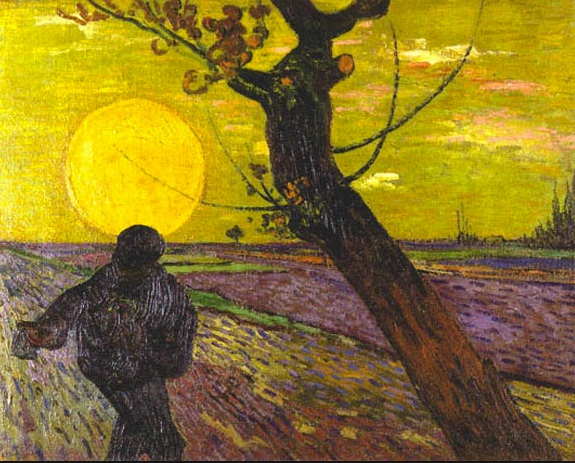
(Vincent Van Gogh painted the Sower (above) many times and found the subject filled with spiritual significance. He once said “one begins to see more clearly that life is a kind of sowing time, and the harvest is not here.”).

The Gift of Prayer


Do you pray? Often or just occasionally? Is prayer important to you?

These are essential questions for our life of faith. Like breath in the human body, prayer makes our spirits live. Without it, they die. Prayer helps us live and grow spiritually.

Why pray?

     Prayer is God’s Gift

Prayer is a gift of God. “Gift” is a good word to describe prayer, because praying is not something we can do ourselves. ” We do not know how to pray as we ought,” scripture says. (Romans 8,26) God gives this gift to us.

Why? Because God loves us and wants to draw near to us as a friend. How strange that sounds! God all-sufficient, all-powerful, all-knowing, wants to draw close to be our friend. God calls us his friends and looks for our company and hears our prayer. What seems unbelievable is true.

At the same time, prayer fulfills a desire we have as human beings to know God. We’re made in God’s image, and something in our being thirsts for the One who made us. It’s a thirst described in the psalms:

“O God, you are my God, for you I long. For you my soul is thirsting. Like a dry weary land without water… so my soul longs for you, my God.”

We can’t be satisfied unless we are draw near to God. “Our hearts are restless,” St. Augustine says, “until they rest in you.” When we pray, we rest in God.

God gives that gift generously, without considering our worthiness or unworthiness. Sinners as well as saints can pray. People of every religious tradition, or no religious tradition at all, receive the gift. It’s given to every human being. We’re all called to pray.

(cf. The Catholic Catechism: The Universal Call to Prayer. 2566-2567)

All are called to pray

“All” are called to pray. Surprisingly, some who think they are unworthy or ungifted may pray best and be graciously heard. That’s what Jesus taught in his parable about the Pharisee and the Publican who together went up to the temple to pray. The Publican, an outsider who thought himself unworthy of approaching God in prayer, was found more pleasing by God than the Pharisee, a professionally religious person, who seemed to pray so effortlessly. (Luke 18,9-14)

Prayer is God’s gift to the strong and the weak, to the smallest child and frailest of the old. It’s given to those who say, ” I’m not really religious; prayer is beyond me.” It’s given to you, no matter who you are.

That’s not to say we can’t refuse to pray or neglect it. Like any gift, prayer has to be received and, as we know, we can throw gifts away. “If you knew the gift of God,” Jesus said to the Samaritan woman at the well. A Gift was there before her eyes. At first she was blind to it, then she enthusiastically received it.

Don’t go through life leaving the gift of prayer unused. Thankfully, it’s always there to be taken up!

In the prayers of the church, you often find an acknowledgment that prayer is God’s gift and a request that God give and strengthen that gift in us. At the beginning of her daily prayers, the liturgy of the hours, the church prays two verses of the psalms.

O Lord, open my lips
and my mouth shall proclaim your praise.

O God, come to my assistance.
O Lord, make haste to help me.

Simple, truthful words. I cannot open my lips in prayer unless God give me the gift. O God, come and assist me; help me approach you.

God graciously gives us this beautiful gift, hastening to help us open our lips and our hearts. Delighting to give us the gift of prayer, God welcomes us into his presence to share his life with ours, his love with our love.

Prayer’s God’s precious gift; cherish it always.


Weeds and Wheat (16th Sunday)

Here’s the audio for my homily:

In his parables Jesus often presents God as a human being doing things human beings do. He’s a sower sowing seed, an owner of a vineyard with people working for him, a father dealing with a wayward son, a shepherd caring for his sheep, a king whose son has been killed.

The stories bring God into everyday life, where he interacts with people and shares their cares and concerns. Like Jesus, his Son, God enters into the joys and problems of human life in this world.

In the parable we read today, God is a farmer who has sown seed in his field, but afterwards an enemy comes and sows bad seed among the good. Weeds grow up with the wheat. God, as the farmer, faces one of the great problems we all face–the problem of evil.

Why would anyone want to destroy a good field someone else has planted: revenge, jealousy, envy, or just reckless disregard for what’s good? A further question is: what do you do about this?

The farmer’s servants react with fear when they discover weeds growing up with the wheat.. “Do you want us to go out and pull the weeds up? “ The farmer tells them to let the wheat and the weeds grow till the harvest. Then they can be separated; the wheat gathered in barns and the weeds burned and destroyed.  

A lesson to draw from this parable is “Don’t be afraid of evil.” It’s an important lesson. Certainly we have to recognize evil and fear it, but not get overly frightened by it. God doesn’t according to our parable. Like the farmer who has confidence in his wheat, God has confidence in the good he has put into this world.

His patience allows evil, because he is confident in the power of what’s good. God is not afraid of an imperfect world, and neither should we be afraid of it.  God has confidence in the power of the good, and so should we believe in the good that’s there in life.

In parables like the one we read today, God works in our imperfect world. He’s a farmer who has to deal with a enemy;  He’s a father who doesn’t have perfect children, a shepherd who has to manage wandering sheep, a king whose subjects are bad enough to kill his only Son. 

Jesus is the fulfillment of the parables. He is God present in our world, to care for it, to give it life, to bring it to harvest. He is God’s Wheat, whom we receive to strengthen the wheat God has sown. He is stronger than any evil.