Tag Archives: Passionists

Ash Wednesday and Mystical Death

for Swahili

A letter St. Paul of the Cross wrote about “mystical death” may help us celebrate Ash Wednesday.

“You can live as a true servant and friend of God by dying each day: ‘We die daily; for you are dead and your life is hidden with Christ in God.’ It’s a mystical death I want you to undergo. I’m confident that you will be reborn to new life in the sacred mysteries of Jesus Christ, if you die mystically in Christ more and more each day, in the depths of the Divinity. Let your life be hidden with Christ in God…

“Think about a mystical death. Dying mystically means thinking only of living a divine life, desiring only God, accepting everything God sends without worrying about it. It means ignoring everything else so that God can work in your soul, in the sanctuary of your soul, where no creature, angelic or human, can go and where you can experience God working and being born, as you mystically die.

“But I’m in a hurry, and this note is getting too mystical, so listen to it with a grain of salt, because we don’t get it.”    (Letter, Dec 28, 1758)
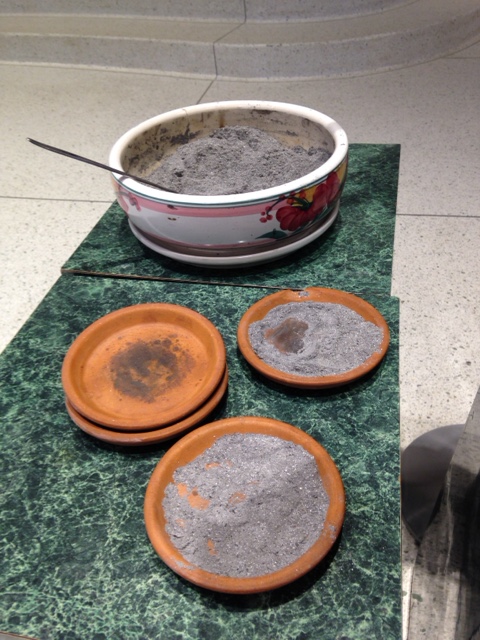
ashes

Ash Wednesday’s a good time to try to “get” what the saint is saying.  Ashes are placed on our foreheads in the form of a cross and a few simple words are said: “Remember you are dust and to dust you shall return.”

A reminder we will die. Yet, this brief symbolic act says much more. A daily mystical death is now taking place within us. Our physical life will end, the ashes tell us; the day and hour unknown. But ashes in the form of a cross say Jesus Christ changes death. “Dying, you destroyed our death. Rising, you restored our life.” Jesus Christ has made his risen life ours. His gift is hidden from us; what he promises we will experience when we enter his glory.

Meanwhile, the mystery of his death and resurrection is at work in us now. Enter this mystery mystically, St. Paul of the Cross says. Daily, deliberately, attentively accept God working within you. A new life is being born in you, though you do not see it.  Desire it, accept what God sends, without worry. God is working within you through the mystery of the Lord’s cross.

Yet, the saint says in his letter that he has to hurry off, like the rest of us, to something else. He’s going somewhere, he has something to do, someone to see, and he tells his correspondent that you can’t think about deep things too long. No, we can’t.

And so, we only glimpse the mystery of the ashes that placed on us. Still, let’s hear the Lord’s voice in today’s readings and the signs of the liturgy. Ash Wednesday is an ambassador God sends to remind us he is at work in us; he’ll send  graces through the days of Lent and Easter. Yes, all the days of our life.

Embrace his cross each day and die mystically and be born anew.

En Espanol

Una carta que San Pablo de la Cruz escribió sobre “la muerte mística” nos podría ayudar a celebrar el Miércoles de Cenizas.

“Tú puedes vivir como un verdadero ciervo y amigo de Dios si murieras cada día: ‘ Morimos diariamente; porque tú estas muerto y tú vida está oculta adentro de Cristo en Dios.’ Es una muerte mística a la que yo quiero que tú te sometas. Tengo confianza de que tú renacerás a una nueva vida dentro de los sagrados misterios de Jesús Cristo, si tú mueres misticamente en Cristo más y más cada día, en las profundidades de la Divinidad. Deja que tu vida se pierda dentro de Cristo en Dios…

“Piensa sobe la muerte mística. Morir misticamente significa pensar solamente en vivir una vida Divina, deseando solamente a Dios, aceptando todo lo que Dios manda sin preocuparse sobre ello. Significa ignorar todo lo demás para que Dios pueda obrar en tu alma, en el santuario de tu alma, donde ninguna criatura, angélica o humana, puede ir, y donde tú puedas sentir a Dios trabajando y naciendo, mientras tú mueres misticamente.

“Pero, estoy apresurado, y esta nota se está poniendo muy mística, así que escúchala pero no te obsesiones, porque esto nosotros no lo podemos captar.”( Carta,  28 de diciembre,1758)

El Miércoles de Cenizas es una buena ocasión para poder captar lo que el santo está diciendo. Cenizas son untadas sobre nuestras frentes en la forma de una cruz y unas sencillas palabras son dichas: ” Recuerda que tú eres polvo y al polvo retornarás .”

Un recuerdo de que vamos a morir. Sin embargo, este breve acto simbólico dice tanto más. Una muerte mística diaria en este momento está tomando lugar dentro de nosotros. Nuestra vida física va a terminar, nos dicen las cenizas; el día y la hora, desconocidos. Pero cenizas en la forma de una cruz nos dicen que Jesús transforma la muerte. ” Al morir Tú destruistes nuestra muerte. Resucitando, restaurastes nuestra vida.” Jesús Cristo ha convertido su vida resucitada en nuestra vida. Este regalo de Él está escondido de nuestros ojos; lo que Él promete lo experimentaremos cuando entremos en su Gloria.

Mientras tanto, el misterio de su muerte y resurreción está operando adentro de nosotros. Entra adentro de este misterio misticamente, nos dice San Pablo de la Cruz. Diariamente, deliberadamente, atentamente acepta a Dios obrando dentro de tí. Una nueva vida está naciendo en tí, aunque no lo veas. Deséalo, acepta lo que Dios te manda sin preocupación. Dios está obrando adentro de tí a través del misterio de la cruz del Señor.

Sin embargo, el santo dice en su carta que está apurado y tiene que irse, como el resto de nosotros hacia otra cosa. Va para algún lugar, tiene algo que hacer, alguien que ver, y le dice a su corresponsal , que no se puede estar pensando sobre cosas profundas por mucho tiempo. No, no podemos.

Y así, nosotros solamete vislumbramos por un segundo el misterio de las cenizas que untan sobre nosotros. De todas maneras, escuchemos la voz del Señor en las lecturas de hoy y en los signos de la liturgia. El Miércoles de Cenizas es un embajador que Dios nos manda para recordarnos que Él está operando dentro de nosotros; Él nos mandará Su gracia a través de los días de Cuaresma y de Pascua. Sí, y todos los días de nuestra vida.

Abraza su Cruz cada día y muere misticamente para poder renacer.

Swahili
Lent

Jumatano Ya Majivu
Padre Evans FwambaCp
Mt. Paulo Wa Msalaba aliandika, “Kifo ni fumbo” na kinaweza kutusaidia kusherehekea vyema Jumatano ya Majivu. Maisha kwa watumishi wa kweli ni kuwa marafiki wa mungu, kwamba tunakufa kila siku; kifo chetu na kuishi vimefichika kwa kristo na kwa mungu. Hiki ni kifo ambacho ni fumbo ambalo, nina hakika kwamba tutazaliwa katika maisha mapya kupitia mafumbo matakatifu ya Yesu Kristo, kadiri tunavyo kufa zaidi na zaidi kila siku katika fumbo la kifo cha Kristo na katika undani wa mungu. Tunatambua maisha yetu yote yamefichika ndani ya kristo na mungu.

Fikiria juu ya kifo cha fumbo. Kifo cha fumbo kinamaanisha kufikiri maisha ya kimungu, kumtamani mungu peke yake. Kupokea mapenzi ya mungu bila wasiwasi wowote. Hii inamaanisha kudharau kila kitu ili mungu afanye kazi ndani ya mioyo yetu, ambapo hakuna kiumbe chochote kinaweza kuingia wala malaika au mwanadam. Hapo tunaweza kuona kazi ya mungu ndani yetu katika kufa kwetu ambayo ni fumbo.
“Ila nina haraka, na maandishi haya yanakuwa fumbo, basi yasikilize na punje ya chumvi kwani hatuwezi kuelewa.” (Barua, Dec 28,1758)

Tunapopakwa majivu, ishara ndogo ya msalaba hafanywa kwenye paji la uso na maneno yafuatayo husemwa, “Kumbuka wewe u mavumbi na mavumbini utarudi.” Hiyo alama ya msalaba inamaana kubwa sana. Inatukumbusha kwamba tuliumbwa kutoka udongoni na humo udongoni tutarudi. Kwamba maisha ya mwanadam ni msalaba na kifo ni fumbo kwetu.

Tunakumbushwa kwamba maisha yetu ya kimwili yataisha na kwa ishara ya msalaba, kifo chake Kristo kitabadili maisha yetu kwa ufufuko wake na kuturejeshea uhai.Majivu yanatukumbusha kwamba sisi hatujui mda wala siku tutakapokufa. Mt. Paulo anasema kwamba tafakari kila siku na kupokea kwa makini kazi ya mungu inayofanyika katika maisha yako. Maisha mapya yanazaliwa ndani yako, ingawa huwezi kutambua au kuona.

Mungu anafanya kazi ndani yako kupitia fumbo la msalaba wa Yesu.
Tunapopakwa majivu tunatafakari juu ya msalaba na maisha yetu. Leo tusikilize masomo na ishara za liturijia. Jumatano ya majivu ni kama balozi aliyetumwa na mungu kwetu kutukumbusha kwamba mungu anafanya kazi maishani mwetu. Katika mfungo huu mtakatifu wa kwaresima, mungu anatutumia neema katika kipindi kizima cha kwaresima na pasaka, ndio, na katika maisha yetu yote.
Tupokee msalaba wa Kristu kila siku na tuwa tayari kufa na Kristu katika fumbo la mateso na kifo chake ili tuweze kuzaliwa upya.

Mission: St. Joseph, Keyport, NJ

IMG_1100

I’m leading a 3 day mission at St. Joseph Parish in snowy Keyport, New Jersey, ending Ash Wednesday. The theme of the mission is: Following Jesus Christ. Last night, we remembered how Jesus called others to follow him into the world. Parishioners read from the call of the disciples from St. John’s gospel and I spoke about the way Jesus in Mark’s gospel led his disciples into the town of Capernaum, into its synagogue, the house of Peter and then on the road where they met a leper.

Today Jesus calls us to go with him into our world, into our towns and cities, our churches, our homes and along the road where we meet the poor, the lepers of today. He’s leading us there.

In the catechesis I suggested we look again at the simple ways we were taught to pray, like the Sign of the Cross and the Our Father. In prayer we come know Jesus Christ. For our closing rite we held lighted candles, symbols of our baptismal call. We listened to a wonderful testimony from a couple who returned to church recently; the choir provided inspirational music. Afterwards there were refreshments in the parish hall.

Praching (2)

Tonight we turn to the Passion story of Mark. In our catechesis I suggested reading the bible during Lent, because we can know Jesus Christ through the bible. In recent times our understanding of the bible has grown as archeologists, historians and other studies enlarge what we know of the world Jesus lived in and the early writings that tell of him. The New American Bible Revised Edition is a good choice to read because it contains the same translations read in the liturgy and its notes are up to date and well written.

Knowing more about the books of the bible can help us understand them better. For example, the Gospel of Mark, generally considered the earliest gospel, was probably written in Rome for Christians who had been shaken by a fierce, unexpected persecution under the Emperor Nero. The persecutions caused Roman Christians to question their faith in the light of this absurd injustice.

Mark’s gospel doesn’t answer their questions. Instead, it presents the innocent Jesus as he faces suffering and death holding on to a belief he is in his Father’s care. From death, he will rise again.

Tonight we read from the story of the Passion of Jesus in Mark and reflect on its meaning. We’ll also hear a testimony from one of our young parishioners here at St Joseph’s and be given a small cross as a reminder of Jesus’ words, “Take up your cross and follow me.”

Come With Me

Jesus garden

You went into the garden and fell to the ground
and prayed
alone,
yet all humanity was there
holding the cup of death
and hearing itself in your words.
“Father, if it possible, let this cup pass from me.
The cup of death.
you drank
contained our fears and cries too,
our sweat of blood.
“Your will be done,” you said.
“Your will be done,”we say
and wait for an angel to strengthen us.

The Consecrated Life

This year we’re remembering the Consecrated Life in the Catholic Church.  Pope Francis asked religious and religious communities this year to remember their past with gratitude, to live in the present with passion and to embrace the future with hope.

The other day I was on the internet browsing through iTunes University, where you can get courses–most for free– from various universities on all kinds of subjects. I noticed a course from Yale, given by Professor Paul Freedman on monasticism and early religious life. I have an interest in that period, so I thought I’d see what the historian said to his students about monks in monasteries and hermits in the desert.

Freedman knows a lot about early monasticism and its history, people like Benedict , Augustine, Anthony, Martin of Tours. He offers some interesting insights, as you would expect from a Yale professor, but after listening to his lecture I’m not sure he really appreciates or understands what religious life is all about.

For him monks and the hermits were people who turned their back on the world to pursue a life of prayer. They gave up everything to be with God and separated themselves from everyday life. Because they did that, other people sought them out as intercessors. Ordinary people looked up to them because they’re above them, as it were. They’re holy people who intercede before God for you.

Certainly religious have that intercessory role. But the Epistle to the Hebrew, which we’re reading these days at Mass, reminds us that the one who intercedes must know and experience human life and its weakness. Jesus did that. He is a compassionate high priest, not because he turned his back on human life but because he embraced it. A compassionate high priest, he embraced the cross of human experience.

I’m not sure Professor Freedman appreciates that element of the consecrated life. Anthony in the desert and Martin of Tours in Gaul were wise teachers to whom others came, not just to ask for prayers, but because they knew the human heart. Freedman gives the example of Simon Stylites, the Syrian who lived on top of a pillar for years. People came from all over and built ladders to reach him and ask for prayers, Freedman says.

They weren’t only asking for his prayers; they wanted Simon’s advice, because from his high pillar Simon saw more clearly into their busy lives than they themselves did.

Indeed, the consecrated life goes beyond intercession and wisdom. Over the centuries, religious communities blazed trails into the future for the church and the world. They created new forms of life and culture, they provided missionaries who drew distant peoples together and thinkers who saw beyond the present. They saw what had to be done and did it. Christopher Dawson shows us the reach of religious life and monasticism in the period Freedman covers in his classic The Making of Europe.

It’s important to reflect on the consecrated life this year. It can be unappreciated. Even people in the consecrated life can get it wrong and miss its dimensions, so let’s do what the pope asks:   remember our past with gratitude,  live the present with passion and embrace the future with hope.


The Presentation of Jesus in the Temple

Presentation

The Feast of the Presentation of our Lord is the last of the feasts of Christmas, even though most Christmas decorations have disappeared awhile ago.

The Feast is based mainly on Luke’s Infancy narrative which begins in the temple with the announcement to the priest Zacharias of the birth of John the Baptist and ends with the presentation of Jesus in the temple by Mary and Joseph. The two elderly Jews, Simeon and Anna represent the faithful generations that have been waiting for the Messiah.

Previously, Luke tells of the poor shepherds, the outcasts waiting in the dark, who are greeted by the angels. In Matthew, the gentiles are invited in the coming of the magi. Now the long wait of the Jewish people is rewarded as old Simeon takes the child in his arms and utters a prophecy that he will bring light to his people.

We bless candles today to symbolize our acceptance of the light of Christ.

God was present in the Temple of Jerusalem, the Jews believed. They prayed there and offered sacrifices to the Lord. Luke would have us see that God’s Son is one with his Father as he is presented in the temple. He becomes the new temple, God present in our midst in a unique way.  He is our new High Priest who unites us to the Father by the sacrifice of himself.

Jesus later claims that role as he teaches in the temple and prays there.

From simple places, Bethlehem and Nazareth, Jesus was taken by his parents to the splendid temple of Jerusalem. From an everyday world where he’s hardly noticed, he’s carried to the glorious place where heaven and earth meet. From a town hidden on a mountain and a cave cut into a hill, he’s brought and placed as Light for the world.

The presentation of Jesus in the  temple is a highly symbolic feast. Here are the readings for Mass.  Here’s how St. Sophronius, an early bishop of Jerusalem, describes it:

“The light has come and has shone upon a world enveloped in shadows; the Dayspring from on high has visited us and given light to those who lived in darkness. This, then, is our feast, and we come in procession with lighted candles to reveal the light that has shone upon us and the glory that is yet to come to us through him. So let us hasten all together to meet our God.

Rejoicing with Simeon, let us sing a hymn of thanksgiving to God, the Father of the light, who sent the true light to dispel the darkness and to give us all a share in his splendor.

Through Simeon’s eyes we too have seen the salvation of God which he prepared for all the nations and revealed as the glory of the new Israel, which is ourselves…   By faith we too embraced Christ, the salvation of God the Father, as he came to us from Bethlehem.

Gentiles before, we have now become the people of God. Our eyes have seen God incarnate, and because we have seen him present among us and have mentally received him into our arms, we are called the new Israel.

Never shall we forget this presence; every year we keep a feast in his honor.”


4th Sunday B: An Explosive Day

To listen to the audio for today’s homily, please select the audio player below:

Our gospel reading this Sunday, like most from the last four Sundays, is from the first chapter of Mark’s Gospel. It describes a day– one day in the life of Jesus–one commentator calls it a “paradigmatic day”– a day you can see everything you need to know about Jesus.

The evangelist prepares us for this day with an account of Jesus’ baptism and temptation in the desert by Satan. At the Jordan River the heavens open and a voice says, “You are my beloved Son; with you I am well pleased.” Immediately, Mark says, Jesus is led by the Spirit into the desert to be tempted by Satan for forty day.

This is God’s beloved Son, but he knows what it means to face evil. He came among us and faced evil.

“After John had been arrested,” Mark continues, “Jesus came to Galilee proclaiming the gospel of God: “This is the time of fulfillment. The kingdom of God is at hand. Repent, and believe in the gospel.”

Jesus goes into Galilee “after John has been arrested,” not the safest time to announce anything, but that doesn’t matter. God’s kingdom is stronger than the powers of this world. It wont be stopped.

Mark’s Gospel is fast paced. As Jesus passes the Sea of Galilee, he sees Simon and his brother Andrew casting their nets into the sea. Jesus says to them. “Come after me, and I will make you fishers of men.” They abandoned their nets and followed him.

He walked along a little farther, he sees James and John, the sons of Zebedee, getting ready to go out in their boat. He calls them and they leave their boat to follow him.

They can’t resist him, Mark’s gospel says. There’s something exciting and commanding about him. They have to follow him.

They come to Capernaum, the town where they all live. It’s the Sabbath Day. They all go into the synagogue and Jesus begins to teach. He amazes the people with his teaching. No one has taught like him before.

But then, as happens all through his life, the voice of evil is heard. A man with an unclean spirit cries out, “What have you to do with us, Jesus of Nazareth?

“Have you come to destroy us?

I know who you are—the Holy One of God!”

Jesus rebuked him and said,

‘Quiet! Come out of him!’ The unclean spirit convulsed him and with a loud cry came out of him.

All were amazed and asked one another,

‘What is this? A new teaching with authority.

He commands even the unclean spirits and they obey him.’”

Of course, when those people leave the synagogue, they tell everybody they meet. Capernaum was a trading center. The news gets out quickly.

“His fame spread everywhere throughout the whole region of Galilee.”

Next Sunday’s gospel from Mark will continue the story of this momentous day. Jesus leaves the synagogue goes into Peter and Andrew’s house in Capernaum and heals Peter’s mother in law. This same day is filled with excitement. Mark ends his account by saying that as the day ends, the whole town in at the door, anxious to hear him, with their sick and those who are disturbed.

I wish I could convey some of the excitement that this gospel wants to convey. When Jesus comes into your town he brings life. Peter and those he calls can’t resist him. They have to follow him to know more. That’s always what Jesus does. He draws us to himself; he sets our hearts on fire.

Of course, he’s always accompanied by the evil of this world. The man with the unclean spirit whom always be there too. “Stay away from us. Get away from us. We want to be left alone. Even if you are the Son of God we want to be left alone.”

“If today you hear his voice harden not your hearts.” What a tragedy that is. not to hear his voice, to harden our hearts.

Friday Thoughts Continued

Friday is the traditional day Christians remember the Passion of Jesus. We’re losing that tradition I’m afraid. Can we do something about it?

The words “Friday Thoughts” came to my mind and so I put some thoughts from Thomas Aquinas and Bernard of Clairvaux on a previous blog. Then I happened to #hashtag Friday Thoughts over at Twitter and came upon #fridaythoughts , a whole world of people probably finishing the week and looking at the coming weekend.

So here are some Friday thoughts:

“Fri-YAY! Welcome back weekend, can’t wait to enjoy you!”

“You can’t climb the ladder of success with your hands in your pocket.”

“In a gentle way, you can shake the world.”

How can we offer #fridaythoughts a reminder of the Gentle One who shook the world this day and brought it hope and life?

Some of them might be interested

Friday Thoughts

When you blend the prose of St. Thomas Aquinas with the poetry of St.Bernard, you get something like this:

“Why did the Son of God have to suffer for us? There was a great need, and it can be considered in a twofold way: in the first place, as a remedy for sin, and secondly, as an example of how to act.

It is a remedy, for, in the face of all the evils which we incur on account of our sins, we have found relief through the passion of Christ. Yet, it is no less an example, for the passion of Christ completely suffices to fashion our lives.”  ( Thomas Aquinas)

“Where can the weak find a place of firm security and peace, except in the wounds of the Saviour? Indeed, the more secure is my place there, the more he can do to help me. The world rages, the flesh is heavy, and the devil lays his snares, but I do not fall, for my feet are planted on firm rock. I may have sinned gravely. My conscience would be distressed, but it would not be in turmoil, for I would recall the wounds of the Lord: he was wounded for our iniquities…

They pierced his hands and feet and opened his side with a spear… But the piercing nail has become a key to unlock the door, that I may see the good will of the Lord. And what can I see as I look through the hole? Both the nail and the wound cry out that God was in Christ reconciling the world to himself. The sword pierced his soul and came close to his heart, so that he might be able to feel compassion for me in my weaknesses.

Through these sacred wounds we can see the secret of his heart, the great mystery of love, the sincerity of his mercy with which he visited us from on high. Where have your love, your mercy, your compassion shone out more luminously than in your wounds, sweet, gentle Lord of mercy? More mercy than this no one has than that he lay down his life for those who are doomed to death.”  (St. Bernard)

3rd Sunday: A Sabbath Day


To listen to the audio for today’s homily, select the file below:

One disadvantage in reading the scriptures as we do in our liturgies on Sundays and weekdays is that we can miss the overall picture an evangelist is trying to paint. By breaking up the scriptures in parts, as we do, we can miss the sweep of the gospel as it unfolds and as one detail leads to another.

That’s especially so for Mark’s gospel, I think. Mark wants to tell an exciting, fast moving story, but read slowly, part by part, Sunday after Sunday, we may miss the breathlessness of the whole account. This is God speaking, revealing himself, God who brings new power and excitement to the world. This is the “gospel of Jesus Christ, the Son of God,” Mark says.

Some years ago I went to a play on Broadway called The Gospel of Mark. It featured a famous English actor, Alec McCowen, who came onstage alone, put a copy the New Testament on a table– “just in case” he said– and then proceeded to tell the whole story of Mark’s Gospel, just as it was written, from memory. It was a wonderful experience, listening to the whole gospel story unfold.

It might be good to do something like that with our gospel today, about the call of the disciples, from the first chapter of St. Mark. Let’s look at it in its setting, what comes before it and what comes after it.

Before Jesus calls his disciples, Mark says as the other gospels do that Jesus was baptized in the Jordan River by John. “You are my beloved Son, with you I am well-pleased,” a voice from heaven says. The Spirit then drove Jesus “at once” into the desert to be tempted for forty days. Mark summarizes those events in few words. He moves quickly to bring Jesus into Galilee, into the world where the Good News is proclaimed.

After John had been arrested,

Jesus came to Galilee proclaiming the gospel of God:

“This is the time of fulfillment.

The kingdom of God is at hand.

Repent, and believe in the gospel.”

“John was arrested,” Mark says. A dangerous time. but the kingdom of God is stronger than dangerous times. With simple words Mark tells the story.

Jesus meets four fishermen along the Sea of Galilee, Peter and his brother Andrew, then James and his brother John. He calls them, promising to make them “fishers of men.” Immediately– there’s no delay– they leave their nets and families to follow him. They’re taken by him and they want to share what he does. (Mark 1, 14-20)

And the story doesn’t stop there. Right away after they’re called, Jesus and the fishermen go into Capernaum, a fishing village along the Sea of Galilee. It’s the Sabbath Day, the day of God’s blessing. They enter the synagogue and Jesus begins to teach. His teaching immediately amazes those who hear him, the same amazement the fishermen felt when he called them.

Then, a possessed man in the synagogue shouts out at Jesus. “What have you to do with us, Jesus of Nazareth? Have you come to destroy us? I know who you are—the Holy One of God!” Jesus rebukes him. “Quiet! Come out of him!”

“The unclean spirit convulsed him and with a loud cry came out of him.” They’re all amazed. This is different, his teaching, his silencing of evil.

Mark says: “His fame spread everywhere throughout the whole region of Galilee.” What would we expect? The people from synagogue that day go out and tell others what they saw and heard. There is someone here from Nazareth who teaches and works wonders we have never seen or heard before. (Mark 1,21-28)

They leave the synagogue; Peter and his brother Andrew take Jesus to their house, a compound not far from the synagogue. James and John, the other two disciples are with them. Peter’s mother in law is sick in bed and immediately they tell him about her. Going to her Jesus takes her by the hand and helps her up. The fever leaves her and she begins to wait on them. She is not only healed, she becomes a disciple. She’s serving people, helping them. She has become a disciple of Jesus, Mark is saying.

Of course, she not only waits on others, but Peter’s mother in law must have told her neighbors. The news spreads. By evening, after sunset “they brought to him all who were ill or possessed by demons. The whole town was gathered at the door. He cured many who were sick with various diseases, and he drove out many demons, not permitting them to speak because they knew him. (Mark 1,21-34)

Now, that’s one exciting Sabbath day. The next day, Jesus goes with his disciples to other synagogues and towns where he teaches and performs miracles. The excitement continues, but Satan who tempted him in the desert and the man possessed by a demon in the synagogue take on new forms. Jesus faces opposition, growing opposition, from the leaders of his people. Scribes question him for daring to forgive sins. They call him the devil himself. Pharisees accuse him of not keeping Jewish laws; enemies begin to plot to put him to death. Eventually they’ll do just that, they’ll put him to death.

His own family came down from Nazareth to take him home because they think he’s out of his mind. And Capernaum and other cities that received him with excitement will turn away from him. People who clapped their hands and ran to the synagogues where he taught turned away. They had better things to do.

What has that to do with us? Well, we might have the same experience we see before us in Mark’s Gospel. The kingdom of God has been promised to us. What greater promise can we receive?There’s a power and attractiveness to the person of Jesus. Who can deny the beauty of his teaching, to love one another? Forgiving one another? Caring for the poor and those in need?

Who can deny also that there is evil in this world, a powerful evil that makes us question and fear? Even Jesus fears, according to Mark’s gospel. It’s good to read the scriptures, especially the gospels. They describe Good News, real news.


Baptism and the Passion of Christ


Christ tempted


“It happened in those days that Jesus came from Nazareth of Galilee and was baptized in the Jordan by John.
On coming up out of the water he saw the heavens being torn open and the Spirit, like a dove, descending upon him.
And a voice came from the heavens, “You are my beloved Son; with you I am well pleased.”
At once the Spirit drove him out into the desert, and he remained in the desert for forty days, tempted by Satan. He was among wild beasts, and the angels ministered to him.” (Mark 1, 9-13)

We read Mark’s account of the baptism of Jesus this year and we will read from his gospel all this year.

Mark’s account of the baptism and temptation of Jesus in the wilderness is the most succinct of the four gospels. Only five sentences. The theophany at the Jordan is quickly over. The heavens are open, and the Spirit, like a dove, descends on him. “You are my beloved Son; with you I am well pleased,” a voice from heaven says.

But then, the Spirit drives him out into the desert “at once.” He’s tempted for forty days, and the forty days point to a lifelong experience Jesus has. Wild beasts will always be in the world he lives in, and angels will always minister to him. Mark does not name his temptations either, they’re varied throughout his life. Ours are too.

The heavens open at baptism, all the gospels say. But more than the others, Mark’s gospel says that baptism calls us to participate in the Passion of Christ. His account and his gospel are important for understanding what baptism means for us.