Tag Archives: Passionists

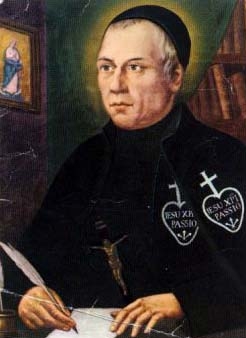
St. Paul of the Cross

OLYMPUS DIGITAL CAMERA

A saint’s work is never done because, like Jesus Christ, the saints reach beyond their time and place.  They’re agents of God’s plan. Their work is not finished at their death– our belief in the communion of saints reminds us–and even in old age they saw something yet to do.

They never say “The work is done,” and neither should we.

I’m reminded of a poem called “What then?” by W.B. Yeats; which he wrote as an old man at the end of a successful career filled with literary honors, financial rewards and a host of friends. You would think he’d sit down and enjoy it all, but listen to him as he hears the challenge of more to do:

‘The work is done,’ grown old he thought,
‘According to my boyish plan;
Let the fools rage, I swerved in naught,
Something to perfection brought’;
But louder sang that ghost,’What then?’

I’m sure St. Paul of the Cross, the founder of my community, the Passionists, is saying something like that from his place in heaven where he guides us still.

May the priest Saint Paul, whose only love was the Cross,

obtain for us your grace, O Lord,

so  that, urged on more strongly by his example,

we may each embrace our own cross with courage.

Through our Lord Jesus Christ, your Son,

who lives and reigns with you in the unity of the Holy Spirit,

one God, for ever and ever. Amen.

28th Sunday B: Aiming Higher


The audio homily is here:

The rich young man in today’s gospel seems like a nice enough person, doesn’t he? In fact, he looks like someone you’d want your daughter to meet. Good living, good to his father and mother, good morals. Well heeled financially; talented maybe, good education, has a good job, good connections. Good catch.

Is Jesus being too strong with him? Instead of giving the young man a pat on the back and telling him he’s doing great, Jesus seems to tell him he’s not doing enough. He’s urging him on to be more.

We have to fit any gospel story like this one, into the larger story the gospel wants to tell. The gospel we’re reading on most Sundays this year is the Gospel of Mark? What’s the larger message it wants us to hear.

The Kingdom of God has come, Jesus says in the Gospel of Mark. The world’s going to change, and Jesus is the one who will bring it about. But he’s not going to bring it about alone. We’re called to join him, to follow him, to change the world with him. That means we have to go beyond ourselves and our own interests and our own plans. We have to live in a bigger world. God’s world. “Your Kingdom come, your will be done,” we say in the Lord’s Prayer.

Often enough, this gospel is seen as a challenge to young people, like the rich young man, to embrace a church vocation, like entering religious life, or becoming a priest. I would love some young people to respond to a challenge like that, but it seems to me the call of Jesus in this gospel is wider than that.

The winners of the Noble prize are being announced at this time. I saw an interview with the winner of the prize for physics, a Japanese scientist, Takaaki Kajita. I don’t know anything about what he discovered, neutrinos, but his discovery has changed the way we understand matter and our view of the universe. In the interview you saw someone excited about what he was doing, dedicated to what he was doing, and urging young people to become interested in science.

I think Jesus would say here’s someone, not trapped in self-interest, but deeply engaged in the pursuit of truth.

I don’t want to limit the gospel message to Noble prize winners either. We’re all called to enlarge our own horizons, to go beyond our safe zones and live and work in a bigger world.

The Synod on the Family is taking place in Rome now. One of its goals is to urge all of us not to give up on families. In the western world, many young people are not getting married, not having children. It seems that people are afraid to get married; instead retreat into themselves. Marriage and family and children are part of God’s plan. They’re worth giving your life to.

In our story today Jesus tells all of us to aim higher than ourselves and our own interests. How do we know what to aim for what are we to do? Our first reading for today, from the Book of Wisdom tells us that.

I prayed, and prudence was given me;
I pleaded, and the spirit of wisdom came to me.
I preferred her to scepter and throne,
and deemed riches nothing in comparison with her,
nor did I liken any priceless gem to her;
because all gold, in view of her, is a little sand,
and before her, silver is to be accounted mire.
Beyond health and comeliness I loved her,
and I chose to have her rather than the light,
because the splendor of her never yields to sleep.
Yet all good things together came to me in her company,
and countless riches at her hands. Wisdom 7, 7-11

27th Sunday: The Gesture of Presence

To listen to today’s homily, please select the audio file below:


Like many of you, I’m sure, I still feel the warmth from Pope Francis’ visit to our country last week. I was moved, certainly, by the wise words he spoke to our congress, to the United Nations, to the various groups here, but I think what moved me most was his simple gestures– his gestures of presence.

Wherever he went, he was present there. Whether he was with the President of the United States, or with school kids in Harlem, his presence was the same. I don’t know how many hours he spent waving simply to crowds, but it seemed to me he was present as much then as he was celebrating Mass in Madison Square Garden or Philadelphia. He seemed to live in the moment.

A picture on the front page of the New York Times the other day symbolized that gift. It was the picture of the pope shaking hands with a prisoner in Philadelphia; the picture showed only the two men’s arms; the arm of the prisoner covered with tattoos, and the arm of the pope, their hands clasped together.

One person meeting the other. So simple, so moving.

At the Mass for Families in Philadelphia last Sunday Francis spoke about the gift of presence:

“Holiness, like happiness, is always tied to little gestures. ‘Whoever gives you a cup of water in my name will not go unrewarded’, says Jesus (cf. Mk 9:41). These little gestures are those we learn at home, in the family; they get lost amid all the other things we do, yet they do make each day different. They are the quiet things done by mothers and grandmothers, by fathers and grandfathers, by children. They are little signs of tenderness, affection and compassion. Like the warm supper we look forward to at night, the early lunch awaiting someone who gets up early to go to work. Homely gestures. Like a blessing before we go to bed, or a hug after we return from a hard day’s work. Love is shown by little things, by attention to small daily signs which make us feel at home. (Faith grows when it is lived and shaped by love. That is why our families, our homes, are true domestic churches. They are the right place for faith to become life, and life to become faith.)

“Jesus tells us not to hold back these little miracles. Instead, he wants us to encourage them, to spread them. He asks us to go through life, our everyday life, encouraging all these little signs of love as signs of his own living and active presence in our world.”

In an earlier talk to bishops, Francis urged them to be a “living and active presence” in the church. His words reminded me of the treatise On Pastoral Care which St. Gregory the Great wrote for the pastors of his time. Don’t get so absorbed, so fixated on your role of teaching and guiding others that you forget to look at yourselves and be yourselves, Gregory said. Don’t become automatic in what you do.

“Christianity which does little in practice, while incessantly explaining its teachings, is dangerously unbalanced,” Francis told the bishops. Give your energies, “not so much in rehearsing the problems of the world around us and the merits of Christianity’ but standing in the midst of your flock, not “afraid of questions, contact, accompaniment.” Keep watch in prayer, supporting the faith of your people, instilling confidence in the presence of the Lord, helping people lift up their gaze at times of discouragement, frustration and failure.”

The pope used an interesting phrase to describe the presence he urged the bishops to have. “Are we ready to ‘waste time’” with them? “Waste time.” The kind of presence the pope described is often described that way. Not important, a waste of time. We hear that word used by some who dismiss the contemplative vocation of someone like St. Therese of Lisieux, whose feast we celebrated October 1st. “What a waste.”

But it isn’t a waste at all.

Saint Therese of Lisieux, October 1

FullSizeRender

We get the saints we need. Saint Therese of the Child Jesus (1873-1897) inspired millions by her “little way,” which she described in her autobiography “Story of a Soul.” We can be holy in our ordinary lives, she said. Love transforms everything, however small, into a gift pleasing to God.

As a young Carmelite nun she desired greatness, perhaps even to give her life as a martyr for her faith. Then she realized:

“Since my longing for martyrdom was powerful and unsettling, I turned to the epistles of St Paul in the hope of finally finding an answer. By chance the 12th and 13th chapters of the 1st epistle to the Corinthians caught my attention, and in the first section I read that not everyone can be an apostle, prophet or teacher, that the Church is composed of a variety of members, and that the eye cannot be the hand. Even with such an answer revealed before me, I was not satisfied and did not find peace.

  “I persevered in the reading and did not let my mind wander until I found this encouraging theme: Set your desires on the greater gifts. And I will show you the way which surpasses all others. For the Apostle insists that the greater gifts are nothing at all without love and that this same love is surely the best path leading directly to God. At length I had found peace of mind.
 ” When I had looked upon the mystical body of the Church, I recognized myself in none of the members which St Paul described, and what is more, I desired to distinguish myself more favorably within the whole body. Love appeared to me to be the hinge for my vocation. Indeed I knew that the Church had a body composed of various members, but in this body the necessary and more noble member was not lacking; I knew that the Church had a heart and that such a heart appeared to be aflame with love.
“I knew that one love drove the members of the Church to action, that if this love were extinguished, the apostles would have proclaimed the Gospel no longer, the martyrs would have shed their blood no more. I saw and realised that love sets off the bounds of all vocations, that love is everything, that this same love embraces every time and every place. In one word, that love is everlasting.
  “Then, nearly ecstatic with the supreme joy in my soul, I proclaimed: O Jesus, my love, at last I have found my calling: my call is love. Certainly I have found my place in the Church, and you gave me that very place, my God. In the heart of the Church, my mother, I will be love, and thus I will be all things, as my desire finds its direction.”

” Lord Jesus, I am not an eagle,

All I have are the eyes and heart of one.

In spite of my littleness, I dare to gaze

at the sun of love

and fly to it.

I want to imitate the eagles

but all I can do is flap my small wings.

What shall I do?

With cheerful confidence I shall stay

gazing at the sun till I die.

Nothing will frighten me, neither wind nor rain.

O my beloved Sun, I delight in feeling small

and helpless in your presence;

and my heart is at peace.

Looking Ahead

Looking ahead realistically is always hard, but maybe it’s harder today, especially for a religious congregation like mine, whose membership is old and whose financial resources are stretched.

We mirror the church in this country, in fact, which is losing members and running short on finances. So, we have to plan for diminishment’

But God’s plan is not to fade away, but to grow; to live and not to die. The wonderful first reading from Zechariah for today’s Mass talks about growth, not decline. Keep a “measuring line” in your hand for what is new, it says. Don’t be afraid to think big.

Here’s the reading from Zechariah in full:

“I, Zechariah, raised my eyes and looked: 
there was a man with a measuring line in his hand.
I asked, “Where are you going?”
He answered, “To measure Jerusalem,
 to see how great is its width and how great its length.”

Then the angel who spoke with me advanced,
and another angel came out to meet him and said to him,
“Run, tell this to that young man:
People will live in Jerusalem as though in open country,
because of the multitude of men and beasts in her midst.
But I will be for her an encircling wall of fire, says the LORD,
and I will be the glory in her midst.”

Sing and rejoice, O daughter Zion!
See, I am coming to dwell among you, says the LORD.
Many nations shall join themselves to the LORD on that day,
and they shall be his people and he will dwell among you.”

We need God’s “measuring line” when we look ahead.

26th Sunday: A Pope Visits Us

Audio homily here:

I’m always surprised at the way our current Mass readings throw light on what’s happening now. Pope Francis is ending his visit to our country. He’s hard to miss, a genuine celebrity, tying up traffic in three major cities and drawing immense crowds and media coverage. If he were running in our presidential elections, he might get elected.

He’s a leader, no doubt. But look at the way leadership is described in today’s readings: a kind of leadership Francis exemplifies. Our reading from the Book of Numbers (Nm 11,25-29) says the Lord blesses Moses with power, but also takes “ some of the spirit that was on Moses and bestows it on the seventy elders.” Then, when two others, not of the seventy, seem to have that same spirit, some tell Moses to stop them. They don’t belong to our group.

But Moses wont stop them. Are you jealous? he asks. “Would that all the people of the LORD were prophets! Would that the LORD might bestow his spirit on them all!”

The gospel from Mark (Mk 9, 38-48) offers a similar situation. Some are exercising a power like Jesus and his followers try to stop them. Let them be, Jesus says, “Whoever is not against us is for us.” Whoever is working for the same good cause is working with us.

The lesson, of course, is that a real leader doesn’t want power for himself or herself. Power is meant to serve all. “Would that all the people of the LORD were prophets! Would that the LORD might bestow his spirit on them all!” Moses says. In his strong address to our Congress the other day, Francis called them to be real leaders and work for the common good. Work together, not in a spirit of partisanship, or for your own gain, but for the good of all and for the good of the world, he said. Don’t be afraid to face the big challenges before us.

Of course, we might stop there and say we need better leaders, better politicians; let’s pray for a good president and a good congress that can work together for the good of us all.

But our readings seem to suggest that power is not just in great leaders like Moses and Jesus. We all have power which we’re called to use for the common good. The same partisanship and selfishness, the same lack of vision we complain about in our leaders can also be present in us.

The pope addressed our bishops before he met with congress and he told them too to be good shepherds of the gifts of God. “It’s wrong,” he said to look the other way or to remain silent.” They need to face the many challenges before them.

That challenge is addressed to us too.

Addressing congress, the pope pointed to four Americans who worked for the common good: Abraham Lincoln, Martin Luther King, Dorothy Day and Thomas Merton. Only one of those was a politician, an elected leader. The rest were people who served society using their unique gifts.

So it was not just politicians in Congress or bishops or representatives of the nations at the UN the pope challenged these last few days. He was challenging all of us to face the world today, to confront the issues before us, to work together, to follow the Golden Rule. “Do onto others what you would have them do to you.” That’s what God wants us all to do.

The Pope in Cuba

If you want to know what Pope Francis is doing in Cuba, read this homily he gave there yesterday:

We are celebrating the feast of the apostle and evangelist Saint Matthew. We are celebrating the story of a conversion. Matthew himself, in his Gospel, tell us what it was like, this encounter which changed his life. He shows us an “exchange of glances” capable of changing history.

On a day like any other, as Matthew, the tax collector, was seated at his table, Jesus passed by, saw him, came up to him and said: “Follow me”. Matthew got up and followed him.

Jesus looked at him. How strong was the love in that look of Jesus, which moved Matthew to do what he did! What power must have been in his eyes to make Matthew get up from his table! We know that Matthew was a publican: he collected taxes from the Jews to give to the Romans. Publicans were looked down upon and considered sinners; as such, they lived apart and were despised by others. One could hardly eat, speak or pray with the likes of these. For the people, they were traitors: they extorted from their own to give to others. Publicans belonged to this social class.

Jesus, on the other hand, stopped; he did not quickly take his distance. He looked at Matthew calmly, peacefully. He looked at him with eyes of mercy; he looked at him as no one had ever looked at him before. And this look unlocked Matthew’s heart; it set him free, it healed him, it gave him hope, a new life, as it did to Zacchaeus, to Bartimaeus, to Mary Magdalen, to Peter, and to each of us. Even if we do not dare raise our eyes to the Lord, he looks at us first. This is our story, and it is like that of so many others. Each of us can say: “I, too, am a sinner, whom Jesus has looked upon”. I ask you, in your homes or in the Church, to be still for a moment and to recall with gratitude and happiness those situations, that moment, when the merciful gaze of God was felt in our lives.

Jesus’ love goes before us, his look anticipates our needs. He can see beyond appearances, beyond sin, beyond failures and unworthiness. He sees beyond our rank in society. He sees beyond this, to our dignity as sons and daughters, a dignity at times sullied by sin, but one which endures in the depth of our soul. He came precisely to seek out all those who feel unworthy of God, unworthy of others. Let us allow Jesus to look at us. Let us allow his gaze to run over our streets. Let us allow that look to become our joy, our hope.

After the Lord looked upon him with mercy, he said to Matthew: “Follow me.” Matthew got up and followed him. After the look, a word. After love, the mission. Matthew is no longer the same; he is changed inside. The encounter with Jesus and his loving mercy has transformed him. He leaves behind his table, his money, his exclusion. Before, he had sat waiting to collect his taxes, to take from others; now, with Jesus he must get up and give, give himself to others. Jesus looks at him and Matthew encounters the joy of service. For Matthew and for all who have felt the gaze of Jesus, other people are no longer to be “lived off”, used and abused. The gaze of Jesus gives rise to missionary activity, service, self-giving. Jesus’ love heals our short-sightedness and pushes us to look beyond, not to be satisfied with appearances or with what is politically correct.

Jesus goes before us, he precedes us; he opens the way and invites us to follow him. He invites us slowly to overcome our preconceptions and our reluctance to think that others, much less ourselves, can change. He challenges us daily with the question: “Do you believe? Do you believe it is possible that a tax collector can become a servant? Do you believe it is possible that a traitor can become a friend? Do you believe is possible that the son of a carpenter can be the Son of God?” His gaze transforms our way of seeing things, his heart transforms our hearts. God is a Father who seeks the salvation of each of his sons and daughters.

Let us gaze upon the Lord in prayer, in the Eucharist, in Confession, in our brothers and sisters, especially those who feel excluded or abandoned. May we learn to see them as Jesus sees us. Let us share his tenderness and mercy with the sick, prisoners, the elderly and families in difficulty. Again and again we are called to learn from Jesus, who always sees what is most authentic in every person, which is the image of his Father.

I know the efforts and the sacrifices being made by the Church in Cuba to bring Christ’s word and presence to all, even in the most remote areas. Here I would mention especially the “mission houses” which, given the shortage of churches and priests, provide for many people a place for prayer, for listening to the word of God, for catechesis and community life. They are small signs of God’s presence in our neighborhoods and a daily aid in our effort to respond to the plea of the apostle Paul: “I beg you to lead a life worthy of the calling to which you have been called, with all lowliness and meekness, forbearing one another in love, eager to maintain the unity of the Spirit in the bond of peace” (cf. Eph 4:1-3).

I now turn my eyes to the Virgin Mary, Our Lady of Charity of El Cobre, whom Cuba embraced and to whom it opened its doors forever. I ask Our Lady to look with maternal love on all her children in this noble country. May her “eyes of mercy” ever keep watch over each of you, your homes, your families, and all those who feel that they have no place. In her love, may she protect us all as she once cared for Jesus.

Heads of States at the United Nations

On the Van Wyck Expressway from Kennedy Airport warnings are flashing that leaders from all over the world are coming to the United Nations. The Letter to Timothy we’re reading this week tells us to pray for them:

“First of all, I ask that supplications, prayers,
petitions, and thanksgivings be offered for everyone,
for kings and for all in authority,
that we may lead a quiet and tranquil life
in all devotion and dignity.”

The reading from the Book of Esra (Esra 1,1-6) reminds us how important authorities are in fulfilling God’s plan. Cyrus, the King of Persia (Modern Iran), moved by God, issues a decree letting the Jews return to Jerusalem after about 70 years so they can rebuild their city and its temple. It’s not about a human homecoming; their return furthered on the plan of God.

Our reading makes the point that God moves the heart of King Cyrus. God is not only the creator of the world but its real ruler. He’s king, the one with power to change directions as he wills, and he can even change powerful kings like Cyrus.

Reading the Old Testament helps us remember that God acts in the real world of human affairs and creation itself. God’s action is mysterious, beyond our thoughts and ways. God’s kingdom will come, but not according to the calculations of pundits or prognosticators, or “the wise and clever.” We may believe mistakingly that it’s all politics and human motives and natural causes, but “God is king,” the Old Testament proclaims.

To know God’s activity we have to look into “the signs of the times.” Cyrus told the Jews they could return to their homeland and rebuild, but they had to take him up on his offer. Some did, who saw it as a sign from God – “everyone, that is, whom God had inspired to do so.” Some didn’t, for a number of reason: they liked where they were, they feared being deceived, they lost faith. But faithful Jews took the journey back.

The Vatican II document on the Church in the Modern World offers a powerful invitation to respond hopefully and generously today to “the signs of the times.” Our times are not without them. A new Eucharistic prayer prays for the grace to accept that invitation:

“Grant that all the faithful of the church, looking into the signs of the times by the light of the faith, may constantly devote themselves to the service of the gospel.”

“Keep us attentive to the needs of all that, sharing their grief and pain, their joy and hope, we may faithfully bring them the good news of salvation and go forward with them along the way of your kingdom.”

Let’s pray for  peace in Syria,  Certainly “signs of the times” are out there. May we be inspired by God to look for them.

Blessed Dominic Barberi, CP

img-Blessed-Dominic-Barberi
We continue reading at Mass today from St. Paul’s First Letter to the Thessalonians. This letter is not a theological treatise like his Letter to the Romans, nor can you find a list of corrections in it as in his letters to the Corinthians.

This is Paul’s first letter, written shortly after the year 50 AD, and it’s mostly Paul’s way of telling the Thessalonians how thankful he is for the faith he sees in them.

He’s just come with his companions from Philippi where he narrowly escaped death. He would be shaken, for sure. The apostle seems surprised at the faith he finds in them. He’s delighted by it all. Paul reminds them he didn’t come with nice words or looking for affirmation for himself or for what he could get from them. He describes himself as a nursing mother: “We wanted to share with you the Gospel of God and our very selves as well.”

Today the Passionists remember one of their own great missionaries, Blessed Dominic Barberi, who had Paul’s qualities of zeal and humility. Dominic was born in Viterbo, Italy, in 1792. Early on, God gave him a desire to be a missionary, especially to England.

As a Passionist priest he dedicated himself to work for Christian unity and in 1842 he went to England with the desire to bring the English church and the Catholic church together as one.

Dominic had a good mind and wanted to engage the leading religious scholars in England, but the Industrial Revolution was changing the face of that country; thousands of poor Catholic immigrants from Ireland were flocking to the great English factory towns looking for work.

They needed priests and Dominic, though he never mastered the English language, tirelessly preached and ministered to them. He shared with them the Gospel of God and his very self as well.

Dominic never got his wish to engage the learned scholars of England as a lecturer at Oxford, for example, but he was noticed by them all the same.

One of the greatest of England’s intellectuals, John Henry Newman, was attracted to Dominic, not by the tracts he sent to him, but by his zeal and humility. Newman needed to see those qualities in the Roman church.

“If they want to convert England,” Newman wrote earlier, “let them go barefoot into our manufacturing towns, let them preach to the people like St Francis Xavier–let them be pelted and trampled on, and I will own they do what we cannot…Let them use the proper arms of the Church and they will prove they are the Church.”

Humble, zealous and faithful, Dominic used “the proper arms of the Church.” When Newman decided to enter the Catholic Church, he asked for Father Dominic Barberi receive him.

“All that I have suffered since I left Italy has been well compensated by this event,” Dominic wrote later, “ I hope the effects of such a conversion may be great.”

21st Sunday B: A Journey of Compassion


Who am I? Who are we?

Our first reading this Sunday from the Book of Joshua is all about those two questions. “Who am I?” and “Who are we?” It’s a reading worth reflecting on.

Joshua, you may remember from your bible history, succeeded Moses as the leader of Jewish people when they came out of Egypt. He’s generally remembered as a soldier who led the Israelites across the Jordan River into the Promised Land, a land disputed then and a land disputed now. The Book of Joshua is a litany of the battles he fought, beginning with the famous battle for Jericho. “Joshua fit the battle of Jericho and the walls came tumblin down.”

Our reading today is from the end of the Book of Joshua. Joshua is over a 100 years old, and the old soldier calls together the different tribes and families of Israel to Shechem to speak to them for the last time.

Your work isn’t finished, your journey isn’t over, he reminds them. But he’s not an old soldier interested in recalling old battles or strategizing military planning for the future. You have been called by God, he tells them. Are you going to listen to that call or not, he asks them? You can drift away and follow other voices, other gods. Make your choice.

“As for me and my household, we will serve the Lord,” Joshua says.

And the people respond:
“Far be it from us to forsake the Lord for the service of other gods. For it was the Lord who brought us and our ancestors out of the land of Egypt, out of a state of slavery. He performed those great miracles before our eyes and protected us along our entire journey and among the peoples through whom we passed. Therefore we also will serve the Lord, for he is our God.”

For Joshua the most important thing is remembering who you are. It’s remembering who you are as an individual and remembering who we are as a people. Everything depends on how we choose to answer those questions.

There’s the personal call: “Who am I?” Where did I come from, who gave me life? Why am I here, what am I to do? Where am I going? What’s my future going to be? God is there in those questions. How do I answer him?

My personal call is not for me alone, though, I’m part of a call to others. We go to God together. We make this journey together.

Joshua and the people see God’s call not just as a personal call When God called them from Egypt, he called them all, the old and the young, the strong and the weak, the rich and the poor, to journey together and they did. That’s the way the bible describes it and that’s the way it should be, even today. No matter how sophisticated our society gets, how difficult our circumstances are, God calls us to make the journey together.

A French geophysicist and philosopher, Xavier Le Pichon, says that the world evolves the way it should when we respect the fragility of the earth and the fragility of our human community. We advance as a people when we take care of our weakest members; our earth community advances when we respect its fragile nature.

One important way we differ from the animals,Le Pichon says, is the care we take of our weakest members. It’s a trait he finds in our earliest ancestors, the Neanderthals, over one hundred thousand years ago. One study of a Neanderthal burial ground in Iraq revealed the skeleton of a 40 year old severely malformed male, who evidently had been carried from place to place by this group of hunters and then buried with them. He would have been a burden to them, he must have slowed them down, but they carried him with them just the same. He meant something to them.

Unlike animals who cast aside their weak to die on the way, humans have developed a feeling for the weak, Le Pichon says. Like animals, they nourish and care for their young, but they reach further to the weakest. This sense of compassion separates humans from animals. It makes us humane.

Le Pichon disputes Darwin’s all embracing principle of the “survival of the fittest.” That principle, when applied to human evolution, does not take into account the spirit of compassion, he says.

Jesus, of course, taught the importance of the spirit of compassion when he told us that what we did for “one of these, the least, you did it to me.” You grow in love through your care of the least. We are truly human, made in God’s image, when we take care of the weak. We make the journey together.