Tag Archives: Passionists

St. Martin of Tours, November 11

martin_of_tours_204_detail_843x850

If saints are antidotes to the poison of their times, as Chesterton said, Martin of Tours is a saint worth reflecting upon.  So, what poison did Martin confront?

One was the poison of militarism. Martin was born into a military family in 316,  his father a Roman officer who arose through the ranks and  commanded the legions on the Roman frontier along the Rhine and Danube rivers. When his son was born his father saw him as a soldier like himself and named him Martin, after Mars, the god of war.

Rome was mobilizing then to stop invading barbarian tribes, and soldiers, like the emperors Constantine and Diocletian, were its heroes.  But Martin wanted nothing to do with war. As a young boy he heard a message of peace and non-violence from Christians he knew. Instead of a soldier, he became a Christian catechumen, over his father’s strong objections.

Martin was a lifelong peacemaker. He died on his way as a bishop to settle a dispute among his priests.

Another poison Martin confronted was the poison of careerism. Elected bishop of Tours by the people, Martin adopted a lifestyle unlike that of other bishops of Gaul, who were increasingly involved in imperial  administration and adopted the privileged style that came with an imperial administrator.

Bishops set themselves up in the cities;  Martin preferred to minister in the country, to the “pagani”, the uneducated poor. He established monasteries and the simple Christian life they promoted. The great monastic settlements that contributed to the evangelization of Gaul were largely his legacy.

Are the poisons of militarism and careerism around today? We remember our war veterans today.So many died in terrible wars these 100 years and many bear the scars of war. Militarism, the glamorizing of war, is still around.  So is careerism .

Finally, martyrdom was the great sign of holiness in Martin’s day, but Martin witnessed to another kind of martyrdom, the martyrdom of everyday. That could happen in embracing monasticism or religious life. It also could take place in embracing fully one’s own state in life. Martin was a martyr of another kind. For all these reasons, he is an important saint on our church calendar.

The story that epitomizes Martin, of course, is his meeting with a beggar in a cold winter as he was coming through the gate in the town of Amiens. Still a soldier but also a Christian catechumen, he stopped and cut his military cloak in two and gave one to the poor man. That night, the story goes, Christ appeared to him in a dream, wearing the beggar’s cloak. “Martin gave me this,” he said.

Pope Benedict XVI commented on this event.

“ Martin’s gesture flows from the same logic that drove Jesus to multiply the loaves for the hungry crowd, but most of all to leave himself to humanity as food in the Eucharist… It’s the logic of sharing.

May St Martin help us to understand that only by a common commitment to sharing is it possible to respond to the great challenge of our times: to build a world of peace and justice where each person can live with dignity. This can be achieved if an authentic solidarity prevails which assures to all inhabitants of the planet food, water, necessary medical treatment, and also work and energy resources as well as cultural benefits, scientific and technological knowledge.”

Well said.

In medieval Europe farmers, getting ready for winter at this time, put aside food and meat for the cold days ahead. Martin’s feast day was their reminder to put aside something for the poor. The poor are always with us; are we remembering them?

Today  Veterans’ Day in the USA honors those who fought in our country’s wars. It was originally called Armistice Day celebrating the end of fighting between the Allies and Germany on November 11, 1918. The United States lost 116,516 troops in the 1st World War; other countries lost millions more. The wars that followed added to that count.

Veterans Day: November 11

Tomorrow is Veterans Day, honoring those who fought in our country’s wars. It was originally called Armistice Day celebrating the end of fighting between the Allies and Germany on November 11, 1918. The United States lost 116,516 troops in the 1st World War; other countries lost millions more. The wars that followed added to that count.

Our church calendar today celebrates the Feast of St. Martin of Tours, the great 5th century saint, who is remembered especially as the soldier who gave a beggar half of his cloak on a freezing day at the gate of that city. Son of a Roman officer, Martin chose to become a monk, a man of peace, instead of a soldier. He died on a peace-making visit to a squabbling church in the diocese where he had become bishop.

As a bishop, Martin lived a noticeably poor life; he lived and dressed as a poor man, his biographers say.  Poor in spirit, he identified with the poor. Evidently, the beggar he met at the gate of Tours had a lasting effect on him. In a dream that night, Christ told him he was the beggar Martin clothed that day.

It was customary in Europe for farmers to put away meat for the winter on St. Martin’s feast. They were also urged to put away a portion for the poor this day too.

In Martin’s time as bishop, a group of Christians were following a teacher named Priscillian, who was convinced that the evil in the world was so ingrained in life that only severe ascetical practices could root it out. Other bishops convinced the imperial authorities that the leaders of this heretical group should be executed. Their execution marked the first attempt by Christian leaders to stop heresy by killing those suspected of it.

Martin was against the execution. He believed you didn’t deal with people with wrong ideas by killing them; you had to live with them. You need to have a soldier’s heart to do that.

Pope John XXIII was an admirer of Martin of Tours. I think he wrote a thesis about him. After he was elected pope he wanted to go and pray at his shrine. Another soldier of a sort.

St. Charles Borromeo (1538-84)

borrom2

Charles Borromeo. whose feast we celebrate today, was born into a rich powerful northern Italian family in 1538. His uncle was Pope Pius IV. Nepotism was customary at the papal court then, so having the pope as your uncle was a sure way to get ahead. A shy studious young man of 23, with a speech impediment, Charles was called to Rome and made a deacon, then cardinal, becoming the pope’s trusted advisor and Secretary of State.

His brother died unexpectedly In the winter of 1562 and Charles, grieving, made a retreat, following the Spiritual Exercises of Ignatius Loyola. His father and mother died also,  and as their remaining heir Charles was urged by his family, including the pope, to marry and have children. Instead he chose to become a priest.

The Council of Trent was concluding its work for church reform and Charles embraced the council’s call for reform; he left Rome and became bishop of Milan.

As bishop of that key city, Charles Borromeo became a key figure in the renewal of the Catholic Church shaken by the Protestant Reformation. In an era of absentee bishops, he stayed in his diocese, bringing about reform. He helped draft the Catechism of the Council of Trent. He founded a Confraternity of Christian Doctrine for catechizing his people. He started a printing press to make the Word of God known to his people. He created seminaries for training priests.

He wasn’t afraid to deal with inertia in his church or to confront the challenge to his authority from secular rulers or diocesan groups. In 1569 a friar from one religious community irked by his call for reform fired a shot that grazed his vestments while he was celebrating Mass. He was a man of meetings, a hard worker, constantly calling people together in diocesan synods and groups.

He endeared himself to his people by his work among the plague-stricken, when a plague gripped Milan in 157.  Borromeo stayed in the city while most authorities fled. He mobilized  people to minister to the sick and dying and set up hospitals for their care.

He was only 46 when he died, worn out trying to bring the gospel to his people;  he showed other bishops and dioceses how to renew the church. Some historians say he lacked an appreciation of the role of the laity in the ministry of the church, but most  see saints like Charles Borromeo, Philip Neri and Francis de Sales as more important for the Catholic renewal after the Reformation than the popes and general councils of the time.

We hope and pray for church leaders and saints like them today.

Father Theodore Foley, a holy superior general of my community, the Passionists, was reading the life of Charles Borromeo, when he died in 1974. He was inspired by his selfless leadership and his commitment to work patiently for the good of his community.

Wikipedia  has an article on Charles Boromeo.

Politics goes beyond the local

All politics is local, the saying goes. But let’s hope politicians–and we who elect them– go beyond local interests and ourselves. The Second Vatican Council says it well:

“Christians should co-operate, willingly and wholeheartedly, in building an international order based on genuine respect for legitimate freedom and on a brotherhood of universal friendship. This is all the more urgent because the greater part of the world still experiences such poverty that in the voices of the poor Christ himself can be heard, crying out for charity from his followers.

There are nations, many of them with a Christian majority, which enjoy an abundance of goods, while others are deprived of the necessities of life, and suffer from hunger, disease and all kinds of afflictions. This scandal must be removed from the human family, for the glory of Christ’s Church and its testimony to the world are the spirit of poverty and the spirit of love.”

Beautiful image in that quote–the poor are the “voices of the poor Christ’.” Unfortunately, politicians –and those who elect them (us)– only hear their own voices and interests.  Politicians should listen to voices seldom heard, and so should we.

All Souls Day: November 2

All Saints. Fra Angelico

All Saints Day and All Souls Day belong together. On the Feast of All Saints we thank God for calling all to holiness as his children. All of us are called to be numbered among the saints of God.

On All Souls Day we remember that we are all weak and sinful and depend on the mercy of God.  We can lose hope in our call, and so on All Souls Day we ask God’s mercy for ourselves and those who have gone before us in death.

Listen to our prayer at Mass:

“Remember, also, our brothers and sisters, who have fallen asleep in the hope of the resurrection, and all who have died in your mercy. Welcome them into the light of your face. And have mercy on us all, we pray, that with the Blessed Virgin Mary, with the blessed Apostles and all the saints who have pleased you throughout the ages, we may be coheirs to eternal life and may praise and glory you, through your Son, Jesus Christ.( 2nd Eucharisitic Prayer)

We pray for all who hope in Christ’s resurrection, and also for “all who have died in your mercy.” All Souls is a day we pray for all who have died.

We begin our prayer on All Souls Day with St. Paul’s words to the Thessalonians and Corinthians, affirming God’s promise of eternal life to all humanity:

“Just as Jesus died and has risen again, so through Jesus God will bring with him those who have fallen asleep and as in Adam all die so also in Christ all will be brought to life.”

At the Communion of the Mass, we hear the words of Jesus:

“I am the resurrection and the life, says the Lord. Whoever believes in me even though he die will live and anyone who believes in me will never die.”

Yet death saddens us; it can weaken our faith. Praying for the dead strengthens our faith and benefits those who have gone before us. In our opening prayer we ask for stronger faith.

Listen kindly to our prayers, O Lord,
and, as our faith in your Son
raised from the dead is deepened,
so may our hope of resurrection for your departed servants
also find new strength.
Through our Lord Jesus Christ, your Son, who lives and reigns with you and the Holy Spirit, world without end. Amen.

“It’s a holy and wholesome thought to pray for the living and the dead.” Eternal rest grant to them, O Lord, and let perpetual light shine upon them.

Saints Simon and Jude: October 28

Simon Rubens
St. Jude LaTour

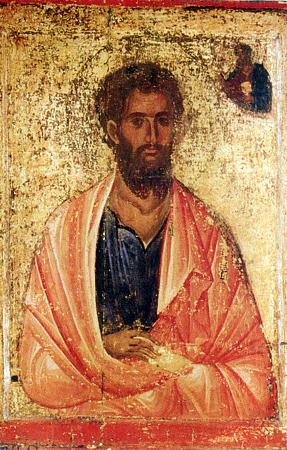
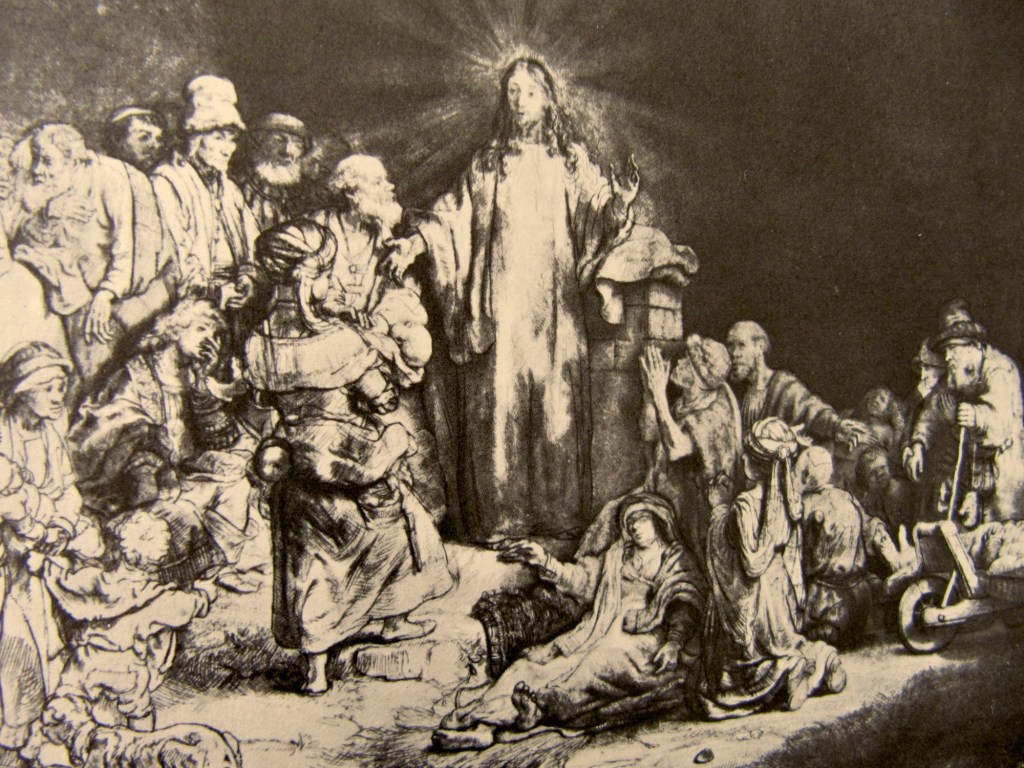
Saints Simon and Jude, whose feast we celebrate October 28, are mentioned only a few times in the New Testament list of apostles,  tenth and eleventh respectively. (Mark 3,13-19, Luke 6,12-16)

Simon is called  `the Zealot,’ either because he was zealous for the Jewish law or because he was a member of the Zealot party, which in the time of Jesus sought to overthrow Roman domination by force.

Some of Jesus’ followers,  the Gospels indicate, were hardly pacifists. Peter was ready to use his sword in the garden of Gethsemani when the temple guards came to seize Jesus;  James and John told Jesus to call down fire from heaven on the hostile Samaritans whom they met on their journey to Jerusalem. So did Simon have thoughts of revolution when he answered Jesus’ call ?

Jude, called “Thaddeus” to distinguish him from Judas Iscariot, may be the brother of James, the son of Alphaeus, some interpreters of the Gospel say. If that’s so, he’s also a relative of Jesus. He may be the author of the Epistle of Jude in the New Testament.

Early Christian traditions – all difficult to prove historically – locate the ministry of these apostles in places as far apart as Britain and Persia; one important legend from 3rd century Syria says they were apostles to Syria. If so, we ask their intercession for that troubled place today.

Knowing little about  Simon and Jude may be a good thing, because then we have to look to their mission to know them – they were apostles. Even if we don’t know exactly where each of them went, they were apostles. The mission of the apostles was to follow Jesus. “ As the Father has sent me, so I send you.” Jesus says in the Gospel of John. He also said, “I have come down from heaven, not to do my own will, but the will of him who sent me.”

God made his will known to the apostles in due time. They didn’t decide what to do or where to go by themselves. They knew God’s will day by day, as we do.  So often, it was unexpected and perhaps not what they planned. Simon had revolutionary thoughts. This was a revolution of another kind. Jude followed his cousin. He found himself in a family of another kind.

“Your will be done,” we say in the Lord’s Prayer. That’s an apostle’s prayer. We try to make it our prayer too.

The Legacy of Paul of the Cross

Saints are raised up by God to meet the needs of their time. What need did the 18th century world of St. Paul have ? The church of Paul’s day was weakened and humbled by politics, revolutions and new ways of thinking. The popes then were losing power and influence in Europe, the Jesuits were suppressed, revolutions like the French Revolution brought persecution, the suppression of church schools, religious houses, the confiscation of church assets. Some said the church was dying.

A humbled church needed to be reminded of the humble Christ, who took the form of a slave and died on a cross and was raised up by God’s power. That’s what St. Paul of the Cross did through his preaching and ministry. His message was a message the church of his time needed to hear. His message was of an abiding hope.

An “abiding hope.” That was the hope needed then. Most of Paul’s preaching and ministry took place in the Tuscan Maremma, a region north of Rome in Italy, the size of Long Island, NY. “Maremma” means swamplands. The Maremma was region of small towns and a few small cities suffering from chronic poverty and neglect. Only at the end of the 18th century did the region inch forward with some reforms. Ironically, Tuscany today is a tourist destination after Mussolini dealt with the swamplands in the 20th century. The world loves Tuscany now.

In Paul’s time, though, it was known for disease, poverty, beggars, the homeless, and bandits. Year after year things never got better. Year after year the future never got bright. Year after year Paul and his companions went from town to town, set up a cross in a church or town square and spoke of the “abiding hope” promised by Jesus Christ to the people who gathered to hear..

His preaching of the Passion of Jesus brought an abiding hope to them. God was with them, no matter how dark things were, or how long the darkness lasted.

Are we living in a church and a world like his today? I wonder, as we struggle with politics, pandemics, climate change, if we’re becoming like the Tuscan Maremma. Some say it will all be over when the political scene settles and wars are over and when science produces a new miracle that makes everything perfect. But I don’t know.

I think we are going to need an “abiding hope” to keep us going. I think the Passionists still have something to do.

May God send laborers into our vineyard. St.Paul of the Cross, pray for us.

In the United States October 20 is the feast of St. Paul of the Cross, founder of the Passionists. You can find more out about him and the Passionists here and here.

Feast of St Luke: October 18

Luke copy

The Feast of St. Luke is October 18th.  If you’re beginning to read the New Testament  Luke’s Gospel is a good place to start. His gospel is the longest gospel, followed by the Acts of the Apostles. Together they present a magnificent picture of the life of Jesus followed by the life of his church.

Luke’s gospel provides many  of  readings for the various liturgical feasts we celebrate yearly in the church, especially the feasts celebrating Jesus’ early life, like those in the Christmas season, for example. We are reading from Luke’s Gospel these days.

Luke takes over into his gospel about 65% of Mark’s Gospel, which he modifies for his own purposes. He shares with Matthew’s Gospel material from another source, and he also offers material not found in the other gospels–the infancy narratives, for example. (Luke 1-2). He must be the companion St.Paul mentions in his letter to Timothy, read in today’s Mass. “Luke is the only one with me.” (2 Tim 4: 10 ff) He’s the narrator of Paul’s missionary journey in Acts.

Like other evangelists, Luke has his own plan. In his commentary on Luke’s gospel, Timothy Johnson speaks of the way Luke’s positive outlook on the world influences his writings:

“Luke-Acts is positive toward the world, not only as God’s creation but also as the arena of history and human activity. It is perhaps the least apocalyptic of the NT writings, and the least sectarian. Not only is Luke relatively unconcerned about the end time, his historical narrative bestows value on time itself. Luke is also generally approving of those outside the Christian movement. Outsiders-not counting the Jewish opponents who are not outsiders at all– are generally regarded as reasonable and open-minded, which is a high compliment paid by apologetic literature.” (The Gospel of Luke, Liturgical Press, Collegeville, Md. 1991)

Carry the cross with me each day, Jesus says,  and don’t worry or be anxious. Be vigilant and prayerful each day, the Lord will return on the clouds of heaven. No, we don’t know the day or the hour, but we’ll we ready for the last day if we prepare for that day each day. Jesus says we can stand strong and fearless on that day, if we live each day well in the meantime. Be especially mindful of the poor. Luke emphasizes that teaching of Jesus in his writings especially.

Isn’t that  good advice for times like ours when enormous problems confront our world and clear solutions and grand designs are nowhere to be found? We can so easily fall into pessimism (a form of spiritual sleep) and lose hope. We can also turn away from the poor.

We can use Luke’s optimism today.

Father,
you chose Luke the evangelist to reveal by preaching and writing
the mystery of your love for the poor.
Unite in one heart and spirit all who glory in your name,
and let all nations come to see your salvation.
Grant this through our Lord Jesus Christ, your Son, who lives and reigns with you in the unity of the Holy Spirit,
God, for ever and ever.
Amen.

St.Ignatius of Antioch: October 17

DSC00978

Ignatius, bishop of the large early Christian center of Antioch, was put to death in the third century in the Colosseum in Rome during the reign of Trajan. His death by wild animals is vividly portrayed in the picture (above) in the church of San Stefano Rotondo in Rome. We celebrate his feast October 17th..

On the way to Rome, Ignatius wrote seven letters to important Christian churches. The letters show him as a skillful teacher and writer; he must have been an eloquent preacher.

In his letter to the Christians at Ephesus,  however, you sense his days for words are coming to an end. He’s entering the silence of death where words are not important, Ignatius writes–  faith and “ being faithful to the end,” are what count:

“It is better to remain silent and to be than to talk and not be. Teaching is good if the teacher also acts. One teacher ‘spoke, and it was done,’ yet what he did in silence was worthy of the Father. He who has the word of Jesus can also listen to his silence…”

What does Ignatius mean? The Word of God silent? True, in his early years at Nazareth, Jesus is silent. Before his baptism in the Jordan by John he’s silent, until the voice of the Father says, “This is my beloved Son, listen to him.”

Then his public ministry began, yet many didn’t hear him at all. Finally, when he’s arrested and taken to the cross to die, the evangelists say  Jesus was silent.

Silence is part of facing the mystery of God. Here and now, some things can’t be known or explained. Like terrorism, natural disasters, the suffering of children. Why? God is silent. Again,  Ignatius:

“He who has the word of Jesus can truly listen also to his silence.”

Martyrs like Ignatius made early Christians aware of what it meant to follow Jesus. It meant following Jesus into the silence of his death and his promise of resurrection. Some, however, were not so brave. As religious persecutions increased, many Christians abandoned their faith rather than face death. All they could see was this world.

The martyr became a significant figure in Christianity, a faithful follower of Jesus, an example for Christians to see further than this life. That’s why martyrs are so frequent in our calendar.

The martyr was also a powerful advocate for the mercy of God, who could turn our fear of death into hope. In the pictures of above, powerful lions tear into the saint, but his face is not turned to them, but to the One who promises life “I believe in the resurrection of the body and life everlasting. Amen.”

Don’t Look Back: Luke 9:51-18:14

We’re reading at Mass from the long portion of Luke’s gospel describing Jesus’ journey from Galilee to Jerusalem–chapters 9,51-18,14. One sentence dominates this part of Luke’s gospel. “Follow me,” Another sentence we hear repeatedly: “Don’t look back.”

Notice how Jesus’ miracles on this journey help people stuck in one place move on. So, he cures the ten lepers confined outside a village in Samaria and sets them free. “Stand up and go,” Jesus says to them. (Luke 17,11-19) The blind man begging beside the road outside Jericho seems doomed to sit there forever. Jesus immediately gives him his sight and getting up he “followed him, giving glory to God.” {Luke 18, 35-43)

“Follow me,” Jesus says on his way to glory, but not all hear. Leprosy and blindness aren’t the only things stopping them. In Luke’s journey narrative; lots of things get in the way..

In Lot’s day, Jesus says, “they were eating, drinking, buying, selling, planting , building on the day Lot left Sodom.” It was time to see beyond these things and get going, but Lot’s wife looked back instead of looking ahead. Fixed on life she knew, she’s frozen there, and she’s.not the only one.

Jesus gives other examples in Luke’s journey narrative. The rich fool building bigger barns, (Luke 12,16-21) the rich man absorbed in himself and his riches, (Luke 16, 19-31) the man absorbed in a lawsuit with his brother, (Luke 12,13-15) the disciples absorbed in maneuvering politically for first place.(Luke 18,15-17) How can they make the journey?

Jesus returns often to another theme that’s a remedy for our lack of faith. Pray constantly, he says. Never stop praying, for prayer opens your eyes and your mind and your heart. Prayer gives us the grace to take up our cross each day and follow him.