The Holy Spirit is “poured out on all flesh,” Peter tells the crowd at Pentecost who represent all peoples. The Spirit is like water poured out, St. Cyril of Jerusalem tells his hearers:
Tag Archives: Passionists
The Visitation of the Blessed Virgin Mary: May 31

Faith gives you life and calls you to a mission. That’s what it did for Mary, the mother of Jesus. Mary believed in the message of an angel at Nazareth. She welcomed the Son of God to be born of her, and he brought life to her and to the world.
He gave her a mission, Luke’s gospel says today. Mary set out “in haste” for the hill country of Judea to visit Elizabeth, the wife of Zechariah, who also was with child. Mary has a mission.
When Elizabeth heard Mary’s greeting, the infant leaped in her womb.” The infant who would be John the Baptist, leaped for joy, the gospel says.
Both of these women had exceptional faith. Mary, the younger woman, accepted what the angel asks, even as she questions how it will take place and the meaning of it all.
Elizabeth, the older woman, conceives with her husband, Zechariah. But she’s an old woman, pregnant with a child. However miraculous her pregnancy was, she must have felt fear and uncertainty for having a child in her old age. Like Mary, she must have asked, “How can this be?” “What does this all mean?”
Mary’s visit took those fears away from her. The child in Elizbeth’s womb leaped for joy. Elizabeth’s fears were turned into joy. Faith gives you life and sends you on a mission. Exceptional faith, in the case of Mary and Elizabeth led to exceptional missions.
In spite of what some people think, faith is not a burden that cripples you. Faith is a gift that empowers you. It takes you beyond your dreams and what you hope for.
“Blessed are you who believed,” Elizabeth says to Mary.
“You too, my people, are blessed,” comments St. Ambrose, “ you who have heard and who believe. Every soul that believes — that soul both conceives and gives birth to the Word of God and recognizes his works.
“Let the soul of Mary be in each one of you, to proclaim the greatness of the Lord. Let the spirit of Mary be in each one of you, to rejoice in God. According to the flesh only one woman can be the mother of Christ, but in the world of faith Christ is the fruit of all of us.”
As with Mary so with us, faith gives life and sends us on a mission..
The Song of Birds

Before 7 : AM I sit for a few minutes on the porch as the weather gets warmer, watching the birds. There are almost 40 different birds in our garden, just up from the E train. The sparrows and the doves are usual visitors, singing away, but the other day they couldn’t be seen or heard. I soon saw why: a big hawk flew by overhead.
After awhile the birds were back, chirping and moaning as usual. Someone told me our ears are wired to hear the song of birds. Why? They tell us no dangerous enemies nearby, all is well.
Birds singing tell us the world’s in good hands. Is that why Noah sent a dove from the ark? The dove not only brought back olive branches signifying all was well, but sang the good news to those in the closed boat.
The Holy Spirit descends in the form of a dove. The ancients saw birds as mysterious visitors from heaven. I notice something fearless in the doves at our feeder. The sparrows scatter quickly at the least sign of danger; the doves stay and hold their ground. Like the dove, the Holy Spirit is a giver of life to our land and won’t abandon us.
By baptism we’re wired to hear God’s voice. We listen for God’s good news, despite the dangers. We listen for a world redeemed, a higher plan at play. Good reason to begin the day, listening to birds singing..
7th Week of Easter: Last Instructions
To listen to today’s homily, please select the audio file below:
The Ascension of Jesus into heaven is recalled briefly in Mark’s gospel (Mark 16,19) and described in more detail in Luke’s gospel (Luke 24, 44-53} and in the Acts of the Apostles. (Acts 1, 1-14) As he leaves his disciples, Jesus promises to send them his Spirit.
What are his final instructions to them before he ascends into heaven? They are to be witnesses to him. They will have power from the Holy Spirit to witness, but there’s no promise of security, safety, or immunity from fear or suffering. Just the opposite, Jesus sends them on a mission that’s insecure, unsafe and hard.
Here’s what Jesus says in Mark’s gospel, “Go into the whole world and proclaim the gospel to every creature.” “The whole world?” we might say. “To every creature?” It’s a dangerous world out there, and there are creatures in it I don’t particularly like. Yet, that’s the mission Jesus entrusts to his disciples–and us.
“These signs will accompany those who believe,” Jesus continues. “In my name they will drive out demons, they will speak new languages, they will pick up serpents and if they drink any deadly thing, it will not harm them. They will lay hands on the sick, and they will recover.”
That seems to mean if you really believe in Jesus you confront the evil in this world, you learn new things all your life, you deal with snakes–they’re out there too, you can recover from the deadliest experiences, and you can bring healing to those who need healing.
In Luke’s Ascension account in the Acts of the Apostles the disciples wonder if this is the time when God’s kingdom will come now, her and now. Heaven on earth. “Lord, are you at this time going to restore the kingdom to Israel?”
We have hopes like that too, don’t we? That God’s kingdom come here and now, and everything will be perfect. Jesus tells his disciples they wont know the day or the hour. Perfection doesn’t happen here on earth.
As the disciples stand looking at the Lord ascending, Luke writes, angels ask them “Why are you standing here looking up into the sky?” Jesus will return. Go back into the city and live as he asks you to live. You will receive what he promised there. No standing looking up into the sky. Stay where you are; that’s where the promises will be kept.
Luke goes on to describe the disciples making their way back to Jerusalem and praying there with Mary, the mother of Jesus. Prayer prepares them for the Spirit who comes. Prayer prepares us too.
5th Week of Easter: Readings and Feasts
The Acts of the Apostles, read this week, describes the church’s growth after the Resurrection of Jesus as Paul and Barnabas bring the gospel tos the gentiles in the Asia Minor cities of Lystra, Derbe, and Pisidia. Yet, the mission raised questions in the Jewish Christian community at Jerusalem. Are the gentiles taking over?
To meet what some considered a threat, a council was called in Jerusalem, which had enormous consequences . Councils are usually important events in the life of the church. The Second Vatican Council that took place in the 1960s was an important event for the church in our time.
The Council of Jerusalem is described on Wednesday to Saturday of this week.
The gospel readings for the remainder of the Easter season are from the Farewell Discourse from John’s gospel. They help us understand the presence of Jesus in the Eucharist and the other sacraments.
“I will not leave you orphans,” Jesus says, yet he will not be with them as he was before. The Paraclete, the Spirit of truth, will teach them all things; Jesus will be present to them –and to us– in signs.
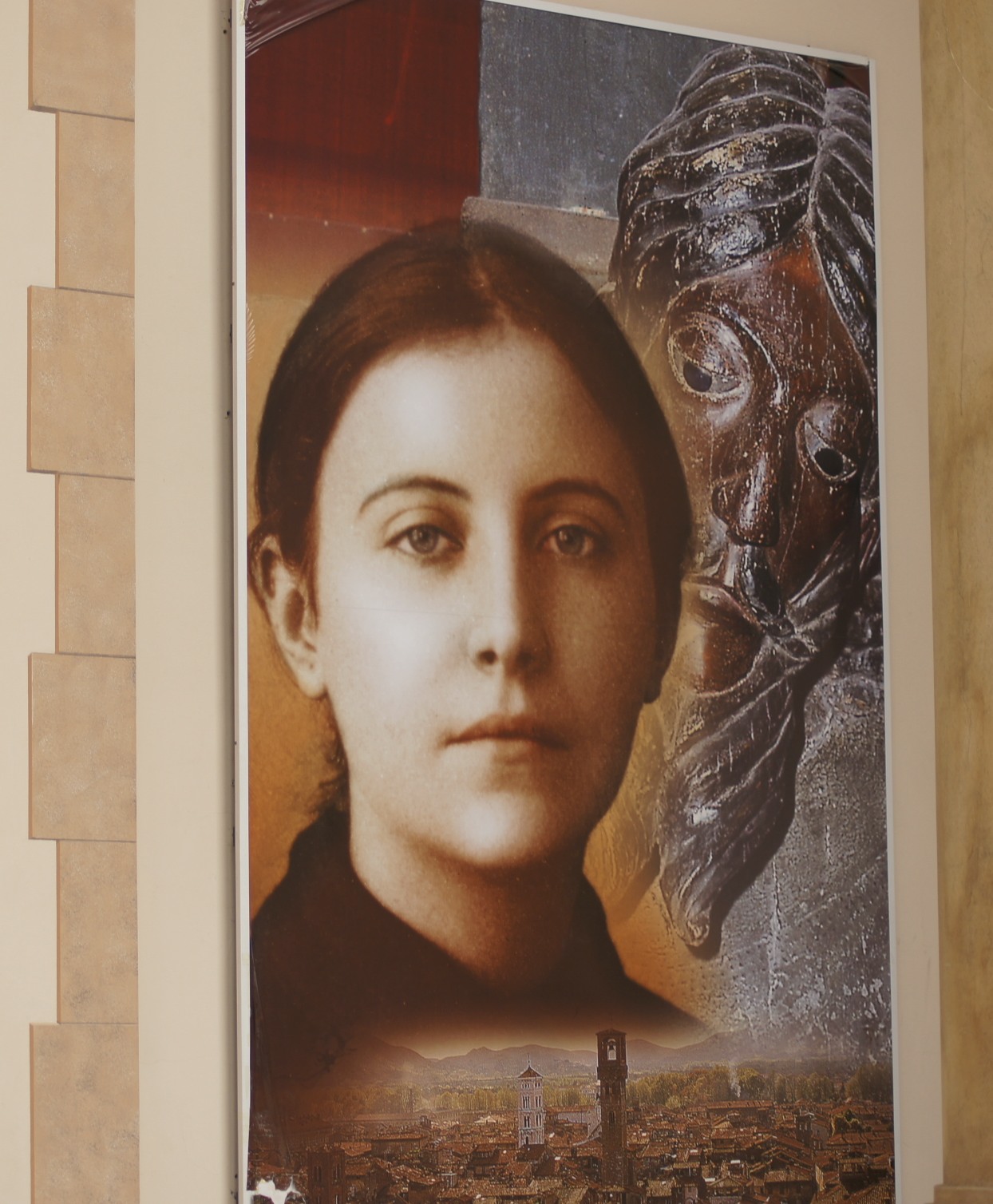
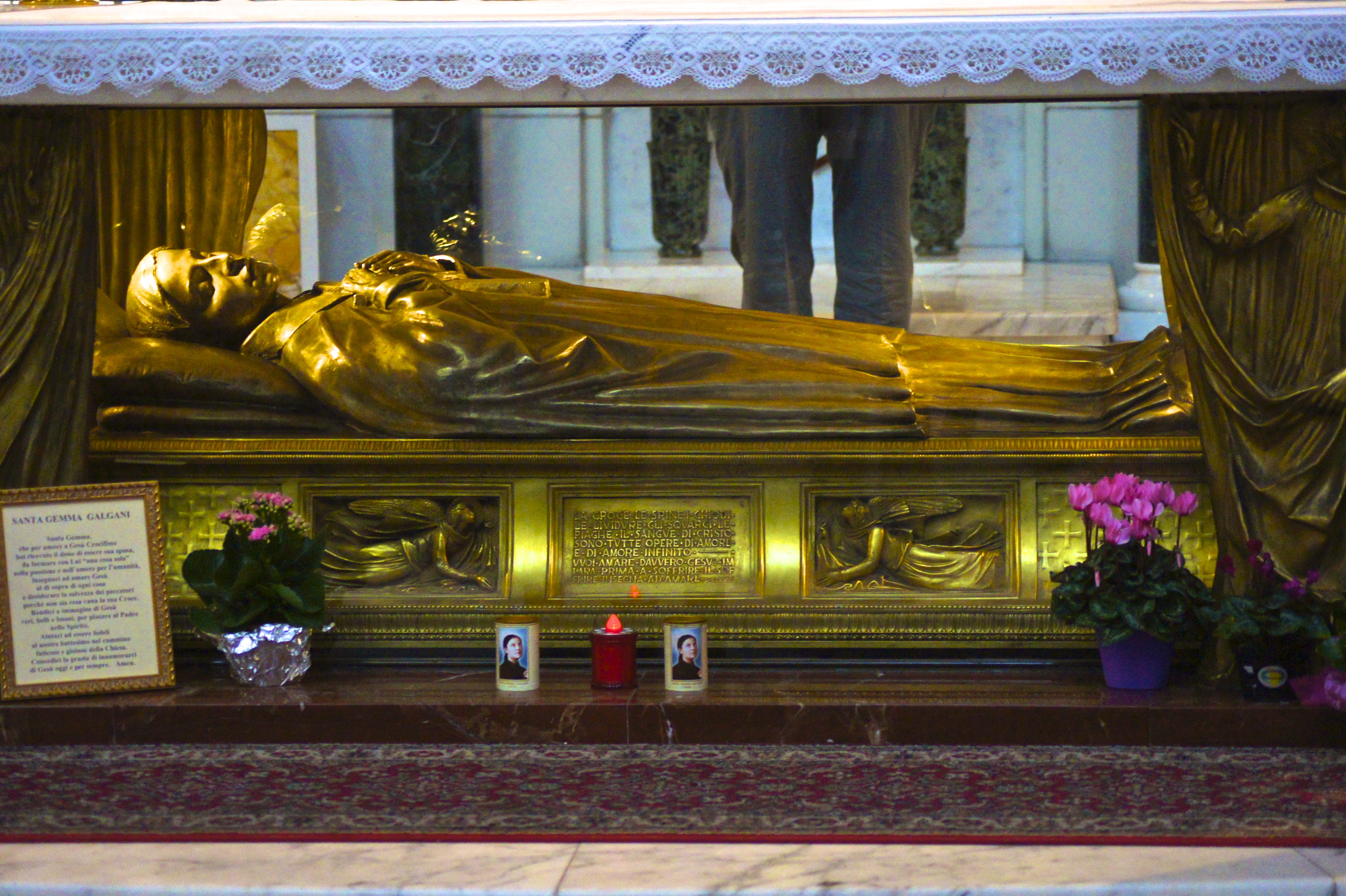
St. Gemma Galgani
Gemma Umberta Pia Galgani
(1878-1903)
Gemma Galgani died on Holy Saturday, 1903 in Lucca, Italy. Her death should have been completely unnoticed. She was often sickly in her 25 years of life and had to be taken care of. She left no children or family/. No hospitals, schools or any human achievement bear her name. Disappointments marked her life at every turn. She never got her wish to enter the Passionist Nuns or any other religious community.
Yet, at the news of her death on Holy Saturday, her neighbors gathered quickly in the Lucca’s ancient streets proclaiming “A saint has died.” Today in the Easter season we’re celebrating her feast.
Holy Saturday, the day after Jesus suffered and died, is the day before Jesus rose from the dead and appeared to his disciples. They report that he ate and drank with them for some days before ascending into heaven. He showed them the wounds in his hands and his side. He appeared to them, not just to prove he was alive, but affirm his love for them and for the whole world. He promised life.
Gemma knew the mysteries of Jesus’ death and resurrection in a special way. She spoke familiarly with the Risen Jesus, as we see from her writings, and in a unique way she bore his wounds in her body.
“Poor Gemma”, she called herself; but she was’t poor. Frail in body and mind, she wasn’t a failure. In declaring her a saint, Pope Pius XII said that Gemma experienced what the great apostle Paul experienced: “I have been crucified with Christ and the life that I live is not my own: Christ lives in me.
The stigmata, the bodily experience of the wounds of Christ, is a rare experience. It was not reason Gemma was declared a saint. Her heroic life of faith, patience and humility revealed her union with Christ, living in her.
The stigmata is a rare experience given to individuals, but it’s not meant for individuals themselves; it’s given to strengthen the belief of many. In Gemma’s time, “enlightened” thinkers like Freud and Jung were beginning to explore the human person. They were little concerned with God’s presence in human life. They would likely have dismissed Gemma’s spiritual experiences as delusional. A number of Lucca’s “enlightened” people had that opinion of her.
Gemma’s Passionist spiritual director, Father Germano, was introduced to her while preaching in Lucca. He saw God working in her. The church concurred in his judgment by declaring Gemma a saint in 1940.
Many today still define humanity in human terms and sees success here on earth as our ultimate goal. Gemma is a strong reminder of God’s presence in humanity, in ordinary people, even in unsuccessful, imperfect people. Her devotion to the Passion of Jesus gave her a deep sense that Jesus loved her and lived in her. She saw her life fulfilled in him and she believed his promise of life beyond this.
Many today think the spiritual world faraway; for Gemma it wasn’t faraway at all– saints and angels, Jesus himself, were ever at her side. She once wrote: “Often I seem to be alone; but really I have Jesus as my companion…I am the fruit of your passion, Jesus, born of your wounds. O Jesus, seek me in love; I no longer possess anything; you have stolen my heart.”
We’re not alone. Jesus Christ is our companion as well.
You can get St. Gemma’s Autobiography or a The Life of St. Gemma Galgani by writing to the Passionist Nuns, 1151 Donaldson Highway, Erlanger, Kentucky 41018
(859)371 8568
“Then one day I became very discouraged because I saw that it was impossible for me to become a Passionist, because I have nothing at alI: all I have is a great desire to be one. I suffer much seeing myself so far from realizing my desires. No one will be able to take this desire away from me. But when will it come about?” Letter to Germano
Gemm’a buried at the Convent of the Passionist Nuns in Lucca, Italy. The house where she lived before she died has been turned into a museum honoring her. Both places worth a visit.
Her feast day is May 16th.
Feast of St. Matthias: May 13
May 14th is the Feast of St.Matthias, chosen by lot to take the place of Judas. Appropriately, the feast falls in the Easter season, the time he was selected. Matthias brings the number of apostles back to twelve, symbolic of the twelve tribes of Israel who await the promises of God. The Spirit comes after Matthias is selected in Luke’s account.
The qualifications for a new apostle seem simple enough. Peter says it should be someone “who accompanied us the whole time the Lord Jesus came and went among us, beginning from the baptism of John until the day on which he was taken up from us. He joins us as a witness to his resurrection.”
Two have those qualifications. Joseph called Barsabbas and Matthias.
Then, they pray:
“You, Lord, who know the hearts of all,
show which one of these two you have chosen.”
Then they gave lots to them, and the lot fell upon Matthias,
and he was counted with the Eleven Apostles.” (Acts 1,15-17, 20-25)
Yet, it isn’t as easy as it sounds. To be a witness to Jesus it wasn’t enough to get all the details right about what Jesus did or said, as a reporter or witness at a trial might do. In John’s gospel read for Matthias’ feast, Jesus describes a disciple as one who abides in him, who remains in him– a friend committed to him. So, a disciple cannot be just an on-looker, but one who enters the mystery of Jesus’ death and resurrection. He’s one who weathers doubts and uncertainties as the disciples listening to Jesus’ Farewell Discourse did. He’s like Thomas who sees the wounds in the Lord’s hands and side and learns to trust and believe through them.
I think also that the disciples of Jesus were conscious of their own failures as they selected Matthias. They thought Jesus was the key to an earthly kingdom, but he was not. Surely, they wanted someone who looked beyond their vision as a successor for Judas. They were looking for someone with a new vision of things.
Rembrandt’s wonderful portrayal of Jesus showing his wounds to Thomas (above) presents Thomas, not as a lonely skeptic, but someone representing all the disciples. All the disciples must look at Jesus’ wounds.
Pope Francis in a homily spoke of the importance of the wounds of Christ for a disciple of Jesus. We’re on an exodus beyond ourselves, he said, and there are two ways open for us. “one to the wounds of Jesus, the other to the wounds of our brothers and sisters.”
“If we are not able to move out of ourselves and toward our brothers and sisters in need, to the sick, the ignorant, the poor, the exploited – if we are not able to accomplish this exodus from ourselves, and towards those wounds, we shall never learn that freedom, which carries us through that other exodus from ourselves, and toward the wounds of Jesus.”
The wounds of Christ and the wounds of our brothers and sisters– we learn from both to see victory over death and to trust in the passion of Jesus.
Like Matthias, we’re called to be witnesses..
Saint Stephen, the Deacon

Our readings from the Acts of the Apostles this week tell us one thing about the early church: it doesn’t evolve from human planning but from God’s plan. The disciples certainly didn’t expect Stephen.
The church was pretty settled in Jerusalem after Jesus rose from the dead, according to Acts. The followers of Jesus, good Jews, continued to worship in the temple. Yes, there were occasional squabbles with the Jewish leaders, but they were mainly tolerated as they worshipped and preached in Jerusalem. This was their world. Besides praying in the temple, they met together, probably on Mount Sion where the Last Supper was celebrated or maybe in Bethany. They broke bread and prayed there.
They were mostly Galileans at first, then others joined them from elsewhere. One of them was Stephen.
Stephen was a new-comer. He may have been a Samaritan, which could explain his polemic against the Judaism of the day. The scriptures see him as one who follows Jesus in his passion. So many of his sufferings are like those Jesus endured. But he was also the cause of the first scattering of believers to other places. He was brash and undiplomatic. I would also think that some of the Galileans didn’t like him.
Yes, he was a saint, but a hard-nosed saint.
He brought change, or better, God brought about change through him. We would like change to take place smoothly, without disagreements, but our early church history says change doesn’t come so easily.
Readings here.
Morning and evening prayers, 3rd week, here.
I Am The Bread of Life
The dark green around the Lake of Galilee in the upper part of this Google satellite picture of Palestine points to good farmland. It was good farmland at the time of Jesus. Herod the Great and his son Herod Antipas, Galilee’s rulers then, appreciated the land and created a network of roads and cities – Tiberius, Sepphoris and Caesarea Maritime on the sea– for shipping goods from Galilee to the rest of the world. Here Jesus proclaims in John’s gospel: “I am the bread of life”,
All four gospels say that Jesus fed a great crowd near the Sea of Galilee by multiplying a few loaves of bread and some fish. Like the Passover feast, the miracle and the teaching that follows occur over a number of days in the gospels. We will read .John’s account (John 6) at Mass on weekdays from the Friday of the 2nd week of Easter until Saturday of the 3rd week of Easter,
The Passover feast commemorated the Manna God sent from heaven to sustain the Jews on their journey to the promised land. Jesus claims to be the “true bread,” the “living bread” that comes down from heave
Jesus is a commanding presence during the miracle and the days that follow in John’s account. “Where can we buy enough food for them to eat?” he asks Philip as crowds come to him. Then he directs the crowd to sit down, feeds them with the bread and fish, and says what should be done with the fragments left over. The disciples have only a small role in this miracle.
A sudden storm occurs as Jesus and his disciples return to Nazareth after feeding the crowd. Jesus rebukes the wind and the sea; the forces of nature obey him. All four gospels have some version of Jesus power over the sea and the natural world occurring with this miracle. All obey him.
As Jesus reaches Capernaum after the miracle, the crowds want to make him king. Their faith is imperfect; they are limited in their understanding of this sign from heaven. The disciples are also tested; some walk with him no more.
The miracle of the loaves and the fish reminds us that Jesus is Lord and we are people of limited faith. “Master, to whom shall we go? You have the words of everlasting life,” Peter says to Jesus at the end of John’s account. We share His response.
In his commentary on Jesus as the bread of life, the early theologian Origen says that Jesus is bread because he is “nourishment of every kind.” He nourishes our minds and our souls; he also nourishes creation. When we ask “Give us this day our daily bread,” we’re asking for all that nourishes the life of the world.
“Give us this day our daily bread.”
Saints Philip and James: May 3

We celebrate a feast of the apostles each month. Why? Every family wants to find out how it began. Our church began with the apostles. Today, May 3rd, we remember two apostles together, Philip and James.They’re celebrated together because their relics were placed side by side in the Church of the Twelve Apostles when it was built in Rome in the 6th century.
Philip was called by Jesus to follow him the day after he called Andrew and Peter. (John 1:43-45) James, who is also called James the Less to distinguish him from James, the brother of John, was the son of Alpheus and a cousin of Jesus. He later became head of the church in Jerusalem. His mother Mary, stood with Mary the mother of Jesus and Mary Magdalen beneath the cross of Jesus. (John 19: 25) He was martyred in Jerusalem in the year 62.
On a feast of an apostle you expect to hear one or more heroic act or wise saying, but in today’s reading from St. John’s gospel we hear an apostle’s clumsy question instead. During his Farewell Discourse, Jesus says, “I am the way and the truth and the life. No one comes to the Father except through me. If you know me, then you will also know my Father.”
“Master, show us the Father, and that will be enough for us.” Philip says to Jesus, who responds:
“Have I been with you for so long a time and you still do not know me, Philip? Whoever has seen me has seen the Father. How can you say, ‘Show us the Father’? Do you not believe that I am in the Father and the Father is in me? The words that I speak to you I do not speak on my own.”
Can we hear exasperation in Jesus’ words to Philip ? Better, perhaps, they point out how slow Jesus’ apostles were to understand him; how uncertain, fearful–even ready to betray him. Philip isn’t the only one who can’t fathom Jesus and his message.
James, son of Alpheus, came from conservative Nazareth. He knew Jesus as the son of Joseph, the carpenter and probably played with Jesus as a child. He lead the Jerusalem church, while apostles like Peter and John embarked on missions to distant lands. James favored keeping the Jewish tradition as the Spirit’s means of spreading the gospel. James and his allies would certainly be early critics of Paul’s mission to the gentiles. He alienated Jerusalem’s leaders less than Stephen or Paul, but eventually he was put to death in the year 62, as the Jewish wars approached and Jerusalem was destroyed by the Romans. Jewish Christians fled the city for the safety of another place.
Called by Jesus, all of his disciples were human. Their humanness and slowness makes us realize where our power comes from. “Not to us, O Lord, not to us be the glory!” The church’s one foundation is Jesus Christ.
But before we dismiss an apostle like Philip, let’s remember he pointed Jesus out to Nathaniel at the Jordan River and he brought Greek visitors to Jesus as he was entering Jerusalem to die on a cross. ( John 12: 20-23) He never stopped pointing to the One whom he tried to understand. It’s an apostle’s gift.
The apostles make us realize the patience of Jesus, which is the patience of God. They reveal the different gifts and weaknesses found in the followers of Jesus.