Tag Archives: Passion of Christ

Friday Thoughts Continued

Friday is the traditional day Christians remember the Passion of Jesus. We’re losing that tradition I’m afraid. Can we do something about it?

The words “Friday Thoughts” came to my mind and so I put some thoughts from Thomas Aquinas and Bernard of Clairvaux on a previous blog. Then I happened to #hashtag Friday Thoughts over at Twitter and came upon #fridaythoughts , a whole world of people probably finishing the week and looking at the coming weekend.

So here are some Friday thoughts:

“Fri-YAY! Welcome back weekend, can’t wait to enjoy you!”

“You can’t climb the ladder of success with your hands in your pocket.”

“In a gentle way, you can shake the world.”

How can we offer #fridaythoughts a reminder of the Gentle One who shook the world this day and brought it hope and life?

Some of them might be interested

Friday Thoughts

When you blend the prose of St. Thomas Aquinas with the poetry of St.Bernard, you get something like this:

“Why did the Son of God have to suffer for us? There was a great need, and it can be considered in a twofold way: in the first place, as a remedy for sin, and secondly, as an example of how to act.

It is a remedy, for, in the face of all the evils which we incur on account of our sins, we have found relief through the passion of Christ. Yet, it is no less an example, for the passion of Christ completely suffices to fashion our lives.”  ( Thomas Aquinas)

“Where can the weak find a place of firm security and peace, except in the wounds of the Saviour? Indeed, the more secure is my place there, the more he can do to help me. The world rages, the flesh is heavy, and the devil lays his snares, but I do not fall, for my feet are planted on firm rock. I may have sinned gravely. My conscience would be distressed, but it would not be in turmoil, for I would recall the wounds of the Lord: he was wounded for our iniquities…

They pierced his hands and feet and opened his side with a spear… But the piercing nail has become a key to unlock the door, that I may see the good will of the Lord. And what can I see as I look through the hole? Both the nail and the wound cry out that God was in Christ reconciling the world to himself. The sword pierced his soul and came close to his heart, so that he might be able to feel compassion for me in my weaknesses.

Through these sacred wounds we can see the secret of his heart, the great mystery of love, the sincerity of his mercy with which he visited us from on high. Where have your love, your mercy, your compassion shone out more luminously than in your wounds, sweet, gentle Lord of mercy? More mercy than this no one has than that he lay down his life for those who are doomed to death.”  (St. Bernard)

The Passion of Christ

passion site

Monday on the Feast of St. Paul of the Cross we launched a new website on the Passion of Christ.

http://passionofchrist.us/

The website has a commentary on the Passion Narratives by Fr. Don Senior, CP, and information on Passion sites, devotions, prayers, spirituality and recent studies.

In recent studies, for example, there’s a review by Fr. Paul Zilonka, CP. of Bill O’ Reilly’s recent book “Killing Jesus.”

It’s a work in progress. A lot more material will be added in days to come, so drop in every once in awhile. The Passion of Jesus is at the heart of the mission of the Passionists, the community I belong to. It’s a mystery that can feed your soul.  I would be grateful for any suggestions you may have.

The site will play on any computer, iPad or smart phone. We hope eventually to develop the website into a multi-lingual site that will literally reach the whole world.

I’m very grateful to the person who did such a beautiful job in formatting the site. A work of art in itself. A special grace brought this site about.

Mission at St. Thomas More: Tuesday Evening

Tuesday evening at our mission in St. Thomas More Parish, Sarasota, Florida, we’re going to reflect on the Passion of Jesus Christ. Those who can’t attend our service at 7 PM (and maybe some who attended too) may find this great presentation by Rembrandt something to study. He’s a great visual teacher of scripture.


Here’s some thoughts on it:

Rembrandt’s Crucifixion.

Light from above falls on this dreadful scene, falling first on Jesus Christ, who is the Light of the World, even in this dark hour.

The same light bathes those on his left (Is it because blood and water from his pierced heart flows on them?). The thief, his face turned already toward Paradise, has a place among those who followed Jesus from Galilee. Some of them sit on the ground overwhelmed by it all; some comfort Mary his mother; some stand looking on. Mary Magdalene comes close to kiss his nailed feet.

The centurion kneels before Jesus and cries out his confession of faith, “Yes, this is the Son of God.” But his soldiers look ready to leave their grim duty for the barracks and dinner.

On the left, Jesus’ enemies are heading home too, into the darkness. The other thief’s face is turned to them, as if he wished he could go with them, away from this place.

But I notice some light seems to reach out to them too. “Father, forgive them, for they know not what they do.”


Beauty every ancient, ever new

The recent blogs from America and Commonweal magazines mention Pope Benedict’s new book, Jesus of Nazareth, Part 2, which is due out next week and which devotes a great deal of attention to the gospel narratives of the Passion. The bloggers, like the New York Times yesterday, seem interested mostly in what the pope says about Jewish responsibility for the death of Jesus. Following Nostra Aetate from the Second Vatican Council, Benedict says the Jewish people were not responsible for putting Jesus to death; the Romans and a few Jewish leaders were the primary culprits.

Yet, it would be regrettable to see the pope’s treatment of the Passion narratives only as a lengthy statement about this issue, important as it is. From what I read, he’s doing more. He’s looking at the Passion of Jesus like other believers before have done: as a book that reveals in those harsh and heroic moments the wisdom of God.

He seems to be using insights from modern scholars, new tools that can add to the way we reflect on this great story. The Passion of Jesus has always been “the well-trained tongue” that God uses to speak to us, but we may not hear it so well today, and the pope is reminding us of its power and glory.

We tend to say “I’ve heard that already. I know the story.” But it’s a revelation of God and humanity;  “a Beauty ever ancient, ever new.”

Nearing his death, Paul of the Cross was supposed to have pointed to the crucifix over his bed and said to the brother caring for him, “Give me my book.” That seems to be what the pope is doing also.


Pilate’s Wife

Daniel Harrington, SJ, in an article I’ve been reading in Bible Today on the Gospel of Matthew has an interesting comment on Matthew’s narrative of the passion of Jesus. He sees the narrative framed to absolve the Romans of their role in the death of Jesus and shift the blame to the Jews. The Jewish  Christian community around 90 AD, about the time the gospel was written, lived in a Roman world and wanted to be seen by the Romans, not as revolutionaries ready to topple their rulers, but as people interested only in the kingdom of heaven.

Matthew is the only gospel reporting the dream of Pilate’s wife, who pronounces Jesus innocent. Like the dreams of Joseph, also recorded by Matthew,  her dream is important. Her judgment is followed by the Jewish crowd, prompted by their leaders, shouting out before Pilate: “His blood be on us and on our children.”  Matthew 27,15-25

Matthew’s community would see the punishment for their complicity in the destruction of Jerusalem in 70 AD. They wanted to minimise Roman responsibility. Unfortunately, Christians  throughout history reading Matthew continued to place the guilt for the death of Jesus on the  Jewish people, resulting in dire consequences.

Today in the Office of Readings I’m reminded of the true key to understanding the scriptures, however:

“The stream of holy Scripture flows not from human research but from revelation by God. It springs from the Father of lights, from whom all fatherhood in heaven and on earth takes its name. From him, through his Son Jesus Christ, the Holy Spirit flows into us; and through the Holy Spirit, giving, at will, different gifts to different people, comes the gift of faith, and through faith Jesus Christ has his dwelling in our hearts. This is the knowledge of Jesus Christ which is the ultimate basis of the solidity and wisdom of the whole of holy Scripture.

“From all this it follows that it is impossible for anyone to start to recognise Scripture for what it is if he does not already have faith in Christ infused into him. Christ is the lamp that illuminates the whole of Scripture: he is its gateway and its foundation. For this faith is behind all the supernatural enlightenments that we receive while we are still separated from the Lord and on our pilgrimage. It makes our foundation firm, it directs the light of the lamp, it leads us in through the gateway. It is the standard against which the wisdom that God has given us should be measured, so that no-one should exaggerate his real importance, but everyone must judge himself soberly by the standard of the faith God has given him.”

St Bonaventure, Breviloquium

Church Closings

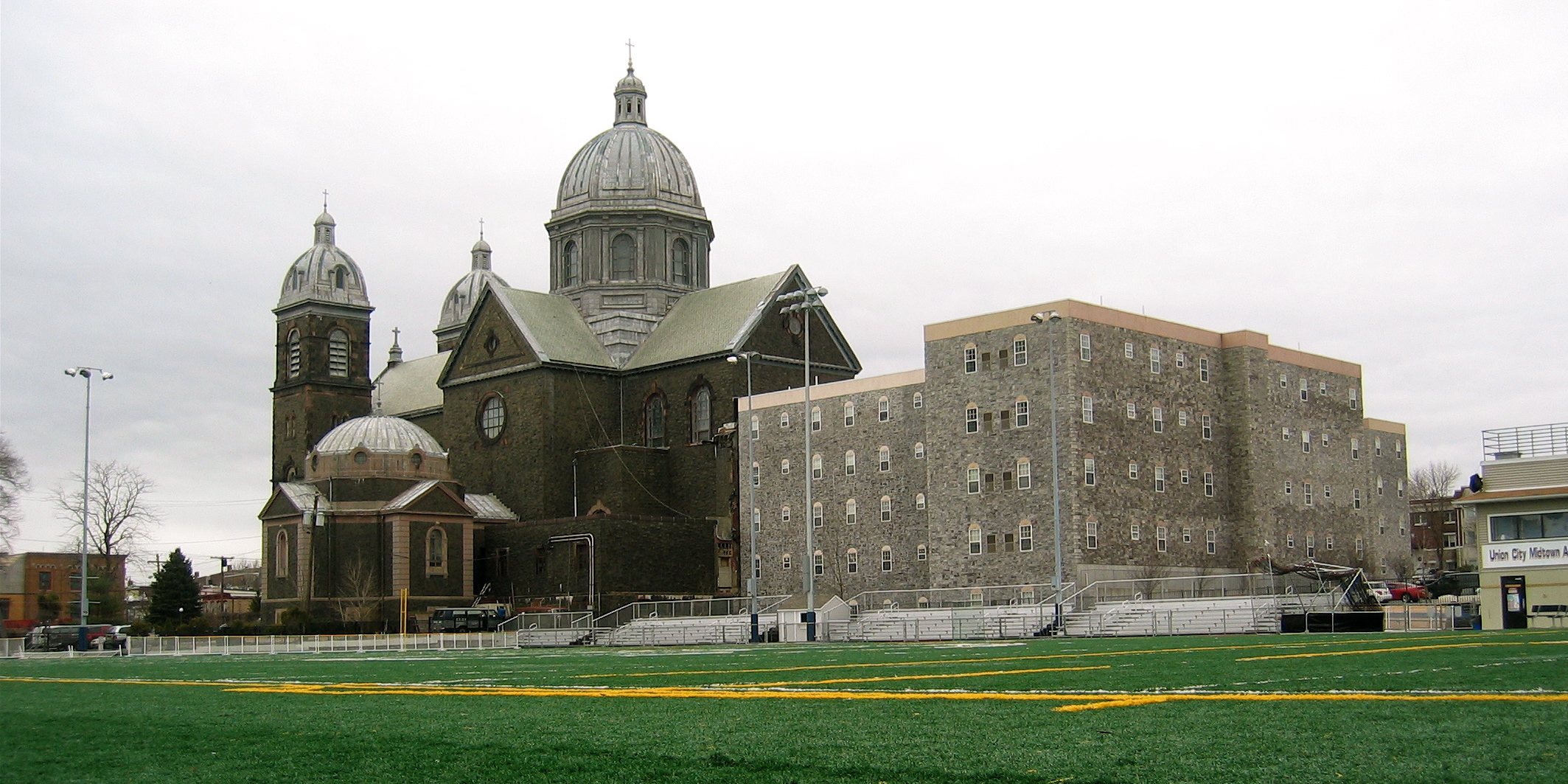
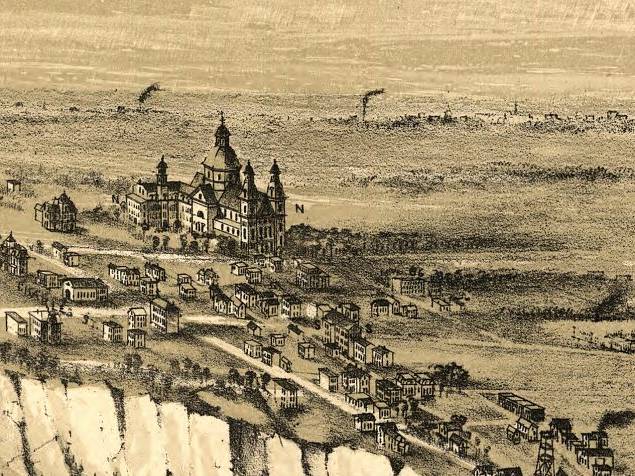
IMG_2928My window in Union City faces the great church across the street, which I still think of as St. Michael’s, although now the signs outside say in Korean and English that it’s the Hudson Presbyterian Church.  Until its closing and sale in 1981, St. Michael’s was one of the “mother churches” of Hudson County, NJ, where devotions to the Passionist saints flourished and where many of my Passionist community’s important moments took place.

A good number of parishes were established throughout the county from this place, after its foundation in 1869.

St. Michael's 3St.Michael’s 1881

St. Michael’s parish was closed because many of its parishioners moved to the suburbs as new immigrants came here and the Passionists couldn’t take on the large expense involved in maintaining the old church. The Passionists were also experiencing a decline in members,  and staffing the old monastery was difficult.

Since 1981, church closings have increased in the Unites States, especially in the Northeast and Midwest, due to population shifts, the expense in keeping up old buildings, and recently, a drastic economic downturn. But there’s another important factor contributing to church closings that doesn’t get the attention it deserves:   people are leaving the Catholic Church.

One of the best sources on religious practice in the United States is the Pew Forum on Religion and Public Life (http://pewforum.org/), based in Washington, D.C., “a nonpartisan ‘fact tank’ that provides information on the issues, attitudes and trends shaping America and the world.”

It’s recent survey (April 27, 2009), which reports that about half of American adults have changed religious affiliation at least once in their lives, explores the reasons different groups cite for leaving or joining their religion.

“Most people who change their religion leave their childhood faith before age 24, and many of those who change religion do so more than once,” the survey says.

“The group that has grown the most in recent years due to religious change is the unaffiliated population. Two-thirds of former Catholics who have become unaffiliated and half of former Protestants who have become unaffiliated say they left their childhood faith because they stopped believing in its teachings, and roughly four-in-ten say they became unaffiliated because they do not believe in God or the teachings of most religions.”

“Additionally, many people who left a religion to become unaffiliated say they did so in part because they think of religious people as hypocritical or judgmental, because religious organizations focus too much on rules or because religious leaders are too focused on power and money. Far fewer say they became unaffiliated because they believe that modern science proves that religion is just superstition.”

“Catholicism has suffered the greatest net loss in the process of religious change. Many people who leave the Catholic Church do so for religious reasons; two-thirds of former Catholics who have become unaffiliated say they left the Catholic faith because they stopped believing in its teachings, as do half of former Catholics who are now Protestant. Fewer than three-in-ten former Catholics, however, say the clergy sexual abuse scandal factored into their decision to leave Catholicism.”

Almost 1,000 Catholic churches have closed in the US in the last 10 years and more closings will come, especially in the Northeast and Midwest. When the diocese of Cleveland closed or merged a third of its 224 parishes recently, Bishop Richard Lennon had to be escorted by Cleveland police as he made the rounds for the closing ceremonies.

In February, Bishop Joseph Martino of Scranton announced the consolidation of diocesan parishes –from 209 to 111, citing changing demographics, fewer financial resources and a dwindling number of priests as reasons for the closures and mergers. The bishop’s recent resignation had to be influenced, in part, by the turmoil that came from the move.

It’s a dangerous time to be a church leader, and hard to be a Catholic in a shrinking church.  The church is suffering.

A sermon of Origen, an early 3rd century Christian scholar, may offer a good image for understanding  our present suffering. He sees a suffering church in the light of the destruction of the temple of Jerusalem.

Just as the stones of the Jewish temple, once harmoniously connected to each other, were pulled away from each other and cast down by Roman legions in 70 AD, so the “living stones” of the church, once harmoniously joined together, can become disconnected and fragmented “by troubles and persecutions.”

“Nevertheless the temple will be rebuilt and will rise again on the third day,” Origen says, echoing the words of Jesus,  “Destroy this temple and in three days I will raise it up.” (John 2,19)

For Origin, the destruction of the temple is an image of the Passion of Christ. The “troubles” in our present church belong to this same mystery. We’re experiencing them and have no idea how much will be torn down and what the rebuilding will look like. The “third day” is a good way off, but it will come.
Veronica’s Veil

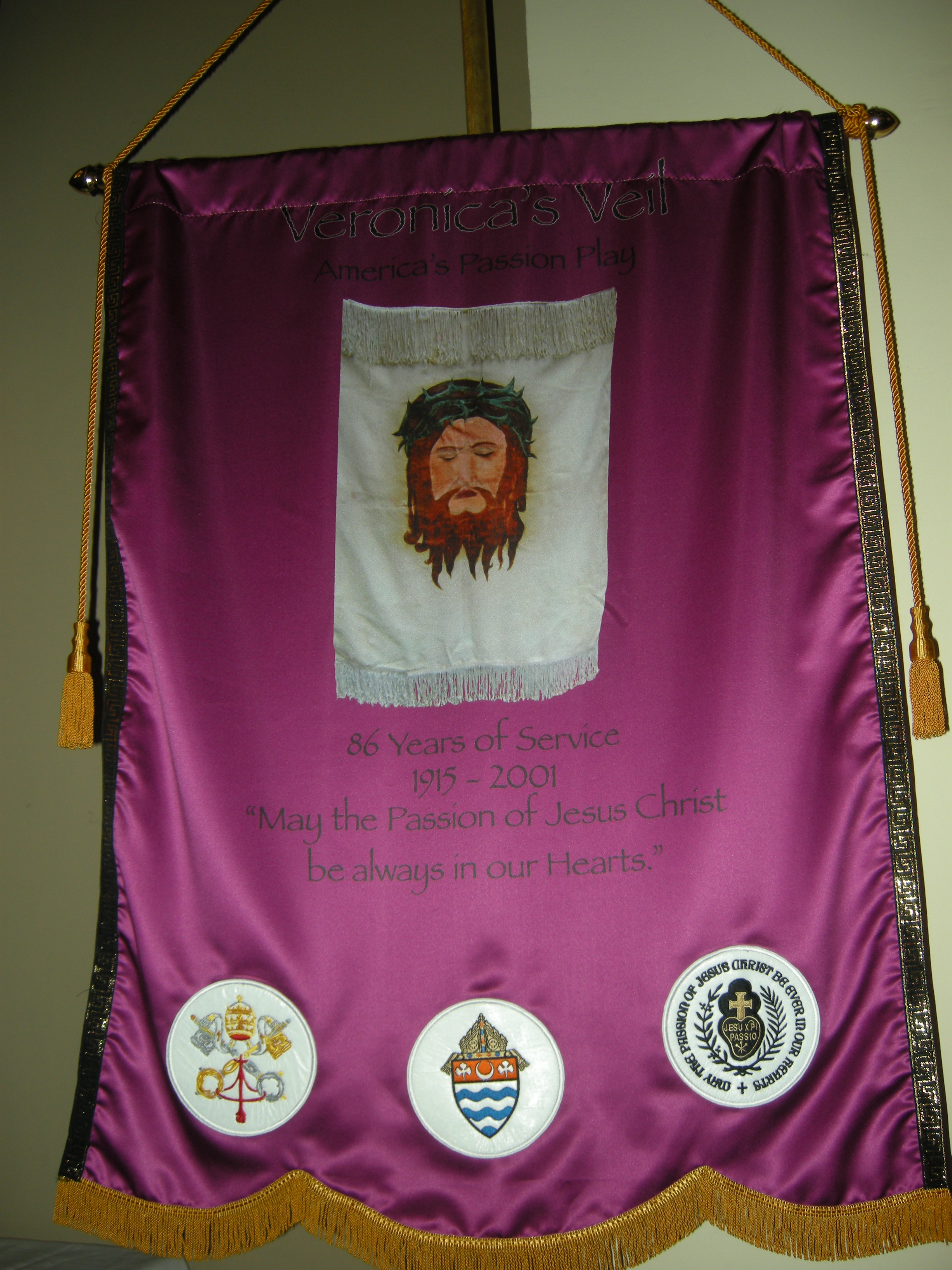
DSCN1721The Passionists, the community I belong to, were founded by St. Paul of the Cross (+1874) to keep alive the memory of the Passion of Jesus Christ. For 86 years, from 1915-2001, people from Saints Joseph and Michael’s parish in Union City, NJ,  a parish nearby where the Passionists served for many years, presented a Passion play, “Veronica’s Veil,” during Lent.  Two Passionists , Father Bernardine Dusch, CP, and Father Conrad Eiben, CP,  were the play’s creators.

Patrick Allen, a Union City native and the last stage manager of the play in 2001, has begun to bring the play “back into service,” he says. Last Lent, on Good Friday, the Veronica Veil players processed through the streets of New York’s Little Italy near Old St. Patrick’s Cathedral, reenacting the Lord’s journey to Calvary, and ended up in the church itself.

Patrick hopes to present the play again in Union City and New York City this coming Lent. This Thursday, June 25th, he’s accompanying Archbishop Timothy Dolan, the new archbishop of New York, to Rome where the archbishop will receive the pallium from Pope Benedict XIV.

At the Mass, Allen will bring a service banner from Veronica’s Veil as part of the offertory gifts. Afterwards, the banner will be placed with the original relic of the veil presently enclosed in one of the great pillars in St. Peter’s Basilica next to the main altar.

For centuries, Passion plays have told the story of the Passion of Jesus. The banner to be blessed by the pope this Saturday explains why they are created. “May the Passion of Jesus Christ be always in our hearts.”

Here’s Patrick talking about Veronica’s Veil.

The Rocks were Rent

I’ve been thinking about the earthquake in L’Aquila, Italy, that claimed 292 lives. We stopped on our pilgrimage from St. Mary’s at that beautiful old medieval city on our way fron the shrine of St. Gabriel in the Abruzzi last November. Now it’s in ruins.

In January, 1915, an earthquake hit the town of Pescina, about 25 miles from Aquila, killing 3,500 of the town 5,000 people. The Italian writer, Ignazio Silone, a native of the town, dug his mother’s body from its rubble and would remember the day the rest of his life.

“In an earthquake,” he wrote, “everyone dies: rich and poor, learned and illiterate, politicians and people. An earthquake accomplishes what words and laws promise and never achieve: the equality of all.”

News from the Passionist shrine, not far away, was that the community there were sleeping in cars outside the buildings, which have been shaken by the shocks.

They buried their dead in L’Aquila on Good Friday at a mass funeral.

Earthquakes are awful experiences. They ‘re the harsh face of nature– our mother, our sister, our brother– that nourishes us with life and delights us with beauty. Yet, nature also brings death and destruction. With all our technical expertise we can’t predict when or where the earth will open up.  Quakes are no respecters of persons: old, young, rich, poor are taken.  Treasured buildings completely destroyed.

It’s interesting that Matthew’s gospel says “the rocks were rent” when Jesus died. He was describing an earthquake. But this one reverses the equation; it brings the dead to life.

“This day you will be with me in paradise,” Jesus says to the thief hanging in the dark at his side. As the rocks are rent, the dead rise. Jesus’ resurrection reaches out to all humanity, to all the dead.  And the earth itself takes part in the mystery. An earthquake, its sign of death, becomes a sign of resurrection.

The mystery of his cross speaks to the mystery of death. As the earth quakes, God wills that there be life.

On television news from Aquila, a reporter picked up a cross from the rubble and handed it to a Franciscan priest who was showing him a ruined church. Then the earth quaked again and they had to get out of the church. How significant his gesture was!

Holy Thursday

When Jesus Christ entered the supper room to eat the Passover meal that last Thursday night, he was aware a dark fate awaited him. Powerful forces were drawn up against him ready to take his life. His enemies were moving to stop him.

Beside him were his disciples, “his own who were in the world.” Arguing among themselves as they took their place at table, they gave him little support. Not only did Jesus face their pettiness, he also sensed their impending betrayal of him.

What would he do? Understandably he might respond with caution and draw back. Like the servant, whom Isaiah described, he might well say, “I toiled in vain; and for nothing, uselessly, spent my strength…” (Is. 49).

Jesus, however, took bread and gave it to his disciples. “Take this,” he said, “this is my body.” He took the cup and gave it to them. “This is my blood, the blood of the new covenant, to be poured out in behalf of many.”

That night, without wariness or regret, he gave himself in love to his Father and his disciples. As Savior and Redeemer he gave himself unhesitatingly for the life of the world.

We remember that love each time we celebrate the sacrament of the Holy Eucharist, the sacrament which makes a supper room of every time and place. Until the end of time, the sacrament says, Jesus Christ will offer his body and blood for all.


Lord Jesus,
once in the wilderness
your people ate heavenly manna
and they were filled.
And once in a desert place
you fed the hungry
with blessed bread.

A simple thing, we say,
costing our mighty God
litte effort.

But what if bread is
a body offered for all,
and a cup of wine
your own life-blood
given to those who hardly care?

A costly thing, we say,
Is there anything more
God could have done?
Anything more
Love could do
than lay down his life
for his friends?