Tag Archives: Nazareth

The Scandal of the Incarnation

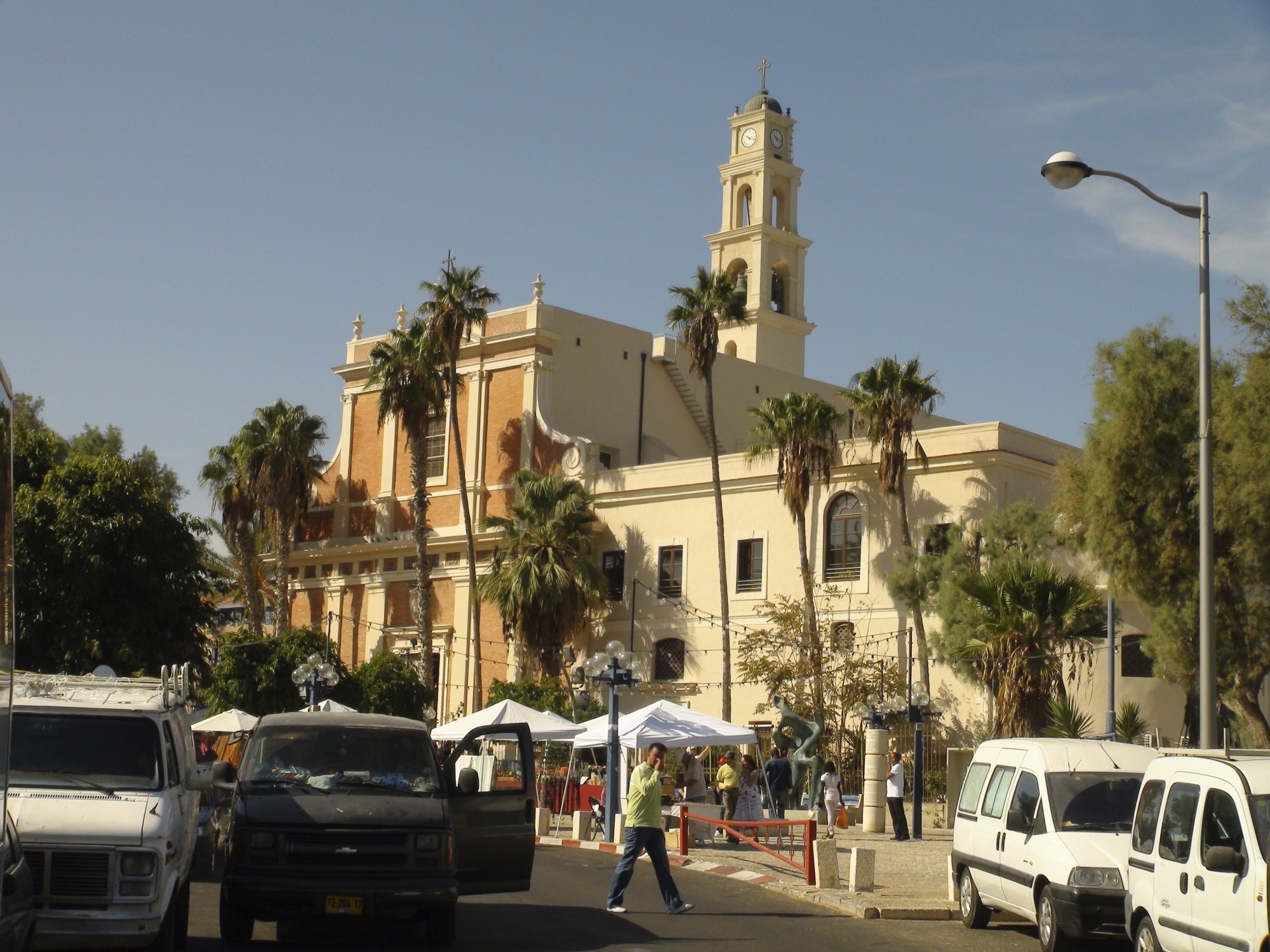
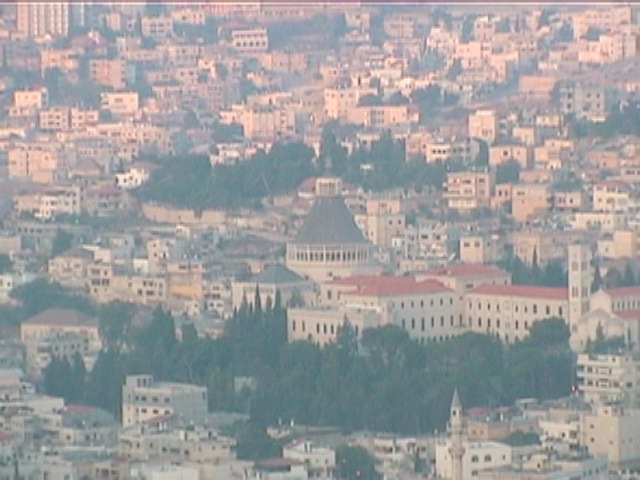
Nazareth, Annunciation ch

The four gospels take a dim view of Nazareth, the hometown of Jesus Christ. Early in his gospel, John says that Philip, one of Jesus’ first disciples,  invited Nathaniel to meet “Jesus, son of Joseph, from Nazareth.” “Can anything good come from Nazareth?” Nathaniel replies. (John 1,46).

 The other gospels recall the sad rejection of Jesus by his hometown after his baptism by John the Baptist. According the Matthew, it takes place after Jesus has spoken to a large crowd in parables. Then, he goes to Nazareth and speaks in the synagogue to his own townspeople, who are at first astonished at his wisdom, but then wonder where did “the carpenter’s son” get all this. They know his mother and his family, and they reject him. (Matthew 13,54-58)

Mark’s gospel puts the event after Jesus has raised a little girl from the dead. Going to Nazareth with his disciples, he’s greeted in the synagogue with astonishment because of his wisdom; they’ve heard of his mighty deeds, but then they ask where did this “carpenter” get all of this? He’s “Mary’s son” and they know his family. Jesus “was amazed at their lack of faith.”    (Mark 6,1-5)

Luke’s gospel has the most detailed description of the event, which he places at the very beginning of Jesus’ ministry. Last Sunday we read the first part of his account: in the synagogue Jesus takes up the scroll from Isaiah and reads “the Spirit of the Lord is upon me.” And he says,  “This reading is fulfilled in your sight.”

This Sunday we hear about the reaction to his claim. “They are amazed at the gracious words that come from his mouth,” but then ask “Isn’t this Joseph’s son.” Then, enraged by his sharp rebuke to them for refusing to accept him, they take Jesus to the steep hill on the outskirts of their town and are ready to throw him over, but he passes through their midst. (Luke 4,16-30)

Why do they reject Jesus? The reason seems to be that they know his family and what he’s done for a living, and they can’t believe someone like him could be a messenger of God to them.  He’s just a carpenter. What does he know? He came from an ordinary family, some of whom may not have been nice people at all. So they dismiss him.

At Nazareth we see an example of what’s called the “scandal of the incarnation.” People can’t believe that God could come to us as Jesus did.

That scandal still continues.  One obvious instance of it is when people claim to be “spiritual, but not religious.” They want God and not the human ways God comes to us. They want God to be in the beauty of a sunset, but not in a church. They want God as they would like him to be, and not in the messiness of humanity.

I think of that line from one of the English poets:

“I saw him in the shining of the stars, I marked him in the flowering of the fields, but in his ways with men, I knew him not.”

The scandal of the Incarnation is always with us.

The Higgs-Boson Particle

Scientists all over the world are celebrating the discovery last week at a research center in Switzerland of a mysterious particle called the Higgs Boson particle. It’s a particle that’s found in all matter and its existence contributes to a new understanding of the nature of our universe.

After fifty years of searching for it, physicists seem to have found it.

I certainly can’t explain what they found, but I admire the scientists for their curiosity, their imagination and their patient searching for this mysterious piece in the puzzle of our universe. They want to know and I admire their drive to know.

I also admire their humility. The scientists say they’re only beginning to see how this world of ours began and how it works. To use a religious analogy, like Moses on the mountain, they’re approaching this mysterious universe with shoes off.

Our search for God is similar to theirs. We know God step by step, little by little. We can’t look straight at the sun; neither can our minds know God completely and at once. We search, not for particles, but for signs and experiences of life that reveal God little by little.

The truth of it is that God does not hide from us. In fact, we believe God revealed himself in the extraordinary sign of Jesus Christ, God’s  Son, who came humbly into our world as God’s Word.

Today’s gospel for the 14th Sunday of the year (Mark 6,1-6 ) recalls the rejection  of Jesus by his own people in Nazareth, a town in Galilee where he was brought up. He suffered the rejection that prophets often receive; later he would suffer a cruel death on a cross, but he did not turn away. In his life, death and resurrection, we see God’s love, God’s desire that we know him.   In him, we have God’s invitation to share his life more deeply, face to face.

We have to fix our eyes on him, patiently and steadily. If we do, we will find him.

Patron of Blended Families

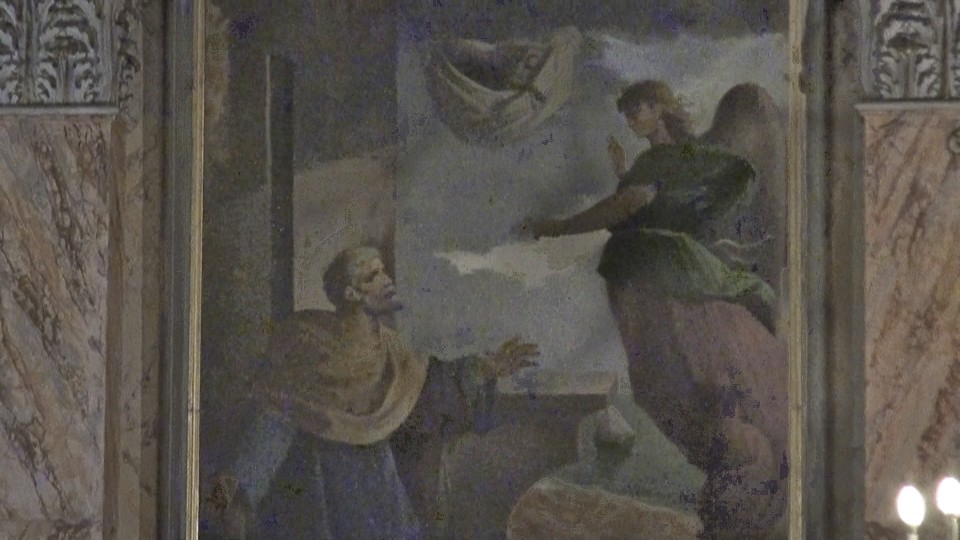
The great old stories from the scriptures have a way of speaking to us today, if we  hear them right. Tomorrow’s gospel from Matthew is about the announcement of Jesus’ birth made by an angel to Joseph.

Joseph is ready to divorce Mary who is mysteriously pregnant, but prompted by the angel he takes her into his home and raises her Child as his own. Anything like that going on today?

How about all the blended families we meet now, where divorce or death have created other groupings not based on original marriage vows or blood relaltionships? The holidays will bring many of them together. Stepfathers and stepmothers, stepchildren.  Some of these families have known divorce, maybe once, or twice or three times. There are kids and relatives from family number one, number two, number three.

Joseph loved  Jesus and Mary with a love, not based on flesh and blood, a love that made him father, husband, and all the other relationships that blood or vows are supposed to bring. He showed us that love is what counts after all.

Later on, Jesus said in Capernaum, when they announced that his family were outside waiting to see him: “Who are my mother and my brothers? “  He was proclaiming a love higher than that based on flesh and blood. He saw it in Joseph.

How about naming Joseph, Patron of Blended Families?

Safe and Sound

We are safe and sound on the Sea of Galilee, forty two weary pilgrims from St. Mary’s in Colts Neck. After an uneventful flight, (always appreciated) we were met my our guide, Joseph, a Palestinian Christian, and our driver, Eiz a Muslim from Bethany at about 8 AM this morning. Since our hotel rooms would not be ready till later because of the Sabbath, we toured Joppa, where a lovely Mass was taking place in French, and the ruins of Caesaria Maritima, where we saw Pilate’s  inscription and the great stadium and harbor of that important city. We finally made our hotel Gai Breach Hotel, in Tiberias, around 3 PM.

Joseph is a wonderful guide who explained the land and its development around Tel Aviv. He studied archeology at Drew University in Madison, NJ.

Tomorrow we go for Mass to Nazareth, then to Cana. If we have any energy left tomorrow, Joseph says he will take us somewhere else. Christians tourists are all over the area, from Houston, West Virginia, California, and of course New Jersey.

I have the homily tomorrow.

His Own Received Him Not

Lk 4:24-30

Jesus said to the people in the synagogue at Nazareth:
“Amen, I say to you,
no prophet is accepted in his own native place.
Indeed, I tell you, there were many widows in Israel
in the days of Elijah
when the sky was closed for three and a half years
and a severe famine spread over the entire land.
It was to none of these that Elijah was sent,
but only to a widow in Zarephath in the land of Sidon.
Again, there were many lepers in Israel
during the time of Elisha the prophet;
yet not one of them was cleansed, but only Naaman the Syrian.”
When the people in the synagogue heard this,
they were all filled with fury.
They rose up, drove him out of the town,
and led him to the brow of the hill
on which their town had been built,
to hurl him down headlong.
But he passed through the midst of them and went away.

Monday, 3rd week of Lent

The gospel from Luke brings us back to Nazareth, where Jesus lived most of his life among “his own.” Yet when he began his ministry in the synagogue at Nazareth, his own strongly reject him.  It’s hard to see how Jesus would not carry the hurt of that rejection with him;  how could he forget it?

According to Matthew’s gospel, the crowds that welcome him to Jerusalem on Palm Sunday call him “the prophet Jesus from Nazareth in Galilee.”  But  few disciples from Nazareth follow him into Jerusalem; a couple of women from there will stand by his cross as he dies. From what we know of Nazareth and its subsequent history, Jesus did not find much acceptance there. “He came to his own and his own received him not.”

To prepare us to enter the great mystery of Jesus’ death and resurrection, the lenten gospels  help us understand the one who took on himself our sorrows. They also help us see what our own participation in that mystery will be like. Can rejection by our own be one of them?

Nazareth again

Nazareth: 1843

The gospel readings for the last two Sundays, and then today’s reading, make you wonder about Nazareth, where Jesus spent most of his life. He was rejected there, the gospels say, even by his own family. Why? Because they knew him too well, or at least they thought they did?

What happened at Nazareth afterwards? Did the rejection continue?

Archeologists and historians piece together some facts about the place where the Word made flesh dwelt. John Meier’s, A Marginal Jew: Rethinking the Historical Jesus, Vol 1, New York,1991, offers a lengthy assessment of what the gospels and other early sources say about his parents, his family status, the language he spoke, his education, his own place in society.

In his book, Meier criticizes the popular over-reliance on apocryphal literature like the Gospel of Thomas–which colors so many media presentations about Jesus today–  and asks why more attention isn’t given instead to the more reliable New Testament and patristic writers of the “great church.’

For the gospel writers, especially Mark,  leaving your own town and place was part of a prophet’s mission, Meier says, and so they have little to say about any connections Jesus had with his hometown during his ministry. Besides the story of his rejection there, Mark records some unpleasant visits from his family to Capernaum. (Mark 3, 21; 3,31-35) That explains somewhat the silence about Jesus’ hometown.

John’s gospel, though, mentions that after the wedding at Cana in Galilee, Jesus “went down to Capernaum with his mother, his brothers, and his disciples and remained there for a few days.” (John 2,12)

So there wasn’t a radical break.

Later, some from Nazareth took up his cause. Though they didn’t take part in his public ministry,  people from Nazareth were there when he died. In John’s gospel,  Mary, his mother, his mother’s sister, Mary the wife of Clophas–all presumably from Nazareth– stand beneath his cross with one of his disciples, and Jesus gives his mother into the disciple’s care.

The Acts of the Apostles say that Mary, his mother, along with “certain women’ and “his brothers” join in prayer with the eleven disciples after Jesus ascends into heaven. (Acts 1,14)

James, called the Just, likely one of those brothers mentioned in Acts, became a leader of the Jerusalem church. Paul met him a number of times, beginning shortly after his conversion . “Then after three years I went up to Jerusalem to confer with Cephas and remained with him for fifteen days. But I did not see any other of the apostles, only James the brother of the Lord.” (Galatians 1,18-19)

Paul notes too that Jesus appeared to James after his resurrection. “…He appeared to Cephas, and then to the Twelve. After that, he appeared to more than five hundred of the brothers and sisters at the same time, most of whom are still living, though some have fallen asleep. Then he appeared to James, then to all the apostles”

James continued to be a highly respected leader of the Jewish Christians in Jerusalem and probably met his death there in 62 AD, for resisting the pressure of the Jewish authorities to limit the growth of that faith in the city.

He’s the author of the Epistle of James, a hard-hitting appeal for social justice. “If a brother or sister is naked and lacks daily food, and one of you says to them, ‘Go in peace; keep warm and eat your fill,’ and you do not supply their bodily needs, what is the good of that. So faith by itself, if it has no works, is dead.” ( James 2,15-17)

Besides James, a number of relatives of Jesus became leaders in the new Christian movement. We wonder about Joseph, but the silence of early sources seems to indicate that he died before Jesus began his ministry.

Still, others from Nazareth must have found Jesus “too much for them.” Early sources speak of the Ebionites, Jewish Christians who thought that Jesus of Nazareth was indeed the messiah, but not the Son of God born of a virgin. There must have been some too from his native place who considered him a fraud. Jesus of Nazareth cast a dividing fire on the earth. “From now on five in one house will be divided, three against two and two against three…” (Luke 12,52)

But what about the Nazareth itself? The town  was certainly affected by the destruction of Jerusalem in 70 AD, which reduced the presence of Jewish Christianity and Judaism  throughout that land.  When Jerusalem was rebuilt, gentile Christians became leaders of the Christian church there. Some relatives of Jesus still lived as farmers in Nazareth and kept memories of him alive, but their relationship meant less and less as time went by.

Hegesippus, a Jewish Christian writer of the 2nd century, says that at the end of the 1st century, Zocer and James, descendants of Jude, a relative of Jesus, were called to Rome for questioning by the Emperor Domitian, because of suspicions that as descendants of David  they might lay claim to his throne.

The emperor’s fears vanished when he saw the poor bedraggled farmers with callused hands standing before him, and he immediately sent them home.

In the 3rd century, another relative of Jesus, Conon, was arrested and stated that he was from Nazareth and was related to Christ. He was put to death; a shrine to him was built in the town and remains can still be seen.

Today Nazareth is a sprawling new city, the regional capital of Galilee, with over 60,000 people, the majority of whom are Moslem. Ancient and modern Christian shrines have been built over the old town. and remnants of the houses like the one where Jesus and his family once lived have been unearthed.

As with other great places of the past–Rome, Athens, Constantinople–the right kind of eye lets you see great things in this ancient town.

I hope to go there next November.

A Rejected Prophet

Usually celebrities are welcomed to their hometowns by proud family members and neighbors,  but when Jesus returns to his native place, a rising star in Galilee, he’s driven out of the synagogue and almost killed by the people of Nazareth. He claims to be anointed by the Spirit of God and he’s been acclaimed elsewhere, but they see him only as the son of Joseph, the carpenter, and reject him. (Luke 4,21-30)

They stay unconvinced, it seems, because some of his family appear later at Capernaum, the base for most of his ministry, and want to take him home because he’s out of his mind,they say.

Why are they against his extraordinary claim? Is it because they know him too well? Or really, not enough? They’ve watched him grow; he’s worked on their homes and in their fields. He built some of the tables they’ve used for their meals. They know his father, his mother, his relatives. An unassuming young man whom they’ve known since infancy.

Where does he get all this?

We have to be careful that, like them, we get used to Jesus Christ, whom we may have known from our infancy. They took him for granted. His silence through the years made them blind to his power and they did not believe in him.

We know his silence too in faith and sacraments. He may act somewhere else, we may think, but not in us. We can mistake his silence for powerlessness too.

Give us faith in you, Lord.

(4th Sunday of the Year)

Sepphoris

Today’s gospel from Luke says that Mary and Joseph customarily took the Child up to Jerusalem for the yearly Passover feast. But was Jerusalem the only place they took him? Surely, they had friends and relatives in Cana and Capernaum, as well as in the Judean hill country, whom they visited from time to time? I don’t think they were a reclusive family hiding in the hills.

What about Sepphoris– Zippori the Israeli call it today– the capital of Galilee at the time, about five miles away from Nazareth, an easy walk for people then? According to one tradition, Mary’s family came from there. For the past decade, archeologists have been uncovering the ruins of this fascinating city.

Sepphoris was a flourishing place in Jesus’ day where, unlike Nazareth, gentiles and Jews lived together. Like other cities it was built on a hill surrounded by fertile valleys; looking east you could see the Mediteranean Sea. The city had a theater that sat 4,500 people, gleaming mansions with sparkling mosaics, streets lined with shops and public buildings. It was a center for tax-collecting and trade.

For sure, Galilee’s ruler, Herod Antipas, had his father’s taste for building. As in Jerusalem, building must have been going on there all the time. Did Joseph, a “builder” according to the gospel, work there? Did he bring his Son along with him? Did people from Nazareth bring their produce to the city to sell to the residents who smiled at the “simple” Nazarenes? Did Jesus see there how proud bureaucrats, like Pilate and Herod,”made their authority felt.” Did he watch the tough Roman legionnaires based there and recognize how futile a fight against them would be?

Sepphoris must have been one of the places, like Jerusalem, where Jesus learned about the world. The two wise teachers who mostly helped him understand what he saw were Mary and Joseph, “simple” people from Nazareth. But there must have been other family members and friends too who brought him up.

Angels didn’t.

The Feast of the Holy Family reminds us it’s not where you go to school, or where you live, or what things you have that’s important. It’s who brings you up?

On to Nazareth

This year we go quickly, too quickly I think, from Bethlehem to Nazareth for the Feast of the Holy Family on Sunday.

According to a story from CNN this week, Israeli archeologists announced that they had uncovered the remains of a house in Nazareth from the time of Jesus. It’s near the Church of the Annunciation, the large Franciscan church that’s built over the center of the ancient town.

The house has two small rooms, a courtyard with a cistern for gathering rainwater and a pit the archeologists speculate was dug as a hiding place at the time the Roman army invaded Israel in the mid 60s. It may not be the actual house where Jesus lived, but it would be like it.

They say that Nazareth probably had about 50 of these modest dwellings, clustered together, where families or groups of families lived. They tended small farms on the outskirts of the town.

This was where Jesus Christ was brought up and spent most of his life. Hardly a showcase for someone Christians call “the Light of the World,” But it was the place God’s Son chose to live among us. Another mystery to wonder about.

CNN also carried a story called Passions Over the Prosperity Gospel: Was Jesus Weathy? The “prosperity preachers,” evangelists who tell you to believe and you’ll get rich, should take a trip to the digs at Nazareth where  Jesus spent most of his days. Probably a little different than where they live.


St. Joseph

For awhile, I’ve been studying a television preacher on one of the cable stations we get– Doctor Harold Camping, who is predicting the end of the world on May 21, 2011.  He’s found this news in the Bible, he says, and tries to prove it through fast and far-fetched calculations. He’s against churches and their services and their sacraments, like baptism. The age of the churches is over, according to him, just believe in the bible, it’s all there.

Questioners call in and he ends the session thanking them for sharing, but there’s not much sharing going on. It’s Dr. Camping’s monologue.

He’s not interested in recent biblical scholarship either. His main point is to get ready for May 21th by living a good life, otherwise you’re going to be burned to a crisp.

Today’s the feast of St. Joseph and I’m sure Dr. Camping isn’t interested in saints either. In fact, when he talks about the bible, he pays little attention at all to the people in it. The bible is just for us, waiting for the world to end.

But a world of witnesses produced this book, and Joseph was among them. He’s a guide, not only to the bible but the faith it represents. He’s a “son of David,” whom God calls from the small village of Nazareth to play an intimate part in the birth and life of Jesus.

In fact, in Matthew’s account of Jesus’ birth, Joseph is more prominent than Mary. He provides Jesus with a genealogy going back to Abraham. He is told by the angel not to be afraid to take Mary as his wife; he shouldn’t divorce her as Jewish law called for, and he should name the child, Jesus, “for he will save his people from their sins.”

After the visit of the Magi, he’s told to take the child and his mother and flee to Egypt. Then, the angel tells Joseph to return to Israel after Herod’s death. Finally, he makes his home in Nazareth in Galilee, where his family would be safer away from Herod’s heir, Archelaus, who ruled in Judea.

Clearly, according to Matthew’s gospel, Joseph has a major role in the birth and early life of Jesus Christ. Is that role over?
“Whenever the divine favor chooses someone to receive a special grace, or to accept a lofty vocation, God adorns the person chosen with all the gifts of the Spirit needed to fulfill the task at hand,” says St. Bernardine of Siena in the readings for today’s feast.

“This general rule is especially verified in the case of Saint Joseph, the foster-father of our Lord and the husband of the Queen of our world, enthroned above the angels. He was chosen by the eternal Father as the trustworthy guardian and protector of his greatest treasures, namely, his divine Son and Mary, Joseph’s wife. He carried out this vocation with complete fidelity until at last God called him, saying: ‘Good and faithful servant enter into the joy of your Lord.’”

St. Bernardine goes on to say that the church today honors Joseph as the fulfillment of the “ noble line of patriarchs and prophets” of the Old Testament. Christ honors him in heaven as he did on earth.

“Remember us, Saint Joseph, and plead for us to your foster-child. Ask your most holy bride, the Virgin Mary, to look kindly upon us, since she is the mother of him who with the Father and the Holy Spirit lives and reigns eternally.”

Joseph was blessed with a wonderful interior faith. I don’t think he was too interested in calculating the end of the world.