Tag Archives: Mary

The Word Made Flesh

Because the Word was made flesh, St. Athanasius writes:
“He had then to take a body like ours. This explains the fact of Mary’s presence: she is to provide him with a body of his own, to be offered for our sake. Scripture records her giving birth, and says: She wrapped him in swaddling clothes. Her breasts, which fed him, were called blessed. Sacrifice was offered because the child was her firstborn. Gabriel used careful and prudent language when he announced his birth. He did not speak of “what will be born in you” to avoid the impression that a body would be introduced into her womb from outside; he spoke of “what will be born from you,” so that we might know by faith that her child originated within her and from her.
  By taking our nature and offering it in sacrifice, the Word was to destroy it completely and then invest it with his own nature, and so prompt the Apostle to say: This corruptible body must put on incorruption; this mortal body must put on immortality.
  This was not done in outward show only, as some have imagined. This is not so. Our Saviour truly became human, and from this has followed the salvation of humanity as a whole. Our salvation is in no way fictitious, nor does it apply only to the body. The salvation of the human being, that is, of soul and body, has really been achieved in the Word himself.
  What was born of Mary was therefore human by nature, in accordance with the inspired Scriptures, and the body of the Lord was a true body: It was a true body because it was the same as ours. Mary, you see, is our sister, for we are all born from Adam.
  The words of St John, the Word was made flesh, bear the same meaning, as we may see from a similar turn of phrase in St Paul: Christ was made a curse for our sake. Our  body has acquired something great through its communion and union with the Word. From being mortal it has been made immortal; though it was a living body it has become a spiritual one; though it was made from the earth it has passed through the gates of heaven.
  Even when the Word takes a body from Mary, the Trinity remains a Trinity, with neither increase nor decrease. It is for ever perfect. In the Trinity we acknowledge one Godhead, and thus one God, the Father of the Word, is proclaimed in the Church.

Tuesday, 4th Week of Advent

Annunciation

“In the days of King Herod,” six months after Elizabeth conceived, the “Angel Gabriel was sent by God to a town of Galilee called Nazareth, to a virgin betrothed to a man named Joseph, of the house of David, and the virgin’s name was Mary.”

One of St. Bernard’s most beautiful sermons reflects on this great moment:

“You have heard, O Virgin, that you will conceive and bear a son; you have heard that it will not be by man but by the Holy Spirit. The angel awaits an answer; it is time for him to return to God who sent him. We too are waiting, O Lady, for your word of compassion; the sentence of condemnation weighs heavily upon us.

“The price of our salvation is offered to you. We shall be set free at once if you consent. In the eternal Word of God we all came to be, and behold, we die. In your brief response we are to be remade in order to be recalled to life.

“Tearful Adam with his sorrowing family begs this of you, O loving Virgin, in their exile from Paradise. Abraham begs it, David begs it. All the other holy patriarchs, your ancestors, ask it of you, as they dwell in the country of the shadow of death. This is what the whole earth waits for, prostrate at your feet. It is right in doing so, for on your word depends comfort for the wretched, ransom for the captive, freedom for the condemned, indeed, salvation for all the sons of Adam, the whole of your race.

“Answer quickly, O Virgin. Reply in haste to the angel, or rather through the angel to the Lord. Answer with a word, receive the Word of God. Speak your own word, conceive the divine Word. Breathe a passing word, embrace the eternal Word.

” Why do you delay, why are you afraid? Believe, give praise, and receive. Let humility be bold, let modesty be confident. This is no time for virginal simplicity to forget prudence. In this matter alone, O prudent Virgin, do not fear to be presumptuous. Though modest silence is pleasing, dutiful speech is now more necessary. Open your heart to faith, O blessed Virgin, your lips to praise, your womb to the Creator.

“See, the desired of all nations is at your door, knocking to enter. If he should pass by because of your delay, in sorrow you would begin to seek him afresh, the One whom your soul loves. Arise, hasten, open. Arise in faith, hasten in devotion, open in praise and thanksgiving. Behold the handmaid of the Lord, she says, be it done to me according to your word.

Thursday, 3rd week of Advent

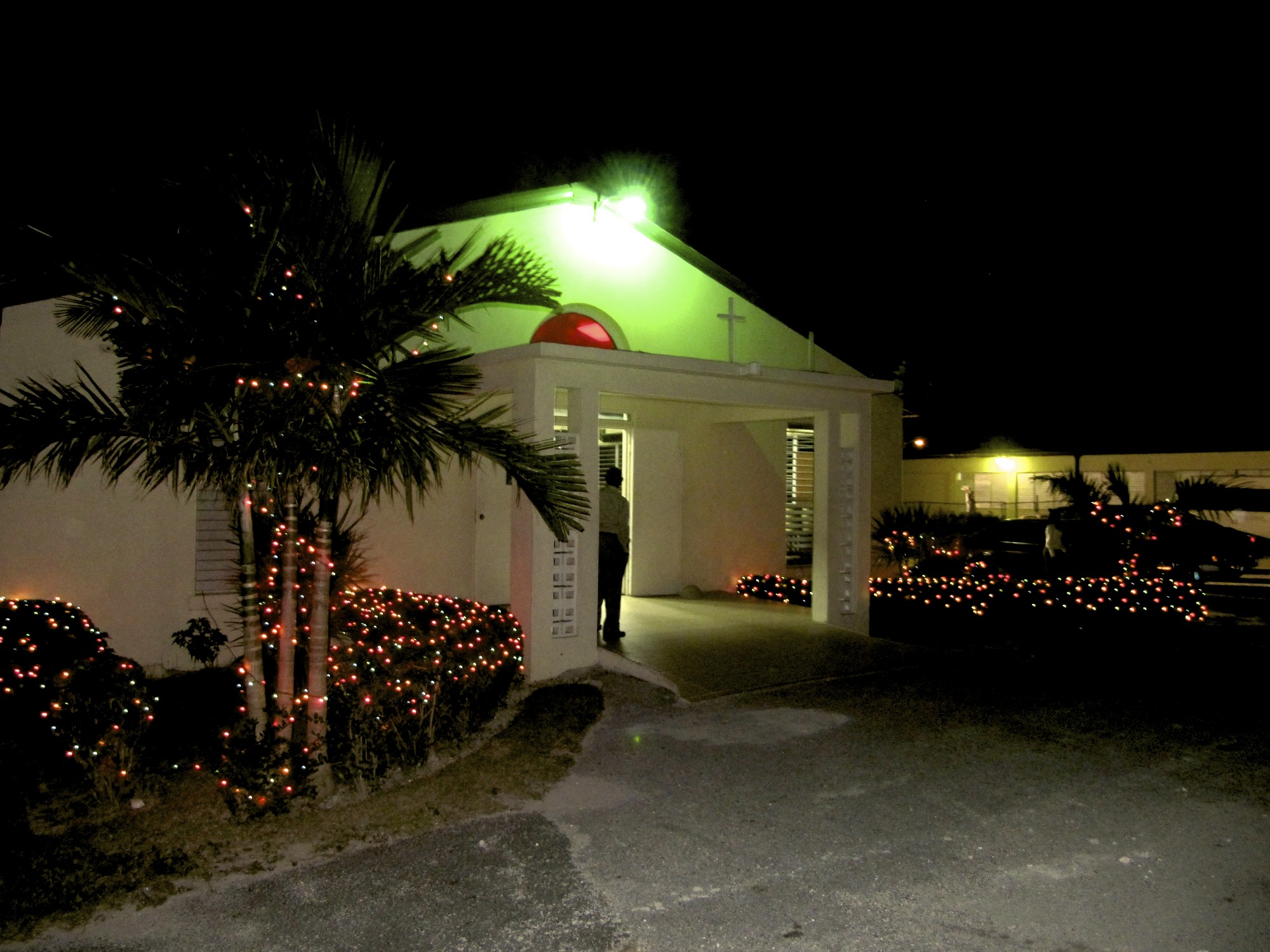
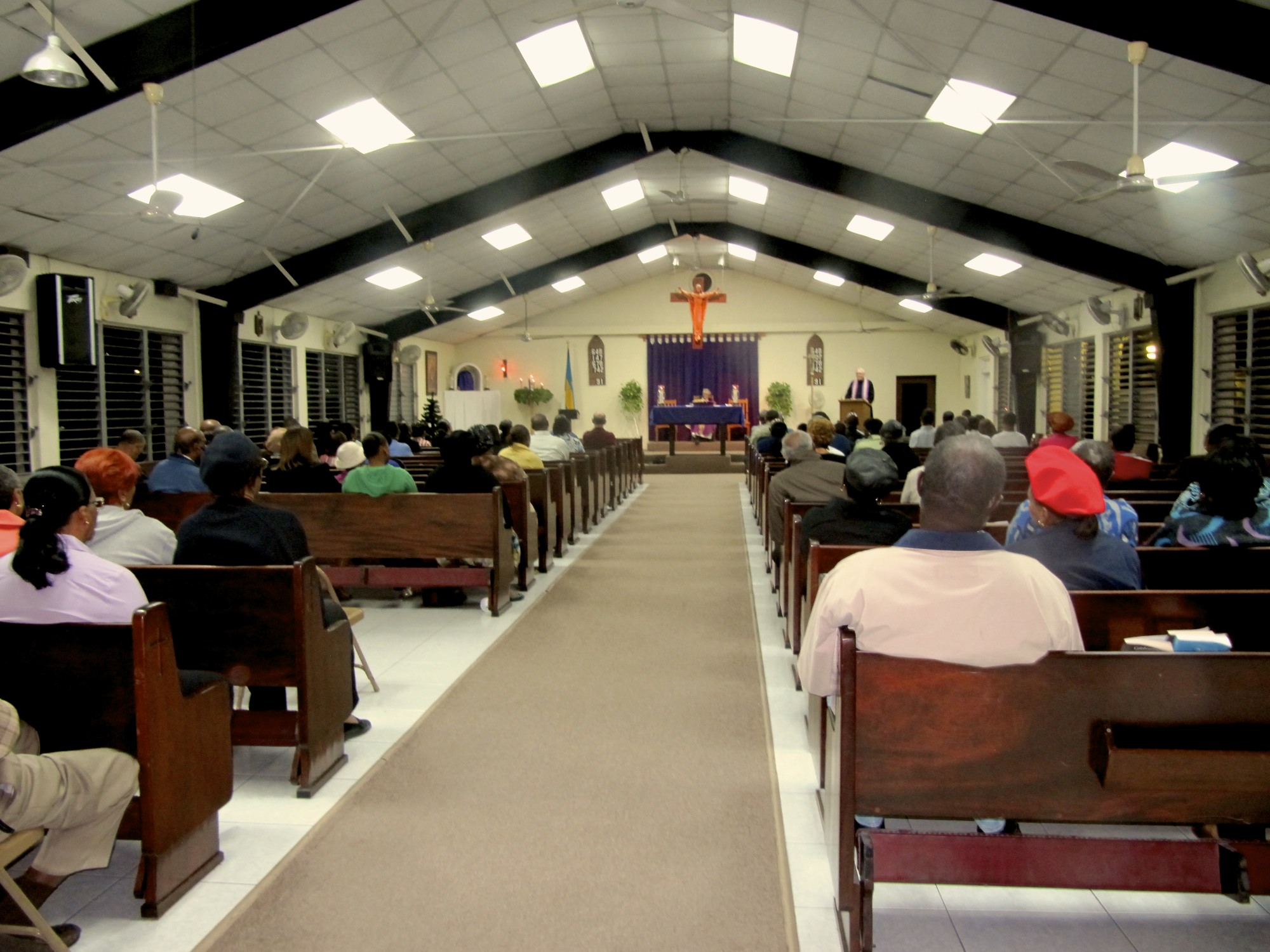
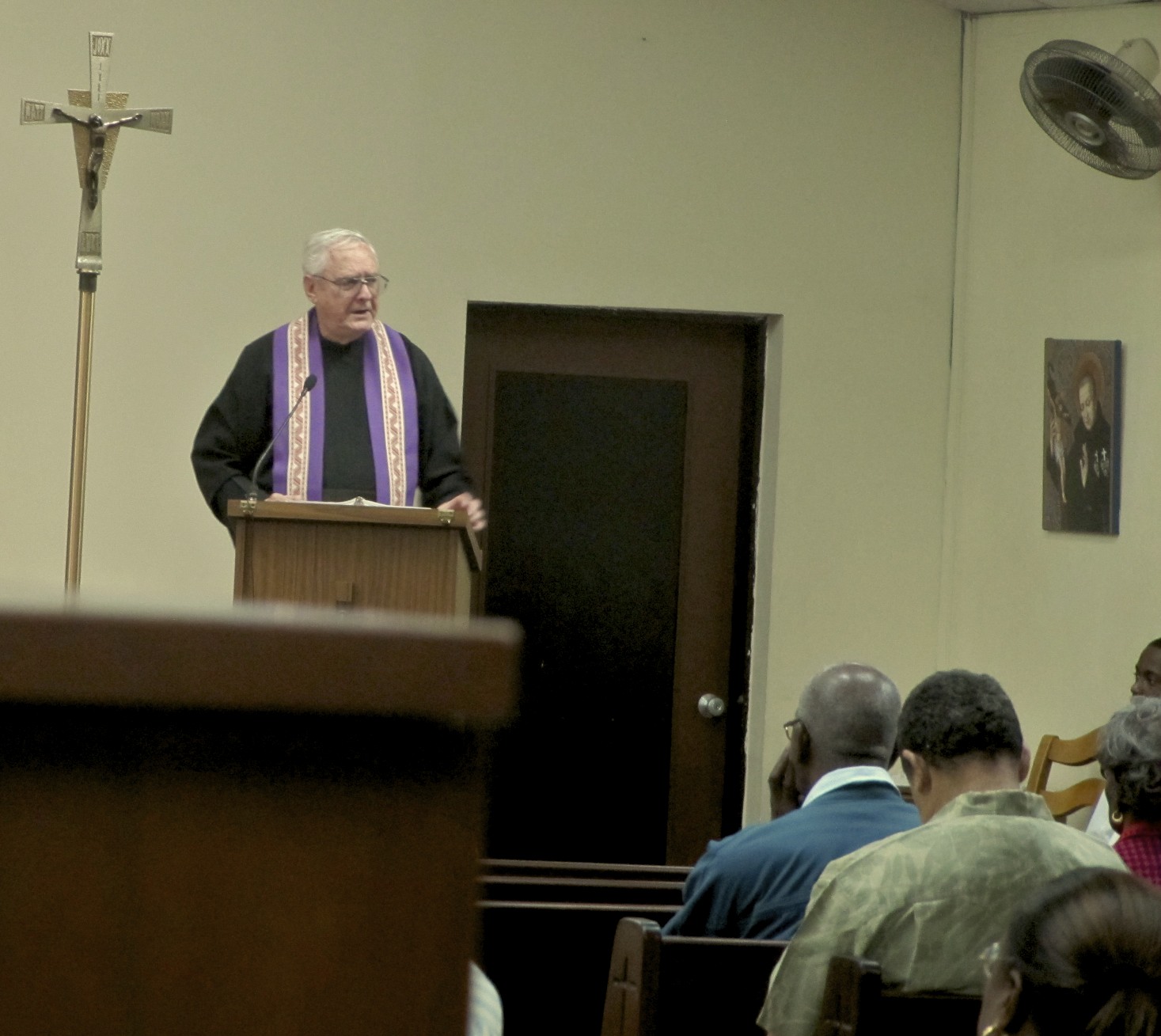
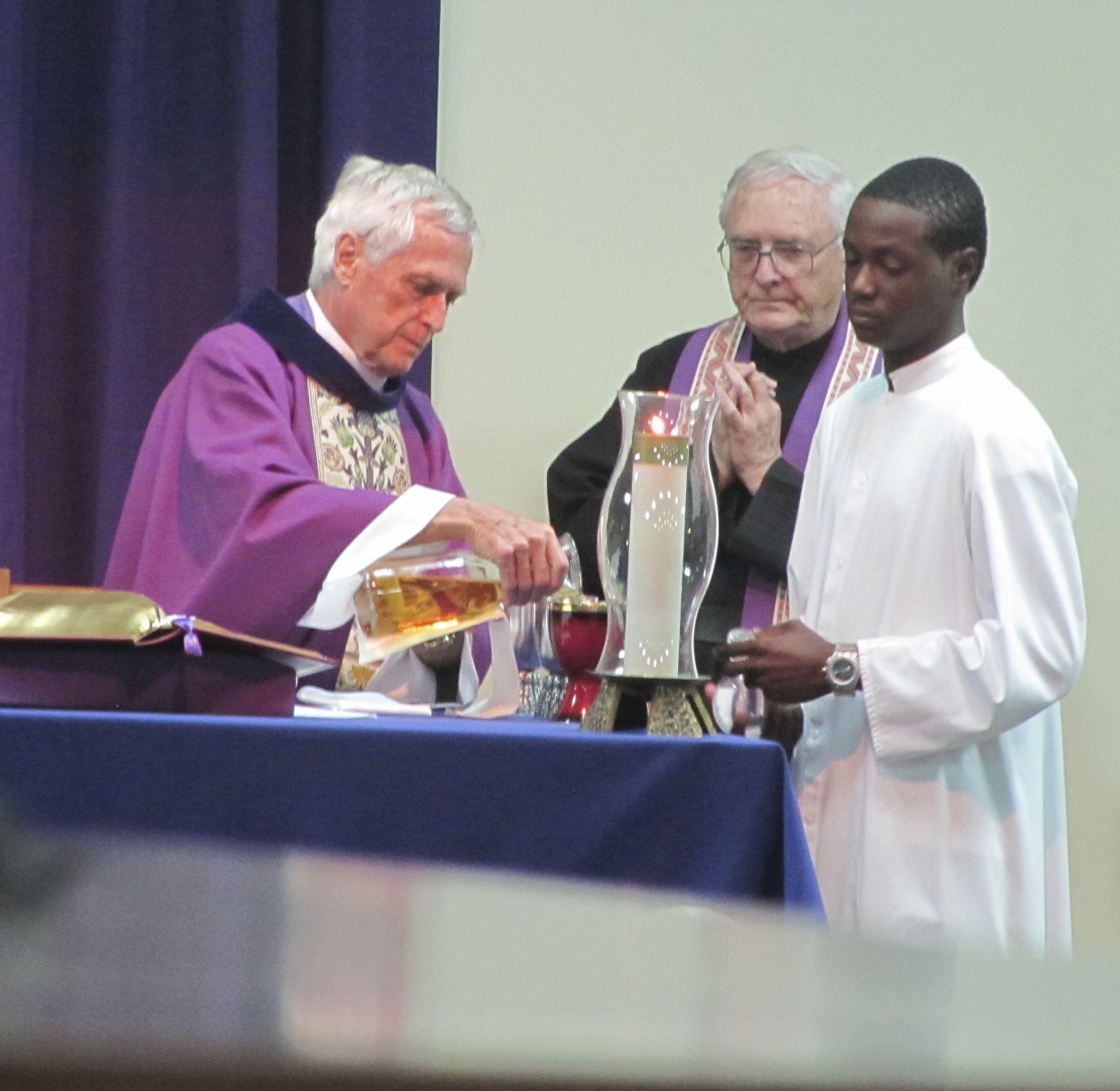
Tonight is the last evening of our mission at Holy Family in the Bahamas. During the week, I spoke about the three great witnesses of the Advent season: Isaiah, John the Baptist and Mary of Nazareth. They prepare us to receive Jesus Christ.

Let’s remember the Prophet Isaiah again, and those who followed him. He tells us to remember God’s promises. They seem far beyond what we think possible and greater than we can imagine, but God promises to fulfill them in the world and in us.

The prophet speaks to those most likely to distrust, yet God wants them most to hear:  the poor, the sick, the blind, the lame, those wearied from the journey. He speaks tender words of comfort. His words to the barren woman in today’s reading are among his most beautiful.

John the Baptist is the voice in the wilderness. We’re to be that voice too. It’s far easier to speak God’s word in a church or in a temple than there. That’s why Jesus praised John, and why he praises all who are his voice in the wilderness. You may not be able to say much, but if you speak what you can and remain faithful to God in the wilderness that’s yours, God will bless you as God blessed John.

Finally, we reflected last night on Mary, the mother of Jesus.  You have a wonderful custom here in this parish at the end of daily Mass, I notice, of praying the Angelus, which recalls the coming of the angel to Mary and her response. That’s a mystery we share with her, and so we recall it each day to make it our own. “Pray for us, O Holy Mother of God, that we may be made worthy of the promises of Christ.”

Each day is important because the promises of Christ come to us day by day. They are not always obvious, so we must become aware of them. Like Mary, we question what they mean. For that reason, we enter that mystery that happened once in small, unnoticed Nazareth. The angel still comes and goes., and with Mary, we say each day “Be it done to me, according to your word.”

Fishing in the Text

One thing the Christian preachers from patristic times seem to do well is to lead you to the scriptures to search for God’s wisdom there. They seem to do it better than many preachers today who use the scriptures rather like “proof texts” to back up their own observations and ideas, good as they may be.

The patristic homilists  don’t just give you the dish of fish to eat. They teach you how to fish. Here’s St. Ambrose on Luke’s gospel about Mary visiting her cousin Elizabeth in today’s Office of Readings. He’s fishing in the text.

Notice in the third paragraph the beautiful way he uses the simple detail that Mary made haste to go to the hill country. It’s a place of grace revealed. “I lift up my eyes to the mountain, from whence shall come my help…”

“The angel Gabriel had announced the news of something that was as yet hidden and so, to buttress the Virgin Mary’s faith by means of a real example, he told her also that an old and sterile woman had conceived, showing that everything that God willed was possible to God.

When Mary heard this she did not disbelieve the prophecy, she was not uncertain of the message, she did not doubt the example: but happy because of the promise that had been given, eager to fulfill her duty as a cousin, hurried by her joy, she went up into the hill country.

Where could she hurry to except to the hills, filled with God as she was? The grace of the Holy Spirit does not admit of delays. And Mary’s arrival and the presence of her Son quickly show their effects: As soon as Elizabeth heard Mary’s greeting her child leapt in her womb and she was filled with the Holy Spirit.

See the careful distinction in the choice of words. Elizabeth was the first to hear the voice but her son John was the first to feel the effects of grace. She heard as one hears in the natural course of things; he leapt because of the mystery that was there. She sensed the coming of Mary, he the coming of the Lord — the woman knew the woman, the child knew the child. The women speak of grace while inside them grace works on their babies. And by a double miracle the women prophesy under the inspiration of their unborn children.

‘Blessed are you,’ said Elizabeth, ‘who believed’.

You too, my people, are blessed, you who have heard and who believe. Every soul that believes — that soul both conceives and gives birth to the Word of God and recognises his works. Let the soul of Mary be in each one of you, to proclaim the greatness of the Lord. Let the spirit of Mary be in each one of you, to rejoice in God. According to the flesh only one woman can be the mother of Christ but in the world of faith Christ is the fruit of all of us.”

Patron of Blended Families

The great old stories from the scriptures have a way of speaking to us today, if we  hear them right. Tomorrow’s gospel from Matthew is about the announcement of Jesus’ birth made by an angel to Joseph.

Joseph is ready to divorce Mary who is mysteriously pregnant, but prompted by the angel he takes her into his home and raises her Child as his own. Anything like that going on today?

How about all the blended families we meet now, where divorce or death have created other groupings not based on original marriage vows or blood relaltionships? The holidays will bring many of them together. Stepfathers and stepmothers, stepchildren.  Some of these families have known divorce, maybe once, or twice or three times. There are kids and relatives from family number one, number two, number three.

Joseph loved  Jesus and Mary with a love, not based on flesh and blood, a love that made him father, husband, and all the other relationships that blood or vows are supposed to bring. He showed us that love is what counts after all.

Later on, Jesus said in Capernaum, when they announced that his family were outside waiting to see him: “Who are my mother and my brothers? “  He was proclaiming a love higher than that based on flesh and blood. He saw it in Joseph.

How about naming Joseph, Patron of Blended Families?

St. Joseph

For awhile, I’ve been studying a television preacher on one of the cable stations we get– Doctor Harold Camping, who is predicting the end of the world on May 21, 2011.  He’s found this news in the Bible, he says, and tries to prove it through fast and far-fetched calculations. He’s against churches and their services and their sacraments, like baptism. The age of the churches is over, according to him, just believe in the bible, it’s all there.

Questioners call in and he ends the session thanking them for sharing, but there’s not much sharing going on. It’s Dr. Camping’s monologue.

He’s not interested in recent biblical scholarship either. His main point is to get ready for May 21th by living a good life, otherwise you’re going to be burned to a crisp.

Today’s the feast of St. Joseph and I’m sure Dr. Camping isn’t interested in saints either. In fact, when he talks about the bible, he pays little attention at all to the people in it. The bible is just for us, waiting for the world to end.

But a world of witnesses produced this book, and Joseph was among them. He’s a guide, not only to the bible but the faith it represents. He’s a “son of David,” whom God calls from the small village of Nazareth to play an intimate part in the birth and life of Jesus.

In fact, in Matthew’s account of Jesus’ birth, Joseph is more prominent than Mary. He provides Jesus with a genealogy going back to Abraham. He is told by the angel not to be afraid to take Mary as his wife; he shouldn’t divorce her as Jewish law called for, and he should name the child, Jesus, “for he will save his people from their sins.”

After the visit of the Magi, he’s told to take the child and his mother and flee to Egypt. Then, the angel tells Joseph to return to Israel after Herod’s death. Finally, he makes his home in Nazareth in Galilee, where his family would be safer away from Herod’s heir, Archelaus, who ruled in Judea.

Clearly, according to Matthew’s gospel, Joseph has a major role in the birth and early life of Jesus Christ. Is that role over?
“Whenever the divine favor chooses someone to receive a special grace, or to accept a lofty vocation, God adorns the person chosen with all the gifts of the Spirit needed to fulfill the task at hand,” says St. Bernardine of Siena in the readings for today’s feast.

“This general rule is especially verified in the case of Saint Joseph, the foster-father of our Lord and the husband of the Queen of our world, enthroned above the angels. He was chosen by the eternal Father as the trustworthy guardian and protector of his greatest treasures, namely, his divine Son and Mary, Joseph’s wife. He carried out this vocation with complete fidelity until at last God called him, saying: ‘Good and faithful servant enter into the joy of your Lord.’”

St. Bernardine goes on to say that the church today honors Joseph as the fulfillment of the “ noble line of patriarchs and prophets” of the Old Testament. Christ honors him in heaven as he did on earth.

“Remember us, Saint Joseph, and plead for us to your foster-child. Ask your most holy bride, the Virgin Mary, to look kindly upon us, since she is the mother of him who with the Father and the Holy Spirit lives and reigns eternally.”

Joseph was blessed with a wonderful interior faith. I don’t think he was too interested in calculating the end of the world.

Waiting for Christmas

Every year we’re invited to enter the mystery of Christmas. Of course we can refuse to welcome this mystery of God.

That’s what Ahab, king of Israel, did, according to last Saturday’s first reading for Mass. He refused to engage with God. “Come, ask for a sign, Let me open the mysteries of life to you,” God said to him. But Ahab, the busy, proud. self-aborbed man,  said “No.” –as politely as he could– “I will not tempt the Lord.” In other words, “Don’t bother me.”

God would send a sign anyway.

This is the time to open our minds and hearts to the mysteries of God and if we do we’ll be blessed.

The other day a woman was telling me about her little girl, Isabel. She’s in the first grade in a little Catholic school down the street from us and they’re into the Christmas story these days..

“She can’t wait to go to school these days, ” her mother said. They’re putting together a creche for the Baby Jesus and they’re learning all about the angels, and the wise men who come to the stable on camels, and Mary and Joseph, and the shepherds and the wicked king who want to kill all the babies in Bethlehem. They’re offering little prayers that the whole world be blessed when he comes.

Isabel is enthralled by it all. “Mommy, did you know Jesus had to sleep on straw. That  straw we put in the crib would  hurt him when he slept on it.”

Isabel was asking what she was going to get for Christmas, and her mother told her that before we open our hand to get anything we have to open it to give something.

So Isabel is asking now for enough money to buy presents for everyone in the world. She’s going to have to see the Secretary of the Treasury of the United States for a bailout like that, her mother says.

Why do we lose that childlike wonder and ability to be engaged?  Why do we become like Ahab, not wanting to be bothered about this great sign?

Every once in awhile we’re spurred by something we hear. I heard it in Isabel. I heard it too in St. Bernard’s  beautiful  sermon  on Luke’s gospel of the annunciation, when the angel invites Mary of Nazareth to conceive the Child. Here’s a summary of it:

“You hear, Mary, that you will conceive and bear a Son; you hear it will not be by man but by the Holy Spirit. The angel waits for your answer; it’s time he returns to God who sent him. We wait for your answer too.

Salvation will be ours if you consent. In the eternal Word, we all came to be made. At your answer we can be remade and brought to life.

Adam with his sorrowing family exiled from Paradise begs you to respond.
Abraham and David asks to agree. The patriarchs and all our ancestors look  for your answer. All the earth waits to hear.

Answer quickly, O Mary, quickly answer the angel and through him the Lord. Say the word and receive the Word of God; say your word, and receive God’s Word. Speak a passing word, and embrace the eternal Word.

Don’t delay or be afraid. Open your heart to faith, your mouth to praise and your  womb to the Creator.  The desired of the nations is at the door knocking. Open to him.

And Mary said: Behold the handmaid of the Lord, be it done to me according to your word.”