Tag Archives: Lent

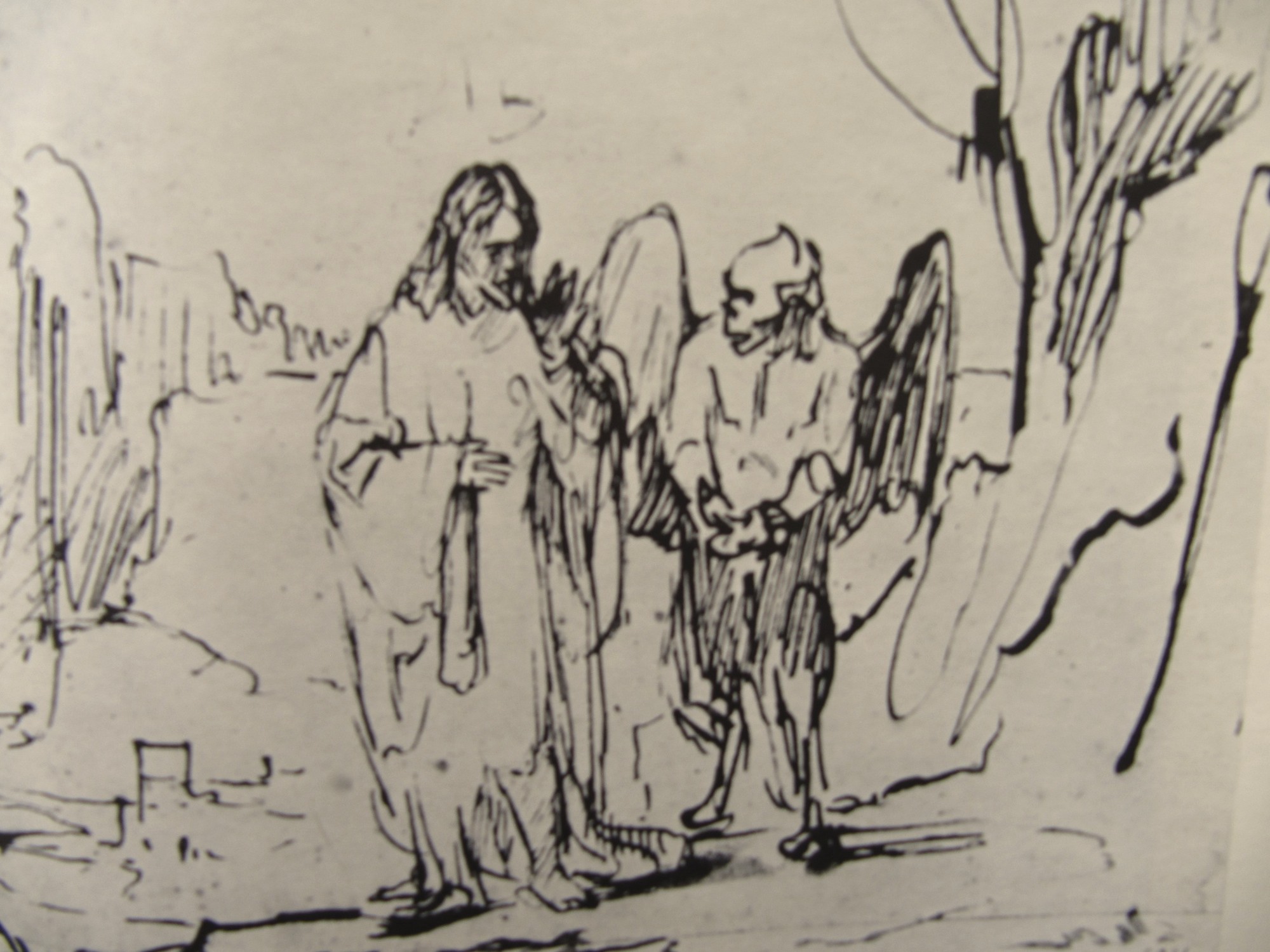
The Temptations of Jesus

As supreme ruler in China from 1949-1976  Mao Zedong began the practice of sending young recruits for the Communist party on what was called the  “Long March.”  They retraced the 8,000 miles that Mao and his army took in 1935 through some of the toughest parts of western China to evade their enemies and eventually become the fighting force that conquered China. The recruits were expected to learn from people like Mao and his soldiers who made that difficult journey what made you into a good Communist.

Lent is our “Long March.”  For 40 days, we retrace the 40 years the Israelites journeyed through the desert from Egypt to the Promised Land and the great journey that Jesus Christ took to his death and resurrection.

This Sunday we begin that journey with Jesus in the desert after his baptism where he is tempted by the devil. Mark’s gospel describes it succinctly:

“The Spirit drove Jesus out into the desert,

and he remained in the desert for forty days,

tempted by Satan.

He was among wild beasts,

and the angels ministered to him.”

The experience of Jesus in the desert mirrors his experience in his life. At his baptism, God calls him his “Beloved Son” and tells us to “listen to him.” He is the Messiah, sent by God to save his people. But in the desert he is tempted by Satan to be a Messiah of another kind.

In his recent reflection on Lent, Pope Benedict said that in the desert Satan “offers Jesus another messianic way, far from God’s plan, because it passes through power, success, dominion and not through the total gift on the Cross. This is an alternative messianism of power, of success, not the messianism of gift and selfless love.”

Matthew and Luke’s gospels speak more than Mark’s gospel does about the temptations of Jesus in the desert. Jesus is hungry; “Turn these stones into bread,” Satan says. You’re above the ordinary laws of life.  From a mountain, Satan shows Jesus all the kingdoms of the world. “Here’s political power,” Satan says. From the pinnacle of the temple in Jerusalem, Satan says “Throw yourself down; you can have religious power.”

Mark’s gospel goes on from his account, saying simply:

“After John had been arrested,

Jesus came to Galilee proclaiming the gospel of God:

“This is the time of fulfillment.

The kingdom of God is at hand.

Repent, and believe in the gospel.’”

Instead of Satan’s suggestion, Jesus follows John the Baptist and the way of the prophets. He goes to Galilee, not Jerusalem, and proclaims the gospel of God.

Jesus’ ministry in Galilee has all the ambivalence of the journey of the Jews in the desert. He’s a sign of God’s presence. Like a cloud by day and a pillar of fire by night he teaches in the synagogues and along the seashore in Galilee.  He gives manna to the hungry and strengthens the poor and heals the sick. He pitches his tent among them and makes his home with them.

But he finds murmuring and rejection there too. You can hear it in the constant questions and doubts that he faces. Demons cry out against him. Finally, going up to Jerusalem, Jesus faces death; he becomes the sacrifice that saves his people from their sins. As he did in the desert, Jesus accepts his role as the Servant of God in his life–he “ renounces himself and lives for others and places himself among sinners, to take upon himself the sins of the world. “ (Benedict XVI)

So what do we learn from Jesus on our long march of 40 days? Our great temptations will be like his. We like to control things, we like the world to be on our side; we like to control God. His great wish was “ your will be done, your kingdom come.” Our temptation is “my will, my kingdom come.”

Our world is a lot like his. We wish God were more visible, not hidden in signs or limited to believing eyes. We wish for a world more supportive of good values, not a desert where Satan’s voice is strong and wild beasts roam.

This Lent we make the Long March with Jesus Christ who is with us today and all days. He has pitched his tent with us. We’ll have manna to eat and rocks will give water for our thirst. A fire goes before us in darkness and a pillar of cloud marks our path in the day. Angels still minister to us.

Prayers teach us to pray

Prayers teach us how to pray. The collect for  this Thursday after Ash Wednesday is a simple prayer that says so much.  Listen to it:

Lord,

may everything we do

begin with your inspiration,

continue with your help

and reach perfection under your guidance.

We ask this through Jesus Christ, your Son, who lives and reigns with you and the Holy Spirit, One God, forever and ever.

Let’s recognize where we stand before God– empty-handed. And so we look for God to put something into our hand, to give the bread we need, inspire us. We start with nothing.

Then, we ask for help with what we are about now. We can’t continue without God.

Finally, God must guide us to complete what we are about in our lives. It’s not about what we want or plan,  but “your will be done.”

Yet, we pray with a sublime hope:

We ask this through Jesus Christ, who has shown us a God who loves us, who promises to make our prayer his own, who is our advocate, our Savior, our reward.

A Lenten Journey

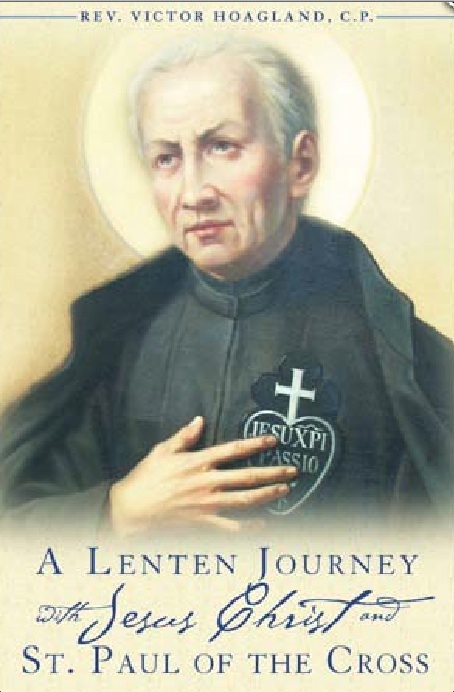
Last year I wrote “A Lenten Journey with Jesus Christ and St. Paul of the Cross” for Christus Publishing. It was a little late for last Lent but Lent is almost upon us and it’s available now on Amazon and Crossplace.com.

The book attempts to link St. Paul of the Cross with the Lenten season, an obvious connection for someone who loved the mystery of the cross. His spirituality responds well to the gospels we read during Lent.  Saints feed on the Word of God and he not only fed on it but preached it too. This book takes a look at his life and  spirituality and offers a daily reflection for each day of Lent based on the gospel of the day.

I hope to follow St. Paul of the Cross as he follows Jesus Christ in this season of grace and to use some excerpts from the book on this blog.

Lent is a journey that’s blessed. The church and the whole communion of saints take part in it.  Let’s make it together.

Jesus of Nazareth, Holy Week

I’m reading Pope Benedict XVI’s “Jesus of Nazareth: Holy Week,” which treats of his journey into Jerusalem to his resurrection. The pope introduces the book by saying he’s   not going to overwhelm us with the historical questions that so many of the studies about Jesus concentrate on today. By reducing Jesus to his history, we can miss his presence with us today, he says.

Still,  Benedict is obviously trying to incorporate into his study the work of recent scriptural scholars which give us renewed appreciation of Jesus Christ.

He begins with the different approaches to his journey to Jerusalem found in the gospels. Matthew, Mark and Luke describe one journey. John’s gospel describes three journeys to the Holy City, beginning with the ominous one where he overturns the tables in the temple, which creates a growing suspicion among the Jewish leaders that he’s a danger to Judaism and its temple.

Jesus “ascends” to Jerusalem. His ascent is concrete, first of all. From the Sea of Galilee, 690 feet below sea level, to Jerusalem almost 2,500 feet above sea level. But he “goes up” to Jerusalem in a spiritual sense as well. He makes his way to the Jerusalem which is above, the “new Jerusalem,” and he brings his followers with him, beginning with the twelve but then with others who join him on the way.

As he goes through Jericho, also a symbolic city of  journeys, he meets the blind man, Bartimaeus, who shouts out “Jesus, son of David, have mercy on me!” When Jesus calls him over and gives him his sight, he says to Bartimaeus, “Go on your way;  your faith has made you well.” And the man begins to “follow him on the way.”

The pope doesn’t overwhelm us either with obvious conclusions from the scriptural sources. They tell us that others joined Jesus on his way to Jerusalem, in great numbers, including this poor blind man, who follows him on the way.

And what about us, as well? The crowd around him try to shout him down, but the blind man keeps calling. “Jesus, son of David, have mercy on me.” Surely, we are among those who call and follow.

I downloaded the pope’s book from Amazon and I’m  reading it on my iTouch. I’m trying to discover the limits and possibilities of ebooks these days of Lent. So far, so good.

Temptations are Teachers

There are two wonderful posts in the blogs from Commonweal Magazine for March 22,

One by  Fr. Joseph Komonchak, “Finding  out who you are,” the other by J.Peter Nixon “Spiritual Excercises.”

The first is a quote from St. Augustine on temptation. I hope Fr. Komonchak wont mind if  I give in to the temptation to steal from him:

“Is God so ignorant of things, does he know so little about the human heart, that he can find what a man is only by testing him? Of course not, the testing is so that the man can find himself….

“You should recognize that God does not need to test in order to learn something he did not know before; it’s so that by his testing, by his investigating, what is hidden in someone might come out. A person is not as well known to himself as he is to his Creator, an ill person doesn’t know himself as well as his doctor. Someone becomes ill, and he’s the one suffering, not the doctor, but it’s from the one not suffering that the sufferer expects to hear what’s wrong.

“The Psalmist cries out: “Cleanse me, Lord, from my hidden things” (Ps 18:13). In any person there are things hidden to the very one in whom they exist. They don’t come out, aren’t laid open, aren’t discovered, except by his being tested. If God ceases to test, the teacher ceases to teach….

“Why do I say this? Because a person is ignorant of himself until he learns who he is by being tested. But once he has learned who he is, let him not be careless about himself. If he was careless when he lay hidden from himself, let him not be careless now that he knows himself.” (Augustine, Sermon 2, 2-3; PL 38-28-29)

St. Paul of the Cross has a similar view of temptation, as far as my reading of him teaches me. He tells people not to be afraid of temptations, or be ashamed of them; they’re teachers of humility and messengers to remind us who we are.  They lead us to God, our teacher, our doctor, the One who makes us whole.

J.Peter Nixon’s blog is about taking care of your body. See what he says for yourself.


Words Can Kill

In today’s gospel Jesus seems to almost equate anger and harsh words with murder. They’re liable to judgment, he says.

Does that exaggerate the damage words can cause? If you think about it, angry words can just about destroy someone.  Killing someone’s spirit, taking away someone’s reputation may not draw a jail sentence here on earth, but God sees the harm that’s done. Sometimes, so do we.

Murder takes away physical life; we also need to respect another kind of life that people have. “Respect” is a wonderful word. It means “to look again” in Latin, to look again at someone and see a value we may have denied or missed, to constantly reassess how we judge another. Jesus tells us to do this as we come before God’s altar to offer our gift. It’s one of the reasons behind the sign of peace we offer our neighbor at Mass. It’s a sign of respect.

As we look honestly and respectfully at others, we also have to look honestly at ourselves. Respect is a form of love, St. Paul of the Cross writes. It’s “love toward your neighbor, putting up with the faults of others, looking at all with charity and compassion, having a good opinion of everyone and a bad opinion only of yourself. A simple eye lets you see your neighbor as full of virtues and yourself full of vices, but without discouragement, peacefully, humbly.” (Letter 525)

Lord,

make me an instrument of your peace,

bringing life and hope to others, not death.


Prayers teach us to pray

If prayers teach us to pray, the one for this Thursday after Ash Wednesday is a good one to think about.

Lord,

may everything we do

begin with your inspiration,

continue with your help

and reach perfection under your guidance.

We ask this through Jesus Christ, your Son, who lives and reigns with you and the Holy Spirit, One God, forever and ever.

How better to recognize where we stand before God? Empty-handed, we look for God to begin something within us, to inspire us. We ourselves start with nothing.

Then, we ask for help with what we are about now. We can’t continue without God.

Finally, God must guide us to complete what we are about in our lives. It’s not about what we want or plan,  but “your will be done.”

We ask this through Jesus Christ, who has shown us a God who loves us, who promises to make our prayer his own, who is our advocate, our Savior, our reward.

Ash Wednesday Thoughts

We should be humble in mind, putting aside all arrogance, pride and foolish anger. Rather, we should act in accordance with the Scriptures, as the Holy Spirit says: The wise person must not glory in his wisdom nor the strong one in his strength nor the rich one in his riches. Rather, let him who glories glory in the Lord by seeking him and doing what is right and just. Recall especially what the Lord Jesus said when he taught gentleness and forbearance. Be merciful, he said, so that you may have mercy shown to you. Forgive, so that you may be forgiven. As you treat others, so you will be treated. As you give, so you will receive. As you judge, so you will be judged. As you are kind to others, so you will be treated kindly. The measure of your giving will be the measure of your receiving.”

St. Clement of Rome

What am I going to do for Lent?

Someone was asking that question at our supper table the other night. Lent begins  Ash Wednesday. The supper table is a good place to ask the question, because Lent is about renewing ourselves as we are and where we live. The supper table stands for life here and now.

The supper table is the place where we face those closest to us. Doing something for Lent has to mean doing something for them, first of all, the people across the table–or maybe those who have left our table. One of our scripture readings early on in Lent says: “Don’t turn your back on your own.”   Renewing our relationship with those closest  to us is one of the most important steps to renewing ourselves.

Besides the supper table, I guess we should also ask that question “What am I going to do for Lent?” in the place where I work, or where I go to school. Don’t turn your back on them either.

Lent is for renewing ourselves as we are, in real life and real time. It isn’t about changing us into different people or changing the world we live in or leaving for Mars.

The scriptures read on Ash Wednesday tell us to pray, to fast and give alms. What am I going to do for Lent? How about praying everyday? How about fasting from my own hard opinions of others? How about thinking about others and not just myself?

What am I going to do for Lent? I hope I can get closer to God, and that means for me to get closer to Jesus Christ. He says in this Sunday’s gospel that it’s possible to think we know him, but don’t know him. Where should I begin? Let me look in the scriptures, especially the scriptures we read during Lent.

Pope Benedict’s “Jesus of Nazareth” part 2 where he looks long and hard at the story of the Passion of Jesus is due out this week. I’m going to read it. Maybe that will help.

One thing we shouldn’t forget when we ask that question “What am I going to do for Lent?” is  another question: “What is God going to do for us during Lent?” It’s a time of God’s grace, more than we can hope for, beyond what we could possibly earn. The great sign of God’s limitless giving is the Passion of his Son, a wondrous gift.


A Lenten Journey with Jesus Christ and St. Paul of the Cross

I’ve been working on this book for two years now and it’s finally finished, in time for Lent. Christus Publishing from Wellesley, MA, a new publishing firm, asked me to write the book and I see they have it on their internet site today for sale. We’ll put it on Crossplace.com  ,our Passionist site for selling books and media, as soon as we can.

It gave me an opportunity to look again at St. Paul of the Cross, the founder of the Passionists, his spirituality and the community he founded. He was a great teacher of prayer, a gift we need today more than ever. He saw prayer as a gift given to everyone, and his letters to all kinds of people witness that conviction.

I appreciated the opportunity to write a short biography of the saint; I don’t think I copied others exactly. He lived in an interesting time, when the Enlightenment was pushing ahead in Europe, changing the worldview of the church and society. We’re still feeling its affects.

I read most of his letters while writing the book and was impressed by their earthiness. He was an earthy mystic who took people as they were and didn’t mind their darkness. I revised many of the present English translations of his writings for the book, perhaps for the better.

A recent exhibit at the Morgan Library in New York City featured the letters of Jane Austen. Letter-writing was the rage from the 18th century on and Paul of the Cross used this “new” communication to reach others. He would be using the new media today, I think.

I liked writing reflections for all the Lenten gospels for the book; the readings for Lent are indeed a treasure to be explored. Our catechesis and spirituality are becoming more biblically and liturgically based, and we need to see how a spirituality like that of  Paul of the Cross fits in to this new trend.

“From their place in heaven they guide us still.”