Tag Archives: Lent

Wednesday, 3rd Week in Lent


Mt 5, 17-19

Jesus ascends a mountain and gathers his disciples to teach them, according to Matthew’s gospel, chapters 5-7.  Moses before him brought God’s word to the Israelites from a high mountain.  Now, Jesus teaches as the New Moses. He does not abolish what the great patriarch taught; he brings it to fulfillment.

Lent gathers us again to listen to the Sermon on the Mount.  Sublime promises of a Kingdom are made to us; our God is gracious and near. But this part of the gospel reminds us of little things, the small steps, the “least commandments,” we must keep to enter the Kingdom of heaven.

This is a season–our reading reminds us– for remembering that small things like a cup of cold water, a visit to the sick, feeding someone hungry, clothing someone naked, speaking a “word to the weary to rouse them” are important commandments of God.

Yes, lent calls us to think great thoughts and embrace great visions of faith, But the law of God often comes down to small things, and the greatest in the kingdom of God are the best at that.

“The most important things for you are: humility of heart, patience, meekness, charity toward all, and seeing in your neighbor an image of God and loving him in God and for God.” ( Letter 1114)


What small step do you want me to take today, O Lord?

What can I do to help the neighbor I meet,

Who is made in your image?

The Weather of God’s Blessings

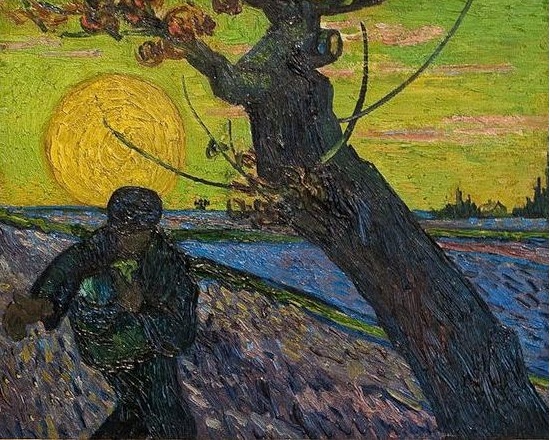
sower

The first reading from today’s Lenten Mass describes God’s blessings in terms of the weather.

“Just as from the heavens

the rain and snow come down, and do not return there

till they have watered the earth,

making it fertile and fruitful,

Giving seed to the one who sows

and bread to the one who eats,

So shall my word be

that goes forth from my mouth;

It shall not return to me void,

but shall do my will,

achieving the end for which I sent it. (Isaiah 55,10)

Can this reading help us understand how God blesses us?  Like rain or snow God’s blessings come, making our lives fruitful. Yes, they will surely come, but how about the times we have to wait, when no rain or snow comes at all?

God’s blessings are like the weather.

Or think of God’s blessings through the Sign of the Cross. We say “we bless ourselves” when we make this sign. Sometimes God’s blessing comes through the cross of glory and we receive blessings never imagined through his tender mercy.

Sometimes his blessings takes another form of his cross; disappointment, suffering, failure, sickness, death. There God’s blessings are mostly hidden and hard to see.

In Matthew’s gospel today Jesus offers us a way of praying. Does this blessing also follow the weather. Prayer is a gift, but it’s a gift like the rain and snow. It’s one of God’s greatest gifts to us, yet sometimes we find it hard to pray while at other times it wells up within us.

The blessings of God are like the weather.

Jewish Feasts as Signs

Jesus came again to Jerusalem for another feast, the Feast of the Dedication of the Temple, John’s Gospel read in as today’s Lenten reading says. It’s the Hanukkah feast celebrated sometime in late November to late December, recalling the rededication of the temple after its profanation by Antiochus Epiphanes in the second century BC.

In John’s Gospel the Jewish feasts are signs revealing who Jesus is; they inspire his words and the miracles he does. In fact, he replaces them.

On the Sabbath, (chapter 5) he heals the paralyzed man at the pool at Bethsaida. The Son will not rest from giving life as the Father never rests from giving life.

On the Passover (chapter 6), he is the true Bread from heaven, the manna that feeds multitudes.

On the Feast of Tabernacles (chapters 7–9) he calls himself the light of the world and living water.

On the Feast of the Dedication, (chapter 10,31-42) he reveals himself as the true temple, the One who dwells among us and makes God’s glory known. Once more, Jesus proclaims in today’s Gospel his relationship to the Father, “the Father is in me and I am in the Father.”

Yet, once more hostile listeners do not see the signs and accuse him of blasphemy, trying to stone him or have him arrested. But Jesus evades them and goes back across the Jordan to the place where John baptized and “many there began to believe in him.” He will return to Jerusalem to raise Lazarus from the dead. (chapter11)

So many signs are given to us. We have the scriptures, the sacraments, the witness of the saints. How tragic not to follow them to the Word made flesh! Follow the feasts and let them speak to us.

Resurrection Thinking

I spoke today, the final day of  our mission at Immaculate Conception Church, Melbourne Beach, Florida, about the mystery of the Resurrection of Jesus, a crucial mystery of our faith. Each of the gospels presents it in its own way. Here’s a summary from a previous blog of mine.

A recent presentation on the Resurrection by Bishop Wright, the Anglican bishop of Durham, to the Catholic bishops of Italy, is particularly interesting. I put it on my blog last month.

I began my presentation talking about Harold Camping’s prediction from last spring that the world was going to end on May 21, 2011. It didn’t, of course. But Harold’s thinking probably reflects the widespread gloom in our western world, in particular, about where the world is heading.

Our belief in the Risen Christ affects the way we see our church, ourselves and our world. We learn from this mystery to trust in the Risen Christ who King of all creation, our Way, our Truth and our Life. We need Resurrection Thinking.

Here’s a visual meditation on the Passion of Jesus from Rembrandt:

The Inhabitants of Jerusalem

In our lenten gospel for today from St. John (7th chapter) Jesus goes up from Galilee to Jerusalem where some “ were trying to kill him.” He celebrates the feast of Tabernacles, a popular autumn feast that draws crowds of visitors to the city. At his return in the spring for Passover, his enemies will fulfill their plans. Now, he draws the attention of “the inhabitants of the city.”

 Who are they? They’re not the leaders who will later put him to death. They’re the ordinary public who
know what’s happening in the city, who follow the trends and pass the gossip. They watch Jesus with curiosity as he enters the temple area and begins to teach. “Do our leaders now believe he’s the Messiah?” “How can he be, because he’s from Galilee and no one will know where the Messiah is from?”

Here are the voices of those who go back and forth, the undecided who wait to see who wins before taking sides. Jesus cried out against them, because they think they know what’s going on but know nothing. They’re blind to the Word in their midst.

Unfortunately, whether we’re learned theologians, or practiced priests, or informed church-goers, we can be like the  “inhabitants of Jerusalem.”  We need to humble ourselves before God. Prayer helps us see what’s real; it’s a way of taking sides, the right side.

Meditation on the Passion of Jesus

St. Leo the Great, in today’s Office of Readings, tells us why we meditate on the Passion of Jesus.

“True reverence for the Lord’s passion means fixing the eyes of our heart on Jesus crucified and recognising in him our own humanity…

Who cannot recognise in Christ his own infirmities? Who would not recognise that Christ’s eating and sleeping, his sadness and his shedding of tears of love are marks of the nature of a slave?

It was this nature of a slave that had to be healed of its ancient wounds and cleansed of the defilement of sin. For that reason the only-begotten Son of God became also the son of man. He was to have both the reality of  human nature and the fullness of the godhead.

The body that lay lifeless in the tomb is ours. The body that rose again on the third day is ours. The body that ascended above all the heights of heaven to the right hand of the Father’s glory is ours. If then we walk in the way of his commandments, and are not ashamed to acknowledge the price he paid for our salvation in a lowly body, we too are to rise to share his glory. The promise he made will be fulfilled in the sight of all: Whoever acknowledges me before men, I too will acknowledge him before my Father who is in heaven.”

Jesus of Nazareth

In his book, Jesus of Nazareth, Pope Benedict presents a picture of Jesus Christ from the gospels using the tools of modern scholarship as well as insights from the long tradition of the church.

While he welcomes the resources recent biblical studies provide, he also acknowledges some limitations:

“As historical-critical scholarship advanced…the figure of Jesus became more and more blurred…The reconstructions of Jesus became more and more incompatible with one another: at the one end of the spectrum, Jesus was the anti-Roman revolutionary working–though finally failing–to overthrow the ruling powers; at the other end, he was the weak moral teacher that approves everything and unaccountably comes to grief.”

Some reconstructions of Jesus over the last fifty years are “more like photographs of their authors and the ideals they hold,” the pope says. The result is a skepticism about our ability to know Jesus at all. “This is a dramatic situation for faith, because its point of reference is being placed in doubt: Intimate friendship with Jesus, on which all else depends, is in danger of clutching at thin air.”( foreward xii, Jesus of Nazareth, From the Baptism in the Jordan to the Transfiguration, Ignatius Press 2008)

Seems to me the aim of preaching and catechesis today, as the pope suggests, is to offer a renewed picture of Jesus, enriched by modern studies and faithful to what tradition says of him. A challenge.

Jesus Loved Outcasts


Luke’s gospel, which we read this evening at our mission (Luke 18,31-19,10),  has been called the Gospel of the Outcasts. The New American Bible gives this overall description of it: “Throughout the gospel, Luke calls upon the Christian disciple to identify with the master Jesus who is caring and tender towards the poor and the lowly, the outcast, the sinner, and the afflicted, towards all those who recognize their dependence on God… No gospel writer is more concerned than Luke with the mercy and compassion of Jesus.”

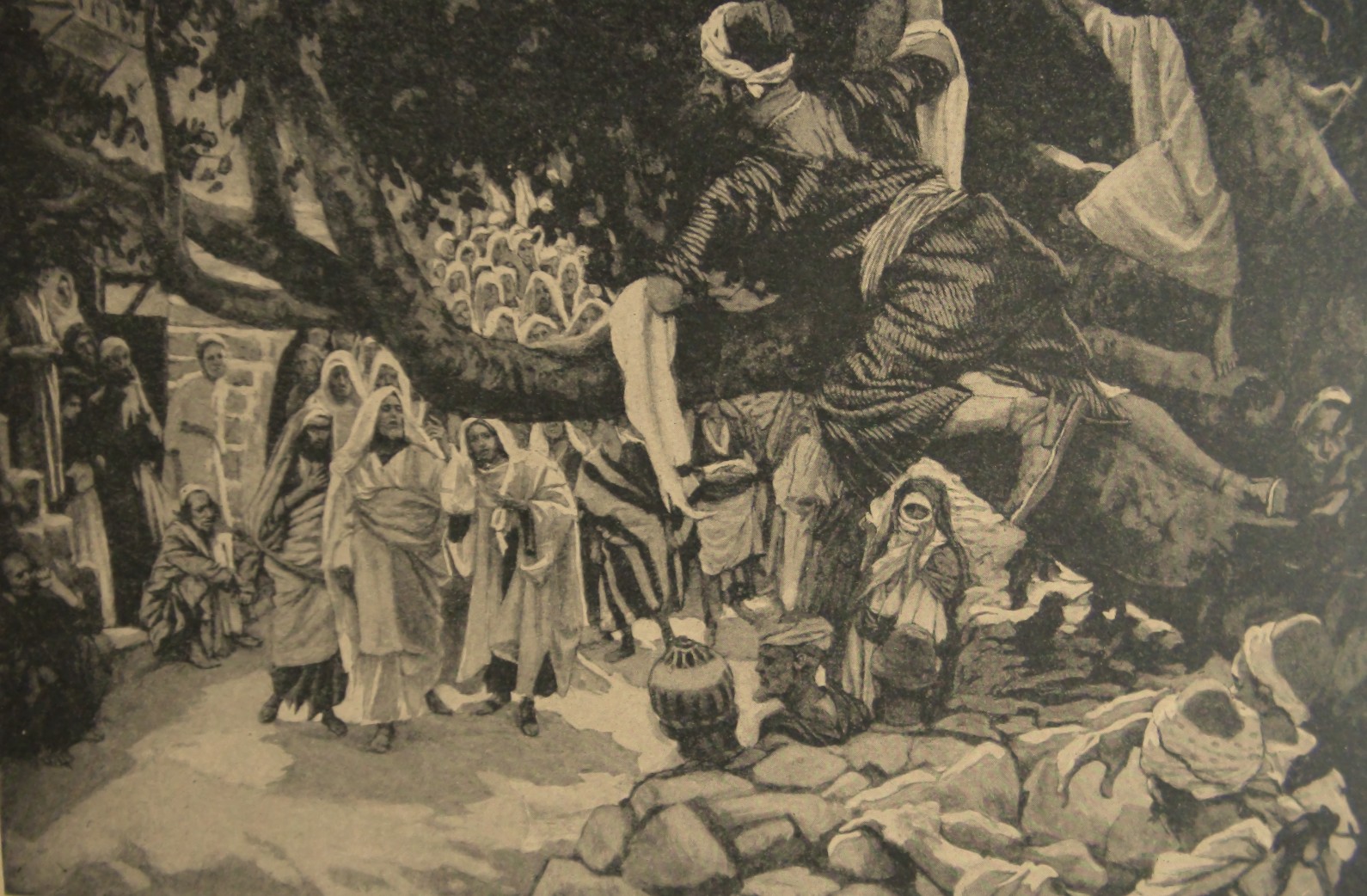
As the name implies, outcasts can be hard to take, but Jesus embraced them in his lifetime and the gospel tells us he will always embrace people like the blind man and Zachaeus, the chief tax-collector in Jericho.

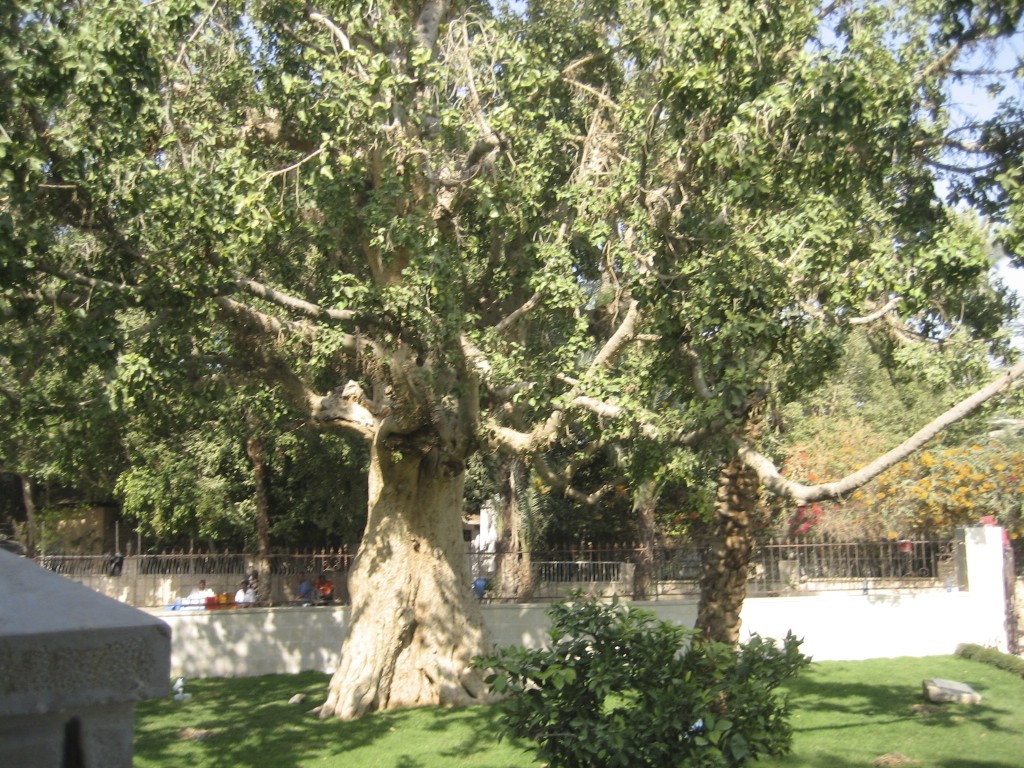
The parable of the talents follows the story of Zachaeus in Luke’s Gospel. Was Zachaeus one of those given ten talents, which he multiplies by his generous gifts to the poor?  There seems to be something of the child in him too. Climbing a tree is something a child would do, isn’t it? Was he on the way to become like a child, as Jesus taught?

I like this picture of Zachaeus by J. Tissot. (above)

In Jericho last year I took a picture of the sycamore tree they feature now in the town square. (above) Imagine Zachaeus up that tree.

Mission: St. Thomas More Parish, Sarasota, FL

I preached at all the Masses on Sunday at this vibrant parish which is now expanding its church. Wonderful music ministry and a large congregation, some fleeing from the cold of the north.

During the mission from Monday to Wednesday, I’ll be preaching in the morning after the 8 AM Mass and at an evening service at 7 PM.

You can find a  summary of the morning homily on this blog and a video outlining the evening service.

Here’s  video for the evening service:

Calling Us Together

In a recent article in the Wall Street Journal (February 18,2012) entitled “Religion for Everyone” the British atheist Alain De Botton expressed his hopes for a future world without God, but he suggests keeping some things religions have done well in the past. One of them is the ability to create vital communities.

“One of the losses that modern society feels most keenly is the loss of a sense of community.” De Botton writes. Religions once supplied a sense of neighborliness. Now it’s “been replaced by ruthless anonymity, by the pursuit of contact with one another primarily for individualistic ends: for financial gain, social advancement or romantic love.”

We’re set on making money, getting ahead and plenty of sex, he says. We’re building more restaurants, more bars, more gated communities, but there seem to be fewer places where all of us can get together. “The contemporary world is not lacking in places where we can dine well in company, but what’s significant is that there are almost no venues that can help us to transform strangers into friends.”

Of all things, De Botton points to the Catholic Church and its liturgy of the Mass as his prime example of religion’s ability to create community:

“Consider Catholicism, which starts to create a sense of community with a setting. It marks off a piece of the earth, puts walls up around it and declares that within their confines there will reign values utterly unlike the ones that hold sway in the world beyond. A church gives us rare permission to lean over and say hello to a stranger without any danger of being thought predatory or insane.”

No one asks what you do or how much you earn when you come for Mass.  The banker and the cleaner sit side by side. The Mass places you in a setting that focuses on human dignity and its blessings. It urges you to give up being judgmental of others and look on them with respect.

“Religion serves two central needs that secular society has not been able to meet with any particular skill: first, the need to live together in harmonious communities, despite our deeply-rooted selfish and violent impulses; second, the need to cope with the pain that arises from professional failure, troubled relationships, the death of loved ones and our own decay and demise.”

De Botton makes you think, doesn’t he? Modern society is losing a sense of community as we become more and more individualistic. An atheist, he recognizes in a religion like the Catholic church a powerful remedy to the ills of our times.

Why don’t we see these same blessings in our church? Though De Botton doesn’t see them so, they’re signs of God’s lively presence.