Tag Archives: Jesus Christ

The Heavenly Marathon

The New  York Marathon was run yesterday involving thousands of people. An interesting homily in the Office of Readings today ends with a glimpse into the 2nd century when they ran marathons too:

“So, my brethren, let us move forward to face the contest before us. In the contests of this world victory does not come to all competitors but only to a few who have trained hard and fought well; but in our contest, let us fight so that all may have the victory. Let us run the straight race, let us compete in the eternal contest, and let whole crowds of us steer our course towards the crown of victory. If we cannot all be victors let us at least come close.”

So in the great run of life, it’s not just one or a few that run the race. We’re all in it, “whole crowds of us.” It’s not just my run, but our run. We have to run together, and cheer each other on toward “the crown of victory.”

Nice image for the church, isn’t it?

All Souls Day

All Souls Day, says a homily I received in email this morning from the Congregation of the Clergy in Rome, recognizes our fears before the mystery of death. “From the perspective of Gospel wisdom, death teaches us an important lesson because it makes us see reality without filters.  It encourages us to recognise the falling away of all that appears great and strong in the eyes of the world.  Before death every motive of human pride and jealousy is lost and instead all that is truly worthwhile reappears.”

All Souls Day is a frank admission that we find it hard to face death in ourselves and in others. It’s an experience we cannot prepare for adequately, despite all the resources of faith and reason we have at hand.

Yes, the hope of resurrection encourages us. But as a holy bishop says in our readings for the Office of the Dead:

“As we are saying all these things some unknown feeling causes us to burst into tears; some hidden feeling discourages the mind which tries to trust and to hope. Such is the sad human condition; without Christ all of life is utter emptiness.

“O death! You separate those who are joined to each other in marriage. You harshly and cruelly divide those whom friendship unites. Yet your power is broken…We do not really belong to ourselves; we belong to the One who redeemed us.”   (Saint Braulio)

This is day that recognises our “sad human condition” as its struggles to believe.  And as our prayer for today says:

“Merciful Father, as we renew our faith in your Son who you raised from the dead, strengthen our hope that all our departed brothers and sisters will share in his resurrection, who lives and reigns with you and the Holy Spirit, One God, forever an ever. Amen.

Does God Provide?

I was at a fund-raiser for Providence Clinic last Sunday  evening and for some reason I’ve been thinking about the meaning of God’s providence ever since.

God’s providence is mysterious, for sure. But is it cold or fickle?  Or is God mostly uninvolved like the Enlightened Deists say. It’s all up to us, or politics, or economics. So God hasn’t much to say about little Providence Clinic.

Yet, according to Catherine of Siena’s Dialogue on Divine Providence, God is more than just an absentee land lord.

“The eternal Father, indescribably kind and tender, turned his eye to this soul and spoke to her:

‘O dearest daughter, I have determined to show my mercy and loving kindness to the world, and I choose to provide human beings with all that is good. But they, ignorant, turns into a death-giving thing what I gave in order to give them life…Still I go on providing. So I want you to know: whatever I give to human beings, I do it out of my great providence.

‘So it was that when, by my providence, I created human beings, I looked into myself and fell in love with the beauty of the creatures I had made – for it had pleased me, in my providence, to create human beings in my own image and likeness.

‘Moreover, I gave them memory, to remember the good things I had done for them and  to share in my own power, the power of the eternal Father.

‘Moreover, I gave them intellect, so that, seeing the wisdom of my Son,  they could recognize and understand my own will; for I am the giver of all graces and I give them with a burning fatherly love.

‘Moreover, I gave them the desire to love, sharing in the tenderness of the Holy Spirit, so that they might love the things that they knew and saw.

‘But my kind providence did all this solely that they might be able to understand me and enjoy me, rejoicing in my vision for all eternity. And as I have told you elsewhere, the disobedience of your first parent Adam closed heaven to you – and from that disobedience came all evil through the whole world.

‘To relieve human beings of the death that his own disobedience had brought, I tenderly and providently gave you my only-begotten Son to heal you and bring satisfaction for your needs. I gave him the task of being supremely obedient, to free the human race of the poison that your first parent’s disobedience had spread throughout the world. Falling in love, as it were, with his task, and truly obedient, he hurried to a shameful death on the most holy Cross. By his most holy death he gave you life: not human life this time, but with the strength of his divinity.’”

The Coin of Tribute

Taxes. If you want to see people react strongly, just bring that subject up. Taxes are a big issue in politics and economics. Some  want to get rid of as many taxes as possible. Others say we need to rebalance our tax system to make it more equitable. We need to tax the rich more.

Sunday’s gospel (Matthew 22, 15-21) reminds us that controversy isn’t new. In Jesus’ day his enemies try to get him in trouble with a question about paying taxes to the emperor.

“Tell us, then, what is your opinion:

Is it lawful to pay the census tax to Caesar or not?”

The census tax to Caesar was a tax levied on the Jews that required everyone to pay one denarius (the equivalent of one day’s pay) to the emperor in Rome every year. It was a very unpopular tax, one more burden to all the other taxes people had to pay.

Some Jewish nationalists at the time argued against the census tax and at one point started a revolt against paying it. The Romans judged them to be traitors and quickly put them to death. Rembrandt’s illustration above shows the Pharisees and the Herodians questioning Jesus about the coin of tribute, but notice the fellow on the staircase ready to run and inform on Jesus if he says the wrong thing.

If Jesus said “Don’t pay the tax,” his enemies could have reported him to the Roman authorities and they would have taken care of him. But his answer is more complex.

Show me the coin that pays the census tax.”

Then they handed him the Roman coin.

He said to them, “Whose image is this and whose inscription?”

They replied, “Caesar’s.””Then repay to Caesar what belongs to Caesar

and to God what belongs to God.”
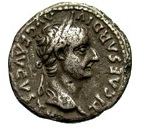
On that coin, Tiberias Caesar, the Roman Emperor then, was pictured as godlike, wearing a crown of victory. His word and will were supreme. In a very clever way, Jesus says to give him his due,  but he’s not God, though he may think he is. Caesar, his state, his government, his empire are under a higher authority. All life is under God.

That’s a basic lesson for us today too as we look at all levels of government,  from our national to our local governments. Governments are also under God.

What does that mean? It doesn’t mean that a government follow a particular religion. In pluralistic societies like ours, it’s not prudent for a particular church to dominate.  We believe in separating church and state.

But that does not mean that governments should respond only to the will of the majority or the will of the powerful or the will of the rich.  Governments have to respond to the needs of all,  to respect human rights, “ life, liberty, the pursuit of happiness.”

When governments become the tool of private interests or powerful majorities, they no longer are under God who cares for all, especially the poor and the sick and the slow.

Later on, after he’s arrested, Jesus appears before Pontius Pilate, the Roman governor, who condemns him to death.  It’s a dramatic meeting. Pilate is a symbol of what can go wrong in governments. He’s  more interested in keeping his job than seeing that justice is done.

The One who stands before him has no power, no influence, nothing to give the Roman governor. He’s innocent, but the injustice done to him doesn’t matter to Pilate. He’s helpless, but that matters less. Pilate sentences him to death. Jesus stands for our vulnerable humanity. Pilate is an example of pragmatic power, looking after its own interests.

The great tragedy of governments is that they fall in love with their own power and position. But the greater tragedy is that we let them.

Is the Church Dying?

Pope Benedict’s talk to German Lay Catholics at the end of his visit to that country this September addressed the decline in church membership and structures. Providence is at work the pope said. God is cleansing the church from worldliness for the next step in its mission.

“ One could almost say that history comes to the aid of the Church here through the various periods of secularization, which have contributed significantly to her purification and inner reform.

“Secularizing trends – whether by expropriation of Church goods, or elimination of privileges or the like – have always meant a profound liberation of the Church from forms of worldliness, for in the process she has set aside her worldly wealth and has once again completely embraced her worldly poverty. In this the Church has shared the destiny of the tribe of Levi, which according to the Old Testament account was the only tribe in Israel with no ancestral land of its own, taking as its portion only God himself, his word and his signs. At those moments in history, the Church shared with that tribe the demands of a poverty that was open to the world, in order to be released from her material ties: and in this way her missionary activity regained credibility.

“History has shown that, when the Church becomes less worldly, her missionary witness shines more brightly. Once liberated from her material and political burdens, the Church can reach out more effectively and in a truly Christian way to the whole world, she can be truly open to the world. She can live more freely her vocation to the ministry of divine worship and service of neighbour.

“The missionary task, which is linked to Christian worship and should determine its structure, becomes more clearly visible. The Church opens herself to the world not in order to win men for an institution with its own claims to power, but in order to lead them to themselves by leading them to him of whom each person can say with Saint Augustine: he is closer to me than I am to myself (cf. Confessions, III, 6, 11).”

We need wisdom like this to face decline in the Church and its institutions today.

What Do The Scriptures Mean?

An article in a recent issue of the Jesuit magazine, America,  discussed the way American Catholics read the scriptures. Actually, they don’t read them very much or know much about the writings we call the Word of God, the author, Brian B. Pinter, says. Also, many Catholics who do read the scriptures, read them  literally, like fundamentalists. But the Pontifical Bible Commission in 1993, Pinter points out, said  “Fundamentalism actually invites people to a kind of intellectual suicide.”

Last summer the pope urged Catholics to take up and read the scriptures. It wasn’t a pious wish, he was dead serious. As the Word of God the scriptures nourish our faith and help us know God’s will. The scriptures are our new catechism and our new prayerbook.

I like Pope Benedict’s books “Jesus of Nazareth” because he takes seriously what the scriptures and biblical studies today say about Jesus. Those books–and others like them– are worth reading if you want to learn how to read the Word of God. There’s also some good advice about reading the bible on the website of the American Catholic Bishops.

But don’t forget to begin with the scriptures themselves. Get to know them, their stories, their words and images. A good way to start leaning the scriptures is to let them be your teacher, let one part teach you about another part.

For example, this Sunday’s reading from the Gospel of Matthew is about the two sons going out into the vineyard. One says right off to his father, “I won’t go” , but eventually he goes. The other says “Sure I’ll go”, but he doesn’t. That story begins with the note that Jesus said this to the chief priests and elders of the people who weren’t responding to the invitation to believe in him.

We may shake our heads and say, “It’s too bad they failed to answer the call of Jesus.”

But a further question is, “And what about me? Do I just shake my head at them?” That story’s meant for me too.

There are other sons mentioned in scripture who may help me out.  The prodigal son and his brother come to mind. The two thieves on the cross, brothers in crime, also come to mind.

Jesus didn’t recall the story of the two sons to the Jewish leaders to condemn them, but to wake them up. His words are for me too. God calls me everyday to go out my door into my world and do his will. It’s an everyday call. Do I say “yes!” More importantly, do I mean it!


The World Trade Cross

I’m not sure what they’ll do with the Cross at St. Peter’s Church on Barclay Street,  salvaged from the ruins of the World Trade site after September 11, 2001, but it would be sad to lose the wisdom that mystery offers. We need it.

After Jesus Christ crossed over to the Garden of Gethsemane that Thursday evening centuries ago, he began his hard journey to death by praying in the garden.  Jesus faced  “the primordial experience of fear, quaking in the face of the power of death, in terror before the abyss of nothingness that makes him tremble to the point that, in Luke’s account, ‘his sweat falls to the ground like drops of blood.’ (Luke 22,44)”

He faced an unnatural death that caused a “ particular horror felt by him who is Life itself before the abyss of the full power of destruction, evil, and enmity with God that is now unleashed upon him, that he now takes directly upon himself, or rather into himself, to the point that he is ‘made to be sin’ ( 2 Cor 5.21)… Because he is the Son, he sees with total clarity the whole foul flood of evil, all the power of lies and pride, all the wiles and cruelty of the evil that masks itself as life yet constantly serves to destroy, debase, and crush life.” (Jesus of Nazareth, Part 2, Benedict XVI)

The World Trade Center Tragedy wasn’t caused by an earthquake, a hurricane, some natural cause. Human beings caused it, just as human beings were responsible for the passion and death of Jesus.

Jesus disciples took up their swords when his enemies came to arrest him in the garden, but he told them, “Put your sword into its place. Those who take up the sword will perish by the sword.” After ten years of wars, in Iraq and Afghanistan and Pakistan, it might be time to put up our swords too.

You can’t fight evil by violence.

We live in a time that has largely forgotten the Passion of Jesus, but it’s still the wisdom and power of God. We shouldn’t put the Cross aside.

Good Night, Irene

Irene got our attention this weekend on the east coast of USA, from Miami to Washington to New York City and to Boston. The hurricane took over television, governments, businesses, transit systems, entertainments as nothing else has done since the terror attack on the World Trade Center ten years ago. For a couple of days, Irene turned our regular human preoccupations upside down.

Mayor Bloomberg and other government officials kept referring to “Mother Nature”   when they spoke of her. Respect her, they said, and for the most part we listened, though typically some of “Mother Nature’s” children ignored her threats.

Jim Keane, SJ, has a piece in the America Blog entitled “The Mountains Melt Like Wax,”where he asks what our expanding knowledge of creation means for our faith in the Incarnation of Jesus Christ and our understanding of our place as humans in this world. We’re not only learning more about weather systems like Irene, but we’re  also finding out much more about a “Mother Nature” who’s more complex, more powerful, older and more mysterious than we ever thought. She demands respect.

“If our notion of time keeps expanding, and our notion of space does the same, that particular moment of the Incarnation can seem more and more vanishingly discrete.” Sharing this mystery we humans have to wonder about our place in an expanding picture of the universe.

Keane points to Christian thinkers like  Roger Haight, SJ, Elizabeth Johnson, CSJ, William Lynch, SJ, Teilhard de Chardin, SJ and David Toolan, SJ. who faced this question.

I would add Thomas Berry, CP.

We like to see ourselves and our human world as the center of everything, and then Irene comes along. Jim Keane put it this way: “In other words, recognizing the immensity of space and the eternity of time might prove a valuable wakeup call for all of us:  it’s not just about you, pal.”

Besides expanding knowledge of our universe, how about Irene? Is she part of a wakeup call? If so, it’s not wise to sing “Good night, Irene.”

Ever Old, Ever New

Our faith is “ever old and ever new.” It has a beauty ever old and ever new, a beauty found in the ancient scriptures we’ve received and in the creeds and traditions handed down to us; a beauty that shines out as it meets new times and circumstances and knowledge. The beauty of Jesus Christ.

Sometimes we hear about “an age of faith,” meaning an age gone by when faith was strong and real. That age is gone, it’s said; our times are unbelieving times when faith is weak and dying.

But is that true? Is faith just for another time, or is it also for our time? Can it be that  it only waits for fresh understanding and expression.

“For last year’s words belong to last year’s language

And next year’s words await another voice.” (T. S. Eliot)

“Jesus Christ is the same, yesterday, today and forever.” (Hebrews 13,8) Where are the voices that speak of him now? Are they ours?

God of Storms and Tiny Sounds

Sometime in the summer I go down to the Jersey Shore and just sit by the water. The other day some young boys were looking out at the ocean and one said to the other: “What do you think is out there where we can’t see?” The other said, “ I don’t know, but something’s out there.”

Little children were playing along the shore that day, and as mothers and fathers have always done, they stood close to the children telling them to watch themselves, the waves can be dangerous.

The sea is fascinatingly beautiful and dangerous at the same time. For St. Paul of the Cross, the founder of the Passionists, the sea was a favorite symbol of the infinite love of God and our spiritual passage to a new, uncharted future. He lived for many years on a mountain on Italy’s Tuscan coast and I think he spent a lot of time looking at the sea and learning from it too.

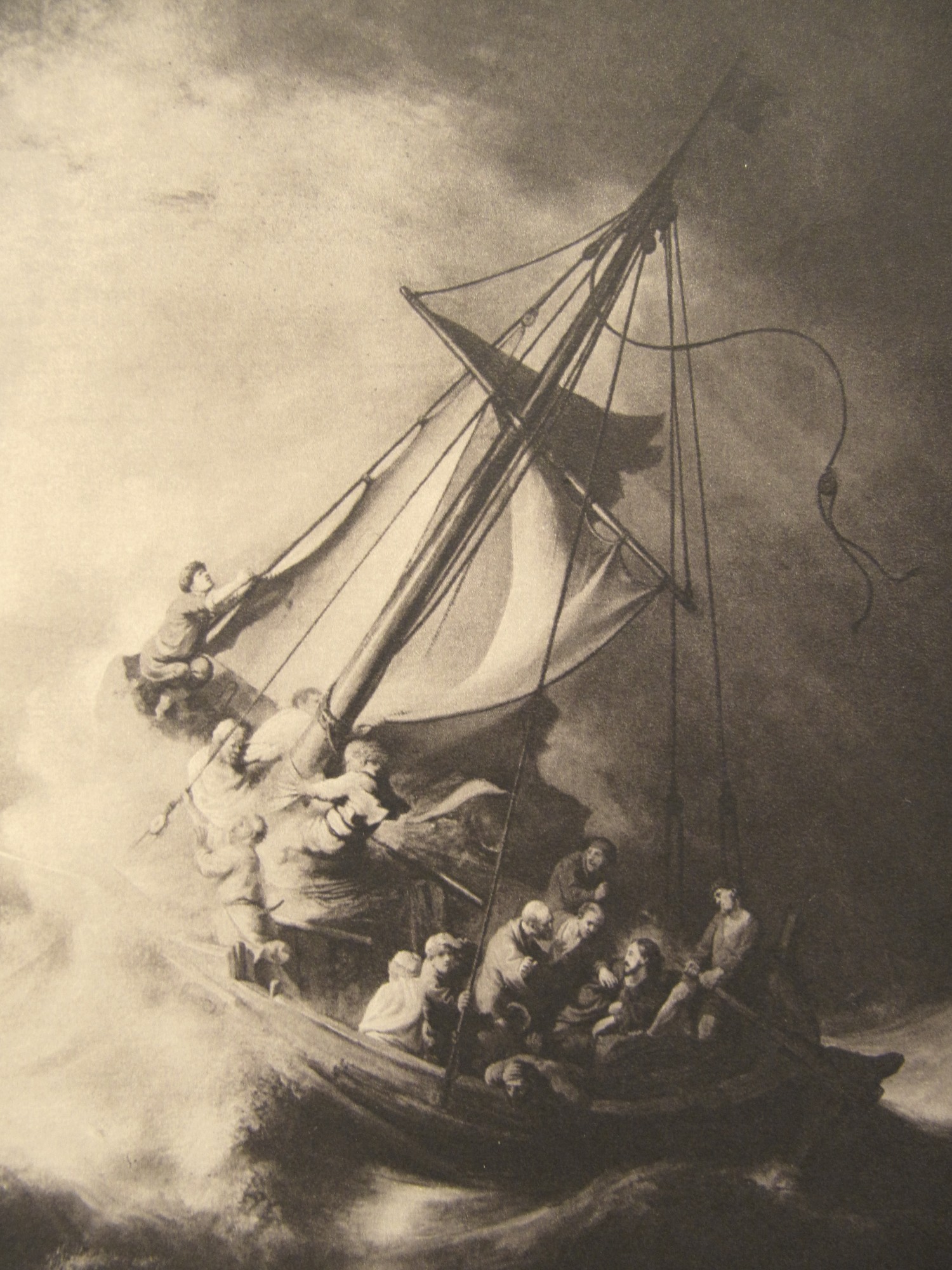
It’s a book that teaches us about life. We may believe in God’s love all right, but sometimes storms come that seem more powerful and we’re sure we’re going to sink.

That’s what happened to Peter in Sunday’s gospel. When told by Jesus to come to him over the water, he set out bravely, but “ when he saw how strong the wind was he became frightened; and, beginning to sink, he cried out, “Lord, save me!”
Immediately Jesus stretched out his hand and caught Peter.”

The sure hand of God is stronger than the raging storms of the sea, our gospel reminds us. Hold on to that hand.  At the same time, our first reading from the Book of Kings reminds us that God is just as strong in quiet times when nothing much seems to be happening.

As the Prophet Elijah watches from his mountain cave, strong winds, earthquakes, fire strike the mountain, but he finds God, not in these, but in the “tiny whispering sound” where one might not expect God at all. God works in quiet times too.