Tag Archives: Jesus Christ

Sing a New Song

In the days after Easter our readings during the liturgy speak of the growth of the church as well as the source of its growth, the Risen Christ, who abides with us in signs and mysteries.

The church’s growth is never easy;  Stephen’s persecution, described in the Acts of the Apostles, tells us that.

But we have “Bread from heaven,” better than the heavenly manna. This bread  keeps you alive forever.

“Sing to the Lord a new song; his praise is in the assembly of the saints.” We’ve been given a new song to sing each day, Augustine says in his commentary.

“A song is a thing of joy; more profoundly, it is a thing of love.” To sing we’ve been  given the gift of love, a new convenant,  a new promise of a kingdom.

“You have heard the words: Sing to the Lord a new song. Now you want  to know what praises to sing. The answer is: His praise is in the assembly of the saints. If you desire to praise him, then live what you express. Live good lives, and you yourselves will be his praise. Singers become the song.”

Earth Day and Solar Panels

Saturday evening,  April 21, after the 5 PM Mass, the Parish of St. Mary’s in Colts Neck, NJ, dedicated an array of solar panels that will cut their use of energy in the parish complex by 90%.  It’s the first parish in the Trenton Diocese to do it, and one hopes an incentive to others. Congratulations to Fr. Tom Triggs and his lively environmental committee.


I offered these thoughts at two Sunday Masses the next morning:

“Bread from heaven.” How frequently Jesus uses earthly things to speak of the things of heaven. “I am the vine,” “I am the light,” “I am living water.” He calls himself the “son” of the “Father.”

Jesus takes things we know: birds of the air, flowers of the field, seed scattered in the earth, to point to things unknown. The created world reveals secrets of a world beyond here.

Shouldn’t we reverence creation then? If we follow Jesus we will. Yet, as we watch our natural world being plundered, its air and waters polluted, its environment sacrificed for human convenience and pleasure, we know our attitude toward our natural world must change. Human-centered and human-concerned, we lack respect for the non- human.

In the Book of Genesis, human beings are said to be made in the image of God and are given an important relationship to the rest of creation. We’re caretakers of creation; we don’t own it; we care for it for awhile. We have a responsibility for it; it has rights of its own, and we have to use all our ingenuity in its care.

Our understanding of God and Jesus Christ, his Son, also suffers from lack of respect for creation. Taking bread, taking wine, Jesus gave thanks; they’re creation’s ambassadors, instruments of a divine exchange. They enlarge our relationship to God by reminding us that God’s plan includes creation as well as our human family and it embraces even the simplest creative things.

Placing bread and wine on precious plates and in precious cups, we carry them to the altar in church and they bring Jesus to us. Can we begin to learn a greater respect for creation here?

Good Friday

We solemnly celebrate the death and Resurrection of our Lord on Holy Thursday, Good Friday, and Holy Saturday, using the simplest of signs.

On Holy Thursday Jesus knelt before his disciples and washed their feet. At table he gave them in bread and wine his own body and blood as signs of his love for them and for all humanity.

On Good Friday we take another symbol, the cross, a powerful sign of death, which first struck fear into the hearts of Jesus’ disciples, but then as they recalled the Lord’s journey from the garden to Calvary, as they saw the empty tomb, as they were taught by the Risen Jesus himself, they began to see that God can conquer even death itself.

On this day, we read the memories of John, the Lord’s disciple, who followed him from the Sea of Galilee, to Jerusalem, its temple and its feasts, to Calvary where he stood with the women and watched the Lord die. Like the others, he recoiled before it all, but then saw signs of victory even in the garden, in the judgment hall, before Pilate, and finally in the cross itself.

On this darkest of days, Christ’s victory is proclaimed in John’s Gospel.

“ Go into my opened side,

Opened by the spear,

Go within and there abide

For my love is here” (St. Paul of the Cross, Letter, September 5, 1740).

One Room, an Everywhere

“Love makes one little room an everywhere.”

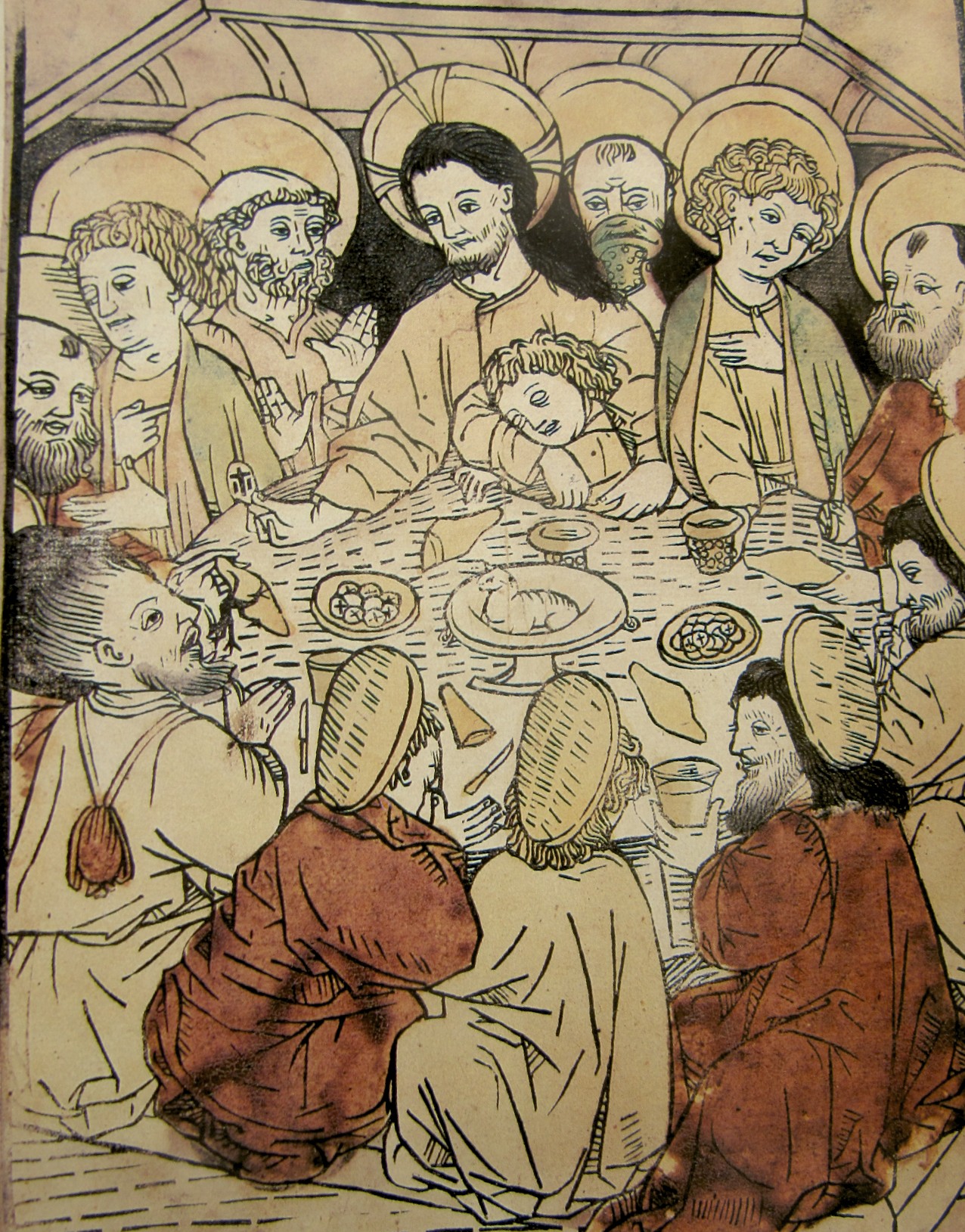
That was so when Jesus entered the supper room in Jerusalem to eat with his disciples on the night before he died. A dark fate awaited him as powerful forces readied to take his life. His disciples, “his own who were in the world,” were arguing among themselves as they took their places at table. What would he do?

Understandably he might respond with disappointment, like the servant whom the prophet Isaiah described, “I toiled in vain; and for nothing, uselessly, spent my strength” (Is 49).

Jesus, however, took bread and gave it to his disciples. “Take this,” he said, “this is my body.” He took the cup and gave it to them. “This is my blood, the blood of the new covenant, to be poured out in behalf of many.”

That night, without wariness or regret, he gave himself to his Father and to his disciples. As our Savior and Redeemer he gave himself unhesitatingly for the life of the world. In the supper room a love was tested and a love was displayed that reached everywhere.

Spy Wednesday

Matthew 26,14-25

Gospels offer little information about the twelve disciples of Jesus. Peter is best known among them, since Jesus gave him a special role and also lived in his house in Capernaum. Then, there’s Judas.

Matthew’s Gospel gives more information about him than any other New Testament source and so it’s read on “Spy Wednesday,” the day in Holy Week that recalls Judas’ offer to the rulers to hand Jesus over for thirty pieces of silver.

“Surely it is not I?” the disciples say one after the other when Jesus announces someone will betray him. And we say so too, as we watch Judas being pointed out. With Peter also we say we will not deny him.

But the readings for these days caution us that there’s a communion of sinners as well as a communion of saints. We’re also sinful disciples. We are never far from the disciples who once sat at table with Jesus. We come as sinners to the Easter Triduum, which begins the evening of Holy Thursday and ends on Easter Sunday. God shows great mercy; we hope for the forgiveness and new life that Jesus gave his disciples who left him the night before he died.

Meal at Bethany

John 12, 1-11

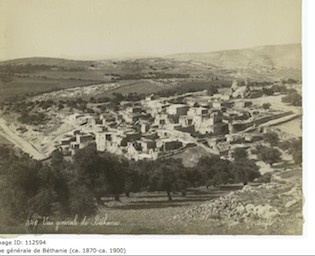
John’s Gospel read today calls us to a meal honoring Jesus in Bethany following the Resurrection of Lazarus. It’s the last meal before the Passover supper. The gift of life that Jesus gives his friend leads to a sentence of death.

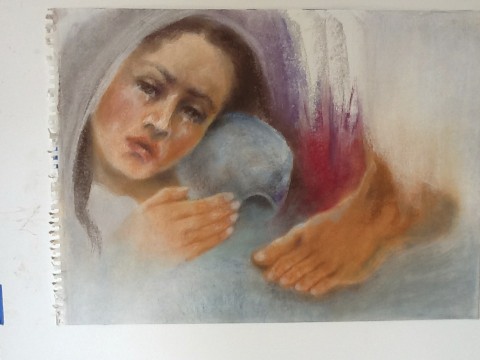
Faithful Martha serves the meal; Lazarus newly alive, is at the table. But the one drawing most of our attention is Mary, their sister who, sensing what’s coming, kneels before Jesus to anoint his feet with precious oil and dry them with her hair. “And the house was filled with the fragrance of the oil.”

The precious oil is an effusive sign of her love and gratitude; it also anoints Jesus for his burial. Only in passing does the Gospel mention that evil is in play here. Judas, “the one who would betray him,” complains that the anointing is a waste, but his voice is silenced. Believers are honoring the one they love.

How fitting that Holy Week begins with this Gospel when, like Mary, we kneel and pour out the precious oil of our love upon him who pours out his precious life for us.

Palm Sunday

The Gospel of Mark, the first of the Gospels to appear in written form, presents Jesus going to his death in utter desolation, draining the cup of suffering given him by his Father.

His enemies viciously reject him; his disciples mostly betray him or desert him. Only a few remain as he goes on his way.

His cry from the cross is a cry of faith mingled with deep fear and sorrow: “My God, my God, why have you forsaken me?”

As we read this Gospel, taut and fast-paced, we share with Jesus the dark mystery of unexplained suffering that all of us face in life. Yet, this mystery leads to life, a risen life. The desolation Jesus experienced takes many forms, some quite hidden from what people see. Yes, the cross can mean physical pain, but suffering may also come from spiritual and psychological situations.

Jesus reveals that God can be found even here: “In Mark’s account, Jesus dies with a wordless scream that echoes from that dread hill, splitting the veil of the temple and igniting faith in the centurion’s heart. This unlikely witness sees in the manner of Jesus’ death for others the true revelation of God. The sight of the Crucified Jesus triggers in him the full first confession of faith expressed in the gospel: “Truly this man was the Son of God!” (15:39). A startling revelation–God’s power revealed not through staggering prodigies but in a selfless death motivated by love.” Donald Senior, CP

 Donald Senior’s beautiful account of Mark’s Passion narrative can be found here.

Here’s Rembrandt’s account of the Crucifixion.

Jewish Feasts as Signs

Jesus came again to Jerusalem for another feast, the Feast of the Dedication of the Temple, John’s Gospel read in as today’s Lenten reading says. It’s the Hanukkah feast celebrated sometime in late November to late December, recalling the rededication of the temple after its profanation by Antiochus Epiphanes in the second century BC.

In John’s Gospel the Jewish feasts are signs revealing who Jesus is; they inspire his words and the miracles he does. In fact, he replaces them.

On the Sabbath, (chapter 5) he heals the paralyzed man at the pool at Bethsaida. The Son will not rest from giving life as the Father never rests from giving life.

On the Passover (chapter 6), he is the true Bread from heaven, the manna that feeds multitudes.

On the Feast of Tabernacles (chapters 7–9) he calls himself the light of the world and living water.

On the Feast of the Dedication, (chapter 10,31-42) he reveals himself as the true temple, the One who dwells among us and makes God’s glory known. Once more, Jesus proclaims in today’s Gospel his relationship to the Father, “the Father is in me and I am in the Father.”

Yet, once more hostile listeners do not see the signs and accuse him of blasphemy, trying to stone him or have him arrested. But Jesus evades them and goes back across the Jordan to the place where John baptized and “many there began to believe in him.” He will return to Jerusalem to raise Lazarus from the dead. (chapter11)

So many signs are given to us. We have the scriptures, the sacraments, the witness of the saints. How tragic not to follow them to the Word made flesh! Follow the feasts and let them speak to us.

Resurrection Thinking

I spoke today, the final day of  our mission at Immaculate Conception Church, Melbourne Beach, Florida, about the mystery of the Resurrection of Jesus, a crucial mystery of our faith. Each of the gospels presents it in its own way. Here’s a summary from a previous blog of mine.

A recent presentation on the Resurrection by Bishop Wright, the Anglican bishop of Durham, to the Catholic bishops of Italy, is particularly interesting. I put it on my blog last month.

I began my presentation talking about Harold Camping’s prediction from last spring that the world was going to end on May 21, 2011. It didn’t, of course. But Harold’s thinking probably reflects the widespread gloom in our western world, in particular, about where the world is heading.

Our belief in the Risen Christ affects the way we see our church, ourselves and our world. We learn from this mystery to trust in the Risen Christ who King of all creation, our Way, our Truth and our Life. We need Resurrection Thinking.

Here’s a visual meditation on the Passion of Jesus from Rembrandt:

Always There

Once again, our lenten gospel for today reports what Jesus said in the temple area during the Feast of Tabernacles. His urgent words address especially those who oppose him. The time is short; the Light that guides the world has appeared, but Jesus “is going away” and those who reject him will die in their sins.

We’re not detached observers of a time long ago, as we listen to this Gospel, watching others challenged to believe. The challenge is not just to someone else; we’re challenged ourselves to answer the question: Who is Jesus Christ? He is “I AM,” a divine title his enemies find blasphemous, but believers find true.

In Hebrew it means “He who is always there.” Later in John’s Gospel, Thomas bows before Jesus and says “My Lord and my God,” for he recognizes that the One lifted up on the cross is indeed “IAM.”

An interesting title for God, isn’t it? “Always there.” Another way of saying the “Eternal One” perhaps, but “Always there” puts it in another way. “Always here” “Always present” “Always powerfully present.”

Our Gospel calls us to reverence the One lifted up on the Cross as the days of Holy Week approach. He is “I AM,” true God, sent by the Father, “who so loved the world that he sent his only Son.” And he will always be there.


Lord Jesus Christ,

Draw me to your cross

and show me your wounds, your bitter death,

your triumph over the tomb.

God with us, always there,

God who loves us so much,

keep me in mind of you,

save me from forgetfulness.      Amen.  .