Tag Archives: Jesus Christ

Faith Like The Mustard Seed

27th Sunday of the Year C

Like the apostles, we would like a stronger faith. “Increase our faith,” they ask Jesus. Give us faith that understands everything immediately and sees everything clearly–right away! We can hear ourselves asking for faith like that too.

In response, Jesus offers the image of a mustard seed. Look at this tiny seed, he says. With faith like this, you can accomplish the most impossible things. What does he mean?
A mustard seed is so small that you hardly can see it in the palm of your hand, Yet once in the ground it grows into a full sized tree, through cold and heat, nights and days, all kinds of weather. But it takes time.

Faith is like that. It grows, but its growth takes place over time, day by day, through the common experiences that come our way. God dwells in the ground of daily life and it’s there we meet him most of all. That’s why the psalm for today’s Mass insists: “If today you hear his voice, harden not your hearts.”

Today in countless little things, in unassuming moments, God speaks to us. And even as the moments slip by, God’s plan unfolds. We need a daily faith, a patient faith, a faith like the mustard seed, to wait until it reaches its completion. “The vision still has its time, presses on to fulfillment, and will not disappoint. If it delays, wait for it, it will surely come, it will not be late.”

A daily faith that watches God’s plan unfold in the course of things.
The Rich Man and Lazarus

In the parable from Luke that we read this Sunday the rich man is so absorbed in himself and his “good” life that he sees nothing else, not the poor man at his door nor his own inevitable death and judgment. Living in the bubble of the present, nothing else, no one else matters to him.

Jesus often warns against this kind of blindness. The scriptures are filled with similar warnings too. Psalm 49 says “In his riches, man lacks wisdom; he is like the beasts that are destroyed” (Psalm 49). Having too much can make you lose perspective.

It would be a mistake to see this parable directed only to the rich, however. That same psalm calls for “people both high and low, rich and poor alike” to listen.

You don’t have to be rich to be like the rich man in the parable. People who don’t have much can also be small-minded and shortsighted and self-absorbed and blind to those around them. Not only the rich, but we all can be self-centered and locked in our own small worlds, in love with success and blind to the poor at our gate.

The parable says that we’re destined for a life beyond this and how we live and how we help one another now is really what matters. We won’t be judged by how well we took care of ourselves, or the honors we have accumulated. We’ll be judged by how we reached out to one another, especially the poorest, the slowest, and those who seem to fail at life.

The rich man in the parable suddenly became aware of this. He finds himself left out, with not a drop of water to quench his thirst. The tables are turned.

Jesus’ parable reminds us that the kind of blindness the rich man has is very difficult to break down. “Send someone back from the dead to tell my brothers,” the rich man pleads. But even if someone comes back from the dead, they will not believe.

No matter how often we hear them, the parables of Jesus have their surprises. Did you notice that the rich man has no name in the parable, yet the poor man does? His name is Lazarus. Probably in his lifetime, everyone knew the rich man’s name, as one of the rich and famous. Probably few knew the name of the beggar looking for scraps of food at the rich mans’s door.

But God knew poor Lazarus’ name. He knew Lazarus on earth and beyond this life in heaven. Probably a good test: how many Lazarus’s do we know?

Lord,
source of all good,
good beyond what we have or can see,
give us wisdom to know you and your gifts
and to see others as you see and love them.
Like the blind man, we want to see.
Amen.

Lord of the Sabbath

Jesus and his opponents often clash over the Sabbath, as they do in today’s reading from Luke’s gospel.(Luke 6,1-5) Jesus’ disciples take some grain as they walk through the fields in Galilee. “Why are you doing what is unlawful on the Sabbath?” some Pharisees ask. All four gospels cite incidents like this. The question of the Sabbath was raised repeatedly in Jesus’ ministry.

We may think the question is about a Jewish law, but it’s really about God. How would God act if someone was hungry, or thirsty, or in need? That’s not a bad question to ask ourselves as we look out into our world. What would God do for the people we see in need? How would God look at those who belong to a different race or culture or nationality than we do? How would God act towards those who harm others or live unjust lives?

The Sabbath is God’s day, a day to remember who he is and what he has done. It’s not a day that restricts how we live, but a day that expands our vision to God’s vision. It’s a day to help us live other days of our lives. On the Sabbath, God gives us hope.

No wonder Jesus spoke of himself as “Lord of the Sabbath,” for he reveals the God we want to know. Too bad so many think of him as someone who restricts the way we live. It’s just the opposite. He teaches how live and offers a hope beyond any we could conceive.

The Transfiguration of Jesus

DSC00070
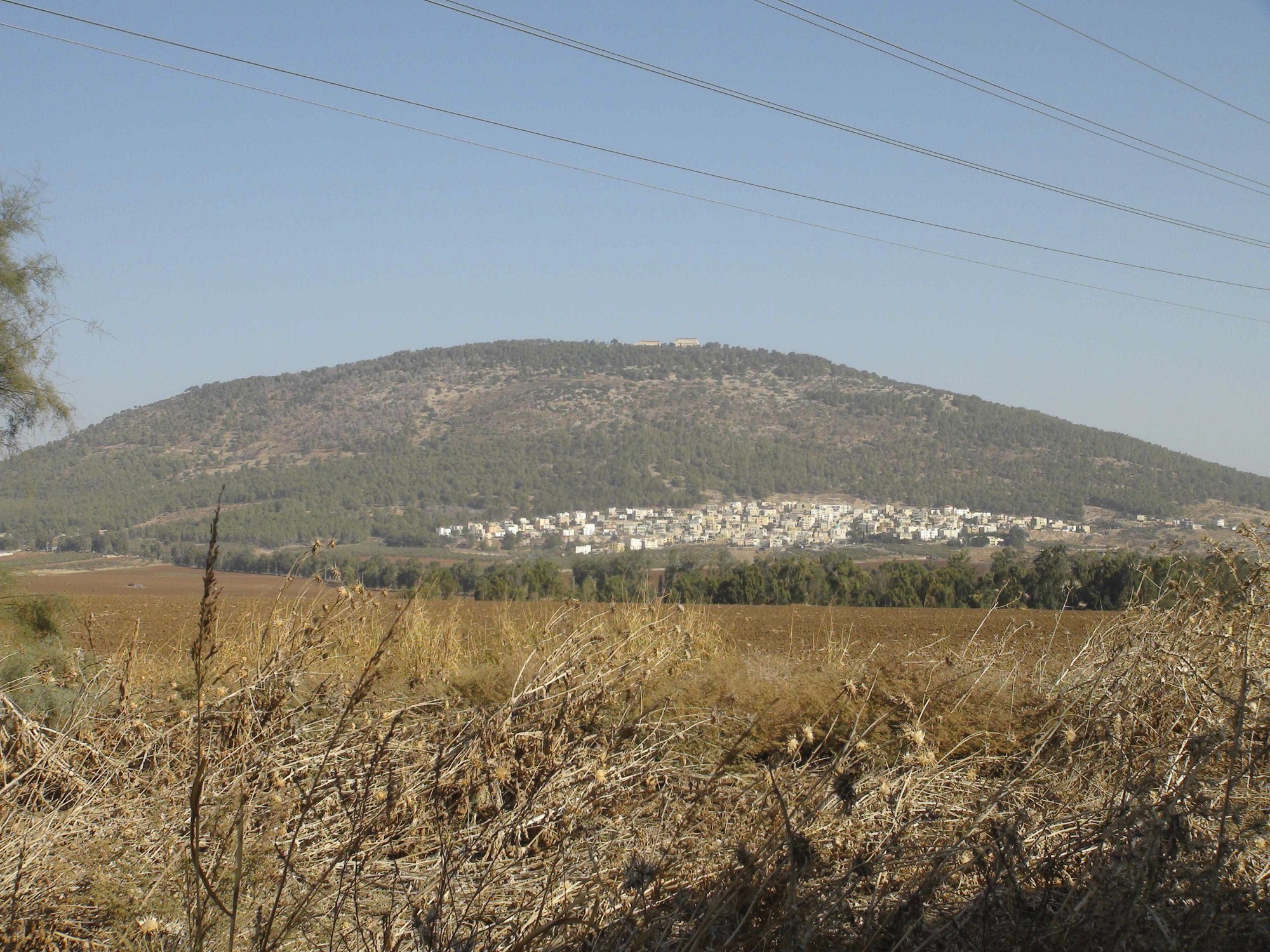
Today’s Feast of the Transfiguration was celebrated as far back as the 4th century by the Syrian church. Then, it spread to other eastern churches, and finally in the 15th century came into our Roman liturgy, probably through western pilgrims to the Holy Land who visited the great mountain shrine of the Transfiguration in Galilee and brought the feast back to Europe. Some of our feasts have come to us like this– from pilgrims to the Holy Land.

All three synoptic gospels have the account of Jesus ascending the mountain with Peter, James and John after he has announced his passion and death. He’s transfigured before them. His face is changed in appearance,“dazzling like the sun,” Matthew’s gospel says. “His clothes are dazzling white;” the other gospels say, reflecting a body we can’t look at directly. It happens “while he was praying,” Luke says, who always sees prayer opening up the mysteries of God.

The mountain in the scriptures is a favorite place where God reveals himself. It’s where you can take in everything, everywhere. Later this week in our readings from Deuteronomy (4,32-40), Moses tells the children of Israel to remember that God’s voice came from the heavens and spoke to them from the mountain of Horeb and led them by a cloud to a land that was their heritage.

Now, God speaks from the Mount of Transfiguration. A cloud envelopes Jesus and his disciples. “This is my chosen Son; listen to him,” God says. “Keep this mystery in mind,” Peter says in his letter; it’s “like a lamp shining in a dark place, until the first streaks of dawn appear and the morning star rises in your hearts.”

Our liturgy today tells us that Jesus “revealed his glory to his disciples to strengthen them for the scandal of the cross,” that’s the dark place God wishes to lighten. “His glory shone in a body like our own, to show that the Church, which is his body, would one day share his glory,” our liturgy says. So our bodies share this mystery with him.

Moses and Elijah are there speaking to him, Luke says, “about his passage, which he was about to fulfill in Jerusalem.” The passage from Egypt to the Promised Land will take place now through the mystery of his passion and resurrection.

The disciples fall silent after experiencing this mystery. They can’t explain it, even if they wanted to. So they fall back on the familiar stories of Moses and Elijah who spoke to God face to face. The mystery of the death and resurrection of Jesus is a mystery we anticipate, we cannot explain. Later, his disciples will say simply: “We have seen the Lord. He is risen, as he said.”

Hunger

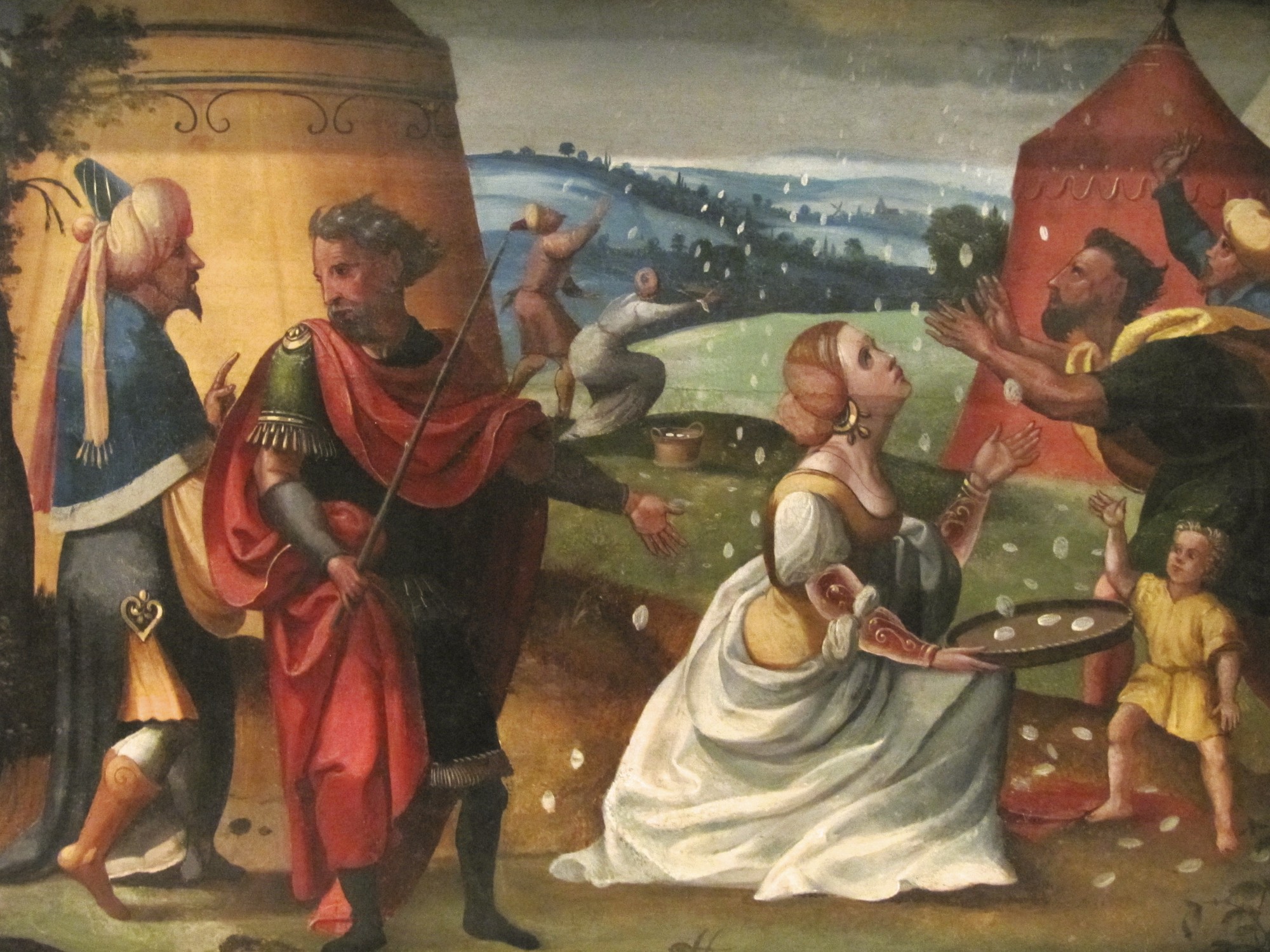
Manna in the Desert

The next five Sundays we’ll read from the 6th chapter of St. John’s gospel, beginning this Sunday with the miracle of the loaves and the fish. All four gospels recall this miracle, Mark and Matthew report it twice. The miracle and Jesus’ words that follow it in John’s gospel are about the Holy Eucharist. Jesus, the Bread of Life, is the answer to our hunger.

The miracle takes place across the Sea of Galilee, in a “deserted place,’ as Matthew’s gospel describes it. There’s no place to buy food for a hungry crowd.

There’s only five barley loaves and two fish a small boy has. Barley loaves were the ordinary food for the poor.

Jesus initiates this miracle by pointing out to his disciples  a hunger in the crowd. They seem hardly aware of it and have no answer what to do, except to say “We don’t have enough!”  Taking what’s there, the five barley loaves and two fish, Jesus multiplies this food and feeds a multitude. John notes the Passover is near; it’s spring and green grass has grown up in this deserted place. Not only is it enough, but fragments are left over as the crowd has its fill.

Keep in mind the basic reality the miracle addresses: hunger. It’s bodily hunger, yes, but hunger of all kinds is addressed here. Like the disciples, we may be hardly aware of it. Humanity is hungry, this gospel says. Only God can fill its silent, hidden hunger, this miracle says. Only Jesus can.

Hunger

“I come among the peoples like a shadow,

I sit down by each man’s side,

None sees me,

but they look on one another and know that I am there

My silence is like the silence of the tide that buries the playground of children

Like the deepening of frost in the slow night, when birds are dead in the morning.

Armies travel, invade, destroy with guns roaring from earth and air.

I am more terrible than armies.

I am more feared than cannon, kings and chancellors

I give no command to any, but I am listened to more than kings

and more than passionate orators

I unswear words and undo deeds,

Naked things know me.

I am more the first and last to be felt of the living.

I am hunger. “

Lawrence Binyon

Mary Magdalene

Today’s the feast of Mary Magdalene. Some recent writers in an attempt to “de-mythologize” Jesus would like to romanticize his relationship with Mary, basing themselves on flimsy late evidence from the gnostic writings of the 3rd and 4th century. They claim he was even married to her. However,tohe gospels see Mary primarily as a disciple who loved him and followed him along with other women. According to the earliest authentic sources we have Jesus was unmarried and his ministry and life was transparent to his early followers.
The media loves sensationalism; it sells and draws an audience. Unfortunately, it takes on a life of its own.

Mary Magdalene

Along with Peter, Mary Magdalene is a key witness to the resurrection of Jesus. Her story is told in John’s gospel which describes their meeting in the garden. For the rest of her years Mary would remember those moments by the tomb.
In the morning darkness she had come weeping for the one she had thought lost forever. She had heard him call her name, “Mary”. She had turned to see him alive and the garden became paradise.
Like a new Eve she had been sent by Jesus to bring news of life to all the living. She was his apostle to the apostles. The belief of Christians in the resurrection of Jesus would be founded on this woman’s word.
On Easter Sunday the church questions her:
“Tell us, Mary, what did you see on the way?
‘I saw the tomb of the now living Christ.
I saw the glory of Christ, now risen.
I saw angels who gave witness;
the cloths, too, which once covered head and limbs.
Christ my hope had indeed arisen.
He will go before his own into Galilee.'”
–Easter sequence

Fascinated by her story, medieval spiritual writers added simple human details to the Gospel accounts. According to the author of the Meditations on the Life of Christ, Mary held the feet of Jesus when he was taken down from the cross, because she had kissed them and washed them with her tears once before.

“(At the tomb) she could not think, or speak, or hear anything except about him. When she cried and paid no attention to the angels, her Lord could not hold back any longer for love… ‘Woman, whom do you seek? Why do you weep?’ And she, as if drugged, not recognizing him said, ‘Lord, if you carried him away, tell me where, and I will take him.’ “Look at her. With tear-stained face she begs him to lead her to the one seeks. She always hopes to hear something new of her Beloved. Then the Lord says to her, ‘Mary’.

“It was as though she came back to life, and recognizing his voice, she said with indescribable joy, ‘Rabbi, you are the Lord I was seeking. Why did you hide from me so long? …I tell you so much grief from your passion filled my heart that I forgot everything else. I could remember nothing except your dead body and the place where I buried it, and so I brought ointment this morning. But you have come back to us.’

“And they stayed there lovingly with great joy and gladness. She looked at him closely and asked him about each thing, and he answered willingly. Now, truly, the Passover feast had come. Although it seemed that the Lord held back from her, I can hardly believe that she did not touch him before he departed, kissing his feet and his hands.”
For more on Mary Magdalene, see http://www.cptryon.org/holylives/nt/magd/

The Sinful Woman

Sinful woman
We’ve been reading from the Gospel of Luke most Sundays at Mass this year and for the last few weeks Luke speaks about women in the ministry of Jesus and of his church. Last Sunday there was the story of the widow of Naim, who was bringing her dead son to be buried. Jesus stopped the funeral cortege raised the boy to life and gave him back to his mother.(Luke7.11-17) This week there’s the story of the sinful woman of the town in a Pharisee’s house. Weeping, she pours an ointment over Jesus’ feet along with her tears. Then she dries them with her hair.(Luke 7,36-8,3)

Recall too the story from last Sunday’s Old Testament readings about a widow whose only son had died. Elijah raised her boy to life. (1 Kings 17,17-24)

Are these stories related? I think they may be. In Jesus’ day women who were widowed were especially vulnerable. Losing their husbands, they lost their support. If they lost their sons their plight was worse. In a society where men were the sole providers, women had nothing without them. It could happen in such a situation that women sold themselves, which leads us to the story for today. Was the woman in the gospel one of those women?

It’s a situation that exists even in our time. “Doesn’t he know what kind of woman she is?” Jesus’ host asks. Yes, he does. He understands her circumstances quite well. Luke’s gospel especially takes up their cause.

You notice how the gospel ends today with Luke’s summary of Jesus’ journey to Jerusalem.

Accompanying him were the Twelve
and some women who had been cured of evil spirits and infirmities,
Mary, called Magdalene, from whom seven demons had gone out,
Joanna, the wife of Herod’s steward Chuza,
Susanna, and many others who provided for them
out of their resources. (Luke 8,1-3)

Luke carefully notes that women followed Jesus. He had empowered them; then they empowered him and his gospel. That’s the way love and forgiveness works. Luke reminds the men of his church that women had an important place in the life and ministry of Jesus. For him women’s issues were not just women’s issues, they were men’s issues as well.

Today is Fathers’ Day. As we honor fathers, let’s remember that the scriptures expand the definition of father beyond biological terms. God is “Our Father in heaven”, “Father of the poor”, “Father of the widow”, “Father of orphans.” He the God of the vulnerable. Luke embraces this expanded understanding of mother and father in his gospel. Let’s make it our own too.

Betrayal

John 13, 21-38

The Gospels for Monday to Thursday in Holy Week take us away from the crowded temple area in Jerusalem where Jesus spoke to the crowds and his avowed enemies and bring us into homes where “his own” join him to eat a meal.

In Bethany six days before Passover he eats with those he loved: Martha, Mary, and Lazarus, whom he raised from the dead. In Jerusalem on the night before he dies he eats with the twelve who followed him. During the meal in Bethany, Mary anoints his feet with precious oil in a beautiful outpouring of her love.

But the Gospels for Tuesday and Wednesday point not to love but betrayal. Friends that followed him abandon him. Judas betrays him for thirty pieces of silver and goes out into the night; Peter will deny him three times; the others flee. Jesus must face suffering and death alone. (Judas’ Betrayal, J.Tissot)

Are we unlike them? Does a troubled Jesus face us too, “his own,” to whom he gave new life in the waters of baptism and Bread at his table. Will we not betray or deny? Are we sure we will not go away? The Gospels are not just about long ago; they’re also about now.

The Passover Meal

During these days of Holy Week I’ve been thinking of the Passionist house of St. Martha in Bethany where I stayed about a week a few years ago. Looking eastward from the roof of the house on a clear day you can see down to the Judean desert miles away. The ancient road Galilean pilgrims took to Jerusalem for the feasts began there in Jericho and passed by this site. The Passionist house stands over parts of the ancient village of Bethany; 1st century ruins stretch out on its eastern side. From the roof you could see the traditional tomb of Lazarus if the modern Israeli security wall didn’t block your view.

It’s a place that stirs your imagination.

Most likely Jesus lived here with his friends during Jewish feasts when he came from Galilee. It was the obvious place for Galilean pilgrims to camp in those times when the city would be so crowded. The Mount of Olives just west of Bethany was sometimes called the “Mount of the Galileans.” Here Jesus would likely be among friends, like Martha, Mary and Lazarus. A safe place. From here he walked to Jerusalem, a few miles away, over the Mount of Olives to teach and pray in the temple. Likely, followers from Galilee would accompany him back and forth, and they were armed.

Would this explain why the temple leaders reached out to an insider like Judas as a way of capturing Jesus, who seemed so secure? Perhaps his disciples thought so too; they’re so complacently confident that nothing will happen to him. They’ll take care of that.

“Where do you want us to prepare the Passover supper for you?” his disciples ask (Matthew 26,27) Surely, Jesus could have chosen to eat the Passover there in Bethany, which Jewish law saw as part of Jerusalem in times of feasts when the city’s population multiplied. It would have been a meal among his own, like that he enjoyed after raising Lazarus from the dead.And it would have been safer.

Instead, he chose to eat the Passover close by the temple. The traditional site of the Last Supper places the site just south of the temple. They would have eaten it there, as the lambs were being slaughtered for sacrifice. It certainly wasn’t a place chosen for security.

The Tomb of Lazarus

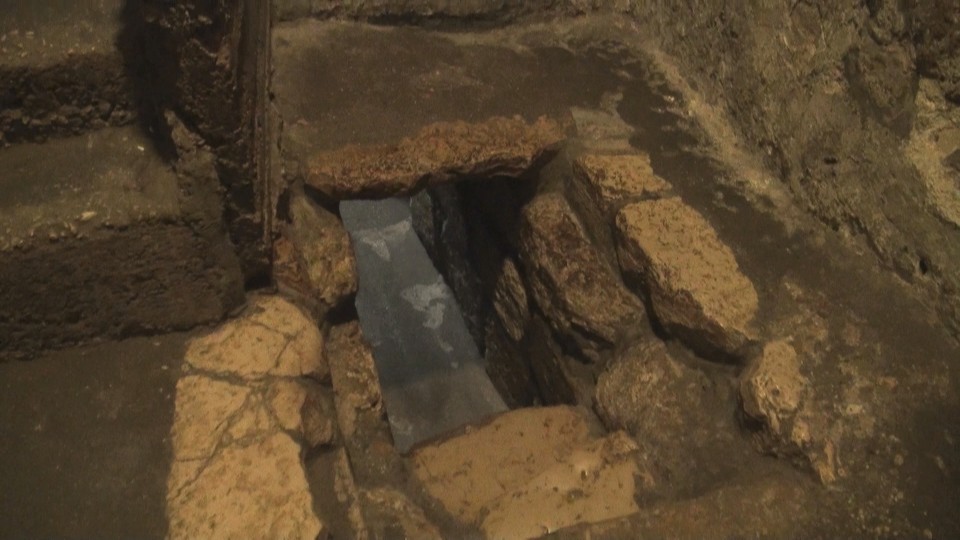
I visited the tomb of Lazarus in November 2010 while in the Holy Land. It’s only a few hundred yards from the Passionist house, St Martha, in Bethany, where I was staying, but because of the Israeli security wall you now have to drive about 13 miles around the wall to get there.

Some sisters from the nearby Comboni convent drove me there on their way to go food shopping one day. As I approached the tomb a group of about 30 pilgrims from one of the slavic countries were entering the tomb, so I stayed outside till they left. During the 2nd World War over 40 million people were killed by Hitler and Stalin in what’s been called “The Bloodlands,” parts of Eastern Europe that were fought over so viciously. Were these people going down to the tomb from that part of the world, bringing memories of “The Bloodlands,” I wondered?

They started to sing in harmony their beautiful eastern chants and the haunting, glorious music came up from the dark rock cavern below. Lazarus was being celebrated again and his tomb rang with their joyful song.

“Lazarus, come out!”

And not only were they celebrating the raising of Lazarus but our hope of resurrection too.

The dark tomb was still ringing with their singing when I went in. Joyful song from a tomb. Lazarus represents us all. That’s the powerful message from our gospel today which prepares us for the life-giving death of Jesus.