Tag Archives: Jesus Christ

Learning in Bad Times

I find myself turning away from the news on television these days. I don’t think I’m the only one. The pandemic only seems to be getting worse, and we’re getting worse with it.

So we turn to the Good News.

I’m finding the Gospel of Matthew, which we’re reading these weekdays and on Sundays, helpful. It was written for people struggling with bad times.

The bad times were around the year AD 90 when the followers of Jesus in Galilee were reeling from the attacks of a resurgent Judaism. Those attacks are described in Chapters 10-12 of Matthew’s gospel.

Instead of closing their eyes and hanging on tight, Jesus tells his disciples to open their eyes and their ears, because there’s something for them to learn. “Blessed are your eyes, because they see and your ears because they hear. Many prophets and righteous people longed to see what you see but did not see it and hear what you hear and did not hear it”  (Matthew 13:16-17). He says that as he teaches them in parables.

Bad times can be the best times to learn. Some of the best things we know; some of the best insights we have;  some of the most creative thoughts may come in bad times. God doesn’t stop speaking or teaching in bad times; God sows seeds and opens new avenues. New treasures, new pearls are there to be discovered in the ground we walk over and the jumble of things that seem to overwhelm us.

We will be reading soon the parables of the treasure hidden in the field and the pearl of great price and the net that pulls up a bewildering variety of things from the sea.  It’s a message continued in the mystery of the Passion of Jesus. The disciples saw only death and failure there at first, but then they saw treasures in the wounds, the blood and water that flowed from his side, the words he said.

We don’t have to turn away from bad times. They’re times to keep your eyes and ears open, Jesus says. Like his first disciples, we should pray, not for blinders, but for “understanding hearts.”

A Meal in Bethany

IMG_0065
On the Monday of Holy Week John’s gospel (John 12,1-11) calls us to a meal honoring Jesus in Bethany following the resurrection of Lazarus. It’s the last meal mentioned in the gospels before the Passover supper. The gift of life that Jesus gives his friend leads to a sentence of death.

Faithful Martha serves the meal; Lazarus newly alive, is at the table. But the one drawing most of our attention is Mary, their sister who, sensing what’s coming, kneels before Jesus to anoint his feet with precious oil and dry them with her hair. “And the house was filled with the fragrance of the oil.”

The precious oil is an effusive sign of her love and gratitude; it also anoints Jesus for his burial. Only in passing does the gospel mention that evil is in play here. Judas, “the one who would betray him,” complains that the anointing is a waste, but his voice is silenced. Believers are honoring the one they love.

How fitting that Holy Week begins with this gospel when, like Mary, we kneel and pour out the precious oil of our love upon him who pours out his precious life for us.

Friday, 2nd Week of Lent

Lent 1


Readings

Rejection is a special kind of pain. Matthew’s gospel today describes the rejection Jesus experienced when he entered Jerusalem before his death. At first, he’s acclaimed by a large crowd as “the prophet Jesus from Nazareth in Galilee.” They spread their cloaks and cast branches before him. “Hosanna to the Son of David. Blessed is he who comes in the name of the Lord.”

Then, Jesus goes into the temple and drives out those who were buying and selling there, a symbolic act that indicates he has come to restore this place of prayer. (Matthew 21, 1-18)

Reacting strongly, the Jewish leaders reject him and question his authority to do such things. He has been sent by God, Jesus says, and responds with a parable that condemns leaders like them who reject prophets sent by God.

Jesus remains convinced of his mission, but conviction does not insulate him from the pain that comes from rejection. Like the prophets before him he suffers from it, and his suffering only increases as the crowds that first acclaimed him fall silent and his own disciples deny and abandon him. All turn against him and he is alone.

The events described in today’s gospel and the parable Jesus told throw light on one suffering Jesus endured in his passion and death¬– rejection. Rejection and death will not be the last word, however: “the stone rejected by the builders will become the cornerstone.”

You went to Jerusalem, Lord,

to announce a kingdom come

a promise of God fulfilled.

a hope beyond any the mind could conceive.

Teach us to keep your dream alive

though we see it denied.

STATIONS OF THE CROSS: Friday is a traditional day. for remembering the Passion of Jesus

Stations of the Cross:   Video  https://www.youtube.com/watch?v=waaMOBJ5e1Q&list=PLLUFZUgOPMFxkmfgBNS4Kfm8XxEwoAd6f&index=11

Stations of the Cross; Text    https://passionofchrist.us/stations-adults/ 

Stations of the Cross for Children: https://passionofchrist.us/stations-of-the-cross-children/

Prayers :  https://passionofchrist.us/prayers/

Human versus Divine Thinking

DSC00804“Who do you say that I am?” Jesus asks his disciples on the way to Caesarea Philippi. “You are the Christ,” Peter says in reply, going beyond what the crowds were saying then of Jesus.

But then as Jesus speaks of suffering greatly, being rejected, killed and rising after three days, Peter rejects his prediction. In reply Jesus says to him “Get behind me Satan. You are thinking not as God does, but as humans do. ” (Mark 8,27-33)

The Gospel of Mark, more than the others, presents us with the human Peter, thinking as humans do. He appears in the story of the Passion of Jesus failing miserably as he denies Jesus three times and deserts him in his last hours. If Peter is the voice behind Mark’s gospel, he certainly hasn’t made himself a hero nor does he excuse his failures. Many times he seems to say as he says elsewhere in the gospel; “I’m a sinful man.”

Yet, he was called upon by Jesus to lead and teach.

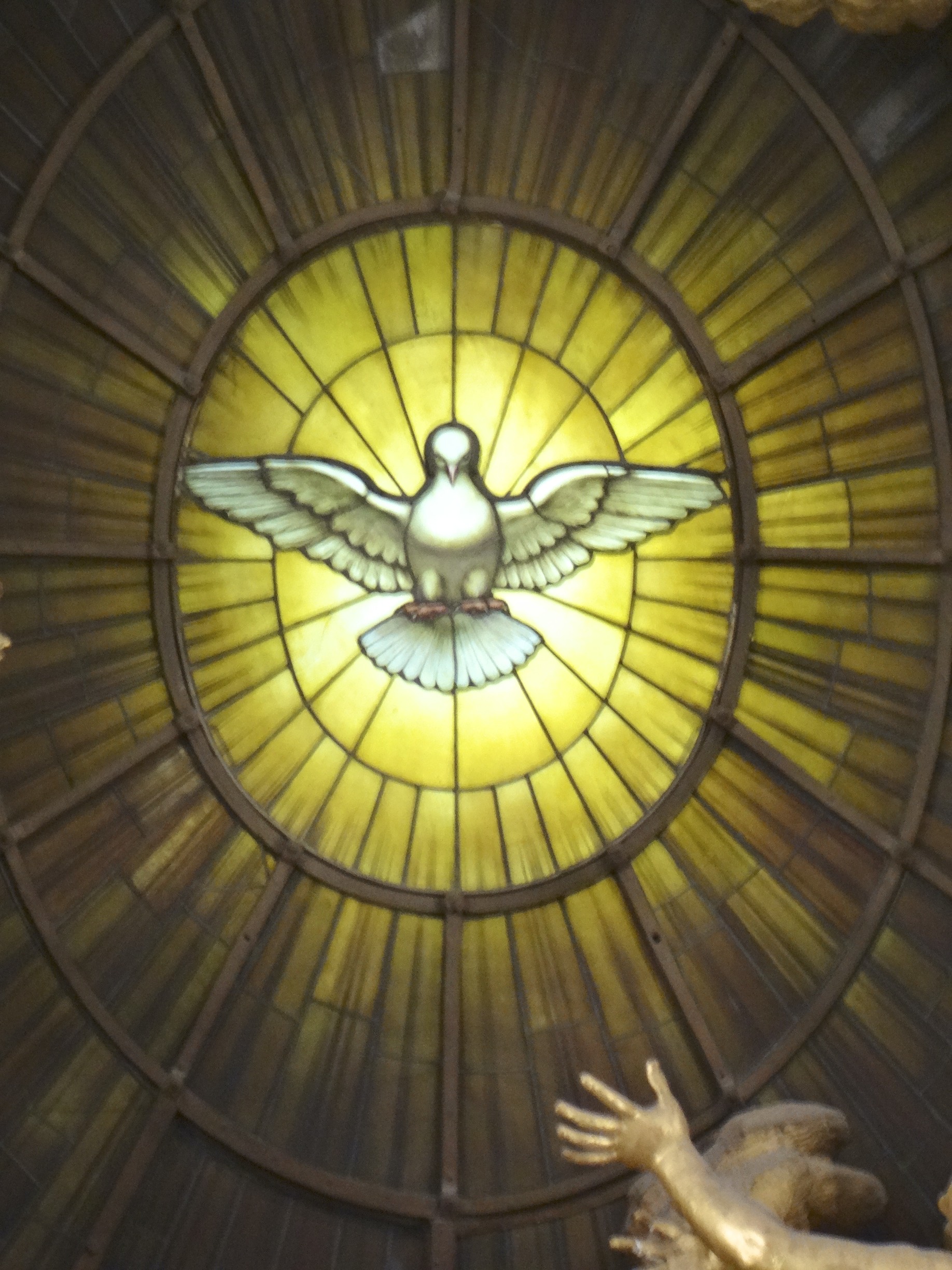
In a few days (February 22nd) we’re going to celebrate the Feast of the Chair of St. Peter. The chair is in the Vatican Basilica beneath the window of the Holy Spirit which sheds its bright light upon it. It’s a teacher’s chair, not a throne, and from Mark’s gospel we get a picture of the one who, with the Spirit’s help, leads and teaches the church.

A human hand reaches from the darkness to the divine.

Monday, Week 3 of Advent

balaam

Readings here

Mattthew’s gospel begins this week with a story of unbelief. Those you would expect to receive Jesus reject him.  They also rejected John the Baptist before him. Yet, prostitutes, tax collectors and sinners believed in him and they also believed  in John, Jesus says.

Faith in Jesus doesn’t come from holding places of privilege and power, or from great learning.

The Old Testament offers a wonderful reading from the Book of Numbers.. It’s about Balaam, a foreign prophet, who’s offered handsome pay if he will put a curse on the tribes of Israel. Instead, Balaam, “whose eyes are true, who sees what God sees and knows what God knows,”  blesses the tribes of Israel.

He promises a “star shall rise from Israel and a staff should appear from Jacob.”.

Even his donkey gets it right. He won’t take Balaam to the place where they want him to curse the Israelites. Is that why t a donkey appears at the manger in Bethlehem?

Beautiful illustration from the Middle Ages. The donkey won’t budge..

Feast of the Immaculate Conception

We tend to see the mystery of the Immaculate Conception, which says that Mary was preserved from original sin from conception, as a gift just for her and not affecting us at all,  a gift that makes her unlike us.

St. Anselm, the 12th century monk, later archbishop of Canterbury, sees it differently. Mary shows us what being human and being part of God’s creation was meant to be. She’s the first to be blessed by Jesus Christ, her son. All of us, yes creation itself,  benefit from the gift:

“Blessed Lady, sky and stars, earth and rivers, day and night – everything that is subject to our power or use – rejoice that through you they are in some sense restored to their lost beauty and are endowed with inexpressible new grace. All creatures were dead, as it were, useless to us or for the praise of God, who made them. The world, contrary to its true destiny, was corrupted and tainted by human acts of idolatry. Now all creation has been restored to life and rejoices.

“The universe rejoices with new and indefinable loveliness. Not only does it feel the unseen presence of God, its Creator, it sees God openly, working and making it holy. These great blessings spring from the blessed fruit of Mary’s womb.

“Through the fullness of the grace given you, dead things rejoice in their freedom, and those in heaven are glad to be made new. Through the Son who was the glorious fruit of your virgin womb, just souls who died before his life-giving death rejoice as they are freed from captivity, and the angels are glad at the restoration of their shattered domain.

“Lady, full and overflowing with grace, all creation receives new life from your abundance. Virgin, blessed above all creatures, through your blessing all creation is blessed, not only creation from its Creator, but the Creator himself has been blessed by creation.”

What You Find in the First Week of Advent

The daily Advent readings at Mass for the first week of Advent are beautifully arranged..

In the Old Testament readings,  the Prophet Isaiah speaks as a fierce Assyrian army heads towards Jerusalem. Bad times ahead, but the prophet sees something else. All nations are streaming to God’s mountain.

The nations will come to God’s mountain, Jerusalem, where the temple stands, the prophet says.  They’ll be fed a rich banquet (Wednesday),  the poor will triumph (Thursday),  the blind will see (Friday). Safe on this rock, children play around the cobra’s den, and the lion and the lamb lie down together (Tuesday). The prophet  challenges us to see our world in another way.

In the gospels  Jesus Christ fulfills the Isaian prophecies. The Roman centurion, humbly approaching Jesus in Capernaum, represents all nations approaching him. (Monday)  Jesus praises the childlike;  they will enter the kingdom of heaven.(Tuesday)  He feeds a multitude on the mountain.(Wednesday) His kingdom is built on rock.(Thursday)  He gives sight to the blind to find their way.  (Friday)

Many Advent readings in these early weeks of Advent are from the gospel of Matthew, who portrays Jesus teaching on a mountain (Isaiah’s favorite symbol). His miracles affect all. Jesus is the new temple, the Presence of God, Emmanuel, God with us. He brings hope beyond human hope.

Lord, help us see what you and the prophets see.

Light in Darkness

IMG_5910

The Easter readings tell us  Jesus Christ is the light of the world, who shines in our darkness. Mary comes to the tomb while it’s still dark. The dark of evening comes as the disciples hide in the Upper Room. The disciples fish all night, in the dark, and catch nothing. Then, Light comes.

Listen to Maximus of Turin’s reflections on Jesus Christ, “Light from Light.”

“Yes, we have the light of Christ, but it is a light that shines in darkness.  The light of Christ is an endless day that knows no night. Christ is this day, says the Apostle; such is the meaning of his words: Night is almost over; day is at hand. He tells us that night is almost over, not that it is about to fall… This is why John the evangelist says: The light shines in the darkness, and the darkness has never been able to overpower it.

And so, my brothers and sisters, each of us ought surely to rejoice on this holy day. Let no one, conscious of his sinfulness, withdraw from our common celebration, nor let anyone be kept away from our public prayer by the burden of his guilt. Sinner he may indeed be, but he must not despair of pardon on this day which is so highly privileged; for if a thief could receive the grace of paradise, how could a Christian be refused forgiveness?”

I like sitting on the porch this morning watching the light come in the morning. It always comes, sometimes muted, sometimes bright and clear, but it always comes.

Today, the feast of St. Athanasius, I was thinking of the Word proclaimed by the heavens and the earth.

“When I see your heavens, the work of your fingers,

…O LORD, our Lord,

how awesome is your name through all the earth!”

I l

The Easter Season: a School of Faith

Nicodemus

Nicodemus reminds us that faith doesn’t depend on how sharp our minds are or how many books we’ve read. Faith is God’s gift to us. We are all still in the school of faith.

On Friday of the Second Week of Easter we begin reading from John’s gospel about Jesus multiplying the loaves and fish near the Sea of Galilee. (John 6) There’s a lot of unbelief in the crowd that Jesus feeds, according to John. “Many of his disciples drew back and no longer went about with him,” . Besides those who radically reject Jesus’ claim to be the bread come down from heaven,  others appear to have little appreciation for this great sign. Commentators suspect this this section of John’s gospel may indicate there were troubles over the Eucharist and over the identity of Jesus in the churches John is writing for.

Most of the gospel readings for the last weeks of the Easter season are taken from the Farewell Discourse in John’s gospel. There too the disciples seem far from perfect. They’re fearful, they seem to understand Jesus so little. He calls them “little children,”  not far removed from the children making their Communion this season.

There are no perfect believers  in the gospels of our Easter season. Plenty of imperfect believers, like us, which tells us that faith is something to pray and struggle for. More importantly, they reveal the goodness of Jesus, who showed the wounds in his hands and his side to Thomas, who never dismissed Nicodemus to the night, who came to table with his disciples and fed them again, who called them “his own” and prayed that they would not fail.

We’re in a school of faith in the Easter season where the Risen Christ speaks to us in signs like water, bread and wine, words that promise a world beyond ours and teach us how to live in our world today.  He is our Teacher and Lord.

Fixing Our Eyes on Jesus


We’ve been reading the Letter to the Hebrews at Mass for two weeks now. It’s a good example of how time-conditioned our scriptures are. Those who listened to the letter long ago knew more about the temple in Jerusalem and its round of worship than we do today.  They were more familiar with the story of the exodus and they knew “the great cloud of witnesses” better than we do.. We’re far removed from their times.

We’re people of our age, wired to the absorbing images of our time. Hard as we try, the language of the bible can be hard to appreciate.

Still, one image from those times stands fresh and strong.. It’s the image of Jesus on the Cross.  We must “keep our eyes fixed on Jesus, the leader and perfecter of our faith,” the Letter to the Hebrews says. “For the sake of the joy that lay before him, Jesus endured the cross, despising the shame, and has taken his seat at the right of the throne of God. Consider how he endured such opposition from sinners, in order that you may not grow weary and lose heart.”

The passion of Jesus  speaks to every time and place. It’s a book anyone can read, a sign to get the attention of every age, for it makes  a startling claim. The Son of God, through whom all things were made, endured the shame of dying on a cross.  Jesus, wise and powerful, fell into the hands of his enemies. And it was all because of a wondrous love.

Fixing our eyes on him, our faith in God grows, the Letter to the Hebrews says. If we keep this mystery before us we won’t tire or lose heart. Fixing our eyes on Jesus means fixing our eyes on the eternal God.

So utterly simple. Beyond past images and time.