Tag Archives: Jerusalem

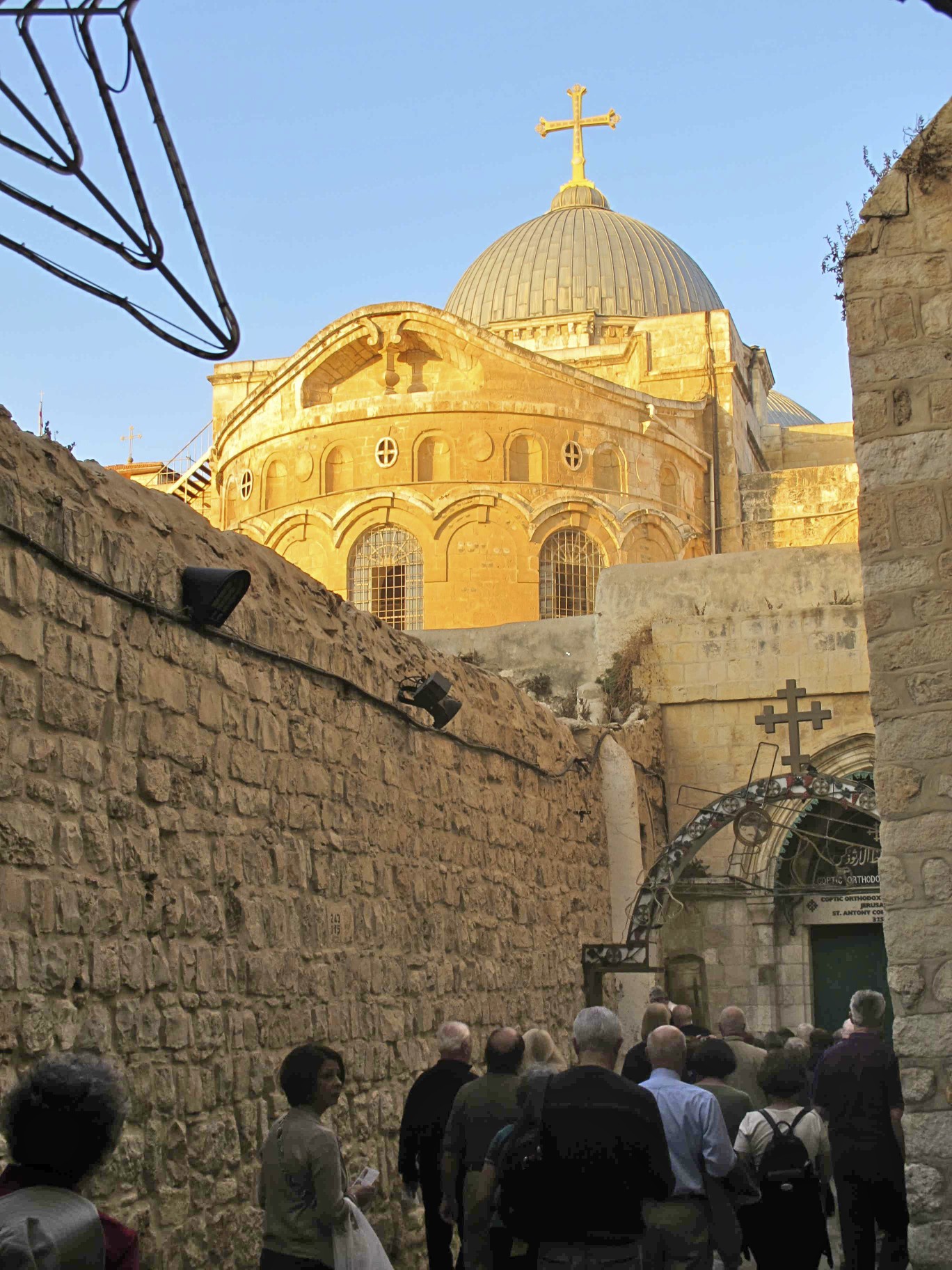
Church of the Holy Sepulcher, Jersusalem

Holy sepul
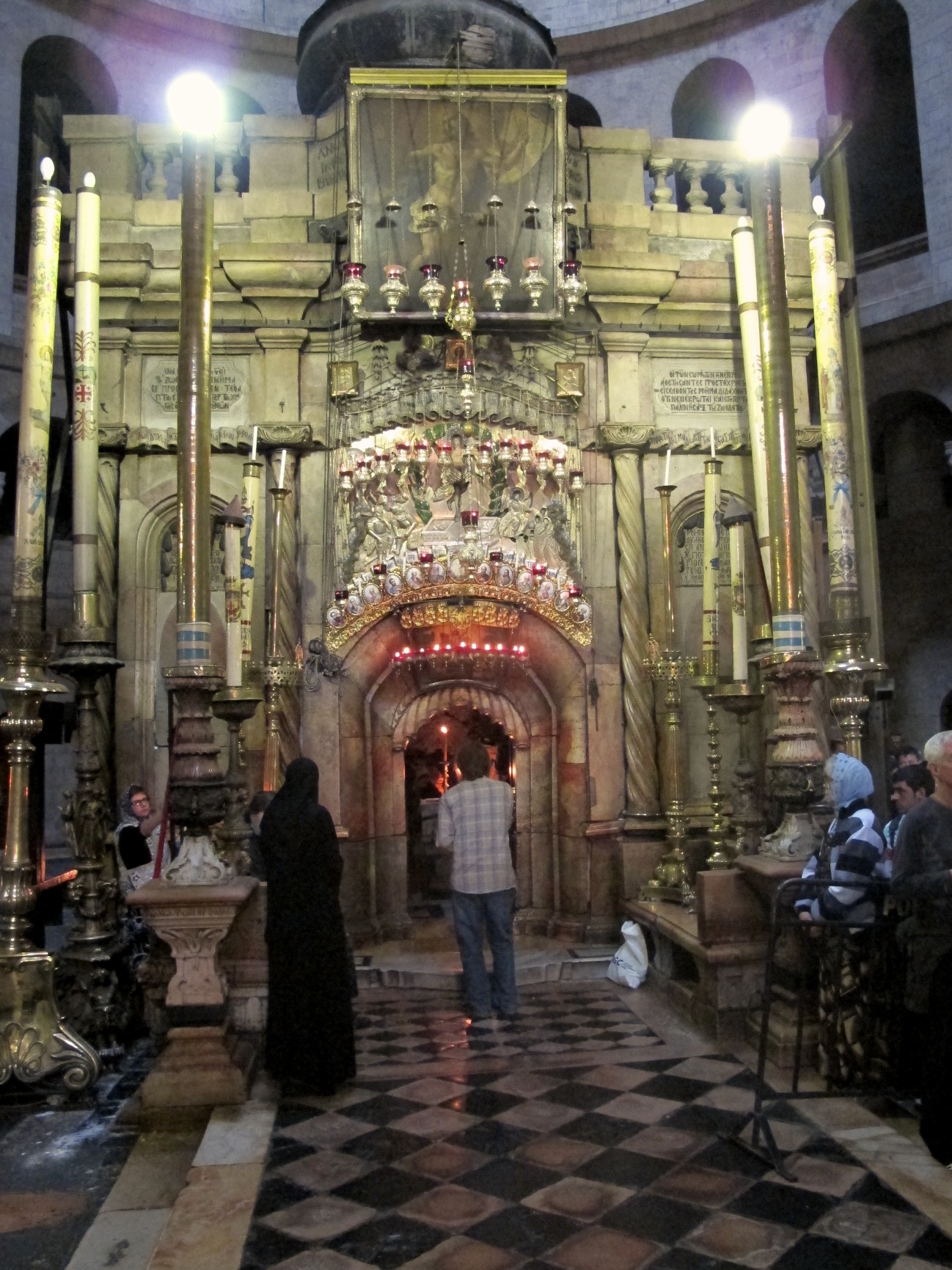
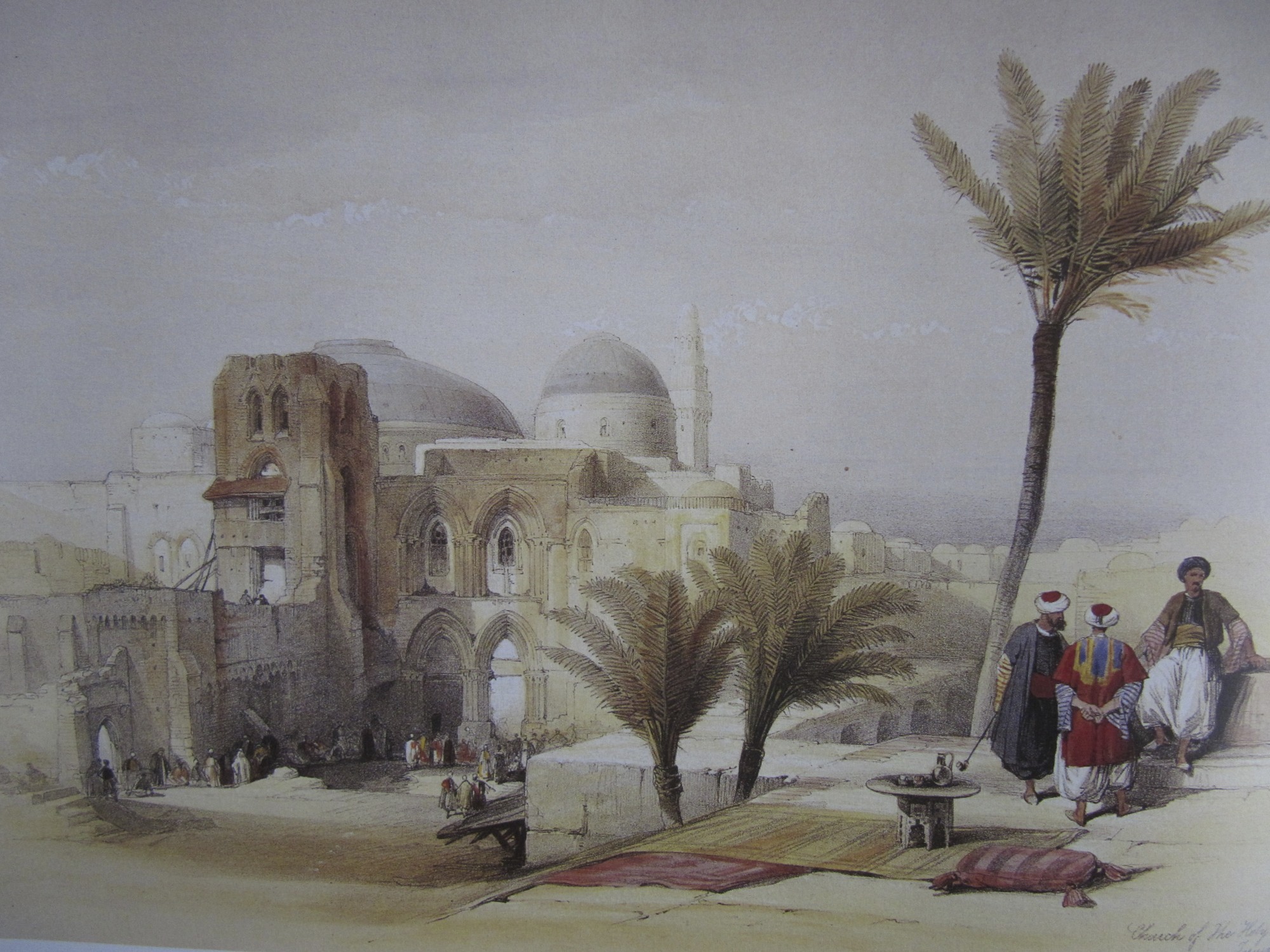
The ancient Church of the Holy Sepulcher in Jerusalem, constructed over the places where Jesus was crucified and buried, has been the focus of Christian pilgrimage to the Holy Land since the 4th century. Built by the Emperor Constantine at the urging of Bishop Macarius of Jerusalem, the church has suffered earthquakes, fires, and devastation; it’s authenticity has been questioned, especially since the Enlightenment; it has been fought over by competing Christian churches, yet it still has the best claim to be the place where the greatest of all Christian mysteries happened.
Holy Sepulcher - 28

The church received its worst blow when the calif Hakim began demolishing the church in 1009, an action leading to the Crusades. Once Jerusalem was conquered, the crusaders rebuilt the church, but only to half its former proportions.Calvary

Reliable historians weigh in positively today on the claims of the Church of the Holy Sepucher “Is this the place where Christ died and was buried?” Jerome Murphy-O’Connor asks in his solidly researched “The Holy Land: An Oxford Archaeological Guide” (New York, 2008). “Yes, very probably,” he answers.
Calvary 2

The Finding of the Cross

When Constantine in the 4th century looked for Calvary and Jesus’ tomb, he had no difficulty finding their location. They were buried beneath a Roman temple built in 138 AD by the Emperor Hadrian, in the new Roman city, Aelia Capitolina, which he erected over the ruins of devastated Jewish Jerusalem. Christians since the time of Jesus knew the place and could point it out to Constantine’s builders.

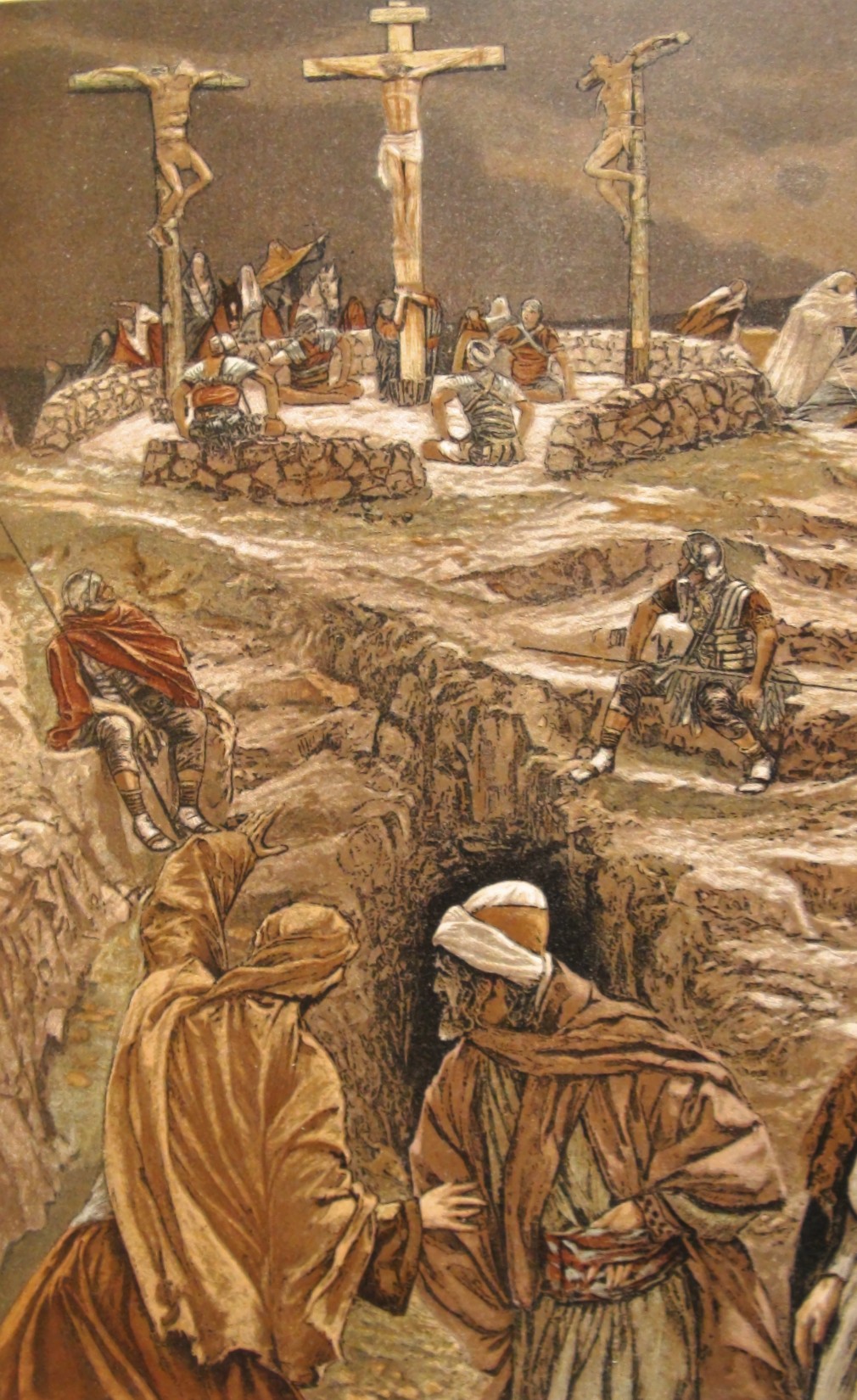
Early witnesses report that, which tearing down the Roman temple and digging the foundations for the new church, the emperor’s workmen came upon an ancient cistern filled with debris from the old Roman execution site, including three upright beams and the title that Pontius Pilate had attached to the Cross of Jesus. The discovery caused a sensation in the Christian world.

Constantine’s 80 year old mother, Helena, had come the Holy Land as a devout pilgrim, “old in years, but young in spirit. She wanted to know this land… and walk in the footsteps of the Savior….”(Eusebius)
She took the precious remains from Calvary and distributed them, one part to the new church on Golgotha, another part to her son, Constantine, in Constantinople; the rest she placed in the chapel of her private residence at the Sessorian Palace in Rome, where they remain till this day, in the Church of the Holy Cross. She covered the floor of her Roman chapel with soil from the Jerusalem excavations.
photo

Christians rejoiced at the discovery. Less than 25 years before, they had experienced the worst of all persecutions under the Emperor Diocletian, who tortured and killed great numbers, confiscating Christian homes and property. Their religion was on the verge of extermination. Now a new day had dawned; Christianity was triumphant.

The pieces of scarred wood buried in the earth for so long, became reflections of God’s triumphant power. They were placed in settings of gold and precious stones; signs that, like Jesus, the church also had tasted death but was now raised up.

Besides wood from Calvary, Constantine’s builders made another great discovery as they dug the foundations for the new basilica. They discovered the tomb of Jesus, and immediately constructed a splendid rotunda around it. The tomb survives today in the Church of the Holy Sepulcher in Jerusalem’s Old City. Nearby one can still see and touch the rock of Calvary. Holy Sep
These early discoveries inspired a powerful movement of Christian devotion. Crowds of pilgrims made their way to the holy places. “The whole world is making its way to an empty tomb,” St. John Chrysostom said. Pilgrims returned home with reminders of their visit: small vials of oil from lamps at the tomb of Jesus, small handfuls of soil. Some even carried back tiny precious portions of the Cross itself.

A feast to celebrate the dedication of this church in 325 AD is found in various church calendars for September 14.
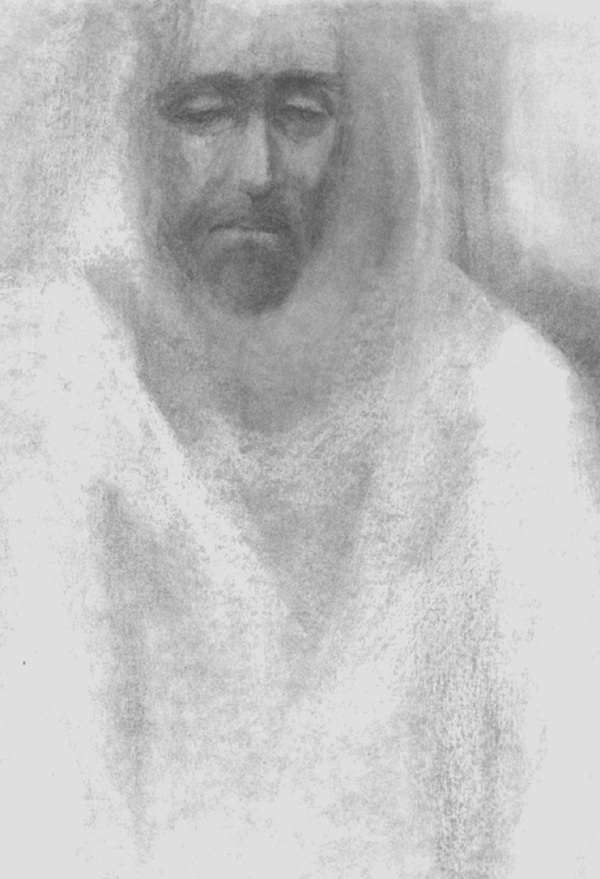
The Blind Believe

Jesus sorrowing

Rejected by your own,
By those who know so much
yet know so little.

This week in Jerusalem,
the city that knows so much
yet knows so little,
you walk its streets where a blind man begs
and give him sight that he never had before,
but they don’t believe
you’re God’s Son,
his only Son, equal to him.

“Who is he, sir, that I may believe in him?”
the blind man said with new sight.
“You have seen him,
the one speaking with you is he,”
you said to the man with new sight.

He worshiped you,
“I do believe, Lord.”

Give us his sight.

art: Duk Soon Fwang

The Mystery of the Cross

We’re reading the Letter of James and the Gospel of Mark these weekdays at Mass, writings going back to the 60s, from Jerusalem and Rome respectively. Three important Christian leaders were put to death in that decade: James, Peter and Paul. We see their deaths now as the glorious death of martyrs; Christians then were probably more aware of losing three religious leaders they depended on for guidance.

The Letter of James and the Gospel of Mark (traditionally acknowledged as the spokesman for Peter) were voices for these disciples in the churches they left behind.

In the 60s a growing turmoil engulfed the church in Jerusalem, as Jewish Christians faced growing opposition in the city. The death of James, their leader, at the hands of Jerusalem’s Jewish leaders is evidence of this antagonism. Because of it, many Jewish Christians left Jerusalem and went into exile. The destruction of the city by the Romans in 70 AD canceled any plans they had for returning home.

In the 60s, the Christians of Rome experienced persecution of another kind. It was a sudden, unexpected persecution by the Emperor Nero that followed the fire that destroyed most of the city in 64 AD.

The Disciples' Unbelief

The Disciples’ Unbelief

It’s good to keep the background of these writings in mind when reading them. In today’s reading, Mark emphasizes a theme that runs through his gospel. “Do you still not understand?” Jesus asks his disciples. (Mark 8,21) What the disciples, led by Peter, don’t understand especially is the mystery of his passion and death.

Writing for the Christians of Rome, Mark wants them to see in the incomprehension of Jesus’ first disciples their own incomprehension before the vicious suffering inflicted on them at the hands of a powerful and unjust emperor.
They don’t understand. It’s a mystery slowly understood.

And they wont be the last to not understand the mystery of the cross. We’re seldom ready for it and slow to recognize all the forms it takes.

The Road Through the Wilderness

Sometimes the best view you get of the world is from above. Here’s a picture taken from a plane in the 1930s or so of the road up to Jerusalem from Jericho and the Jordan Valley. I add another from the ground of the road outside Jericho from more recent times.


Jericho Rd  3

Jericho road modern


Both pictures tell us the road to Jerusalem is a climbing, winding road. It wasn’t easy to take when prophets like Isaiah and John the Baptist knew it. Of course today it’s easily managed by car or bus. But in those days, walking or on a donkey, you didn’t always know what to expect when you went through deserts and mountains and some fertile areas where crops were grown.

Isaiah and John the Baptist knew this road very well and they used it to explain our way to God. First, it’s an image that says life will never be easy.  On that road you’re going to get hungry, tired, even wonder whether you will make it or not. Unexpected things can happen: you may get robbed like the man did in the parable of the Good Samaritan. That happened on the road up from Jericho to Jerusalem, remember. You might be blind, like the two blind men from Jericho who couldn’t find their way.

But if you want to get to Jerusalem and enter the house of God, you have to take that road. Jesus took it when he went up to the Holy City. He began in the wilderness.

The message of Isaiah and John the Baptist, so beautifully expressed in our first reading for today (Isaiah 35,1-10), is that God will bring us there.

And Don’t Look Ahead

Strange thing to say, isn’t it? We want to see what’s ahead. But in Luke’s account of Jesus’ journey to Jerusalem–which we read from this Sunday– Jesus warns his disciples as he nears the Holy City to be wary about what they see coming.

First, some disciples like James and John thought the journey would bring about the kingdom of God on earth and they wanted a big place in it. Their dream didn’t come true. Then, other disciples as they entered the city saw the temple itself, “adorned with costly stones and votive offerings,” and believed something so beautiful would go on forever. They were wrong too.

Jesus said, “All that you see here–
the days will come when there will not be left
a stone upon another stone that will not be thrown down.”

We have to be wary of messianic claims from those who claim to know the future. “Many will come in my name, saying, ‘I am he,” and “The time had come.’ Do not follow them!” Jesus says. The future is in God’s hands, not in ours.

The journey Jesus makes does not end in Jerusalem, according to Luke, it’s completed in his resurrection, and that will surprise us. Luke’s account of Jesus’ death in Jerusalem offers the surprising promise he makes to the thief crucified on his right, whose only hope is in him. “Today, you will be with me in paradise.”

That’s the future we trust in.

Ann and Her Daughter Mary

ann
A few years ago on pilgrimage to Jerusalem I visited the western wall that once supported the ancient Jewish temple where Jesus worshipped and taught. He announced that he would replace this temple through the mysteries of his death and resurrection. Some years later, in AD 70, the temple was destroyed.

The day I visited this holy place, Jewish mothers and their daughters were fervently praying at one section of the battered wall, all that’s left of the glorious buildings that once filled pilgrims with awe and pride. I wondered what they were praying for at this majestic ruin.

Tradition says that the parents of Mary, Ann and Joachim, whose feast we celebrate today, were closely connected to the temple of Jerusalem and may have lived near it or in a town close by. Joachim had a role in providing for the temple, tradition says. Like the Jewish women I saw, Ann and her daughter Mary must have prayed often in this holy place.

What did they pray for; what did they believe? God is here, the Prophet Isaiah said; all the peoples of the earth will stream toward this place when the Messiah comes. Pray even when dreams seem gone. God raises up the poorest to do great things. God’s kingdom will come, no matter how dim the present seems. God works even in ruins.

Ann was old when she conceived Mary, tradition says. Too old to conceive. “Nothing is impossible with God,” the angel said to her daughter when she conceived her Son.

We ask the grace to believe and pray as these two women did. I can’t help thinking that the Jewish mothers and their daughters I saw that day praying at the wall are their descendants too.

The Testament of Mary

Mary sorrows copy

A new book called The Testament of Mary by the Irish writer Colm Toibin presents a very unorthodox picture of Mary, the Mother of Jesus. She’s an old woman  living in Ephesus telling two of Jesus’ disciples about the life and death of her son. One reviewer said of the book, “This is not the Mary your mother knew.”

That’s because Toibin pictures Mary as an embittered, vengeful woman who’s still grieving and angry over her son’s death. She can’t accept it and sees nothing good about it. Her son had been taken away from her.

Some reviewers in the secular press praise the book because they say it’s so human. That’s the way a mother would deal with a son’s unjust death, they say. But is it human to live angry and embittered? Are we human when we end our lives disappointed and with no hope? Is that what God means human to be? Was that really the way Mary was?

Not according to the gospels. The Mary they present certainly bears her cross. Christian devotion calls her the Mother of Sorrows and says that seven great sorrows pierced her heart. She stood by the cross of her Son. But she saw something beyond the sorrows and apparent failure. God was there in it all and a larger plan promised resurrection and life.  Mary was a believer and that made the difference.

It seems to me that Toibin’s gospel presents Mary as our secular culture sees all human beings, as if all life’s meaning comes from the here and now, and then there’s death. A cold dreary picture of being human.

But Mary represents humanity redeemed, as God means it to be. The mystery of her Immaculate Conception–which we celebrate December 8th– far from isolating her from the rest of us, prepared her to be the first fruits of a new humanity, as she followed  the path of her Son. She was human as God meant human to be.

It I were writing a book like Toibin’s I think I would begin it in Jerusalem where St. Luke describes the disciples waiting after Jesus ascended into heaven. Among them were“…certain women, including Mary the mother of Jesus.” (Acts 1.14) They were wondering when the days of God’s restoration of the kingdom were coming, even though Jesus had told them “It’s not for you to know the days.”

Still, there and then in Jerusalem, the disciples were sure the kingdom was coming soon, even though Jesus tells them to witness to him further “in Jerusalem, Judea and all Samaria, and to the ends of the earth.” (Acts 1, 6-9) Luke charts that journey of the church in the Acts of the Apostles.

Did Mary at that time temper the expectations of the disciples by sharing her own experience of patient waiting, of her closeness to her Son, of God’s mysterious ways. “How can this be?” she once said to the angel. She knew what it meant to wait for God’s will to be done after the angel left her. God’s will is beyond our will and expectations.

There with the disciples in Jerusalem, Mary would be a thoughtful woman, who found answers to the questions she kept pondering in her heart in the scriptures and the feasts they celebrated in the temple. We can hear Mary’s voice in Luke’s Gospel, not a voice of anger or bitterness, but a voice proclaiming God’s goodness for the good things done through her. She was truly “blessed among women.”

“Full of grace,” she was full of humanity too.

Passing On The Faith

Basilica of St. Ann, Jerusalem, 11th century

Devotion to St. Ann began in Jerusalem, probably at a 5th century basilica near the pool of Bethesda, where Jesus cured the paralyzed man waiting to get into its healing waters. Ruins of the basilica can be seen today in the ruins of the Bethesda pool. The present basilica of St. Ann, begun in the 12th century, stands nearby.

Would the early basilica be near the place where Joachim and Ann lived in the city, or was its site chosen for convenience? The ancient stories of the Protoevangelium associate Mary’s family with the temple and describe Joachim participating in the temple sacrifices. I wonder if we dismiss these stories too quickly as “myths.”

The Protoevangelium says that Mary was presented in the temple and dedicated to God as a child. At the least, this indicates that Mary would be well acquainted with the temple, its worship and the teachings of Judaism. If we accept this reconstruction, Mary would be far from a peasant girl from Nazareth. She would be better formed in Judaism and particularly in temple worship than we sometimes think.

Mary’s family was related to the family of John the Baptist, whose father Zachariah is a priest in the temple. (Luke 1,3-25) They live in the hill country near Jerusalem. Mary’s visit before Jesus’ birth to Elizabeth, Zachariah’s wife, connects her closely with them.

Later, as a young boy Jesus engages the teachers of the law on a pilgrimage to Jerusalem. (Luke 2,41-52) He amazes them with his wisdom. Could some of that  wisdom have come from a mother’s teaching?

“And Jesus advanced in wisdom and age and grace before God and man,” (Luke 2,52)

Mary and Joseph, Ann and Joachim certainly contributed to his growth.

Today at the novena, I’m going to talk about how Mary and Ann may have taught Jesus about the temple and what to do there. Like them, we must pass on our faith to others, particularly to the next generation.

Basilica of St. Ann, Jerusalem

The Inhabitants of Jerusalem

In our lenten gospel for today from St. John (7th chapter) Jesus goes up from Galilee to Jerusalem where some “ were trying to kill him.” He celebrates the feast of Tabernacles, a popular autumn feast that draws crowds of visitors to the city. At his return in the spring for Passover, his enemies will fulfill their plans. Now, he draws the attention of “the inhabitants of the city.”

 Who are they? They’re not the leaders who will later put him to death. They’re the ordinary public who
know what’s happening in the city, who follow the trends and pass the gossip. They watch Jesus with curiosity as he enters the temple area and begins to teach. “Do our leaders now believe he’s the Messiah?” “How can he be, because he’s from Galilee and no one will know where the Messiah is from?”

Here are the voices of those who go back and forth, the undecided who wait to see who wins before taking sides. Jesus cried out against them, because they think they know what’s going on but know nothing. They’re blind to the Word in their midst.

Unfortunately, whether we’re learned theologians, or practiced priests, or informed church-goers, we can be like the  “inhabitants of Jerusalem.”  We need to humble ourselves before God. Prayer helps us see what’s real; it’s a way of taking sides, the right side.

Philip and James

We celebrate a feast of the apostles each month because they’re the foundation stones of our church. “Every family wants to find out how it began. We go back to the apostles because they were at the beginning of our church,” the early Christian writer Tertullian says. Today we have two together, Philip and James.

We celebrate the two together because their relics were placed side by side in the Church of the Twelve Apostles in Rome, which was built in the 6th century. Philip was called by Jesus to follow him the day after he called Andrew and Peter, St. John’s gospel says. James, who is also called James the Less to distinguish him from James, the brother of John, was a cousin of Jesus who later became head of the church in Jerusalem and was martyred there in the year 62.

“Don’t forget where you come from!” That’s a good thing for us to remember and that’s why the church remembers those who first heard and believed, and then went out to tell the whole world about Jesus risen from the dead. They handed the faith on to us and we now have their message and their task.

We’re meant to tag our names onto the list St. Paul sent to the church at Corinth long ago.

For I handed on to you as of first importance what I also received:
that Christ died for our sins ?in accordance with the Scriptures;
that he was buried;?that
he was raised on the third day
in accordance with the Scriptures;
that he appeared to Cephas, then to the Twelve.
After that, he appeared to more
than five hundred brothers and sisters at once,
most of whom are still living,
though some have fallen asleep.
After that he appeared to James,
then to all the Apostles.
Last of all, as to one born abnormally,
he appeared to me.