Tag Archives: Isaiah

Black Friday and Christmas

photo
Now that Black Friday is over maybe we can get down to thinking about Christmas. For four weeks we prepare for that feast in the season of Advent.

The best place to look for the meaning of Christmas is the scriptural readings for these next four weeks. A timely source I suggest we add to them is the recent Apostolic Exhortation of Pope Francis, “The Joy of the Gospel.”

The Old Testament readings for today and all through the 1st Week of Advent are from Isaiah. Even if you can’t get to Mass, take a look at them, they make wonderful readings for Advent.

Isaiah promises salvation for all people, and one of his favorite images to describe God’s promise is found in this Sunday’s reading: Isaiah 2:1-5. All nations will stream to God’s mountain for instruction. “They will beat their swords into plowshares and their spears into pruning hooks.” Wars are no more; a fragmented humanity becomes one.

Quite a claim, considering that Assyrian armies were laying waste the towns and cities of Israel and Judea as Isaiah spoke. But God’s promise trumps all human conquests.

For Isaiah, the mountain of the Lord is Jerusalem, on which the Jewish temple is built. All nations will come there; they will be fed a rich banquet (Wednesday), the poor will be welcomed there (Thursday), the blind will see there (Friday); it’s the rock where people will dwell safely, where children play around the cobra’s den, and the lion and the lamb lie down together (Tuesday). The prophet’s imagery in these readings is strikingly beautiful.

The Gospels for the 1st week point to the fulfillment of the Isaian prophecies in Jesus Christ. The Roman centurion humbly approaching Jesus in Capernaum represents all the nations that will come to him. (Monday) Jesus praises the childlike, who will enter the kingdom of heaven. (Tuesday) He feeds a multitude on the mountain.(Wednesday) He affirms that his kingdom will be built on rock. (Thursday) He gives sight to the blind. (Friday)

Remember, too, that Matthew’s gospel, source of many of our Advent readings, portrays Jesus teaching on a mountain (Isaiah’s favorite symbol) and working great miracles there that benefit all who come. He is the new temple, the new Presence of God, Emmanuel, God with us.

Prophets like Isaiah were brave people, brave enough to speak when all seemed lost. They’re strong people, strong enough to hope when hope seems gone. And something of that prophetic spirit is in Pope Francis, I believe, who last week issued an important exhortation to the church.

He says that we can’t bring the gospel to the world if we don’t know what our world needs. We can’t bring greater human life to our world if we don’t realize what disfigures human dignity now.

What disfigures human dignity today is social inequality. Money had become our god. He speaks of the “tyranny of the financial markets.” We pay attention to a 2% drop in the stock market and ignore the death of a homeless man who dies in the cold. We’re a throw-away society. Not only do we discard things, we discard people. We tend to exploit immigrants and then throw them away. We ignore the economically unproductive, who may be without jobs or skills or socially deprived through sickness or being displaced.

The pope’s message is a hard-hitting restatement of traditional Catholic social teaching. It’s interesting to see a papal document quoted so freely on Tweeter, Facebook and the social media. It’s because he’s touched on something we need to hear.

The front page of the Asbury Park Press this morning seemed to echo the picture the pope painted in his recent address. There’s the big picture of smiling shoppers fresh from the stores on Black Friday holding their precious treasures. Next to it is a story of a homeless man who died in the cold yesterday.

No picture of him at all.

Ann and Her Daughter Mary

ann
A few years ago on pilgrimage to Jerusalem I visited the western wall that once supported the ancient Jewish temple where Jesus worshipped and taught. He announced that he would replace this temple through the mysteries of his death and resurrection. Some years later, in AD 70, the temple was destroyed.

The day I visited this holy place, Jewish mothers and their daughters were fervently praying at one section of the battered wall, all that’s left of the glorious buildings that once filled pilgrims with awe and pride. I wondered what they were praying for at this majestic ruin.

Tradition says that the parents of Mary, Ann and Joachim, whose feast we celebrate today, were closely connected to the temple of Jerusalem and may have lived near it or in a town close by. Joachim had a role in providing for the temple, tradition says. Like the Jewish women I saw, Ann and her daughter Mary must have prayed often in this holy place.

What did they pray for; what did they believe? God is here, the Prophet Isaiah said; all the peoples of the earth will stream toward this place when the Messiah comes. Pray even when dreams seem gone. God raises up the poorest to do great things. God’s kingdom will come, no matter how dim the present seems. God works even in ruins.

Ann was old when she conceived Mary, tradition says. Too old to conceive. “Nothing is impossible with God,” the angel said to her daughter when she conceived her Son.

We ask the grace to believe and pray as these two women did. I can’t help thinking that the Jewish mothers and their daughters I saw that day praying at the wall are their descendants too.

The Weather of God’s Blessings

sower

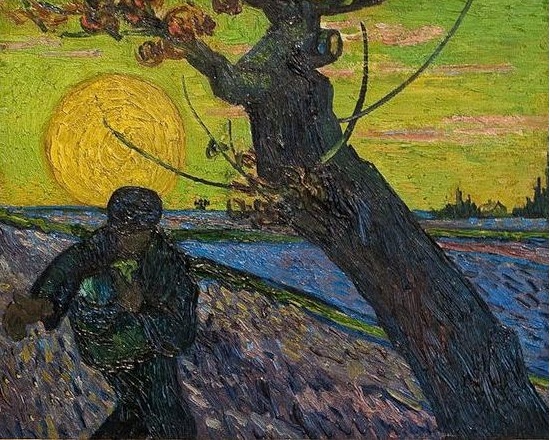
The first reading from today’s Lenten Mass describes God’s blessings in terms of the weather.

“Just as from the heavens

the rain and snow come down, and do not return there

till they have watered the earth,

making it fertile and fruitful,

Giving seed to the one who sows

and bread to the one who eats,

So shall my word be

that goes forth from my mouth;

It shall not return to me void,

but shall do my will,

achieving the end for which I sent it. (Isaiah 55,10)

Can this reading help us understand how God blesses us?  Like rain or snow God’s blessings come, making our lives fruitful. Yes, they will surely come, but how about the times we have to wait, when no rain or snow comes at all?

God’s blessings are like the weather.

Or think of God’s blessings through the Sign of the Cross. We say “we bless ourselves” when we make this sign. Sometimes God’s blessing comes through the cross of glory and we receive blessings never imagined through his tender mercy.

Sometimes his blessings takes another form of his cross; disappointment, suffering, failure, sickness, death. There God’s blessings are mostly hidden and hard to see.

In Matthew’s gospel today Jesus offers us a way of praying. Does this blessing also follow the weather. Prayer is a gift, but it’s a gift like the rain and snow. It’s one of God’s greatest gifts to us, yet sometimes we find it hard to pray while at other times it wells up within us.

The blessings of God are like the weather.

Friday, First Week of Advent

  Readings:

Isaiah 29:17-24:  The deaf shall hear and the blind shall see.

Matthew 9:27-31:  Jesus gives two blind men sight.

Two blind men are among the many healed by Jesus in Matthew’s gospel. They’re healed together and they represent the blind who will see when the Messiah comes, Isaiah says.

Notice there are two of them, not one. Do the two blind men represent a collective blindness, a group blindness, perhaps a group prejudice against certain people, or a way of thinking that distorts how others are seen? Is it more than    physical blindness they share?  The cures Jesus worked touched more than the ills of body.

When John Newton, the former 18th century captain of an African slave ship, wrote the famous hymn “Amazing grace,” he said he “was blind, but now I see.” It wasn’t physical blindness he described. The tough seaman was converted on a voyage after reading Thomas a Kempis’ “The Imitation of Christ,” and gradually came to see the horrific evil of slavery as well as other vices he had fallen into.

In 1788 after years of debate over the issue in England, Prime Minister William Pitt formed a committee to investigate the slave trade which, until then, was largely seen by the nation as good for their country’s economic welfare. One of its star witnesses was John Newton who described in detail the slave trade and the horrendous practice it was.

This advent may Jesus bring light to our world, our nation, and our church. There are many things we don’t see.

What do you think they are?

Thursday, 3rd week of Advent

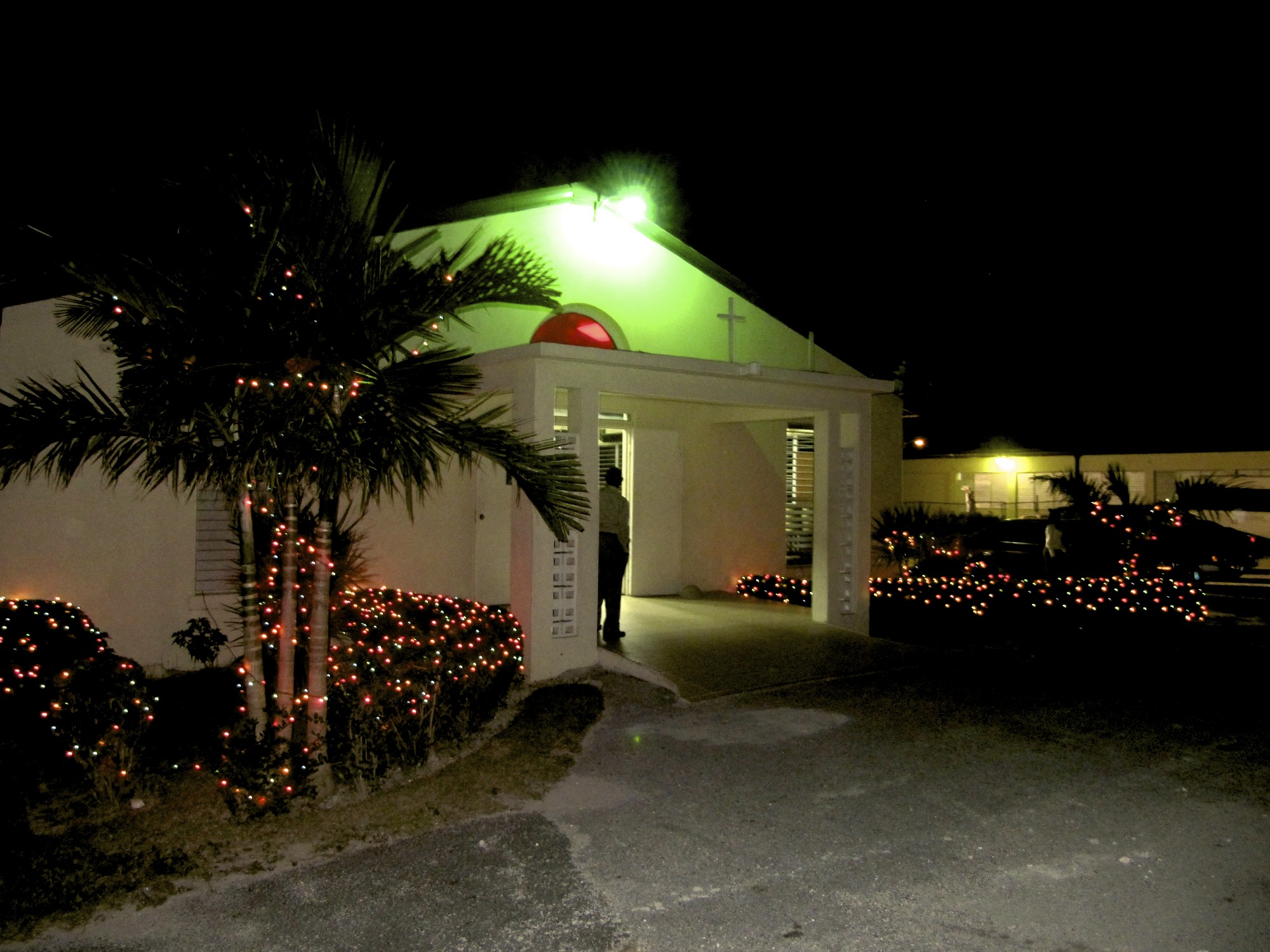
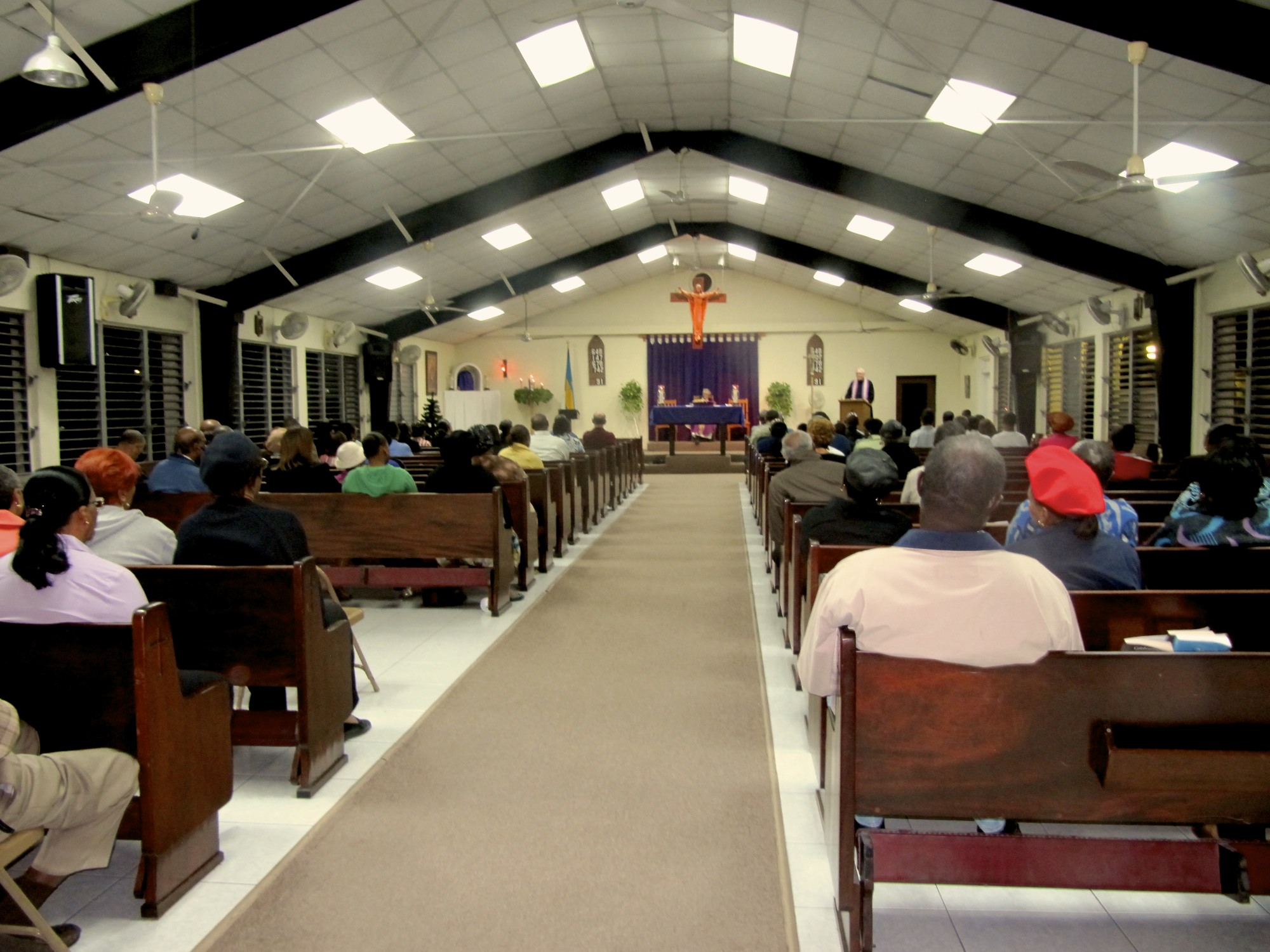
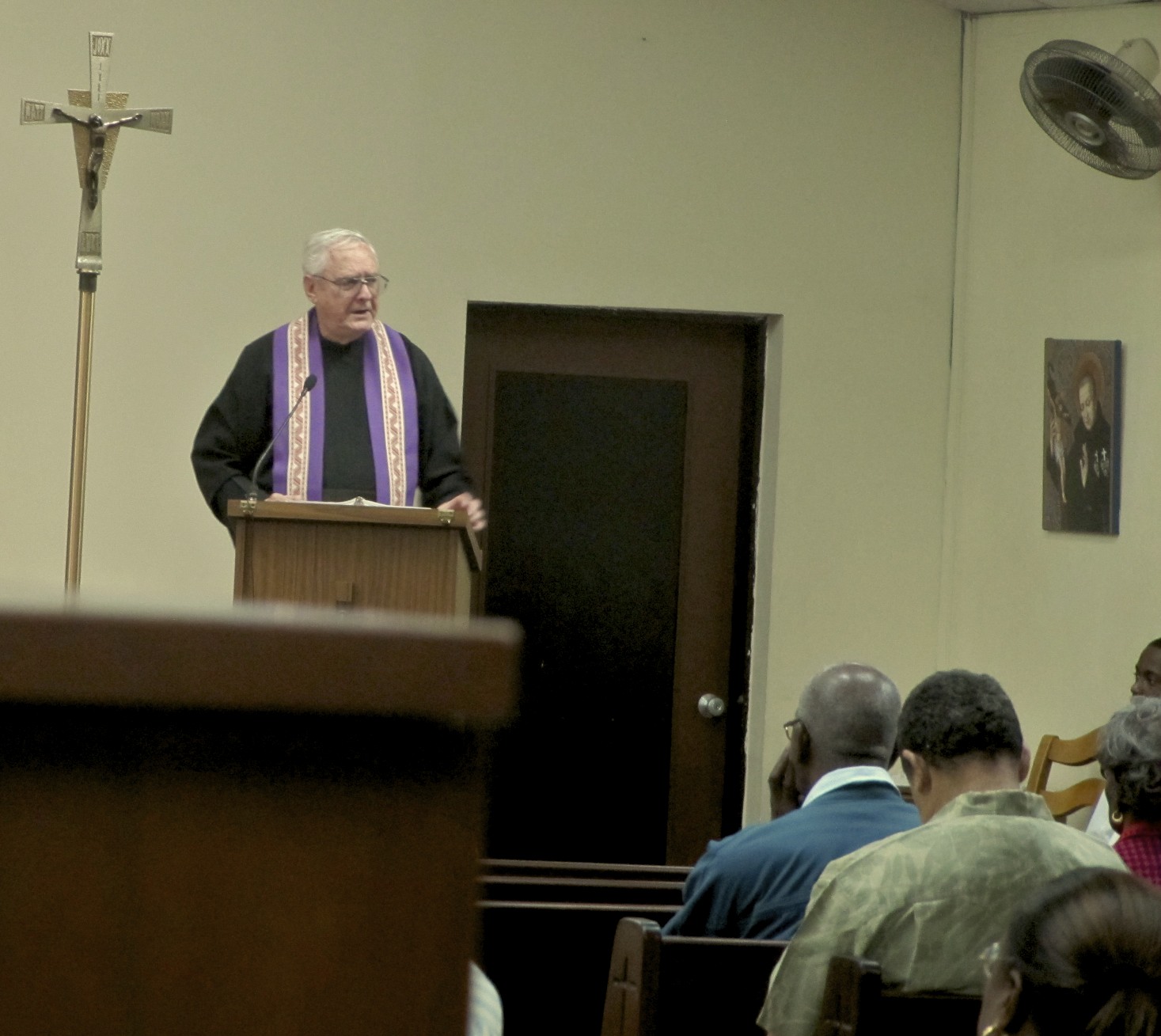
Tonight is the last evening of our mission at Holy Family in the Bahamas. During the week, I spoke about the three great witnesses of the Advent season: Isaiah, John the Baptist and Mary of Nazareth. They prepare us to receive Jesus Christ.

Let’s remember the Prophet Isaiah again, and those who followed him. He tells us to remember God’s promises. They seem far beyond what we think possible and greater than we can imagine, but God promises to fulfill them in the world and in us.

The prophet speaks to those most likely to distrust, yet God wants them most to hear:  the poor, the sick, the blind, the lame, those wearied from the journey. He speaks tender words of comfort. His words to the barren woman in today’s reading are among his most beautiful.

John the Baptist is the voice in the wilderness. We’re to be that voice too. It’s far easier to speak God’s word in a church or in a temple than there. That’s why Jesus praised John, and why he praises all who are his voice in the wilderness. You may not be able to say much, but if you speak what you can and remain faithful to God in the wilderness that’s yours, God will bless you as God blessed John.

Finally, we reflected last night on Mary, the mother of Jesus.  You have a wonderful custom here in this parish at the end of daily Mass, I notice, of praying the Angelus, which recalls the coming of the angel to Mary and her response. That’s a mystery we share with her, and so we recall it each day to make it our own. “Pray for us, O Holy Mother of God, that we may be made worthy of the promises of Christ.”

Each day is important because the promises of Christ come to us day by day. They are not always obvious, so we must become aware of them. Like Mary, we question what they mean. For that reason, we enter that mystery that happened once in small, unnoticed Nazareth. The angel still comes and goes., and with Mary, we say each day “Be it done to me, according to your word.”

Monday Night at the Mission


I spoke this evening at our mission at Holy Family Church. How can we know Jesus Christ? Through the Scriptures.

What version would I recommend? I like the New American Bible because it’s the version closest to what we use in our liturgy and it’s got great notes. It’s also been recently revised to benefit from new bible manuscripts come to light, new archeological discoveries, and new historical and biblical scholarship.

A drawback of a version like the King James is that it stands still and doesn’t benefit from these advances. Fundamentalists would say it’s the Word of God and doesn’t need updating. The Catholic Church, on the other hand, welcomes the advance in understanding  and new biblical knowledge as advancing our knowledge of Jesus Christ.

Biblical fundamentalism, by its nature, neglects the gifts of reason. It’s a step backward.

One thing I noticed in the hymns we sang tonight in Holy Family is their rich scriptural base. They’re words from the bible, which are a step towards a biblical spirituality.

I reflected on two sections of Isaiah, the great prophet of Advent. His promise of the kingdom coming on God’s holy mountain seems so unrealistic, given the circumstances Jerusalem, God’s holy mountain, faced in his day. But Isaiah spoke of  a promise that comes from God who is with us, who teaches us to pray and live in hope for what’s beyond human power to bring about.

I also spoke of the spirituality of childhood, which calls us to be free from crippling anxieties, forgetful of injuries, sociable, and wonder at all things. At the pinnacle of God’s holy mountain Isaiah, and Jesus after him, places a Child.

Saturday, 1st Week of Advent

Readings

Isaiah 30:19-21-23-26  God heals and gives an abundance of gifts.

Matthew 9:35; 10:1, 5, 6-8  Jesus pities the lost sheep and sends his disciples to cure, to raise the dead and give life.

Daily homily:

http://thepassionists.org/reflections/

Isaiah was driven by a vision of God. Here’s a meditation by St. Anselm that leads us to God, whom we look for in this holy season:

“Get up, little one! For awhile put away what holds you. Put aside your busy thoughts. Lay down your burdens and what bothers you. Make way for God for a little while.

Go into your mind and stop thinking. Concentrate on God and thoughts that help you look for God. Close your door and look. Speak from the  heart. Speak to God: I seek your face; your face, Lord, I seek.

Come, Lord God, teach my heart where and how to seek you, where and how to find you.

Lord, if you are not here, then where are you? You are everywhere, so why don’t I see you here? You dwell in unapproachable light. So where is unapproachable light, or how shall I come to it? Who shall lead me to that light and into it, that I may see you in it? I have never seen you, O Lord, my God; I do not know your face.

I’m an exile far from you. What shall I do, anxious to love you, and so far from your presence? I want to see you and yet your face seems far away. I long to come to you and yet you dwell in a place inaccessible. I  want to find you, but I don’t know where. I desire to seek you, and I don’t know what you look like.

Lord, you are my God, and I have never seen you. You made me and renewed me and give me all  good things, and I have not yet met you. I was created to see you, and I have not yet done what I was made for.

How long,  Lord will you forget us; how long will you turn your face from us? When will you look upon us, and hear us? When will you enlighten our eyes that we may see your face?

Ist Sunday of Advent


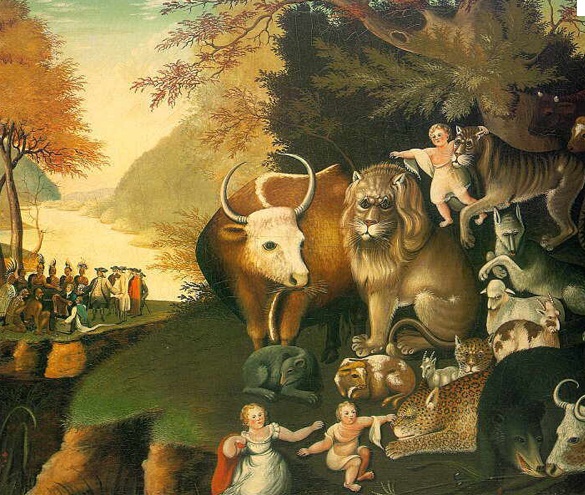
Edward Hicks (1780-1849), the Quaker painter, painted about 100 versions of the peaceable kingdom, based on the 11th chapter of Isaiah,  read on Tuesday of our 1st week of Advent.


1st Sunday Advent B

Lord, make us turn to you; let us see your face and we shall be saved.  Psalm  80

 Readings:

Isaiah 63, 16b-17,19b; 64:2-7

God is our Father, Isaiah says, but we wander off, as if we had no father. “Would that you might meet us doing right, that we were mindful of you in our ways.” But the people of his day are “like withered leaves, driven by the wind.”

1 Corinthians 1,3-9

A harmless looking selection of scripture, yet reading on you find that Paul is writing to a troubled church at Corinth, a seaport city filled with upwardly mobile people who want to get ahead in the world. There are factions in the church; people fighting for power and prestige. Some don’t believe in the resurrection of Jesus and their own resurrection.

Yet, Paul still loves them like a father.

Mark 13, 33-37

We are in charge of a house, but it’s not ours. God has a claim on our life, so don’t fall asleep where you live, in your own house, your own family, your own work, your own situation or condition of life. Don’t fall asleep even if everything looks like it’s falling apart. That’s where God comes to all of us–where we are now. That’s when God comes, when things look like they’re falling apart.

Cf. Passionist homilies at www.thepassionists.org

Questions:

What kind of world is God coming to now?

How are things in your house?


Jesus in the Temple

Where did Jesus teach and pray and live when he was in Jerusalem? That’s hard to figure out today because the city was thoroughly destroyed by the Romans in 70 AD, and since then earthquakes, wars, political and religious forces have hammered away at the old city.

Jerusalem destroyed: 70 AD

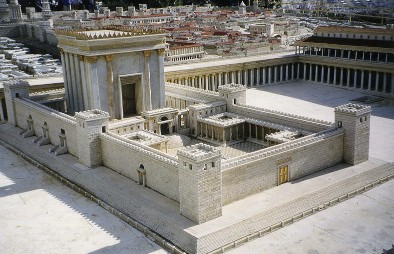
Archeologists try their best to reconstruct ancient Jerusalem and they’ve produced a wonderful model of the city from about the time of Jesus, which can be seen today at the city’s Israel Museum.  As the model indicates, the Second Temple built by Herod the Great dominated the city then. Jesus must have taught and prayed in this splendid place–still being built during his lifetime– as he came to celebrate the Jewish feasts.

His activity here triggered his condemnation to death.

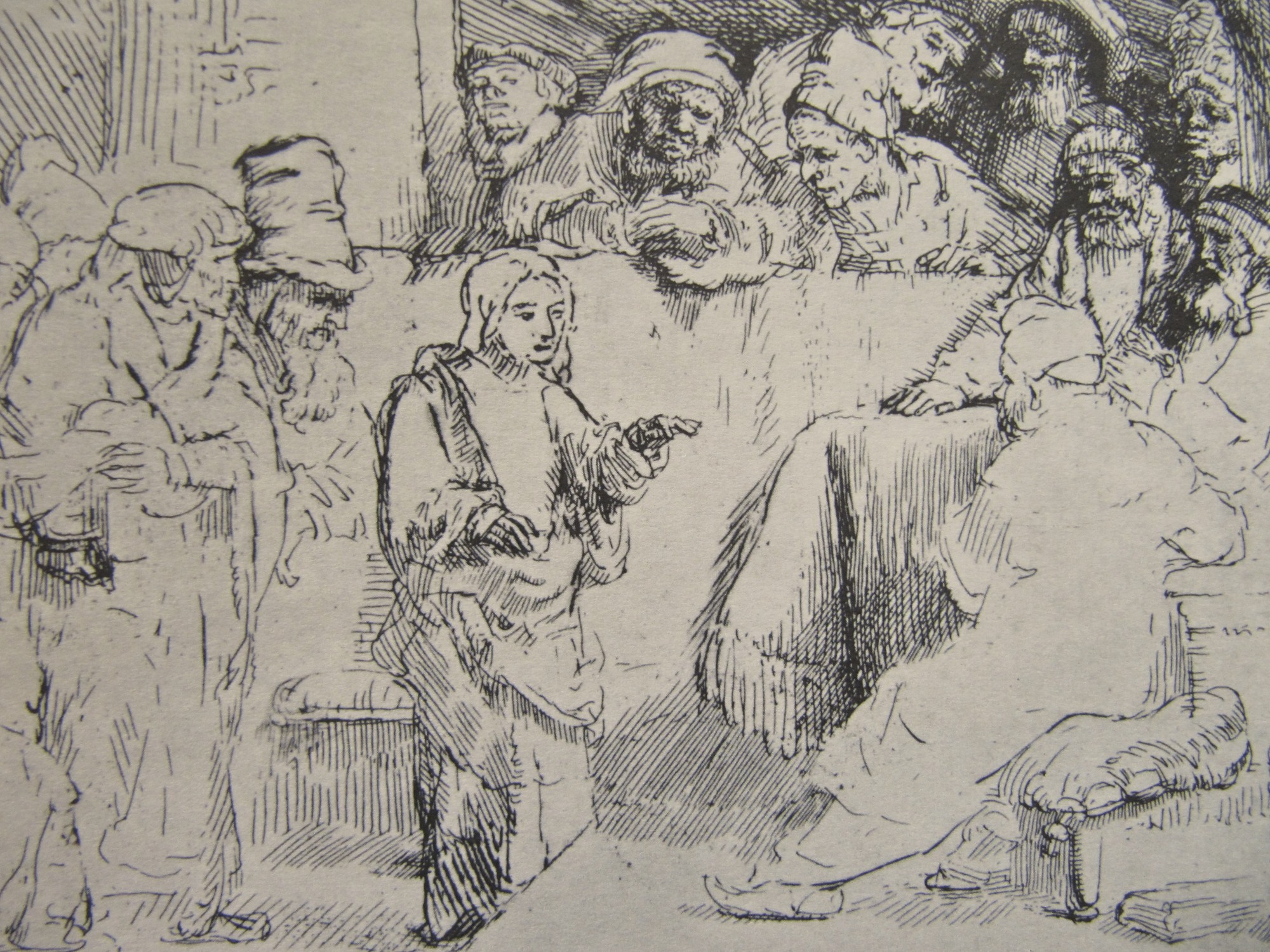
Can we say more precisely where he taught and when he began teaching there? Luke’s gospel offers the interesting story that his parents, after missing him on one of their usual visits to the Holy City,  “found him in the temple, sitting among the teachers, listening to them and asking them questions.” (Luke 2,46) This probably took place in the Court of the Gentiles, the extensive space that surrounded the temple itself, which we can see in the model. We can surmise that, as observant Jews, his family brought him to Jerusalem for the major feasts.

The name, Court of the Gentiles, indicates an area open to all, even though the temple building itself was open only to the Jews. In the Court of the Gentiles,  young Jewish children like Jesus and adults looking for a greater understanding of their faith were able to listen and ask questions of the Jewish teachers. At the same time, even those who did not share the Jewish faith were welcome here,  namely,  non-Jews, gentiles, who could speak to Jewish teachers, inquire about the Jewish faith and even pray to the unknown God.

The Court of the Gentiles was an important part of the temple area; it proclaimed Jewish openness to the world.  The psalms and the prophets spoke of the God of all nations and looked to the day when all peoples would be counted among the children of Abraham:

“In days to come the mountain of the Lord’s house

will be established as the highest mountain

and raised above the hills.

All nations shall stream toward it;

many peoples will come and say:

‘Come, let us climb the Lord’s mountain to the house of the God of Jacob,

that he may instruct us in his ways

and we may walk in his paths.” Isaiah 2,1-5

The Court of the Gentiles was the place where Jesus proclaimed a new age that would fulfill these promises.  As he grew “in wisdom and age and grace” Jesus continued to go to the temple with his family from Galilee to celebrate the Jewish feasts, still “listening to the teachers and asking them questions.”

But after his baptism by John, Jesus’ visits to the temple changed. During the feasts he made extraordinary claims about himself and his mission, as John’s Gospel records.  His claims, along with healings he worked in Jerusalem– his cures of  the man born blind and of the paralyzed man, above all his raising of Lazarus from the dead– alarmed the temple authorities.

The gospels all record the disturbing incident that took place in the temple during the final stages of his ministry. According to Mark’s gospel: “He entered the temple and began to drive out those who sold  and those who bought, and he overturned the tables of the money-changers and the seats of those who sold pigeons; and he would not allow anyone to carry anything through the temple. And he taught and said to them, “Is it not written, “my house shall be called a house of prayer for all the nations?’ But you have made it a den of thieves.” (Mark 11,15-17, Matthew 21,1017; Luke 19, 45-46; John 2,13-17)

Not only was the Court of the Gentiles a place for teaching and prayer, it was also a place for exchanging money, getting advice from priests about where and how to pray and make your offerings,  buying food and animals for sacrifice. In a prophetic gesture, Jesus upset this traditional apparatus and called for renewing the temple so that it could fulfill its destiny as “a house of prayer for all the nations.”

The Gentiles would no longer be excluded from experiencing the Divine Presence;  Jesus signified he came to break down the dividing wall between Jew and Gentile and reconcile both to God through his death. He himself would be the new temple and the sacrifice of reconciliation for all peoples.

No wonder that a major accusation made against him later at his trial before the Jewish leaders was based on what witnesses claimed were his threats to destroy the temple. “We heard him say ‘I will destroy this temple made from human hands and I will build another not made by human hands.” (Mark 14,58)

Some picture Jesus as a hapless Galilean peasant caught in a government net to catch and destroy potential revolutionaries, like Barabbas. Jesus went to his death for more reasons than that. His activity in the temple is an important part of his life and mission, and it led to his death.

Turning Your Back On Your Own

During lent we’re supposed to turn to God, to pray, fast and give alms. Every church I know has something extra going on for Lent.

But there’s a line from Isaiah in last Friday’s first reading that keep’s coming to me.  It comes after he pointedly says that all the above can just be a gesture if they don’t lead to acts of justice, “releasing those bound unjustly…sharing your bread with the hungry…clothing the naked when you see them…not turning your back on your own…”

“Not turning your back on your own.” That’s the phrase I hear. Who are our own and how do we turn our backs on them? It’s the curse of familiarity that we so often misunderstand or peg into a category those we know. Often enough, we judge them by what they’re done or not done, and end up not knowing them at all. Our memories, unfortunately, are long and narrow. Our appreciation is often driven by self-interest.

Lent is a good time to turn to our own. Putting away our categories, our experiences, our memories and expectations, it’s time to look again at the promise in people we know.

I have some looking to do.