Tag Archives: Immigration

Our Lady of Guadalupe, Pray for Immigrants

In our 2018 pastoral letter, “Open Wide Our Hearts,” we lamented the impact of immigration raids and mass deportations in which even those who are U.S. citizens have been caught up and deported, noting: “Today, many Hispanics are often assumed to be in this country illegally. These attitudes of cultural superiority, indifference, and racism need to be confronted; they are unworthy of any follower of Christ.”

We consistently reaffirm what the church has always taught: that every human person is created in the image and likeness of God, the imago Dei, and that the dignity of the human person does not depend on a particular legal status, nationality or occupation. We also recognize that promoting public order and upholding the rule of law are necessary endeavors, especially because these measures help guard against trafficking and other forms of exploitation.

Today, however, we see aggressive approaches to immigration enforcement that inflict harm on our sisters and brothers, sometimes restricting their ability to work, live and worship in arbitrary ways. Many citizens and lawful residents have reported being detained by methods that blur the line between legitimate enforcement and discriminatory profiling. This climate of fear makes our neighbors hesitant to go to work, to attend Mass or to visit loved ones.

In light of this, we must ask again: Who is my neighbor? The answer, as always, is found in Christ. He calls us to see with the eyes of mercy, to walk with those who suffer and to build a society rooted in justice and love. As disciples, we cannot remain indifferent. We are called to advocate for a just and meaningful immigration reform that respects human dignity, upholds due process and promotes the common good.

Let us follow the example of Our Lady of Guadalupe and stand in solidarity with those who live in fear, as a testament to God’s abiding peace. Let us be beacons of Christ’s light, filled with compassion and courage. Let us raise our voices in support of a meaningful reform of our immigration system, one that recognizes, as the U.S. bishops reaffirmed last month, that ensuring national security and safeguarding human dignity are not in conflict. Let us reject dehumanizing rhetoric and violence, whether directed at immigrants or at law enforcement. And let us never grow weary in the Gospel call to love without condition.

May the Lord, who is close to the brokenhearted, strengthen us in this mission. And may we, as one body of Christ, never forget who our neighbors are (Ps 34:19).

Bishop Robert Brennan of Brooklyn, NY

Our Lady of Guadalupe

December 12th is the feast of Our Lady Guadalupe, which recalls the appearance of Mary on a hilltop near Mexico City to Juan Diego, a humble Mexican laborer, in 1591, ten years after the Aztec Empire was crushed by the colonial armies of Spain. Mary appeared dark skinned, with native features and in native dress, not at all like someone from the colonial powers. In appearing like them, Mary helped many of the native peoples accept Christianity.

Keep this story in mind when the next discussion on immigration comes up.It’s a strong reminder of Isaiah’s ancient call in our Advent readings: God wishes all to be his children.

Pope John Paul II said this about St. Juan Diego Cuauhtlatoatzin, whose feast is celebrated December 9th:

“He has lifted up the humble. God the Father looked down onto Juan Diego, a simple Mexican Indian and enriched him not just with the gift of rebirth in Christ but also with the sight of the face of the Blessed Virgin Mary and a role in the task of evangelizing the entire continent of America. From this we can see the truth of the words of St Paul: those whom the world thinks common and contemptible are the ones that God has chosen – those who are nothing at all to show up those who are everything.

“This fortunate man, whose name, Cuauhtlatoatzin, means “the eagle that speaks,” was born around 1474 in Cuauhtitlan, part of the kingdom of Texcoco. When he was an adult and already married, he embraced the Gospel and was purified by the waters of baptism along with his wife, setting out to live in the light of faith and in accordance with the promises he had made before God and the Church.

“In December 1531, as he was travelling to the place called Tlaltelolco, he saw a vision of the Mother of God herself, who commanded him to ask the Bishop of Mexico to build a church on the site of the vision. The bishop asked him for some proof of this amazing event.

“On 12 December the Blessed Virgin Mary appeared to Juan Diego once more and told him to climb to the top of the hill called Tepeyac and pick flowers there and take them away with him. It was impossible that any flowers should grow there, because of the winter frosts and because the place was dry and rocky. Nevertheless Juan Diego found flowers of great beauty, which he picked, collected together in his cape, and carried to the Virgin. She told him to bring the flowers to the bishop as a proof of the truth of his vision. In the bishop’s presence Juan Diego unfolded his cape and poured out the flowers; and there appeared, miraculously imprinted on the fabric, the image of the Virgin of Guadalupe, which from that moment onwards became the spiritual centre of the nation.

“The church was built in honor of the Queen of Heaven. Juan Diego, moved by piety, left everything and dedicated his life to looking after this tiny hermitage and to welcoming pilgrims. He trod the way to sanctity through love and prayer, drawing strength from the eucharistic banquet of our Redeemer, from devotion to his most holy Mother, from communion with the holy Church and obedience to her pastors. Everyone who met him was overwhelmed by his virtues, especially his faith, love, humility, and other-worldliness.

“Juan Diego followed the Gospel faithfully in the simplicity of his daily life, always aware that God makes no distinction of race or culture but invites all to become his children. Thus it was that he enabled all the indigenous peoples of Mexico and the New World to become part of Christ and the Church.”

Pope John Paul II

Remembering My Grandfather

neil

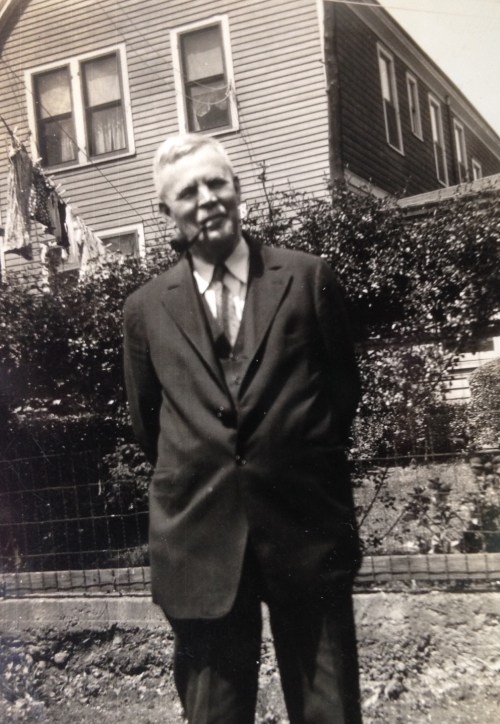
Neil O’Donnell, a small farmer from Donegal, Ireland, where the crops had failed for years, came to the United States in 1882 and landed at Castle Garden at the Battery in New York City along with countless others looking for work and a home.
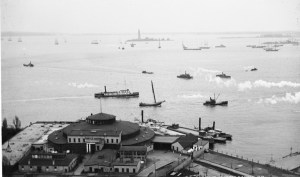
Castle Garden 1880s

Castle Garden 1880s

Among my boyhood memories, I remember sitting in the summer on the front porch with the old man in the picture above with a pipe in his mouth. “Allo Bye,” he would shout out to passers-by in a thick Irish brogue. His sight was failing, but once the passer-by was known a lively conversation began about families, friends, the weather and everything else going on in close-knit Bayonne.

Neil died in 1942. I remember kneeling with my family, friends and neighbors outside his room next to the kitchen saying the Rosary as he was dying. I was at his big funeral at St. Mary’s church. Irish funerals were always big then, but this one was special I felt. A patriarch had died.

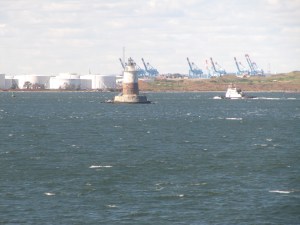
Neil didn’t look far for a job or a home when he got off the boat at Castle Garden. From the Staten Island Ferry, near the docks at St. George, you can still see today oil tanks at Constable Hook on the western shore of the harbor in Bayonne, NJ. In Neil’s day this was The Standard Oil Company of New Jersey, but for him then it was “Hughie Sharkey’s oil works” where he got the job he held all his working life. Hughie Sharkey was the guy who got Neil and Irishmen like him a job.img_1923
Neil married Sarah Givens, also from Donegal. They had six kids, four boys and two girls. Sarah died after the last was born and Neil brought his sister Mary out from Ireland to take care of the kids, but unfortunately she died shortly afterwards too.

“We made our way up in the world,” my mother often said. From a small house on 19th Street in Bayonne, they made their way to a two decker house on the Boulevard about a half-mile away. The first three kids had a minimal education, but the last three got more. My mother was the first to graduate from high school; the last two boys were sent to the Jesuit St. Peter’s High School in Jersey City. One became a priest, the other a New Jersey State Trooper.

A close immigrant family in a solidly Catholic neighborhood, the O’Donnells took care of each other and watched out for their neighbors too. Regularly, they brought others out from Ireland and helped them find jobs and homes of their own. They remembered where they came from.

With all our talk about immigrants these days, I think of Neil, the small farmer from Donegal where crops were failing, who found in America a job and a place to raise a family. His hours were long and his work was tough. The Standard Oil Company of New Jersey fiercely resisted workers’ demands for unionization and better working conditions in his day; in fact, it hired strike breakers to squash workers’ protests. My mother remembered when she was a girl a terrible day some workers were shot and killed near their home.  But Neil and his boys working at the Hook never missed a day.

They never missed church either. With simple unquestioning faith they prayed at St. Mary’s church on 14th. St. They reverenced the priests and sisters there; they were especially fond of the Passionists priests who preached and served the parishes of Hudson County from their monastery in nearby Union City. Faith was never a small part of their lives.

Neil could scarcely read when he came to this country, my mother said, and one thing he wanted was to read the Bayonne Times like everyone else. She taught him how to read. I remember the old man, newspaper in hand, bent on getting the news of the day, like everyone else.

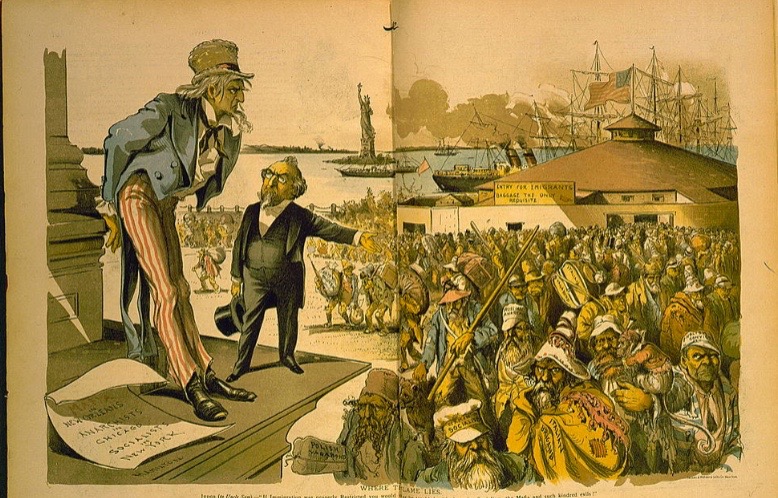
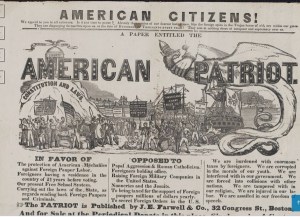
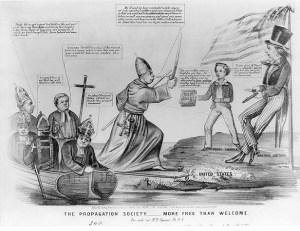
Not everyone in America appreciated Neil and immigrants like him, however. Nativist sentiments affected much of the country then as large numbers of foreigners, especially Irish Catholics, came to our shores. To some they brought poverty, disease and crime to America. Laws were proposed advocating literacy requirements and denial of voting rights to them. Catholics were denied jobs and access to political offices. Neil would never have made it here if the Know-Nothings and nativists had their way.

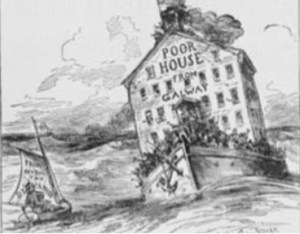
We celebrate our country’s generosity and openness to the world; but we can’t forget the ugly side of our history. You can see it here in some Nativist broadsheets and cartoons from the time, voices Neil must have heard. They’re still with us today in more subtler forms.
Nativist 1

Nativist 1840

Nativist 4

Nativist 2

Among the anti-immigrant material I found, I came upon one that made me stop and wonder some more. In the 1880s the United States was pushing China for access to her markets. We wanted free ports and free trade with that land and demanded she take down her walls.

At the same time, Chinese laborers were entering our country, chiefly the west coast, to work on the railroads. They were cheap labor, competing with the Irish, the Italians and other immigrants for jobs. In 1882 Congress prohibited Chinese laborers from entering the country.

A Punch cartoon from that time saw the irony of the situation. We demand walls be pulled down and put up walls ourselves. Look carefully, though, at who brings the bricks for our wall. Immigrants like the Irish and others who came here, often not welcomed themselves.
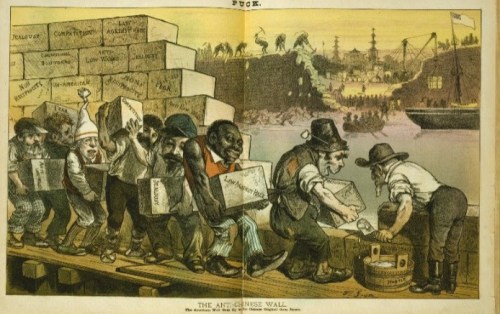
Nativist wall 1882

I wonder what Neil would say about this? I wonder what his descendants are saying about immigration today? We who come from an immigrant church.

Fidel

fidel

Dear Lord,

     The death of Fidel Castro, Cuban dictator, brought joy to many and sadness to others. In Miami there were celebrations in the streets of Little Havana. In Cuba there were nine days of mourning. Many of my friends ask how I feel about the death of Fidel. I’m neither happy nor sad. As a Christian I don’t rejoice in someone’s death. What I do is put them in Your capable hands, my Lord. I’m no one to judge!

     I’ve been praying for Fidel’s soul. Unfortunately I can’t forget that because of his political views and cruel policies generations lost their country and way of life. Torture, executions, imprisonment, all took place if you dared to disagree with any of his policies. Freedom no longer existed. Indoctrination began! Your churches, Lord, were closed. Prayer and religion were no longer necessary, we now had Fidel.

     My mother decided that she needed to leave Cuba for my sake and her own. In 1962 we became refugees. Thanks to the U.S., which opened its arms to us, we began a new life. It wasn’t easy, my God. Here we were penniless in a new land facing a new language and new obstacles. But with the help of family, the U.S. government, and the Catholic Church hope began to spring up and we survived.

     We left Cuba, my God, afraid and without much hope. We left Cuba because one man lost his way and the need for power overwhelmed his ideals. Fidel did have wonderful ideals, but the dark side won, in his case.

     I’ve been in the U.S. now for over fifty years. I’m in love with You, my Lord Jesus and I have to admit that happened here in the U.S.. Good things happened to most Cuban refugees. Most of us survived. We progressed. We lived full lives. But we never will know what could have been. The Cuba of today is nothing like the Cuba of yesterday. For some it’s very sad, for others it’s life. For me it is Your will, my God! May You, our Lord and Savior have the mercy on Fidel that he neglected to have for many of his people.

Berta Alvarez-Hernández

New York Harbor

Container

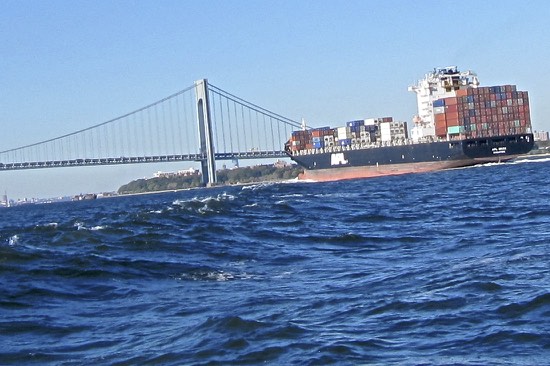
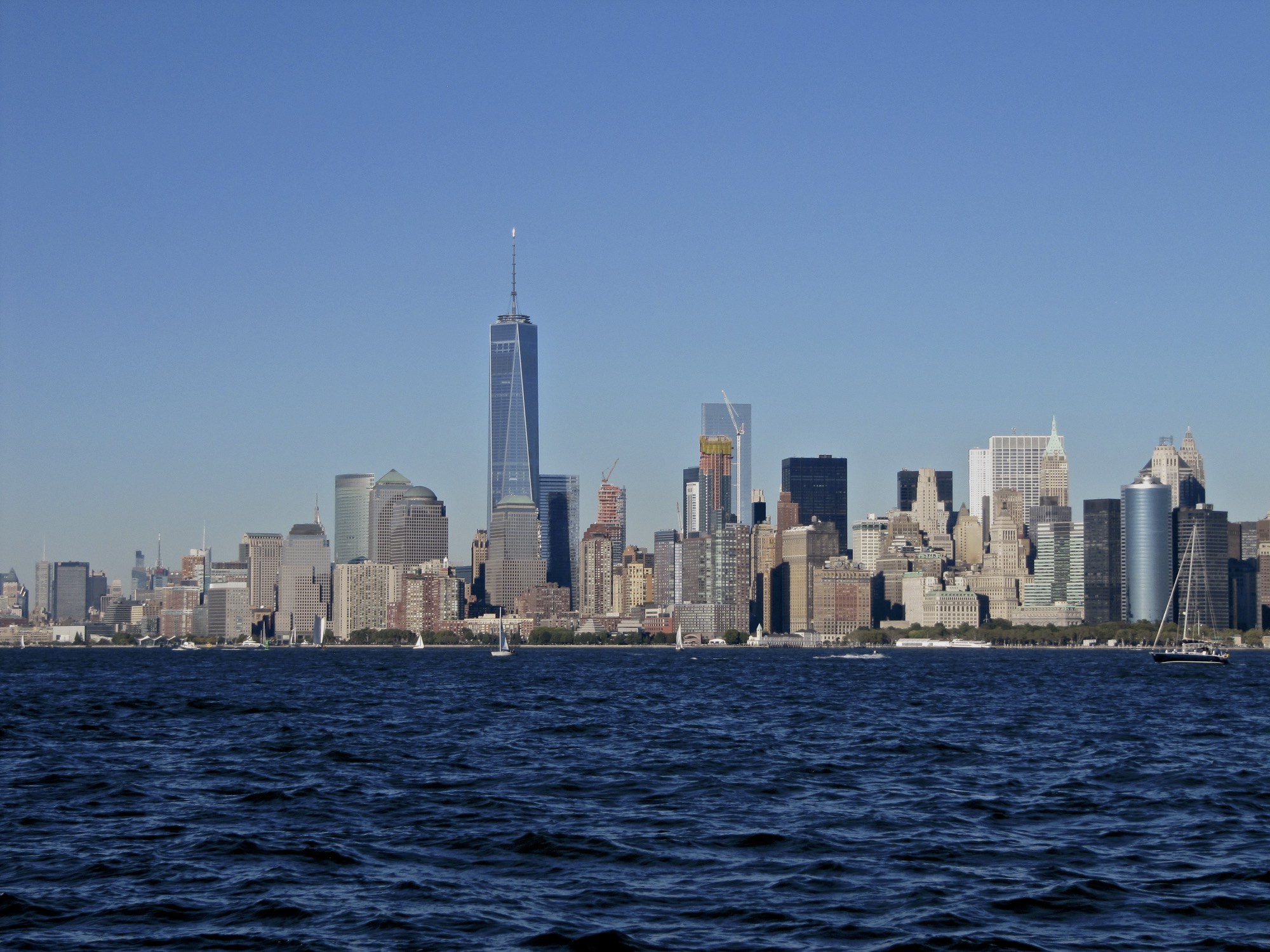
I went on a boat trip on Sunday into New York harbor, one of my favorite places. We followed a giant container ship from Singapore under the Verrazano Bridge.

Indian tribes were the first here to fish and to trade. The Dutch and the English followed them. It’s a great harbor with a great history. The fishing’s gone, unfortunately, and I wonder what happened to the Indians? Their story never seems to be told.

Indian fishing

Indian fishing

The Hudson River reaching north was a trading dream. Early on, furs and timber and raw materials were brought here from the interior to be shipped all over the world. The Eire Cana only increased the river’s reach.

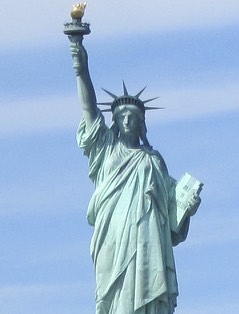
liberty stat - Version 2Millions of immigrants, looking for work and a place to live, sailed into this harbor from distant places. The sign welcoming them, the Statue of Liberty, and the place where many of them were processed, Ellis Island, are on the left of the harbor as you come through the Narrows from the open sea.

Many of our ancestors, my own included, first saw the New World here. Many never left the area. On a recent TV program on Italian immigration, the question was asked “Why did so many Italians choose to live in New York City and New Jersey?” “That’s where the work was, “ someone said. My ancestors–Irish and Swedes– chose to live and work here too. Skyline medium

Skyline close

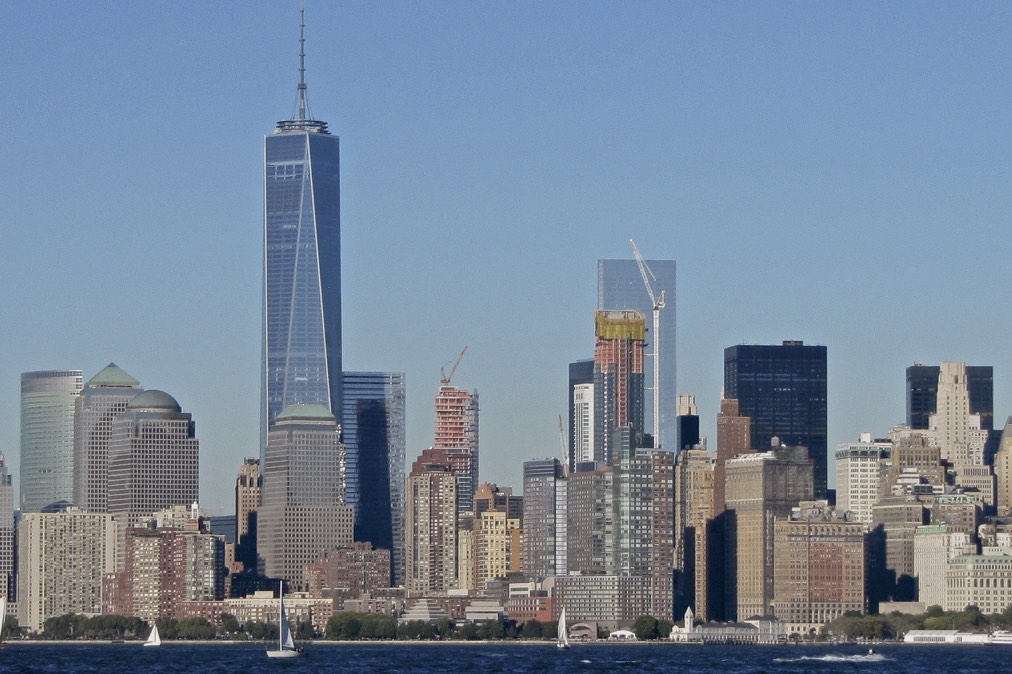
As you look at the impressive skyline of New York, look also to Brooklyn on the right and Jersey City and Bayonne on the left, Staten Island behind you. Those places were where the immigrants who built the city lived–and still do.

Quarentine station, staten island,

Quarentine station, staten island,

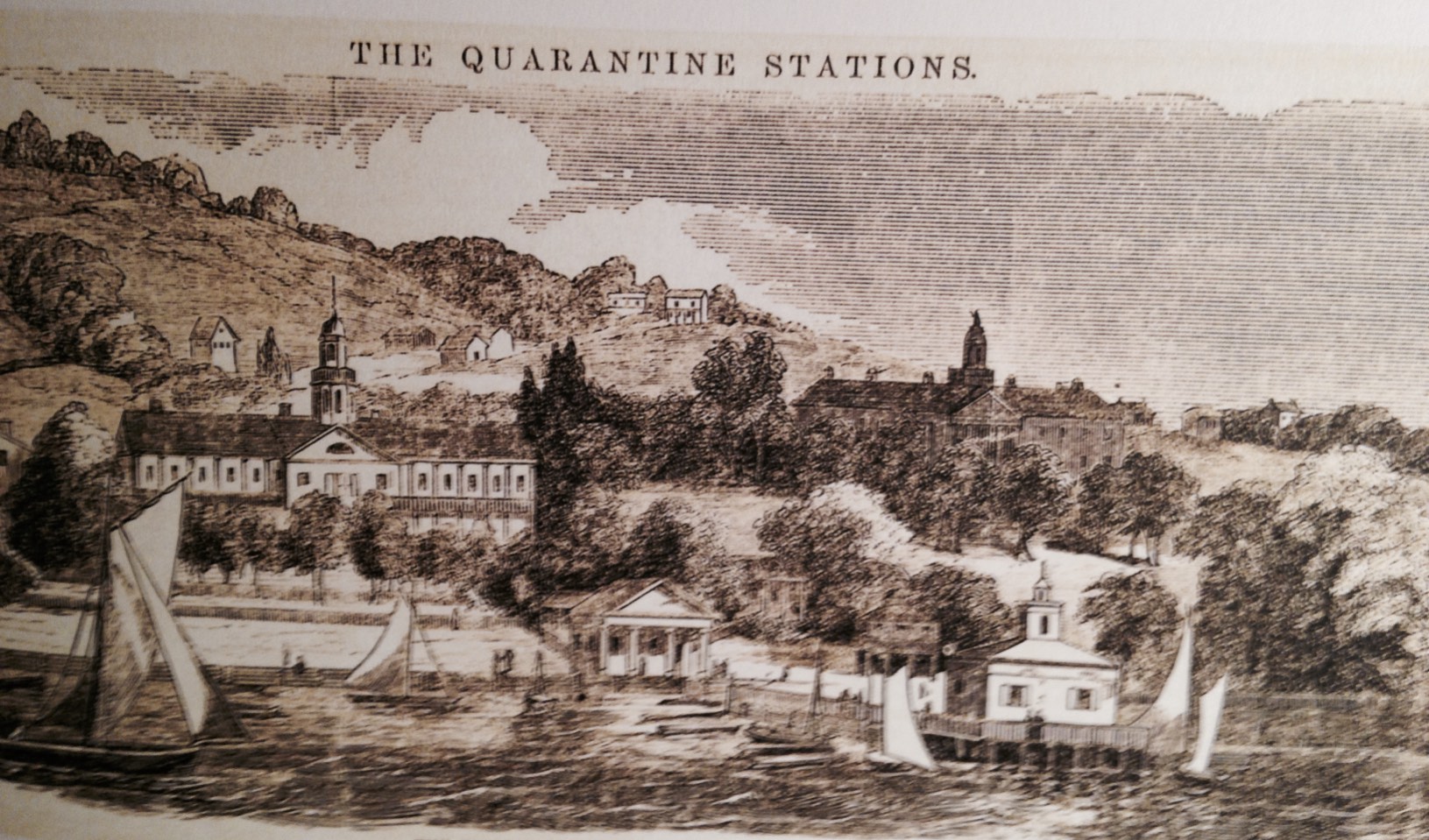
The Quarantine Station built in 1799 by Doctor Richard Bayley, father of St. Elizabeth Seton, was located near Stapleton on Staten Island, just south of the Staten Island Ferry terminal at St. George. Passengers with infectious diseases like small pox, cholera or yellow fever were detained and treated there, and sometimes returned to their own countries.

In the summer of 1801, Elizabeth Seton was staying with her father at the quarantine station when a boatload of sick Irish immigrants were brought in. She describes what poorer immigrants faced coming here:

“I cannot sleep–the dying and the dead possess my mind. Babies perishing at the empty breast of the expiring mother…Father says such was never known before: twelve children must die for want of sustenance…parents deprived of it as they have lain for many days ill in a ship without food or air or changing…There are tents pitched over the yard of the convalescent house and a large one at the death house.” (Letter July 28, 1801)

That same year, Richard Bayley died from yellow fever contacted while caring for a boatload of Irish immigrants at the Quarantine Station. He’s buried in the family plot next to the Episcopal Church of St. Andrew in Richmond, Staten Island.

Too bad no remains of the quarantine station are left to remind us how difficult an immigrant’s journey could be. There’s no quarantine station in the harbor now; sick immigrants and travelers go to nearby hospitals, as far as I know.

People in ancient times looked at travel over the uncertain sea as a perilous challenge. You never knew when you would arrive or the welcome you would get. No cruise ships then to make the journey a pleasure. An anchor was the sign the ancients used to symbolize their arrival, safely reaching port. Some ancient Mediterranean seaports like Alexandria and Antioch adopted the anchor as a symbol of their city.

Early Christians used this same sign on the burial places of their dead to symbolize their hope in Jesus Christ. The anchor closely resembles a cross. Jesus would bring them safely home, to harbor, to the New Jerusalem.