Tag Archives: holy scripture

Seed on Tough Ground: Matthew 13:1-9

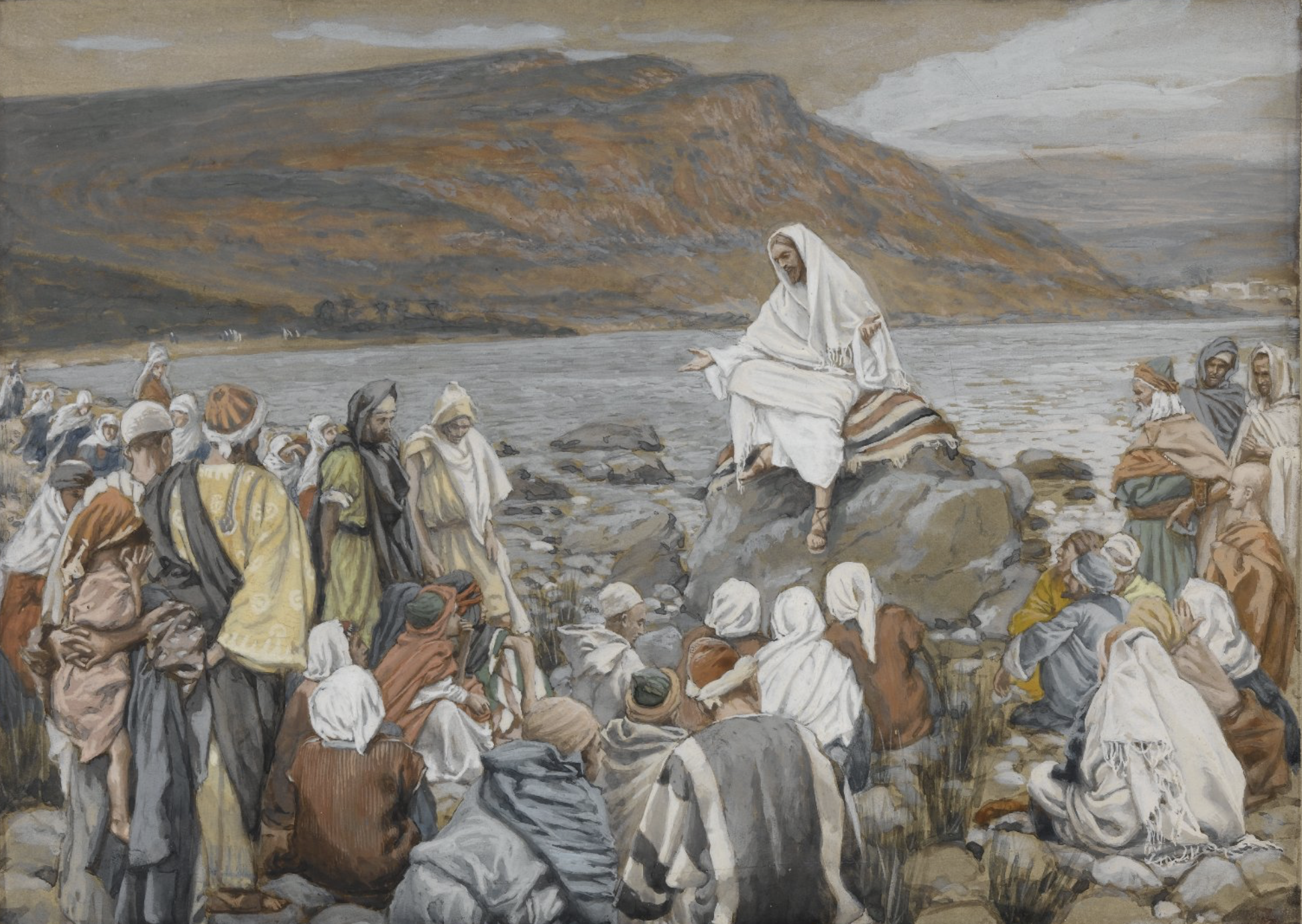
Teaching by the Sea. James Tissot

“A sower went out to sow. some seed fell on the path, and birds came and ate it up. Some fell on rocky ground, where it had little soil. It sprang up at once because the soil was not deep, and when the sun rose it was scorched, and it withered for lack of roots.Some seed fell among thorns, and the thorns grew up and choked it.” ( Matthew 13:1-9)

Jesus tells the crowd at the lakeside the parable of the sower after the Pharisees, the towns where he taught and worked wonders and his own family from Nazareth oppose him. (Matthew 11-12) Previously, Jesus sent his own disciples out to proclaim his life-giving message but he tells them:   “Do not go into pagan territory or enter a Samaritan town. Go rather to the lost sheep of the house of Israel. As you go, make this proclamation: ‘The Kingdom of heaven is at hand.’” (Matthew 10:

When they proclaimed his message to the lost sheep of Israel the seed fell on tough ground. They found the same opposition that Jesus did, more than they expected. .

Our reading today is an example of how an evangelist like Matthew used what Jesus experienced as an example for the church of his time. Matthew’s gospel was written around 90 AD with an eye on the religious conditions then in Galilee. The area had changed since the time of Jesus. After the Romans destroyed Jerusalem in 70 AD, many Jews influenced by the Pharisees moved into Galilee seeking to rebuild Judaism. They strongly opposed the followers of Jesus of Nazareth.

Matthew’s gospel reflects the increasing tension between Christians and Jews in his day. The parable Jesus originally taught throws light on this new situation. The ground is hard, rocky, with little soil. Still, the seed must be sown, however it’s received. Don’t give up on the tough ground, don’t judge it hopeless, Matthew’s gospel insists: Some seed falls on good ground.

A lesson for us today? Seems so. The soil was unwelcoming then, Matthew’s gospel says. Our soil seems unwelcoming now… Still!
Daily Readings, Daily Bread

Reading the scriptures daily and on Sundays in the lectionary and the Liturgy of the Hours is one of the great reforms begun by the Catholic Church after the Second Vatican Council. It’s an effort to seek renewal through the Word of God, yet after 60 or so years we’re still getting used to it. Not too many individuals or parishes or other groups in the Catholic Church focus on it, in my view.

Early Christianity saw the scriptures as daily bread. Today we may think the scriptures old and and not up to offering wisdom to our age. More than ever, we have to trust if we search for “the face of God” in scripture we will find it there.

“If today you hear his voice, harden not your hearts.” The daily scriptures are daily bread, but they may not be easy to digest. We go from Matthew, preoccupied with the tensions of his church with Pharisaic Judaism,  to Luke preoccupied with an outreach to the gentiles, to the other New Testament writings, each with its own purpose.

Then there are the various readings of the Old Testament. They can be hard to understand, but the church wisely keeps them side by side with the New Testament. They hold a treasure all their own. We need to understand them better.

We need help to appreciate this daily bread, this varied diet served up. We need people like those hosts on the cooking shows on television who not only  tell you what to eat but make those strange dishes appetizing and appealing. We need good homilists and good catechists.

We need a “lamp, shining in a dark place.” So we ask: Come, Holy Spirit, fill our hearts with your light.”

Confraternity of the Passion

Sign
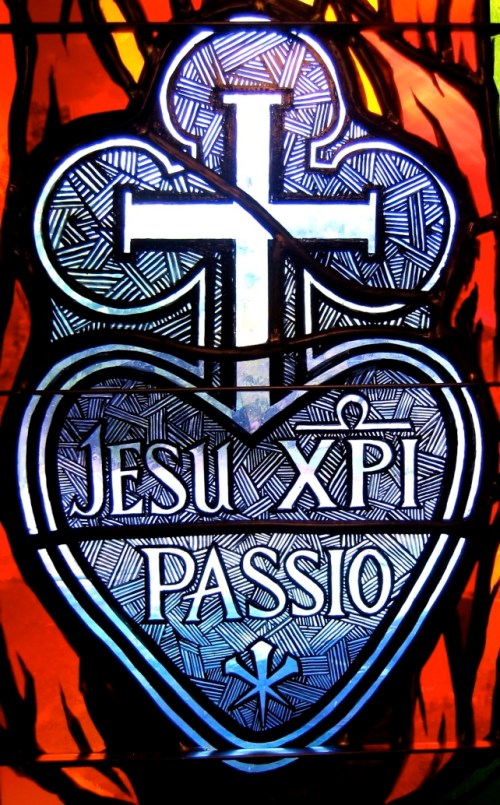
The Confraternity of the Passion met yesterday at 1:00 PM at Immaculate Conception Monastery in Jamaica, NY, for Mass and to reflect on the Passion of Jesus. The Confraternity began in 18th century Italy when a group of laypeople approached St. Paul of the Cross, founder of the Passionists, for help in participating in the liturgy and reaching out to the needy. They admired the spirituality of St. Paul and his community and wanted to share in it as people living in the world.

Confraternities have been part of the structure of the Catholic church for centuries; some center on growing in prayer, some have the goal of caring for the sick or the dying or teaching the young catechism. They may function in a parish but usually they function beyond parish structures. That characteristic makes the confraternity an interesting pastoral structure today when some don’t find their spiritual needs fully met in their own parishes and look for something more.

Our meeting yesterday began with Mass; I preached a homily on the gospel, an extended version of the homily you can find in our last blog. After Mass we spent time reflecting on the gospel and the Sunday readings together. The reflections from the group were filled with wisdom and insight. You can see what Jesus meant when he said, “Where two or three are gathered in my name, there am I in the midst of you.”

The scriptures read in our liturgy day by day, week by week, and the feasts we celebrate are a sure way to hear God’s word. They nourish faith and provide food for our journey. I offer by email a monthly calendar of the readings for our group and others. If you’re interested, send me your email I’ll put you on our list. confraternitycp@gmail.com

I’m becoming more aware of the centrality of the accounts of the Passion and Resurrection of Jesus as we read the scriptures. They’re at the heart of the gospels, the first and the longest part; what we know of these mysteries casts light on the rest of the gospels and, in fact, all sacred history. They are a key to “the wisdom and power of God.”

And so we have the Confraternity of the Passion.

What Do The Scriptures Mean?

An article in a recent issue of the Jesuit magazine, America,  discussed the way American Catholics read the scriptures. Actually, they don’t read them very much or know much about the writings we call the Word of God, the author, Brian B. Pinter, says. Also, many Catholics who do read the scriptures, read them  literally, like fundamentalists. But the Pontifical Bible Commission in 1993, Pinter points out, said  “Fundamentalism actually invites people to a kind of intellectual suicide.”

Last summer the pope urged Catholics to take up and read the scriptures. It wasn’t a pious wish, he was dead serious. As the Word of God the scriptures nourish our faith and help us know God’s will. The scriptures are our new catechism and our new prayerbook.

I like Pope Benedict’s books “Jesus of Nazareth” because he takes seriously what the scriptures and biblical studies today say about Jesus. Those books–and others like them– are worth reading if you want to learn how to read the Word of God. There’s also some good advice about reading the bible on the website of the American Catholic Bishops.

But don’t forget to begin with the scriptures themselves. Get to know them, their stories, their words and images. A good way to start leaning the scriptures is to let them be your teacher, let one part teach you about another part.

For example, this Sunday’s reading from the Gospel of Matthew is about the two sons going out into the vineyard. One says right off to his father, “I won’t go” , but eventually he goes. The other says “Sure I’ll go”, but he doesn’t. That story begins with the note that Jesus said this to the chief priests and elders of the people who weren’t responding to the invitation to believe in him.

We may shake our heads and say, “It’s too bad they failed to answer the call of Jesus.”

But a further question is, “And what about me? Do I just shake my head at them?” That story’s meant for me too.

There are other sons mentioned in scripture who may help me out.  The prodigal son and his brother come to mind. The two thieves on the cross, brothers in crime, also come to mind.

Jesus didn’t recall the story of the two sons to the Jewish leaders to condemn them, but to wake them up. His words are for me too. God calls me everyday to go out my door into my world and do his will. It’s an everyday call. Do I say “yes!” More importantly, do I mean it!


Pope Benedict’s “Jesus of Nazareth”

Are old voices speaking out anew? What about the voice of Holy Scripture, the books of the Old and New Testament? What about an old pope?

I’ve just finished reading Pope Benedict’s  Jesus of Nazareth, volume 2. I think this book may be his greatest contribution to the church. He’s regularly described as a traditionalist, but in this book he approaches Jesus listening, not to voices from earlier church commentaries, but to new voices speaking through modern biblical studies.

Recent popes  have acknowledged and approved of modern biblical scholarship, but none use it so thoroughly as Benedict does in this work. He opens the scriptures and let’s them speak of Jesus and his mission to the world.

His insights are profound and make you want to look at the scriptures more closely yourself  for the wisdom they contain. One recent European study said that Catholics there don’t read scripture much; I think the same could be said about this side of the Atlantic too. People prefer sermons.

My challenge is not to get people to listen to my sermons, but to help them prayerfully read and reflect on the scriptures themselves in a regular way. That’s what the pope himself recommended recently. Take up the scriptures; they speak of Christ.

He never says read my book, but I’m going to read it again too. It’s very good.

Fishing in the Text

One thing the Christian preachers from patristic times seem to do well is to lead you to the scriptures to search for God’s wisdom there. They seem to do it better than many preachers today who use the scriptures rather like “proof texts” to back up their own observations and ideas, good as they may be.

The patristic homilists  don’t just give you the dish of fish to eat. They teach you how to fish. Here’s St. Ambrose on Luke’s gospel about Mary visiting her cousin Elizabeth in today’s Office of Readings. He’s fishing in the text.

Notice in the third paragraph the beautiful way he uses the simple detail that Mary made haste to go to the hill country. It’s a place of grace revealed. “I lift up my eyes to the mountain, from whence shall come my help…”

“The angel Gabriel had announced the news of something that was as yet hidden and so, to buttress the Virgin Mary’s faith by means of a real example, he told her also that an old and sterile woman had conceived, showing that everything that God willed was possible to God.

When Mary heard this she did not disbelieve the prophecy, she was not uncertain of the message, she did not doubt the example: but happy because of the promise that had been given, eager to fulfill her duty as a cousin, hurried by her joy, she went up into the hill country.

Where could she hurry to except to the hills, filled with God as she was? The grace of the Holy Spirit does not admit of delays. And Mary’s arrival and the presence of her Son quickly show their effects: As soon as Elizabeth heard Mary’s greeting her child leapt in her womb and she was filled with the Holy Spirit.

See the careful distinction in the choice of words. Elizabeth was the first to hear the voice but her son John was the first to feel the effects of grace. She heard as one hears in the natural course of things; he leapt because of the mystery that was there. She sensed the coming of Mary, he the coming of the Lord — the woman knew the woman, the child knew the child. The women speak of grace while inside them grace works on their babies. And by a double miracle the women prophesy under the inspiration of their unborn children.

‘Blessed are you,’ said Elizabeth, ‘who believed’.

You too, my people, are blessed, you who have heard and who believe. Every soul that believes — that soul both conceives and gives birth to the Word of God and recognises his works. Let the soul of Mary be in each one of you, to proclaim the greatness of the Lord. Let the spirit of Mary be in each one of you, to rejoice in God. According to the flesh only one woman can be the mother of Christ but in the world of faith Christ is the fruit of all of us.”