Tag Archives: Holy Land

At The Tomb Of Jesus: November 14

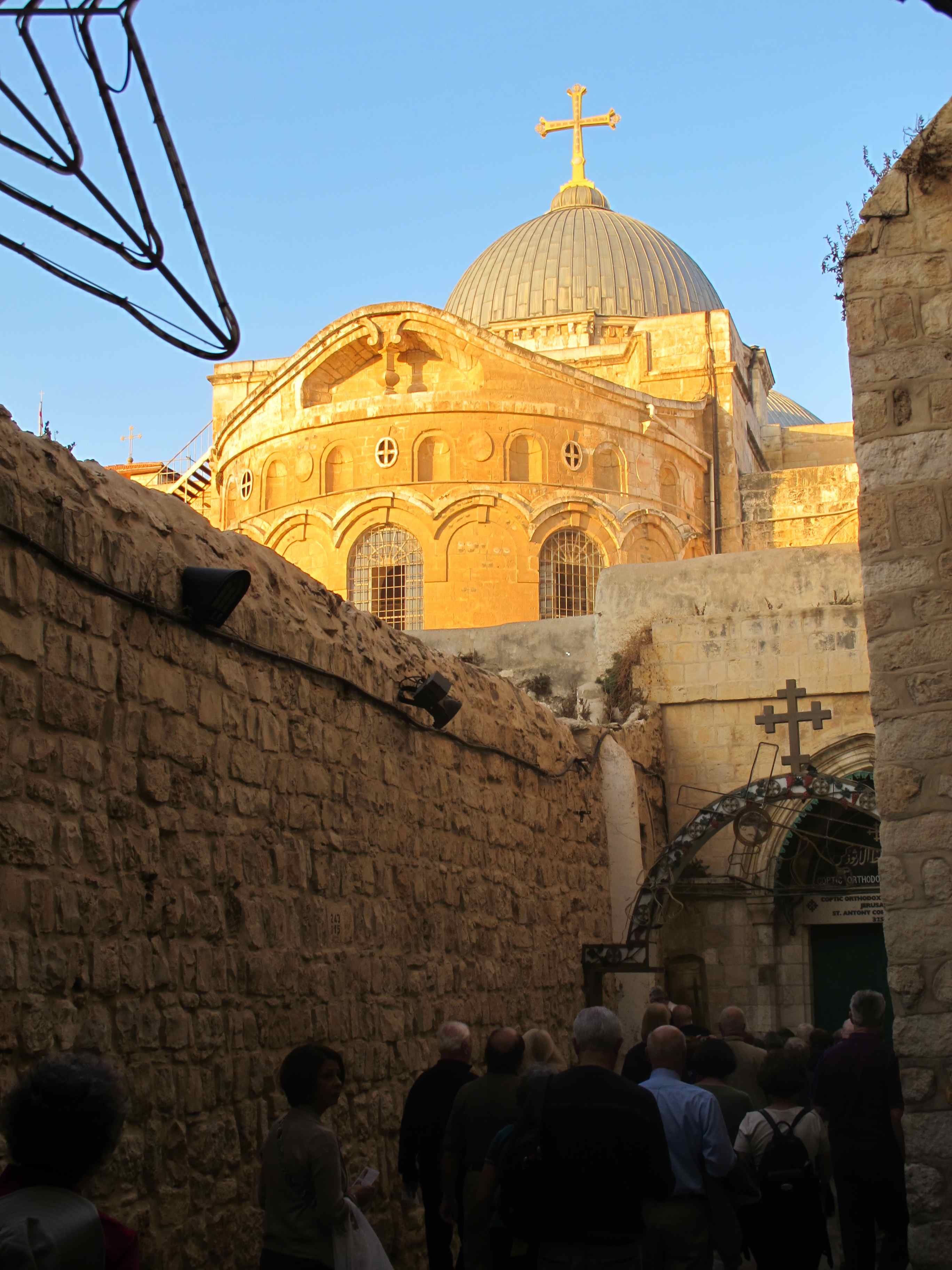
Early this morning,  Sunday,  like the women in the gospel we went to the tomb of Jesus at the Church of the Holy Sepulcher, entering the Old City by way of Herod’s Gate. Hardly any shops were open on the narrow streets before the Via Dolorosa except the bakeries where they were making fresh bread.

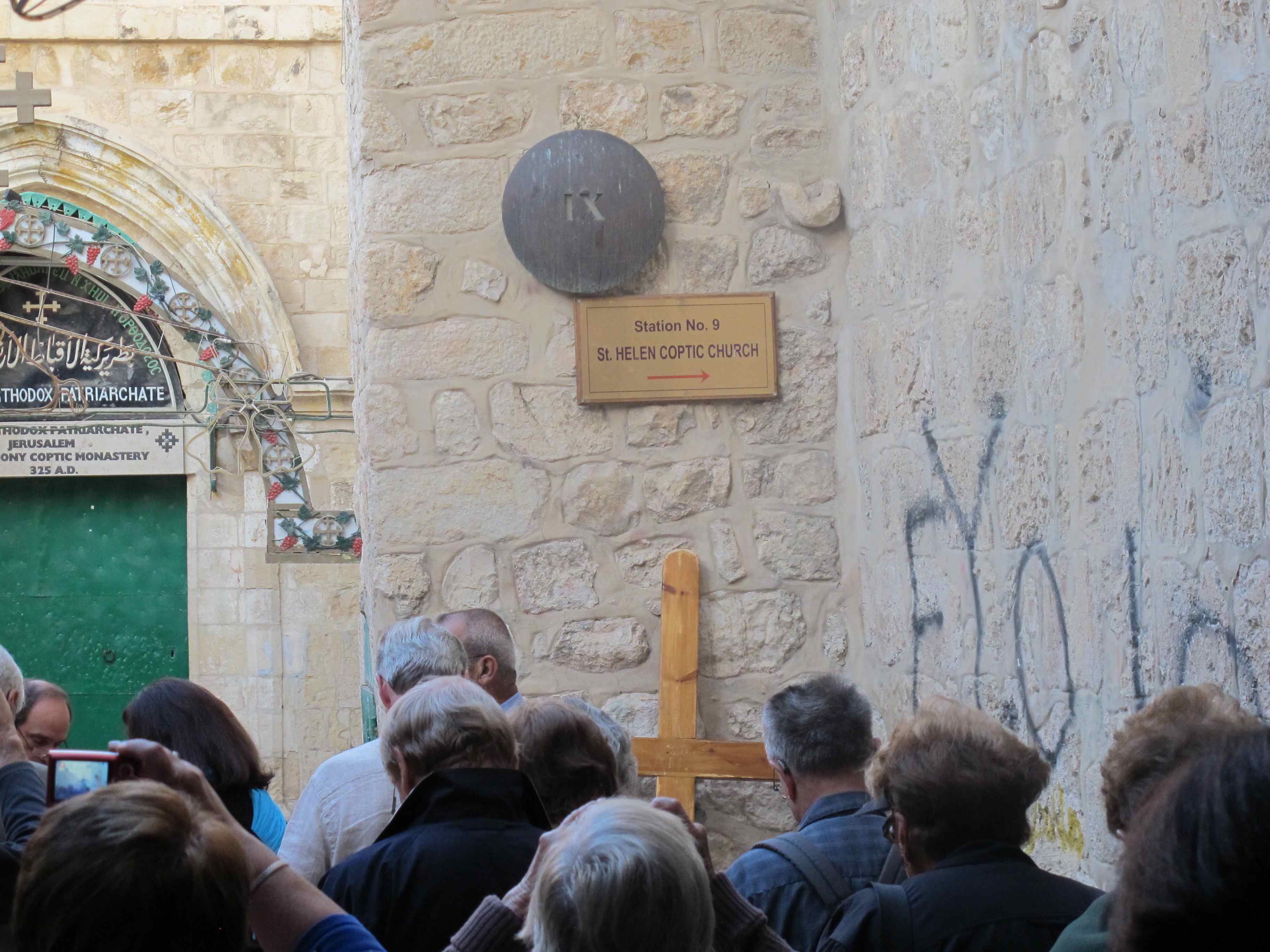
We walked the quiet dark street, the Via Dolorosa, the Street of Sorrow, up to the church and prayed the Way of the Cross marked out on different stations along the way.

We entered the church through a side door to a small chapel where an Ethiopian liturgy was going on shrouded with clouds of incense and celebrated with ancient chanting.  They are here with the Armenians, the Copts from Egypt, the Greek Orthodox, and Roman Catholics– all with their Sunday liturgies in progress in different parts of the church.

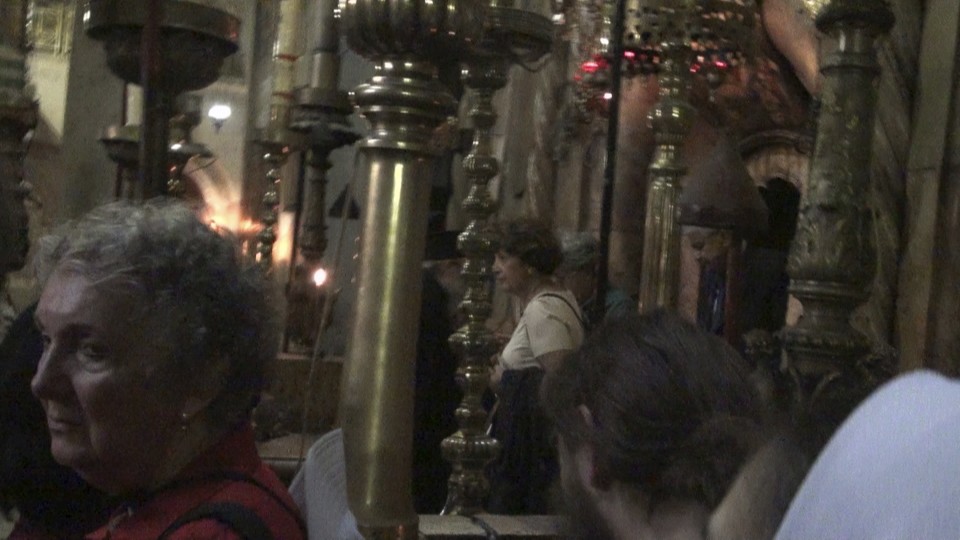
Since the lines were not yet long going into the tomb of Jesus, we got in line and entered the tomb in small groups of three or four.

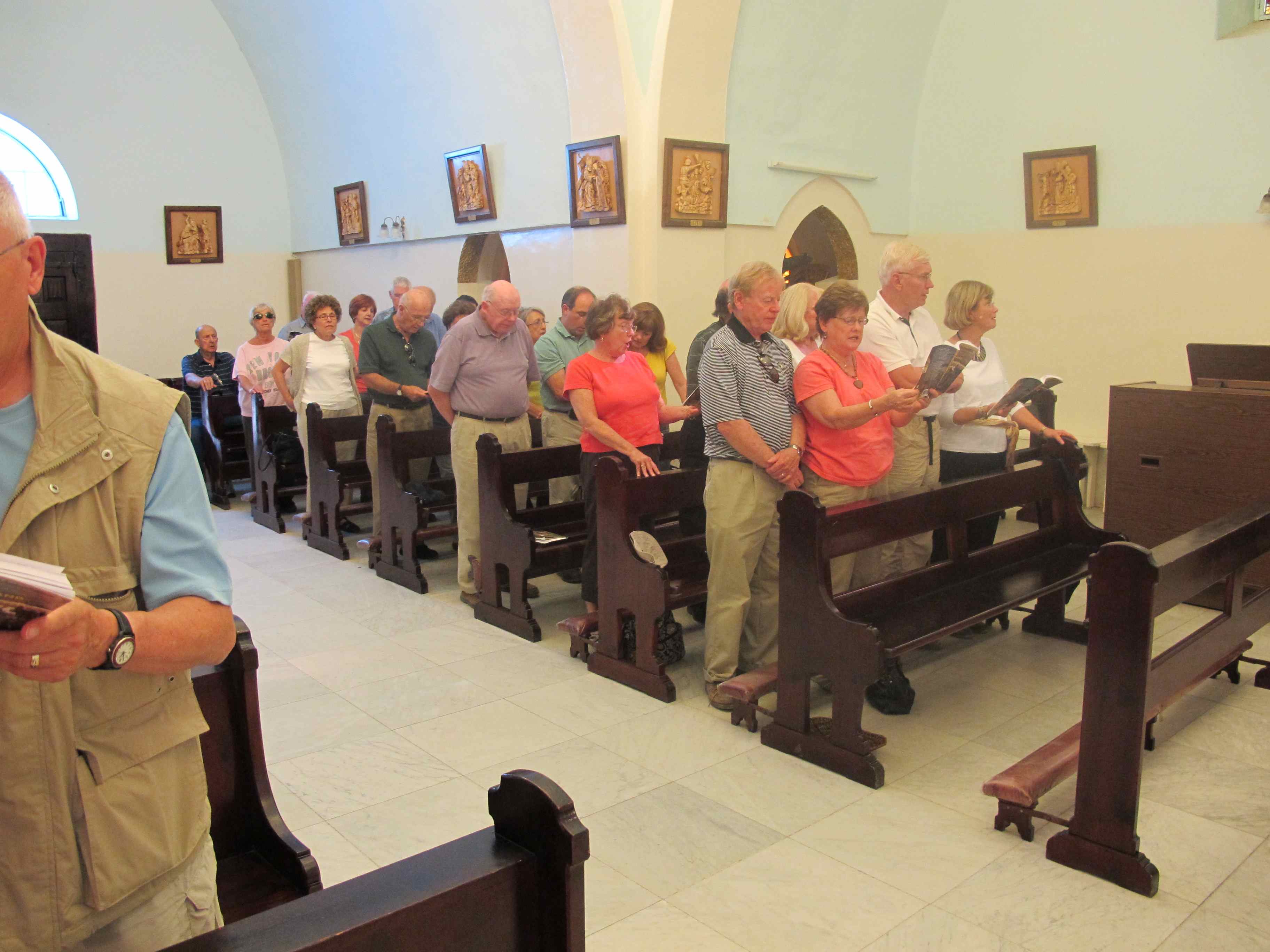
Then we had Mass in the Roman Catholic Chapel, where we read the Easter gospel from Mark that tells of the women coming to the empty tomb on Easter morning.

From the church we went to the Jaffa Gate, boarded the bus, and headed for our hotel for breakfast.

Tomorrow most of us go home. I stay for a few days with the Passionists at Bethany.


Exploring Jerusalem: November 13

We went early this morning at 7:30 to the Western Wall, where many Jews were devoutly praying on the Sabbath. The Presence of God dwells beyond the wall, according to the Jews. Women and men pray separately at the wall. No pictures were allowed today.

The Temple Mount was closed today so we couldn’t visit it.

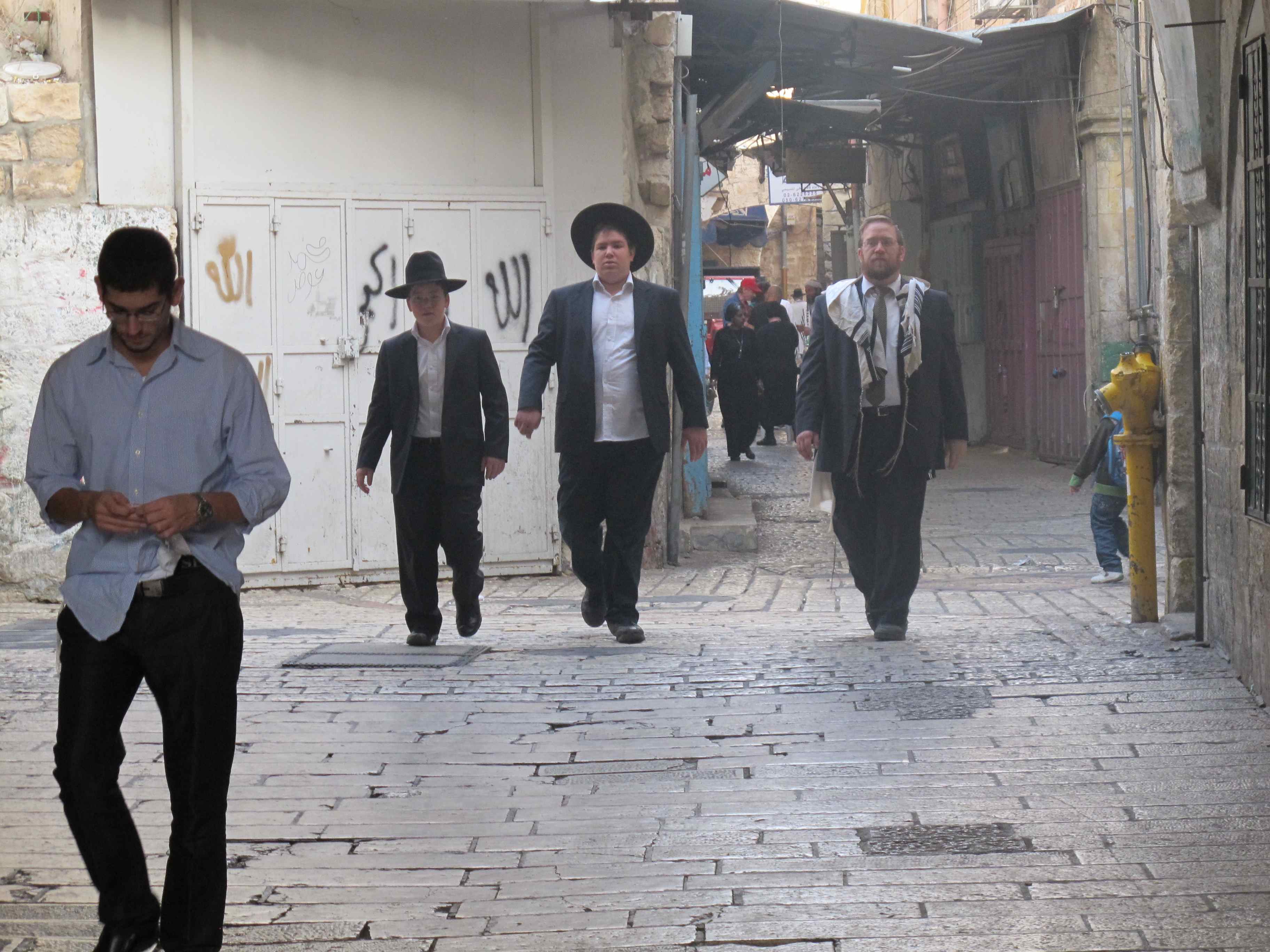
We walked then through the narrow streets of the Old City as the Muslim and Christian shops were opening. Joseph gave us some freshly baked Jerusalem bread to eat. By the time we reached the Via Dolorosa, the traditional path that Jesus took to his death, the streets were crowded with pilgrims, from Brazil, Russia, Korea, Singapore and Eastern Europe, as well as natives of Jerusalem.

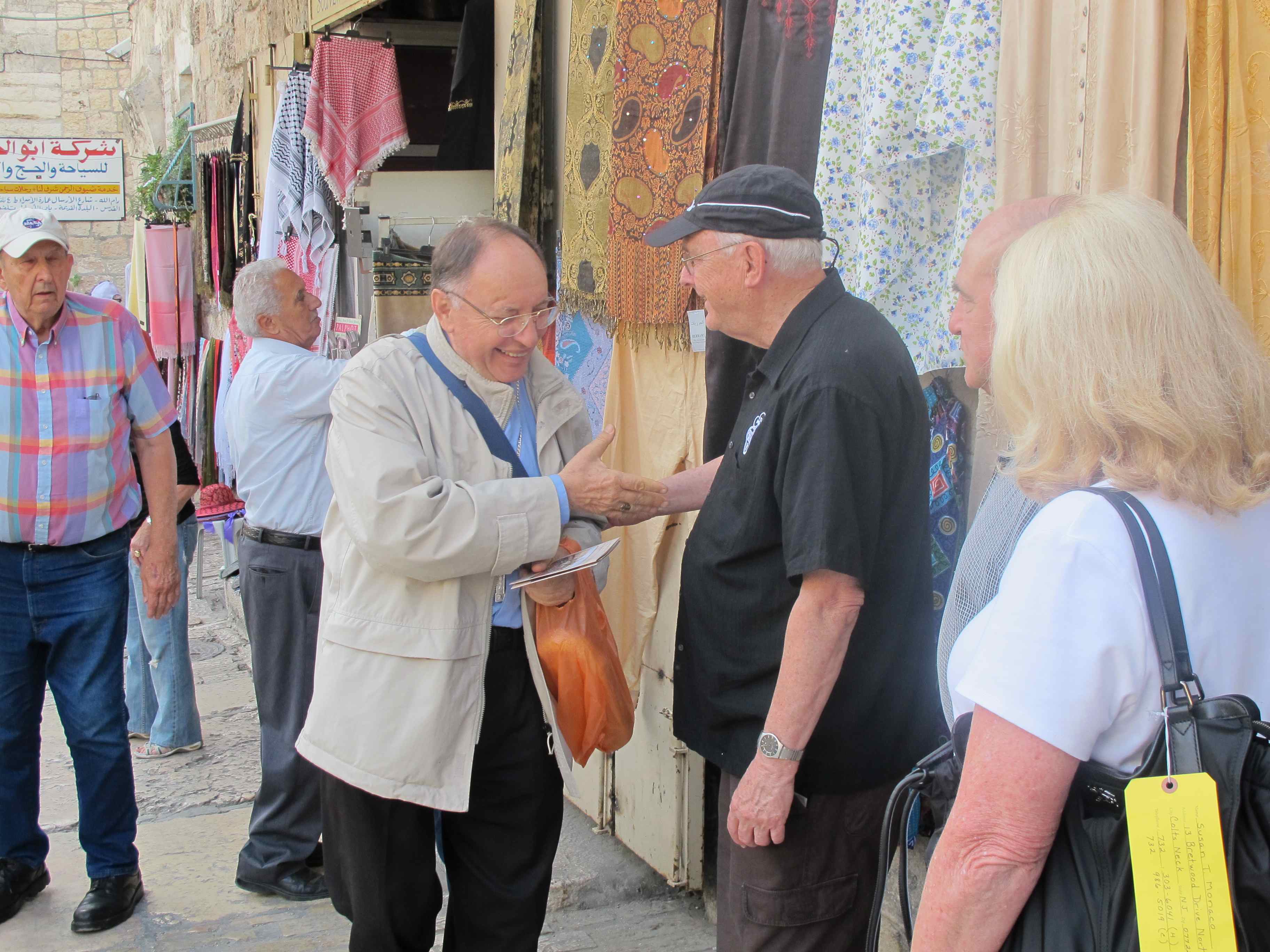
I met a bishop from Brazil who knew the Passionists there.

We walked the Via Dolorosa to the Convent of the Sisters of Sion, an order of nuns founded by a Jewish priest-convert, whose purpose is to work for better relations between Christians and Jews.  Their convent is built on the site of the Fortress Antonia, where Roman soldiers were garrisoned at the time of Jesus. While excavating for the convent years ago, an early street and part of the soldiers’ barracks were uncovered.

In this place early pilgrims, entering the city from the Mount of Olives, commemorated the trial of Jesus by Pilate, his scourging and mockery by the soldiers–the beginning of his way to Calvary carrying his cross, as Joseph explained.

Afterwards, we entered the area of Bethesda, where Jesus cured the paralyzed man who had been waiting for 38 years to be cured but no one would help him into the healing pool when it bubbled up. (John 5,1-19) The ruins of the pool from the time of Jesus have been excavated, along with an ancient Byzantine church built over the ruins, but you have to follow the ground plan carefully to sort them out, because centuries overlay centuries.

The Crusaders’ church of St. Ann, built in the 12th century, is one of the most beautiful churches in Jerusalem.  When we were there it was filled with the songs of the different pilgrim groups taking advantage of its wonderful acoustics.

We went from there by bus to the Church of St. Peter in Gallicantu on the eastern slopes of Mount Sion where we celebrated Mass.  Some believe it was here that Jesus was brought before Caiaphas, the High Priest, and accused of blasphemy. In the area luxurious homes from the time of Jesus have been found, so it is likely that prominent Jewish leaders lived here.

Next to the church is a steep path down from Mount Sion to the Kidron Valley below, which dates to the time of Jesus, and it could have been the path he took after the Last Supper and the path those who seized him in the garden took to bring him to Caiaphas.

The Gallicantu church recalls the condemnation of Jesus by the Jewish leaders and also the denial of Peter. The weathervane of the rooster over the church is a reminder that a cock crowed after Peter denied Jesus three times.

The afternoon was devoted to plundering the local stores.

In the evening we went to a Church of the Gethsemani for a holy hour. In the dark church–we were the only ones there–we read the gospel accounts of Jesus in the Garden from Matthew, Luke and John as we sat around the open rock before the altar. Each of the evangelists tell the same story but draws a different lesson. In Matthew’s account Jesus relies on his Father for everything, and so leads his followers to go to the Father for life. In Luke’s account, Jesus is strengthened from heaven for what he must do, and so are we when we pray. In John’s account, Jesus is already glorified, even in the midst of his sufferings. God’s sovereign power never fails, even in the midst of suffering.

Let’s Go To Bethlehem

We started our visit to the Jerusalem area with a visit to Bethlehem where we had Mass at the beautiful little cave-chapel in the Franciscan site at Shepherds’ Field. We sang with the shepherds “Joy to the World” and read the Christmas story from Luke’s gospel.

There’s something about hearing that gospel there.

To get to the place we had to pass through the security wall and the Israeli checkpoint. When we left Bethlehem two young Israeli soldiers carrying guns boarded our bus at the checkpoint to take a look around.

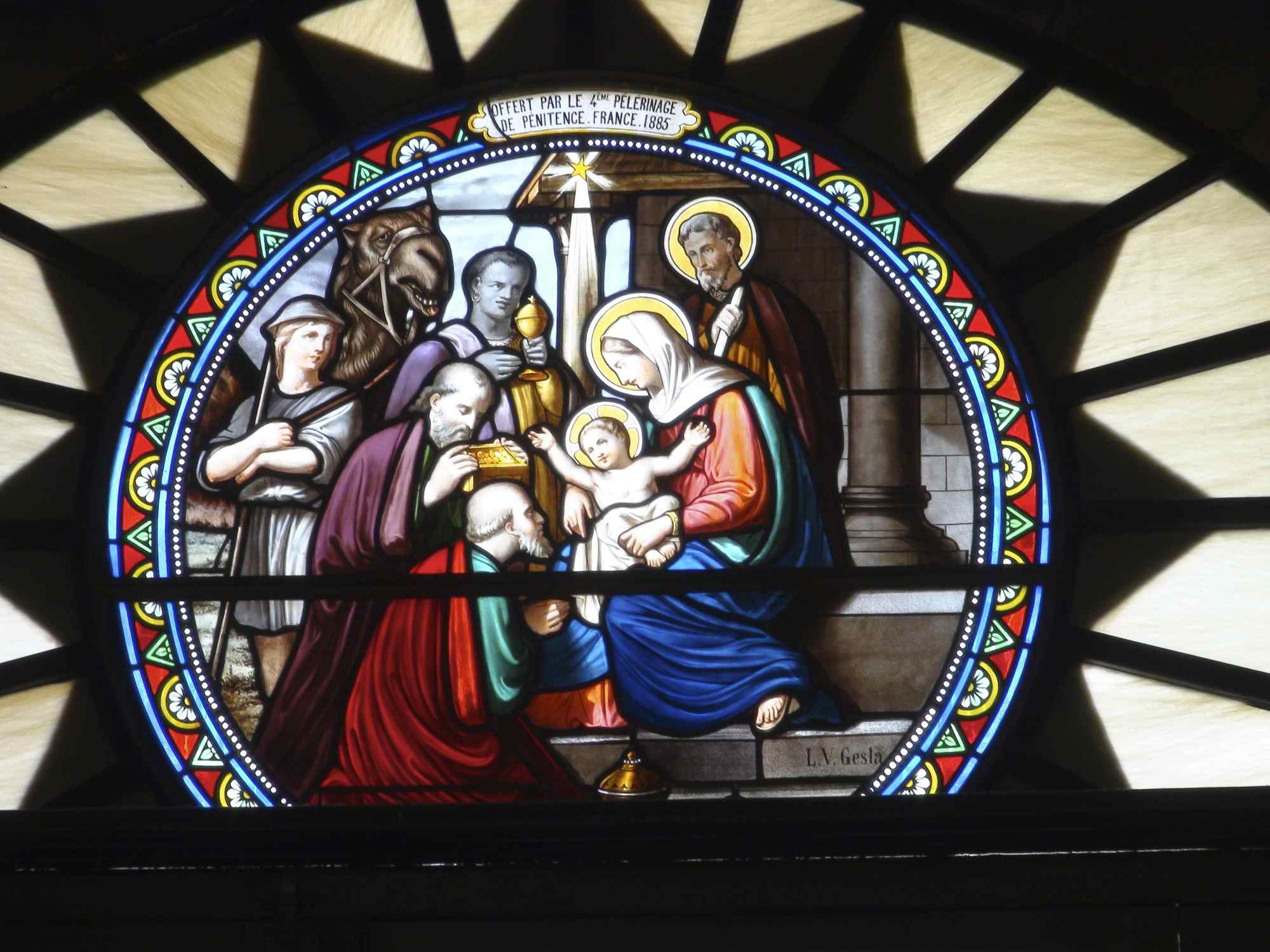
Much building going on in the Bethlehem area. After Mass we headed for the ancient Church of the Nativity to visit the cave where tradition says Jesus was born. Long lines of people from many places waited to go down to the shrine. Here we are squeezed in with the Russians.

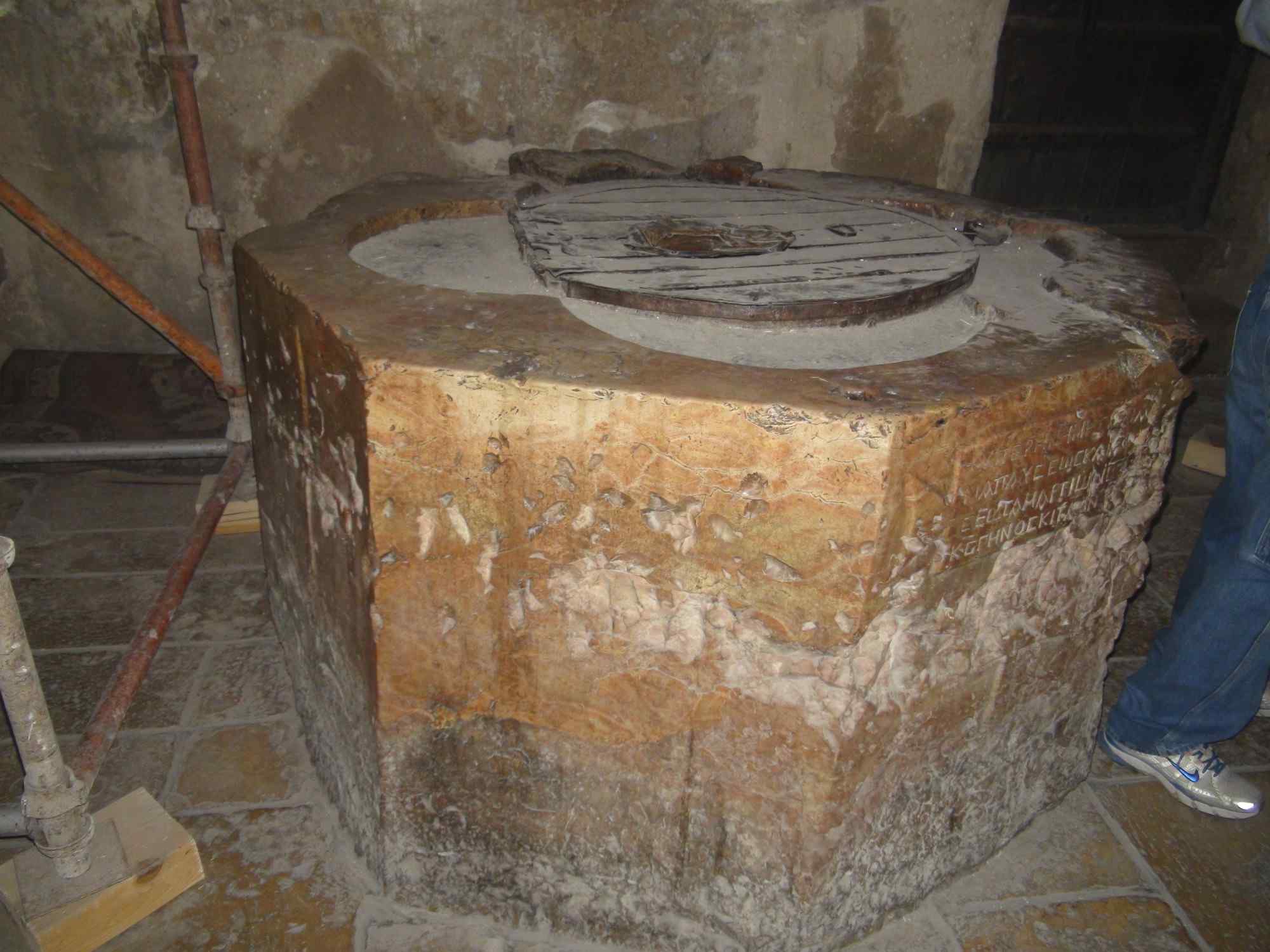
This is one of Christianity’s oldest churches. Renovations to the church are going on now, which I understand are being paid for by the Palestinian Authority. I found the baptismal fount which must go back at least to the 5th century. They’re probably going to do something with it.

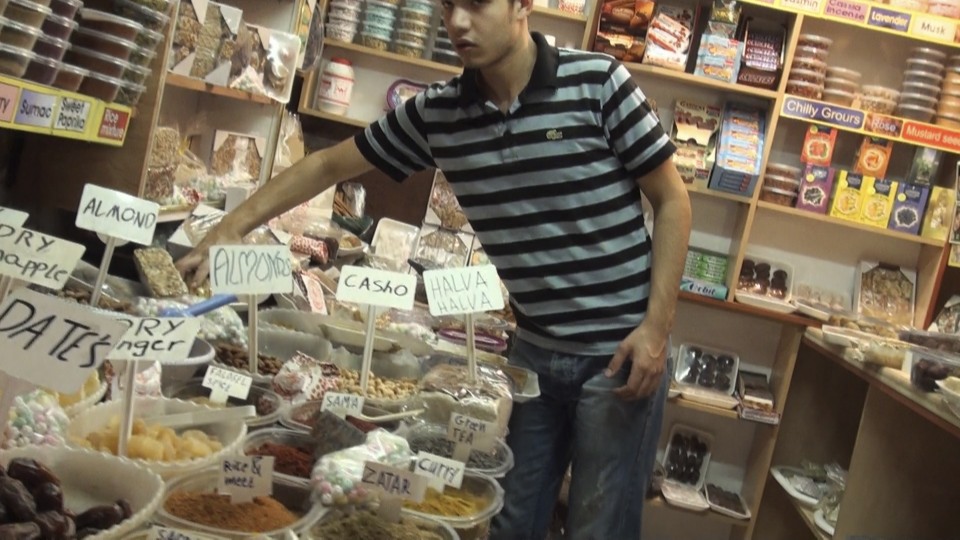
After all these holy things there was nothing left to do but shop, which we did in a Bethlehem store that carried a profusion of religious gifts. Their stock on the Dow went up considerably after our visit.

If you ever wondered about the difference between men and women. The men were all  outside the shop waiting; then the women came out with their treasures.

Then, a lunch at a new place near the state museum. Finally, a visit to the Holy Land map at the museum which features Jerusalem as it was shortly after the time of Jesus. We made our weary way to see the exhibit on the Dead Sea Scrolls at the museum and headed back to the hotel.

Up to Jerusalem. November 10

Joseph said in the time of Jesus it would take a group of men about 7 days to get to Jerusalem from Tiberias; a family about 10 days. By bus we made it today in about 9 hours with stops at Mount Tabor, where we decided the wait was too long, so we just took some pictures of the mountain from a distance.

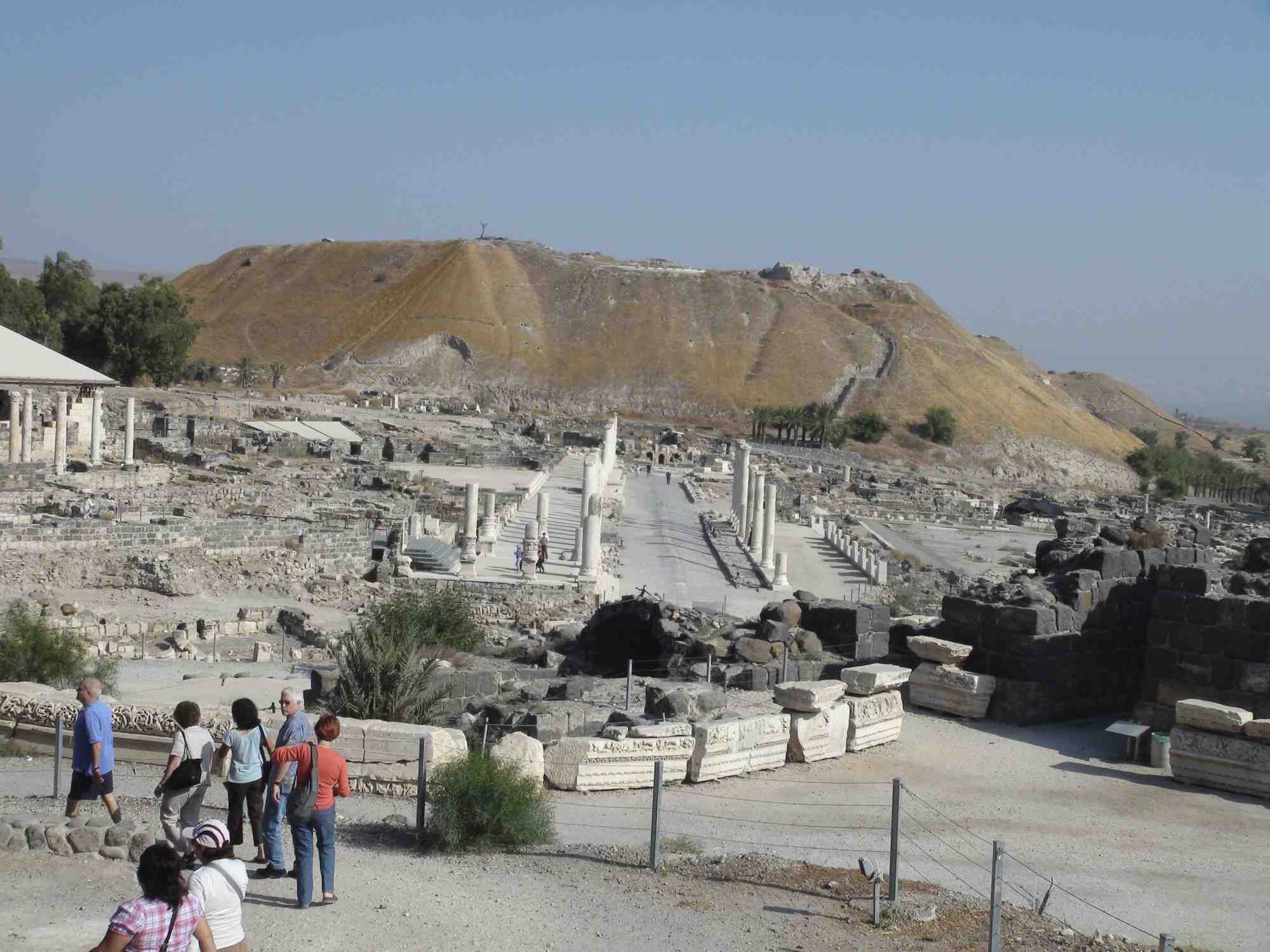
We made for Bet Shean, a Roman city built during the time of Jesus on the site of an older city. Our route was along the Jordan River, with barbed wire fences east of us.

We had Mass around 12;30  at Jericho, Zacchaeus, the tax-collector’s town, in a little Catholic Church, Good Shepherd,  staffed by Franciscans. It’s also Joseph’s parish. There’s a Catholic school there with over 400 kids, the majority Muslims. Our group sang like angels, auditioning for the angelic choir tomorrow at Bethlehem.

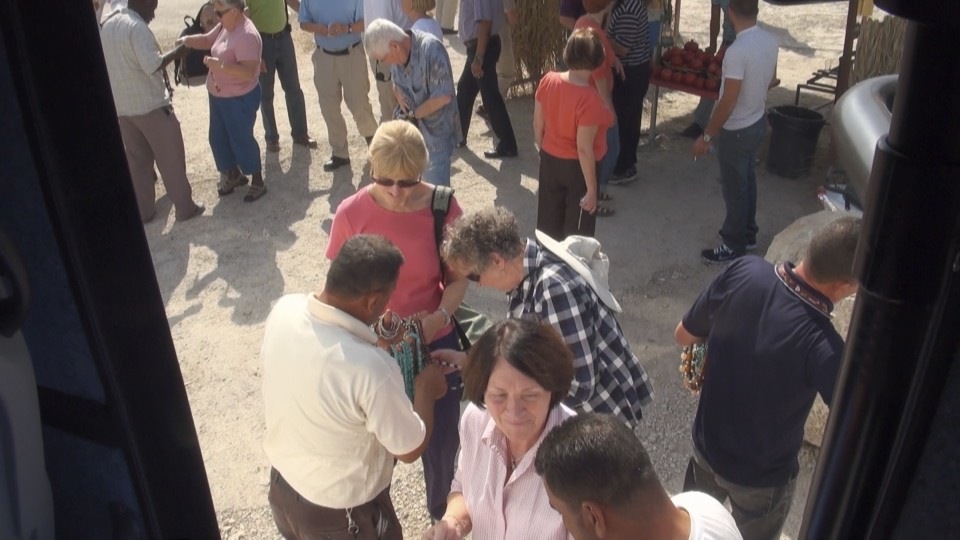
On the way to Jericho we had a lively experience of group haggling with some Jericho peddlars. I think the peddlars met some real competition from some New Jersey experts.

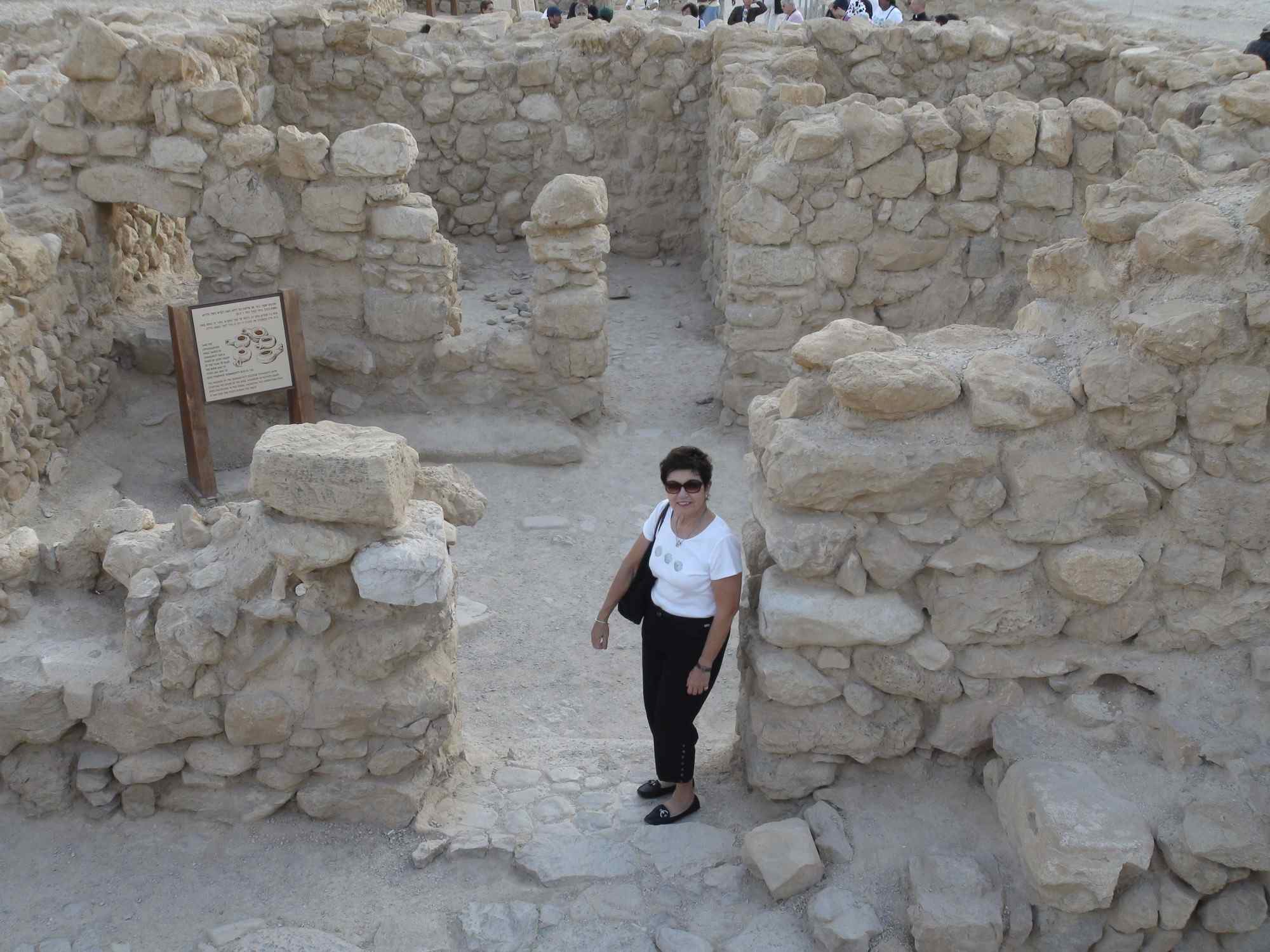
Then we went to the Qumran site along the Dead Sea where the Dead Sea Scrolls were found.

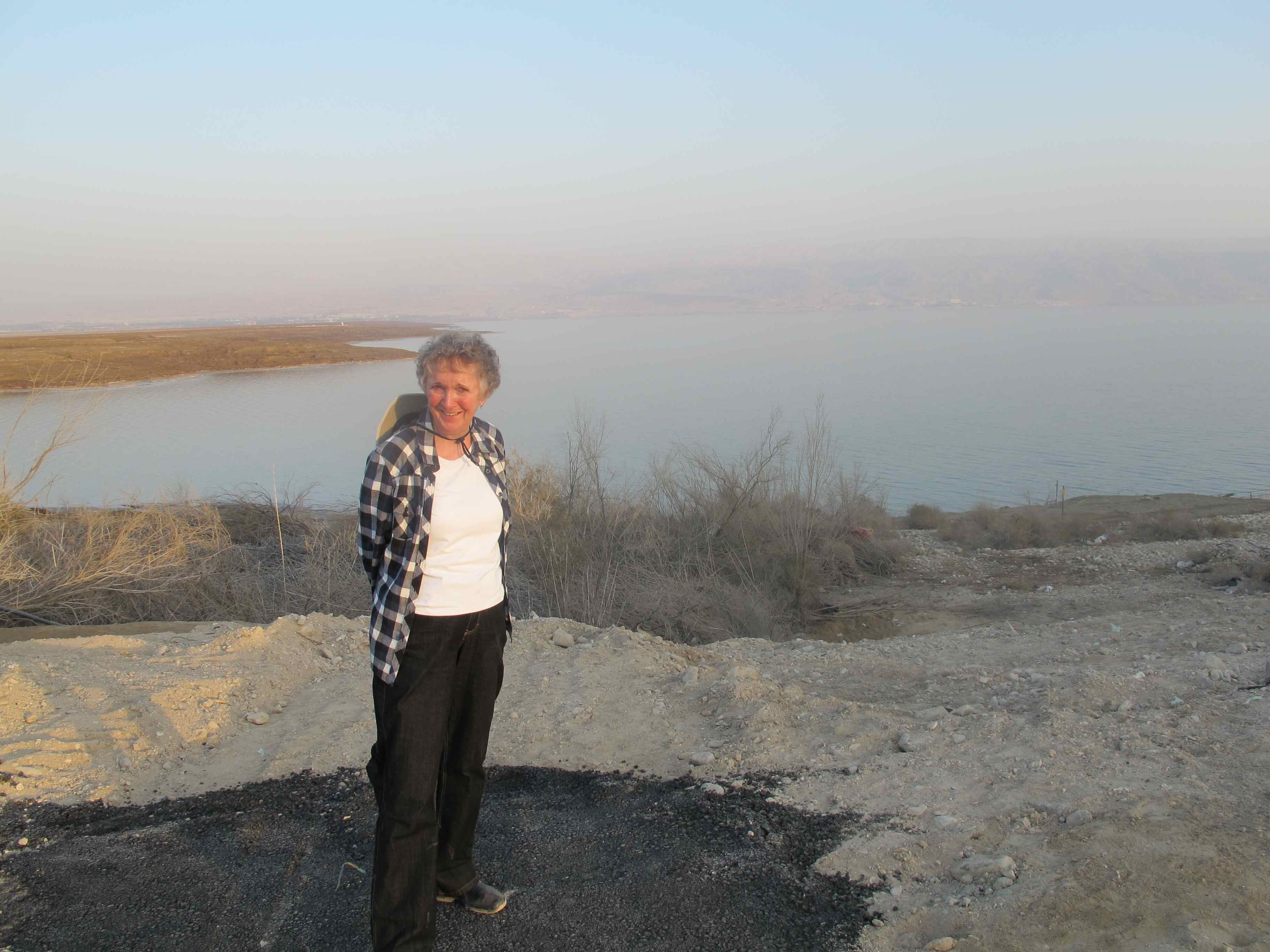
Afterwards, we made for the Dead Sea to see if it was really dead. It was. Some of us dipped our feet into it, some plunged in and lived to tell the tale.

Tonight we are in Jerusalem, not far from the Old City. Just finished a meal,

November 8, Going to Carmel

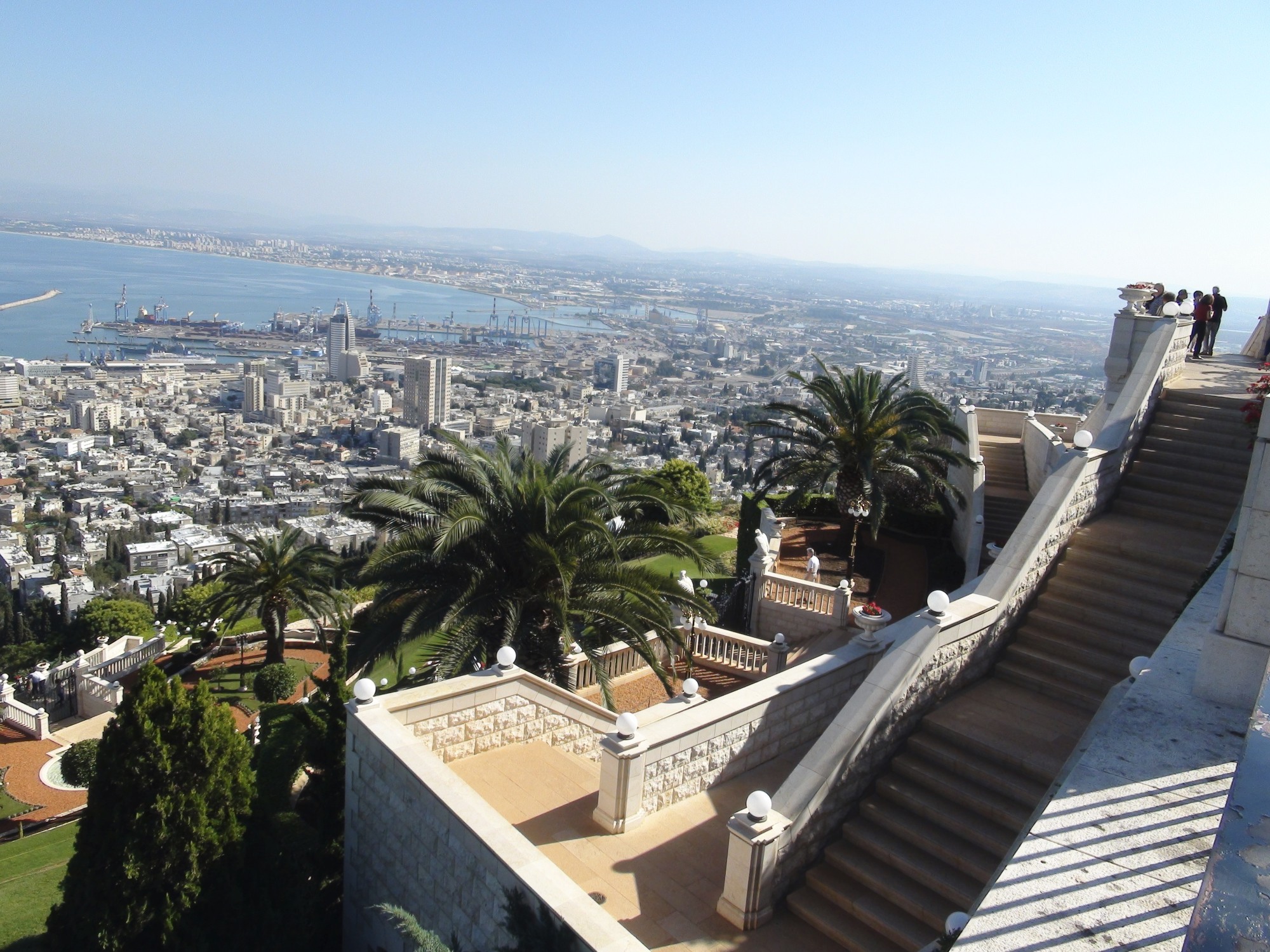
Today we drove from Tiberias to Carmel famous for its connection with the prophet Elijah,  stopping at Haifa, the main seaport of Israel and a place where Arabs and Jews live together peacefully, according to Joseph our guide. Here’s a picture of Haifa from above the B’hai gardens.

We then had Mass at Stella Maris, a Carmelite shrine above the sea. Fr. Carmelo, a Carmelite from Bergamo who spent 55 years in Japan graciously welcomed us. He told  me he was thinking of entering the Passionists but then joined the Carmelites. We taped the homily at Mass. The group sang like the Sistine choir, except for the Agnus Dei, which we have to work on. Maybe we will put my homily up on this blog shortly. I spoke about  Elijah and his relationship  to Jesus.

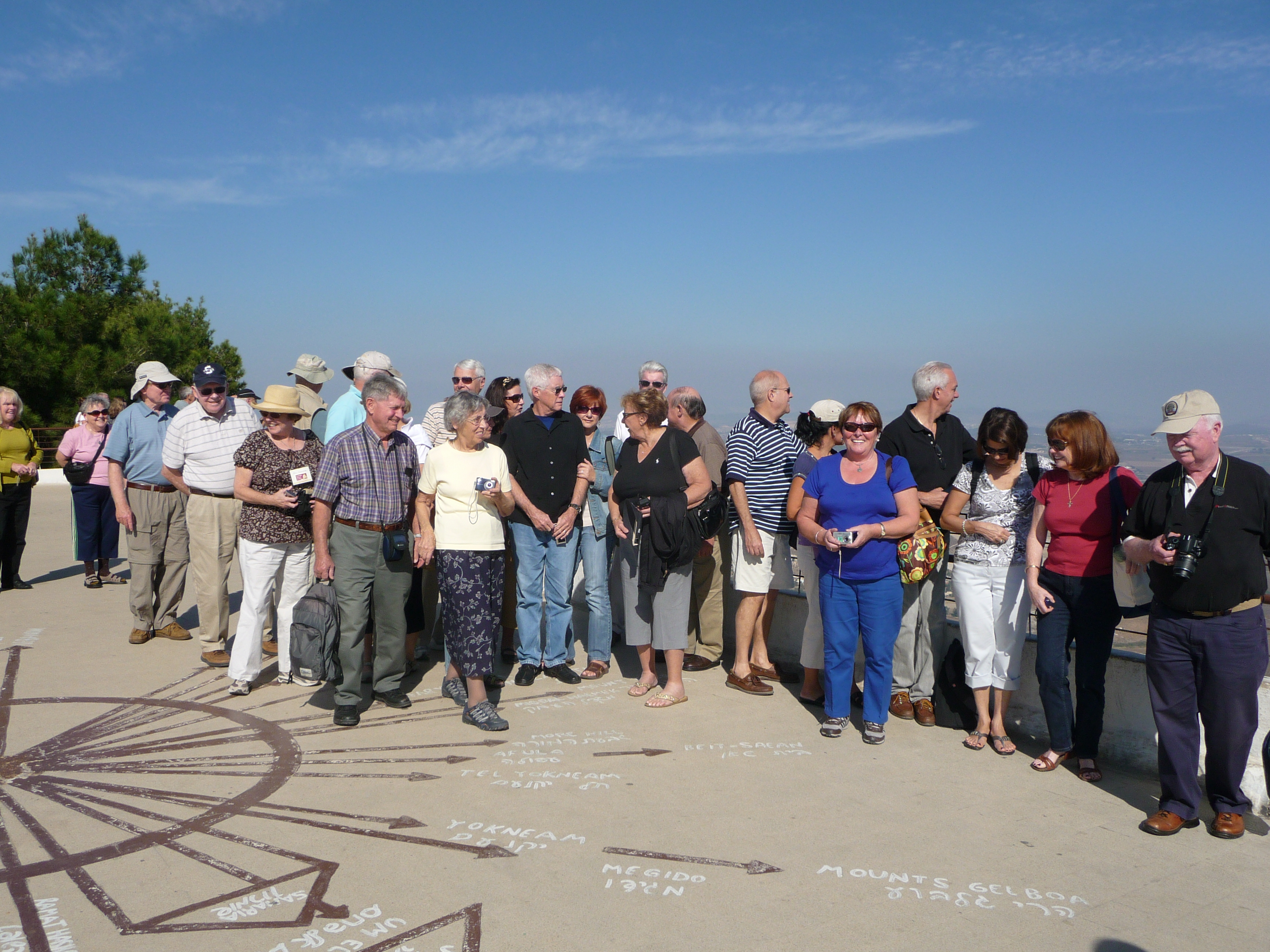
The view from  the top of Mount Carmel facing the Valley of Armageddon, on the the great battlefields of history, is spectacular.

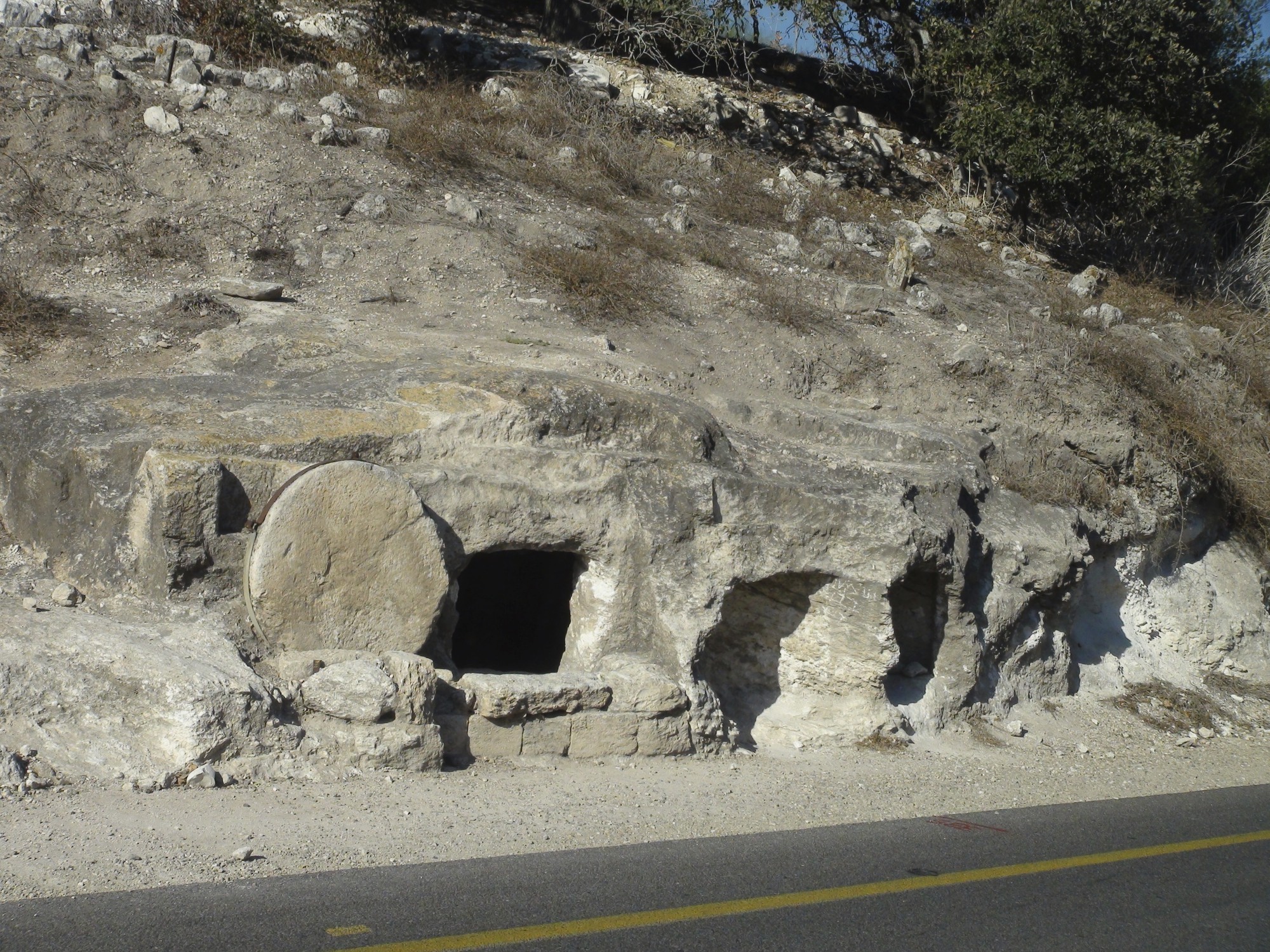
Coming down from the mountain, Joseph pointed out a tomb from the time of Jesus, recently discovered, that shows how burials were conducted then. It was discovered during a recent expansion of a highway near Carmel.

On the way back we passed Mount Tabor, which we will visit later, and Naim, where Jesus raised the son of the widow from the dead. Nearby Elijah raised a widow’s son from the dead also.

Finally, proof that an army marches on its stomach.

Safe and Sound

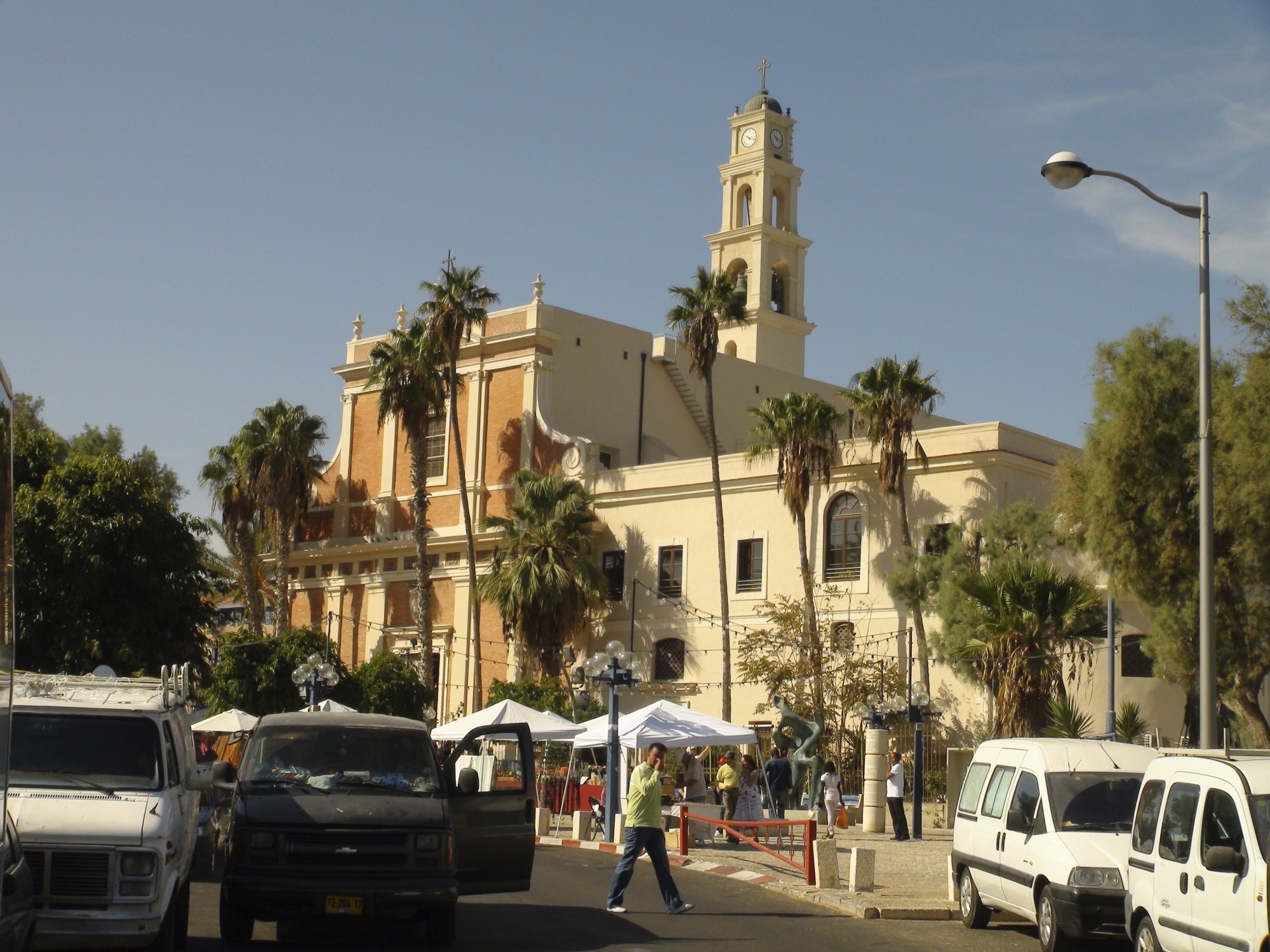
We are safe and sound on the Sea of Galilee, forty two weary pilgrims from St. Mary’s in Colts Neck. After an uneventful flight, (always appreciated) we were met my our guide, Joseph, a Palestinian Christian, and our driver, Eiz a Muslim from Bethany at about 8 AM this morning. Since our hotel rooms would not be ready till later because of the Sabbath, we toured Joppa, where a lovely Mass was taking place in French, and the ruins of Caesaria Maritima, where we saw Pilate’s  inscription and the great stadium and harbor of that important city. We finally made our hotel Gai Breach Hotel, in Tiberias, around 3 PM.

Joseph is a wonderful guide who explained the land and its development around Tel Aviv. He studied archeology at Drew University in Madison, NJ.

Tomorrow we go for Mass to Nazareth, then to Cana. If we have any energy left tomorrow, Joseph says he will take us somewhere else. Christians tourists are all over the area, from Houston, West Virginia, California, and of course New Jersey.

I have the homily tomorrow.

Going to Mount Carmel: the Prophet Elijah

The Bible Today, edited by Fr. Donald Senior, CP, is always worth reading, The current issue has some fine articles about Messianism written by top scripture scholars. “You are the Messiah, the Son of the Living God,” Peter says at Caesarea Philippi, when Jesus asks him who people say he is.  We may forget that Jesus was not born Jesus Christ; the appellation “Christ” meaning “Messiah” was added later to his name by his followers. Peter wasn’t alone in this declaration: “We have found the Messiah (which means Anointed,” his brother Andrews says. (Jn 1,41)

Jesus came into a Jewish world expecting a Messiah, but what kind of Messiah were they hoping for? Some Jews of the time expected a royal Messiah, the Son of King David. You see that expectation in the Gospel of Matthew which begins by tracing the human origins of Jesus back to David. “An account of the genealogy of Jesus the Messiah, the Son of David and Son of Abraham.”

Hope for a Messiah like the warrior King David who would free the land of Israel from its oppressors grew stronger among the Jews after the Roman occupation of Palestine by the Roman general Pompey in 63 BC. It can be seen in some of the Essene writings discovered from Qumran in recent times.

The Gospel of Matthew  indicates that ordinary people too were hoping for a kingly messiah at the time of Jesus. “Can this be the son of David,” the crowd says after he cured a man who could not see or speak. (Mt 12,23) “Hosanna to the son of David,” the crowd says as he enters Jerusalem on Palm Sunday. (Mt 21,9) That causes the leaders in Jerusalem to become angry, because a claim like that could fire revolution and they feared what would happen because of it. (Mt 21.15)

Jesus never claims to be a political revolutionary, however.  He refuses to fit neatly into that kind of messianic expectation. He will not lead an uprising against the Romans. He’s not John the Baptist come back from the dead. “Jesus is not confined to playing an already fixed role–that of Messiah– but he confers, on the notions of Messiah and salvation, a fullness which could not have been imagined in advance.” (Pontifical Biblical Commission)

If we ask what messianic expectation of his time Jesus comes closest to, we might find it in the hope for a prophetic messiah like Elijah.

Like Elijah, he will speak the truth against the powerful, he will help the poor, he will suffer persecution; he will raise the dead.

Our visit on November 8th to Mount Carmel, long associated with Elijah, will help us place Jesus in the context of his time.

Go, Tell It to the Mountains

Mountains were important for the ancient people of the Holy Land who lived at a time when maps were unreliable and directions from Google unavailable. The businesslike system of Roman roads didn’t reach everywhere. Going to distant places wasn’t easy, and so with no one to guide you, often the best you could do was to climb to high ground and get your bearings.

No wonder great mountains were considered sacred places. You could see far and wide from them. Yet, more important, mountains were also places for spiritual vision. The Jews knew that God had spoken to Moses on Mount Sinai and others experienced God on mountains too.

As a new Moses, Jesus taught on the Mount of Beatitudes, according to Matthew’s gospel.  (Mt 5-7) He called his disciples and after his resurrection sent them out to the whole world from a mountain in Galilee. (Mk 3,13; Lk 6,12, Mt 28,16)  He often prayed and reflected on a high place.(Lk 6,12)  As he set off for Jerusalem, he took his disciples up a high mountain and revealed his glory to prepare for the difficult journey that would lead to his sufferings and death. (Mt 17; Mk 9; Lk 9,28)

Mountains were places for making decisions and facing dangers. Early in his ministry, the devil tempted Jesus on a high mountain.(Mt 4,8) On the Mount of Olives as his disciples admired the beautiful buildings of the temple in Jerusalem, Jesus warned his followers that what they saw would be completely destroyed and wars and earthquakes and persecutions were coming besides. (Mk 13,3)  From that same mountain, as looked over at the moonlit city the night before he died, Jesus could see his own approaching death.

Mount Carmel: November 8th

We’re going to some of these holy mountains on our pilgrimage to the Holy Land this November. November 8th we will visit  Mount Carmel, where the Prophet Elijah, to whom Jesus is often compared in the gospels, communed with God and faced the cunning King Ahab, Queen Jezebel and the priests of Baal.

As Jesus preached and performed miracles, he reminded many Jews of the great prophet who worked mighty deeds and challenged the powerful.   Like Elijah, who was hounded by powerful leaders, Jesus was opposed by the powerful of his time. Was he the messenger of God’s coming kingdom?

This majestic mountain, set so prominently by the sea, was a place of worship for the  ancient Phoenicians, the Egyptians before the Jews and the Romans revered it as a holy place.

Mount of the Beatitudes: November 9th

The beautiful eight- sided church on the hillside outside the ruins of Capernaum, which we will visit, recalls the eight beatitudes summarizing the teaching of Jesus. “When Jesus saw the crowds he went up the mountain, and after he sat down, his disciples came to him. Then he taught them and began to speak…” (Mt 5, 1) His teaching, about prayer, forgiveness, reliance of God, patience, generosity, make his followers the salt of the earth and the light of the world. The “Sermon on the Mount” is found in chapters 5-7 of Matthew’s gospel.

Mount Tabor:November 10

None of the evangelists name the mountain where Jesus was transfigured, but Christian tradition gradually designated Mount Tabor, seven miles from Nazareth and close to other places where he ministered.  By the 5th century Christian scholars like St. Jerome had settled on the site.

From Tabor, rising like a great globe 1500 feet from the plains of Jezreel, you can see to the northeast Mount Hermon, Nazareth and the mountains that hide the Sea of Galilee To the southeast is the depression where the Jordan River winds its way to the Dead Sea. Mount Nebo, where Moses saw the Promised Land before his death, was there. Branching off the road along the Jordan River was the road to Jerusalem. As Jesus and his disciples stood on Tabor, the world they knew lay before them.

“This is my beloved Son, listen to him, ”  God says of Jesus, and his clothes become a dazzling white, anticipating his resurrection.  “It is good to be here,” the disciples say. In a transitory way, the mystery of the Transfiguration anticipates God’s promised kingdom, which comes through Jesus.

St. Luke in his gospel says that Jesus and his disciples went up the mountain of the transfiguration to pray. Painful and hard as the journey ahead will be, it will end in glory for them and for the whole world..

The Mount of Olives: November 13th

The Mount of Olives, overlooking the ancient eastern walls of Jerusalem, hold precious memories of  Jesus and his time in the city, especially the memory of his death and resurrection.  We’ll visit the Garden of Gethsemani on the lower slopes of the mountain, where he prayed and was arrested on Holy Thursday evening.

During the time of feasts, when the city was over-crowded, the Mount of Olives provided shelter for the overflow of pilgrims who came to the Holy City. The road leading to Bethany, where Jesus stayed with the family of Lazarus, winds over the mountain through the olive groves that still grow there.

“When he was sitting on the Mount of Olives, opposite the temple,” Jesus spoke of the destruction of the temple and various catastrophes that would mark “the birth pangs” of a new age. (Mk 13,3 ff)  According to the Acts of the Apostles, Jesus ascended into heaven from the Mount of Olives. (Acts 1,12)

In the Byzantine period, the Mount of Olives was a favorite place for Christian religious and pilgrims to stay while visiting the Holy Land.

Nov 6 Tel Aviv to Tiberias on the Sea of Galilee

The drive from the airport to Tiberias is about two hours. Israel and the occupied territories are about the size of New Jersey, so our trips to different sites will not be too long.

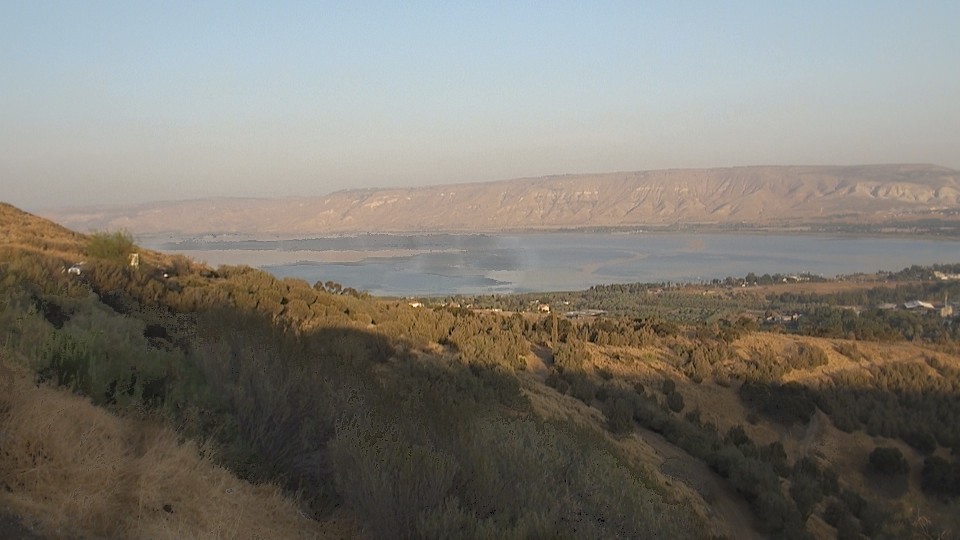
This is the land of Jesus and we’re going first to where he was raised and began his mission: Galilee. In the scriptures he’s called a Galilean, from Nazareth. Our hotel is in Tiberias on the Sea of Galilee, where we will be staying for four days. It’s not too far from Nazareth and Capernaum and other Galilean towns mentioned in the New Testament.

On a map of 1st century Palestine you can see where these places were.

Our official guide will tell us a great deal about Tiberias and the surrounding area, but let me say something about the city where we will be staying.  Today it’s a Jewish city of modern resorts, hotels and spas, but it’s also one of Judaism’s holy cities. Let’s look at it at the time of Jesus.

Herod Antipas

It was built by Herod Antipas,  Tetrarch of Galilee, around the year 20 AD. He made the city his capital and  named it after his patron, the Roman Emperor Tiberius.

Herod Antipas (4 BC-39 AD) is mentioned a number of times in the New Testament. Jesus called him “that Fox.”  He ordered John the Baptist beheaded and later wondered if Jesus might be John come back from the dead.

Pontius Pilate sent Jesus to Herod before sentencing him to death, but Jesus didn’t say a word to him. One other interesting connection to Herod: Johanna, wife of Herod’s steward Cusa, was a follower of Jesus who stood with Mary and the other women at his cross.

Like his father, Herod the Great, Herod Antipas loved to build, and his splendid Greco-Roman city of Tiberias arose from 20 and 27 AD, while Jesus lived in Nazareth. It had a Roman gate, stadium, spacious squares with marble statues,  a grand palace with a golden roof and a large synagogue. To pay for it, Herod relied on his tax-collectors in the cities and towns in his district–places like Capernaum and Nazareth– to squeeze the fishermen and farmers for whatever they could get.

The ruins of Herod’s city lie south of the present city of Tiberias.

Talmudic Judaism

After the destruction of Jerusalem and its temple by the Romans in 70 AD,  pharisees and scribes from the city flocked to Tiberias and made it a base for reconstituting Judaism. Instead of the temple, they made the synagogue the center of Jewish life and worship. Tiberias itself became the site of over 12 synagogues and an important place for Jewish learning.  A rabbinic school established in the city eventually produced the Palestinian Talmud, a written collection of rabbinic teachings on Jewish laws and traditions, around the beginning of the 4th century. Jewish historians describe the early centuries after the destruction of Jerusalem as the Time of Talmudic Judaism.

The Gospel of Matthew

Some scholars say the Gospel of Matthew, the most contentious and polemical of the gospels, may have been written near Tiberias around the year 90 AD. (Other places they suggest are Antioch in Syria and Sepphoris, not too far from Nazareth)  The gospel certainly reflects the struggles between the Jewish authorities in Tiberias and the Jewish Christians of Galilee over the future of Judaism. The sharp critique of the scribes and pharisees in the 23rd chapter of Matthew is an example of the contentious spirit that must have existed on both sides.

It would be good to keep Matthew’s gospel in hand as we travel around Galilee.

Peter’s confession at Caesaria Philippi that Jesus is “the Christ, the Son of the Living God”, the highpoint of the Matthew’s gospel, makes a claim that the Jewish authorities from Tiberias would fiercely dispute.  After all, Jesus came from nearby, inconspicuous Nazareth where his own neighbors rejected him.  Did he really rise from the dead? Rumors were that his disciples stole his body from the tomb. Perhaps he resembled Elijah, or John the Baptist, or one of the prophets, but he could be a false prophet too.

The Jewish authorities would also question the credentials of the chief followers of Jesus–  uneducated fishermen and unpopular tax-collectors. Could they be authentic teachers in Israel?

Modern scriptural studies point out the real life situations that influenced the creation of our gospels. They didn’t drop down from heaven, they came from people struggling over the questions Jesus asked Peter: “Who do people say that I am?” “Who do you say that I am?” They were written to answer his critics then, and we hear these old disputes even now.

For example, Matthew’s gospel speaks to questions about the origins of Jesus, born of a virgin and conceived through the power of the Holy Spirit.  Matthew’s Jesus speaks to the crowds from a mountain, like Moses, not in a synagogue like the Pharisees. The gospel is filled with Old Testament references backing up his claims. Matthew’s gospel  challenges the story that after his resurrection his body was stolen by his own disciples. Matthew takes on the task to disprove that story.

Finally, Peter, the fisherman, and Matthew, the tax-collector are star witnesses of Matthew’s gospel. “Flesh and blood” hasn’t revealed this to them, but the Father in heaven.

Did the Christians Lose?

I think the followers of Jesus lost the battle with the new Jewish establishment in Galilee at the end of the 1st century, and many moved on to other places. Only some  remained in Galilee. The final words of Jesus to his eleven disciples in Matthew’s gospel seem to indicate a call to other places.

“The eleven disciples went to Galilee, to the mountain to which Jesus had ordered them.  When they saw him they worshipped, but they doubted. Then Jesus approached and said to them, “All power in heaven and on earth has been given to me. Go, therefore, and make disciples of all nations, baptizing them in the name of the Father, and of the Son, and of the Holy Spirit, teaching them to observe all that I have commanded you. And behold, I am with you always, until the end of the age.”  Mt 28, 16-20

Fourth Century Christian Expansion

The Christian presence in the Holy Land increased when Constantine gained control of the Roman empire in the 4th century and favored the Christian Church. As Christians came to the Holy Land and built churches and shrines over the places where tradition said Jesus lived and ministered,  Galilee remained a Jewish stronghold.

When Muslims conquered the Holy Land in the 7th century, Christians and Jews alike came under their rule. Because of harsh Muslim rule under the Seljuk Turks and their destruction of the great Christian shrine of the Holy Sepulcher in Jerusalem in the 11th century,  Crusaders from Europe invaded Palestine and re-established a Christian presence again. Evidence of Crusader churches and fortresses can be seen today.

Muslims, Jews and Christians

Muslims regained control of the Holy Land in the 13th century and remained in power  till the 20th century. Under Ottoman rule, Jews were treated more favorably than Christians, but as the fortunes of the Ottoman Empire declined so did the economy of Palestine. By the 19th century , Jewish and Christian and Muslims saw a land that was poor and neglected.

As the nation states formed in Europe in the 17th century, persecutions of the Jews increased and Jewish aspirations to return to their ancestral lands strengthened. By the 19th century Jews from Russia and Poland were settling again in parts of Palestine, in Jerusalem as well as in Galilee. After the holocaust, the Jewish population dramatically increased.

The Christian presence today is small and increasingly limited to shrines at Christian holy places, sustained especially by religious like the Franciscans.

Tiberias Then and Now

An English visitor to Tiberias towards the end of the 19th century offers an interesting glimpse of this Jewish city at the time:

“The Jews are very numerous in Tiberias,  it and Safed being, after Jerusalem and Hebron, the two holiest towns; for the Messiah is one day, they believe, to rise from the waters of the lake and land at Tiberias, and Safed is to be the seat of his throne.

“Prayer must be repeated at Tiberias at least twice a week, to keep the world from being destroyed. The worship in the synagogue seems to be in some respects peculiar, since the congregation seek to intensify different parts of the service by mimetic enforcement of its words.  Thus, when the Rabbi recites the passage, “Praise the Lord with the sound of the trumpet,” they imitate the sound of the trumpet through their closed fists; when a tempest is mentioned , they puff and blow to represent a storm; and when the cries of the righteous in distress are spoken of in the Lesson, they all set up a loud screaming.

“The Israelites of Tiberias are chiefly from Russian Poland, and do not speak German. Poor, thin, and filthy, they are certainly far from attractive;  but the women are neatly dressed, many of them in white and look much better than the men. “  Cunningham Geikie, The Holy Land and the Bible,Vol 2, New York, 1890 p 543

Tiberias today little resembles the city the visitor describes then.
Holy Land Pilgrimage

Itinerary: November 5-16

Pilgrims in the Holy Land

Over the centuries, countless Christian pilgrims have gone to the Holy Land. Among the first were women like Helena, the mother of the Emperor Constantine, who is largely responsible for building Christian shrines over places like the Tomb of Jesus, Calvary and Bethlehem in the early 4th century AD.

A nun from Gaul, Egeria, visited the holy places later in the 4th century and left a wonderful account of her visit. Here’s what she did at every place:

“It was always our practice when we managed to reach one of the places we wanted to see to have first a prayer, then a reading from the scripture, then to say an appropriate psalm and another prayer. By God’s grace we always followed this practice whenever we were able to reach a place we wanted to see.”(9)

We are going to do that too. At most of the places, we will read from the scriptures associated with the place and celebrate Mass. Though our trip is primarily a pilgrimage, it’s also an opportunity to broaden our understanding of this part of the world and its place in our history.

On Egeria and other early women pilgrims: http://www.umilta.net/egeria.html

http://www.ccel.org/m/mcclure/etheria/etheria.htm

Where are we going?

Here’s an outline of the places we’re going to and the scriptural readings at Mass. I’ll provide some material beforehand and as we go along. We’ll have a professional guide with us who is certified by the State of Israel.

The guidebook I follow is The Holy Land: An Oxford Archaeological Guide, by Jerome Murphy-O’Connor, OP  NY 2008

The Gospel of Matthew is an important gospel to have as a reference in Galilee. The Gospel of John is important for Jerusalem.

Nov. 5 Newark departure

Nov. 6 Tel Aviv to Tiberias on the Sea of Galilee, where we will be staying for four days.

The drive from the airport to Tiberias is about two hours. Israel and the occupied territories are about the size of New Jersey, so most of us should feel right at home. Our trips to different sites won’t be too long in Galilee– less traffic than the Garden State Parkway.

Nov. 7 Tiberias to Cana. (Mass) Is 62,1-5   Jn 2,1-12.  John’s gospel also recalls a Jewish ruler came to Jesus at Cana asking him to cure his son. (Jn 4,46-54)

Then to Nazareth, now a city of 70,000 people, mostly Muslim, and the capital of Galilee.  At the time of Jesus it was an insignificant village of about 500.

Nov. 8 Mt Carmel, where the prophet Elijah, who is closely connected to Jesus,  defeated the priests of Baal and King Achaz and his Queen Jezebel. In the ancient world, mountains like Mt. Nebo and Mt. Tabor, were places to get your bearings. (Mass) Sirach 48,1-15 Mt. 16,13-20  From Mt. Carmel to a baptismal site on the River Jordan near the Sea of Galilee.

Nov. 9 Sea of Galilee sites where Jesus lived, taught, gathered disciples, left a memory. Mt. of Beatitudes, Primacy site along Sea of Galilee, (Mass) Jn 21,1-19  Acts 5, 27-32,40-41 Tabgha, Capernaum, Peter’s house. Synagogue.

Nov. 10 Tiberias to Mt. Tabor, where Jesus was transfigured. (Mass) 2 Pt 1,16-19  Mt 17,1-9) Jericho, Qumran, Jerusalem.

Nov. 11 Bethlehem (Mass: Shepherd’s Cave) Luke 2,1-2 Tit 2,11-14

Dead Sea Scrolls: Mystery Solved? Cf: National Geographic Special, Robert Cargill, 60 years ago.

http://video.nationalgeographic.com/video/index.html

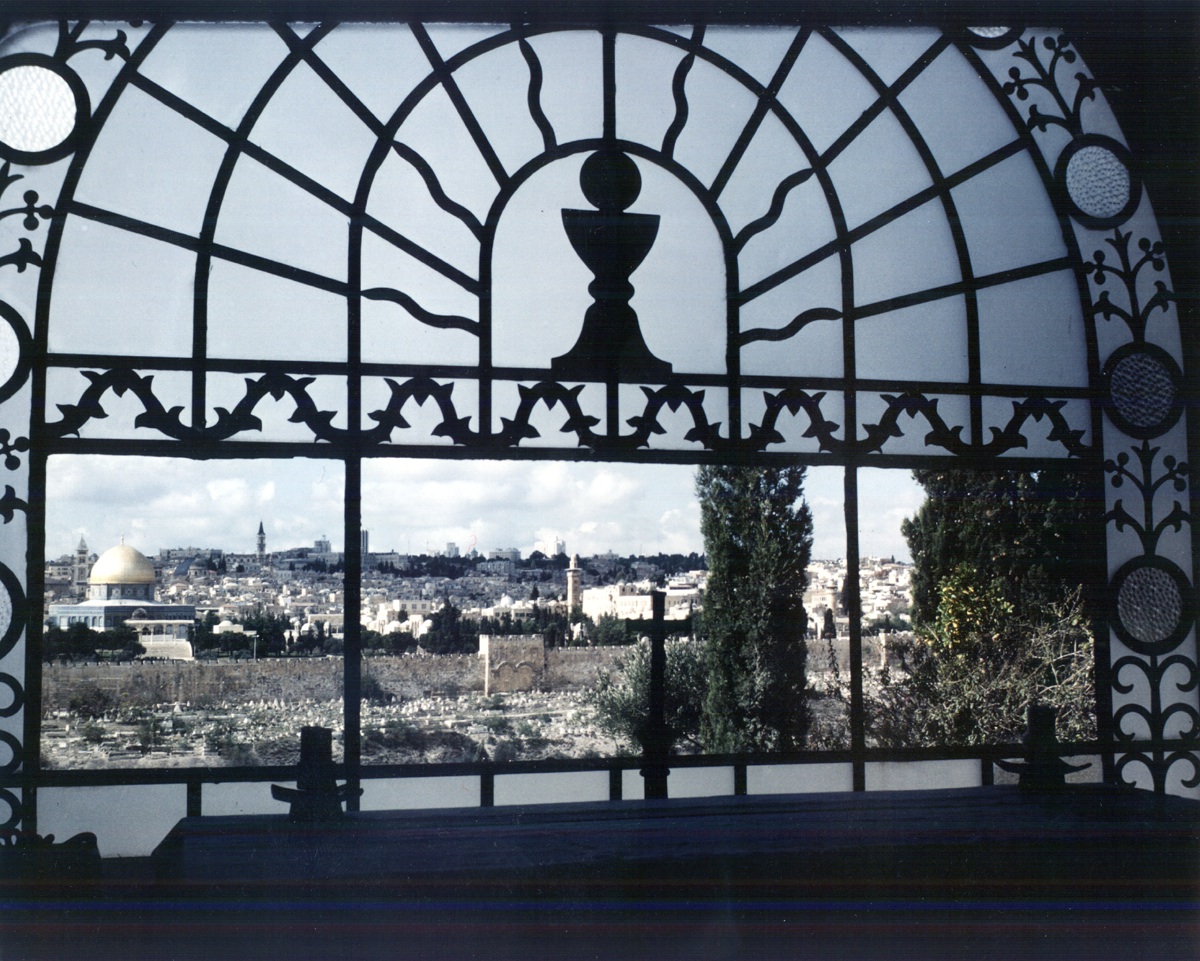
Nov. 12 Jerusalem, Old City  Western Wall, Temple Mount, St. Stephen’s Gate, Upper Room (Mass) Mk 14,12-16.22-26  Heb 9,11-15   Jesus is the new Temple.

Nov. 13 Mount of Olives. Peter in Gallicantu (Mass)   Jn 18,15-27 Is 50,4-9a

Nov. 14 Via Dolorosa, Church of Holy Sepulcher (Mass)

Nov. 15 Return to Newark

The Political Situation

We are going to the Holy Land as negotiations between the Israeli and the Palestinians have reached a critical point. You may find these background stories from the website of the  BBC  helpful to understand the current situation:

Obstacles to Peace: Jerusalem

Obstacles to Peace: Borders and Settlements

Obstacles to Peace: Refugees

Obstacles to Peace: Water

http://www.bbc.co.uk/news/world-middle-east-1110179

There’s an important Synod on the Middle East involving Catholic and other religious figures that convened at Rome now to discuss the situation of Christians in that area.  You can follow it at the Vatican Radio site: http://www.radiovaticana.org/en1/index.asp