Tag Archives: europe

Dedication of the Churches of Sts. Peter and Paul

IMG_1302

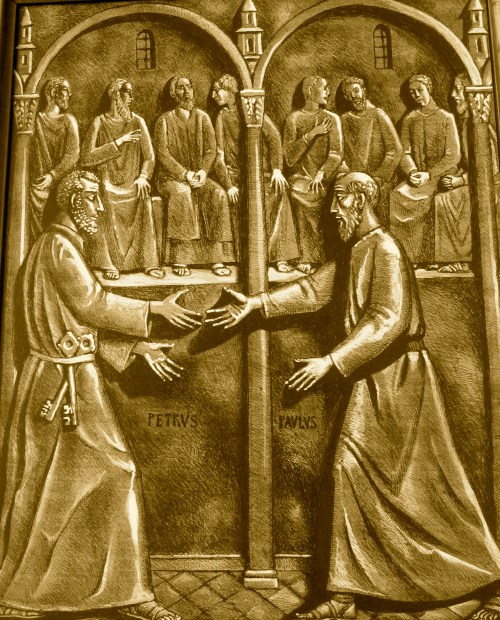
On November 18th, we honor the great apostles, Peter and Paul, remembering the dedication of the two ancient churches built over their graves. Peter is honored in the Vatican Basilica of St. Peter; Paul is honored in the Basilica of St. Paul, outside the Aurelian Walls along the Via Ostiense. The two apostles are founders and teachers of the Roman church.

Constantine built churches over the apostles’ graves in the middle of the 4th century. Besides honoring the apostles Peter and Paul, the churches were part of a wider plan of prayer, instruction and pilgrimage still seen in the Holy Year pilgrimages to Rome today. An early example of evangelization and catechesis.

From earliest times pilgrims followed a path from one church to the other, visiting a number of other Christian shrines – St. Agnes and St. Lawrence, for example–on their way. A later pilgrim map based on that ancient pilgrimage journey offers an example.
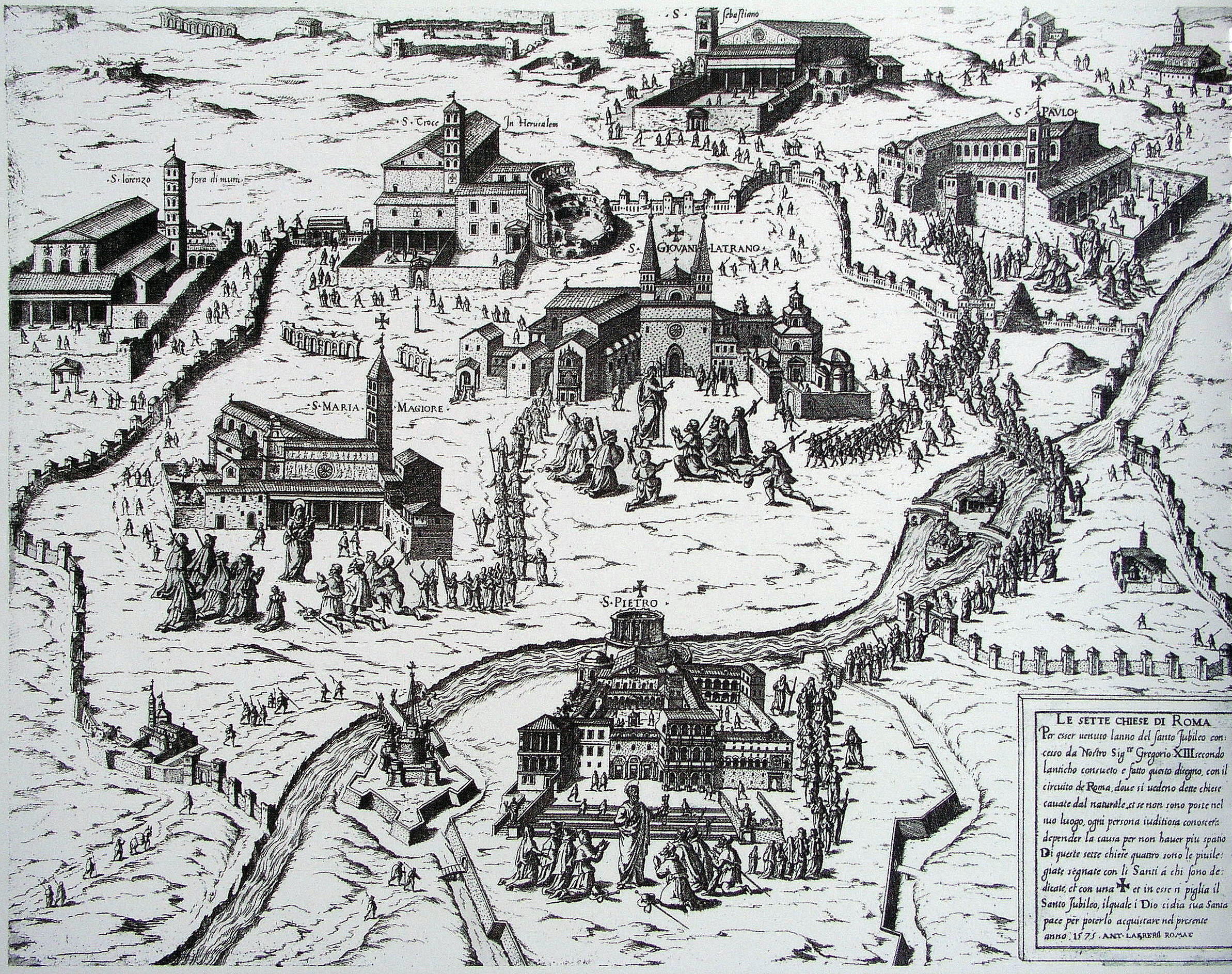
Pilgrim Map, 17th century, Wikipedia Commons

Peter was crucified on the Vatican Hill in 64 near the obelisk not far from the circus of the emperors Caligula and Nero and was butried nearby.  Constantine erected a basilica over his burial site in 326, while Sylvester was pope. Later in 1626 the present basilica replaced Constantine’s church. It’s in the process of reconstruction in the illustration above. Recent excavations have confirmed Peter’s burial place under the papal altar of this church.

Paul, tradition says, was beheaded on the Ostian Way, outside the ancient city walls, in 67. Constantine built a shrine church over the gave in 325; it was enlarged by Theodosius I in386. The church was rebuilt after a fire in 1823, according to its original measurements. The apostle’s grave lies before the main altar of the church.

Defend your Church, O Lord, by the protection of the holy Apostles, that, as she received from them. the beginnings of her knowledge of things divine, so through them she may receive, even to the end of the world, an increase in heavenly grace. Through our Lord Jesus Christ, your Son. (Collect for the feast)
St. Peter’s Basilica, Rome
St.Paul outside the wall, Rome

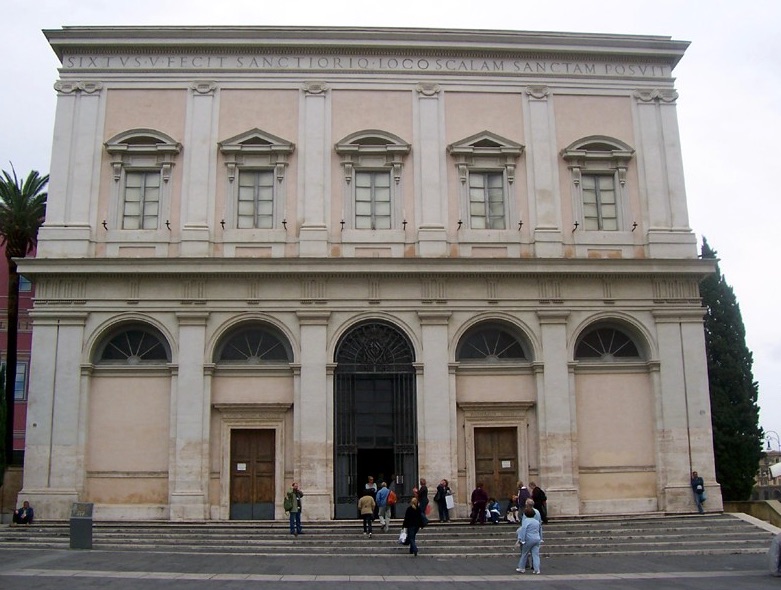
The Scala Sancta, The Holy Stairs

We’re celebrating the Dedication of the Lateran Basilica today. The Lateran Basilica was the parish church of Rome and the actual residence of the popes for many centuries. A magnificent baptistery was an essential part of Constantine’s church, dedicated in 325.  As the reading from Ezekiel for the feast of its dedication indicates the church was a place of baptism for Rome’s Christians. Waters from this church – and all other churches, in fact–  bless the world. 

The Lateran Basilica has been an important destination for pilgrims to the Holy City since the 4th century.  It was on the route early pilgrims took to pray at the shrines of martyrs buried on Rome’s outskirts, beginning with the place where Peter was buried, the Vatican Basilica. The pilgrim route ended in the church where the Apostle Paul was honored on the other side of Rome. 

Pilgrimage to Rome’s shrines began shortly after Constantine brought freedom to the Christian church in 315. We know some of them. The popular shrine church of St. Lawerence, north of the Lateran Basilica, was part of the pilgrim route.  Nearby Helena, the mother of Constantine, enshrined relics of the Cross from the hill of Calvary in the great hall of her residence. 

Pilgrims came to Rome in great numbers to celebrate their faith and visit the Roman martyrs’ shrines. In the late 4th century, Pope Damasus placed about 40 inscriptions in Rome’s shrines, guiding pilgrims on their journey. St. Jerome was among the early pilgrims. He found faith and was drawn to being baptized on his journey.

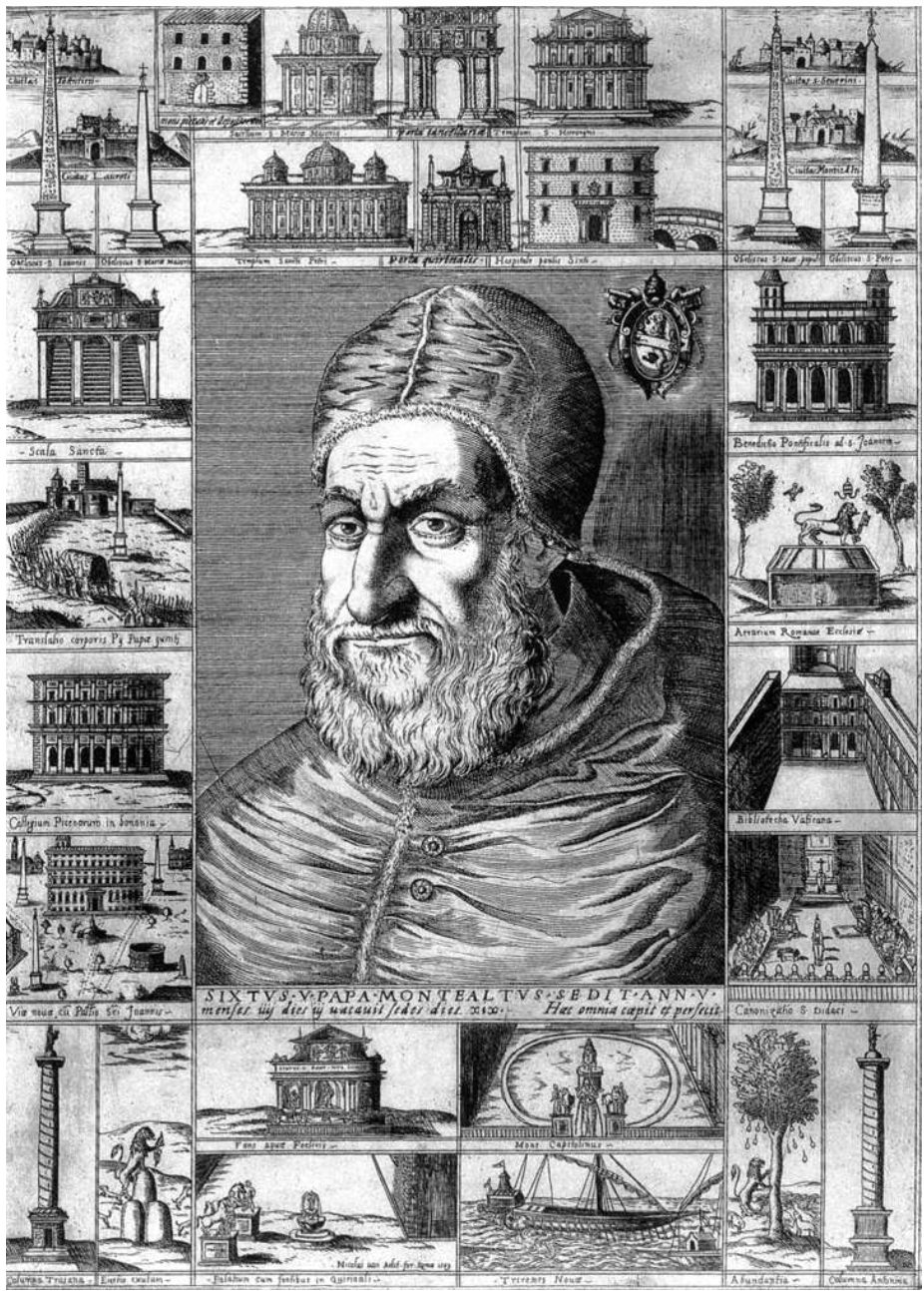
Early sources say that Constantine built a palace for the pope and a royal staircase leading to the papal quarters and his personal chapel at the Lateran site. The chapel was known as the Sancta Sanctorum, the Holy of Holies. An earthquake in the 1277 leveled the palace and chapel with its many relics.

 The chapel was rebuilt in magnificent style by Pope Nicholas III in the 13th century. Pope Sixtus V demolished most of the papal buildings in the 16th century but left the chapel alone in a free standing building, reached by a staircase of 28 steps. He claimed the stairs were from Pilate’s palace in Jerusalem on which Jesus walked to be judged. Historians and archeologists today say the stairs may be the stairs from the pope’s residence built by Constantine.

The site, known today as the Scala Sancta, the Holy Stairs, was restored in 2019. It is a UNESCO site. Pilgrims traditionally ascend the stairs on their knees.  Pope Pius IX entrusted the shrine to the Passionists in 1853. 

Two friends of mine ascended the stairs recently. Here they are.