Tag Archives: docetism

Image of the Invisible God: 1 John 3:22-4:6

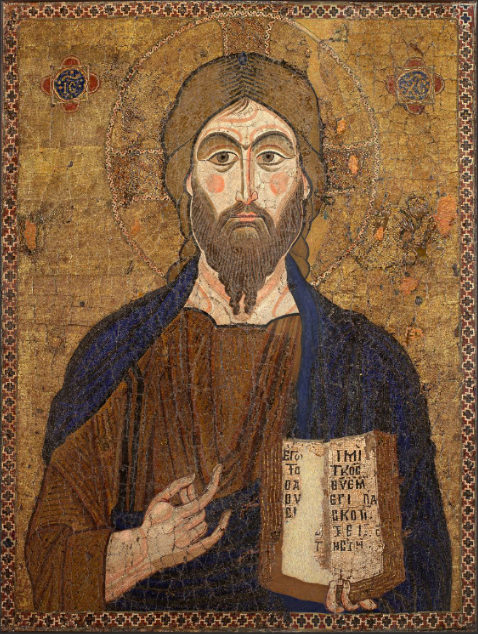
There’s always a temptation to make God distant and abstract. After all, God dwells “in light inaccessible,” the scriptures say. God is beyond the eyes of our mind and body.But God reveals himself in Jesus Christ, the “image of the invisible God.” The first followers of Jesus saw him with their own eyes and proclaimed that “the grace and kindness of our God has appeared” in him.

The First Letter of John, written as that first generation of  eyewitnesses to the gospel was passing on, tells a new generation (certainly us too) to believe in Jesus Christ. As eyewitnesses pass on and years go by, we’re tempted to forget or minimize his place in our world and in our lives.

John’s letter warns about the dangers of docetism and gnosticism, two heresies supporting that temptation. A note in the New American Bible describes what these strange sounding heresies are all about:

“The specific heresy described in this letter cannot be identified exactly, but it is a form of docetism or gnosticism; the former doctrine denied the humanity of Christ to insure that his divinity was untainted, and the latter viewed the appearance of Christ as a mere stepping-stone to higher knowledge of God.”

He came “through water and Blood,” John writes. He urges us not to forget the humanity of Jesus Christ, the humble way he became flesh and shared our experience. God comes to us that way too. He was baptized in the waters of the Jordan uniting all nations  journeying to God’s Kingdom. He died and shed his blood for us. Don’t forget the mystery of his death and resurrection.

“God gave us eternal life, and this life is in his Son.”

Love for one another is an essential part of loving God:

Beloved, we love God because
he first loved us. 
If anyone says, “I love God,”
but hates his brother, he is a liar;
for whoever does not love a brother whom he has seen 
cannot love God whom he has not seen. 
This is the commandment we have from him:
Whoever loves God must also love his brother.

Feast of St. John:December 27

John evangelist

The Feast of St. John the Apostle (December 27) follows the birth of Jesus. John followed Jesus and was entrusted by him to care for his mother. In his writings– the 4th gospel and letters– he answers the great question: Who is Jesus, the child born of Mary?

At the beginning of his gospel, he writes: “In the beginning was the Word, and the Word was with God, and the Word became flesh and dwelt among us.” John’s gospel is the earliest gospel read on the Christmas feast.

John was one of the first Jesus called at the Sea of Galilee. He knew where Jesus came from, Nazareth; he knew his family; he accompanied Jesus on his ministry in Galilee and on his journey to Jerusalem. he saw him transfigured in glory on the mountain. John sat beside Jesus at the Last Supper; he went into the Garden of Gethsemane with him, then stood beside his cross with Mary, his mother.

John witnessed Jesus’ death and resurrection. He was close to Jesus’ mother, Mary.

The gospel reading for his feast reminds us that John was a key witness to his resurrection. He saw the empty tomb and recognized Jesus risen from the dead. “‘It is the Lord,’ he said to Peter” on the Lake of Galilee as the Risen Christ appears. (John 21, 7) John, “the disciple whom Jesus loved” had a special relationship with Jesus, human and divine. 

The 1st Letter of John, read during the Christmas season, tells us to know Jesus Christ through his humanity, just as the apostles did. Know the One in his humanity is also the Word of God who is God.

“What was from the beginning, what we have heard, what we have seen with our eyes, what we looked upon and touched with our hands concerns the Word of life —for the life was made visible; we have seen it and testify to it and proclaim to you the eternal life that was with the Father and was made visible to us—what we have seen and heard we proclaim now to you.” 1 John 1-4

The feasts we celebrate immediately after Christmas Day give meaning to the mystery of the Incarnation. We remember the death of Stephen, John the Apostle, and the Holy Innocents because they reveal the identity and mission of the Child born of Mary. More than just the birth of an infant, in the Christmas feast The Word has become visible and lived among us revealing God’s plan for us and creation.

God, our Father, you have revealed the mysteries of your Word through John the apostle. By prayer and reflection may we come to understand the wisdom he taught. Grant this through our Lord Jesus Christ, who lives and reigns with you and the Holy Spirit,  One God, forever and ever.