Tag Archives: creation

Ecological Conversion

IMG_0943
Today, September 1st, Pope Francis asks Catholics and all people to pray for the care of creation, the subject of his recent encyclical “Laudato Si.” We may need to pray, if recent surveys are right that claim that American Catholics aren’t much interested in the pope’s recent encyclical. That might be true of Catholics elsewhere as well.

There’s an ecological crisis, the pope says in his letter, and we have to do something about it. Some may deny the crisis exists; some may claim it’s exaggerated; some may just throw up their hands thinking it’s too big to deal with. Some may think it can be easily fixed by the eventual play of “market forces.”

For the pope and many today the ecological crisis is real, it endangers the world and it has to be dealt with now. To meet it Francis recently urged Christians to “first rediscover in our own rich spiritual patrimony the deepest motivations for our concern for the care of creation.”

That’s important advice. The first step is not to immerse ourselves in conclusions of science, although the pope in his encyclical obviously respects scientific conclusions. The ecological crisis is not going to be taken care of with a few quick moves, like changing a couple of light bulbs at home. The first step, the pope says, is to undergo an “ecological conversion” guided by our spiritual patrimony.

Caring for creation isn’t going to be an easy task. People of faith are needed who, in the pope’s words, understand that “living our vocation to be protectors of God’s handiwork is essential to a life of virtue; it is not an optional or a secondary aspect of our Christian experience” (Laudato Si, 217).

In his encyclical the pope looks to the scriptures, from Genesis to the books of the New Testament, to provide wisdom for our steps. He looks to the sacraments, especially the Eucharist, as signs that creation itself figures in God’s plan.

An interesting feature in “Laudato Si” is the way Francis turns to the Eastern Church for guidance to ecological conversion, almost as if he recognizes the weakness of western theology and spirituality. A prayer suggested by the Vatican for today’s prayer service is inspired by the prayers of the Eastern Church:

We praise and bless you, O Lord,
for you are the King of all ages,
and through Christ your Son you have made all that is.
In the beginning of the beginning,
you breathed upon the waters of creation,
and filled the earth with life through your vibrant Spirit.
The heavens declare your glory, O Lord,
and the stars of the sky bring light to our darkness.
You spoke, and the earth burst forth in life,
you saw that it was good.
You called forth creation, and enlivened every creature on land and sea.
You made human beings in your image,
and set us over the whole world in all of its wonders.
You gave us share in your dominion,
and called us “to till and to keep” this garden, the work of your hands.
As day gives way to evening, we praise you for your manifold gifts.
May our adoration this night give glory to your name,
so that we may serve you with faithfulness and love.
May our daily care for your creation show reverence for your name,
and reveal your saving power in every creature under heaven.
We make this prayer in the name of Christ your Son,
in the unity of the Holy Spirit, One God forever and ever. Amen.
Day of Prayer for the Care of Creation

OLYMPUS DIGITAL CAMERA
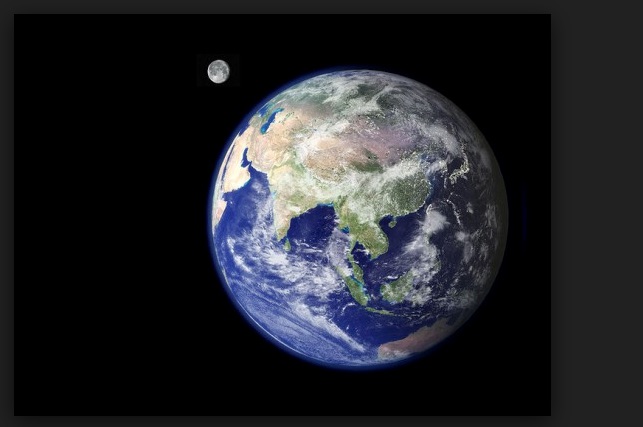
Pope Francis is asking that September 1st be a world day of prayer for the care of creation. The Pontifical Council for Justice and Peace has provided suggestions for a 1 hour prayer service for the day:

Click to access PCJP_WorldDayPrayerCreation2015_PROPOSAL_ENG.pdf

September 1st marks the beginning of the Church Year for the Orthodox Church. Pope Francis quotes from the Orthodox tradition in his encyclical “Laudato Si”
We need a spiritual conversion, Pope Francis wrote to Cardinals Koch and Turkson. ( August 6, 2015)

“As Christians we wish to contribute to resolving the ecological crisis which humanity is presently experiencing. In doing so, we must first rediscover in our own rich spiritual patrimony the deepest motivations for our concern for the care of creation. We need always to keep in mind that, for believers in Jesus Christ, the Word of God who became man for our sake, “the life of the spirit is not dissociated from the body or from nature or from worldly realities, but lived in and with them, in communion with all that surrounds us” (Laudato Si’, 216). The ecological crisis thus summons us to a profound spiritual conversion: Christians are called to “an ecological conversion whereby the effects of their encounter with Jesus Christ become evident in their relationship with the world around them” (ibid., 217). For “living our vocation to be protectors of God’s handiwork is essential to a life of virtue; it is not an optional or a secondary aspect of our Christian experience” (ibid.).

Creation Redeemed


creation
Pope Francis is soon to issue an important encyclical on the environment. Some say that’s none of the church’s business, but creation is the church’s business, In his great treatise “On the Incarnation of the Word ” St. Athanasius says Jesus Christ came to save it.

“The Word of God, incorporeal, incorruptible and immaterial, entered our world. Yet it was not as if he had been remote from it up to that time. For there is no part of the world that was ever without his presence; together with his Father, he continually filled all things and places.

“ Out of his loving-kindness for us he came to us, and we see this in the way he revealed himself openly to us. Taking pity on our weakness, and moved by our corruption, he could not stand aside and see death have the mastery over us; he did not want creation to perish and his Father’s work in fashioning humanity to be in vain. He therefore took to himself a body, no different from our own, for he did not wish simply to be in a body or only to be seen.

“ If he had wanted simply to be seen, he could indeed have taken another, and nobler, body. Instead, he took our body in its reality.”

Jesus Christ, the Word of God, entered into the world of real time and place, Athanasius says.  The world was not a stage he used, to be dismantled and thrown away.  it was a reality he embraced and redeemed. “He is the Word through whom you made the universe; the Savior you sent to  redeem us.” “He became flesh and dwelt among us.”

God’s plan of salvation, then, was not restricted to human beings: “he did not want creation to perish and his Father’s work of fashioning humanity to be in vain.”

The World to Come

There was an evangelist on TV a couple of years ago, Harold Camping, who was predicting the end the world. He calculated from the Bible that the world was going to end on May 21, 2011 at 6 PM. It was going to be an awful, terrifying event–fires, earthquakes; everything was going to be blown up and destroyed.

Harold had no use for any the churches. They were taken over by the devil, he said. Read the bible, hold on to it; it was the only thing that would save you, he said.

I remember signs on the buses and on billboards announcing judgment day. It was surprising how many people were paying attention to him. Harold not only had the date wrong; he also had God’s plan for our world wrong.

Paul’s Letter to the Romans, which we’re reading at Mass today, sees such a different picture. (Romans 8, 18-25) Paul speaks of a glory that will be revealed. The resurrection of Jesus has changed the way we look at our death and also the way we see the future of creation itself.

The destiny of the created world is linked to our destiny. It wont be destroyed. “Creation awaits with eager expectation the revelation of the children of God.” It “groans in labor pains” until that day comes, when there will be a “new heaven and a new earth.”

Just as we hope to share in the resurrection of Jesus, we also hope that creation share in it. We ready ourselves now for the future we’ve been promised by a life of loving and caring, a love and care that should extend to the created world. Loving and caring for creation is so urgently needed today, when it suffers from so much human abuse.

“I look forward to the resurrection of the body and the life of the world to come.” Those words of the creed are so important. I look forward, not in fear but in hope. I look forward to sharing in the glory of the resurrection of Jesus. I look forward to a world to come, when the creation we know now shares in the glory we know then.

Earth Day and Solar Panels

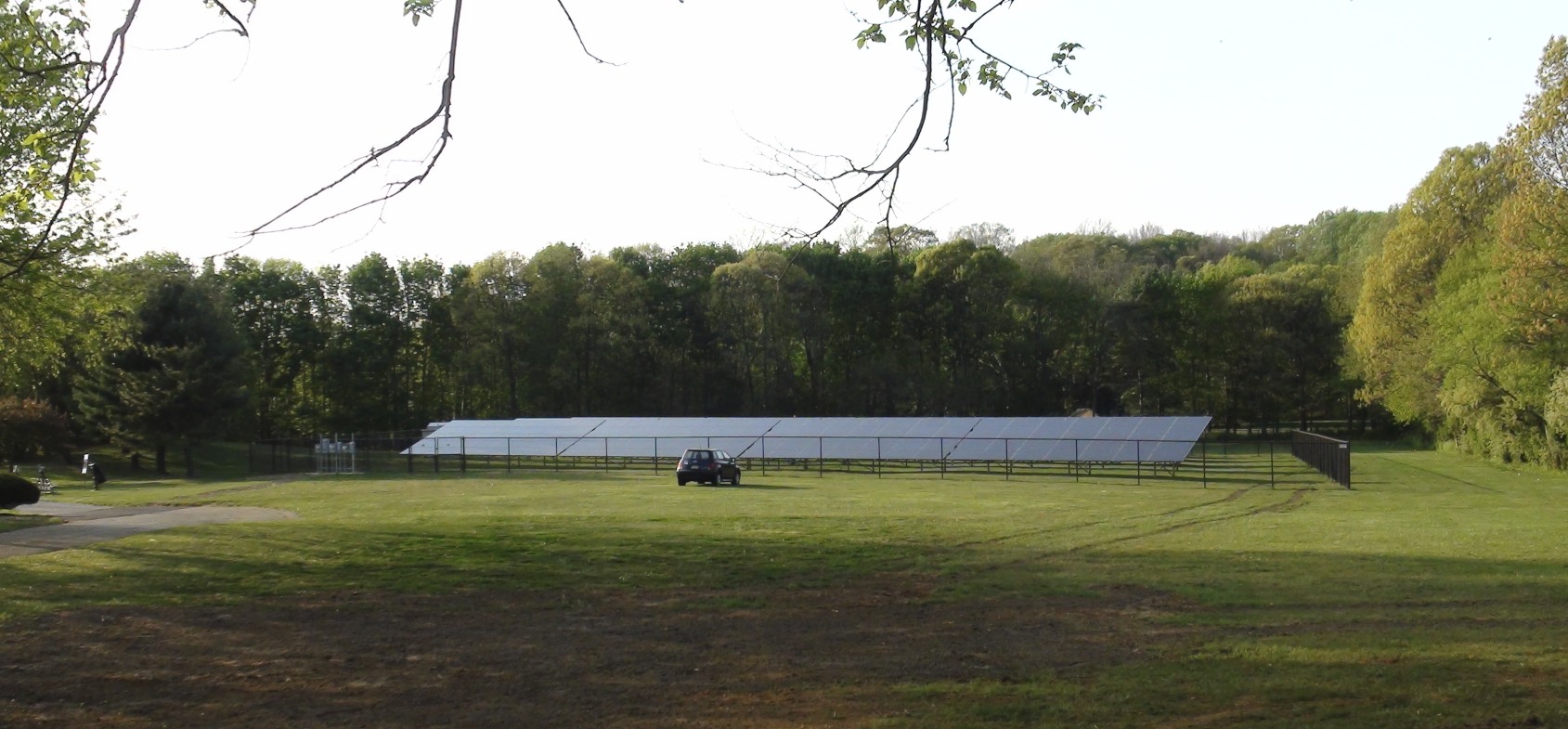
Saturday evening,  April 21, after the 5 PM Mass, the Parish of St. Mary’s in Colts Neck, NJ, dedicated an array of solar panels that will cut their use of energy in the parish complex by 90%.  It’s the first parish in the Trenton Diocese to do it, and one hopes an incentive to others. Congratulations to Fr. Tom Triggs and his lively environmental committee.


I offered these thoughts at two Sunday Masses the next morning:

“Bread from heaven.” How frequently Jesus uses earthly things to speak of the things of heaven. “I am the vine,” “I am the light,” “I am living water.” He calls himself the “son” of the “Father.”

Jesus takes things we know: birds of the air, flowers of the field, seed scattered in the earth, to point to things unknown. The created world reveals secrets of a world beyond here.

Shouldn’t we reverence creation then? If we follow Jesus we will. Yet, as we watch our natural world being plundered, its air and waters polluted, its environment sacrificed for human convenience and pleasure, we know our attitude toward our natural world must change. Human-centered and human-concerned, we lack respect for the non- human.

In the Book of Genesis, human beings are said to be made in the image of God and are given an important relationship to the rest of creation. We’re caretakers of creation; we don’t own it; we care for it for awhile. We have a responsibility for it; it has rights of its own, and we have to use all our ingenuity in its care.

Our understanding of God and Jesus Christ, his Son, also suffers from lack of respect for creation. Taking bread, taking wine, Jesus gave thanks; they’re creation’s ambassadors, instruments of a divine exchange. They enlarge our relationship to God by reminding us that God’s plan includes creation as well as our human family and it embraces even the simplest creative things.

Placing bread and wine on precious plates and in precious cups, we carry them to the altar in church and they bring Jesus to us. Can we begin to learn a greater respect for creation here?

The Glory of God

I was surprised to see Harold Camping at his usual place on television the other night. The rapture didn’t happen May 21st, he explained, because God wanted to alert the world that the end was going to come this October. A caller wondered if we could do anything about helping this world of ours, but Harold was quite firm that God was going to destroy it completely. It’s an open sewer, according to him. Nothing’s worth saving.

How different from the Christian vision of St. Irenaeus, the 3rd century  bishop of Lyons, whose feast we celebrate June 28th. He condemned the gnostics– favorites of new age thinkers today– for their dismissal of creation as evil. The One God is the source of our created world and we know him through it, Irenaeus taught. We cannot know God if we depreciate or ignore the world God has made; it mirrors his glory.

“The glory of God gives life; those who see God receive life. For this reason God, who cannot be grasped, comprehended or seen, allows himself to be seen, comprehended and grasped by us, that he may give life to those who see and receive him…  God is the source of all activity throughout creation. He cannot be seen or described in his own nature and in all his greatness by any of his creatures. Yet he is certainly not unknown.”

The Word of God has a twofold role, according to Irenaeus, revealing God in creation and finally coming in the flesh to complete this revelation in Jesus Christ.  No  one has ever seen God, except the only-begotten Son, who is in the bosom of the Father; he has revealed him.

He revealed God to us and presented us to God. He safeguarded the invisibility of the Father to prevent us from treating God with contempt and to set before us a constant goal toward which to make progress. On the other hand, he revealed God to us and made him visible in many ways to prevent us from being totally separated from God and so cease to be.

“Life in us is the glory of God; in human life one can see the vision of God. If the revelation of God through creation gives life to all who live upon the earth, much more does the manifestation of the Father through the Word give life to those who see God.”

Harold should read that wonderful story from the Book of Genesis we read yesterday at Mass about Abraham bargaining with God for the salvation of Sodom and Gomorrah. The world’s worth saving.

Bread and Wine

After the homily at every Sunday Mass, we pray the Creed, that sweeping summary of what we believe as Christians.  We say it before we bring the bread and wine to the altar because it helps us understand what we’re doing. It begins:

We believe in God the Father Almighty,

creator of heaven and earth,

of all that is seen and unseen.

Bread and wine are symbols of the heavens and the earth– the world God has made. They represent the totality of God’s gifts found in creation which we acknowledge as we bring them to their Creator:

“Blessed are you, Lord God of all creation, through your goodness we have this bread to offer, which earth has given and human hands have made. It will become for us the bread of life.” “Blessed are you, Lord God of all creation, through your goodness we have this wine to offer, fruit of the vine and work of many hands, it will become our spiritual drink.”

These simple gifts stand for all the gifts that come from an almighty God, a kind Father, the generous One who made the heavens and earth, the Maker “of all that is seen and unseen.” They point to a God, beyond our minds grasp, a good God, who is with us always; a loving God who is our friend.

They  represent God’s promise of life everlasting.

The prayers at Mass address God, the Creator. “All life, all holiness comes from you,” (3rd Eucharistic Prayer) “All things are of your making, all times and seasons obey your laws,” (P33) “In you we live and move and have our being. Each day you show us a Father’s love.(P34)

At Mass we approach God, Maker of all.

As Creator, God doesn’t act alone, but shares power with his creation. Our prayers at Mass recognize that: “You formed us in your own likeness, and set us over the whole world in all its wonder. You made us the stewards of creation to serve you our creator and to rule over all creatures.” (P33)

As “stewards of creation” we have an important role in the world, but we’re not the only power in our universe.  Creation itself has rights and a role in God’s plan. As we come to know the story of our own universe, we’re amazed at its mysterious development, its complexity and its beauty. It’s charged with the glory of God, and so for all our importance, we’re  meant to be respectful participants in its story.

That’s the vision of faith our Mass offers. But is it true? Our experience of life can sometimes tempt us to doubt it. Is God really the creator of us all? Does God really care? Why do bad things happen? Why do people do what they do? Why do we die? Why is there suffering? Why is there injustice. Questions like that raise doubts. Then too, preoccupation with ourselves also can weaken our vision of faith. We think we are the creators of the world and its gods.

The Mass tells the story of creation, but also the story of salvation. The Creed reminds us that God sent his only Son to be our Savior. In the mystery of the Mass, Jesus Christ is sent into the world. He comes into the bread and wine, just as he came into the womb of Mary.  Listen to the words of one of our prayers.

“Father, you so loved the world,

that in the fullness of time you sent your only Son to be our Savior.

He was conceived through the Holy Spirit,

and born of the Virgin Mary,

one like us in all things but sin.

To the poor he proclaimed the good news of salvation,

to prisoners, freedom,

to those in sorrow, joy.

In fulfillment of your will

he gave himself up to death,

but by rising from the dead,

he destroyed death and restored life.

And that we might live no longer for ourselves but for him,

he sent the Holy Spirit from you, Father,

as his first gift to those who believe,

to complete his work on earth

and bring us the fulness of grace.”

The prayer goes on to ask God, the Father, to send his Holy Spirit upon the bread and the wine, as he did on Mary.

“Father, send your Holy Spirit to sanctify these offerings,

Let them become the body and blood of Jesus Christ our Lord

as we celebrate the great mystery

which he left us as an everlasting covenant.” (4th Eucharistic Prayer)

Our Mass is a creation story and a story of salvation.

How we go to God

One saint I want to meet someday is St. Irenaeus, the 3rd century bishop of Lyons, because I like the way he thinks. Let me change slightly some of his words from today’s reading.

“God keeps calling us to what is primary by what is secondary, that is, through things of time to things of eternity, through things of the flesh to things of the spirit, through earthly things to heavenly things.”

The saint offers the example of Moses striking the rock and water comes out. People drank and were refreshed, but something more happened–they knew through the water, though dimly, a generous God who slaked their thirst.

No demeaning of creation in Irenaeus. Don’t neglect it, he says.

I’ve just come from a good meal and good company–things of time, things of flesh, earthly things. And it was more than eating and talking.