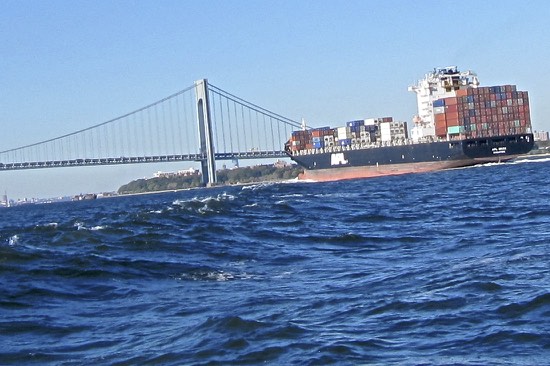
I went on a boat trip on Sunday into New York harbor, one of my favorite places. We followed a giant container ship from Singapore under the Verrazano Bridge.
Indian tribes were the first here to fish and to trade. The Dutch and the English followed them. It’s a great harbor with a great history. The fishing’s gone, unfortunately, and I wonder what happened to the Indians? Their story never seems to be told.

Indian fishing
The Hudson River reaching north was a trading dream. Early on, furs and timber and raw materials were brought here from the interior to be shipped all over the world. The Eire Cana only increased the river’s reach.
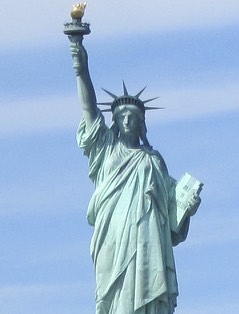 Millions of immigrants, looking for work and a place to live, sailed into this harbor from distant places. The sign welcoming them, the Statue of Liberty, and the place where many of them were processed, Ellis Island, are on the left of the harbor as you come through the Narrows from the open sea.
Many of our ancestors, my own included, first saw the New World here. Many never left the area. On a recent TV program on Italian immigration, the question was asked “Why did so many Italians choose to live in New York City and New Jersey?” “That’s where the work was, “ someone said. My ancestors–Irish and Swedes– chose to live and work here too. 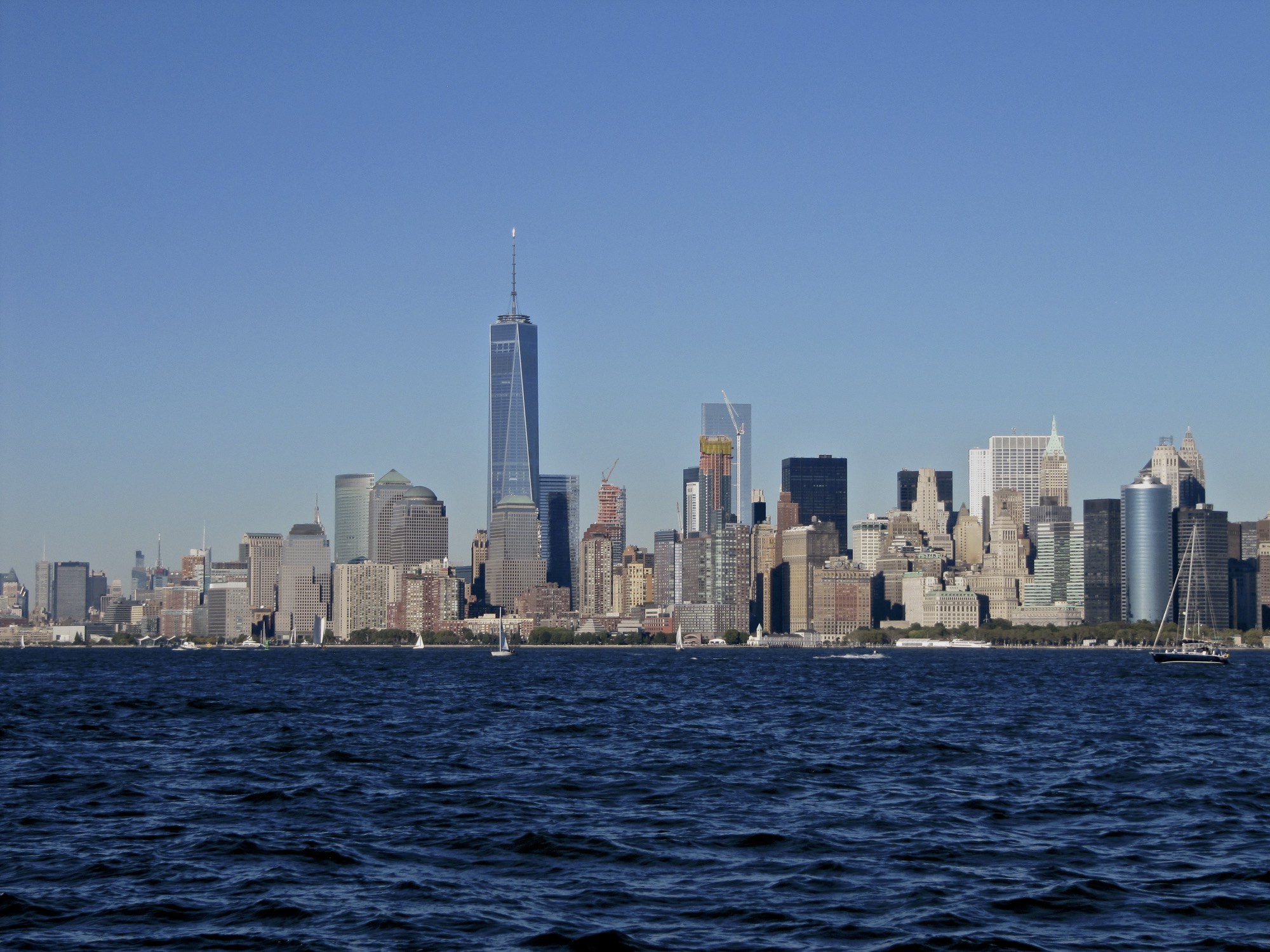
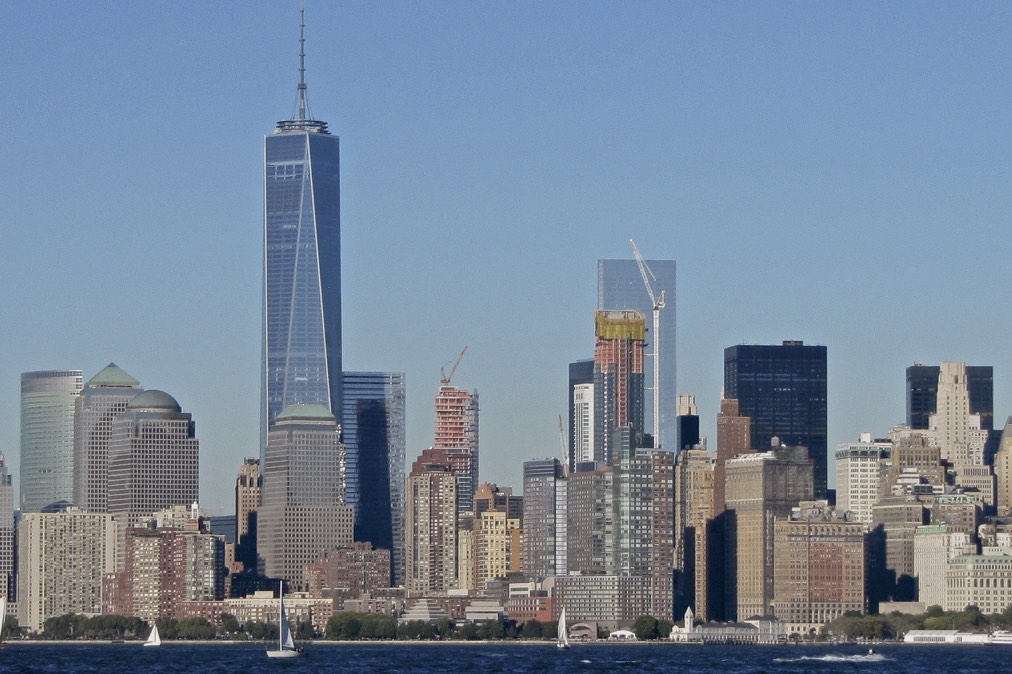
As you look at the impressive skyline of New York, look also to Brooklyn on the right and Jersey City and Bayonne on the left, Staten Island behind you. Those places were where the immigrants who built the city lived–and still do.
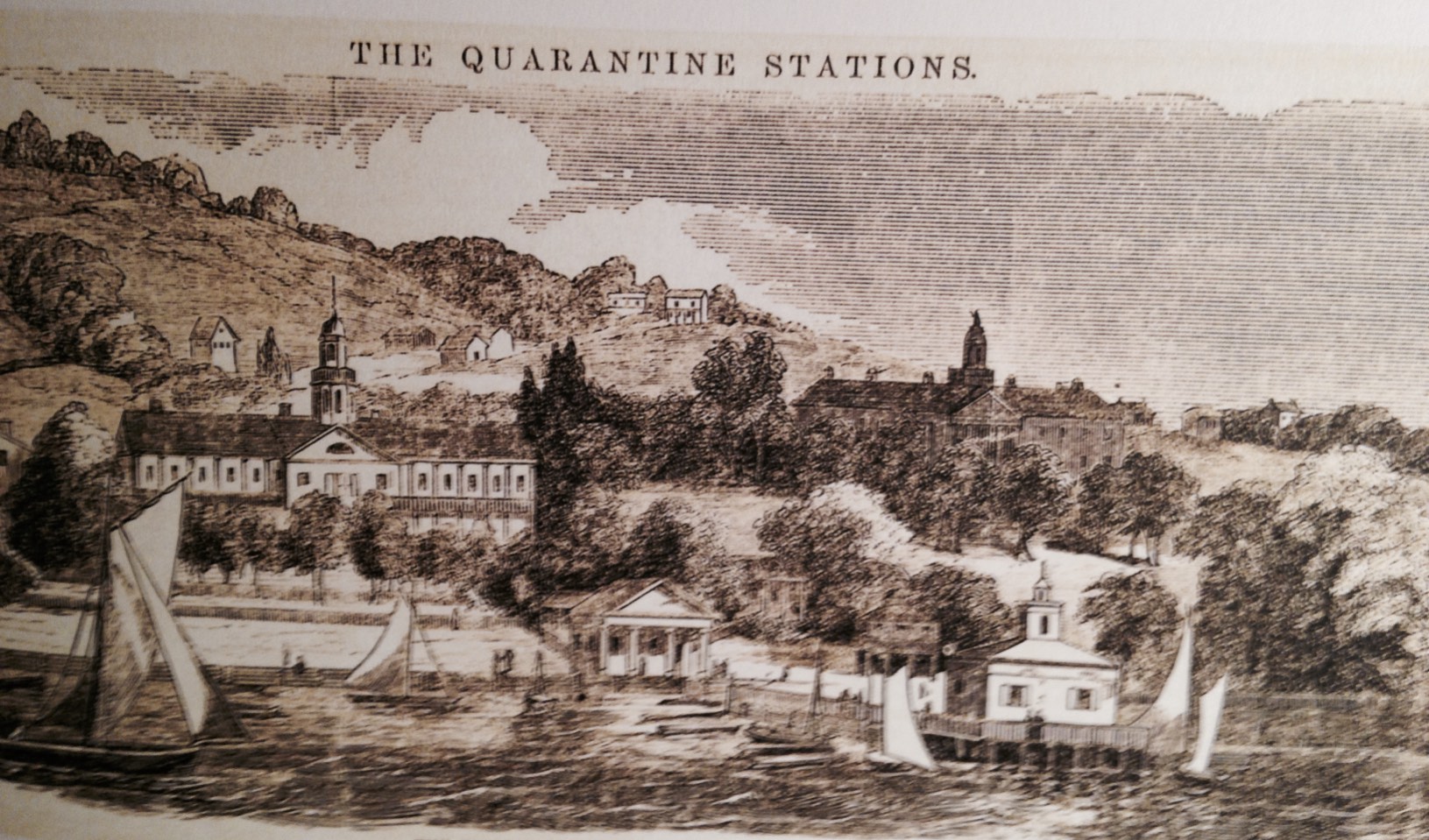
Quarentine station, staten island,
The Quarantine Station built in 1799 by Doctor Richard Bayley, father of St. Elizabeth Seton, was located near Stapleton on Staten Island, just south of the Staten Island Ferry terminal at St. George. Passengers with infectious diseases like small pox, cholera or yellow fever were detained and treated there, and sometimes returned to their own countries.
In the summer of 1801, Elizabeth Seton was staying with her father at the quarantine station when a boatload of sick Irish immigrants were brought in. She describes what poorer immigrants faced coming here:
“I cannot sleep–the dying and the dead possess my mind. Babies perishing at the empty breast of the expiring mother…Father says such was never known before: twelve children must die for want of sustenance…parents deprived of it as they have lain for many days ill in a ship without food or air or changing…There are tents pitched over the yard of the convalescent house and a large one at the death house.” (Letter July 28, 1801)
That same year, Richard Bayley died from yellow fever contacted while caring for a boatload of Irish immigrants at the Quarantine Station. He’s buried in the family plot next to the Episcopal Church of St. Andrew in Richmond, Staten Island.
Too bad no remains of the quarantine station are left to remind us how difficult an immigrant’s journey could be. There’s no quarantine station in the harbor now; sick immigrants and travelers go to nearby hospitals, as far as I know.
People in ancient times looked at travel over the uncertain sea as a perilous challenge. You never knew when you would arrive or the welcome you would get. No cruise ships then to make the journey a pleasure. An anchor was the sign the ancients used to symbolize their arrival, safely reaching port. Some ancient Mediterranean seaports like Alexandria and Antioch adopted the anchor as a symbol of their city.
Early Christians used this same sign on the burial places of their dead to symbolize their hope in Jesus Christ. The anchor closely resembles a cross. Jesus would bring them safely home, to harbor, to the New Jerusalem.
 The Victor's Place