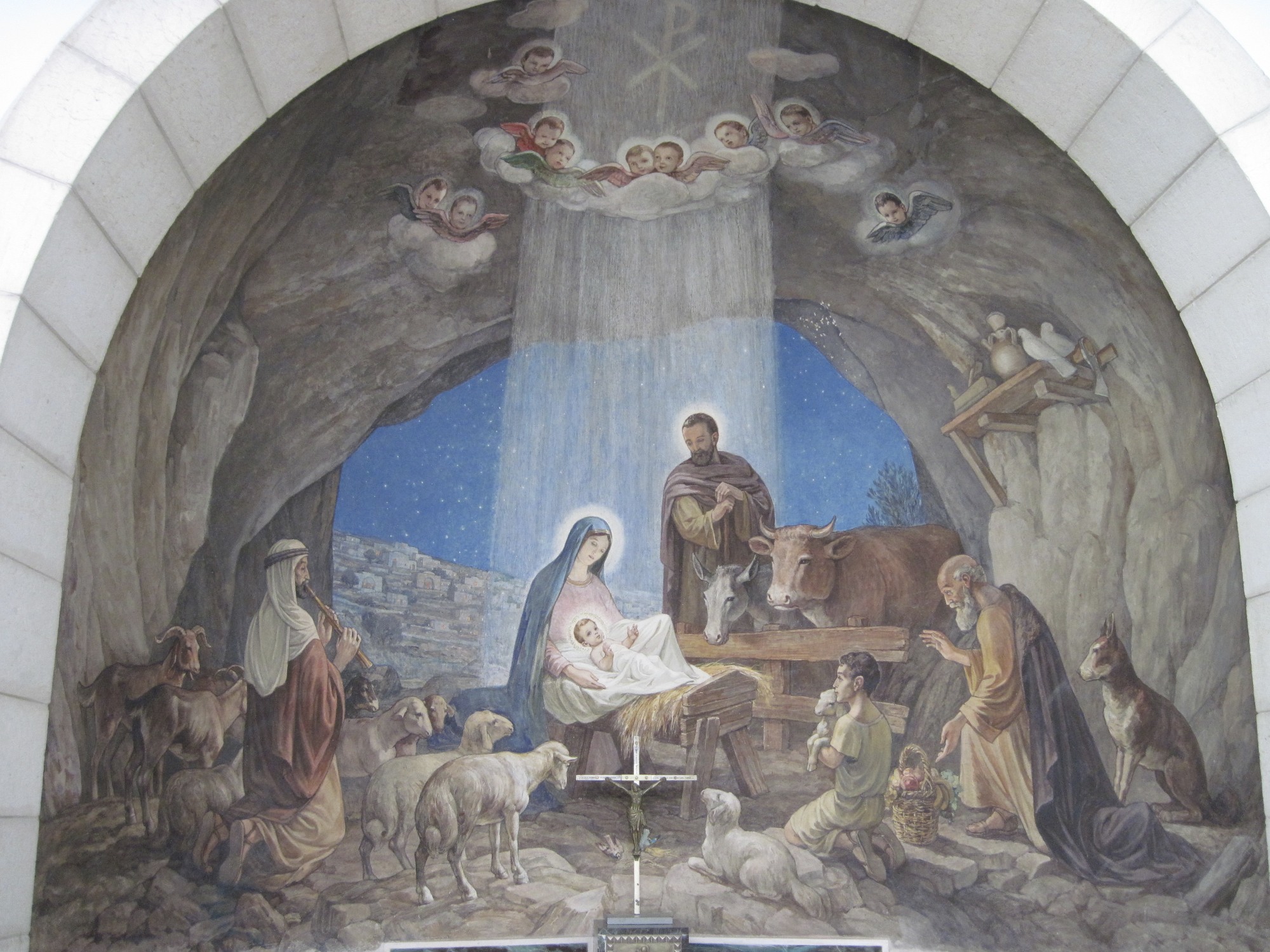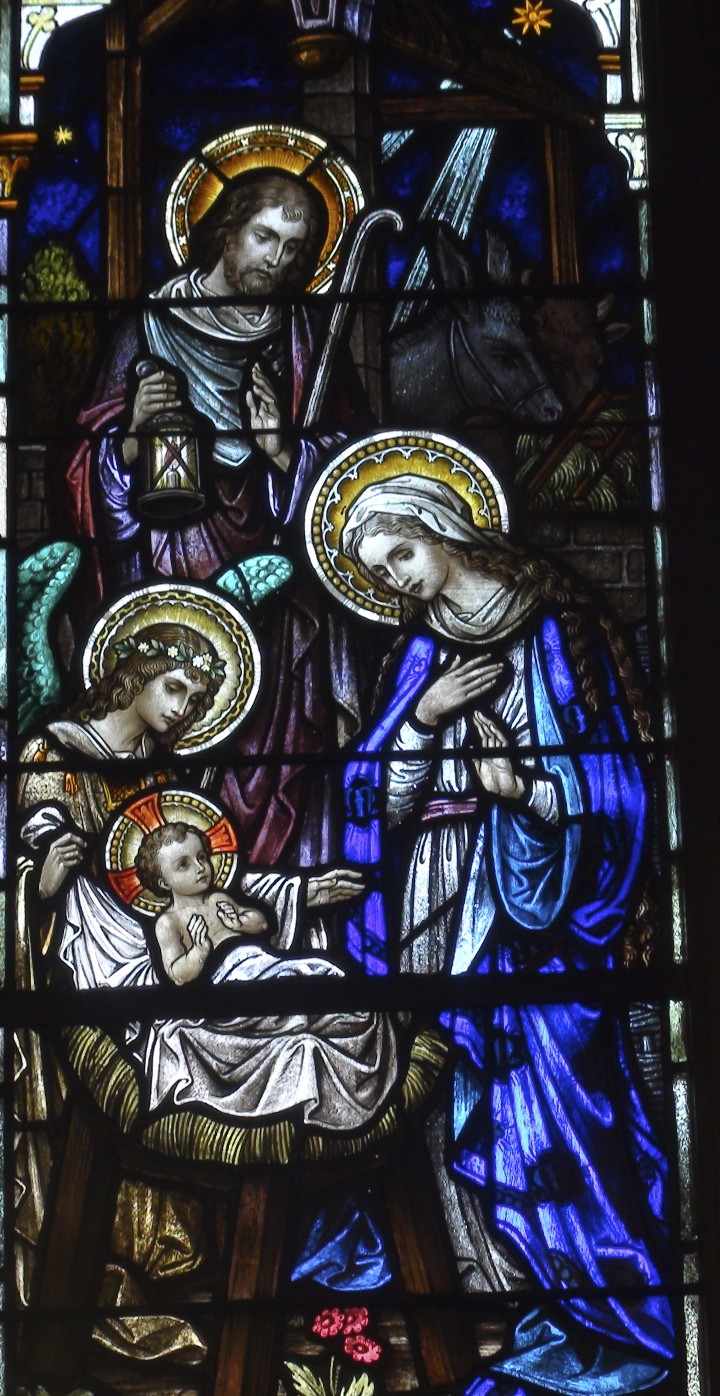
Tag Archives: Christmas

Black Friday and Christmas

photo
Now that Black Friday is over maybe we can get down to thinking about Christmas. For four weeks we prepare for that feast in the season of Advent.

The best place to look for the meaning of Christmas is the scriptural readings for these next four weeks. A timely source I suggest we add to them is the recent Apostolic Exhortation of Pope Francis, “The Joy of the Gospel.”

The Old Testament readings for today and all through the 1st Week of Advent are from Isaiah. Even if you can’t get to Mass, take a look at them, they make wonderful readings for Advent.

Isaiah promises salvation for all people, and one of his favorite images to describe God’s promise is found in this Sunday’s reading: Isaiah 2:1-5. All nations will stream to God’s mountain for instruction. “They will beat their swords into plowshares and their spears into pruning hooks.” Wars are no more; a fragmented humanity becomes one.

Quite a claim, considering that Assyrian armies were laying waste the towns and cities of Israel and Judea as Isaiah spoke. But God’s promise trumps all human conquests.

For Isaiah, the mountain of the Lord is Jerusalem, on which the Jewish temple is built. All nations will come there; they will be fed a rich banquet (Wednesday), the poor will be welcomed there (Thursday), the blind will see there (Friday); it’s the rock where people will dwell safely, where children play around the cobra’s den, and the lion and the lamb lie down together (Tuesday). The prophet’s imagery in these readings is strikingly beautiful.

The Gospels for the 1st week point to the fulfillment of the Isaian prophecies in Jesus Christ. The Roman centurion humbly approaching Jesus in Capernaum represents all the nations that will come to him. (Monday) Jesus praises the childlike, who will enter the kingdom of heaven. (Tuesday) He feeds a multitude on the mountain.(Wednesday) He affirms that his kingdom will be built on rock. (Thursday) He gives sight to the blind. (Friday)

Remember, too, that Matthew’s gospel, source of many of our Advent readings, portrays Jesus teaching on a mountain (Isaiah’s favorite symbol) and working great miracles there that benefit all who come. He is the new temple, the new Presence of God, Emmanuel, God with us.

Prophets like Isaiah were brave people, brave enough to speak when all seemed lost. They’re strong people, strong enough to hope when hope seems gone. And something of that prophetic spirit is in Pope Francis, I believe, who last week issued an important exhortation to the church.

He says that we can’t bring the gospel to the world if we don’t know what our world needs. We can’t bring greater human life to our world if we don’t realize what disfigures human dignity now.

What disfigures human dignity today is social inequality. Money had become our god. He speaks of the “tyranny of the financial markets.” We pay attention to a 2% drop in the stock market and ignore the death of a homeless man who dies in the cold. We’re a throw-away society. Not only do we discard things, we discard people. We tend to exploit immigrants and then throw them away. We ignore the economically unproductive, who may be without jobs or skills or socially deprived through sickness or being displaced.

The pope’s message is a hard-hitting restatement of traditional Catholic social teaching. It’s interesting to see a papal document quoted so freely on Tweeter, Facebook and the social media. It’s because he’s touched on something we need to hear.

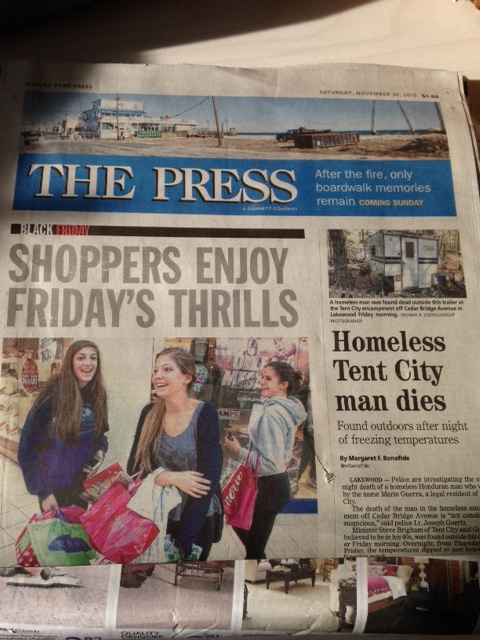
The front page of the Asbury Park Press this morning seemed to echo the picture the pope painted in his recent address. There’s the big picture of smiling shoppers fresh from the stores on Black Friday holding their precious treasures. Next to it is a story of a homeless man who died in the cold yesterday.

No picture of him at all.
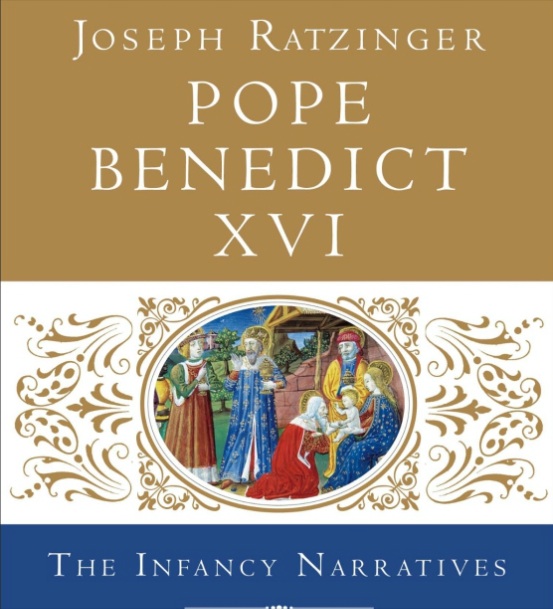
Jesus of Nazareth, The Infancy Narratives

You wish they would read it instead of looking for a headline. I mean the pope’s new book “Jesus of Nazareth, the Infancy Narratives”  Image Books, 2012. From the headlines the last few days you would think all the pope said was that the ox and the donkey weren’t around the manger at Christ’s birth, and he’s joining others who question the historical reliability of this event.

The contrary is true. As in his previous books on Jesus of Nazareth, Pope Benedict engages what modern scriptural scholarship says about this section of the gospels. (True, he depends on German and French scholarship for the most part) But if anything, the pope sees a swing from not accepting a history behind the infancy narratives to a recognition of historical facts.

But he does more than affirm history. He sees meaning behind the facts. So the manger of Jesus to him is the Lord’s first throne, the humble temple where he comes to feed the poorest of the world.

“So the manger has in some sense become the Ark of the Covenant, in which God is mysteriously hidden among men, and before which the time has come for ‘ox and ass’–humanity made up of Jews and Gentiles–to acknowledge God.”

I downloaded the book yesterday. A good book to read in Advent. Here’s a theologian and mystic at work. I think his three volumes on Jesus of Nazareth will stand as his lasting contribution to the church.

Becoming a Child

The mystery of Christmas is a call for all of us to become like the little Child. Is that what it means to be born again? St. Leo tells us in today’s reading it was the first act of humility that God’s Son made as he came among us and we need to renew this mystery in ourselves as we celebrate his birth.

“ God’s Son did not disdain to become a baby. Although with the passing of the years he moved from infancy to maturity, and although with the triumph of his passion and resurrection all the actions of humility which he undertook for us were finished, still today’s festival renews for us the holy childhood of Jesus born of the Virgin Mary.

“In adoring the birth of our Saviour, we find we are celebrating the commencement of our own life, for the birth of Christ is the source of life for Christian folk, and the birthday of the Head is the birthday of the body.

“Every individual that is called has his own place, and all the children of the Church are separated from one another by intervals of time. Nevertheless, just as the entire body of the faithful is born in the font of baptism, crucified with Christ in his passion, raised again in his resurrection, and placed at the Father’s right hand in his ascension, so with him are they born in this nativity.”

Age, race, sex, social status, temperament, individual gifts separate us, but “the entire body of the faithful” come during this holy season to be born with him in his nativity.

I Love Christmas

I Love Christmas


I love Christmas – all about Christmas –

‘Tis the season to be jolly, and happy,

and light-hearted…

Oh, go away Spirit of Christmas Past,

You fill my eyes with tears,

You make my heart cry,

With a longing for loved ones.

And places and events which are no more.

But I do love Christmas – all about Christmas –

The gift wrapping, the “secrets,”

The beautifully decorated stores,

The choosing of the tree,

 Bringing out the “Christmas box,”

The carols, the parties and get-togethers…

Oh, Spirit of Christmas Present,

Why must you show me visions of starving children,

Of the homeless,

Of old people alone and lonely,

Of all those who have lost hope?

But I do love Christmas – all about Christmas –

The visit to Santa Claus,

The excitement as the day approaches,

The cookie baking,

The magic reflected in the children’s faces,

The joy and warmth of family and friends…

Oh, Spirit of Christmas Present,

You persist in showing me visions of those children

Who have never felt that warmth,

Whose eyes will never reflect that magic,

Who are already old and wise

In the harsh, unloving ways of our world.

But, I do love Christmas – all about Christmas –

For the treasures you have given us,

Oh, God, we thank you.

And we ask that you guide us

And teach us how to share them.

I love Christmas

Because through the tears and the glitter,

Shines the LIGHT!


Teresita J. Blake

I Wonder as I Wander Out Under the Sky

Of all the gospels, St. Luke’s gospel gives the most complete account of the birth of Jesus and events leading up to it.  Luke also points out the historical importance of his birth, not only for the Jews but for the world itself. He does it by noting at the beginning of his gospel that it was in the days when Caesar Augustus ruled in Rome. Previously, he noted that King Herod the Great ruled in Judea in those days.

Those men were well known to Luke’s first readers. Caesar Augustus brought about an unprecedented era of peace and prosperity in the Roman empire. He was considered godlike. Herod the Great ruled with an iron fist in Judea; there were fearful signs of his presence everywhere.  People kept out of his way.

The child born in a stable in Bethlehem was more important than them and the great ones who followed them. He brought greater peace than any emperor could bring. He was more powerful and more present than Herod or anyone like him could possibly be.

Luke in his gospel gives an orderly account of Jesus, from his birth to his resurrection, and he also wrote a further account–the Acts of the Apostles– about  how his message was spread by his followers from Jerusalem to the great cities of the Roman empire, and finally to Rome itself. His message went out to all the world.

I was thinking of the spread of the gospel as I read the report issued a few days ago from the Pew Research Center about religion throughout the world. There are approximately 6.9 billion people in the world in 2010. There are 2.18 Christians in the world, about a third of the world’s population.

The report notes that since 1910 a great shift has taken place among the religions of the world. Instead of being concentrated in Europe, Christianity has grown enormously in sub-Saharan Africa and the Asia-Pacific region, where there were relatively few Christians at the beginning of the 20th century.  “Christianity has become a global religion. Christians are also geographically widespread – so far-flung, in fact, that no single continent or region can indisputably claim to be the center of global Christianity.”

A third of the world’s population call themselves Christian. Half of them are Roman Catholic.

Over two thousand years ago, Jesus Christ was born in Bethlehem, of poor unknown parents. He grew up unrecognized in a small discounted Galilean town called Nazareth. For a few years he taught, he healed people of illnesses, he raised the dead to life, he gathered disciples who followed him. They abandoned him when he was put to death on a cross. Then he rose from the dead.

He shot across the sky of time like a meteor. However, you would might expect that history would forget him as it does so many others. But Jesus Christ hasn’t been forgotten.   Over two billion people in our world today remember him and follow him.

We believe he’s still present and his promise of peace is still waiting to be fulfilled.

This causes me  to wonder at the mystery we celebrate at Christmas when we come to the stable and see the tiny Child.

Hanukkah and Christmas

Today I wrote a reflection for our province website entitled “Hanukkah and Christmas.” The Jewish and Christian celebrations coincide closely this year.

Hanukkah celebrates the rededication of the temple in Jerusalem after its desecration by Antiochus Epiphanes IV in 167 BC. Christmas celebrates the birth of Jesus Christ approximately 167 years later.

Both of these feasts are about the Presence of God. For the Jews God was present in the temple in a special way. For Christians God is present in Jesus Christ, who spoke of himself as the temple of God in this world. His presence remains and cannot be destroyed.

Many days, I look out my window at a great church across the street here in Union City  that my community had to let go of some years ago. As with many holy places nowadays,  we couldn’t keep it going financially.

It seems to me the ancient mysteries of Hanukkah and Christmas constantly repeat themselves over time. Buildings, places, however sacred, rise and fall. Jesus Christ does not rise and fall. The Christmas mystery reminds us of his abiding Presence. He is God with us, Emmanuel, and he always gives us life.

Still, we mourn when buildings go.

The Story of St. Nicholas

Here’s the story for little ones, and maybe big people too.


Christmas: A Call to Baptism

Matthew’s gospel was the gospel most used for catechesis in the early church. It also plays an important role in the creation of our Christmas season. It gives us the Feast of the Epiphany, for example. Jesus Christ came for the gentiles as well as for the Jews.

I think Matthew’s gospel is also an important source for our upcoming Feast of the Baptism of Jesus which closes the Christmas season. Matthew sees baptism as a way of repentance. That’s how John the Baptist describes it in Matthew’s gospel: “In those days, John the Baptist appeared in the wilderness of Judea, proclaiming: ‘Repent, the kingdom of God is near.’” (Mt 3,1-2)

When Pharisee and Sadducees come for baptism, John calls them “a brood of vipers” because they presume they are saved as “children of Abraham.” “God is able to raise up from these stones children of Abraham, “ John says to them.

Baptism is not an entitlement. Baptism is a commitment to repentance. That’s important for us to realize too.

But repentance is a difficult path. Can we do it alone?  John continues in Matthew’s gospel with the promise that one more powerful than he is coming. “He will baptize you with the Holy Spirit and fire.” When we are baptized into Christ, we are given the Holy Spirit and his fire to continue on the path of repentance.

Christmas is not just for looking at the Child in a manger; it’s a call  to enter into the mystery of Jesus Christ.


God in a Creche

In The New York Times the other day Maureen Dowd’s column was about a visit she and her brother made to see a collection of Christmas crèches in New Haven, Ct. She’s a columnist who makes fun of things, and in this column she made fun of those who compulsively collect crèches. In fact, she bought for herself a bizarre crèche to illustrate how wacky it can get. As I put down the paper, though, I wasn’t laughing.  I had the impression that a crèche doesn’t mean much to her at all.

Today I read a selection from an early Roman saint, Hippolytus,  “Against the Noetic Heresy” and I thought of her and the crèche.  The Noetics, if I remember, were Gnostics who looked down on Christianity because they thought they were smarter than anything it had to offer. They were smart, sophisticated people.

Hippolytus said something like this:

“When God speaks we better pay attention, and God has spoken to us in Jesus Christ.  Look at what the scriptures say about him. Learn from what they teach. Believe in what they tell us. You don’t decide the way God reveals himself. God decides that. Look at the way he reveals himself and learn from him.”

We learn so much from the mystery of the birth of Jesus Christ. Look at the humility of God, who comes to us as a tiny infant. Look at the way he invites the rough shepherds to be the first to see him as he lights up the dark hills with his glory. So he  welcomes the poorest among us. We are invited to see him too and share in his life and light.

We should pay attention to the revelation of God we celebrate these holy days. It tells us of a God who loves us.  It says that God wants to be near us, to be part of our lives, to lead us to a new life.

Window on the World

The window in my room faces west to a slice of Union City that includes the old monastery church and parking space, some city athletic fields, a crowded  block of houses along 21st Street and a few big oak trees that somehow have survived the urban sprawl.  It’s a wonderful window for taking in the world.

Earlier this morning, Jose reached into the van carrying some neighborhood people to work to bless them, anticipating the morning sun that blesses everything now. A  few minutes ago, a flock of pigeons momentarily touched down on the wires along the street, thenflew away. I can’t figure out their unpredictable ways.

I leave the tiny figures of Mary and Joseph and the Child on the window sill all year because they seem to complete the picture.  Keep your eyes fixed on examples of faith, St. Ambrose said yesterday in his commentary on the Visitation.  Mary saw it in Elizabeth and Elizabeth saw it in Mary. Joseph certainly had eyes of faith too.  The Child is so small.  Only eyes of faith can see him–and everything else as well.